A buried water line can serve a home for years without attracting much attention. If it develops a leak, however, the questions become immediate: Who is responsible for the damaged section? Who arranges the repair? Will any coverage pay for digging up the line and restoring the yard afterward?
Those questions are worth answering before there is a problem. Offers for exterior water line insurance can sound straightforward, but a separate service plan and a homeowners-policy endorsement may define the line, covered failures, and repair expenses differently. Customer feedback can add useful perspective, yet even a detailed review cannot tell you what an agreement for your address will cover.
For New York homeowners, a sound comparison starts with the water provider’s responsibility boundary and ends with the written terms of each available option. Here is how to work through the decision without assuming that every underground leak—or every cost associated with one—is covered.
What exterior water line insurance means
“Exterior water line insurance” is often used as a general description rather than the name of one standard product. It may refer to an optional service line endorsement on a homeowners policy or to a separate water-line service contract. The distinction matters: the two arrangements can have different providers, claims procedures, limits, and definitions of eligible work.
A homeowners service line endorsement may cover certain damage to an eligible underground line serving the property. Depending on its wording, covered work could include finding the break, excavating, repairing or replacing a section of line, and restoring some disturbed property. Some endorsements address other underground utilities as well. None of those features should be assumed from the phrase “service line coverage” alone. An insurer’s published explanation of service line coverage illustrates why the covered lines, causes, exclusions, and additional expenses need to be checked in the specific endorsement.
A separate service plan may instead arrange eligible work through participating contractors or provide a defined repair benefit, subject to its agreement. For example, the American Water Resources water-line terms published by New York City’s Department of Environmental Protection define the line for that particular program. They are a useful example of the level of detail a contract can contain, not a substitute for the terms of an AWR offer elsewhere in New York.
Ask each provider what counts as a covered failure. A leak, break, blockage, and existing condition may not be treated alike. Check for a waiting period and any requirement to call the provider before hiring a contractor. A plan that could otherwise help with an eligible repair may have a procedure you need to follow to seek its benefit.
The pipe is only one part of the expense
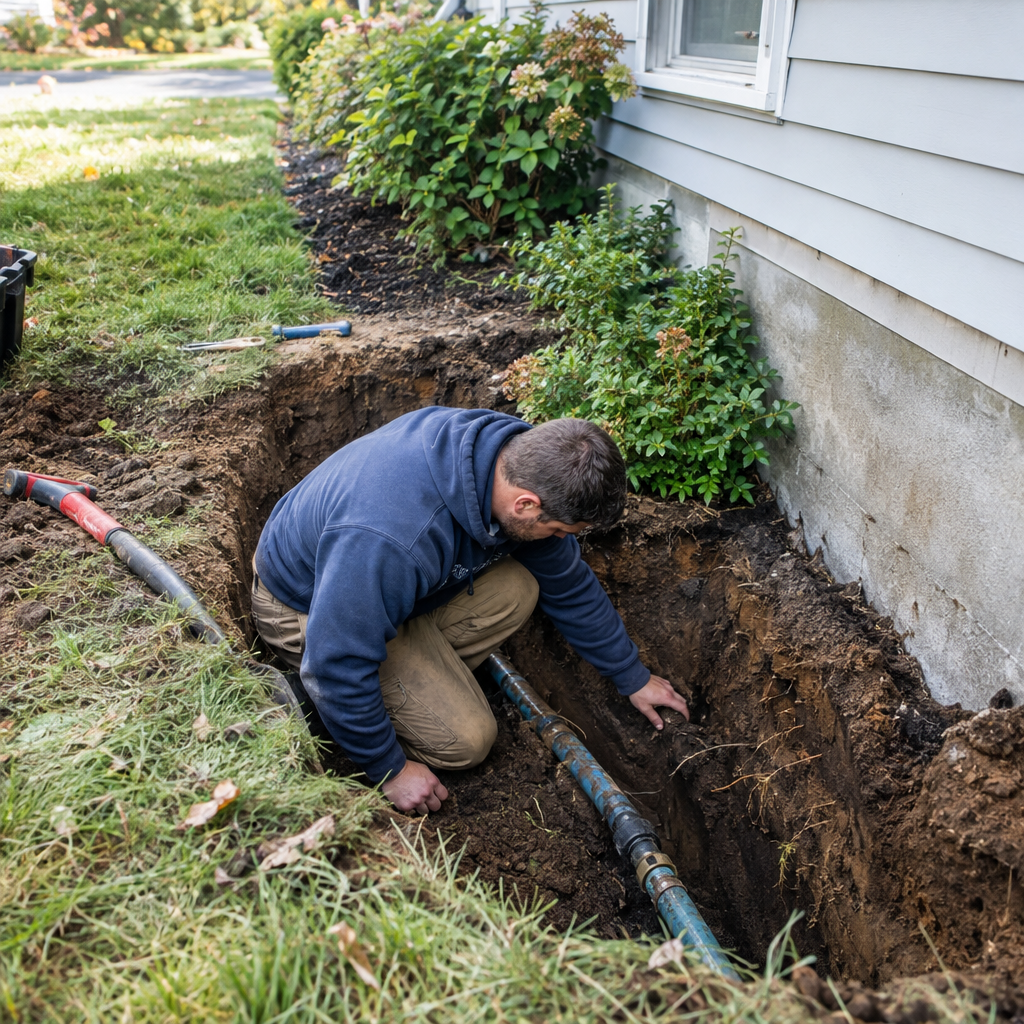
Imagine a leak beneath a paved walkway. The repair may involve locating the problem, opening the ground, replacing pipe, backfilling, and restoring the surface. Those are separate costs, and a coverage limit may apply to several of them together. Ask whether restoration is included, whether it has its own sublimit, and whether the agreement addresses walkways, driveways, landscaping, or other improvements. Do not assume that a promise to repair the line also promises to return every affected surface to its previous condition.
Damage inside the home is another question. Coverage for an exterior supply line does not automatically pay for damaged flooring or belongings, while coverage for resulting interior damage does not necessarily pay to replace the failed pipe. Ask an agent to evaluate those expenses separately under your actual policy.
It also helps to keep the types of water problems distinct. A supply line brings water to the home; a sewer line carries wastewater away. A water-backup endorsement addresses certain damage caused by a backup into the home, according to its terms, rather than necessarily paying to excavate a buried sewer pipe. Flood protection is a separate consideration. The New York State Department of Financial Services notes that some homeowners insurers offer water-backup endorsements and that coverage terms and selected limits vary. Similar names are not evidence that the products solve the same problem.
Find out who maintains the line serving your address
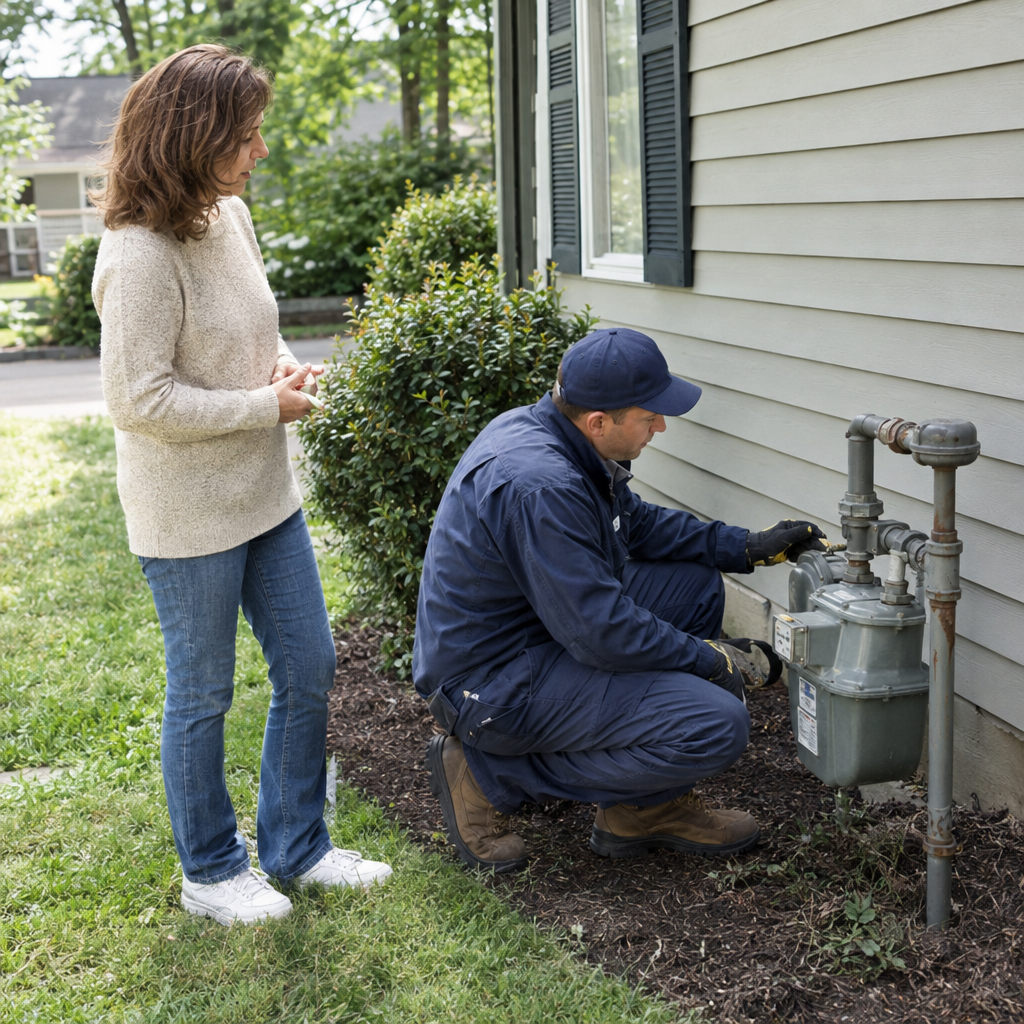
Before pricing coverage, contact your water provider and ask where its maintenance responsibility ends. The boundary might be described using the water main, an outside shut-off valve, a curb box, or another point. It should not be guessed from the property line or from what happened at a neighbor’s house.
The Monroe County Water Authority, for example, describes its responsibility as running from the water main to the outside shut-off valve. It identifies the homeowner as responsible from the curb box to the house and for interior shut-off valves. That is guidance for the authority’s service arrangements, not a rule for every New York utility. If another provider serves your home, confirm its boundary directly.
Then compare that boundary with the coverage boundary. It is possible to be responsible for a section of pipe that a proposed plan does not include, or to receive an offer concerning a section maintained by the utility. Ask the coverage provider to identify its starting and ending points in writing. If the utility’s description and the plan’s description use different landmarks, ask both parties to clarify how they apply to your property.
Unusual arrangements deserve particular attention. A private water supply, shared line, detached building, or line with an uncertain route may not fit a standard illustration of a pipe running from a public connection to a single house. Review any records you have from prior repairs or renovations, but do not treat the absence of records as proof that a line is either sound or failing. What matters for this decision is which portion you maintain and whether the proposed agreement includes it.
If you notice signs of a possible leak, ask the utility how it investigates responsibility before authorizing work on a section whose ownership is unclear. You may also need to contact the insurer or service-plan provider promptly under its reporting rules. Establishing the correct contacts in advance can make that first call less confusing.
How to use American Water Resources reviews
Searching for American Water Resources reviews is a reasonable part of comparing a separate plan. Customer accounts may raise practical questions about communication, scheduling, contractor arrangements, or what a customer understood to be covered. They cannot establish the terms of your offer or predict the result of your claim.
For example, Trustpilot’s AWR review page contains customer-submitted experiences and identifies the company profile as claimed. The submissions reflect what reviewers chose to report; they are not a controlled measure of every customer interaction. A favorable account does not guarantee that your line will qualify, and a negative account does not by itself establish how a different claim should be decided.
The Better Business Bureau’s AWR complaint records provide another perspective by displaying individual consumer complaints and company responses. Read those as reported disputes and replies, not as a complete history of the business. Where an account discusses a denied repair, a reader typically does not have the full agreement, claim file, and property details needed to determine whether the decision matched the contract.
The most useful approach is to turn review themes into questions. If an account makes you wonder how quickly a contractor can be assigned, ask what the plan promises about arranging service. If a dispute concerns the location or cause of a leak, ask the provider to show you the definitions and exclusions that would govern that issue. Request answers tied to the written agreement, rather than relying on a review—or a sales summary—to settle a coverage question.
Check the provider’s identity, too. The New York City-published terms describe AWR as an independent private entity, not a government body, for the program addressed by that document. If a utility’s name appears alongside a plan offer, verify directly with the utility what role it plays. A utility’s involvement in communicating an offer does not, by itself, tell you who provides the plan or what obligations the utility has under it.
Compare the endorsement and the service contract side by side
Once you know which section of pipe is yours to maintain, ask your homeowners agent whether a service line endorsement is available and whether one is already on your policy. Request the wording and the applicable limit and deductible. Then obtain the complete agreement for any separate plan you are considering. Neither product type is automatically the better choice; the comparison depends on their actual terms and your property.
Use the same questions for both options:
- What line is covered? Identify its starting and ending points, and ask whether sewer or other underground lines are included.
- What events qualify? Compare the treatment of breaks, leaks, deterioration, corrosion, freezing, root intrusion, and known existing conditions.
- What expenses are paid? Look separately at locating the failure, excavation, pipe repair or replacement, cleanup, and restoration of disturbed surfaces.
- What remains your responsibility? Check the deductible or other out-of-pocket amount, the maximum benefit, and any sublimits or exclusions.
- How does a repair begin? Determine whether you must call first, obtain authorization, use a designated contractor, or arrange work yourself and seek reimbursement.
- When does protection apply? Ask about waiting periods, renewal, cancellation, and any limits on repeat claims or service.
Keep the comparison specific. A plan may list more kinds of lines but have a narrower limit for the expense that concerns you most. An endorsement may cover excavation yet provide limited restoration for a particular surface. A low advertised price is difficult to evaluate without knowing what portion of a possible bill you would still pay.
Likewise, an online repair estimate is not a reliable quote for the work at your home. Access, the location of a failure, and the repair required can all change the project. Rather than looking for one universal repair figure, decide how much unexpected expense you could manage and whether each proposed limit offers meaningful help against that risk.
Review existing coverages without treating them as interchangeable. Your declarations and endorsements can show whether service line coverage or water-backup protection is listed, but an agent can help explain what those provisions mean for different losses. Our guides to exterior water line insurance in New York and sump pump failure and homeowners insurance offer further context for questions that are often grouped together even though they involve different causes and coverage provisions.
Questions to settle before you enroll
When speaking with an insurer, agent, or plan provider, describe your property rather than asking only whether “water lines” are covered. Useful questions include:
- Does the agreement cover the section my water provider says I must maintain?
- Would my line’s route, connection, or any shared or private-water arrangement affect eligibility?
- Does the benefit pay for both the pipe work and restoration after excavation? Where are the limits stated?
- What must I do if the leak needs urgent attention outside ordinary business hours?
- If a utility first investigates the leak, how should I coordinate that finding with a claim?
- Where can I find the rules for cancellation and any applicable refund?
Ask the provider to identify the relevant provision when an answer is important to your decision. Written terms are especially valuable when an offer uses broad phrases such as “complete protection” but the agreement contains specific boundaries or conditions. If you receive only a brief marketing description, request the contract or endorsement before enrolling.
If you suspect a failure, follow the right process
A possible leak calls for prompt attention, but it does not eliminate reporting requirements. Contact the water provider when its maintenance boundary or the location of the failure is uncertain. Contact the insurer or service-plan provider under the applicable agreement and ask what approval, inspection, or contractor arrangements are required before work begins. In an urgent situation, explain what is happening and ask how to proceed while protecting the property.
Record what you observe and keep relevant photographs, communications, contractor findings, and invoices. If a claim or service request is declined, ask for the reason in writing and compare it with the applicable provision. These steps cannot guarantee payment. They can help you understand the decision and maintain an accurate record of what was reported, authorized, and completed.
Do not assume a standalone plan and a homeowners insurer use the same process. Each may require its own notice and may make its own decision about a different part of the loss. If water has also damaged the house, tell your agent about that damage separately from the buried-line repair.
Is exterior water line insurance worth it?
Start with three facts: which part of the line you maintain, what protection is available for that part, and what an uncovered repair would mean for your household. If you are responsible for a buried section and an agreement offers useful limits on terms you can accept, protection may be worth considering. If the utility maintains the section you are concerned about, the proposed coverage excludes the most relevant work, or you are comfortable paying for a repair yourself, the same offer may be less compelling.
Home age and online review scores cannot make that decision for you. American Water Resources reviews are best used to sharpen your questions, while the written agreement determines the benefit being offered. Compare that agreement with any homeowners-policy endorsement, confirm the utility boundary, and pay close attention to excavation, restoration, limits, and claim procedures.
MITCHELL-JOSEPH Insurance serves homeowners in Naples, Honeoye Falls, Rushville, and across the Finger Lakes. We can help review your homeowners policy and discuss available service line endorsements, including their limits, deductibles, and exclusions. Coverage depends on the insurer, policy wording, and individual circumstances; a conversation grounded in your property and its water provider is the best place to begin.