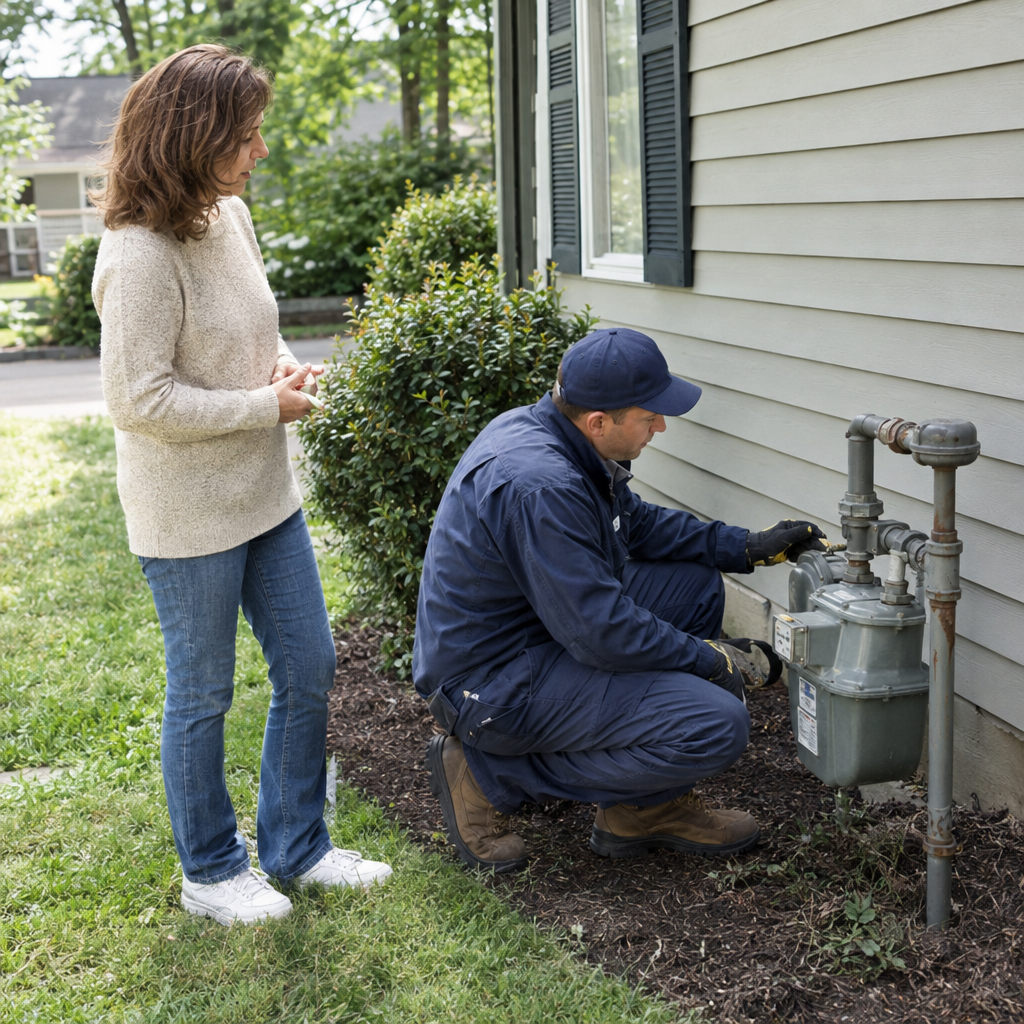
Does home insurance cover gas leaks? The answer depends on whether you mean the leak itself or damage it causes. A homeowners policy generally is not a maintenance plan for a leaking connection, aging pipe, or malfunctioning appliance. If escaping gas causes a sudden fire or explosion, however, the resulting damage to your home and belongings may be covered, subject to your policy’s terms, exclusions, limits, and deductible.
That distinction matters because one incident can produce several different expenses. You might need to pay a professional to find and repair the source of a leak, replace damaged building materials, clean smoke-damaged belongings, or stay elsewhere while repairs are made. An insurer may treat each expense differently. This guide explains the questions New York homeowners should ask, what to do after a suspected leak, and how to review a potential claim. Only your insurer can determine coverage under your policy after examining the facts.
First priority: leave and report a suspected gas leak
If you suspect an active gas leak, put safety ahead of insurance paperwork. Leave the building with everyone inside and move away from the premises. Do not stay to find the source, attempt a repair, operate a light switch or appliance, or use a phone in the affected area. Actions that create a spark can be dangerous. New York State’s Division of Homeland Security and Emergency Services advises people who suspect a gas leak to evacuate immediately and contact the utility from a safe location.
Once you are safely away, call the gas utility. Call 911 if there is immediate danger or an emergency, and follow the instructions of utility personnel and emergency responders. Do not return until they or other qualified professionals say it is safe. A claim, photographs, and repair estimates can wait; none is worth entering a potentially hazardous property.
After the danger has been addressed, contact your insurer or agent if property was damaged. Ask how to report the loss and whether an inspection is needed before non-emergency repairs begin. If urgent work is necessary to protect people or prevent further damage, follow professional safety instructions and keep records of the work when you can do so safely.
The key coverage question: what happened after the leak?
Homeowners insurance generally addresses specified kinds of property loss, not every problem that develops in a house. The New York Department of Financial Services homeowners and tenants guide describes fire and explosion among the perils in a basic homeowners form, while emphasizing that policies differ and consumers should read their own contracts. The National Association of Insurance Commissioners likewise notes that standard homeowners and renters policies generally cover damage from explosions caused by events such as gas leaks. Neither statement guarantees payment for a particular claim.
Consider two situations. In the first, a professional finds a deteriorated appliance connection, shuts off the gas, and replaces the connection before it damages anything else. The homeowner has a repair expense, but may have no covered property damage. In the second, escaping gas ignites and damages a kitchen. A policy may cover qualifying damage from the fire or explosion even if it does not pay to replace the connection that failed. The insurer must still investigate the cause and apply the actual policy wording.
A leak without a fire or explosion is not automatically a covered loss. Nor does every loss involving gas receive the same answer. The location of the failure, the type of damage, applicable exclusions, and the coverage form all matter. When you ask about coverage, describe the specific expense you mean rather than asking only whether your policy covers a gas leak.
What may be covered after a gas-related fire or explosion?
A covered event can affect several parts of a homeowners policy. Each part has its own conditions and limits, so a single claim may not produce the same answer for every expense.
Damage to the dwelling
If a covered fire or explosion damages walls, windows, roofing, cabinetry, or other parts of the house, dwelling coverage may help pay to repair or rebuild them. The amount payable depends on the covered damage, the dwelling limit, the deductible, and the policy’s settlement terms. Ask whether the applicable coverage uses replacement cost or actual cash value and what you must do to receive any available replacement-cost payment.
Damage to belongings
Furniture, clothing, electronics, and other possessions damaged in a covered incident may fall under personal-property coverage. A claim can still be affected by limits, exclusions, deductibles, and the evidence available to establish what was lost. Some items may have special limits. The NAIC recommends understanding whether a policy settles personal-property losses at replacement value or actual cash value and maintaining an inventory of belongings.
Smoke damage and temporary displacement
Smoke or soot associated with a covered fire may also be considered in the claim. If it is safe to do so, document affected rooms and items before extensive cleaning. Ask the insurer whether it needs to inspect them or provide instructions for cleanup.
If covered damage makes the home uninhabitable, additional living expense coverage may help with eligible extra costs of living elsewhere. It is not necessarily reimbursement for every expense you incur while away. The Insurance Information Institute explains that this coverage can apply when an insured disaster makes a home uninhabitable. Ask your insurer which expenses qualify, what receipts it needs, and whether a dollar limit or time limit applies.
These potential coverages address resulting losses. They do not establish that the original leak, the failed part, or every associated bill will be paid. Review each category of damage separately with the insurer.
Why the leaking pipe or appliance may not be covered
The expense of stopping a leak is often the part homeowners find most confusing. Property insurance and home maintenance serve different purposes. The Insurance Information Institute’s guide to covered disasters identifies explosion as a commonly covered homeowners peril but notes that maintenance-related damage generally is not covered. A worn connector, corroded pipe, or defective appliance may therefore be treated differently from damage caused by a subsequent covered fire.
An insurer may need to determine what failed, how it failed, and whether an exclusion applies. A gradual condition, deterioration, poor maintenance, or an installation problem can raise different questions from a sudden event. The presence of one of those factors does not, by itself, tell you how every part of a claim will be decided. The full sequence of events and the contract matter.
For example, suppose a technician identifies a leaking stove connection before there is any physical damage to the home. Replacing that connection may be a homeowner expense. If a gas-related fire has already damaged the kitchen, the insurer may evaluate the fire damage separately from the failed connection. Do not assume that coverage for the kitchen means coverage for the connector, or that an uncovered connector means every resulting loss is excluded.
Keep the professional’s findings and repair invoice. If an insurer declines any part of a claim, ask for a written explanation identifying the relevant facts and policy provisions. That gives you a clearer basis for discussing the decision with the insurer or your agent.
Does home insurance cover the gas line itself?
There is no reliable yes-or-no answer without identifying the line and reading the policy. A connection inside the house and an underground line serving the property may present different ownership, repair, and insurance questions. Even when damage caused by a line’s failure is covered, repairing or replacing the failed line may not be.
Ask your agent whether your policy includes service-line coverage or offers an endorsement that could apply to an underground gas line. If coverage is available, request specifics: Which lines qualify? Must the line serve your home? What causes of failure are covered? Are excavation, repair, and restoration costs included? What limits, deductibles, and exclusions apply? Do not assume that a general reference to utility lines includes gas lines under your particular contract.
It is also important to establish who is responsible for the affected section. Responsibility can depend on its location, utility rules, property documents, and the line involved. Contact the gas utility or a qualified professional for guidance rather than attempting to inspect a suspected leak yourself. Our discussion of exterior water line insurance illustrates why homeowners should confirm repair responsibility and read service-line terms carefully, although water-line and gas-line coverage should not be assumed to work the same way.
Renters, landlords, and damage to neighboring property
The right insurer to contact also depends on your relationship to the property. New York DFS explains that renters policies generally cover a tenant’s contents and personal liability, while the building is typically the owner’s responsibility. If a gas-related event damages a rented home, notify the owner or property manager after reaching safety. A tenant can contact the renters insurer about damaged belongings and any applicable displacement coverage; the owner can contact the insurer covering the building.
These are separate policies, not a promise that every loss will be covered between them. A renter’s personal-property limit, a landlord’s building coverage, and any applicable exclusions each require their own review. If you own a condominium, ask which portions of the property are insured by your unit policy and which fall under the association’s policy.
If an incident affects a neighboring home or someone alleges that you are responsible for their damage, notify your insurer promptly. A homeowners policy may include personal liability coverage, but liability depends on the circumstances and the policy’s terms. Preserve relevant information, avoid speculating about the cause, and do not promise that your insurer will pay someone else’s expenses.
How to document a potential insurance claim
Once responders say it is safe, a clear record can help the insurer distinguish the failed component from the damage it caused. You do not need to determine the technical cause yourself. Focus on accurate observations and documents.
- Report the incident promptly. Tell the insurer when you noticed the problem, whom you contacted, whether there was a fire or explosion, and what property appears damaged. Mention any displacement or injuries. Ask for a claim number and the next steps.
- Record what professionals found. Keep utility reports, written instructions, invoices, and repair estimates. Note when responders and technicians attended the property. Avoid presenting a guess about the cause as an established fact.
- Document damage when safe. Photograph affected areas and belongings, make a list of damaged items, and retain available purchase records. Ask before discarding items the insurer may need to inspect. If something must be removed for safety, follow professional instructions and document it if possible.
- Track extra expenses. If you must live elsewhere, retain lodging and other receipts. Ask which additional costs may qualify under your coverage rather than assuming that all spending is reimbursable.
- Coordinate non-emergency work. Ask whether an adjuster needs to see the damage or review estimates before major repairs begin. Take reasonable protective steps only when the property is safe and the work is consistent with professional guidance.
Keep copies of claim correspondence, including explanations of what the insurer accepts or declines. If a decision is unclear, ask how the insurer applied the deductible, coverage limit, settlement basis, or exclusion. Good documentation cannot create coverage that a policy does not provide, but it can help establish what happened and what was damaged.
Questions to ask before a loss
The best time to understand a coverage gap is before an emergency. During a homeowners policy review, ask your agent or insurer:
- How does my policy cover damage from fire and explosion, and which exclusions could affect a gas-related claim?
- What are my dwelling and personal-property limits, and what deductible would apply?
- Are covered property losses settled at replacement cost or actual cash value?
- What additional living expense coverage is available if covered damage makes my home uninhabitable?
- Do I have service-line coverage? If so, does it include underground gas lines, and what costs, limits, and exclusions apply?
- How would the policy distinguish repair of a failed part from damage caused by its failure?
- What reporting and documentation steps does the insurer require after a loss?
New York DFS advises consumers to look beyond a policy’s label and examine its covered perils, exclusions, and protection for contents. Our guide to choosing home insurance coverage offers a broader framework for discussing limits, deductibles, and property protection. An agent can help explain the options available to you, but a claim decision remains with the insurer under the issued policy.
The bottom line for New York homeowners
Home insurance may cover damage from a gas-related fire or explosion, but it may not pay simply to locate and repair a leak or replace the component that failed. The cause, resulting damage, policy wording, exclusions, limits, and deductible determine what the insurer will consider. If you suspect an active leak, evacuate first and contact the utility from a safe place. After the danger is resolved, report any damage and request a policy-specific explanation of coverage.
Gas leaks are not the only home-system problems that raise a distinction between a failed component and resulting damage. For another example, read our guide to whether homeowners insurance covers sump pump failure. Mitchell-Joseph Insurance serves clients from offices in Naples, Honeoye Falls, and Rushville. If you want to review your homeowners coverage before a loss, our team can help you identify questions about covered events, service lines, and available policy options.