

You've parked your RV in Rush after a weekend near the Finger Lakes. The awning is folded, the tanks are checked, and the next trip is already on the calendar. Then a practical question appears: does your current auto policy really protect the RV, its contents, and the way you use it?
That question matters because an RV can be a vehicle on the road, a storage unit in the driveway, and a temporary home at a campsite. A policy designed for only one of those roles may leave gaps in the others. Weekend travel, full-time living, long-haul trips, and seasonal storage each create different coverage needs.
Table of Contents
- Introduction to Rush RV Insurance for Local Owners
- What Rush RV Insurance Is and How It Works
- New York Requirements and Core Coverage Explained
- What Drives the Cost of RV Insurance in Rush
- Popular Add-Ons and When You Need Them
- How to Compare Policies and Get a Quote That Fits Your RV
- Next Steps to Protect Your RV with Mitchell-Joseph
Introduction to Rush RV Insurance for Local Owners
A Rush household may take its motorhome to a nearby campground on weekends, store it through the colder season, and plan a longer road trip later. Another household may use a fifth wheel as a residence while working remotely. The RVs may look similar from the road, yet their insurance needs can differ because driving, living, and storage create different risks.
The market reflects broad demand for this type of protection. One industry report values the RV insurance market at USD 4.5 billion in 2024 and projects it to reach USD 7.8 billion by 2033, with a 6.5% CAGR from 2026 to 2033 (market outlook for RV insurance). That broader trend does not determine a Rush resident's policy. Your starting point is how the RV is used, where it is kept, and what you carry inside it.
A weekend traveler may need a policy arranged around road use and seasonal storage. Someone living in the RV for extended periods may need protection that recognizes personal belongings and the RV's living function. A trailer owner also needs to describe whether the unit is towed regularly, parked at a campsite, or left on private property.
Local planning rule: Describe how you use the RV before asking which coverage to buy.
Mitchell-Joseph Insurance Agency serves Rush and nearby communities as an independent local resource for discussing these choices. Questions about New York requirements, optional protection, pricing factors, and policy comparisons become easier when the insurance conversation starts with your routine.
Use one simple framework: your RV is part vehicle, part living space, and part personal property. The policy should reflect each role, whether the RV is traveling on a weekend, occupied for longer periods, or waiting in seasonal storage.
What Rush RV Insurance Is and How It Works
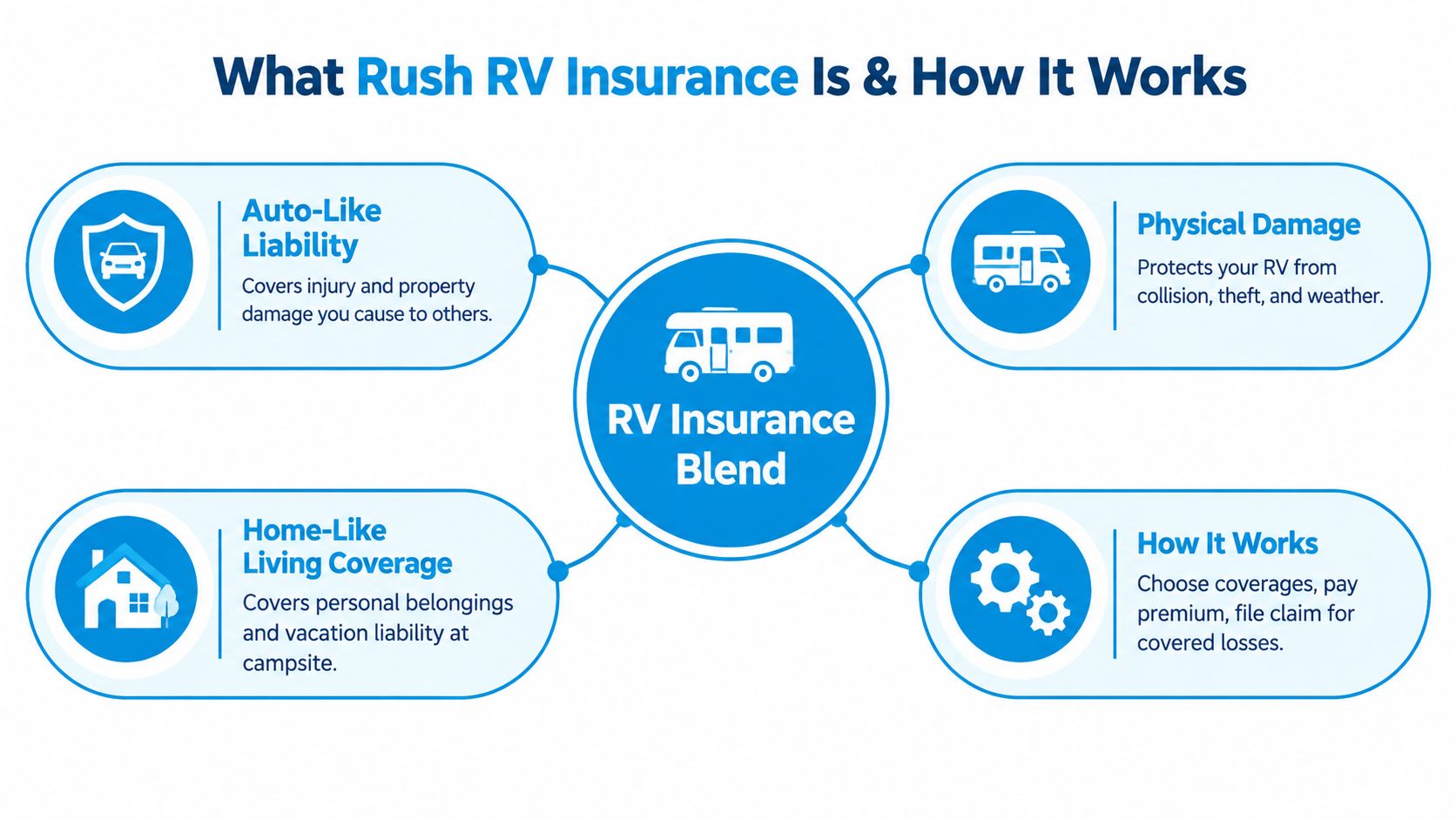
RV insurance combines several types of protection in one policy. The easiest analogy is a vehicle policy with selected home-like features added for the time you spend parked, camping, or living inside the RV.
A motorhome needs protection while it's being driven. A travel trailer needs protection while it's being towed, parked, or stored. Both may contain clothing, electronics, cooking equipment, outdoor gear, and other belongings that a basic auto policy may not address in the same way.
Three parts work together
Liability coverage responds when you're legally responsible for injuring another person or damaging someone else's property. That could involve a traffic accident, a mistake while maneuvering through a campground, or an incident connected to the RV's use.
Physical damage coverage protects the RV itself. Collision generally addresses damage from an impact, while other-than-collision protection is associated with losses such as theft, fire, vandalism, and covered weather events.
Living and personal property coverage addresses the home-like side of RV ownership. Depending on the policy, it may protect belongings inside the RV, liability while parked at a campsite, or certain emergency expenses after a covered loss.
The central idea: An RV policy should follow the way the RV functions, not just the fact that it has wheels.
Usage changes the policy structure
A vehicle used for occasional weekends doesn't present the same exposure as one used as a primary residence. Full-time use can make personal liability, personal property, and temporary living expenses more important than basic collision protection alone. Recent RV insurance coverage discussions also describe insurers offering full-time coverage, usage-based pricing, seasonal adjustments, and add-ons for remote-work equipment or off-grid systems (changing RV usage and insurance structure).
For a towable unit, ask how the trailer is insured separately from the vehicle doing the towing. For a motorhome, ask how the policy addresses the driving portion and the living portion. You'll also want to confirm who may drive it, where it's stored, and whether personal belongings remain covered during seasonal storage.
The policy process is straightforward. You select limits, deductibles, and applicable endorsements, pay the premium, and file a claim if a covered loss occurs. The important work happens before purchase, when you describe the RV's value, location, usage, and contents accurately.
New York Requirements and Core Coverage Explained
New York separates the protection required for operating a vehicle from the protection you choose for the RV itself. For a drivable motorhome, liability insurance is part of the road-use conversation. A towable trailer raises a different question because the towing vehicle and trailer may be insured through separate policy arrangements.
Required protection and what it means
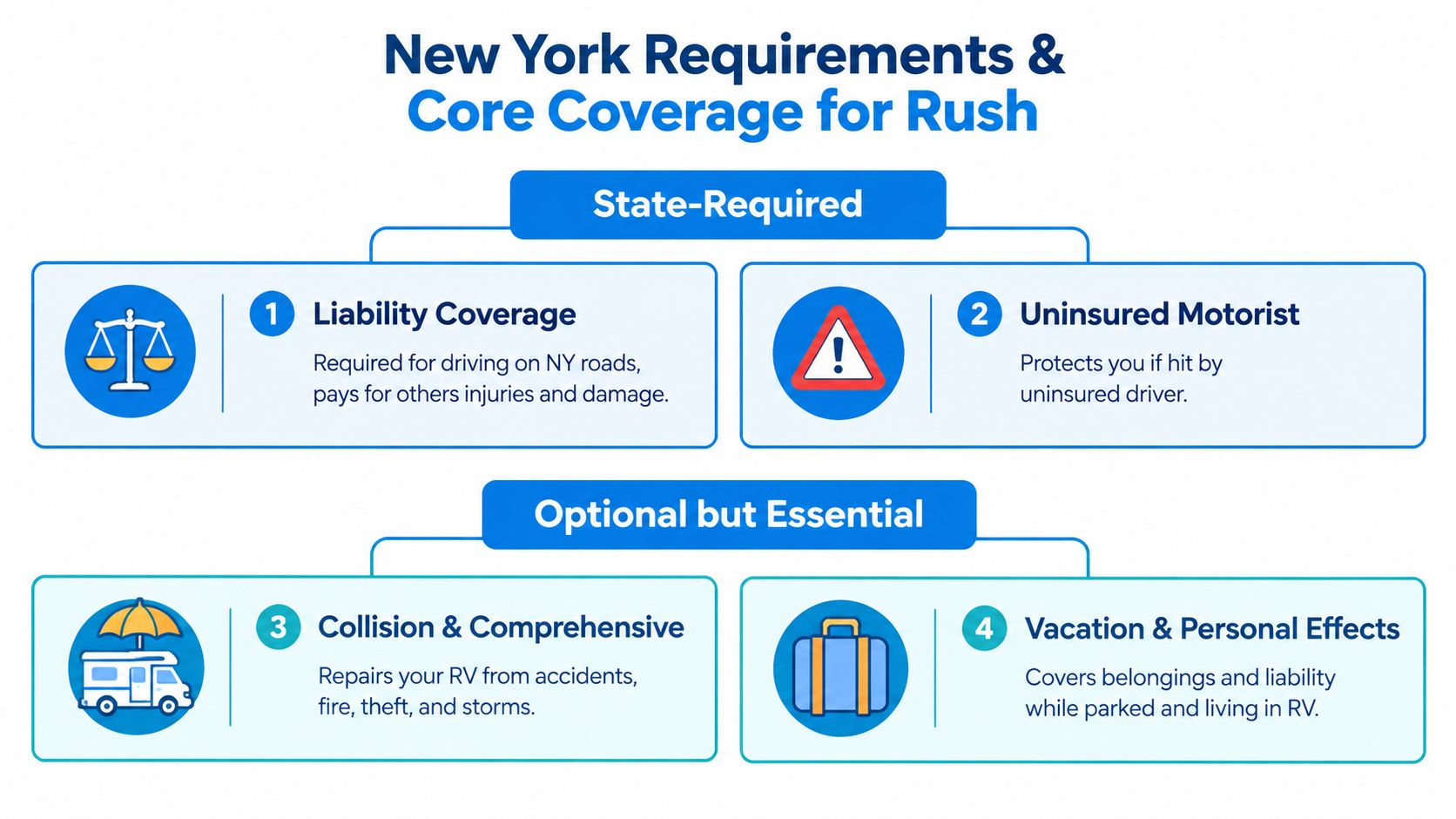
Liability coverage helps pay for bodily injury or property damage you cause to others, up to the policy limits. If you misjudge a turn near a campground and damage another vehicle or campsite property, liability is the part of the policy designed for that responsibility.
Uninsured motorist protection helps protect you if an uninsured driver hits you. It doesn't replace physical damage coverage for every situation, and the details depend on the policy, but it addresses a serious risk created by another driver's lack of insurance.
New York requirements can be affected by whether the RV is drivable, towable, registered, and subject to a loan. Ask the agency or carrier to confirm the exact requirements for your unit instead of assuming a motorhome and travel trailer follow identical rules.
Optional coverage that protects the RV
Collision coverage can help repair or replace the RV after a covered impact, subject to the deductible and policy terms. Full coverage generally addresses non-collision losses such as theft, fire, vandalism, and certain weather damage.
Medical payments coverage may help with eligible medical expenses after an accident, depending on the policy. It's separate from liability because it can address medical costs without requiring the same legal responsibility analysis.
Personal effects and vacation liability coverage become useful when you're parked and using the RV as a campsite or temporary living space. They may address belongings inside the unit and liability connected with the RV while it's occupied or set up, subject to exclusions and limits.
A practical coverage check
- Confirm road requirements: Ask which liability and uninsured motorist protections apply to your registered motorhome or towing arrangement.
- Protect the asset: Review collision and all-risks coverage if repairing or replacing the RV would create a significant financial burden.
- Check the lender's terms: A finance company may require physical damage coverage and specific limits.
- Inventory the contents: Create a record of higher-value belongings and ask whether they need separate scheduling or expanded limits.
- Review the living arrangement: If the RV is used as a residence, ask about full-time liability, personal property, and temporary living expense protection.
For a plain-language overview of how these protections fit together, review what RV insurance can cover. The policy declarations page and endorsements should control your decision, not a general assumption about what “full coverage” means.
What Drives the Cost of RV Insurance in Rush
RV insurance pricing reflects the likelihood and potential size of a covered loss. A larger motorhome, expensive equipment, frequent travel, and limited repair capacity can all affect the insurer's view of the risk. The premium isn't based on one factor, and the cheapest quote may create a costly gap if it removes protection you need.
The RV itself comes first. Its type, age, condition, size, equipment, and replacement value influence the cost of repairing or replacing it. A high-value motorhome with slide-outs, electronics, solar equipment, or custom upgrades may need a different coverage discussion than a small travel trailer used for occasional trips.
Usage and storage shape exposure
A weekend owner usually has a different pattern of road use than someone who travels continuously. Full-time living can increase exposure because the RV is occupied more often and contains more personal property. Long trips also create more time on unfamiliar roads and more opportunities for mechanical or weather-related problems.
Storage matters too. An RV kept outdoors through changing weather may face different risks than one kept in a protected facility. Tell the agent where the RV spends the off-season, whether it remains connected to utilities, and whether personal belongings stay inside during storage.
A lower premium isn't automatically a saving if it removes the coverage you'll need after a serious loss.
External pressures affect claim severity
Weather, repair costs, and regional concentration can influence the amount an insurer may need to pay after a loss. Recent market coverage identifies escalating weather-related risk, tariff-driven vehicle price increases, and rising repair costs as pressures on RV insurance, while one report highlights parts inflation of about 12 to 15% annually and premium pressure in coastal states (RV insurance market trends and repair-cost pressures). Those pressures don't determine an individual Rush quote, but they help explain why replacement-value features and appropriate physical damage limits deserve careful review.
North America is the dominant region in available RV insurance research. One report places its share at 62.3% of global revenue, while another cites about 54% market share connected to roughly 11 million registered RVs (regional RV insurance market context). Regional exposure can affect underwriting through weather, theft, storage conditions, and repair-capacity constraints.
You can influence some cost factors:
- Choose a deductible deliberately: A higher deductible may reduce premium, but only choose one you could pay after a loss.
- Report usage accurately: Misclassifying full-time living as occasional recreation can create coverage problems.
- Review limits before cutting them: Reducing liability or personal property limits may save money while increasing financial exposure.
- Ask about discounts: Discuss bundling, safety features, claims history, and storage arrangements.
- Compare the whole policy: A lower price isn't meaningful if the quote has weaker limits, broader exclusions, or no needed endorsements.
For a policy discussion suited to a motorhome or trailer, see recreational vehicle insurance options.
Popular Add-Ons and When You Need Them
The right endorsement depends on what happens inside and around your RV. A couple taking occasional weekend trips may prioritize roadside assistance and personal effects protection. Someone living in the RV may need broader liability, more substantial contents coverage, and emergency expense protection.
The most common mistake is buying a basic policy for a full-time lifestyle. A low-priced policy may look attractive until a covered loss raises questions about where you live, what property was inside, and how you'll manage if the RV cannot be occupied.
Which RV Add-On Fits Your Usage
| Add-On | Best For | What It Covers |
|---|---|---|
| Full-time liability | Owners using the RV as a primary or extended residence | Broader personal liability considerations connected with ongoing RV living |
| Personal effects coverage | Travelers carrying clothing, electronics, tools, and outdoor equipment | Eligible belongings inside the RV, subject to limits and exclusions |
| Emergency expense coverage | Owners stranded after a covered loss | Certain lodging, transportation, or immediate living costs, depending on policy terms |
| Vacation liability | Campers who spend significant time parked at sites | Liability connected with using the RV as a temporary campsite or living area |
| Roadside assistance | Motorhome and trailer owners traveling away from home | Services such as towing, tire help, fuel delivery, or lockout assistance, subject to the plan |
| Uninsured or underinsured motorist enhancements | Drivers concerned about losses caused by another driver | Protection that may respond when the responsible driver has insufficient or no insurance |
Match protection to the calendar
For a weekend traveler, start by confirming liability, physical damage, personal effects, and roadside assistance. If the RV stays in storage for much of the year, ask whether the policy can reflect seasonal use without creating a gap when you bring it back onto the road.
For an extended traveler, emergency expenses and vacation liability deserve closer attention. A breakdown or covered loss far from Rush can create costs beyond the visible damage to the vehicle.
For a full-time or remote-work owner, ask specifically about full-time liability, personal property, temporary living arrangements, and equipment used for work. Off-grid systems and other permanent upgrades should also be discussed so the policy reflects what is installed.
Coverage should follow your lifestyle. If the RV functions like a home, insure more than the road trip.
Read each endorsement's exclusions and sublimits. “Included” doesn't always mean unlimited, and an add-on may apply only in specific locations or circumstances. An independent agency can help compare how different carriers define the same category of protection.
How to Compare Policies and Get a Quote That Fits Your RV
A Rush owner who takes short weekend trips needs a different policy conversation from someone who lives in an RV year-round. Start with a fact sheet that reflects your actual routine. Record the RV's year, make, model, identification details, purchase value, upgrades, storage location, typical mileage, and intended use. Note whether you tow it, sleep in it occasionally, work from it, or leave personal property inside during seasonal storage.
Request each quote with the same information. A policy priced for weekend travel cannot be compared fairly with one based on extended occupancy. Ask agencies to present liability limits, collision deductibles, personal property limits, roadside services, emergency expense coverage, and exclusions in a consistent format.
A quote comparison checklist
- Confirm the insured unit: Check the legal owner, vehicle details, and towing arrangement.
- Describe the usage: State whether the RV is seasonal, occasional, frequently traveled, or used as a full-time residence.
- Review physical damage terms: Compare deductibles, valuation language, covered causes of loss, and exclusions.
- Check living-related protection: Ask about vacation liability, full-time liability, personal belongings, and temporary living expenses.
- Explain storage: Tell the agency where the RV is kept in Rush and whether it remains occupied or loaded.
- Discuss discounts: Ask about bundling home and auto, safety equipment, claims-free history, and other available credits.
- Understand claims support: Learn how to report a loss, who coordinates repairs, and which documents you may need.
Why an independent conversation helps
An independent insurance broker can gather options from multiple carriers instead of presenting only one company's policy. Mitchell-Joseph Insurance Agency works with 24 carrier partnerships and has served Honeoye Falls, Pittsford, Rochester, and surrounding communities for over 50 years, according to the publisher information provided for this guide. Its local process includes discussing coverage needs, comparing options, and helping with claims questions.
The goal is a policy that matches your RV's job. For a weekend vehicle, that may mean road coverage and protection during seasonal storage. For a full-time home, the conversation should account for living-related risks and personal property. Remove options that do not fit your actual use, even when they appear in a quote.
Next Steps to Protect Your RV with Mitchell-Joseph
The most useful RV insurance decision starts with your calendar. If you take weekend trips from Rush and store the RV seasonally, your needs may center on road liability, physical damage, personal effects, and storage details. If you travel for long periods or use the RV as a residence, full-time liability, emergency expenses, personal property, and temporary living protection deserve more attention.
Before requesting a quote, gather your RV information, note the equipment and upgrades inside, and write a short description of how you use it. Ask for an apples-to-apples comparison that shows limits, deductibles, exclusions, and add-ons together. That makes it easier to see whether a lower premium reflects a genuine fit or less protection.
You can also review how the RV policy fits with your household insurance. Bundling may be available, and a local agency can help you consider auto, home, umbrella, boat, or other personal coverage alongside the RV. The important outcome is a coordinated plan, not a policy chosen from a single price alone.
Mitchell-Joseph serves Rush, Honeoye Falls, Pittsford, Rochester, and nearby New York communities through local offices and online quote options. Bring the actual RV lifestyle to the conversation, including weekend travel, full-time living, remote work, and seasonal storage, so the recommendation reflects how you'll use the vehicle.
Mitchell-Joseph Insurance Agency offers RV and motorhome coverage discussions, including liability and full-time protection, with options gathered through its independent carrier relationships. Visit Mitchell-Joseph Insurance Agency to request a quote or connect with a local office and compare coverage built around the way you use your RV in Rush.

