Why Recreational Vehicle Insurance Is Essential for Your Trips
Recreational vehicle insurance provides crucial financial protection for your home on wheels, covering everything from liability and collision to personal belongings and emergency expenses. This specialized coverage goes far beyond standard auto insurance, addressing unique RV risks like campsite liability, permanent attachments, and full-time living scenarios.
Key RV Insurance Essentials:
- Liability coverage – Required in nearly every state for motorhomes
- Comprehensive & collision – Protects against damage, theft, and weather
- Personal belongings – Covers contents up to $3,000 in many policies
- Emergency expenses – Pays for lodging when stranded 50+ miles from home
- Full replacement cost – Available for RVs in first 5 model years
- Specialized add-ons – Vacation liability, roadside assistance, full-timer coverage
The RV industry has exploded in recent years, with over 430,000 units purchased in 2020 alone. Whether you’re weekend camping or living full-time on the road, your RV represents a significant investment that needs proper protection.
I’m Jeffrey Joseph, and I’ve been helping clients in the Finger Lakes region steer complex insurance decisions since 1999 at Mitchell-Joseph Insurance Agency. My decades of experience have shown me that recreational vehicle insurance requires careful consideration of your specific RV type, usage patterns, and lifestyle needs.

Recreational vehicle insurance terms to know:
Understanding Recreational Vehicle Insurance Fundamentals
Recreational vehicle insurance is like your regular car insurance’s smart cousin – it knows your RV serves as both transportation and temporary home. At its core, RV insurance covers liability, comprehensive, and collision, but adds specialized protections for unique RV risks.
State liability minimums apply to motorhomes just like regular vehicles, though amounts vary by state. Lender rules typically require comprehensive and collision coverage for financed RVs, protecting their investment in vehicles that can cost $20,000 to over $500,000.
| Coverage Type | Auto Insurance | RV Insurance |
|---|---|---|
| Liability | Required by state | Required for motorhomes |
| Personal Belongings | Not covered | Up to $3,000+ typically |
| Vacation Liability | Not applicable | Essential for campsite stays |
| Emergency Lodging | Not covered | Covers hotels when RV disabled |
| Permanent Attachments | Not applicable | Covers solar panels, awnings, etc. |
How Recreational Vehicle Insurance Differs from Auto Coverage
The biggest difference? Your car doesn’t have a refrigerator, bed, or thousands of dollars in camping gear. Recreational vehicle insurance recognizes you’re insuring both vehicle and temporary residence.
Specialized risks include permanent attachments like solar panels and awnings, plus vacation liability protecting you when someone gets hurt at your campsite. Towing weight considerations also affect coverage needs for heavy travel trailers.
According to scientific research on RV mandates, RVs require specialized insurance approaches addressing unique lifestyle and risk factors.
When Is Recreational Vehicle Insurance Legally Required?
Motorhome mandates are straightforward – if it has an engine and drives on public roads, you need liability coverage. Trailer exceptions vary by state; many don’t legally require insurance for trailers you own outright, though your auto policy’s liability extends while towing.
Financed units almost always require comprehensive and collision coverage regardless of state law. Full-timer rules apply if you live in your RV more than six months yearly, requiring specialized coverage combining auto and homeowners elements.
Coverage Options: From Basic Liability to Full Replacement
Recreational vehicle insurance offers comprehensive coverage options beyond standard auto policies. Your RV serves multiple roles – vehicle, temporary home, and storage unit – requiring specialized protection.
Liability coverage forms your foundation, paying for bodily injury and property damage when you’re at fault. Comprehensive coverage protects against theft, vandalism, fire, weather damage, and wildlife encounters. Collision coverage handles damage when you hit something or get hit, regardless of fault.
Medical payments coverage pays immediate medical expenses for you and passengers after accidents. Uninsured/underinsured motorist coverage becomes crucial when someone without adequate insurance damages your expensive RV.
For detailed coverage information, visit our RV Insurance Coverage Options page.
Specialized Add-Ons for Serious RVers

Full-timer coverage is essential if you live in your RV more than six months yearly, changing RV insurance into something closer to homeowners coverage with personal liability and improved property protection.
Vacation liability coverage protects you when parked and using your RV as temporary housing. Permanent attachments coverage addresses custom additions like solar panels and upgraded equipment.
Storage discounts can reduce premiums up to 53% during off-season months when you suspend collision coverage. Emergency expense coverage pays for lodging and meals when your RV breaks down far from home.
Understanding Full Replacement & Purchase Price Guarantees
Total loss replacement coverage is available for RVs in their first five model years, paying for a brand-new RV of like kind and quality if yours is totaled. Agreed value coverage eliminates depreciation surprises by establishing your RV’s value when buying the policy.
Purchase price guarantee extends protection for RVs up to nine model years old, ensuring you receive at least what you originally paid. These coverages address the challenge of finding exact RV replacements, since manufacturers frequently change floor plans and features.
For cost information, check the research on RV insurance costs.
Vehicle Classes, Usage Scenarios, and Choosing the Right Policy
Choosing the right recreational vehicle insurance starts with understanding your RV type. Each class has unique protection needs and price points.
Class A motorhomes are luxury homes on wheels, 21-40+ feet long, costing $100,000-$500,000+. Expect $1,000-$2,000+ annually for coverage. Class B motorhomes (camper vans) offer nimble city driving with similar insurance costs. Class C motorhomes provide family-friendly features at $800-$1,000 annually.
Travel trailers range from compact 14-footers to 38-foot family units, typically costing $170-$1,000+ annually to insure. Fifth-wheel trailers offer incredible living space at similar rates. Pop-up campers are budget-friendly, often under $500 annually.
For RV ideas, check our Fun Recreational Vehicles page.
Motorhomes vs Trailers: Policy Differences
Motorhomes need complete insurance policies with liability coverage meeting state requirements. Trailers benefit from your truck’s liability coverage while towing, but need separate comprehensive and collision coverage for the trailer itself.
Trailers spend more time in storage, making storage coverage suspensions more valuable. Vacation liability coverage becomes crucial when trailers serve as temporary residences at campsites.
For smaller units, visit our Insurance for a Pop-Up Camper guide.
Living in Your RV Full-Time: Coverage You Can’t Skip

About one million Americans live full-time in RVs. If you’re among them, your insurance needs differ completely from weekend warriors.
Personal liability protection becomes crucial when your RV is your permanent address. Personal property coverage needs serious attention – full-timers often have $20,000-$50,000+ in belongings versus a few thousand for weekend campers.
Emergency lodging expenses are vital for full-timers. When your RV needs major repairs, this coverage pays for hotels and meals while your home is being fixed. The key is thinking of your RV as both vehicle and residence, requiring special endorsements for this dual role.
Price and Savings: What Affects Your Premium and How to Cut It
Recreational vehicle insurance costs depend on several key factors. Your RV’s value and age matter most – a new $120,000 Class A motorhome costs significantly more to insure than a 10-year-old travel trailer.
Usage frequency plays a huge role. Weekend warriors typically pay less than full-timers. Your location and driving record influence rates, while safety equipment can earn discounts.
For budget options, check our Affordable Recreational Vehicles page.
Based on latest research on RV premiums, expect these annual costs:
- Travel and Fifth-Wheel Trailers: $170-$1,000+
- Class C Motorhomes: $800-$1,000
- Class A Motorhomes: $1,000-$1,300+
Top Discounts You Should Ask For
Multi-vehicle bundling offers your biggest savings opportunity – up to 20% annually when combining RV with auto insurance. Multi-policy discounts increase savings further when adding homeowners insurance.
Storage lay-up discounts can save up to 53% of your premium during off-season months when suspending collision coverage. Safe driver discounts reward clean records and defensive driving courses.
Anti-theft equipment and association memberships through RV clubs provide additional savings opportunities.
Smart Steps to Lower Your Premium Today

Raise your deductibles – the fastest way to lower premiums. Increasing from $500 to $1,000 significantly reduces annual costs. Secure storage in locked facilities qualifies for theft-reduction discounts.
Limit annual mileage if you’re a casual user. Some insurers offer substantial discounts for RVs used fewer than 30 days yearly. Complete safety courses provide ongoing discounts while improving your skills.
Maintain detailed records of routine maintenance and shop around through experienced agents who can compare multiple insurers efficiently.
Choosing, Comparing, and Filing Claims with Confidence
Selecting the right recreational vehicle insurance requires focusing on adequate coverage, reliable service, and fair pricing. The cheapest policy isn’t always the best deal – balance coverage limits, financial stability, and customer service quality.
Choose insurers with A.M. Best ratings of A- or better. Research how they handle RV-specific situations and whether they understand your “vehicle” is also your temporary home.
For comprehensive information, visit our Insurance Coverage page.
How to Compare Recreational Vehicle Insurance Quotes
Comparing quotes properly requires apples-to-apples comparisons. Match coverage limits and deductibles exactly. Understand replacement cost versus actual cash value differences – replacement cost costs more upfront but pays significantly more for total losses.
Service features vary widely. Some offer 24/7 roadside assistance with unlimited towing, others limit towing to 15 miles. The independent agent advantage shines here – we compare options from 24 companies to find your best combination.
The RV Insurance Claim Process Simplified
Filing claims starts with immediate reporting within 24 hours. Safety comes first – move to safety and check for injuries before documenting everything with photos.
Gather information from other parties but don’t admit fault. Keep photos and receipts for all damage and expenses. Temporary lodging coverage helps when your RV becomes unlivable.
Choose repair shops with RV experience, and maintain claim follow-up to ensure your case progresses smoothly.
Frequently Asked Questions about Recreational Vehicle Insurance
What is not covered by standard RV insurance?
Normal wear and tear isn’t covered – insurance protects against unexpected events, not routine maintenance. Mold and rot damage typically falls outside coverage unless resulting from sudden, covered events.
Intentional damage is never covered. Maintenance-related problems like engine damage from skipped oil changes remain your responsibility. Business use often requires special coverage if you’re renting out your RV.
Can I suspend coverage while my RV is in storage?
Yes! Storage savings endorsements can save up to 53% of your premium during storage periods. You can suspend collision and liability coverage while maintaining fire, theft, and weather protection.
Requirements are straightforward: secure storage, no driving during suspension, and advance notice to your insurer.
Can I bundle my RV policy with auto or home for savings?
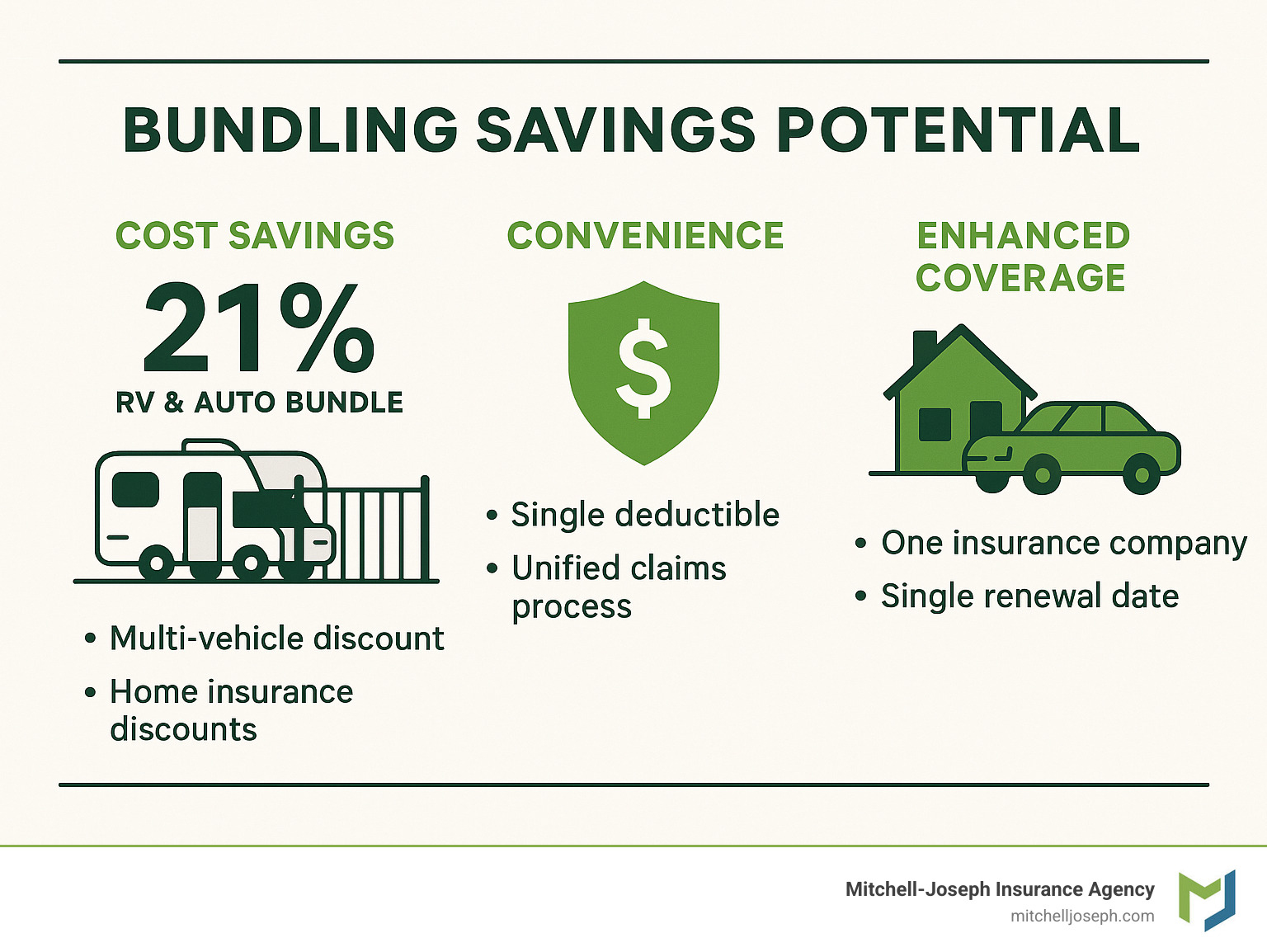
Absolutely! Bundling saves up to 21% on combined premiums when combining RV and auto insurance. Adding homeowners insurance increases savings further.
Beyond cost savings, bundling offers single deductible benefits when multiple vehicles are damaged in the same incident, plus simplified claims processes.
Conclusion
Planning your next RV trip? Recreational vehicle insurance might not be the most exciting part of preparation, but it’s crucial for protecting your investment and peace of mind.
Your RV is more than just a vehicle – it’s your home away from home and likely one of your most significant purchases. Standard auto insurance won’t cut it when things go wrong. Specialized coverage addresses unique risks like campsite liability and emergency lodging that regular car insurance ignores.
Smart discount strategies can save hundreds annually through bundling, storage suspensions, and safety equipment discounts. Most importantly, professional guidance matters when navigating RV insurance complexities.
At Mitchell-Joseph Insurance Agency, we’ve spent over 200 years (combined) helping families throughout the Finger Lakes region – from Rochester and Canandaigua to Naples and Rushville – find exactly the right coverage. We work with 24 different insurance companies to find the perfect balance of comprehensive protection and affordable pricing.
Don’t let inadequate insurance turn your dream trip into a financial nightmare. Whether planning your first camping trip or exploring America’s highways for decades, we’re here to ensure you’re properly protected.
Ready to hit the road with confidence? Visit our More info about Insurance Coverage page or give us a call today. Your next trip is waiting – let’s make sure you’re covered for the journey ahead.