

When Water Flows the Wrong Way: Understanding Sewer Backup Coverage
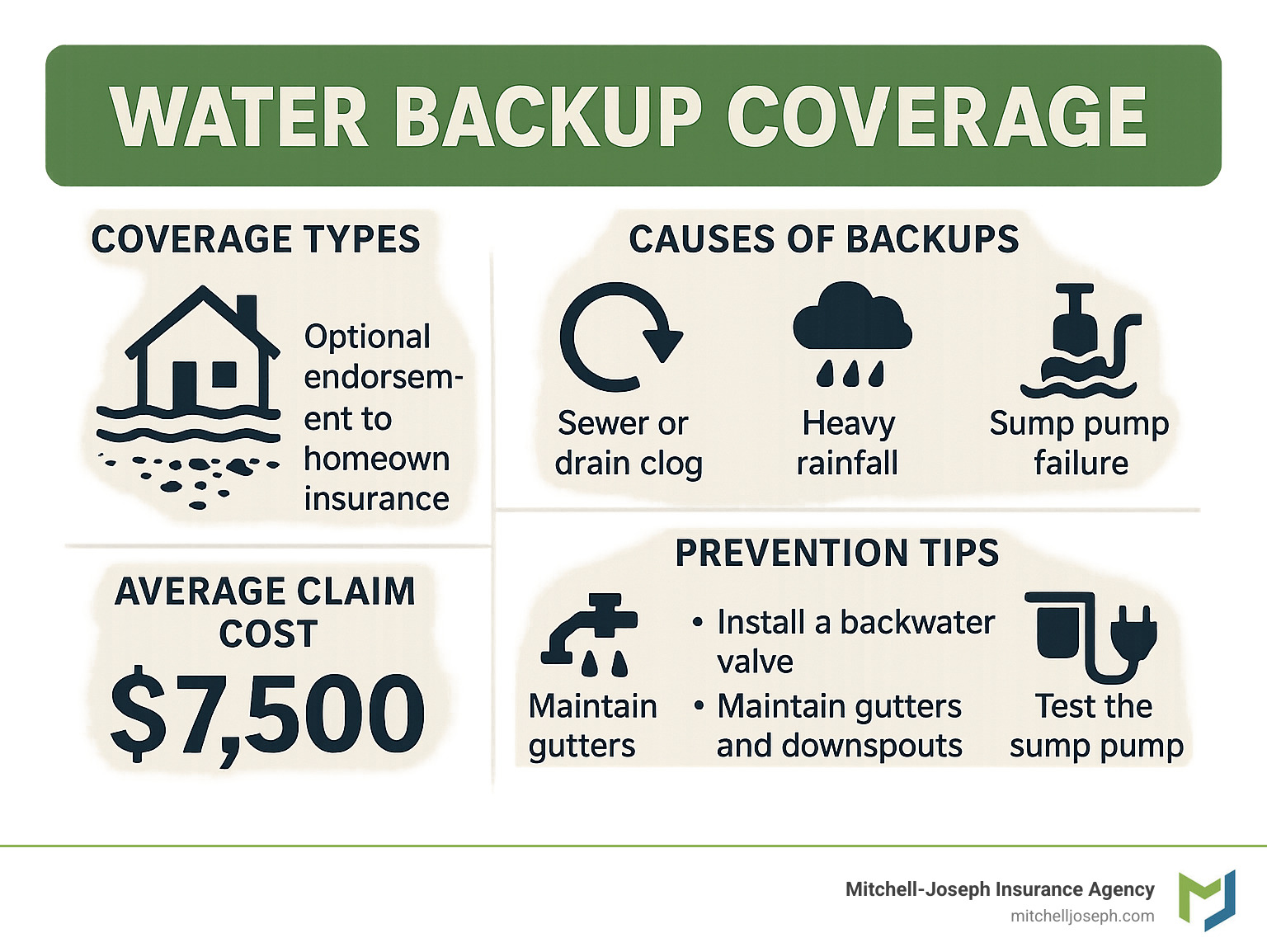
Water sewer backup coverage homeowners is an optional insurance endorsement that protects against damage from water backing up through drains, sewers, or sump pump failures. This coverage fills a critical gap in standard homeowners policies.
| Quick Facts: Water Sewer Backup Coverage |
|---|
| 📋 Coverage Type: Optional endorsement to homeowners policy |
| 💰 Annual Cost: $50-$250 on average |
| 🏠 What’s Covered: Damage from sewer backups, drain overflows, and sump pump failures |
| 🚫 What’s Not Covered: Floods, groundwater seepage, service line repairs, negligence |
| ⚠️ Risk Factor: 1 in 60 homes has a water damage claim each year |
| 💵 Typical Limits: $5,000 to $25,000 (can go higher) |
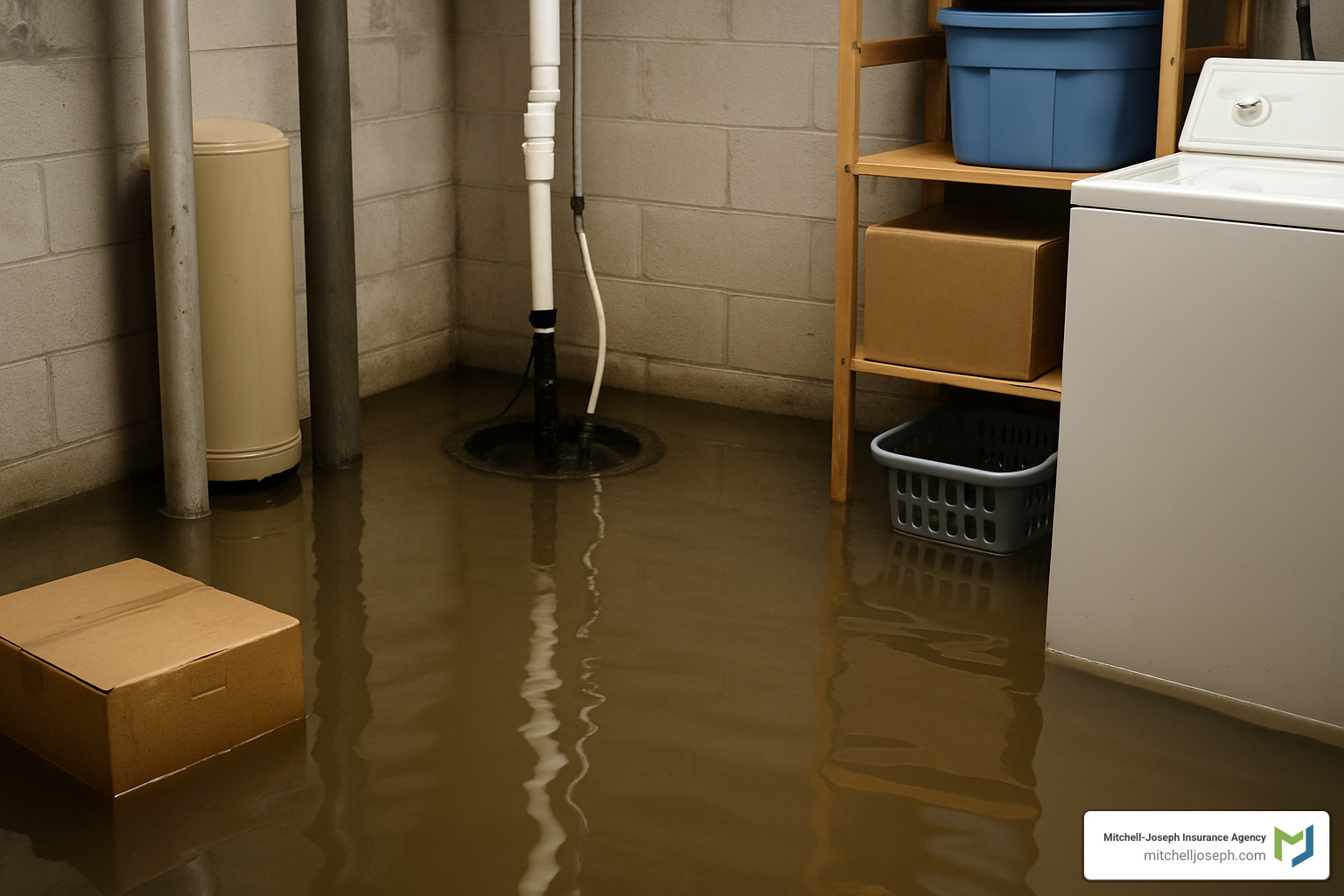
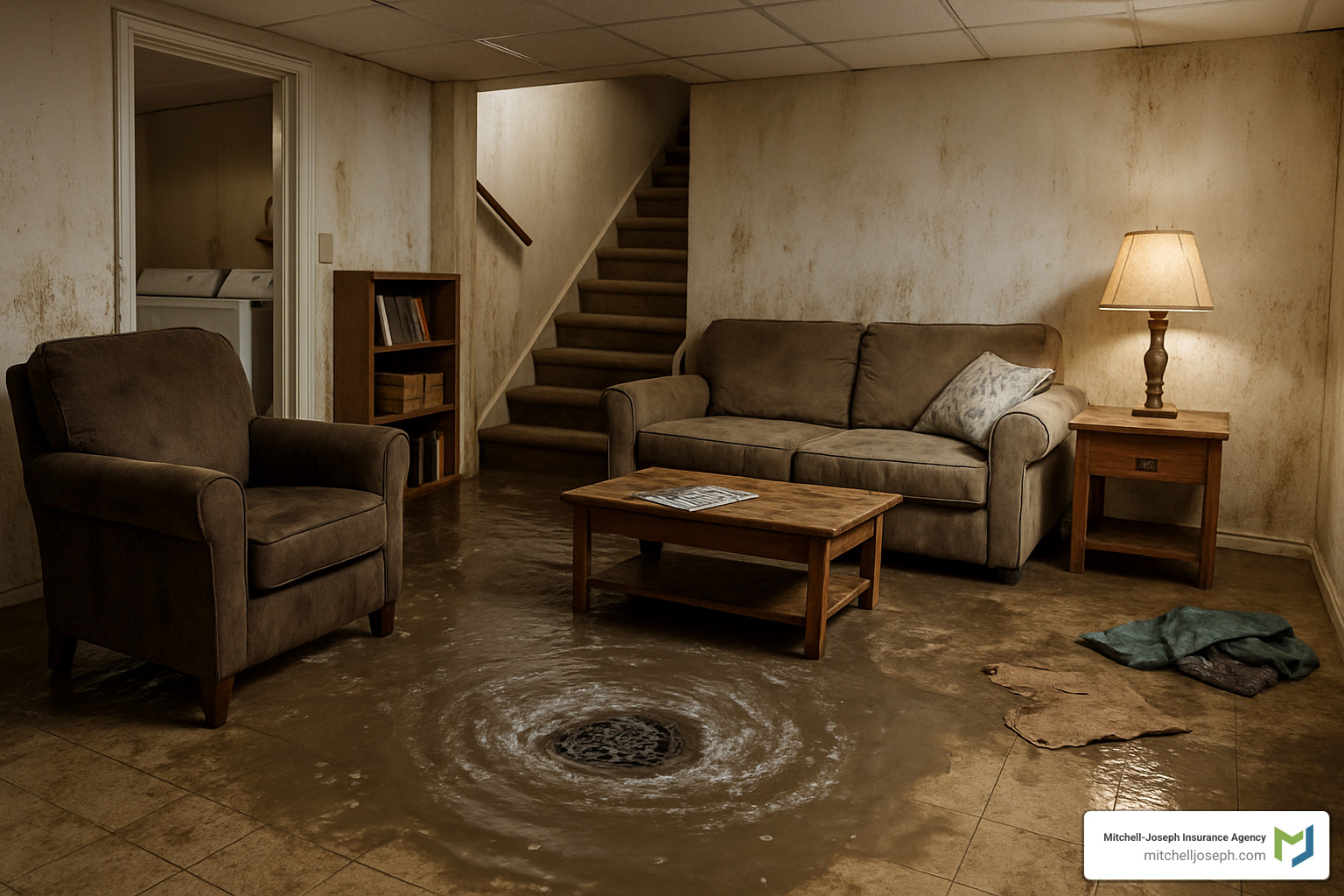
Imagine coming home to find your basement submerged in several inches of water and sewage after a heavy rainstorm. Your standard homeowners policy likely won’t cover this damage—unless you’ve added water and sewer backup coverage.
Water damage from backups ranks as the third most costly type of homeowners insurance claim, yet many homeowners don’t realize their standard policy excludes this common disaster until it’s too late.
“Adding water backup coverage to your home insurance policy doesn’t cost a lot and will provide valuable coverage to help you recover from this type of loss.” — Insurance industry expert
Who needs this coverage? If you have:
– A basement (finished or unfinished)
– A sump pump
– Aging pipes or sewer lines
– Trees near your plumbing lines
– A home in an area with older municipal sewer systems
I’m Jeffrey Joseph, and I’ve helped thousands of homeowners understand water sewer backup coverage homeowners options during my 20+ years at Mitchell-Joseph Insurance Agency. My experience has shown that this affordable endorsement often saves homeowners from catastrophic out-of-pocket expenses.
Basic water sewer backup coverage homeowners vocab:
– does homeowners insurance cover water damage from sewer backup
– does sewer line protection covers clogged tub
– water damage due to rain
Understanding Water and Sewer Backup Insurance
When it comes to protecting your home, some of the most common threats aren’t always covered by standard insurance. That’s where water and sewer backup insurance comes in – though you might hear it called by different names like water backup coverage, sewer backup insurance, or sump discharge and overflow coverage. Whatever the name, this protection is essential for many homeowners in New York and beyond.
What is water sewer backup coverage homeowners?
Water sewer backup coverage homeowners is an optional add-on (endorsement) to your regular homeowners insurance that steps in when water decides to flow the wrong way. It specifically protects you when water or sewage backs up through drains, toilets, or when your sump pump fails or overflows.
When this coverage kicks in, it typically helps with:
- Cleaning up the mess from standing sewage (which nobody wants to handle alone)
- Repairing or replacing water-damaged floors, walls, and personal belongings
- Addressing minor mold issues that directly result from the backup
- Covering hotel stays and meals if your home becomes temporarily unlivable
“I’ve seen many homeowners assume they don’t need this coverage because their basement isn’t finished,” says Kim Bowser, an insurance industry expert. “But then I ask them about what they store down there – holiday decorations, family keepsakes, tools – and suddenly they realize what’s at risk.”
The numbers tell the story: according to the Insurance Information Institute, about 1 in every 60 insured homes files a water damage claim each year. In fact, water and freezing damage ranks as the second most common type of homeowners insurance claim, right behind wind and hail damage.
How does it differ from standard homeowners insurance?
Your typical HO-3 homeowners policy (the most common type) covers certain water mishaps – like when your refrigerator water line suddenly bursts or your washing machine goes haywire and floods the laundry room. But standard policies draw a clear line in the sand (or water) when it comes to:
- Water backing up through sewers or drains
- Water overflowing from a sump pump
- Groundwater seeping through foundation walls
- Flooding from rising surface water
This creates what I call the “soggy gap” in coverage. Here’s a real-world example: If your dishwasher hose breaks and soaks your kitchen floor, your standard policy has you covered. But if heavy rain overwhelms the city sewer system and sends wastewater backing up into your basement through a floor drain? Without water sewer backup coverage homeowners, you’d be paying for that cleanup and repair out of pocket.
It’s also worth noting that water backup coverage typically comes with its own separate deductible, which might differ from your standard policy deductible. At Mitchell-Joseph Insurance Agency, we take the time to walk our Rochester-area clients through these details so there are no unpleasant surprises when you need to file a claim.
For more detailed information about this coverage, you can visit our dedicated page on Sewer and Water Backup Insurance.
Water Sewer Backup Coverage Homeowners: What’s In and What’s Out
When water goes where it shouldn’t, the damage can be devastating. But what exactly does your water sewer backup coverage homeowners endorsement protect? Let’s pull back the curtain on what’s covered—and what isn’t—so you can make smart insurance decisions.
Covered losses in detail
Think of water backup coverage as your financial lifeline when sewage decides to visit your living space. When you add this protection to your policy, it typically covers the messy aftermath:
The sight and smell of sewage in your home is something no one should endure alone. Your coverage will pay for professional cleanup crews to remove the hazardous waste and properly sanitize your living space. Those soggy walls and warped floors? Your policy has you covered for repairs to structural elements, including damaged drywall, flooring, and built-in cabinetry.
That beautiful leather couch now soaking in basement water? Your water sewer backup coverage homeowners endorsement helps replace furniture, electronics, clothing, and other personal belongings damaged in the backup. This becomes especially valuable if you’ve turned your basement into a family room or entertainment space.
I recently helped a family in Canandaigua who experienced a sump pump failure during a thunderstorm power outage. Their finished basement—complete with home theater, exercise equipment, and guest bedroom—was sitting under several inches of water. Their backup coverage saved them over $18,000 in damages after the deductible. Without it, they would have been facing a financial disaster on top of the watery one.
Your coverage also extends to temporary housing if your home becomes uninhabitable. These Additional Living Expenses (ALE) benefits help pay for hotel stays, restaurant meals, and other reasonable costs above your normal living expenses while repairs are being made.
What’s never covered
Even the best coverage has its limitations, and it’s important to understand where your protection ends:
Mother Nature has different categories of water damage, and your water sewer backup coverage homeowners endorsement isn’t designed to handle them all. Surface flooding—water that enters your home from outside at ground level or above—requires separate flood insurance. Similarly, groundwater that seeps through foundation walls without coming through a drain isn’t covered.
While your policy covers damage caused by a failed sump pump, it typically won’t pay to replace the pump itself. Think of it like car insurance covering the damage from an accident but not mechanical repairs to your engine.
The actual repair or replacement of broken sewer lines usually falls outside standard backup coverage. At Mitchell-Joseph Insurance Agency, we often recommend adding service line coverage for more comprehensive protection, especially for our clients in older neighborhoods like Pittsford where aging infrastructure is common.
Insurance companies also draw a line when negligence comes into play. If you’ve ignored obvious warning signs or failed to maintain your plumbing system properly, your claim might be denied. The same goes for recurring problems you’ve chosen not to address—insurance is designed for sudden, unexpected events, not ongoing maintenance issues.
For homeowners throughout Rochester and surrounding areas, we recommend combining water backup coverage with preventative measures like backwater valves and regular plumbing maintenance. After all, the best water damage is the kind that never happens in the first place.
Do You Need It? Risk Factors, Coverage Limits, and Premiums
Do you really need water sewer backup coverage homeowners protection? If you’re like most of our clients in Western New York, the answer is probably yes. At Mitchell-Joseph Insurance Agency, we’ve seen how this modest investment can save homeowners from financial disaster.
Your risk level depends on several key factors. Do you have a basement? Whether it’s your unfinished storage space or a fully decked-out entertainment area, basements sit below grade and are naturally vulnerable to water problems. Living in neighborhoods with older infrastructure like many parts of Canandaigua or Victor? Those aging pipes aren’t getting any younger.
Those beautiful mature trees lining your property? Their roots are silently seeking water sources and can crush or infiltrate sewer lines over time. And if you’re in a municipality with aging sewer systems (which describes many towns in our Western New York service area), you’re at increased risk when heavy rains overwhelm these older systems.
Sump pumps are wonderful devices—until they fail during a power outage exactly when you need them most. And we all know how quickly our Rochester-area weather can turn, with rapid snowmelts and dramatic rainfall that can overwhelm drainage systems in hours.
How much coverage should homeowners carry?
When clients ask me about coverage limits for their water sewer backup coverage homeowners endorsement, I always start by asking them to consider what’s actually at risk.
Take a moment to calculate the real replacement cost of everything in your basement or lower level—not just the big items, but the flooring, drywall, electrical work, furniture, and stored belongings. Many homeowners are shocked when they add it up.
The quality of your home’s finishes matters too. If you’ve invested in custom cabinetry, hardwood floors, or high-end materials, you’ll need higher coverage limits to properly restore these elements after damage.
Water flows downward—a backup on an upper floor can damage multiple levels of your home as gravity does its work. And with construction and repair costs continuing to climb (up nearly 15% in our region over the past two years), it’s wise to include a buffer in your coverage amount.
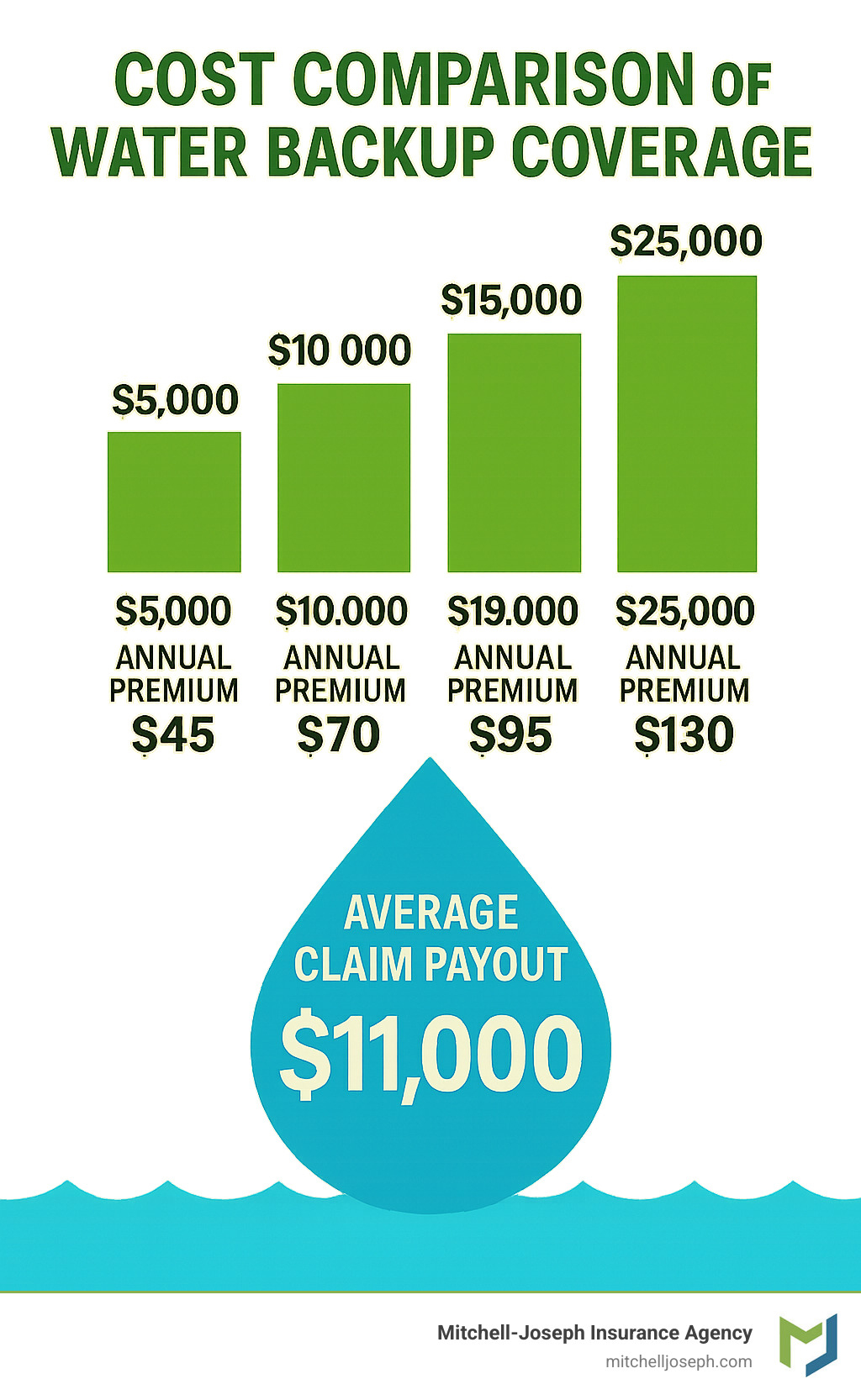
Most of our insurance partners offer water backup coverage starting at $5,000, with options to increase in increments up to $25,000 or even higher for luxury homes. For typical homes in our Rochester service area, we generally recommend at least $10,000-$15,000 in coverage, and $25,000+ for larger homes with finished basements.
Typical price breakdown
Here’s the good news: water sewer backup coverage homeowners protection is surprisingly affordable compared to the protection it provides.
Basic coverage of $5,000 typically costs between $39-$70 annually—about the price of a nice dinner out. Each additional $5,000 in coverage usually adds just $25-$35 to your annual premium. Most of our clients pay between $50-$250 per year for this coverage, depending on their specific situation.
A real-world example: One of our Honeoye Falls homeowners pays approximately $85 annually for $10,000 in water backup coverage. When their sewer backed up last spring, causing nearly $8,700 in damage, they were incredibly relieved they had this protection in place.
Your specific premium will be influenced by several factors: your home’s location and flood zone designation, any previous water damage claims, the age and condition of your plumbing system, your selected coverage limits and deductible, and any overall policy discounts you qualify for.
At Mitchell-Joseph Insurance Agency, we’re proud to work with 24 different insurance companies. This allows us to shop around and find the most competitive rates for our clients throughout the Rochester area, ensuring you get the right coverage at the right price.
Want to learn more about protecting your home? The Insurance Information Institute: Sewer Backup Insurance provides additional details about risk factors and prevention strategies.
Prevention & Response Guide
While having the right water sewer backup coverage homeowners is essential, preventing backups in the first place is even better. Here are proactive measures every homeowner should consider:
-
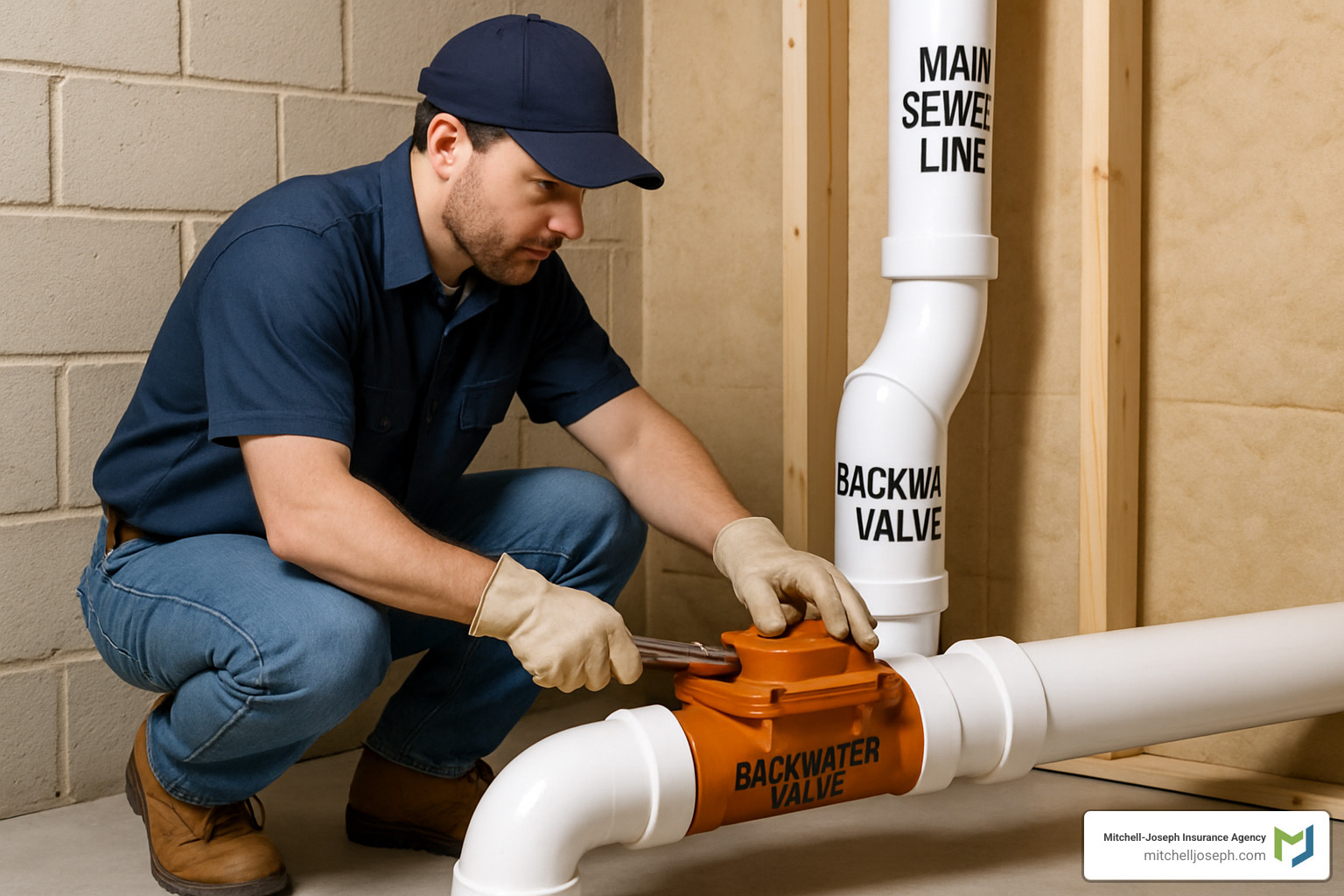
Install a backwater prevention valve: These devices prevent sewage from flowing back into your home when municipal systems are overwhelmed. The typical cost ranges from $500-$1,500 but can save thousands in potential damage.
-
Maintain your sump pump: Test it regularly, especially before rainy seasons. Consider installing a battery backup system for power outages.
-
Practice proper drain care: Never pour grease, oils, or fat down drains. Avoid flushing anything other than toilet paper.
-
Manage tree roots: Have a professional assess trees near your sewer line. Consider root barriers or regular maintenance to prevent intrusion.
-
Schedule regular plumbing inspections: Annual camera inspections of your sewer line can identify potential issues before they become emergencies.
-
Disconnect downspouts from sewer lines: In older homes, downspouts were often connected to sewer lines, which can overwhelm the system during heavy rain.
-
Lift valuable items in basements: Keep electronics, important documents, and irreplaceable items on shelves rather than directly on the floor.
Step-by-step: Filing a water sewer backup claim homeowners
If you do experience a water or sewer backup, follow these steps to ensure a smooth claims process:
-
Safety first: If the backup involves sewage, avoid contact due to health hazards. If water is approaching electrical outlets or panels, turn off power to affected areas.
-
Stop the source if possible: If a sump pump has failed, check for power issues or blockages. For drain backups, avoid using water until the blockage is cleared.
-
Document everything: Take photos and videos of the damage before cleanup begins. Make an inventory of damaged items.
-
Contact Mitchell-Joseph Insurance Agency immediately: The sooner we’re notified, the quicker we can begin the claims process. Our team will guide you through each step.
-
Mitigate further damage: Remove standing water if safe to do so. Move undamaged items to dry areas.
-
Keep all receipts: Document expenses for emergency repairs, cleanup, and temporary accommodations.
-
Meet with the adjuster: Be present when the insurance adjuster inspects the damage to ensure all affected areas are noted.
-
Review the settlement offer: We’ll help you understand what’s covered and negotiate with the insurance company if necessary.
One of our clients in Victor recently experienced a backup after heavy spring rains. By following these steps and having adequate water sewer backup coverage homeowners in place, they were able to restore their finished basement with minimal out-of-pocket expense.
DIY & professional prevention checklist
DIY Maintenance:
- ✓ Test your sump pump quarterly by pouring water into the pit
- ✓ Clean gutters and downspouts seasonally
- ✓ Never flush wipes, diapers, feminine products, or paper towels
- ✓ Dispose of cooking grease in the trash, not down drains
- ✓ Pour a gallon of water down rarely used drains monthly to maintain the trap
- ✓ Consider using enzyme-based drain treatments quarterly
Professional Services:
- ✓ Annual plumbing inspection with camera scope of sewer line
- ✓ Professional sump pump maintenance every 2-3 years
- ✓ Backwater valve inspection annually
- ✓ Root removal service if trees are near sewer lines
- ✓ Professional drain cleaning every 2-3 years
At Mitchell-Joseph Insurance Agency, we often connect our clients with trusted local professionals in the Rochester area who specialize in these preventive services.
Water/Sewer Backup vs. Flood Insurance Comparison
Many homeowners confuse water backup coverage with flood insurance. I can’t tell you how many times I’ve had a client call our office after a heavy rainfall, wondering which policy covers their water damage. The truth is, these two types of coverage serve completely different purposes, and understanding the distinction could save you thousands of dollars.
| Feature | Water/Sewer Backup Coverage | Flood Insurance |
|---|---|---|
| Trigger Event | Water backing up through drains, sewers, or sump pump failure | Rising surface water, mudflow, or groundwater seepage |
| Policy Type | Endorsement to homeowners policy | Separate policy (typically NFIP or private) |
| Buying Source | Your homeowners insurance provider | NFIP (government) or private flood insurers |
| Typical Limit | $5,000-$25,000 | Up to $250,000 for structure, $100,000 for contents |
| Deductible | Often $500-$1,000 | Typically $1,000-$10,000 |
| Premium Range | $50-$250 annually | $400-$3,000+ annually depending on flood zone |
| Waiting Period | Usually none | Typically 30 days for NFIP policies |
| Required? | Optional but recommended | Mandatory in high-risk flood zones with a mortgage |
Think of it this way: water sewer backup coverage homeowners protects you when water comes up from below through your plumbing systems, while flood insurance covers water that enters your home from above or around your property. It’s essentially a question of direction – is the water coming up from your drains or in through your doors and windows?
For many of our clients here in Western New York, especially those living near the Finger Lakes or along the Genesee River, we recommend carrying both types of coverage. Spring thaws and heavy rainstorms can create multiple water threats simultaneously, and having comprehensive protection gives you peace of mind no matter where the water comes from.
I remember helping a family in Pittsford after a particularly nasty storm. The municipal sewer system backed up into their basement while surface water was also trying to find its way in. Because they had both water sewer backup coverage homeowners and flood insurance, they were fully protected from what could have been a financial disaster.
The premium difference is also significant – water backup coverage is quite affordable compared to flood insurance, making it an easy decision to add to your homeowners policy. However, don’t let the higher cost of flood insurance deter you if you’re in a flood-prone area; the potential loss without it could be devastating.
Frequently Asked Questions about Water & Sewer Backup Insurance
Does water sewer backup coverage pay to fix the broken sewer line?
One question I hear almost weekly at our agency is whether water sewer backup coverage homeowners will fix the actual broken sewer line. Unfortunately, the answer is no—this coverage only handles the damage caused by the backup, not the pipe itself.
Think of it this way: if your sewer line backs up and floods your finished basement, your water backup endorsement will pay to clean up the mess, replace damaged flooring, and restore your belongings. But it won’t cover digging up your yard to repair that cracked sewer pipe that caused the problem in the first place.
For that, you need Service Line Coverage—a separate endorsement that’s absolutely worth considering, especially here in Western New York. This coverage protects those underground utility lines connecting your home to the outside world, including water pipes, sewer lines, and even electrical and internet cables.
Given the age of many neighborhoods in Honeoye Falls, Canandaigua, and surrounding communities, we typically recommend bundling both coverages for our clients. I’ve seen how devastating it can be when homeowners find their policy won’t cover that $5,000 excavation bill to replace a collapsed sewer line.
Will my condo or renters policy cover backups automatically?
I wish I could tell you yes, but unfortunately, condo and renters policies follow the same rules as homeowners insurance—they exclude water backups unless you specifically add the endorsement.
For condo owners, there’s often confusion about what’s covered by the association’s master policy versus your personal HO-6 policy. While the association policy might cover damage to walls and floors from a backup, your personal belongings and any improvements you’ve made to your unit (like that custom bathroom remodel) won’t be protected without your own water sewer backup coverage homeowners endorsement.
Renters face an even more precarious situation. Your landlord’s insurance will repair the building structure, but without water backup coverage on your renters policy, you could lose thousands in personal belongings with zero protection. I’ve seen tenants in Rochester apartment complexes face this harsh reality after backup incidents.
The good news? Adding this coverage to a renters policy is surprisingly affordable—often less than $50 annually. That’s a small price for significant peace of mind, especially if you store valuable electronics or furniture in a basement-level apartment.
How does backup coverage interact with Loss of Use?
Here’s where water sewer backup coverage homeowners really shows its value. When a severe backup makes your home temporarily uninhabitable, the Loss of Use coverage (also called Additional Living Expenses) kicks in to maintain your normal standard of living.
I remember helping a family in Pittsford last winter after a major sewer backup damaged their heating system and contaminated their kitchen. They couldn’t safely live in the home for nearly three weeks during repairs. Their backup endorsement not only covered the property damage but also triggered Loss of Use benefits that paid for:
- Their stay at a nearby hotel suite
- The additional cost of restaurant meals (beyond what they’d normally spend on groceries)
- Boarding for their golden retriever at a local kennel
- Laundry service fees since they couldn’t use their washing machine
Without this coverage, they would have been paying these expenses out-of-pocket while simultaneously dealing with cleanup and repairs. There are limits, of course—typically a percentage of your dwelling coverage or a specific time period—but this benefit often makes the difference between an inconvenience and a financial disaster.
At Mitchell-Joseph Insurance Agency, we take the time to explain these nuances so you understand exactly what protection you’re getting. After all, insurance is only valuable if it works when you need it most.
Conclusion
Water and sewer backups can turn your peaceful home into a nightmare in minutes. Yet many homeowners find this coverage gap only when standing in sewage-contaminated water, wondering why their “comprehensive” insurance policy won’t help.
Adding water sewer backup coverage homeowners protection is one of the smartest, most affordable insurance decisions you can make. For about the cost of a nice dinner out each year ($50-$250), you gain protection against damages that commonly exceed $10,000. That’s protection that brings genuine peace of mind.
I’ve seen the relief on clients’ faces when they learn their backup claim is covered—and the devastation when others find they declined this coverage to save a few dollars. The difference is heartbreaking.
At Mitchell-Joseph Insurance Agency, we don’t just sell policies—we build protection plans that truly shield our neighbors throughout Western New York. Our team’s 200+ years of combined experience means we’ve seen virtually every water disaster scenario imaginable, and we know exactly how to prepare you for them.
We’re proud to be locally owned and independent, with access to 24 different insurance companies. This means we can shop around for the best water sewer backup coverage homeowners options specifically custom to your home’s unique risks—whether you’re in a historic Canandaigua property with aging pipes or a new build in Pittsford with modern plumbing.
Don’t wait until you’re facing a wet, smelly disaster to find what your policy excludes. A simple 15-minute conversation with our team could save you thousands of dollars and countless headaches down the road.
Ready to ensure your home has complete protection? Give us a call or stop by our Honeoye Falls office. We’re your neighbors, and we’re here to help you steer these waters with confidence.
For more comprehensive information about protecting your home from water-related disasters, visit our dedicated resource page where we dive deeper into both flood and backup coverage options.

