

Water damage due to rain can be a nightmare for homeowners, causing structural problems in basements, ceilings, and more. Understanding how your insurance covers these situations is crucial for effective protection. Here’s a quick snapshot of how this works:
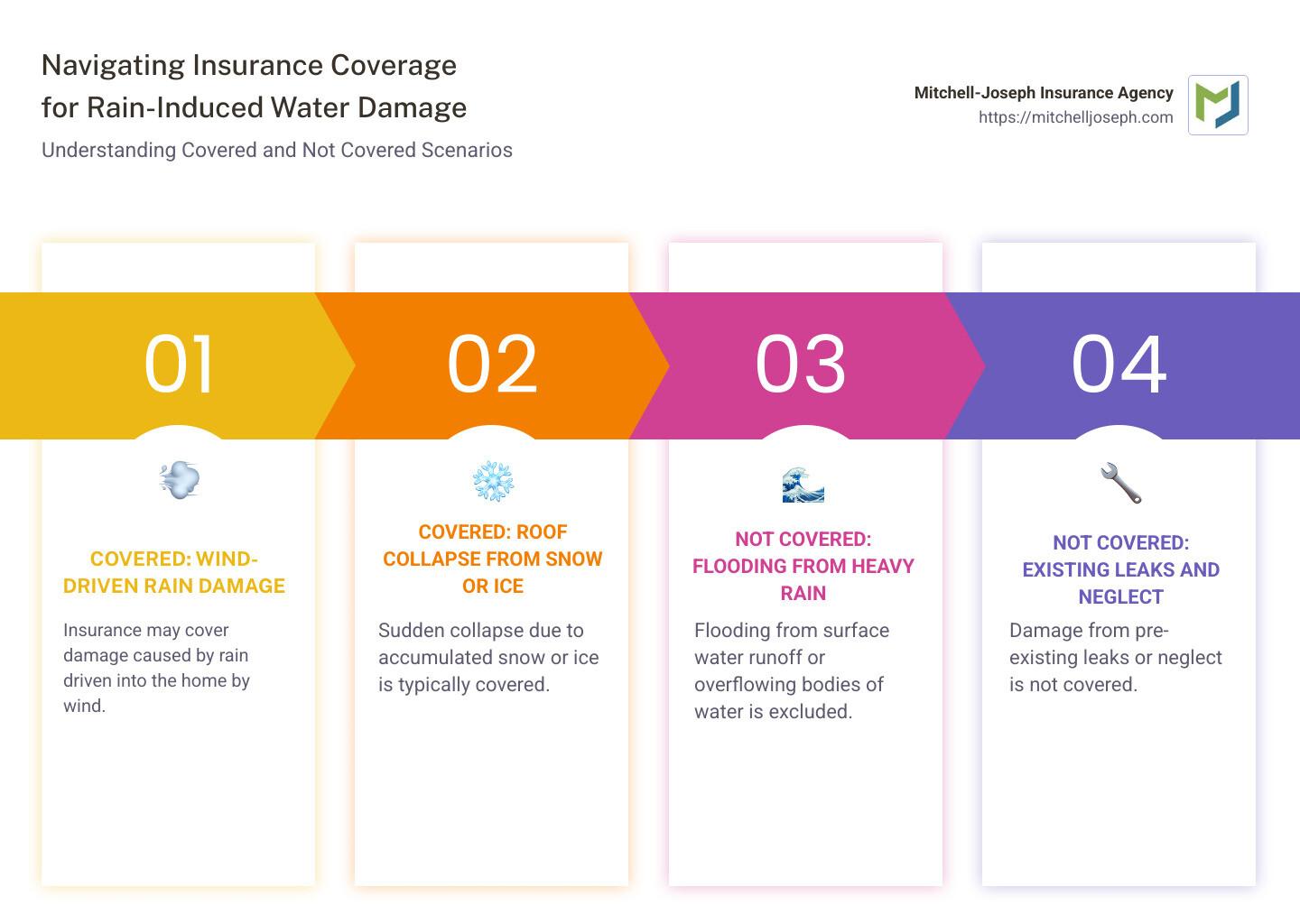
- Covered: Wind-driven rain damage, roof collapse from snow or ice, and sudden mold due to rain.
- Not Covered: Flooding from heavy rain, water through existing leaks, or damage due to neglect.
When it comes to keeping your home and assets safe from rain-induced water damage, navigating the intricacies of insurance coverage can be challenging. Knowing which situations are covered and which aren’t can save you from unexpected costs and troubles.
I’m Jeffrey Joseph from Mitchell-Joseph Insurance Agency, based in upstate New York. With over two decades in the field, I’ve helped countless clients understand the nuances of insurance, including the challenges posed by water damage due to rain.
Understanding Water Damage Due to Rain
When rainwater infiltrates your home, it can lead to severe issues like foundation cracks, basement flooding, and structural instability. Let’s break down these common problems and how they can affect your home.
Foundation Cracks
Foundation cracks occur when rainwater pools around the base of your home. Over time, this water can seep into the soil, causing it to expand and contract. This movement puts pressure on your foundation, leading to cracks. These cracks not only weaken the structural integrity of your home but can also allow more water to enter, exacerbating the problem.
Tip: Proper grading and drainage systems are key to preventing water from collecting near your foundation. Regularly inspect your home’s perimeter to ensure water is being directed away from the structure.
Basement Flooding
Basement flooding is a common issue during heavy rains, especially if your home is located in a low-lying area. Water can enter through cracks in the foundation, windows, or even the walls, leading to significant water damage. This can result in mold growth, damage to personal property, and costly repairs.
Tip: Consider installing a sump pump to help manage water levels in your basement. Regular maintenance of gutters and downspouts can also prevent water from accumulating around your home.
Structural Instability
When water seeps into the structural components of your home, it can lead to structural instability. This includes compromised load-bearing walls, weakened floors, and sagging ceilings. Over time, these issues can become dangerous, potentially leading to partial or complete structural failure.
Tip: Regular inspections and timely repairs are crucial. Address any signs of water damage immediately to prevent further deterioration.
Understanding these potential issues can help you take proactive steps to protect your home from water damage due to rain. By maintaining your property and ensuring adequate drainage, you can minimize the risk and keep your home safe and sound.
How Homeowners Insurance Covers Water Damage from Rain
Homeowners insurance can be a valuable safety net when water damage due to rain strikes. However, understanding what is covered and what isn’t can save you from unexpected expenses.
Sudden and Accidental Damage
Homeowners insurance typically covers sudden and accidental water damage. This means if a storm causes your roof to leak suddenly or a tree crashes through your window allowing rain inside, you’re likely covered. Insurance policies are designed to protect against unforeseen events that cause immediate damage.
Example: If a heavy storm causes a tree to fall on your roof, allowing rain to pour in, your policy should cover the repairs to both the roof and any interior damage.
Water Exclusion Clause
Most standard policies include a water exclusion clause. This clause means that certain types of water damage, such as flooding, are not covered. If water seeps in gradually due to poor maintenance or if your basement floods from rising groundwater, you’ll need separate flood insurance.
Important Note: Flooding is distinct from rain damage. Flood insurance is a separate policy that you can add to protect your home from floodwaters.
Standard Policies
Standard homeowners insurance policies generally cover rain-induced water damage when it’s part of a covered peril. This includes damage from wind-driven rain during a storm or from the weight of ice and snow causing a roof collapse. However, rain penetrating through a pre-existing hole or due to neglect, like not fixing a leaky roof, won’t be covered.
Pro Tip: Regularly review your policy with your insurance agent to understand your coverage limits and exclusions. This ensures you’re prepared and can make informed decisions about additional coverage, like flood insurance.
Understanding the nuances of your insurance policy can help you confidently steer the aftermath of a rain-related incident. By knowing what’s covered and maintaining your home, you can better protect against unexpected costs.
In the next section, we’ll dig into the common causes of rain-related water damage and how you can prevent them.
Common Causes of Rain-Related Water Damage
Rain can be a blessing for your garden, but it can wreak havoc on your home if you’re not careful. Let’s explore some of the most common culprits behind rain-related water damage and how they can impact your property.
Roof Leaks
Your roof is your first line of defense against the elements. Over time, however, it can become vulnerable. Roof leaks often result from worn-out shingles, damaged flashing, or seals that have deteriorated. When these issues occur, rainwater can find its way into your home, leading to water stains, mold growth, and structural damage.
Tip: Regularly inspect your roof for signs of wear and tear. Look for missing shingles, cracked flashing, and other potential entry points for water. Addressing these issues early can prevent costly repairs down the line.
Poor Drainage
Poor drainage around your property can lead to water pooling near your foundation. This can cause foundation cracks, basement flooding, and even structural instability. Water that doesn’t drain properly can also erode soil and create uneven surfaces.
Tip: Ensure your gutters and downspouts are clear of debris, and direct water at least six feet away from your home’s foundation. Consider installing a drainage system if water tends to collect around your property.
Window and Door Seal Failures
Windows and doors are common entry points for rainwater, especially when their seals fail. Over time, weather exposure and temperature changes can cause seals to crack or shrink, allowing water to seep through during heavy rains.
Tip: Inspect the seals around your windows and doors regularly. If you notice any gaps or deterioration, re-caulk or replace the seals to prevent water intrusion.
By understanding these common causes, you can take proactive steps to protect your home from rain-related water damage. Regular maintenance and timely repairs are key to keeping your property safe and dry.
In the next section, we will discuss how to prevent water damage from rain with practical tips and strategies.
Preventing Water Damage from Rain
Water damage due to rain is not just about fixing leaks—it’s about prevention. Here’s how you can protect your home from rain’s potential havoc.
Grading and Drainage
Grading and drainage are crucial to keeping water away from your home. The ground around your home should slope away from the foundation to prevent water from pooling. Poor grading can lead to foundation cracks and basement flooding.
Tip: Check your yard’s slope. If water tends to pool near your foundation, re-grade the area or install a French drain to direct water away.
Clogged Gutters
Clogged gutters are a common issue that can cause water to overflow and damage your home’s roof, walls, and foundation. Leaves, twigs, and debris can block gutters, preventing them from directing rainwater away.
Tip: Clean your gutters at least twice a year, especially in the fall and spring. Consider installing gutter guards to reduce debris build-up.

Sump Pumps
A sump pump is your basement’s best friend when it comes to preventing water damage. It helps remove water that collects in your basement or crawl space, especially during heavy rains.
Tip: Test your sump pump regularly to ensure it’s working correctly. Consider a backup battery system in case of power outages during storms.
By implementing these strategies, you can significantly reduce the risk of water damage due to rain. Prevention is key, and a little maintenance can save you from costly repairs.
In the next section, we will address frequently asked questions about water damage due to rain and how insurance can help.
Frequently Asked Questions about Water Damage Due to Rain
Does homeowner insurance cover water damage from rain?
Homeowners insurance typically covers water damage due to rain if the damage is sudden and accidental. For instance, if a storm causes a tree to fall on your roof, allowing rain to pour in, your policy will likely cover the repairs. However, there is a flood exclusion in most standard policies. This means that if heavy rain causes a flood, the resulting water damage would not be covered unless you have separate flood insurance.
It’s important to understand your policy’s water exclusion clause, which specifies what types of water damage are not covered. Regular maintenance is crucial because insurance won’t cover damage caused by neglect, like water entering through a leaky roof that hasn’t been fixed.
What damage is caused by rainwater?
Rainwater can cause a variety of issues for homeowners. One common problem is foundation cracks. When rainwater pools around your home, it can seep into the ground, causing the soil to expand and contract. This movement can lead to cracks in your foundation, which may compromise your home’s structural integrity.
Another issue is soil expansion. Certain types of soil, like clay, expand when wet and shrink when dry. This can put pressure on your foundation and lead to cracks or even basement flooding. It’s essential to maintain proper grading and drainage to avoid these problems.
Can you get water damage from rain?
Yes, rain can cause significant water damage in several ways. Flooding is a major concern, especially if your home is in a low-lying area or near a body of water. Even without a flood, rainwater can lead to overflowing toilets if the sewage system backs up due to heavy rain.
To protect your home, consider installing a sump pump and regularly maintaining your drainage systems. Understanding the risks and taking preventive measures can help minimize the impact of water damage due to rain.
In the next section, we’ll explore more about how Mitchell-Joseph Insurance Agency can provide personalized service and custom coverage to protect your home.
Conclusion
At Mitchell-Joseph Insurance Agency, we understand that every home is unique, and so are its insurance needs. With over 200 years of combined experience, our team is dedicated to providing personalized service that ensures you have the right coverage for your specific situation.
We know that water damage due to rain can be a major concern for homeowners. That’s why we offer custom coverage options custom to protect you from unexpected events. Whether it’s a sudden storm that causes roof damage or a heavy downpour leading to basement flooding, our goal is to help you steer the complexities of homeowners insurance with ease.
Our independent agency works with 24 different insurance companies, allowing us to compare and find competitive quotes custom to your needs. We take pride in offering comprehensive solutions that go beyond standard policies, including options for flood and water backup insurance.
If you’re looking for peace of mind and a team that truly cares about protecting your home, look no further than Mitchell-Joseph Insurance Agency.
Learn more about our flood and water backup insurance options and how we can help safeguard your property against water damage due to rain.
By choosing us, you’re not just getting insurance; you’re gaining a partner who is committed to your safety and well-being.

