Why Your Video Gear Needs Protection
Video equipment insurance is specialized coverage that protects your cameras, lenses, lighting, and other production gear from theft, damage, and loss. Here’s a quick overview:
- What it covers: Cameras, lenses, drones, lighting, audio equipment, computers, and accessories.
- Key protections: Theft, vandalism, fire, water damage, accidental damage, and loss during transit.
- Typical cost: $35-$45 per month for annual policies; event policies start at $59 for 1-3 days.
- Where it protects you: Worldwide, including in transit and at off-site locations.
Professional video equipment can cost tens of thousands of dollars. A single incident—a dropped camera, stolen gear, or transit damage—could be financially devastating. Standard homeowners or renters insurance typically excludes equipment used for business, leaving many videographers dangerously underinsured.
The financial stakes are high. Most videographers carry equipment worth $10,000 to $50,000 or more. Common claims for dropped equipment can range from $200 to $2,700, while a major theft could halt your operations entirely.
I’m Jeffrey Joseph of Mitchell-Joseph Insurance Agency. For over two decades, I’ve helped videographers in the Finger Lakes region secure the right video equipment insurance. I’ve seen how a proper policy provides peace of mind and financial security when the unexpected happens.
Understanding Your Video Equipment Insurance Options
This specialized coverage, often called inland marine insurance, is designed to protect your valuable gear wherever your work takes you. Unlike other business policies, it focuses specifically on the tools of your trade, providing a crucial safety net for your investment.
What Does a Policy Actually Cover?
Video equipment insurance is designed for professionals who rely on expensive, portable gear. It safeguards your entire toolkit, ensuring you can continue to work and earn a living.

What types of equipment are typically covered?
A comprehensive policy covers a broad range of gear, including:
- Cameras: Digital video, DSLR, mirrorless, and action cameras.
- Lenses: All types, from wide-angle to telephoto, plus filters.
- Audio Gear: Microphones, recorders, boom poles, and mixers.
- Lighting Equipment: Light panels, strobes, stands, and modifiers.
- Support Devices: Tripods, gimbals, sliders, and camera rigs.
- Drones and Aerial Systems: The drone itself is often covered, though liability may require a separate policy.
- Computers and Software: Laptops, hard drives, and editing software.
- Accessories: Batteries, memory cards, cables, and camera bags.
The goal is to ensure you can repair or replace any compromised part of your professional setup without significant financial strain, as the investment in film equipment can be substantial, a point highlighted by the James River Film Journal 1.
What specific risks does it protect against?
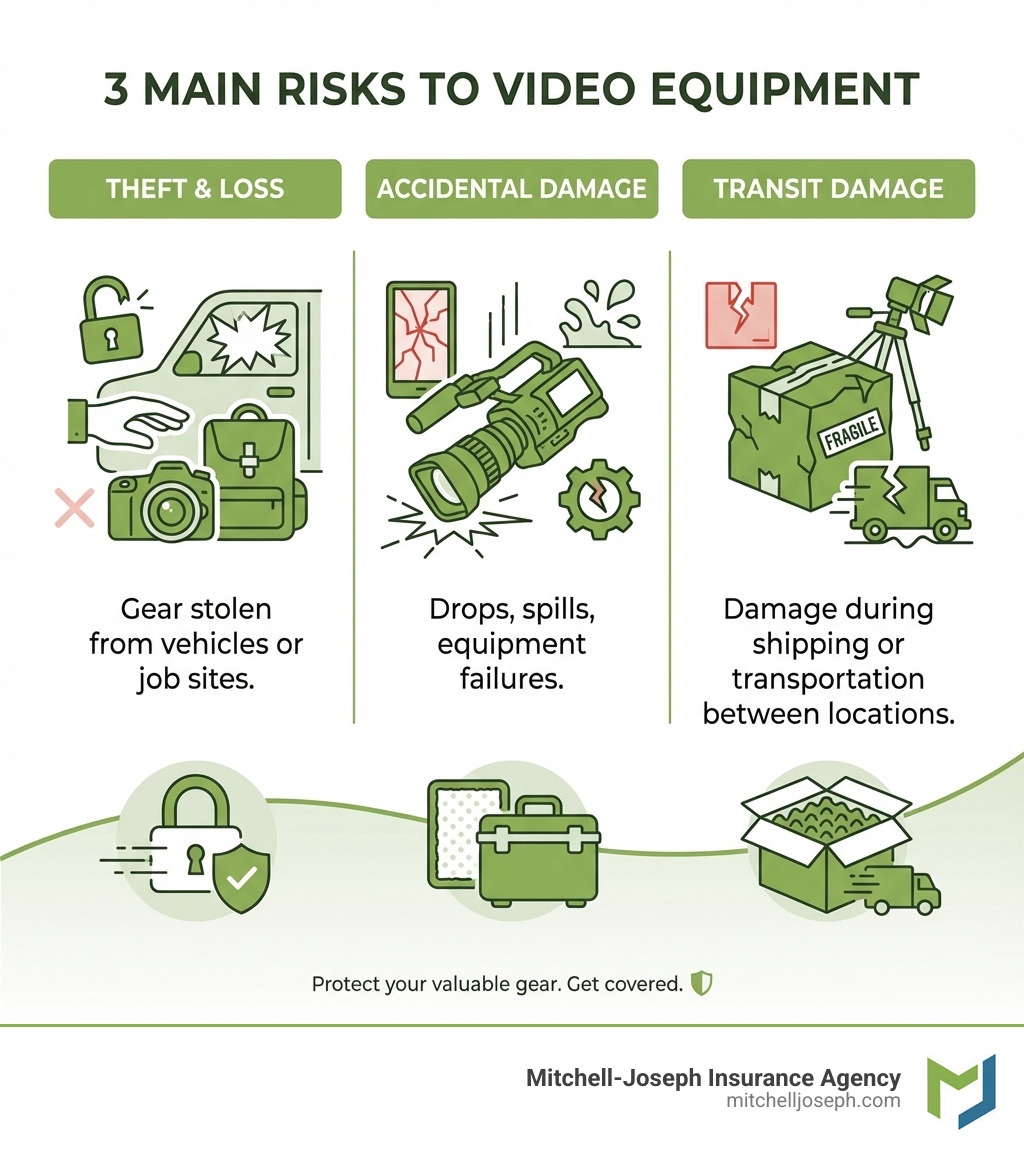
Unlike standard property insurance, video equipment insurance follows your gear wherever it goes, protecting against:
- Theft
- Vandalism
- Fire and smoke damage
- Water damage
- Accidental damage (e.g., drops and spills)
- Damage or loss during transit
Does it cover gear when transported or used off-site?
Absolutely. This is a primary benefit of this insurance. Policies are designed to protect your gear while in transit or used at any off-site location, from a local wedding venue to an international shoot. Many policies offer worldwide coverage, so you can work confidently wherever your projects take you.
Scheduled vs. Unscheduled Coverage: What’s the Difference?
When setting up your policy, you’ll choose between “scheduled” and “unscheduled” coverage to ensure all your gear is properly protected.
Scheduled Coverage
This is for your most valuable, individual pieces of equipment. Each item is listed on your policy with its make, model, serial number, and agreed-upon replacement cost. This is ideal for high-end cameras, specialized lenses, or professional drones (typically items over $2,000). It ensures you receive the full replacement value for your biggest investments.
Unscheduled Coverage (Blanket Coverage)
This covers the collective value of your less expensive gear under a single, aggregate limit. Instead of listing every cable, battery, and memory card, you get a lump sum of protection for these smaller items. While not individually expensive, their collective value can be significant.
In short:
- Schedule your high-value “star” items like cameras and expensive lenses.
- Use unscheduled (blanket) coverage for the essential “extras” like cables, batteries, and filters.
We can help you inventory your gear to determine the right mix of scheduled and unscheduled coverage for your kit.
How Much Does Video Equipment Insurance Cost?
The cost of video equipment insurance depends on several factors, but we can provide typical figures to help you budget.
What factors influence the cost?
Your premium is determined by:
- Total Value of Your Equipment: The higher the replacement cost of your gear, the higher the premium.
- Coverage Limits and Deductibles: Higher limits increase cost, while higher deductibles can lower it.
- Type of Work You Do: Working in high-risk environments or frequent travel can influence rates.
- Claims History: A history of frequent claims can impact future premiums.
- Location: Your primary business location can be a factor.
What is the typical cost?
Based on industry averages, video equipment insurance (inland marine coverage) is quite affordable:
- Median Monthly Cost: Most videographers pay a median of $43 per month.
- Annual Premium: This is around $420 to $520 annually.
- Event-Specific Coverage: For short projects (1-3 days), policies can start at just $59.
- Bundling for Savings: Bundling equipment insurance with general liability can lead to significant savings.
Considering a high-end camera package can cost $10,000 or more to replace, the investment in insurance is a small price for essential peace of mind.
Common Exclusions and Other Essential Business Coverages
While powerful, video equipment insurance has limitations. Understanding these and other essential coverages is key to a complete protection strategy.
What are common exclusions?
Most policies exclude:
- Normal Wear and Tear: Insurance doesn’t cover routine maintenance or aging gear.
- Intentional Damage: Deliberate damage to your equipment is not covered.
- Lack of Due Diligence: Claims may be denied if gear is stolen from an unsecured location (e.g., an open uped car).
- Rented or Loaned Equipment: Coverage may not extend to gear you loan to others unless specified in the policy.
- Drone Use in Flight: Damage or liability from a drone while flying often requires a separate drone or aviation policy.
Equipment Insurance vs. Other Business Coverages
Videographers need a comprehensive insurance plan. Here’s how different policies protect you:
| Insurance Type | What it Protects | What it Covers (Examples) | Typical Cost (Median Monthly) |
|---|---|---|---|
| Video Equipment Insurance | Your physical gear (cameras, lenses, etc.) | Theft, accidental damage, fire, water damage to your equipment. | $35 – $45 |
| General Liability Insurance | Third parties from bodily injury or property damage | A client trips over your tripod and gets injured; you damage a venue’s property. | $23 |
| Professional Liability Insurance | Your business from claims of professional error | A client sues over corrupted footage or missed shots, causing them financial loss. | $53 |
-
General Liability Insurance (GLI): Often called “slip-and-fall” insurance, it covers claims of bodily injury or property damage to others. The risk of falls is significant, as noted by the National Fall Safety Institute 3.
-
Professional Liability Insurance (PLI): Also known as Errors & Omissions (E&O), this protects you from claims of negligence in your services, such as delivering a corrupted file or failing to meet a deadline.
Together, these policies form a robust shield for your videography business: one for your gear, one for accidents, and one for your professional service.
How to Get the Right Coverage for Your Videography Business
Securing the right policy is a straightforward process. By taking a few key steps, you can find coverage that fits your specific needs and budget, allowing you to focus on creating.
Steps to Purchasing Video Equipment Insurance
Getting the right video equipment insurance is simple. Here’s how we help videographers in the Finger Lakes region secure their shots:
- Conduct a Gear Inventory: List all your equipment (cameras, lenses, drones, etc.) with its make, model, serial number, and current replacement cost. This is crucial for determining your coverage needs.
- Assess Your Risk Profile: We’ll discuss where and how you work—on-location, in-studio, or traveling—and if you use specialty gear like drones.
- Choose Deductibles and Limits: Based on your inventory and risk, we’ll help you select a deductible you’re comfortable with and set coverage limits that adequately protect your investment.
- Select a Policy Type: We’ll help you decide between an annual policy for full-time work or a short-term event policy for occasional projects.
- Obtain a Certificate of Insurance (COI): We can quickly provide a COI as proof of insurance for venues and clients, ensuring you’re always ready for your next gig.
Following these steps ensures your policy is customized to your videography business.
Finding a Trusted Insurance Partner
Working with an expert who understands the unique risks of videography is key. As an independent agent, Mitchell-Joseph Insurance Agency can help you build a policy that truly protects your livelihood.
We are a family-owned business deeply rooted in the communities of Honeoye Falls, Pittsford, Naples, Rushville, Avon, Bloomfield, Bristol, Canadice, Canandaigua, Cohocton, Fishers, Gorham, Honeoye, Ionia, Lima, Mendon, Middlesex, Potter, Rochester, Rush, South Bristol, Stanley, Victor, Wayland, and West Bloomfield, NY. With over 200 years of combined experience, our team compares quotes from 24 insurance companies to find the best custom coverage for your needs.
We understand the local landscape and the challenges faced by creative professionals in our region. When you partner with us, you gain a trusted advisor dedicated to protecting your passion.
Don’t let the unexpected blur your focus. Let us help you keep your shots clear and your business secure.