

Your Guide to RV Insurance Essentials
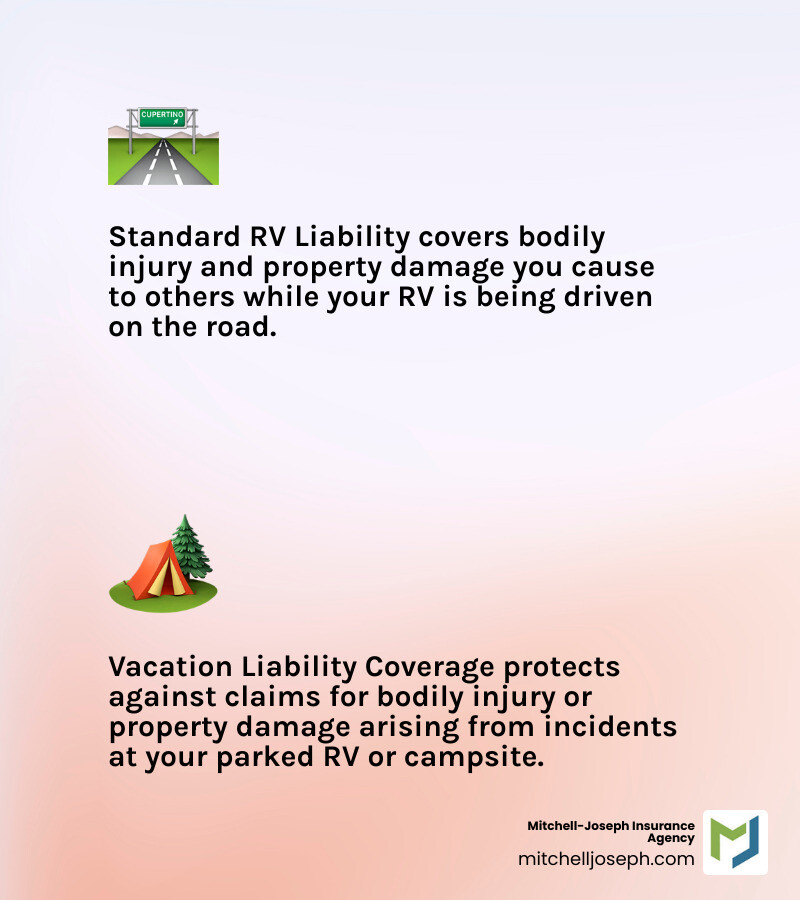
Vacation liability coverage is an optional RV insurance add-on that protects you from liability claims when your recreational vehicle is parked at a campsite or used as a temporary residence. Unlike standard RV liability that only covers accidents while driving, vacation liability kicks in once you’ve parked and set up camp.
Key Features of Vacation Liability Coverage:
- Coverage Area: Protects you at campsites, RV parks, and vacation destinations
- What’s Covered: Bodily injury and property damage you accidentally cause to others
- When It Applies: Only when your RV is parked and being used recreationally
- Cost: Typically around $20 per month as an optional add-on
- Who Needs It: Frequent campers, families, pet owners, and large motorhome owners
Picture this: You’re enjoying a peaceful evening at your favorite campground when a friend slips on your RV steps and breaks their arm. Or your campfire sparks and damages a neighbor’s awning. Without vacation liability coverage, you could be facing thousands in medical bills and property damage costs out of your own pocket.
Most RV owners don’t realize that their standard auto insurance and even basic RV liability coverage stops protecting them once they park. That’s where vacation liability coverage becomes essential – it fills the gap between your driving coverage and the unique risks of camping life.
I’m Jeffrey Joseph, and I’ve been helping Finger Lakes region families steer RV insurance complexities since 1999 at Mitchell-Joseph Insurance Agency. Through decades of experience, I’ve seen how vacation liability coverage can save families from devastating financial losses during what should be their most relaxing moments.
Understanding Your Core RV Insurance Coverages
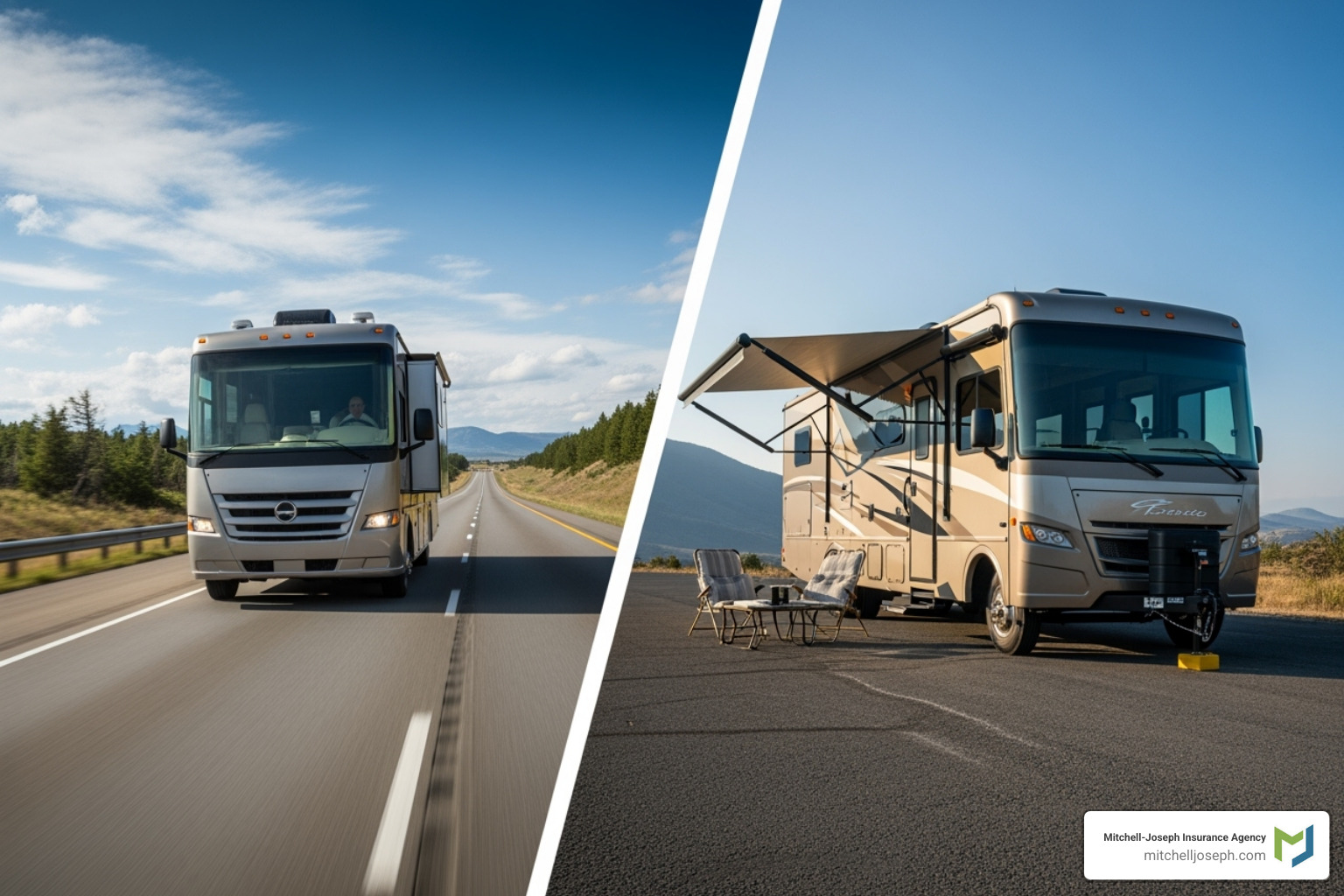
Think of your RV as living two different lives. During the day, it’s your trusty road companion, taking you from point A to point B. But once you park and set up camp, it transforms into your temporary home. Each of these “lives” needs its own type of protection – and that’s where understanding your core coverages becomes essential.
Standard RV Liability: What’s Legally Required?
When your RV hits the road, it’s just like any other vehicle in the eyes of the law. If you’re driving a motorhome – whether it’s a massive Class A coach or a compact Class B van – you’re required to carry liability insurance in nearly every state. For example, you can review the minimum requirements for New York to get an idea of what’s needed. It’s not optional; it’s the law.
Standard RV liability protects other people when you’re driving and something goes wrong. Let’s say you’re navigating a tight mountain curve and accidentally drift into oncoming traffic, causing an accident. This is where your liability coverage steps up to bat.
The coverage works in two main ways. Bodily injury liability takes care of medical bills, lost wages, and pain and suffering for anyone you accidentally hurt. Property damage liability handles the cost of fixing or replacing things you damage – like another person’s car, a guardrail, or even someone’s mailbox.
You’ll often see coverage limits written as numbers like 25/50/25. That means $25,000 per person for injuries, $50,000 total per accident for injuries, and $25,000 for property damage. While these state minimums might seem adequate, they can disappear quickly in a serious accident.
Here’s something important to remember: if you’re towing a travel trailer or fifth-wheel, the liability coverage usually comes from your tow vehicle’s insurance while you’re driving. But once you unhitch and park? That’s a different story entirely.
For more details on how this connects to your overall vehicle protection, check out More info about Auto Insurance.
What is Vacation Liability Coverage?
Now comes the fun part – when you’ve found that perfect campsite and it’s time to relax. This is where vacation liability coverage becomes your best friend. Think of it as the insurance that kicks in when your RV stops being a vehicle and starts being your home away from home.
Vacation liability coverage is an optional add-on that protects you from accidents that happen while your RV is parked. It’s designed for those “oops” moments that can happen around camp – and trust me, they happen more often than you’d think.
Picture these scenarios: A guest slips on your RV steps while coming over for morning coffee and twists their ankle. Your campfire damages a neighbor’s tent when an unexpected wind gust sends sparks flying. Your dog bites a visitor who got a little too close while Rover was protecting his territory.
Each of these situations could cost you thousands of dollars without proper coverage. Your standard auto insurance won’t help here because you’re not driving. Your homeowner’s policy back home? It doesn’t follow you to the campground.
Vacation liability coverage fills this gap perfectly. It covers both bodily injury and property damage that you accidentally cause to others while your RV is parked and you’re enjoying the camping life.
The best part? This coverage isn’t just for motorhomes. Travel trailer and pop-up camper owners can add it to their policies too. After all, accidents don’t discriminate based on what type of RV you’re camping in.
For a comprehensive look at how this fits into your RV protection plan, explore More info about Recreational Vehicle Insurance.
Key Differences: Standard vs. Vacation Liability Coverage
Here’s where many RV owners get confused – and I don’t blame them. The difference between standard and vacation liability coverage isn’t always crystal clear until you need it.
The easiest way to think about it is this: standard liability protects you while your wheels are turning, and vacation liability coverage protects you while your wheels are stopped.
| Feature | Standard RV Liability | Vacation Liability Coverage |
|---|---|---|
| When It Works | RV is being driven | RV is parked at campsite |
| What It Covers | Driving accidents on roads | Accidents around your parked RV |
| Legal Status | Required by law for motorhomes | Optional add-on |
| Where It Applies | Public roads and highways | Campsites and RV parks |
| Cost | Part of basic policy | Additional premium (typically $15-30/month) |
One important distinction to understand is the difference between vacation liability coverage and full-timer coverage. If you live in your RV more than 150 nights per year, you’ll likely need full-timer coverage instead. Full-timer coverage is much broader and includes many of the protections that vacation liability coverage offers, plus much more.
Vacation liability coverage also has some common exclusions worth knowing about. It won’t cover damage to your own RV or belongings – that’s what comprehensive and collision coverage are for. It also won’t cover intentional acts or anything that happens while you’re actually driving.
The bottom line? If you’re a recreational RV user who loves weekend getaways and summer camping trips, vacation liability coverage is probably exactly what you need to fill the protection gap between driving and camping.
Expanding Your Policy for Total Peace of Mind

Picture this: you’re settled into your favorite campsite, coffee in hand, watching the sunrise paint the sky. Your biggest worry should be whether to have pancakes or eggs for breakfast – not whether you’re financially protected if something goes wrong. That’s exactly what expanding your policy with vacation liability coverage gives you: the freedom to truly relax and enjoy your RV trips.
Who Needs Specialized Vacation Liability Coverage?
Let’s be honest – accidents don’t check your calendar before they happen. But some RV owners face higher risks than others, making vacation liability coverage especially valuable.
If you’re a frequent camper who spends most weekends at campgrounds, you’re naturally exposed to more situations where something could go wrong. The math is simple: more camping trips mean more opportunities for unexpected incidents.
Families with children know that kids are bundles of energy and curiosity. They love exploring every inch of the campsite, climbing RV steps, and making friends with neighboring campers. While their enthusiasm is wonderful, it also increases the chance of slips, falls, or accidental property damage around your site.
Pet owners understand that even the sweetest dog can have an off day. Maybe your usually calm retriever gets startled by fireworks and nips someone, or your cat knocks over a neighbor’s expensive camping gear. These incidents can lead to costly claims.
Owners of large motorhomes and travel trailers face unique challenges. Your Class A motorhome with multiple slide-outs creates more space for guests – and more opportunities for someone to trip on steps or bump into equipment. The bigger your rig, the more potential there is for accidents.
Here’s something many travel trailer owners don’t realize: your auto insurance covers your trailer while you’re driving, but it stops protecting you the moment you unhitch at the campsite. To get vacation liability coverage for your travel trailer when it’s parked, you need a separate RV insurance policy with this add-on.
Living here in the beautiful Finger Lakes region of New York, where camping is practically a way of life, I see how busy our local campgrounds get. More people around your site means more chances for something unexpected to happen.
Adding Coverage and Managing Costs
The good news? Adding vacation liability coverage to your policy is usually straightforward. Most insurers offer it as a simple endorsement or add-on. Just give us a call, and we’ll review your current policy and help you add this protection without any hassle.
The cost depends on several factors. Coverage limits make the biggest difference – choosing $500,000 in protection costs more than the minimum $10,000, but it also provides much better asset protection. Your type and size of RV matters too, as does your driving record and claims history. Even your location can influence rates, since some areas have higher claim frequencies.
Most of our clients find that vacation liability coverage costs around $20 per month or more – a small investment when you consider that a single lawsuit could cost tens of thousands of dollars.
One of my favorite ways to help clients save money is through bundling discounts. We work with 24 different insurance companies, so we can often find significant savings when you combine your RV insurance with your home or auto policies. It’s like getting a bulk discount at the grocery store, but for insurance.
For more details on customizing your coverage, check out More info about RV Insurance Coverage Options.
The Benefits Beyond the Basics
Vacation liability coverage does more than just pay claims – it protects your entire financial future. Without this coverage, a serious injury at your campsite could lead to a lawsuit targeting your personal assets: your home, savings, even future earnings. This coverage creates a protective barrier around everything you’ve worked hard to build.
Even if you’re not found responsible for an incident, legal defense costs can drain your bank account. Lawyers are expensive, and defending against a lawsuit – even a frivolous one – can cost thousands. This coverage handles those legal bills for you, up to your policy limits.
The financial safety net this coverage provides means you won’t face unexpected medical bills or property repair costs out of your own pocket. Instead of worrying about how you’ll pay for someone else’s emergency room visit, you can focus on what matters most.
But perhaps the greatest benefit is simply being able to enjoy your trips worry-free. When you know you’re protected, you can truly unwind. You can invite the neighbors over for dinner without worrying about someone tripping on your steps. You can build that campfire without stressing about sparks. You can let your dog play with other campers’ kids without constant anxiety.
At Mitchell-Joseph Insurance Agency, we’ve been helping families across Honeoye Falls, Pittsford, Naples, Rushville, Avon, Bloomfield, Bristol, Canadice, Canandaigua, Cohocton, Fishers, Gorham, Honeoye, Ionia, Lima, Mendon, Middlesex, Potter, Rochester, Rush, South Bristol, Stanley, Victor, Wayland, and West Bloomfield enjoy worry-free RV trips for decades. Our team’s 200+ years of combined experience means we understand exactly what RV owners in our region need.
If you’re considering a smaller towable option, we can also help you Get protected with pop up camper insurance that includes these essential liability protections.


