

Your Essential Guide to Protecting Your Investment
Rental owner insurance is a specialized property insurance policy that protects landlords from financial losses at their rental properties, covering the building structure, liability claims, and lost rental income when standard homeowner’s insurance falls short.
Key Coverage Areas:
- Property Protection: Building structure, other structures, and landlord-owned contents
- Liability Coverage: Legal fees and medical costs if someone is injured on your property
- Lost Rental Income: Compensation when your property becomes uninhabitable due to covered damage
- Add-On Options: Flood insurance, guaranteed income protection, and vandalism coverage
Making the leap from homeowner to landlord brings exciting income potential, but it also exposes you to risks your current insurance doesn’t cover. As one property management expert puts it: “Owning additional property and renting it out is a great way to make extra income. It also comes with risk—damage, liability claims, or lost rental income can quickly eat into your profits.”
Standard homeowner’s insurance won’t protect your rental property because it’s designed for owner-occupied homes. The moment you collect rent, you need specialized coverage for the unique risks of being a landlord. Without it, a single fire or liability lawsuit could wipe out years of rental income. While landlord insurance typically costs 25% more than a homeowner’s policy, it’s essential protection for your investment.
I’m Jeffrey Joseph, owner of Mitchell-Joseph Insurance Agency, and I’ve been helping property owners in the Finger Lakes region with rental owner insurance since 1999. I’ve seen how the right coverage protects landlords from devastating financial losses while giving them peace of mind.
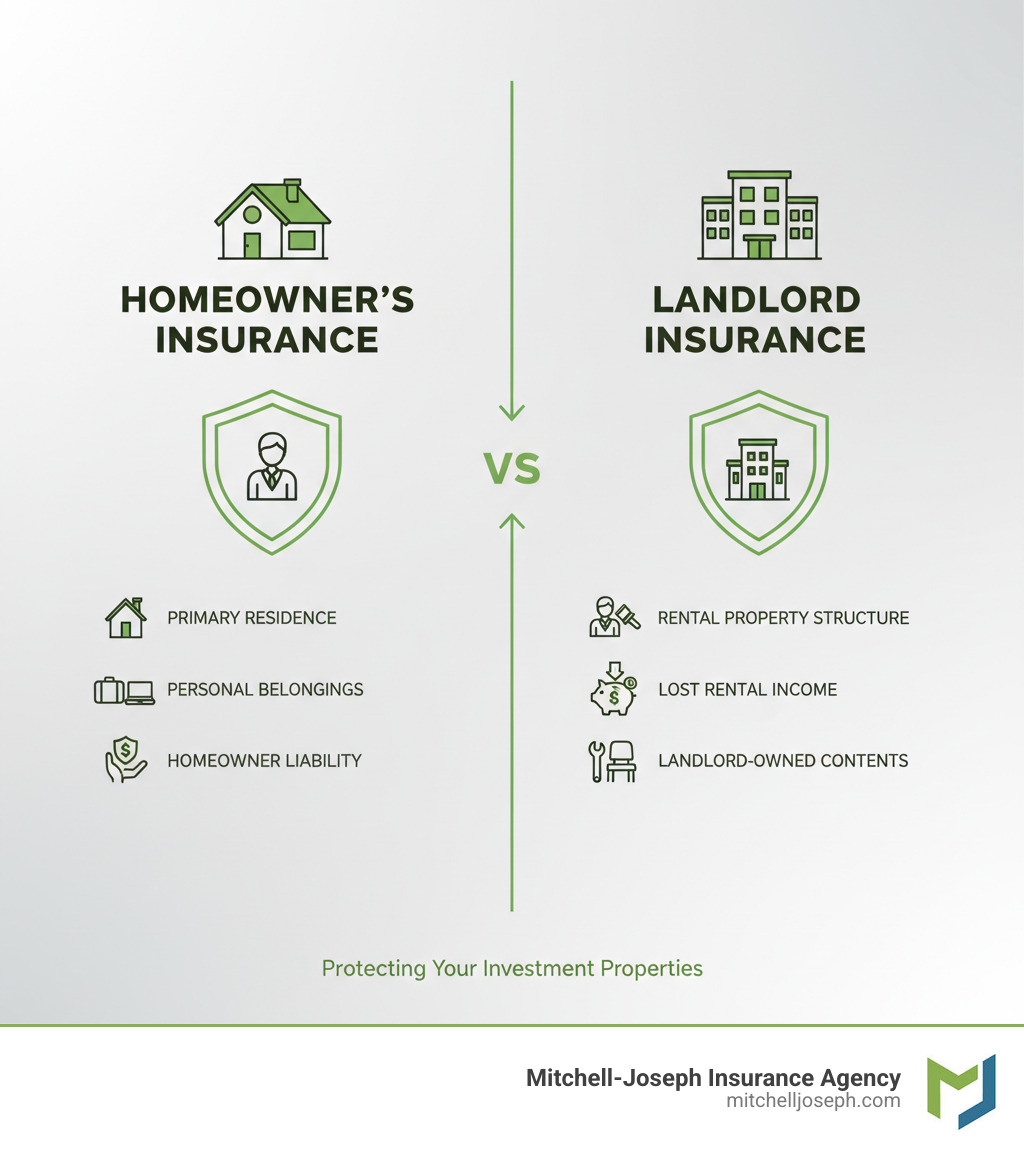
Rental owner insurance is specifically for non-owner-occupied properties, from single-family homes to multi-unit dwellings. Unlike a homeowner’s policy that covers your own home and belongings, landlord insurance addresses the different risks of an investment property. Once you have tenants, your standard policy offers little to no protection.
Investment properties face unique risks beyond fire or weather, including tenants, their guests, and potential income loss. If a burst pipe makes your rental uninhabitable, landlord insurance covers not just repairs but also the lost rent, safeguarding your entire investment and income stream.
The Ultimate Guide to Rental Owner Insurance Coverage
Now that you understand why rental owner insurance is essential, let’s dive into exactly what protection you’re getting. A comprehensive landlord policy rests on three pillars of protection.
What’s Covered: The Three Pillars of Protection

When I sit down with landlords in Pittsford or Canandaigua, I explain rental owner insurance using three pillars: property protection, liability coverage, and lost rental income. Together they create a crucial safety net.
Property Protection forms the foundation. Dwelling protection covers the physical building, from the roof to the foundation, paying for repairs when events like a severe thunderstorm cause damage. Coverage extends to other structures like detached garages and fences. It also protects your personal property used to service the rental, such as appliances you provide and maintenance equipment.
Liability Protection is critical. Landlord liability insurance protects you from lawsuits if someone is injured on your property. For example, if a guest slips on an icy walkway, this coverage helps with medical bills and legal costs. Policies often include medical payments for smaller injuries, regardless of fault, which can prevent larger lawsuits. If you are sued, your legal fees are covered. Many landlords opt for at least $1 million in liability coverage.
The third pillar, Loss of Rental Income, protects your cash flow. If a covered event like a fire makes your property uninhabitable, fair rental value coverage replaces your lost rental income during the repair period. This applies to perils listed in your policy, such as fire, windstorms, and vandalism.
This three-pillar approach to rental owner insurance isn’t just about protecting property—it’s about protecting your entire investment strategy.
Customizing Your Policy: Common Add-Ons and Exclusions
Every rental property is unique, and your insurance should be too. Smart landlords often add extra protection based on their specific risks.
Vandalism coverage is important, especially if your property may be vacant. While some policies include it, you should confirm the coverage is robust.
Guaranteed income insurance can address tenants who default on rent. Programs like the Tenant Protector Plan can provide funds for lost rent and cover negligent tenant damage.
Building code upgrades coverage is crucial for older properties. If an older rental is damaged, current codes might require expensive updates during reconstruction. This add-on bridges that cost gap.
Standard policies exclude flood and earthquake damage; these require separate policies. Since flooding can occur anywhere, it’s crucial to assess your risk. You can learn more about flood risk and insurance options through the National Flood Insurance Program.
Understanding what’s not covered is equally important. Your policy won’t pay for normal wear and tear. Intentional tenant damage is often excluded, though some specialized programs provide this protection. Pest infestations are typically considered a maintenance issue. Finally, your policy covers your property, not your tenant’s belongings, which is why requiring renters insurance is a smart move.
Understanding Your Rental Owner Insurance Policy in Action

Let’s walk through some real-world scenarios to clarify how your rental owner insurance works.
Tenant damage can be confusing. The key is negligent versus intentional damage. If a tenant accidentally starts a kitchen fire, your policy will likely cover the damage. However, intentional damage, like a tenant punching holes in walls, is typically excluded. Specialized endorsements may be available for this type of risk.
Vacancy periods present unique challenges. Most policies have vacancy clauses that may limit coverage if a property is empty for 30-60 days, as vacant properties are a higher risk. Communicate with your insurance agent during vacancies to ensure you remain protected.
Your rental owner insurance can protect various property types:
- Single-family homes are straightforward; the policy covers the structure and your liability.
- For condos, your policy works with the condo association’s master policy. You need coverage for the unit’s interior, your property inside, and liability, as the master policy only covers the building exterior and common areas.
- Multi-family units like duplexes are also insurable, though complexity and costs increase with more units.
Whether your investment is in Victor, Rochester, or Avon, the right rental owner insurance policy protects your income and long-term goals. That’s what we’ve been helping Finger Lakes landlords achieve since 1999.
Managing Costs, Requirements, and Tenant Relationships
Now that you understand what rental owner insurance covers, let’s talk about the practical side: cost, tenant requirements, and finding the right policy.
Landlord vs. Renter: A Tale of Two Policies
Your rental owner insurance doesn’t cover your tenants. Your policy and their renters insurance are two pieces of a puzzle that create complete protection. Your landlord insurance protects the building and your investment, while renters insurance protects your tenant’s belongings and their liability.
| Feature | Landlord Insurance | Renters Insurance |
|---|---|---|
| What it covers | The physical structure of the rental property, landlord-owned appliances/furnishings, liability for accidents on the property, and lost rental income. | The tenant’s personal belongings (furniture, electronics, clothing), and the tenant’s personal liability. |
| Who it protects | The property owner (landlord). | The tenant. |
| Primary focus | Protecting the investment property and the landlord’s financial interests. | Protecting the tenant’s possessions and their liability for damages they cause. |
Requiring renters insurance is one of the smartest moves a landlord can make. When tenants have their own insurance, you gain reduced liability exposure. If they cause a fire or a guest is injured in their unit, their policy is the first line of defense. This helps keep claims off your record and your premiums down. It also acts as a form of tenant screening, as responsible tenants are more likely to secure renters insurance.
Include clear language in your lease about the renters insurance requirement, minimum coverage amounts, and the need for proof of policy. It’s a simple step that creates a safety net for everyone. You can learn more about coverage specifics in our guides on Does Tenant Insurance Cover Water Damage and Can Renters Get Flood Insurance.
Decoding the Cost of Your Rental Owner Insurance Premium
“So, what’s this going to cost me?” Rental owner insurance typically costs between $500 and several thousand dollars per year, but your specific situation determines the actual cost.

Several factors influence your premium:
- Location: Properties in areas with higher risks of severe weather, flooding, or crime will cost more to insure.
- Building Age and Condition: An older, un-updated property is riskier than a modern one. Regular maintenance can lower your costs.
- Claims History: A clean record can earn you better rates.
- Coverage Limits and Deductible: Higher coverage limits increase premiums, while a higher deductible can lower them.
We can help you save money without sacrificing protection. Bundling your policies, such as rental, auto, and home, often leads to substantial discounts. Another effective strategy is increasing your deductible; a higher out-of-pocket amount for a claim will lower your annual premium. Proactive property maintenance, like updating roofing and plumbing, also reduces risk and can lower your rates. Finally, installing safety features like security systems and modern smoke detectors can qualify you for additional discounts.
The biggest advantage of working with us is our ability to shop multiple carriers. As an independent agency, we compare quotes from up to 24 different insurance companies to find the best combination of coverage and price for your property.
Finding the Right Partner for Your Protection
Choosing the right rental owner insurance requires an expert who understands the unique challenges of being a landlord in the Finger Lakes region.
As an independent agency, we work for you, not a single insurance company. This gives us access to multiple carriers so we can shop for the best coverage and budget for your needs. It’s like having a personal shopper for insurance.
With over 200 years of combined experience, our team offers personalized advice based on real-world scenarios, from burst pipes in Victor to storm damage in Canandaigua. We’ve helped landlords just like you protect their investments.
Lender requirements make insurance non-negotiable if you have a mortgage. Your lender requires adequate coverage to protect their investment. Beyond that, you have legal obligations to provide a safe environment for tenants. Adequate liability coverage helps you meet this obligation while protecting your personal assets.
We’re not just your insurance agency—we’re your neighbors. Our offices serve Honeoye Falls, Pittsford, Naples, Rushville, Avon, Bloomfield, Bristol, Canadice, Canandaigua, Cohocton, Fishers, Gorham, Honeoye, Ionia, Lima, Mendon, Middlesex, Potter, Rochester, Rush, South Bristol, Stanley, Victor, Wayland, and West Bloomfield. We understand the local market and risks.
Don’t leave your investment property protection to chance. Get expert guidance on business insurance for landlords and let us help you build the right coverage for your rental property portfolio.

