

Why House Insurance for Tenants Matters More Than You Think
As a renter, you might overlook a critical gap in your financial protection. Your landlord’s insurance only covers the building itself, not your personal belongings or liability. Without house insurance tenants (also called renters insurance), a fire, theft, or guest injury could lead to thousands of dollars in personal losses.
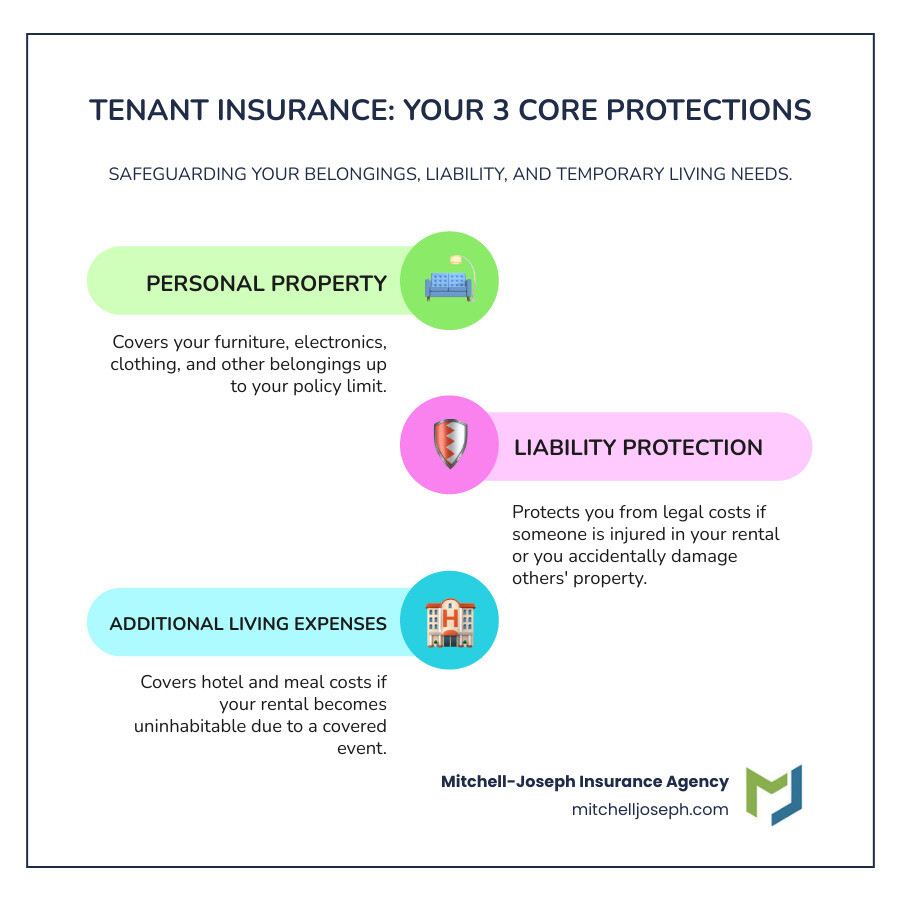
Here’s what tenant insurance typically covers:
- Personal Property: Your furniture, electronics, clothing, and other belongings.
- Liability Protection: Legal costs if someone is injured in your rental or you accidentally damage another’s property.
- Additional Living Expenses: Hotel and meal costs if your rental becomes uninhabitable after a covered event.
Key Facts:
- Average cost to replace contents in a one-bedroom unit: $20,000
- Typical annual premium: $132-$180
- Standard policies start around $11-$14/month
Many renters mistakenly believe their landlord’s insurance protects them. It doesn’t. A landlord’s policy covers the structure, leaving your possessions and liability completely unprotected.
I’m Jeffrey Joseph of Mitchell-Joseph Insurance Agency. Since 1999, I’ve helped clients in the Finger Lakes Region find the right house insurance tenants need. I’ve seen how crucial this coverage is for protecting belongings and financial security.
Quick house insurance tenants terms:
Understanding Your House Insurance for Tenants Policy
When you rent a home in Honeoye Falls, Rochester, or another New York community, it’s easy to assume your landlord’s insurance covers you. This is a costly misconception. The landlord’s policy protects their building, but your belongings and personal liability are your responsibility. This is where house insurance tenants, or renters insurance, provides a vital safety net.
Core Coverage: What’s Included?
A standard house insurance tenants policy includes three main components:
- Personal Property Coverage: This is the core of your policy, covering your belongings—furniture, electronics, clothing, etc.—if they are damaged, destroyed, or stolen by a covered event like fire, theft, or a burst pipe. The average cost to replace the contents of a one-bedroom apartment is around $20,000, highlighting the risk of being uninsured.
- Liability Protection: This protects you financially if you’re responsible for injuring someone or damaging their property. For example, if a guest is hurt in your apartment or you accidentally cause a fire that damages a neighbor’s unit, this coverage helps with medical bills, repair costs, and legal fees. Most policies offer significant protection, often up to $1,000,000 or more.
- Additional Living Expenses (ALE): If a covered event makes your rental uninhabitable, ALE helps pay for extra costs like hotel bills, temporary rent, and meals while you’re displaced.
When choosing a policy, you’ll decide between Actual Cash Value (ACV), which pays the depreciated value of your items, and Replacement Cost, which pays to replace items with new ones. Replacement Cost coverage offers better financial recovery and is highly recommended.
Many policies also include off-premises coverage, protecting your belongings even when they’re outside your home, like a laptop stolen from your car. For high-value items like jewelry or art that exceed standard limits (e.g., $1,500 for jewelry), you can add an endorsement or “floater” for full protection.
For more detailed information, explore our resources on More info about Renters Insurance.

Common Scenarios and Exclusions
House insurance tenants is designed to shield you from the financial fallout of unexpected events. Consider these scenarios:
- Fire Damage: A kitchen fire destroys your belongings. Your policy would cover their replacement and your temporary living expenses.
- Theft: Your apartment is burglarized. Your policy helps replace stolen electronics, jewelry, and other valuables.
- Guest Injury: A friend slips and falls in your apartment. Your liability coverage helps with their medical bills and protects you from a potential lawsuit.
Your policy will cover losses from a broad range of perils, including fire, lightning, windstorms, theft, vandalism, and certain types of water damage. However, it’s crucial to understand what’s not covered.
Common Exclusions:
- Floods: Standard policies do not cover flood damage. You need a separate flood insurance policy.
- Earthquakes: Damage from earthquakes is also typically excluded but can often be added as an endorsement.
- Wear and Tear: Policies don’t cover damage from natural aging or poor maintenance.
- Pest Infestations: Damage from insects or rodents is generally not covered.
Understanding these exclusions is vital. If you live in an area with specific risks, we can discuss options for additional coverage.

For personalized advice on coverage options in our New York communities, please Contact Mitchell-Joseph Insurance Agency for more information about coverage options.
Your Responsibilities and What Happens Without Coverage
Many New York landlords now require tenants to carry renters insurance as a condition of the lease. Even if not required, it’s a wise decision. Your landlord’s policy covers the building, not your personal property or liability.
Without house insurance tenants, you are exposed to significant financial loss:
- Replacing Belongings: You would be solely responsible for replacing everything after a fire or theft. With the average cost for a one-bedroom unit at $20,000, this can be financially devastating.
- Liability Claims: If you’re found responsible for injuring someone or damaging the property, you could face lawsuits costing tens or hundreds of thousands of dollars.
- Temporary Housing Costs: If your rental becomes unlivable, you would have to pay for your own hotel stays and other expenses out-of-pocket.
The landlord’s insurance protects their investment; your renters insurance (an HO-4 policy) protects you. For more on the landlord’s perspective, see our guide on More on Landlord Insurance.
Determining Cost and Finding Affordable House Insurance for Tenants
Renters in communities like Canandaigua or Avon are often surprised by how affordable house insurance tenants can be. Policies can start around $11-$14 per month ($132-$180 annually), a small price for significant peace of mind.
Several factors influence your premium, including the amount of coverage you need, your chosen deductible, your location, and your claims history. Here are ways to find affordable options:
- Choose a Higher Deductible: A higher deductible (the amount you pay before insurance kicks in) lowers your premium.
- Bundle Policies: Combine your renters and auto insurance for significant savings on both.
- Install Safety Features: Security systems, smoke detectors, and deadbolt locks can qualify you for discounts.
- Shop Around: As an independent agency, Mitchell-Joseph Insurance works with 24 different companies to compare options and find the most competitive rates for you.
For more pricing insights, check out our guide on How Much is Renters Insurance?.
Making a Claim and Getting the Right Coverage
If the unexpected happens, knowing how to file a claim on your house insurance tenants policy can make a stressful situation much smoother.
The Claims Process Step-by-Step
If you need to file a claim, follow these steps:
- Report Crimes: For theft or vandalism, contact the police immediately and get a police report.
- Contact Your Insurer: Call us at Mitchell-Joseph Insurance Agency or your provider as soon as it’s safe. We’ll guide you through the process.
- Document Everything: Take photos and videos of all damage. Don’t discard damaged items until your adjuster has seen them.
- Create a List: Prepare a detailed home inventory of lost or damaged items with their estimated value. This will expedite your claim.
- Keep Receipts: If you need to relocate, save all receipts for hotel stays, meals, and other extra costs for reimbursement under your Additional Living Expenses coverage.
- Complete Claim Forms: Fill out and return all forms from your insurer promptly and accurately.
- Work with the Adjuster: Cooperate with the insurance adjuster assigned to your case to assess the damage and determine the payout.
Getting the Right Coverage for Your Needs
Getting the right amount of house insurance tenants coverage means assessing your needs. The best way to determine your personal property coverage amount is to create a home inventory, estimating the replacement cost for all your belongings. We recommend Replacement Cost coverage for superior protection. For liability, a limit of at least $300,000 is a good starting point to safeguard your assets.
At Mitchell-Joseph Insurance Agency, we offer personalized service to clients in Honeoye Falls, Rochester, and surrounding New York communities. With over 200 years of combined experience, we work with 24 insurance companies to compare quotes and tailor a policy that fits your lifestyle and budget. Our goal is to ensure you have the protection you need without paying for coverage you don’t.
Don’t leave your financial security to chance. Protect what matters most with a reliable house insurance tenants policy.
Ready to get started? Get a personalized Renters Insurance quote today with Mitchell-Joseph Insurance Agency. We’re here to help you find peace of mind.

