

Understanding the Hidden Risks Beneath Your Property
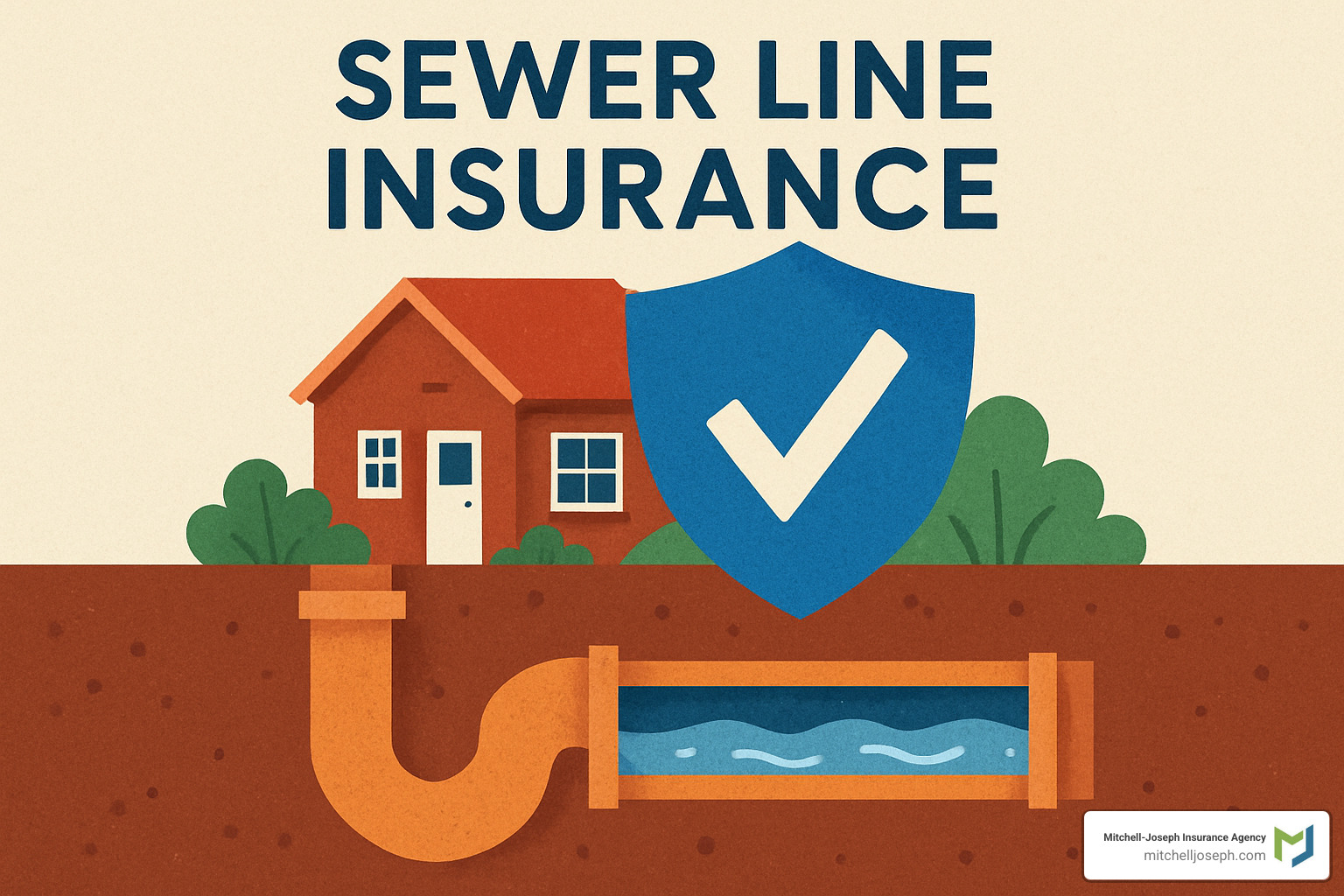
Sewer line insurance is specialized coverage that protects homeowners from the unexpected costs of repairing or replacing sewer pipes that run from your home to the city’s main line. Most standard homeowners insurance policies don’t cover these repairs, leaving you financially vulnerable to potentially significant expenses.
Quick Facts About Sewer Line Insurance:
| Key Information | Details |
|---|---|
| Average repair cost without insurance | $3,000-$5,000 for water lines; $10,000-$15,000 for sewer lines |
| Monthly cost of coverage | $6-$15 depending on provider and coverage type |
| What’s typically covered | Pipe repair/replacement, excavation, backfilling, lawn reseeding |
| Common causes of damage | Tree roots, ground shifting, aging pipes, freeze/thaw cycles |
| Types of coverage | Home insurance endorsements, standalone policies, utility programs, home warranties |
Most homeowners are unaware they’re responsible for the sewer lateral from their home to the public main. When these underground pipes fail, repair costs can quickly escalate into thousands of dollars due to necessary excavation, replacement, and restoration work.
For many Finger Lakes region homeowners, the question isn’t if their aging clay or cast iron pipes will fail, but when. Homes built before 1980 typically used clay pipes with a 50-60 year lifespan, while more modern PVC installations can last over 100 years.
I’m Jeffrey Joseph, owner of Mitchell-Joseph Insurance Agency, and I’ve helped hundreds of homeowners across upstate New York find affordable sewer line insurance solutions custom to their specific property risks and needs. Our agency specializes in helping homeowners understand coverage options that protect them from unexpected infrastructure failures.

Simple guide to sewer line insurance:
– service line coverage
– service line insurance
– water line insurance
Setting the Scene: The Hidden Risk Beneath Your Lawn
Imagine this: It’s a sunny Saturday in Honeoye Falls. You’re planning a backyard barbecue when you notice a soggy patch in your lawn. By Sunday, there’s an unmistakable odor, and by Monday, you’re staring at a backhoe tearing up your carefully maintained yard as a plumber explains you need a complete sewer line replacement—to the tune of $12,000.
This scenario plays out regularly across the Rochester area, where many homes were built in the early to mid-20th century with clay or cast iron pipes that have now reached or exceeded their expected lifespan.
As a homeowner, you’re responsible for the entire sewer lateral that runs from your home to the municipal connection point, which can be anywhere from 10 to 100+ feet away. This liability exists regardless of whether the pipe runs under your private property or beneath public sidewalks and streets.
“Most of my clients are shocked to learn they’re on the hook for repairs that might happen under the street in front of their house,” says our senior agent at Mitchell-Joseph Insurance. “Without sewer line insurance, a sudden failure can mean dipping into retirement savings or even taking out a loan.”
Sewer Line Insurance 101: Definition, Coverage, Exclusions
Ever wonder what’s lurking beneath your perfectly manicured lawn? For most homeowners, those underground pipes remain “out of sight, out of mind” until something goes terribly wrong. Sewer line insurance is your financial safety net for those buried service lines connecting your home’s plumbing to the municipal sewer main. Unlike your standard homeowners policy that primarily protects what you can see, this specialized coverage focuses on what you can’t.
What Is “Sewer Line Insurance” and What Does It Cover?
Sewer line insurance is essentially your underground pipe protection plan. Think of it as a specialized policy or endorsement that steps in when those hidden pipes decide to call it quits. While your regular homeowners insurance might handle the water damage from an indoor burst pipe, it typically waves goodbye when it comes to fixing what’s happening underground.
A good sewer line insurance policy doesn’t just cover the pipe itself—it covers the entire headache, including:
The massive excavation project needed to reach your buried pipe (often the most expensive part!)
Replacing or repairing the actual damaged sewer line
Filling everything back in and restoring your yard to a reasonable condition
Repairing sidewalks, driveways, or other hardscaping that had to be demolished
Sometimes even temporary housing costs if your plumbing issues make your home temporarily uninhabitable
“I always tell my clients that the pipe itself is usually the cheapest part of the repair,” says our claims specialist at Mitchell-Joseph Insurance. “It’s the backhoe rental, labor costs, and putting everything back together that really adds up.”
Take our client in Canandaigua, for example. When their sewer pipe collapsed under their driveway, the actual pipe replacement was only about $2,000. But once you added excavation, concrete work, and landscape restoration, the bill soared to over $9,000. Thankfully, their sewer line insurance covered everything except their $500 deductible—saving them from a serious financial drain.
More info about service line coverage
Does Standard Homeowners Insurance Cover Sewer Line Damage?
I hate to be the bearer of bad news, but your standard homeowners policy probably isn’t going to help much with sewer line problems. Most policies specifically exclude underground service lines, including those all-important sewer pipes.
There are a few rare exceptions. Your policy might cover sewer damage if it’s caused by specific events already covered in your policy, like:
Fire damage
Explosions
Lightning strikes
A vehicle crashing into your property
Vandalism
Even then, these scenarios typically fall under your “other structures” coverage—usually limited to just 10% of your dwelling coverage. If your home is insured for $300,000, you’d have a maximum of $30,000 for everything outside your main house. That might sound like plenty until you realize it needs to cover your garage, shed, fence, and anything else that’s not your actual house.
“Many homeowners don’t realize that their ‘other structures’ limit is a shared pot,” explains our Pittsford office manager. “If you have a nice detached garage worth $25,000, that doesn’t leave much for a major sewer catastrophe.”
More importantly, standard policies almost never cover the everyday villains that actually cause most sewer problems: aging pipes, thirsty tree roots, shifting soil, and our famous upstate New York freeze-thaw cycles.
Common Causes of Sewer Line Damage
Here in the Finger Lakes region, we’ve seen it all when it comes to sewer line failures. Understanding what typically damages these pipes can help you gauge whether sewer line insurance makes sense for your property:
Those beautiful shade trees in your yard could be secret pipe predators. Tree roots naturally seek out water sources and can squeeze through the tiniest cracks in your sewer line, eventually creating major blockages or breaks. If you have mature trees within 20 feet of your sewer path, your risk level jumps significantly.
Age is perhaps the biggest factor. If your home was built before 1980, there’s a good chance you’re sitting on clay pipes that were only designed to last 50-60 years. Even the sturdier cast iron pipes (with their 75-100 year lifespan) eventually surrender to corrosion and time.
Our famous Rochester weather doesn’t help matters either. The constant freeze-thaw cycles we experience create a soil movement dance that puts tremendous pressure on rigid underground pipes. This shifting can misalign sections or break joints, especially in older systems.
Clogs and blockages might start as minor annoyances requiring a simple snake job, but severe blockages create pressure that can crack or even rupture pipes completely.
Then there’s the previous homeowner factor. “We recently had a client in Rochester find their sewer problems stemmed from a 1970s DIY project,” our claims team recalls. “The previous owner used inappropriate materials and didn’t create proper slope. The repair required completely re-engineering the line’s path to the street.”
What’s Typically Excluded?
Even the best sewer line insurance policies have their limits. Before signing up, you should understand what typically isn’t covered:
Pre-existing conditions won’t be covered—insurance companies aren’t keen on paying for problems that already existed when you purchased the policy. This is why some providers require an inspection before coverage begins.
Neglect or poor maintenance can void your coverage. If you ignored obvious warning signs or failed to perform reasonable upkeep, your claim might be denied.
Certain natural disasters might be excluded. If earthquakes aren’t covered by your main homeowners policy, earthquake damage to your sewer line likely isn’t covered either.
Septic systems sometimes receive different treatment than municipal sewer connections. If you’re on a septic system, make sure your policy specifically addresses it.
Shared sewer lines can complicate claims. In some older Rochester neighborhoods, homes share lateral connections, creating unique coverage challenges.
Elaborate landscaping might not be fully restored. While basic yard repair is typically covered, your prize-winning rose garden or custom water feature might not be returned to its former glory.
“The details really matter with sewer line insurance,” our senior underwriter emphasizes. “We always take time to review the exclusions carefully with clients. Nobody wants surprises when they’re already dealing with a plumbing emergency.”

Protection Options & Cost Breakdown
Looking for peace of mind about those pipes beneath your yard? You’ve got more options than you might think. Let’s walk through the different ways you can protect yourself from unexpected sewer line disasters.
Types of Sewer Line Coverage Explained
When my clients ask about sewer line insurance, I usually explain there’s a whole menu of protection options, each with its own flavor.
Service line endorsements are like the perfect side dish to your existing homeowners policy. These add-ons don’t just cover sewer lines – they typically protect all your underground utility lines, from water to gas to electric.
“Most of our clients find service line endorsements to be the sweet spot,” says our agency principal. “They work seamlessly with your existing policy, making claims straightforward, and usually offer the most comprehensive protection.”
Standalone sewer line policies focus exclusively on your sewer infrastructure. Think of these as specialty insurance – they’re laser-focused on one thing, but they do that one thing very well. These policies often make sense if you’ve got a historic home with original clay pipes that are approaching the century mark.
Home warranty coverage for sewer lines works differently. While not technically insurance, these plans function similarly by covering repair costs when lines fail. They’re particularly popular with new homeowners who want one-stop protection for multiple home systems.
Utility company protection programs show up as small monthly charges right on your utility bill. They’re convenient – one less bill to worry about – but they sometimes come with more coverage limitations than other options.
Some towns and villages offer municipal partnership programs where they’ve negotiated group rates with insurers. These community-based options often cost less thanks to collective bargaining power, but may not be custom to your specific property’s quirks and needs.
How Much Does Sewer Line Insurance Cost?
I always tell my clients to expect these ballpark figures for sewer line insurance:
Service line endorsements typically add $40-$160 to your annual homeowners premium – often the most affordable option per dollar of coverage.
Standalone policies usually run about $10-$15 monthly, totaling $120-$180 per year.
Home warranty plans that include sewer coverage average around $56 monthly, but they’re covering much more than just your sewer line.
Utility company programs are budget-friendly at $6-$13 monthly, though they often provide lower coverage limits.
Municipal programs vary widely, but typically cost $7-$12 per month.
Don’t forget about deductibles! Service line endorsements usually carry the same deductible as your homeowners policy ($500-$1,000). Standalone policies often feature lower deductibles ranging from $0-$500, while utility programs typically charge service fees of $50-$125 per incident.
“The premium is only half the story,” our underwriting team always reminds clients. “A plan with no deductible but a higher monthly cost might actually leave you paying more if you only file a claim once every decade.”
Coverage Limits & Deductibles You’ll See in the Market
When it comes to how much protection you’re actually getting, the numbers vary significantly:
Service line endorsements typically offer $10,000-$20,000 per occurrence – usually plenty for most repairs.
Standalone policies generally provide $3,000-$10,000 per incident.
Home warranty plans often cap coverage at $3,000-$5,000 per service call.
Utility programs tend to have lower limits, typically $3,000-$8,500 per call.
Some providers get creative with deductible structures. You might find diminishing deductibles that decrease for each claim-free year you enjoy. Zero-deductible plans eliminate out-of-pocket costs when filing claims but come with higher premiums. And watch for per-foot coverage limits – these specify a maximum dollar amount per foot of pipe rather than a total limit.
I remember helping a client in Rushville who had a policy with a $10,000 limit, but their entire 75-foot line needed replacement at $150 per foot. The $11,250 total exceeded their coverage by $1,250, which came out of their pocket. Always check whether your policy has per-incident or per-foot limitations!
External Help Programs Worth Knowing
Beyond traditional insurance, there are other ways to manage sewer line risks:
Some local governments offer tax assessment financing, allowing homeowners to spread repair costs over many years through property tax assessments at low interest rates.
Several counties in our service area provide financial assistance for sewer repairs to households that meet income qualifications.
Homeowners associations sometimes negotiate group rates for sewer line insurance, leveraging their collective buying power.
For those with properties in New York City, the Water and Sewer Service Line Protection Program through American Water Resources provides comprehensive protection. While it’s outside our immediate Finger Lakes service area, it’s a good example of how municipal partnerships can work.
Learn more about the Water and Sewer Service Line Protection Program

Claims & Eligibility: How the Process Works
Let’s face it – when your sewer line fails, the last thing you want is confusion about how to get help. Understanding the claims process before disaster strikes can save you valuable time (and a whole lot of headaches) when you’re dealing with sewage backing up into your home.
Step-by-Step Sewer Line Insurance Claim Process
When your sewer line decides to call it quits, here’s what typically happens:
First, you’ll notice the warning signs – multiple drains backing up at once, strange gurgling sounds coming from your toilet, sewage where it definitely shouldn’t be, or that unmistakable smell that makes your nose wrinkle. These are your cues to act quickly.
Your first call should always be to your insurance provider’s claims number – not your local plumber. This is a mistake we see homeowners make all the time.
“I can’t tell you how many clients call a plumber first and end up complicating their claim,” shares our claims specialist at Mitchell-Joseph. “Insurance companies often have specific contractors they work with, and going rogue might mean paying out-of-pocket.”
Once you’ve called in your claim (most sewer line insurance providers offer 24/7 emergency service), they’ll typically dispatch a plumber to assess the situation. If sewage is actively backing up, they’ll handle emergency mitigation first to prevent further damage to your home.
The inspection phase comes next, usually involving a camera snaked through your pipes to find exactly where and what the problem is. This footage gets sent to your insurer, who determines if the damage is covered under your policy.
After approval, the real work begins – excavation, repair or replacement of damaged pipes, and restoration of your property. Depending on your policy, payment either goes directly to the contractor or comes as reimbursement after you’ve paid.
One of our Canandaigua clients had a textbook-perfect claim experience last spring. From initial call to completed repair took just three days, with minimal disruption to their landscaping. Their failed clay pipe was completely replaced with modern PVC, and they paid only their $500 deductible on a $9,200 repair.
Eligibility Rules, Waiting Periods & Pre-Existing Conditions
Before counting on your sewer line insurance to save the day, make sure you understand these common policy limitations:
Most policies won’t cover you right away. There’s typically a 30-day waiting period between signing up and when coverage kicks in. This prevents what insurers call “adverse selection” – people who spot a problem and quickly buy insurance.
“We had a heartbreaking situation with a Victor family who purchased coverage with their new home,” our agent recalls. “Their sewer line collapsed on day 17 of their 30-day waiting period, leaving them responsible for the entire $12,000 repair. Always check those waiting period terms.”
Pre-existing conditions are almost universally excluded. Some companies even require a sewer scope inspection before they’ll issue a policy, especially for older homes. If you’ve been experiencing slow drains for months before buying coverage, don’t expect your new policy to foot the bill.
Your account standing matters too, especially with utility-provided plans. If you’re behind on payments, your coverage may be suspended until you’re caught up.
Age-related restrictions are common as well. Homes with pipes installed before 1950 might face higher premiums or coverage limitations. Some providers add surcharges based on pipe material – clay and Orangeburg pipes typically cost more to insure than modern PVC.
Location, Home Age & Other Pricing Factors
When it comes to sewer line insurance pricing, your zip code matters more than you might think.
“We analyze a whole host of risk factors when recommending coverage,” explains our underwriting team. “A newer home in Pittsford with PVC pipes and no nearby trees presents a completely different risk profile than a 1920s home in Rochester with clay pipes and large maples lining the sewer path.”
Insurance providers look closely at:
Pipe materials and age – Older clay pipes (common pre-1980) and Orangeburg pipes (popular from the 1940s-1970s) deteriorate faster than modern PVC, increasing your risk of failure.
Local frost depth – Here in upstate New York, our deep frost lines mean deeper, more expensive excavation when repairs are needed.
Tree density near your lines – Those beautiful maple trees might provide wonderful shade, but their roots are remarkably effective at finding and crushing sewer pipes.
Soil conditions – Certain soil types shift more with freeze-thaw cycles, putting extra stress on rigid pipe connections.
Combined sewer systems – Some older municipalities have systems where stormwater and sewage share the same pipes, increasing backup risks during heavy rainfall.
Historical claim rates in your neighborhood also impact pricing. Some older Rochester neighborhoods have significantly higher premiums due to their aging infrastructure and history of frequent claims.
At Mitchell-Joseph Insurance, we take the time to evaluate all these factors when helping you select the right coverage. We’ve seen how the right policy can save homeowners from financial disaster when those underground pipes finally give out.
Assessing Need, Maintenance & Alternatives
Not every home faces the same sewer line risks, which is why a personalized approach to protection makes the most sense. Let’s explore how to determine if sewer line insurance is right for your situation, how to spot trouble before it becomes catastrophic, and what alternatives might work for your home.
Do You Need Sewer Line Insurance for Your Home?
When homeowners ask me whether sewer line insurance is worth it, I always start by looking at their specific risk factors rather than giving a one-size-fits-all answer.
If you live in an older home built before 1980, your risk is substantially higher since these homes typically used clay or cast iron pipes with lifespans of 50-75 years. Many of these pipes are now living on borrowed time throughout the Finger Lakes region.
The material of your pipes matters tremendously. Modern PVC pipes (common after 1980) are far more resilient than their clay, cast iron, or dreaded Orangeburg predecessors. If you’re not sure what type of pipes you have, a simple camera inspection can tell you.
Homes with finished basements have much more to lose when sewer backups occur. I’ve seen beautiful basement living spaces completely ruined by sewage backups, adding thousands in restoration costs beyond the pipe repair itself.
“The best risk assessment tool might be right next door,” says our Honeoye Falls office manager. “If your neighbors have experienced sewer line failures, you’re likely next in line since homes in the same development typically used identical materials installed around the same time.”
Take the case of our client in Bloomfield who initially declined coverage for their 1990s home. After watching three neighbors deal with expensive repairs from aggressive maple tree roots, they wisely reconsidered. Just 14 months later, their own line failed, but their sewer line insurance covered the $7,800 repair minus their modest $500 deductible.
Signs Your Sewer Line Is Failing
Catching sewer problems early can save you thousands in emergency repairs and water damage. Here are the warning signs I tell all my clients to watch for:
When multiple drains back up simultaneously, the problem likely lies in your main sewer line rather than with individual fixtures. Similarly, strange gurgling sounds from toilets or drains often indicate trapped air from partial blockages downstream.
Pay attention to unexplained sewage odors, either inside your home or in your yard. Your nose can often detect problems before they become visible.
Your lawn can also tell you a lot about what’s happening underground. Unusually lush or soggy patches might be receiving an unwanted “fertilizer” from leaking sewage. More concerning are sudden indentations or sinkholes, which suggest soil erosion from escaping water.
I’ll never forget my client in Avon who noticed their basement floor drain backing up slightly whenever they ran laundry cycles. Their quick call for inspection revealed a partial collapse that was repaired before catastrophic failure. Their attentiveness saved them from potentially devastating water damage to their finished basement.
Maintenance Tips to Prevent Damage
An ounce of prevention truly is worth a pound of cure when it comes to sewer lines. Even with solid sewer line insurance in place, you’ll still face the inconvenience of repairs and potential water damage to your property.
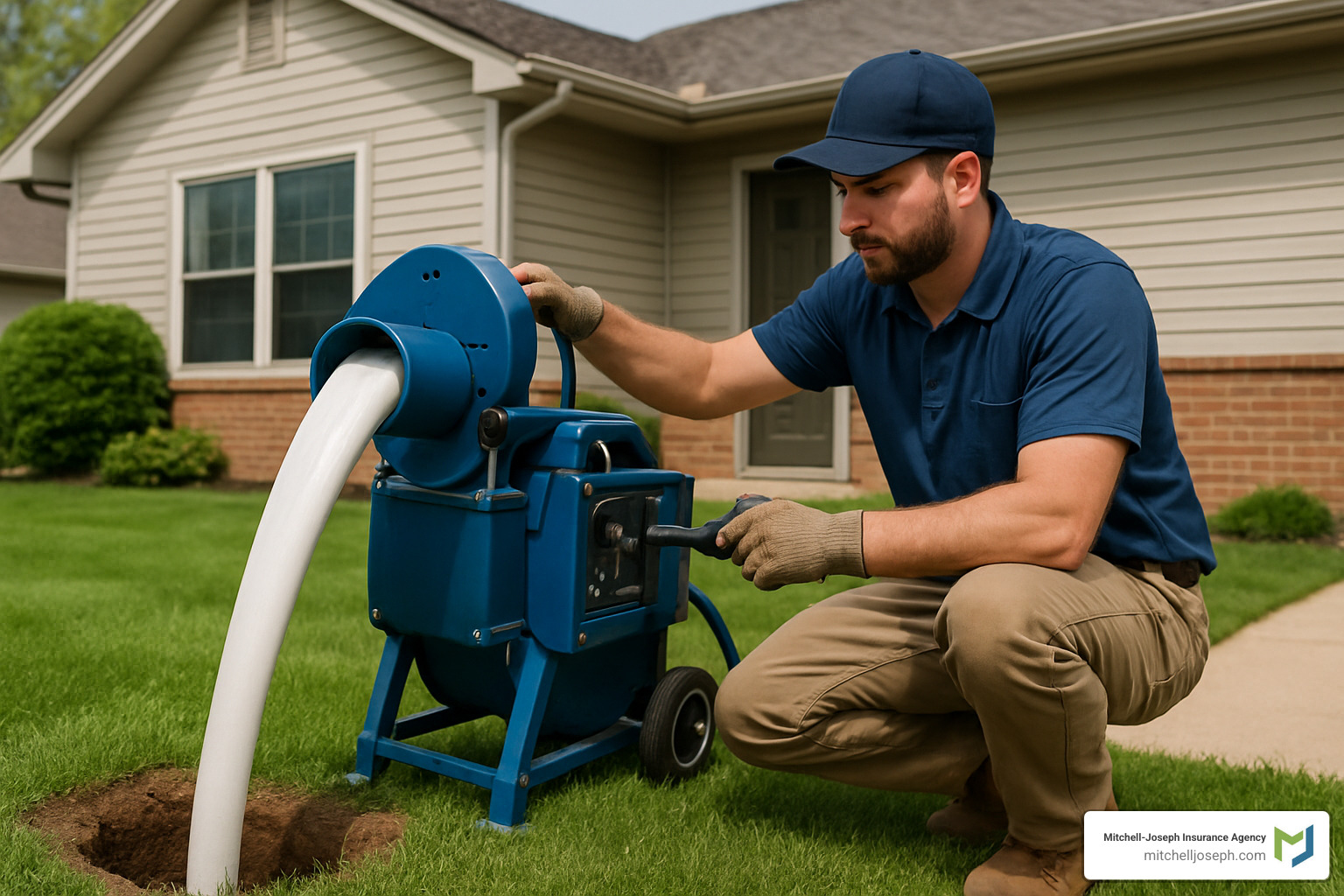
Consider scheduling a professional camera inspection every 3-5 years. At $250-350, it’s a small investment compared to emergency repairs and can identify developing issues before they become disasters.
Be mindful of what goes down your drains. Only toilet paper should be flushed, and keep grease, oil, coffee grounds, and harsh chemicals away from your drains. These are the most common causes of avoidable clogs I see in claims.
If you have trees near your sewer line path, talk to a professional about installing copper sulfate root barriers. These can significantly reduce the risk of root intrusion, which is the number one cause of line failures in our wooded Finger Lakes communities.
Don’t ignore slow drains! They’re often the first sign of developing blockages that, if addressed early, can be cleared without major repairs.
For older homes with high-risk pipes, consider proactive trenchless relining. This modern technology can reinforce existing pipes without extensive excavation, often extending their life by decades.
“Regular maintenance isn’t just about preventing failures,” our risk management team emphasizes. “It’s about peace of mind knowing you’ve done everything possible to protect your home and avoid the disruption that even a covered repair brings.”
More info about sewer backup coverage
Alternatives & Supplemental Strategies
While sewer line insurance offers excellent protection, it’s not the only approach to managing this risk. Many of our clients benefit from combined strategies custom to their specific situation.
Some financially-minded homeowners prefer creating a dedicated emergency fund for home infrastructure repairs. This self-insurance approach works well if you have the discipline to set aside and maintain these funds.
Modern trenchless technologies have revolutionized how we think about pipe maintenance. Rather than waiting for complete failure, some homeowners proactively invest in pipe lining that reinforces aging pipes at lower costs than full replacement and with minimal disruption to landscaping.
Several municipalities in our service area offer low-interest loans or tax assessment financing for sewer line repairs. These programs allow you to spread costs over many years, often at very favorable interest rates.
I frequently recommend combined protection strategies to my clients. For example, pairing a lower-limit sewer line insurance policy with a modest emergency fund gives you both immediate coverage and a safety net for any costs that exceed policy limits.
For homeowners concerned about multiple systems, a comprehensive home warranty that includes sewer lines might provide better overall value, especially if you’re also worried about aging appliances, HVAC systems, or electrical components.
“The right strategy depends on your risk tolerance, financial situation, and the specific characteristics of your property,” explains our Rushville agent. “We take the time to understand each client’s unique needs rather than pushing a one-size-fits-all solution.”
Frequently Asked Questions About Sewer Line Insurance
What Are the Main Differences Between Insurance, Warranties, and Utility Plans?
When clients visit our Honeoye Falls office, they often ask about the different protection options available. Let me break it down in simple terms:
Insurance policies and endorsements are like your trusty winter coat – offering robust protection when you need it most. They typically provide higher coverage limits (often $10,000 or more) and protect against sudden, unexpected damage. You’ll pay an annual premium, similar to your other insurance policies, and your claims process follows familiar insurance protocols. The deductible structure usually mirrors your homeowners policy.
Home warranties are more like a subscription box that covers multiple home systems. Think of them as the Swiss Army knife of home protection – not specialized for one task, but handling many adequately. They generally have lower per-incident limits (typically $3,000-$6,000) but cover gradual wear and tear that insurance might exclude. Instead of deductibles, you’ll pay fixed service fees when technicians visit. One thing to note – they often restrict which contractors you can use, so you lose some freedom of choice.
Utility protection plans are the convenient option that appears right on your monthly utility bill. They’re like adding a warranty at the cash register – simple and straightforward. These plans typically offer lower coverage limits but compensate with minimal or no service fees. They exclusively use their own contractor network, which can mean faster emergency response times. Plus, there’s no long-term commitment – you can cancel anytime.
“I had a client in Pittsford who initially signed up for a utility plan because it was only $8 monthly,” shares our senior agent Jessica. “But after we reviewed her 1930s home with original clay pipes, we realized she needed the higher limits of a true sewer line insurance policy. Six months later, when roots completely blocked her line, the $12,000 replacement was covered minus just her $500 deductible.”
How Much Can Repairs Cost Without Coverage?
The financial reality of sewer repairs without protection can be shocking. Here in the Finger Lakes region, costs vary widely, but they’re never cheap:
For a simple spot repair fixing just one section of pipe, expect to pay $1,500-$3,000. This is best-case scenario territory – like when a single joint fails or a small section cracks.
Partial replacements typically run $3,000-$7,000, while a complete line replacement from house to street can quickly escalate to $8,000-$15,000. And that’s just for a straightforward job.
If your line runs under concrete, stone patios, or expensive landscaping, add another 30-50% to those figures. Need emergency service on a weekend or holiday? That’ll be an extra 25-100% premium.
Then there are the hidden costs most homeowners don’t consider: temporary accommodations if you can’t use your plumbing, extensive landscaping restoration beyond basic backfilling, water damage remediation inside your home, and permit fees.
“The most heartbreaking cases are when homeowners have to dip into retirement savings for unexpected repairs,” says our claims specialist Mike. “Last winter, a family in Canandaigua faced a $17,000 bill when their line collapsed under their stamped concrete driveway. The pipe itself was only $4,000 of that cost – the rest was accessing and restoring the beautiful driveway. Their sewer line insurance saved them from a significant financial setback.”
How Do I Compare Policies Effectively?
Shopping for sewer line insurance can feel overwhelming with so many options. Here’s how to cut through the confusion:
First, look beyond the monthly premium to the coverage limits. A policy might seem affordable at $7 monthly, but if it only covers $3,000 in damages when a typical repair in our area costs $10,000, you’re still exposed to significant risk.
Check which perils are covered – especially those most common in upstate New York like tree root intrusion, freezing, and age-related deterioration. Some bargain policies exclude these very issues that most frequently cause problems here.
Don’t overlook excavation and restoration coverage. The pipe itself might cost $2,000 to replace, but accessing it under your landscaping and restoring your property afterward often represents 60-70% of the total bill.
Review all exclusions and waiting periods carefully. Some policies won’t cover pre-existing issues or require a 30-day waiting period before coverage activates. We’ve seen homeowners find a problem on day 15 of their waiting period and face the entire cost themselves.
Consider the deductible structure. A policy with a $0 deductible might sound attractive, but if it costs $5 more monthly than one with a $500 deductible, you’d need to file a claim every 8-10 years just to break even.
Understand the claims process and contractor selection. Some policies let you choose your trusted local plumber, while others require you to use their network providers – which can be problematic in our rural areas where service availability may be limited.
Finally, research the provider’s reputation and financial stability. The most affordable policy isn’t a bargain if the company delays claims or struggles to remain solvent.
“I always tell my clients to think about sewer line insurance as sleep insurance,” explains our Honeoye Falls agent Tom. “The true value isn’t just financial protection – it’s knowing that one phone call handles everything if disaster strikes, from finding qualified contractors to managing the entire repair process. That peace of mind is priceless, especially when sewage is backing up into your home at 2 a.m.”

Conclusion
Sewer line insurance provides valuable protection against one of homeownership’s most unpredictable and potentially expensive risks. For many homeowners in the Finger Lakes region, the peace of mind alone justifies the modest annual premium.
As we’ve explored, these specialized policies fill a critical gap in standard homeowners insurance, covering the underground infrastructure that connects your home to municipal services. Without this protection, you could face repair bills ranging from a few thousand dollars to $15,000 or more—often with little warning.
At Mitchell-Joseph Insurance Agency, we’ve helped thousands of homeowners across Honeoye Falls, Rochester, Canandaigua, and surrounding communities find the right balance of protection and affordability. Our independent status allows us to compare options from 24 different insurance companies, ensuring you receive coverage custom to your specific property and risk factors.
Remember these key takeaways:
- Standard homeowners policies typically exclude sewer line repairs.
- Older homes with clay or cast iron pipes face significantly higher risks.
- The most expensive part of sewer repairs is often excavation and restoration, not the pipe itself.
- Multiple protection options exist, from insurance endorsements to utility programs.
- Regular maintenance and early problem detection can prevent catastrophic failures.
Whether you’re concerned about aging infrastructure, tree root intrusion, or simply want comprehensive protection for your home investment, we’re here to help you steer the complexities of sewer line insurance.
Contact our team today for a personalized consultation and quote. With offices throughout the Finger Lakes region, we provide the local expertise and personalized service that national insurance websites simply can’t match.


