

The Unseen Risk: Understanding Your Sewer Line Responsibility
Sewer Line Insurance is an optional coverage that helps pay for repairs to the underground sewer pipe connecting your home to the municipal system. It’s a crucial protection because that line is your financial responsibility, not the city’s.
Quick Coverage Overview:
- Standard Homeowners Insurance: Typically does NOT cover sewer line damage from common causes like tree roots, corrosion, or aging pipes.
- Service Line Coverage (Endorsement): Covers physical damage to the pipe itself—repairs, excavation, and replacement.
- Sewer Backup Coverage (Separate): Covers interior damage to your home from sewage backups, not the pipe repairs.
- Average Costs: Claims average $5,000, with excavation being the biggest expense; coverage costs just a few dollars per month.
- Your Responsibility: You own and must maintain the sewer line from your home to the property line or municipal connection point.
Here’s the uncomfortable truth: Almost one in three homeowners incorrectly believe their standard home insurance covers service lines. This misconception can lead to a sudden, multi-thousand-dollar bill when a 50-year-old pipe fails under your driveway.
I’m Jeffrey Joseph of Mitchell-Joseph Insurance Agency. Since 1999, I’ve seen too many families in the Finger Lakes region blindsided by sewer line failures they thought were covered. This is why understanding your insurance options is crucial.

What is Sewer Line Insurance and Why Does it Matter?
Sewer Line Insurance is an add-on to your Homeowners Insurance policy, often called “service line coverage.” It specifically covers damage to your underground utility lines from perils your base policy excludes, such as wear and tear, tree root intrusion, and corrosion.
Standard homeowners insurance protects your house from sudden events like fire or theft, but it falls short when it comes to the buried infrastructure connecting your home to public utilities. Sewer Line Insurance fills this critical gap, providing financial protection for repairing or replacing damaged underground service lines, which can also include water, gas, and electrical lines on your property. For just a few dollars a month, this coverage can safeguard you from significant financial strain.
The Shocking Cost of a Sewer Line Failure
When a sewer line fails, it’s not just a messy inconvenience—it’s a major financial blow. The costs can escalate quickly, often catching homeowners by surprise.
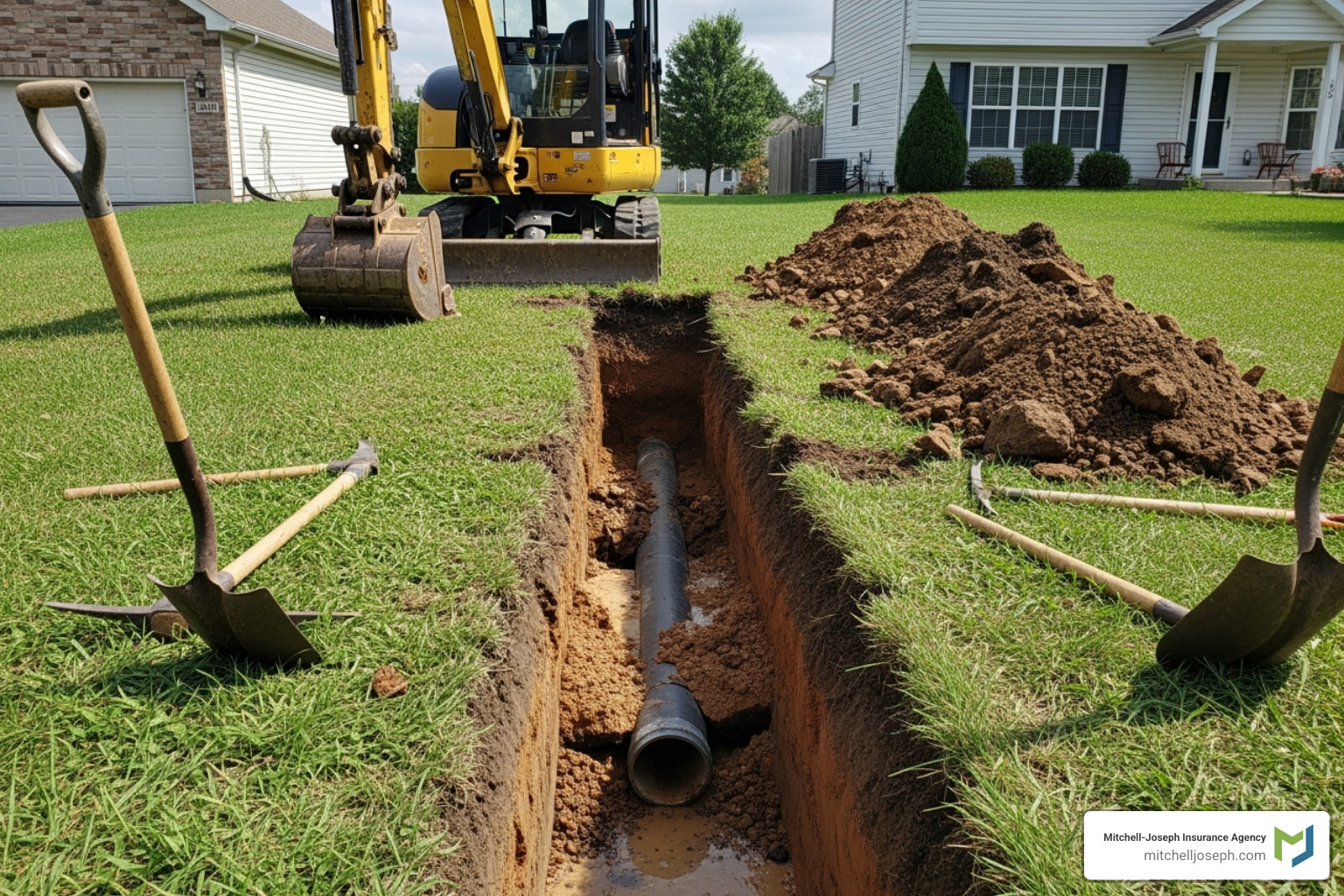
Based on industry data, the average claim for a service line issue is around $5,000. The primary driver of this cost is excavation. Since the pipe is buried deep underground, often beneath landscaping or a driveway, just getting to it is a massive expense.
For example, one homeowner’s repair for a root-damaged pipe cost $1,750 for the new line, but the excavation to access it added another $4,050. The total loss was $5,822. You’re not just paying for pipe; you’re paying for heavy equipment, labor, permits, and property restoration.
This is why Sewer Line Protection is so important. It covers these shocking costs—not just the pipe itself, but also the excavation, backfilling, and restoration of your property. Some policies even cover temporary living expenses if your home is uninhabitable during repairs.
Key Distinctions: Line Damage and Backups
It’s vital to understand the difference between Sewer Line Insurance and Sewer Backup Coverage. They address two different aspects of the same problem, and you ideally need both.
-
Sewer Line Insurance (Service Line Coverage): This covers the physical pipe outside your home. It pays to repair or replace the line when it’s damaged by tree roots, corrosion, or wear and tear. It also covers the expensive excavation and restoration work.
-
Water Sewer Backup Insurance: This covers the damage inside your home. It pays for the cleanup and restoration of your property—like replacing ruined floors, drywall, and furniture—after sewage or water backs up through your drains.
If a tree root cracks your pipe and causes a backup into your basement, Sewer Line Insurance would pay to fix the pipe, while Sewer Backup Insurance would pay to clean the mess inside. Without both, you’re left with a major coverage gap. Both are inexpensive endorsements you can add to your homeowners policy. It’s also important to note that insurance is different from a home warranty, which is a service contract for appliances and typically excludes external utility lines.
Decoding Your Sewer Line Insurance Policy
When you add Sewer Line Insurance to your homeowners policy, it comes as an endorsement with its own coverage limits, deductibles, and covered perils. It’s important to know that the “other structures” coverage on your standard policy is not designed for these unique risks, which is why a dedicated service line endorsement is necessary.

What Does a Typical Sewer Line Insurance Policy Cover?
Our Service Line Coverage is designed to cover the common issues that standard policies exclude:
- Tree root intrusion: Physical damage caused by roots cracking or blocking the pipe.
- Corrosion and rust: Deterioration of older iron or steel pipes that leads to leaks or collapse.
- Wear and tear: Failure due to the natural aging of the pipe system.
- Ground shifting: Damage from frost heave, thawing, or other soil movement.
- Damage to outdoor property: The cost to repair your lawn, driveway, or landscaping after excavation.
- Additional living expenses: Covers hotel stays or temporary housing if a covered failure makes your home unlivable.
- Repair and replacement costs: Includes all related expenses like excavation, permits, and backfilling.
Common Exclusions and Limitations to Know
Understanding what isn’t covered is just as important to avoid surprises:
- Pre-existing conditions: Damage that existed before your coverage began is typically not covered.
- Earthquake damage: This requires a separate earthquake insurance policy.
- Neglect or poor maintenance: Claims can be denied if you ignored obvious warning signs or failed to perform routine maintenance (like pumping a septic tank).
- Septic tank issues: The policy covers the pipes connecting to the tank, but not problems with the tank itself.
- Specific pipe materials: Some outdated or non-standard pipe materials may be excluded.
- Flood damage: This requires a separate flood insurance policy.
- Pest damage: Damage from rodents or other pests (besides tree roots) may not be covered.
If you’re wondering Does Home Insurance Cover Main Sewer Line problems from wear and tear, the answer is almost always no. That’s precisely the gap this coverage is designed to fill.
Securing Your Home and Taking Action
Protecting your home’s buried infrastructure is about being a prepared homeowner. Sewer Line Insurance provides the peace of mind that you won’t face a sudden financial crisis if something goes wrong underground.

Prevention and the Claims Process
Even with insurance, prevention is key. A few simple habits can help you avoid problems:
- Be careful what you flush: Only flush human waste and toilet paper. Avoid grease, coffee grounds, and so-called “flushable” wipes, which can cause serious clogs.
- Schedule regular inspections: For older homes, a camera inspection can spot trouble like root intrusion or deterioration before it becomes an emergency.
- Landscape wisely: Avoid planting large trees or shrubs near your sewer lines. Before you dig, know where your utility lines are. You can do this by contacting your local utility company or using a service like call 811.
If you do experience damage, follow these steps:
- Prevent further damage: Shut off your water if necessary.
- Document everything: Take photos and videos of the damage before and during repairs.
- Contact us immediately: Reach out to us at Mitchell-Joseph Insurance Agency through our Contact page. We will guide you through the claims process.
- Make emergency repairs: If you must act quickly to prevent more damage, do so, but keep all documentation. You have the right to hire your own contractor.
Is Sewer Line Insurance a Smart Investment for You?
For most homeowners, the answer is yes. Consider these risk factors:
- Home Age: Homes over 25 years old likely have older pipes (clay or cast iron) that are more vulnerable to failure.
- Trees: Large, mature trees on your property or your neighbor’s property are a leading cause of sewer line damage.
- Neighborhood History: If your neighbors have had sewer line issues, your home could be at similar risk.
- Climate: Freeze-thaw cycles can shift the ground and crack pipes over time.
Financially, the choice is clear. Sewer Line Insurance can cost as little as $7.99 per month. Compare that to an average repair bill of $5,000, and the value is obvious. You’re paying a small annual amount to protect yourself from a potential multi-thousand-dollar emergency.
At Mitchell-Joseph Insurance Agency, we’ve been helping families in the Finger Lakes region make smart insurance decisions since 1999. We work with 24 carriers to find you the right coverage at a competitive rate.
Don’t wait for a disaster. Let’s have a conversation about your home’s risks and get you protected.
Get a personalized Sewer Line Insurance quote today and secure your home’s essential underground lines.

