

Why Water Backup Protection Matters
Water damage can strike when you least expect it, turning your peaceful home into a soggy disaster zone overnight. Sewer and water backup insurance is an optional endorsement that works alongside your standard homeowners policy, providing crucial protection when water decides to flow the wrong way. This specialized coverage steps in when water backs up through drains or sewers, or when your trusty sump pump decides to take an ill-timed vacation during a rainstorm.
Quick Answer: Sewer and Water Backup Insurance Explained
| What It Is | What It Covers | What It Costs | Who Needs It |
|---|---|---|---|
| An optional endorsement to homeowners or renters insurance | Damage from backed-up drains, failed sump pumps, and sewer backups | $50-$250 annually for $5,000-$25,000 in coverage | Homeowners with basements, sump pumps, older plumbing, or homes in areas with aging sewer systems |
Picture this: You wake up to the unmistakable splash of water underfoot, only to find your toilet has overflowed throughout your bathroom during the night. Or perhaps heavy rain causes your sump pump to fail, sending water creeping across your finished basement, threatening family photos, furniture, and peace of mind. Maybe tree roots have silently invaded your sewer line, creating a backup that sends foul water into your home.
These aren’t just hypothetical scenarios – they’re real nightmares that homeowners face every day, often resulting in thousands of dollars in repairs. The truly shocking part? Your standard homeowners insurance won’t cover a penny of it.
Water damage consistently ranks as the third most expensive type of homeowners insurance claim, trailing only fire and liability lawsuits. Yet many homeowners remain unaware of this critical gap in their protection until they’re standing ankle-deep in water, wondering what went wrong.
I’m Jeffrey Joseph, and I’ve owned Mitchell-Joseph Insurance Agency since 1999. In those years, I’ve helped hundreds of homeowners recover from and protect against devastating water backup incidents. The look of relief when clients learn that sewer and water backup insurance can shield them from these costs is something I never tire of seeing. We specialize in creating customized coverage options that address your home’s unique risk factors.
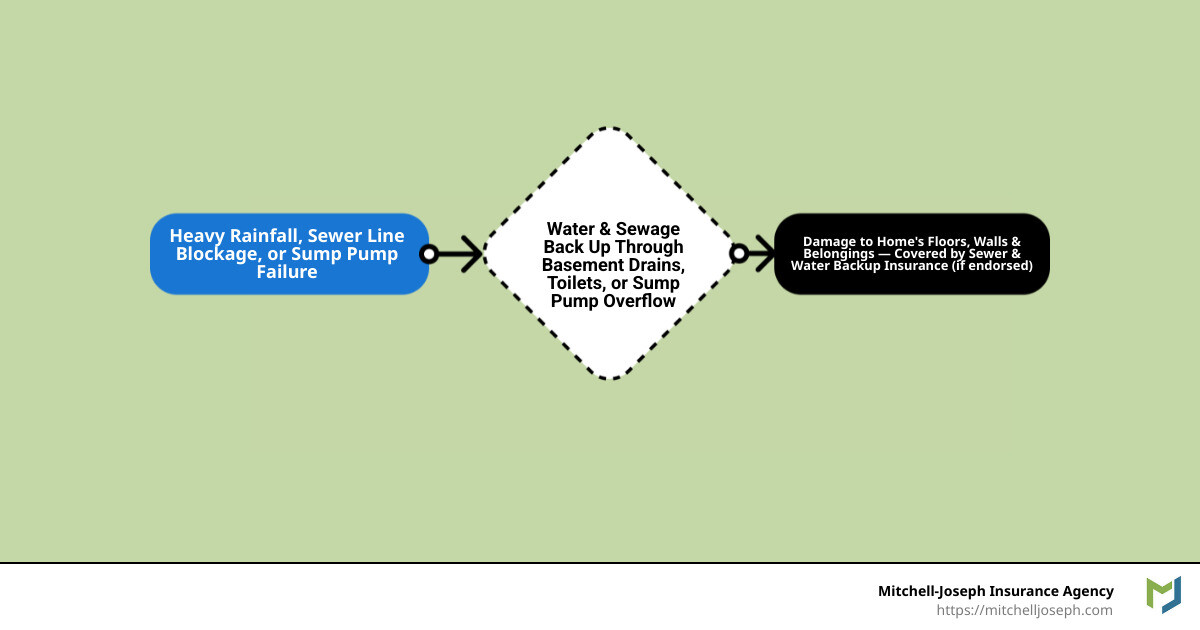
The rising claims for water damage aren’t happening by accident. Aging infrastructure, changing weather patterns, and more finished basements all contribute to increased risk. According to industry statistics, water backup claims average between $5,000-$10,000, with severe cases climbing much higher when finished spaces or valuable belongings are involved.
Confused about what your current policy covers? You’re not alone. Many homeowners assume they’re protected until the moment they need to file a claim. To better understand your options, explore these helpful resources:
- Does homeowners insurance cover water damage from sewer backup?
- Water damage due to rain
- Does sewer line protection covers clogged tub
The stress of dealing with water damage is bad enough without adding financial worry to the mix. Sewer and water backup insurance provides not just financial protection, but also peace of mind when the waters start rising.
What Is Sewer and Water Backup Insurance?
Sewer and water backup insurance is a special add-on (called an endorsement or rider) that gives your home protection against a very specific—and very messy—type of water damage. When you add this coverage to your homeowners, condo, or renters policy, you’re protecting yourself from the damage that occurs when water decides to flow the wrong way—backing up through sewers or drains, or spilling over from a sump pump that’s given up the fight.
Did you know that wastewater pipes across America average about 50 years old? Many of these aging systems are reaching the end of their useful lives, which means the risk of experiencing a backup is higher than ever before. For homeowners, this makes sewer and water backup insurance not just a “nice-to-have” but increasingly a necessity.
As insurance experts often point out: “Water backup insurance is a type of insurance that covers damage caused by water backing up into a home from a sewer, drain or due to a sump pump failure. The cost of water backup insurance is a small price to pay for the money it can save you in repairs.”
This endorsement fills a critical gap that exists in standard insurance policies. Without it, you could find yourself facing thousands of dollars in out-of-pocket expenses for cleanup, repairs, and replacement of water-damaged property—all while dealing with the stress and disruption that comes with it.
How It Differs from Standard Homeowners Insurance
Your standard homeowners insurance (typically an HO-3 policy) isn’t designed to handle every water situation. It generally covers water damage only when it’s sudden and accidental from within your home—like when your dishwasher decides to leak all over your kitchen floor or a pipe bursts in your wall.
Here’s where things get tricky: these standard policies explicitly exclude water that backs up through sewers or drains or overflows from a sump. That’s why sewer and water backup insurance is so important:
Your standard policy contains specific language that excludes sewer and drain backups—leaving you vulnerable without this special coverage. When you add the backup endorsement to your policy, it comes with its own coverage limits, typically starting around $5,000, though you can often purchase higher limits for additional protection.
Some insurers might even apply a separate deductible specifically for water backup claims, which is something to ask about when adding this coverage. And perhaps most importantly, sewer and water backup insurance addresses water coming up from below (through drains) rather than leaking from above (like from your roof).
Here’s a real-world example: If your washing machine hose suddenly bursts, your standard homeowners insurance would likely cover the resulting water damage. But if a heavy rainstorm causes the municipal sewer system to back up into your basement, you’d be out of luck without sewer and water backup insurance.
How It Differs from Flood Insurance
One of the most common and costly misconceptions I see as an insurance agent is homeowners believing their flood insurance will cover sewer backups. This misunderstanding can lead to devastating financial losses.
Flood insurance and sewer and water backup insurance protect against fundamentally different water sources:
Flood insurance (typically purchased through the National Flood Insurance Program) covers damage from “the overflow of inland or tidal waters” and “unusual and rapid accumulation or runoff of surface waters from any source.” In simpler terms, it’s for water that comes from outside your home and above ground.
Sewer and water backup insurance, on the other hand, covers water that backs up through sewers or drains or overflows from a sump—water that’s typically coming from below.
FEMA has a very specific definition of what constitutes a flood: “a general and temporary condition of partial or complete inundation of two or more acres and two or more properties of normally dry land.” This definition doesn’t include water backing up from a clogged drain or failed sump pump.
So what you might casually call a “flooded basement” may not technically be considered a flood for insurance purposes. If the water came from a backed-up drain rather than overland flooding, you would need sewer and water backup insurance, not flood insurance.
For a deeper dive into these important distinctions, check out our article on Water Backup Insurance vs Flood Insurance: What’s the Difference? or visit the Insurance Information Institute: Sewer Backup Insurance resource.
At Mitchell-Joseph Insurance Agency, we’ve seen too many families caught off-guard by these coverage gaps. That’s why we take the time to explain these distinctions clearly—because the last thing you need when dealing with water damage is the additional shock of learning you’re not covered.
What Does Sewer and Water Backup Insurance Cover—and What It Doesn’t
When water starts backing up into your home, the last thing you want to hear is “that’s not covered.” Let’s explore exactly what sewer and water backup insurance protects—and where the coverage stops—so you’re never caught off guard when water starts rising where it shouldn’t.
Covered Perils Snapshot
Your sewer and water backup insurance is like a safety net designed specifically for those messy, stressful water backup scenarios that standard policies turn away. This coverage typically steps in when water or sewage comes up through drains, backs up from sewers, or overflows from a sump pump.
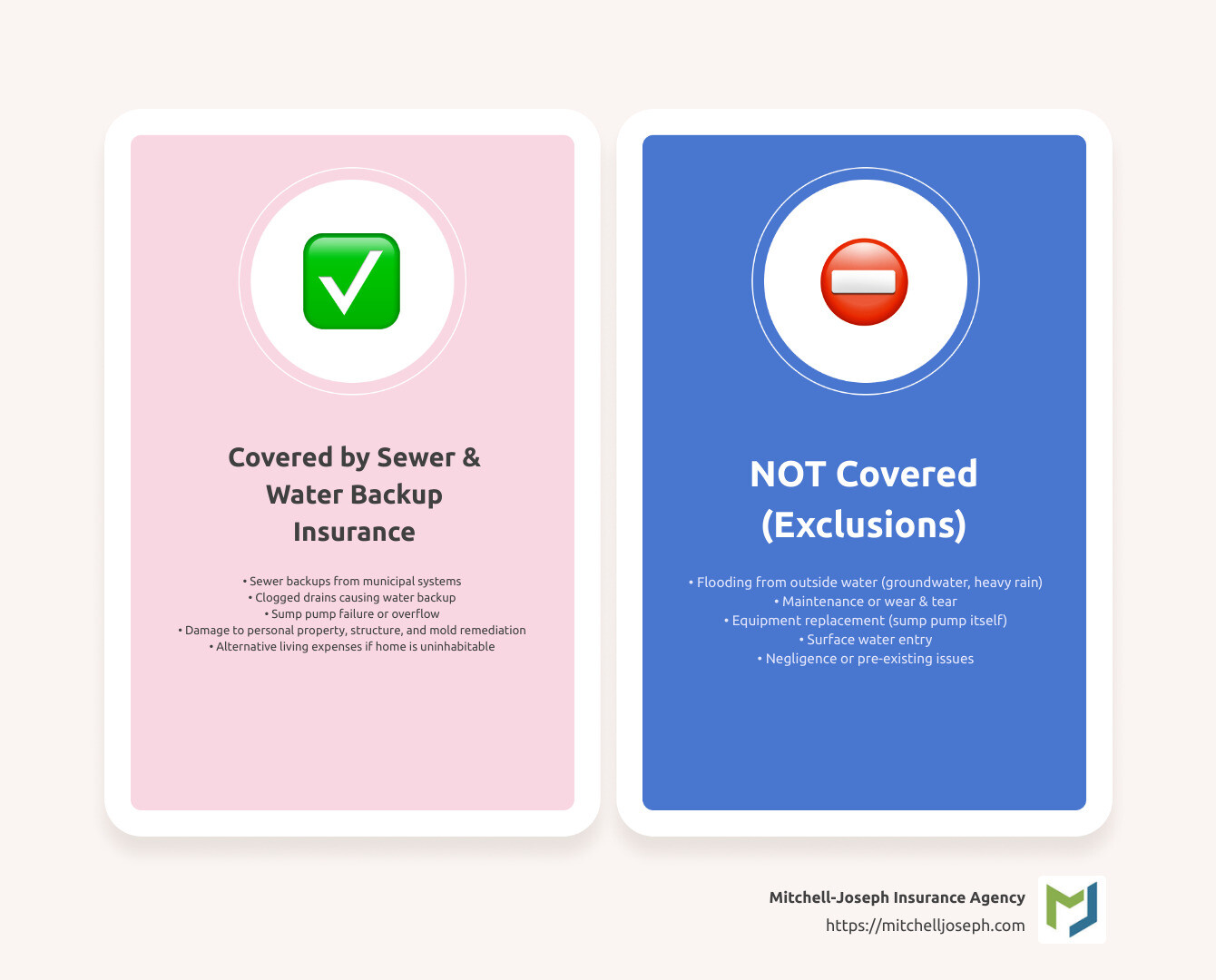
The most common situations covered include sewer backups from overwhelmed municipal systems, drain backups when your home’s plumbing gets clogged, sump pump failures during critical rainstorms, and sump pump overflow when your system simply can’t keep up with water volume.
These backups usually happen because of everyday problems like clogged drains and pipes (that grease you poured down the sink finally caught up with you), tree root intrusion (nature slowly breaking into your sewer lines), municipal sewer blockages beyond your control, or power outages and mechanical failures that knock out your sump pump right when you need it most.
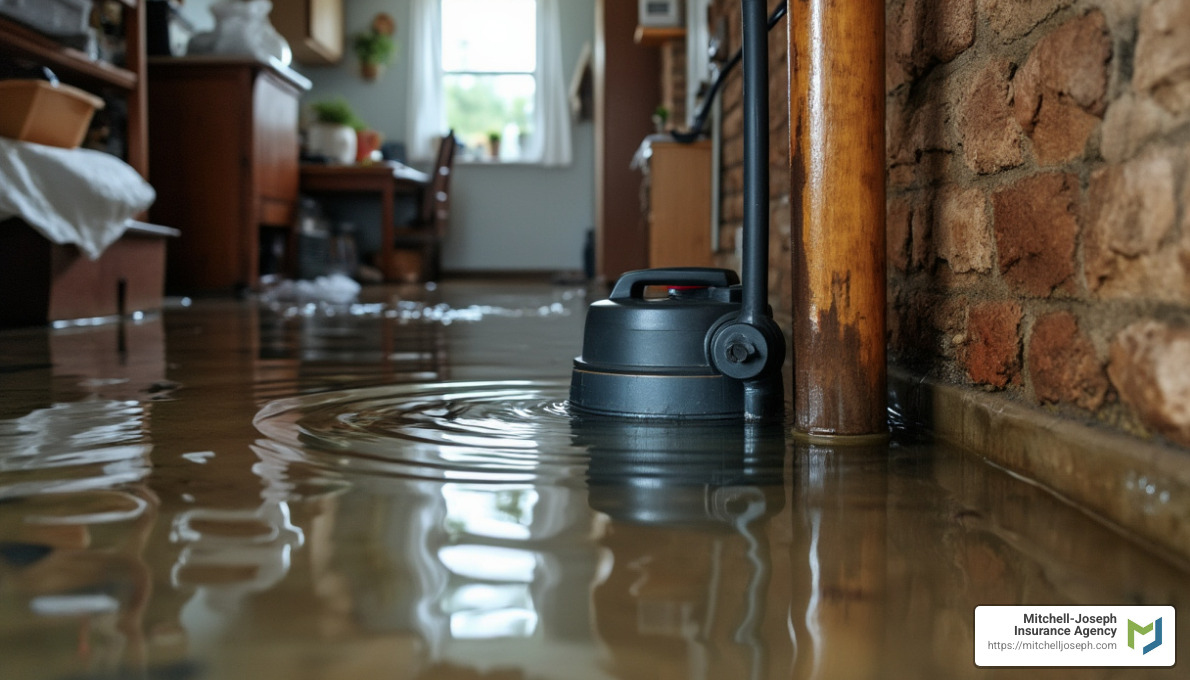
When these disasters strike, your sewer and water backup insurance typically covers the full spectrum of damage: structural repairs to your walls, floors, and electrical systems; personal property like your furniture and electronics; alternative living expenses if you need to temporarily relocate; cleanup costs to remove water and sanitize affected areas; and even mold remediation for fungal problems that develop as a direct result.
Imagine this scenario: It’s a stormy Thursday night, and your sump pump decides it’s the perfect time to quit working. By morning, your finished basement has six inches of standing water. Your carpet is soaked, the drywall is saturated, your couch is ruined, and that entertainment system is toast. Without sewer and water backup insurance, you’d be facing thousands in out-of-pocket expenses. With it, you’re covered up to your policy limits.
Common Exclusions & Gray Areas
Now for the reality check—what your sewer and water backup insurance won’t cover. Understanding these exclusions now saves heartache later.
First and foremost, flooding isn’t covered. If water enters your home from outside at ground level (like when a river overflows), that’s a flood—you need separate flood insurance through the National Flood Insurance Program for that. Similarly, surface water that seeps in through doors, windows, or walls is excluded.
Your insurer also won’t cover damage resulting from negligence—like if you knew your sump pump was failing but didn’t replace it. The actual sump pump replacement itself isn’t covered either; the insurance pays for the damage caused by the failure, not the new equipment. Most policies also exclude service line repairs to underground pipes connecting your home to municipal systems, though we’ll talk about how to cover those in a moment.
Several gray areas exist where coverage depends on your specific policy. Gradual seepage issues might be excluded since some insurers only cover sudden backups. Underground water coming up through foundation floors falls into a murky coverage area for many policies. Pre-existing conditions that began before your policy took effect are typically excluded. Some policies even treat sewage backups differently than clean water situations.
To understand exactly what your specific policy covers, I recommend reading our detailed article on Does Homeowners Insurance Cover Water Damage from Sewer Backup?
Related Endorsements Worth Considering
To build a comprehensive shield against water-related headaches, consider these complementary coverage options alongside your sewer and water backup insurance:
Service Line Coverage fills an important gap by protecting those underground utility lines on your property. If tree roots crush your sewer line or your water line breaks under your yard, this endorsement covers the excavation and repair costs—expenses that can easily run into thousands of dollars. Standard sewer and water backup insurance won’t help with these external line problems.
Equipment Breakdown Coverage is like an extended warranty for your home systems. While your backup insurance covers damage caused by a failed sump pump, this endorsement would actually pay to replace the pump itself. It’s especially valuable for homes with multiple sump pumps or other water management equipment.
Mold Coverage provides extended protection for fungal remediation beyond the basic coverage in your water backup endorsement. Given that even small mold problems can cost thousands to properly address, this additional protection offers valuable peace of mind.
Scheduled Personal Property endorsements make sense if you store valuable items in basement areas that might exceed standard coverage limits. This ensures your prized possessions are fully protected at their actual value.
For homeowners weighing alternatives to traditional insurance for their sewer systems, our article on Sewer Line Home Warranty: Is It Worth It? provides a thoughtful analysis of the pros and cons.
At Mitchell-Joseph Insurance Agency, we’ve seen how devastating water backup damage can be—and how the right coverage makes all the difference. We’re always happy to review your specific situation and help you understand exactly what protection you need for your home’s unique risks.
How Much Coverage Do You Need and How Much Will It Cost?
Finding that sweet spot with sewer and water backup insurance is a bit like Goldilocks – you want coverage that’s just right. Not too little that leaves you vulnerable, and not so much that you’re paying for protection you don’t need.

Setting the Right Coverage Limit
Your basement tells the story of how much coverage you need. A concrete utility space with just your washer, dryer and holiday decorations needs far less protection than your fully finished entertainment paradise with custom carpentry and a home theater.
Most homeowners find coverage sweet spots between $5,000 and $25,000, though some situations warrant going higher. The Insurance Information Institute puts it bluntly: “Water damage is the third most costly homeowners claim behind fire and liability lawsuits.” When water backup happens, it’s rarely a small problem.
If you’ve got an unfinished basement used mainly for storage, $5,000-$10,000 might do the trick. For partially finished spaces with some drywall and flooring, consider $10,000-$25,000. But if your basement is essentially another living floor of your home? You’ll want to look at $25,000 or more.
Don’t forget what’s actually down there. Your furnace, water heater, electrical panels – these big-ticket items add up quickly if they need replacing. And those family photo albums and keepsakes stored in cardboard boxes? They might be irreplaceable, but the professional restoration services to save them come with very real price tags.
Your local environment matters too. Living in an area with aging municipal infrastructure or where heavy rainfall is common? That might tip the scales toward higher coverage limits. The same goes for neighborhoods with lots of mature trees, whose roots have a knack for finding their way into sewer lines.
Pricing Factors Explained
Good news – sewer and water backup insurance is surprisingly affordable for the protection it provides. Most homeowners pay between $50 and $250 annually, though several factors influence where you’ll land in that range.
The coverage limit is the most obvious factor. A basic $5,000 policy might cost as little as $39-70 per year, while each additional $5,000 increment adds roughly $25-35 to your annual premium. That means robust $25,000 coverage might run $139-210 annually – still quite reasonable considering the potential costs of cleanup and restoration.
Your home’s age plays a significant role too. Those charming original pipes in your century-old home? They might charm your insurance company into charging higher rates. Similarly, homes in areas with aging infrastructure or combined sewer systems (where storm water and sewage share pipes) often face higher premiums.
Your personal claims history matters, but so does your address’s history. If previous homeowners filed water backup claims at your property, insurers may see liftd risk regardless of your personal record.
The deductible you choose creates another balancing act. A higher deductible lowers your premium but means more out-of-pocket costs when disaster strikes. For most homeowners, a $500 or $1,000 deductible hits the right balance.
Many insurers also factor in your credit-based insurance score when setting rates. Better credit often translates to lower premiums, though this practice varies by state.
| Coverage Limit | Average Annual Premium |
|---|---|
| $5,000 | $39-70 |
| $10,000 | $64-105 |
| $15,000 | $89-140 |
| $20,000 | $114-175 |
| $25,000 | $139-210 |
One of the advantages of working with Mitchell-Joseph Insurance Agency is our relationships with 24 different insurance companies. Being independent means we’re not locked into a single company’s rates or coverage options. We can shop around to find you the best protection at the most competitive price – something captive agents simply can’t offer.
Remember too that bundling this coverage with your existing policies often open ups discounts. Those savings can sometimes offset much of the added premium for water backup protection, making this essential coverage even more affordable.
Practical Guide: Adding Coverage, Preventing Damage, Filing Claims & FAQs about Sewer and Water Backup Insurance
Now that you understand what sewer and water backup insurance is and why it’s important, let’s talk about the practical side of things. I want to walk you through how to add this coverage, prevent damage before it happens, and what to do if you need to file a claim.
Adding Sewer and Water Backup Insurance to Your Policy
Getting sewer and water backup insurance added to your existing policy is actually pretty straightforward. You don’t need to jump through complicated hoops or fill out mountains of paperwork.
First, give us a call at Mitchell-Joseph Insurance Agency. As an independent agency working with 24 different insurance companies, we can help you compare options to find the best fit for your situation. We’ll chat about the right coverage limits based on your home’s specific risks and what makes sense for your budget.
Once you’ve decided on coverage, we’ll prepare the endorsement form to add to your policy. Some insurers have a 30-day waiting period before coverage kicks in, though many activate it immediately. After everything’s processed, you’ll receive updated policy documents – take a few minutes to review them so you understand your coverage, limits, and any exclusions.
The best part? Unlike flood insurance (which usually requires a separate policy), sewer and water backup insurance is typically just an endorsement to your existing homeowners policy – making it a simple addition to your protection plan.
Preventive Measures to Reduce Risk
I always tell my clients that the best insurance claim is the one you never have to file. Taking some preventive steps can save you from the headache of dealing with water backup damage in the first place.
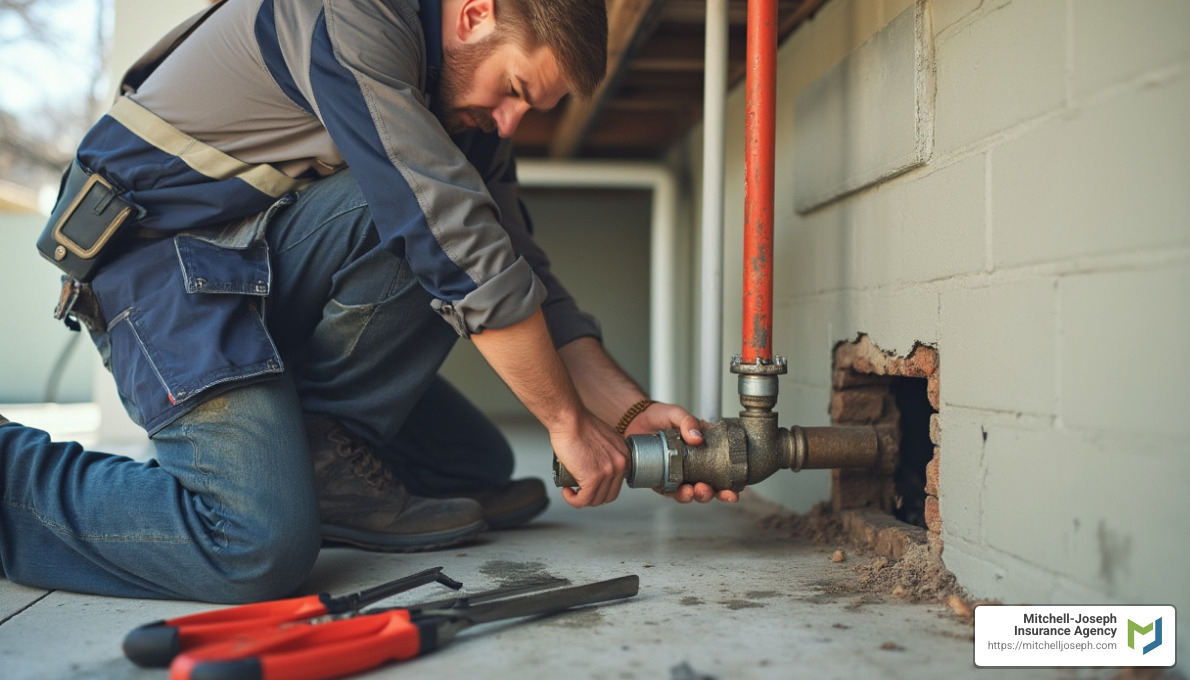
What goes down your drains matters more than you might think. Never pour grease or oil down drains – these solidify and create blockages. And despite what packaging might claim, only flush toilet paper (those “flushable” wipes aren’t really flushable for your plumbing system).
Your sewer line deserves some attention too. Consider having a plumber inspect it periodically, especially if you have older clay pipes. A camera inspection can spot tree root intrusion or pipe damage before it becomes a major problem. Speaking of trees – be mindful of large ones near your sewer line. Those roots are naturally drawn to water sources and can wreak havoc on your pipes.
Sump pump maintenance is crucial if you have one. Test it regularly, especially before rainy seasons. Consider installing a battery backup system for power outages – nothing’s worse than having your pump fail right when you need it most. Most sump pumps need replacement every 7-10 years, so don’t wait for yours to fail during a major storm.
A backwater prevention valve on your sewer line can be a game-changer. These devices allow water to flow out but prevent it from backing up into your home. While installation costs money upfront, it’s significantly less than dealing with a major backup.
Don’t forget about your gutters and downspouts! Keep them clean and make sure downspouts direct water at least 10 feet from your foundation. This simple maintenance step prevents water from pooling around your foundation and potentially finding its way into your basement.
Taking these preventive steps not only reduces your risk but might also qualify you for insurance discounts. Some insurers offer reduced rates for homes with backflow prevention devices or sump pump backup systems.
For more detailed prevention tips, check out our guide on Sewer Backup: What You Need to Know.
Filing a Claim Step-by-Step
Even with the best prevention, backups can still happen. If you find yourself dealing with a water backup situation, here’s how to handle it:
Safety comes first. If it’s safe to do so, turn off electricity to affected areas. If you’re dealing with sewage, wear protective gear (gloves, boots, mask). Don’t hesitate to evacuate if necessary, especially with contaminated water.
Try to stop the water if possible. Identify the source of the backup and address it if you can. Call a plumber for emergency assistance if needed.
Document everything before you start cleaning. Take extensive photos and videos of all damage. Create an inventory of damaged items with estimated values. Note when the backup happened and what you think caused it. This documentation will be invaluable for your claim.
Contact us at Mitchell-Joseph Insurance Agency promptly to report the claim. We’ll guide you through providing the necessary information and can recommend emergency services if needed.
While waiting for the claims process, take reasonable steps to prevent further damage. Remove standing water if safe to do so, move undamaged items to dry areas, and use fans and dehumidifiers to begin drying.
When the claims adjuster visits, share your documentation and ask questions about coverage and next steps. Make sure to get a claim number and contact information for follow-up.
Keep every receipt related to the incident – emergency repairs, cleanup costs, hotel stays if you can’t live in your home. Document all communications with insurance representatives and take photos of the cleanup and repair process.
Finally, carefully review any settlement offer. If something doesn’t seem right, discuss it with us – we’re here to advocate for you and make sure you receive fair treatment under your policy.
For more guidance on handling water backup damage, our article on Water Backup Damage: What to Do Next offers comprehensive advice.
FAQs about Sewer and Water Backup Insurance
I’ve helped hundreds of homeowners with water backup coverage, and these are the questions that come up most often:
Q: What specifically triggers coverage under sewer and water backup insurance?
A: Your coverage kicks in when water or sewage backs up through drains, toilets, or sinks; when sewage comes up from a sewer or septic system; or when water overflows from a sump pump. The key is that the water must be coming up and into your home, not entering from outside at ground level (which would be flood damage).
Q: Does renters insurance cover sewer backups?
A: Standard renters insurance doesn’t cover sewer backups. However, renters can add a water backup endorsement to protect their personal property. This is especially important if you’re renting a basement or garden-level apartment.
Q: Are service lines included in sewer and water backup coverage?
A: No, sewer and water backup insurance typically covers the damage caused by backups, not repairs to the actual pipes. Service line coverage is a separate endorsement that specifically covers the repair or replacement of the lines connecting your home to municipal systems.
Q: If my sump pump fails because of a power outage, is that covered?
A: Yes, most water backup endorsements cover damage resulting from sump pump failure regardless of cause, including power outages. However, policies can vary, so it’s worth reviewing your specific coverage details.
Q: Will water backup coverage pay for a hotel if I can’t stay in my home?
A: Absolutely. If your home becomes uninhabitable due to a covered water backup, your policy typically provides Additional Living Expenses coverage for temporary housing and extra costs like restaurant meals.
Q: Is there a waiting period before water backup coverage takes effect?
A: This varies by insurer. Some impose a 30-day waiting period, particularly if you add coverage during rainy seasons, while many activate coverage immediately.
Q: Does water backup insurance cover mold that develops after a backup?
A: Most water backup endorsements include some coverage for mold remediation resulting directly from a covered event. However, coverage may be limited, and many policies require quick action (within about 14 days) to address potential mold issues.
Q: If my neighbor’s sewer backs up and affects my property, whose insurance covers it?
A: Your sewer and water backup insurance would cover damage to your property, regardless of where the backup originated. Your neighbor’s policy would cover their property. In cases involving negligence, there might be additional liability considerations.
Conclusion
Picture this: You come home from a weekend away to find your basement submerged in murky water. Your cherished family photos, that expensive treadmill, and your newly finished rec room—all damaged. And then comes the gut punch: your standard homeowners insurance won’t cover a penny of it because the water came from a backed-up drain.
This scenario plays out for thousands of homeowners every year, but it doesn’t have to happen to you.
Sewer and water backup insurance serves as your financial safety net for these exact situations. It’s the coverage you hope you’ll never need but will be eternally grateful to have if disaster strikes. For roughly the cost of a few takeout dinners per year—typically between $50 and $250 annually—you’re protecting yourself from potentially tens of thousands of dollars in repair costs.
Here at Mitchell-Joseph Insurance Agency, we’ve walked alongside countless homeowners through the aftermath of water backup disasters. From the historic neighborhoods of Rochester with their aging clay pipes to the rural properties of Canandaigua with their unique septic challenges, we understand the specific risks our New York communities face.
What sets us apart is our independence. We’re not tied to any single insurance company, which means we truly work for you. With access to 24 different insurance carriers and over 200 years of combined experience on our team, we can shop around to find you the perfect balance of comprehensive coverage and affordable premiums.
Think of us as your neighbors who happen to be insurance experts. We’ll take the time to understand your home’s specific risks—whether you have a finished basement filled with valuables or a simple utility space with a washing machine and water heater. Then we’ll recommend the right coverage limit that gives you peace of mind without unnecessary expense.
Don’t wait until you’re ankle-deep in backup water to find the gaps in your coverage. A quick conversation today could save you from a financial nightmare tomorrow. Our friendly team at Mitchell-Joseph Insurance Agency is ready to review your current policy and make sure you’re properly protected against one of homeownership’s most common and costly disasters.
Ready to shore up your protection? Give us a call or stop by our Honeoye Falls office. Your home deserves this essential layer of protection, and you deserve the peace of mind it brings.

