
Your Shield in the World of Self-Employment

Self employed public liability insurance protects you from financial losses if your business activities accidentally injure someone or damage their property. Here’s what you need to know:
Quick Answer: What Self Employed Public Liability Insurance Covers
- Third-party bodily injury – Medical costs if a client or visitor gets hurt
- Property damage claims – Repairs if you damage someone’s belongings
- Legal defense costs – Attorney fees and court expenses
- Completed operations – Issues that arise after you finish a job
- Settlement payments – Compensation you’re legally required to pay
Being your own boss comes with incredible freedom. You set your own hours, choose your clients, and build something that’s truly yours. But with that freedom comes real financial risk. Millions of self-employed individuals face potential liability claims every single day—from the contractor who accidentally breaks a client’s window to the consultant whose equipment damages an office floor.
Without the protective shield of a corporate structure, you’re personally liable for claims. A single lawsuit could devastate your personal finances, your business, and everything you’ve worked to build. That’s where self employed public liability insurance becomes your secret weapon. Starting at surprisingly affordable rates, it’s the safety net that lets you focus on growing your business instead of worrying about worst-case scenarios.
I’m Jeffrey Joseph, and I’ve been helping self-employed professionals across the Finger Lakes Region protect their businesses since 1999, including guiding countless sole proprietors through the complexities of self employed public liability insurance. At Mitchell-Joseph Insurance Agency, we’ve seen how the right coverage can mean the difference between a minor setback and a business-ending disaster.
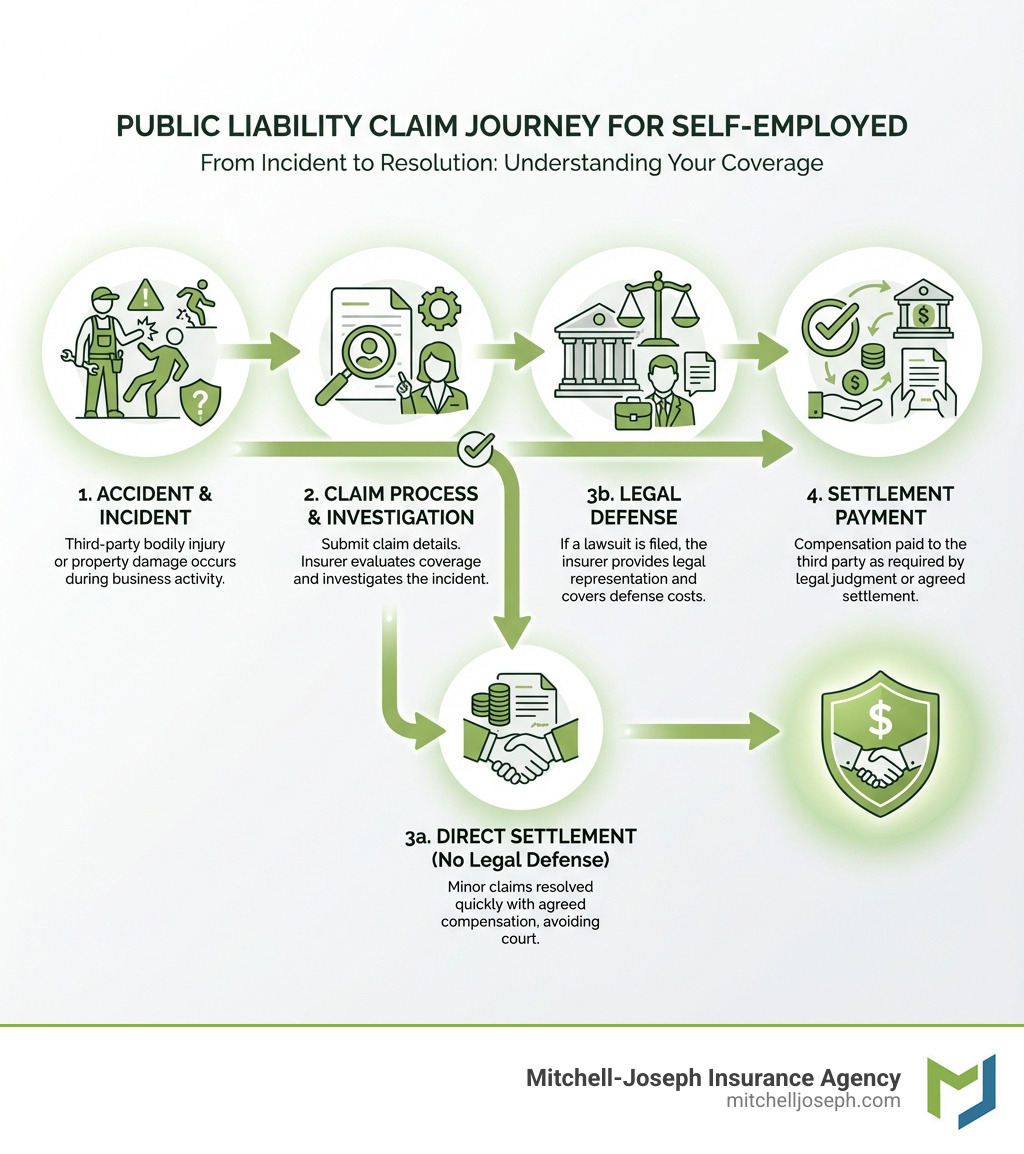
Self employed public liability insurance further reading:
A Deep Dive into Self Employed Public Liability Insurance
When you’re navigating the dynamic world of self-employment, understanding your risks is paramount. While you might be a one-person show, the risks you face are anything but small. This is where self employed public liability insurance steps in, acting as a crucial safeguard for your entrepreneurial journey.
What is Public Liability Insurance?
Public liability insurance protects your business from claims by the public for incidents connected to your business activities. It’s a safety net for unexpected accidents that could lead to costly legal battles.
Specifically, it covers the financial fallout if your business is found legally responsible for:
- Third-party bodily injury: Covers medical costs and lost wages if a client or member of the public is injured due to your business operations, like a slip-and-fall in your home office.
- Property damage: Pays for repairs or replacement if you damage a third party’s property, such as accidentally breaking an item in a client’s home.
- Legal defense costs: Covers attorney fees and court expenses to defend your business against a claim, even if the lawsuit is baseless.
This insurance is vital for sole proprietors, as you are personally liable for claims. Without the legal separation of a corporation, a lawsuit could put your personal assets—like your home and savings—at risk. It protects not just your business, but your personal livelihood.
For a deeper understanding of how such policies work, explore our Business Liability Insurance Policy guide.
Why It’s a Must-Have for the Self-Employed
As a self-employed professional in our region, from Rochester to Honeoye Falls, you constantly interact with the public, which creates potential liabilities. Being prepared is key.

Here’s why self employed public liability insurance isn’t just a nice-to-have, but a true essential:
- Financial Safety Net: A single accident can lead to huge medical and legal bills that could bankrupt your business and personal finances. This insurance acts as a financial shield, protecting your hard-earned assets.
- Building Client Confidence: Being insured signals professionalism and responsibility. Many clients, especially larger organizations, require proof of insurance before hiring you.
- Meeting Contractual Obligations: Many contracts, whether with a local authority in Canandaigua or a company in Victor, will require a minimum level of liability coverage. Without it, you could miss out on valuable opportunities.
- Winning Larger Contracts: Insurance demonstrates credibility and risk management, helping you win larger, more complex projects.
- Peace of Mind: Knowing you’re covered provides peace of mind, letting you focus on growing your business without worrying about potential lawsuits.
We believe in the power of proactive protection. Understanding the Importance of Business Insurance is the first step towards securing your future.
Core Coverages and Common Scenarios
Public liability insurance covers incidents where your business activities cause injury or property damage to a third party. Here are some common scenarios for professionals in communities like Rochester and Pittsford:
- Slips and Falls: A client visits your Honeoye office, slips on a wet floor, and breaks their wrist. Your policy would cover their medical costs and any resulting lawsuit.
- On-Site Property Damage: As a photographer in Canandaigua, you accidentally break a client’s valuable heirloom during a photoshoot. Your insurance would cover the replacement cost.
- Completed Operations Risks: As an electrician in Naples, your past work causes a small fire weeks later. “Completed operations” coverage protects you from claims arising after a job is finished.
- Medical Expenses (without fault): Your policy may include a “medical payments” clause to cover minor injuries on your premises without admitting fault, which can prevent a larger lawsuit.
- Legal Fees: A client in Avon files a frivolous lawsuit. Even if baseless, your policy covers the substantial legal fees to defend yourself.
- Vendor or Supplier Incidents: At a pop-up market in Victor, your display stand falls and injures a passerby. Your insurance can cover claims from the injured person.
It’s clear that even the most careful professional can face unexpected incidents. For more details, you can see an overview of liability insurance from the ABI.
Public Liability vs. Other Key Business Insurance
The world of business insurance can feel like a labyrinth of terms, but understanding the distinctions is key to comprehensive protection. While self employed public liability insurance is fundamental, it’s important to know how it differs from other essential coverages for your business in Honeoye Falls, NY.
We often get asked about the difference between various liability policies. Here’s a quick breakdown:
| Feature | Public Liability Insurance | Professional Liability Insurance (E&O) | Commercial General Liability (CGL) |
|---|---|---|---|
| What it Covers | Bodily injury or property damage to third parties from your operations or premises. | Financial loss to third parties due to your professional advice, errors, or omissions. | Broad coverage including public liability, product liability, personal/advertising injury. |
| Key Risk | Physical harm or damage. | Negligence, mistakes, or inadequate advice. | Wide range of third-party claims, including physical and reputational. |
| Who Needs It | Almost all self-employed individuals, especially those interacting with the public or visiting client sites. | Professionals offering advice or services (consultants, designers, IT professionals). | Many businesses, often encompassing public liability within a broader policy. |
| Example | A client trips over your equipment at their office. | Your consulting advice leads to a client’s financial loss. | Covers a customer slipping in your shop, or a product defect. |
In the U.S., Commercial General Liability (CGL) is the standard policy. It’s a comprehensive package that includes public liability coverage, plus protection for product liability and personal/advertising injury. So, while the term ‘public liability insurance’ is common (especially abroad), most self-employed individuals in New York are actually seeking a CGL policy.
For those providing expert advice or services, Professional Liability Insurance (also known as Errors & Omissions or E&O) is equally vital. You can learn more about this crucial coverage at our Professional Liability Insurance page.
And for a broader understanding of general liability, visit our guide on General Liability Insurance for Businesses.
What is Typically NOT Covered by Self Employed Public Liability Insurance?
While self employed public liability insurance is a powerful tool, it’s not a magic bullet that covers every single risk. Understanding its limitations is just as important as knowing what it covers.

Here’s what public liability insurance typically does NOT cover:
- Employee Injuries: It doesn’t cover employee injuries. For that, you need Workers’ Compensation insurance, which is legally required in New York if you have staff.
- Professional Negligence or Errors: It won’t cover financial losses caused by your professional mistakes or bad advice. That’s what Professional Liability (E&O) insurance is for.
- Damage to Your Own Property: Damage to your own property or equipment isn’t covered. You need a Commercial Property or Business Personal Property policy for that.
- Deliberate Acts or Gross Negligence: Intentional damage, illegal activities, and gross negligence are excluded from coverage.
- Product Defects: Injuries from defective products you sell require Product Liability insurance, which may be part of a CGL policy but is a distinct coverage.
- Cyber-Attacks and Data Breaches: It doesn’t cover data breaches or cyber-attacks. For that, you need specialized Cyber Liability Insurance.
- Business Interruption: Lost income from a forced business closure is not covered. That requires Business Interruption insurance.
By understanding these exclusions, you can work with us to build a robust insurance portfolio that addresses all your unique risks.
Understanding the Cost of Your Self Employed Public Liability Insurance
One of the first questions we hear is, “How much does it cost?” The good news is that self employed public liability insurance can be surprisingly affordable, but the exact premium depends on your business’s unique risk profile.
Here are the key factors that influence the cost:
- Profession/Risk Level: Your profession is the biggest factor. A home-based consultant in Honeoye Falls has a lower risk and premium than a contractor managing job sites in Rochester. High-risk trades like roofing or electrical work cost more to insure.
- Coverage Limits: Higher coverage limits mean higher premiums. Policies typically start at $1 million in coverage, but contracts or high-risk work may require $2 million, $5 million, or more.
- Claims History: A clean claims record can lead to lower premiums.
- Business Location: Operating in areas with higher litigation rates can affect your cost.
- Annual Revenue: Higher revenue generally means more business exposure and can lead to slightly higher premiums.
- Specific Activities: High-risk activities like working at heights or with hazardous materials will increase your premium.
To give you a rough idea, a low-risk, home-based consultant might pay a few hundred dollars per year, while a contractor with higher risks could pay over a thousand dollars annually. The final cost depends entirely on your specific business.
At Mitchell-Joseph Insurance Agency, we specialize in finding competitive rates for our local self-employed clients. For a personalized estimate custom to your specific needs, check out our Business Insurance Quotes NY page.
Secure Your Business and Your Future
As we’ve seen, self employed public liability insurance is more than a business expense—it’s a vital investment in your peace of mind and your business’s future.
By securing the right coverage, you:
- Protect Your Personal Assets: As a sole proprietor, this insurance acts as a critical barrier, shielding your personal savings and property from business-related lawsuits.
- Improve Your Professional Credibility: Having proper insurance signals responsibility to clients and can help you land that next big contract in Rochester or Canandaigua.
- Meet Contractual Obligations: Many clients and venues require proof of liability coverage before they will work with you. Don’t let a lack of insurance cost you an opportunity.
While not always legally required by New York State, public liability insurance is often a contractual necessity. Your clients or work venues may mandate it, so always check your agreements.
Navigating insurance is complex, but you’re not alone. As an independent, family-owned agency with deep roots in the Finger Lakes Region, Mitchell-Joseph has helped self-employed professionals for decades. We leverage our network of 24 insurance carriers to find you personalized, competitive coverage that fits your business and budget—from Honeoye Falls to Pittsford, Naples, and beyond.
Don’t leave your hard work to chance. Let us help you find the secret weapon that will protect your business for years to come.
Get a personalized quote for your NY General Liability Insurance today

