

Why Understanding Your RV Insurance Options Is Critical Before You Hit the Road
RV insurance coverage options protect your home-on-wheels and your family from financial disaster while exploring America’s highways and campgrounds. Here’s what you need to know:
Essential RV Insurance Coverage Types:
– Liability – Required by law in most states for motorhomes
– Collision – Covers crash damage to your RV
– Comprehensive – Protects against theft, weather, and vandalism
– Personal Belongings – Replaces your gear and belongings inside
– Vacation Liability – Covers guest injuries at your campsite
– Roadside Assistance – Emergency towing and repairs on the road
Optional Add-Ons for Peace of Mind:
– Full-timer coverage (if RV is your primary home)
– Emergency expense coverage (hotels when RV is uninhabitable)
– Pet coverage and roof protection
A shocking 85% of RV owners are under-insured or uninsured, according to Trip Club Insurance research. The average RV insurance policy costs just $660 per year – a small price for protecting an investment that often exceeds $100,000.
Your RV isn’t just a vehicle or just a home – it’s both. That’s why standard auto or homeowners insurance won’t cut it. You need specialized coverage that understands the unique risks of life on the road.
I’m Jeffrey Joseph, and I’ve been helping Finger Lakes families protect their recreational vehicles and peace of mind since 1999 at Mitchell-Joseph Insurance Agency.

RV insurance coverage options terms simplified:
– affordable recreational vehicles
– fun recreational vehicles
– top rated recreational vehicles
Do You Need RV Insurance? Laws & Vehicle Types
Here’s the straight answer: yes, you absolutely need RV insurance – but the type and amount depend on what you’re driving and where you’re taking it.
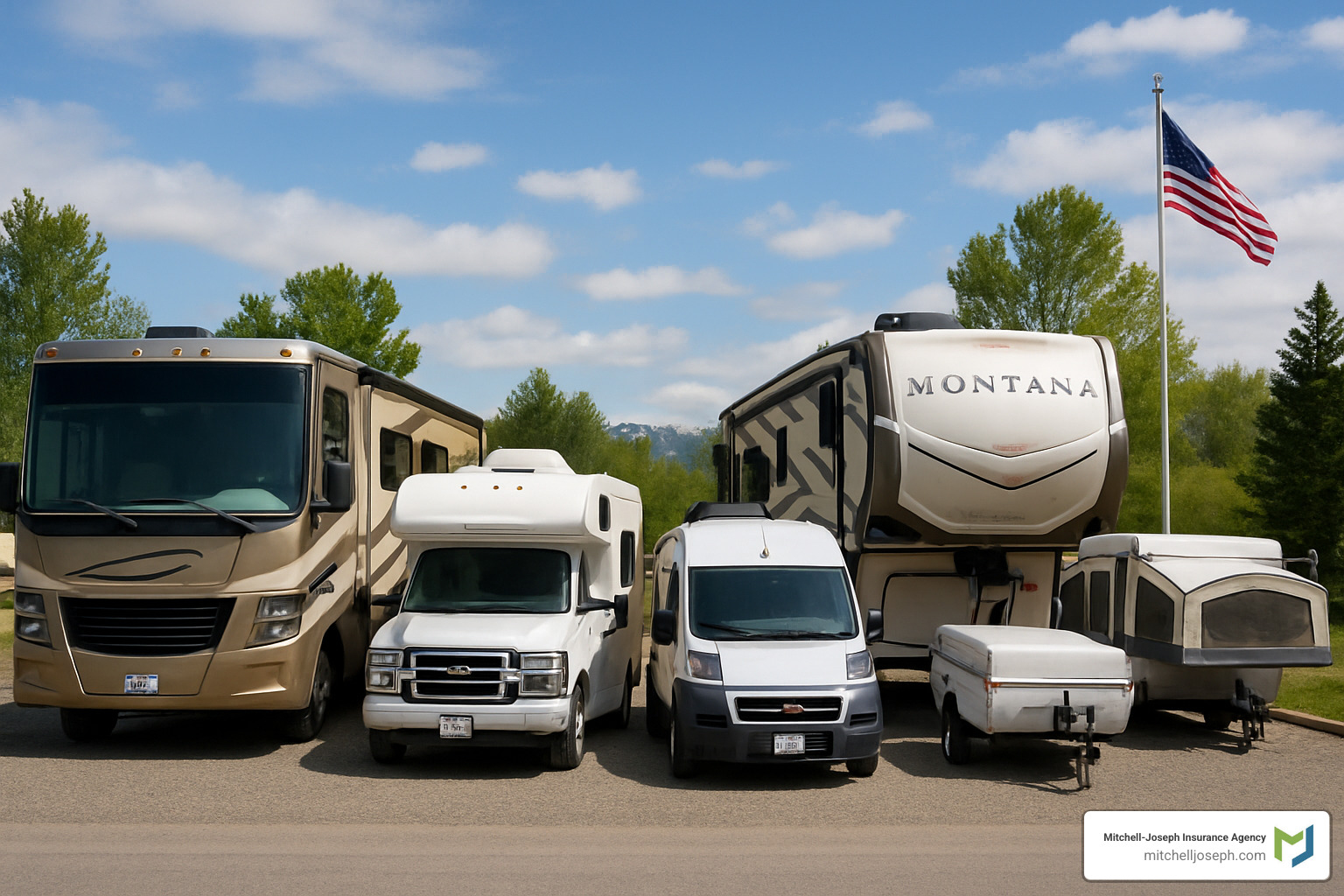
Motorhomes are treated just like cars when it comes to insurance requirements. Whether you’re driving a Class A coach, Class C, or Class B camper van, nearly every state requires liability coverage.
Travel trailers, fifth wheels, and pop-ups play by different rules. Since you’re towing them, your tow vehicle’s liability insurance typically covers the trailer while rolling down the highway. But here’s where it gets tricky.
Lenders change everything. If you’re financing that new travel trailer, your lender will require comprehensive and collision coverage to protect their investment.
Here in New York, the latest research on state minimums shows we need 25/50/10 liability coverage. That means $25,000 per person for injuries, $50,000 total per accident, and $10,000 for property damage. But if your 35-foot motorhome causes a serious accident, those minimums won’t scratch the surface of what you could owe.
Campgrounds are getting pickier too. I’ve had clients call me in a panic because their dream campground required proof of RV insurance coverage options before allowing them to set up camp.
The bottom line? Whether you’re legally required to carry insurance or not, the financial risk of going without coverage is simply too high.
RV Insurance Coverage Options
Think of RV insurance coverage options like building a custom toolkit – you need the basic tools everyone uses, plus specialized ones that match how you actually use your RV.
Basic RV Insurance Coverage Options
Every RV owner needs these fundamental protections, regardless of whether you’re a weekend camper or a full-time road warrior.
Liability coverage is your first line of defense when things go wrong. Picture backing out of a tight campsite and scraping the RV next to you, or someone tripping over your leveling blocks. Liability coverage handles their medical bills and property damage, plus legal costs if they sue.
Collision coverage steps in when your RV meets an immovable object. Low-hanging branches are notorious RV enemies, and backing into campsite posts happens more often than anyone wants to admit. This coverage pays for repairs minus your deductible.
Comprehensive coverage handles the curveballs life throws at you. Hailstorms can turn your RV’s roof into Swiss cheese – I’ve seen $30,000 repair bills from a single storm. This coverage also protects against theft, vandalism, fire, floods, and deer encounters.
Uninsured motorist coverage protects you when the other driver has no insurance or carries pathetically low limits. This coverage can save you thousands when someone else’s poor planning becomes your problem.
Medical payments coverage takes care of immediate medical expenses for you and your passengers, no matter who caused the accident.
Specialized RV Insurance Coverage Options for Your Lifestyle
Here’s where RV insurance coverage options get really interesting – these coverages are designed specifically for the RV lifestyle.
Personal belongings coverage replaces all the gear that makes your RV feel like home. Your camping chairs, expensive grill, electronics, clothes, and outdoor equipment all get protection. Many policies replace items at their original purchase price, not depreciated value.
Vacation liability coverage is perfect for social campers who love making friends at campgrounds. If someone gets hurt while visiting your site, this coverage provides up to $10,000 in protection.
Roadside assistance designed for RVs is completely different from regular auto roadside service. Standard tow trucks can’t handle a 35-foot motorhome, and regular mechanics don’t understand RV systems.
Full-timer coverage transforms your RV policy into something that works like homeowners insurance. If you live in your RV more than 150 days per year, you need this upgrade.
Emergency expense coverage pays for hotels, meals, and transportation when your RV becomes unlivable due to a covered problem.
Other valuable add-ons include permanent attachments coverage for solar panels and satellite dishes, purchase price guarantee that prevents depreciation losses, and pet coverage for veterinary bills.
For complete details about all our coverage options, check out our insurance coverage page.
How to Choose the Right RV Insurance Coverage Options
Selecting the right RV insurance coverage options isn’t about buying everything available – it’s about smart matching your coverage to your actual situation and budget.
Start by honestly assessing your RV’s value and your financial comfort zone. A $200,000 Class A motorhome justifies different coverage than a $15,000 pop-up trailer.
Next, think about how you actually use your RV. Weekend warriors have different needs than people who spend months on the road.
Consider your deductible comfort level carefully. Higher deductibles lower your monthly premium but mean more money out of your pocket when you file a claim.
Finally, talk with an experienced agent who understands RVs. Our team at Mitchell-Joseph Insurance Agency has seen every possible scenario over our 200+ years of combined experience.
| Coverage Comparison | Basic Coverage | Improved Coverage |
|---|---|---|
| Liability | State minimums | Higher limits recommended |
| Collision | Standard deductible | Lower deductible options |
| Comprehensive | Basic coverage | Full replacement cost |
| Personal Belongings | $3,000 standard | Increased limits available |
| Roadside Assistance | Basic towing | Specialized RV service |
| Emergency Expenses | Not included | Up to $750+ per day |
Cost, Discounts & Money-Saving Hacks
Let’s talk money – because RV insurance coverage options don’t have to drain your vacation fund. The average RV owner pays just $660 per year for coverage. That’s less than $2 per day to protect what’s often a six-figure investment.

Your premium isn’t set in stone. I’ve seen clients slash their rates by 20% or more just by understanding what insurance companies care about most.
Your driving record is the biggest factor. Insurance companies love clean records and reward you with lower rates. A spotless record for several years can earn you significant discounts.
Where you live makes a huge difference too. Our clients in rural Finger Lakes communities often pay less than folks in Rochester or Syracuse. Lower population density means fewer accidents and less theft risk.
Storage options can be your secret weapon for savings. When your RV sits covered and locked up for New York’s winters, you can suspend certain coverages and save up to 53% during storage months.
Multi-policy discounts are almost like free money. Bundle your RV with your home and auto insurance, and you can save up to 20%. At Mitchell-Joseph Insurance Agency, we represent 24 different companies, so we can mix and match to find the combination that saves you the most.
Safety features on your RV can earn you real discounts. Anti-lock brakes, backup cameras, and anti-theft systems all signal to insurance companies that you’re less likely to file a claim.
Pay-in-full discounts might seem small, but they add up. Most companies charge monthly billing fees, and paying annually eliminates those charges while often earning an additional discount.
Usage pattern matters more than you might think. If you only use your RV 30 days a year, make sure your insurance company knows. Limited-use policies can save serious money.
For more insights about insurance savings, check out our auto insurance coverage page.
The bottom line? Don’t just accept the first quote you get. With the right approach and an experienced agent, you can get excellent RV insurance coverage options without overpaying.
Coverage Tweaks for Full-Timers, Part-Timers, and Commercial Use
Your RV lifestyle determines what RV insurance coverage options you actually need. A weekend camper has completely different risks than someone who calls their RV home year-round.

Full-timers face the most complex insurance needs because their RV serves as both vehicle and primary home. If you spend more than 150 nights per year in your RV, standard coverage won’t cut it. Full-timer liability coverage becomes essential – it works like homeowners insurance, protecting you when someone gets hurt visiting your “home.”
Loss assessment coverage protects you from unexpected RV park fees. If you accidentally damage park property, this coverage handles your share of the damages.
Your belongings situation changes dramatically when your RV holds everything you own. Standard personal belongings limits of $3,000 won’t replace a full-timer’s possessions. We typically recommend at least $10,000 in coverage.
Part-time RVers who use their rigs seasonally can often get by with more basic coverage, but smart part-timers don’t skimp on key protections. Vacation liability coverage becomes crucial when you’re socializing at campgrounds.
The beauty of part-time RV ownership is the storage discount opportunity. During winter months when your RV sits covered in storage, you can suspend collision and comprehensive coverage, saving up to 53% on your premium.
Emergency expense coverage matters more for part-timers than full-timers. When you’re 800 miles from home and your RV breaks down, you need hotel and meal coverage.
Commercial use throws a wrench into standard RV insurance. If you’re renting your RV through peer-to-peer platforms, your personal RV policy likely excludes coverage during rental periods.
Commercial RV policies cost more but provide essential protection for rental situations. They include higher liability limits and comprehensive coverage that doesn’t exclude commercial use.
Toy haulers present unique challenges. That $15,000 ATV in your RV’s garage might not be covered while being transported. Loading and unloading toys creates liability risks.
Tow vehicle liability becomes critical for large fifth wheels and travel trailers. Make sure your truck’s policy includes adequate coverage while towing.
The key is matching your coverage to your actual lifestyle, not what you think you might do someday.
For more information about finding the right recreational vehicle for your needs, visit our affordable recreational vehicles page.
What’s NOT Covered & Common Mistakes
Nobody likes unpleasant surprises, especially when dealing with an insurance claim hundreds of miles from home. Understanding what your RV insurance coverage options don’t include can save you from financial heartbreak.
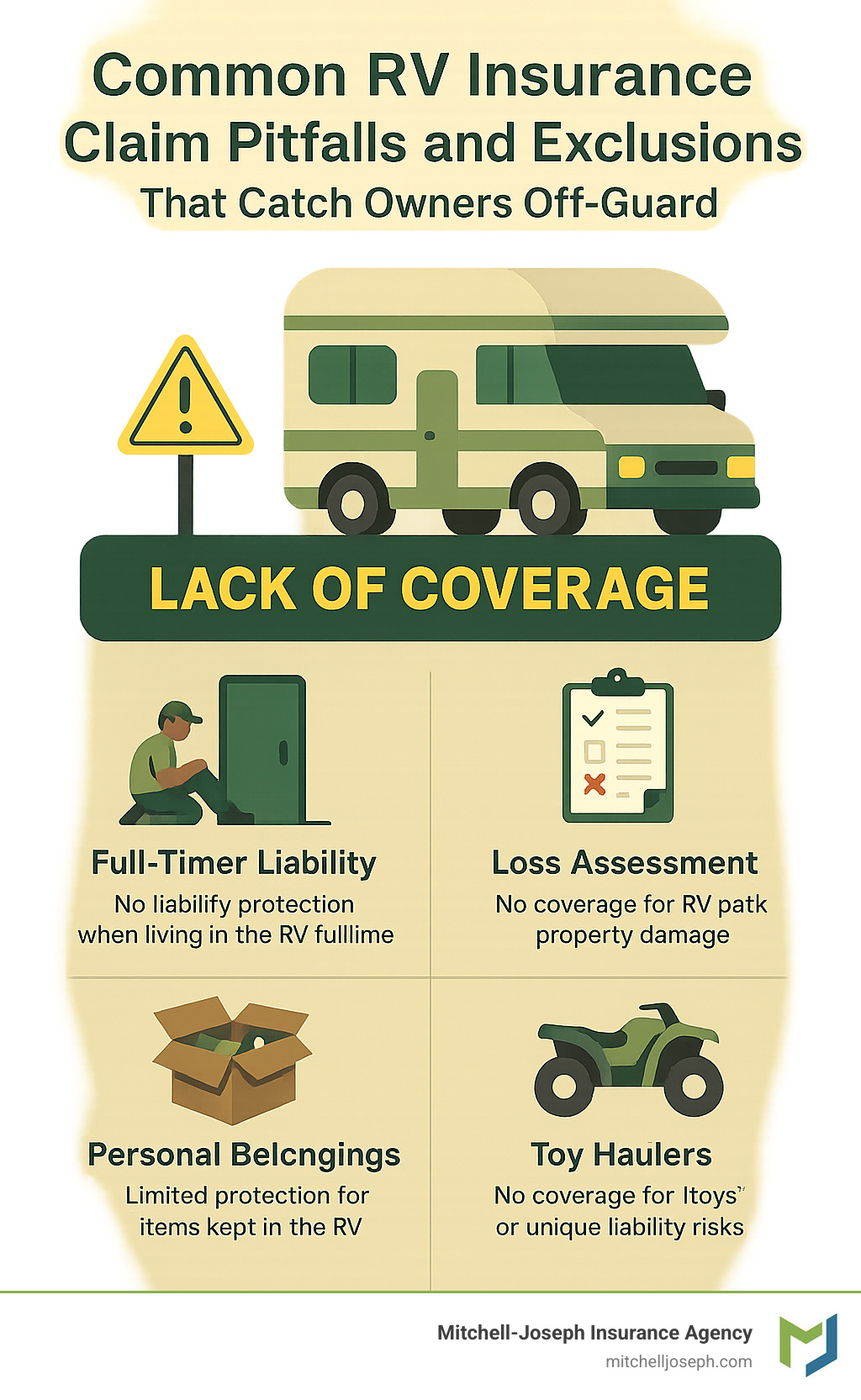
Wear and tear is the big one that catches people off guard. Your RV’s slideout mechanism that finally gives up after five years? That’s a maintenance issue, not an insurance claim. The same goes for rust, faded paint, worn tires, and other normal aging.
Mold, fungi, and rot might seem like they should be covered, but most policies exclude these entirely. Insurance companies consider these maintenance-related problems that develop over time.
Manufacturer defects belong in the warranty department, not the insurance claim department. If your brand-new RV’s air conditioner fails because of a factory defect, that’s between you and the manufacturer.
Flood and earthquake damage usually require separate coverage. While we don’t see many earthquakes in the Finger Lakes, flooding can happen anywhere.
Items left outside your RV typically aren’t covered. That $500 camping chair you forgot to bring in before the thunderstorm? Most policies won’t replace it.
The biggest mistake I see is undeclared full-time usage. Some folks tell us they use their RV for weekend trips when they’re actually living in it full-time. This is insurance fraud, and companies can void your entire policy when they detect it.
Insufficient liability limits represent another costly mistake. New York’s minimum requirements sound like big numbers until you cause a serious accident with your 40-foot motorhome.
Coverage lapses might seem minor, but they can void your entire policy. Even missing one payment can create problems, especially if you’re financing your RV.
Many RV owners make the mistake of not updating their coverage when they add expensive equipment. That $8,000 solar panel system you installed might not be covered under your original policy limits.
Assuming homeowners insurance covers RV contents is another expensive assumption. While some homeowners policies provide limited coverage for personal property in recreational vehicles, this coverage is usually minimal.
The common RV problems page from industry experts shows that many expensive RV issues fall into these excluded categories.
At Mitchell-Joseph Insurance Agency, we’ve seen these scenarios play out countless times over our 200+ years of combined experience. The key is having honest conversations about how you actually use your RV.
Frequently Asked Questions about RV Insurance Coverage Options
Let’s tackle the most common questions we hear from RV owners about RV insurance coverage options.
Is RV insurance required by law everywhere?
The short answer is: it depends on what kind of RV you own and where you’re driving it. Motorhomes – those self-powered Class A, B, and C vehicles – must carry liability insurance in virtually every state, just like your car.
Here in New York, we require 25/50/10 coverage, which means $25,000 per person for bodily injury, $50,000 total per accident, and $10,000 for property damage. But those minimums are pretty skimpy when you’re driving a 40-foot, 30,000-pound vehicle.
Travel trailers, fifth wheels, and pop-ups are different. Since they don’t have engines, most states don’t require separate insurance. Your tow vehicle’s liability coverage typically extends to cover the trailer while you’re pulling it.
But if you’re financing your trailer, your lender will almost certainly require comprehensive and collision coverage. And more campgrounds are asking for proof of insurance before they’ll let you set up camp.
How does RV insurance differ from auto or homeowners?
This is where RV insurance coverage options really shine – they’re designed for the unique reality that your RV is both a vehicle and a home. Your regular auto insurance doesn’t care about the $3,000 worth of camping gear stored inside your RV, and it won’t pay for hotel rooms if your RV becomes uninhabitable after an accident.
RV insurance bridges this gap beautifully. It combines vehicle protections like liability, collision, and comprehensive coverage with home-like benefits such as personal belongings coverage, vacation liability protection, and emergency expense coverage.
Can I get coverage if I rent my RV out?
This question comes up more often with platforms like RVshare and Outdoorsy making it easier to rent out your RV. The tough news is that most standard RV insurance policies specifically exclude commercial use – and yes, renting counts as commercial use.
Some insurance companies now offer commercial use endorsements that you can add to your existing policy. Others provide separate commercial RV policies designed specifically for rental situations.
The most important thing? Never assume your standard policy covers rentals. Always check with your insurance company before you hand over the keys.
Conclusion
Picture this: You’re sitting around a campfire at your favorite campsite, watching the sunset paint the sky in brilliant colors. Your RV is parked safely nearby, and you’re completely relaxed because you know you’re properly protected. That’s the peace of mind that comes with choosing the right RV insurance coverage options.

Choosing the right coverage doesn’t have to feel overwhelming. Start with your foundation – liability, collision, and comprehensive coverage. These are your must-haves. Then build on that foundation with specialized coverages that match how you actually use your RV.
Shocking statistic we shared earlier? 85% of RV owners are underinsured. Don’t become part of that statistic. The average annual cost of $660 is honestly a bargain when you consider you’re protecting an investment that often exceeds $100,000.
At Mitchell-Joseph Insurance Agency, we’ve been helping families throughout the Finger Lakes region protect their recreational vehicles since 1999. Our 200+ years of combined experience represents countless conversations with RV owners just like you, helping them make smart coverage decisions and avoid costly mistakes.
What sets us apart is our relationships with 24 different insurance companies. This means we can shop around to find the RV insurance coverage options that truly fit your specific needs and budget.
Whether you’re a weekend warrior exploring Skaneateles Lake, a snowbird planning your winter escape, or a full-timer ready to accept life on the open road, we understand your unique situation. We’ll help you cut through the insurance jargon and find coverage that actually makes sense for your lifestyle.
The best trips happen when you’re properly protected. You shouldn’t have to worry about “what if” scenarios when you’re creating memories with the people you love most.
Ready to get the protection you deserve? Contact us today for a personalized quote that takes into account your specific RV, how you plan to use it, and what coverage options will give you the most value. Let’s make sure your next trip is memorable for all the right reasons.
For comprehensive information about all our insurance solutions, visit mitchelljoseph.com/insurance-coverage.

