

Why RV Insurance is More Than Just Another Policy
RV insurance is specialized coverage for your recreational vehicle. Unlike a standard auto policy, it combines vehicle, home, and personal property protection to address the unique needs of a “home on wheels.”
Key RV Insurance Essentials:
- Legally Required: Most states mandate liability coverage for motorized RVs.
- Investment Protection: Covers vehicles that can cost from $50,000 to over $500,000.
- Specialized Coverage: Protects features like awnings, slide-outs, and solar panels.
- Personal Belongings: Insures the items you keep inside your RV.
- Campsite Liability: Provides liability protection when you’re parked.
The freedom of RV travel comes with risks standard policies don’t cover. A staggering 85% of RV owners are under-insured or uninsured, hitting the road without proper protection. Whether you have a pop-up camper or a Class A motorhome, the right insurance is crucial.
I’m Jeffrey Joseph of Mitchell-Joseph Insurance Agency. Since 1999, I’ve helped families in the Finger Lakes region find the right RV insurance, preventing minor issues from becoming financial disasters.

Your Complete Guide to RV Insurance
What is RV Insurance and Why is it Essential?
What is RV insurance? It’s a specialized policy for your recreational vehicle, which is a unique hybrid of a vehicle, home, and storage unit. Standard auto insurance is insufficient because it doesn’t cover the unique features and risks of RV ownership.
This specialized coverage is essential for several key reasons:
- It’s the Law: Most states require liability coverage for motorized RVs (Class A, B, and C) to cover injuries or damage you might cause.
- Lenders Require It: If you financed your RV, your bank will mandate comprehensive and collision coverage to protect their investment.
- It Protects Your Investment: Standard auto policies won’t cover RV-specific features like slide-outs or awnings, and homeowners insurance typically doesn’t cover belongings once they leave your property.
- It Provides Peace of Mind: Proper RV insurance lets you focus on your trip, not potential disasters.
At Mitchell-Joseph, we’ve seen how vital this protection is. We always recommend specialized Recreational Vehicle Insurance before you hit the road.
Core Coverage Types for Every RVer
Building the right RV insurance policy means choosing the right components. Here are the core coverages:
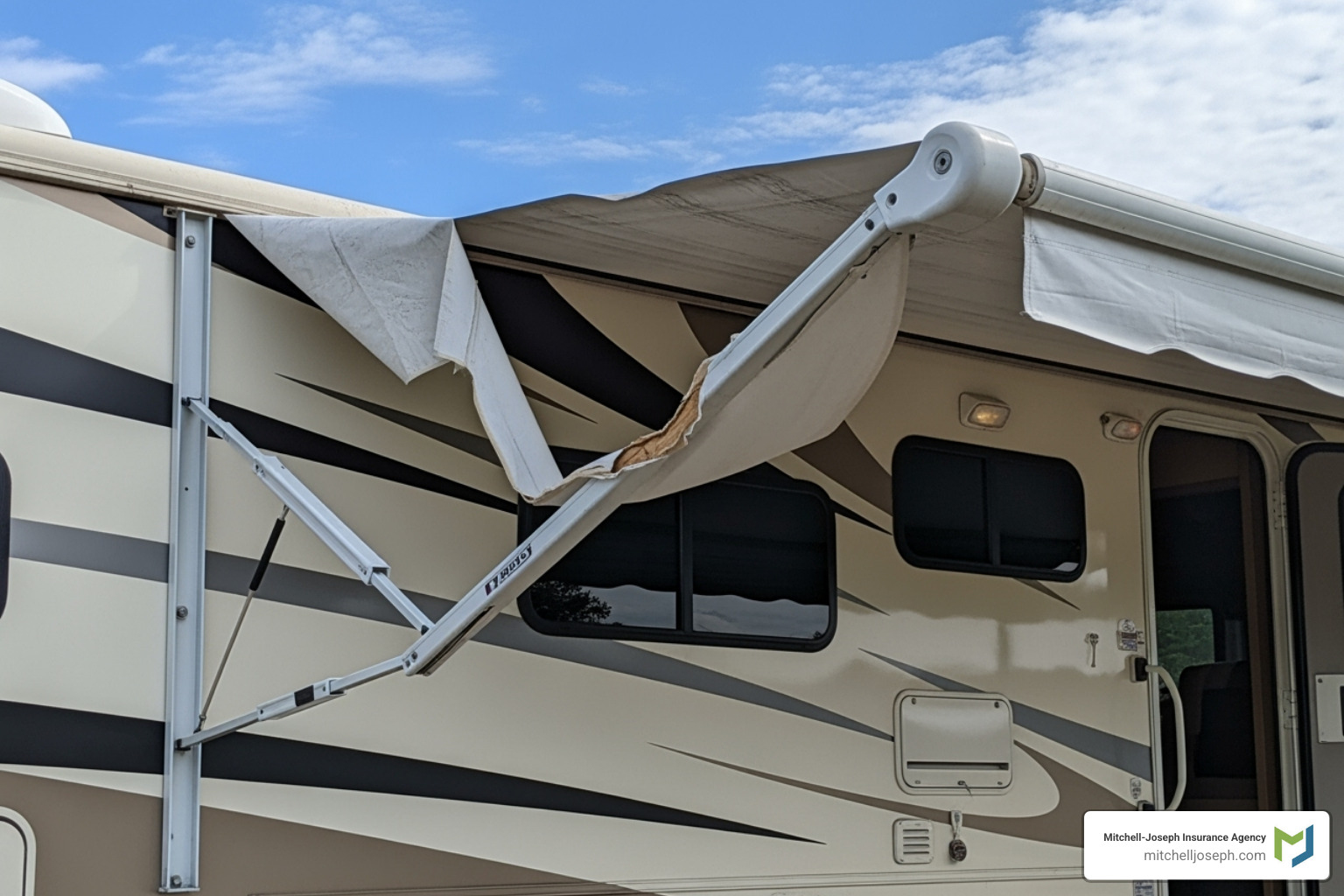
- Liability Coverage: This is the foundation. It covers bodily injury and property damage you cause to others. Given the size and weight of RVs, higher limits are recommended.
- Collision Coverage: Pays to repair or replace your RV if it’s damaged in a collision with another object or vehicle, or if it rolls over.
- Comprehensive Coverage: Protects against non-collision events like theft, fire, vandalism, falling objects, storms, and animal collisions.
- Uninsured/Underinsured Motorist: Covers your expenses if you’re hit by a driver with little or no insurance.
- Medical Payments: Pays for medical bills for you and your passengers after an accident, regardless of who is at fault.
What’s Not Covered? Standard policies typically exclude normal wear and tear, maintenance issues like mold or rot, and damage from pests. Insurance is designed for sudden and accidental events, not gradual deterioration. For a deeper dive, explore our RV Insurance Coverage Options.
Specialized Policies: Full-Time, Motorhome vs. Travel Trailer
Not all RVs are insured the same way; your policy depends on your RV type and lifestyle. The main difference is between motorhomes (which you drive) and travel trailers (which you tow).
| Coverage Feature | Motorhome Insurance | Travel Trailer Insurance |
|---|---|---|
| Liability Coverage | Required as part of RV policy | Usually covered by towing vehicle |
| Physical Damage | Comprehensive & collision on RV policy | Comprehensive & collision on separate RV policy |
| Vacation Liability | Available add-on for campsite protection | Available add-on for campsite protection |
| Personal Effects | Optional coverage for belongings | Optional coverage for belongings |
In short, a motorhome needs its own liability policy. For a travel trailer, your tow vehicle’s insurance provides liability on the road, but you need a separate policy to cover physical damage to the trailer itself.
Full-time RV insurance is for those who use their RV as a primary residence (six months or more per year). It functions more like homeowners insurance, offering higher personal liability, robust personal property coverage, and emergency expense coverage for temporary housing if your RV becomes uninhabitable.
Other key add-ons include:
- Vacation Liability: Protects you if someone is injured at your campsite. Essential for all RVers.
- Personal Effects Coverage: Insures your belongings inside the RV.
- Permanent Attachments Coverage: Covers custom additions like solar panels or satellite dishes.
Matching coverage to your use is key, whether you’re looking at Top Rated Recreational Vehicles or insuring your current one.
Understanding the Cost of Your RV Insurance
“What’s this going to cost me?” The cost of RV insurance varies widely, from around $125 per year for a basic travel trailer policy to $5,000+ for a luxury motorhome. Most owners pay between $400 and $1,200 annually. Key factors influencing your premium include:
- RV Type, Age, and Value: Motorhomes, especially newer, high-value Class A models, cost more to insure than towable trailers.
- Driving Record: A clean record lowers your rates, particularly for motorhomes.
- Usage: Full-time RVers pay more than occasional weekend users due to increased risk.
You can save money with common discounts:
- Bundling: Combine RV, auto, and home policies for significant savings.
- Storage Discounts: Suspend certain coverages during the off-season.
- Good Driver & Paid-in-Full: Rewards for safe driving and paying your premium upfront.
- Safety Features: Discounts for anti-theft devices and other safety equipment.
At Mitchell-Joseph, we shop with 24 carriers to find the best rates, whether you have one of the latest Affordable Recreational Vehicles or a seasoned rig.
Insuring Different Types of RVs
The RV world is diverse, and your insurance should match your specific rig. For more details on different models, the RV Industry Association (RVIA) is a great resource.
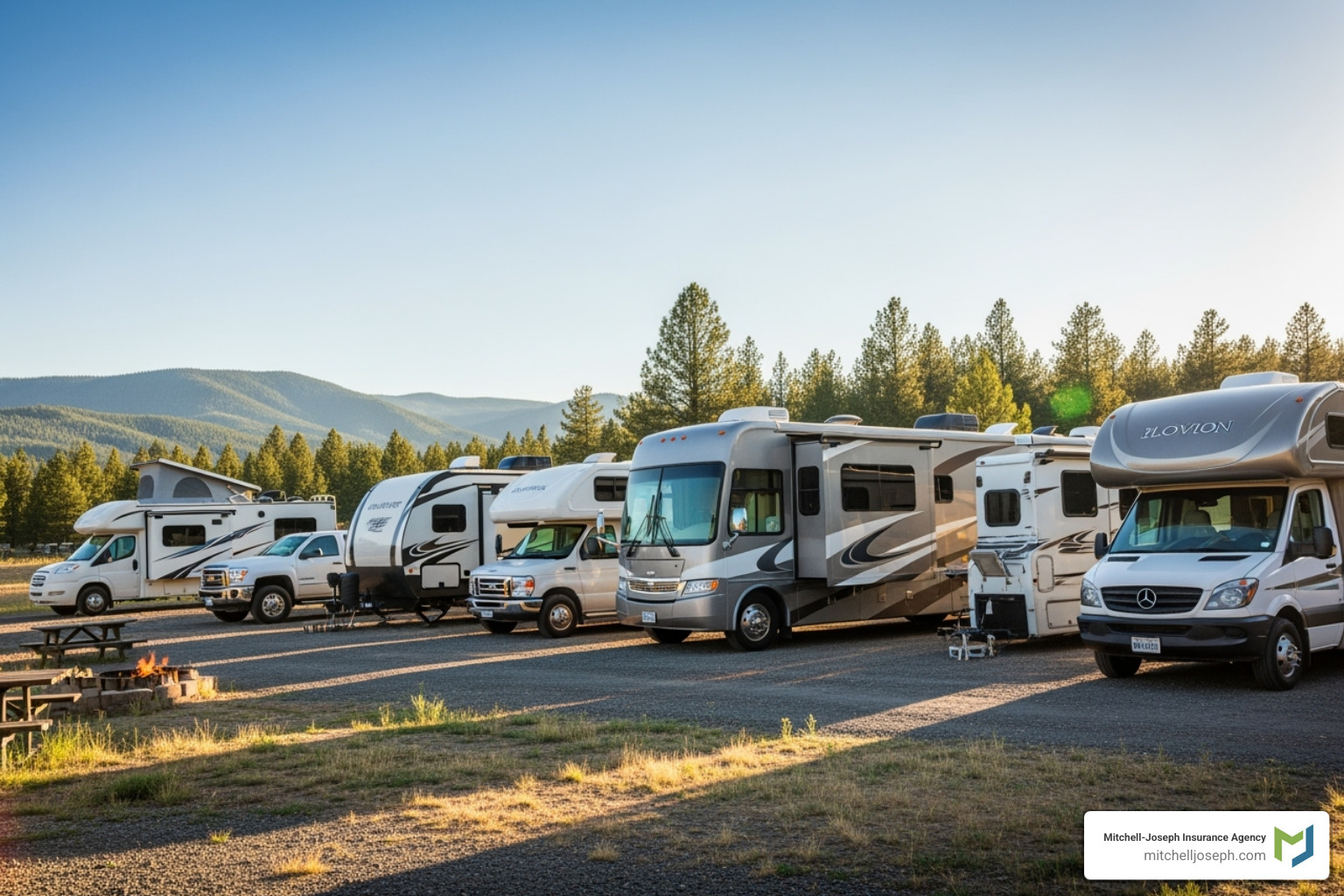
- Class A Motorhomes: These large, bus-style RVs have the highest value and require the most comprehensive coverage and liability limits.
- Class B Camper Vans: Compact and built on a van chassis, they are generally less expensive to insure but still need full motorhome coverage.
- Class C Motorhomes: A mid-size option with a distinct cab-over bunk; insurance costs typically fall between Class A and B.
- Fifth-Wheels: Large, luxurious towable trailers that require their own policy for physical damage and robust personal effects coverage.
- Travel Trailers: The most varied category of towables, needing their own physical damage policy. Costs vary with size and value.
- Pop-Up Campers: Lightweight and collapsible, these usually have the most affordable premiums, but collision/comprehensive is still wise.
- Truck Campers: These slide into a pickup bed and need their own policy to cover the camper unit itself.
- Toy Haulers: These RVs with a built-in “garage” need special consideration for the risks of transporting vehicles.
No matter which of these Fun Recreational Vehicles you own, we can tailor a policy to fit.
Finding the Best Policy and Hitting the Road
How to Get Your Ideal RV Insurance Quote
Finding the perfect policy is the final step. At Mitchell-Joseph Insurance Agency, we make the process straightforward.

Getting Your Quote
To get started, we’ll need some basic information: your RV’s Vehicle Identification Number (VIN), where you store it, and the driving history of all drivers. We also need to know how you use your RV—whether you’re a full-timer, a seasonal traveler, or a weekend warrior—as this determines the type of coverage you need. For example, seasonal users can benefit from storage savings options.
The Power of an Independent Agency
As an independent agency, we work for you, not an insurance company. We shop your policy with 24 different carriers to compare prices, coverage, and service, ensuring you get the best value. We’ll find every discount you qualify for, from bundling policies to having safety features on your rig.
Thinking of Renting Out Your RV?
If you plan to rent out your RV on a platform like Outdoorsy or RVshare, tell us upfront. A standard RV insurance policy will not cover commercial use. We can help you find the right endorsement or commercial policy to ensure you’re protected.
Why Choose Mitchell-Joseph?
With over 200 years of combined experience, our team has been serving the Finger Lakes region for decades. We’re your neighbors in communities from Honeoye Falls and Victor to Canandaigua and Pittsford. We provide expert advice in plain English, helping you steer everything from getting a quote to avoiding Common RV problems.
The open road is calling. Let’s get you protected so you can answer with confidence. Whether you need to Get a quote for your pop-up camper today or insure a luxury motorhome, we’re here to help you make memories that last a lifetime.

