

Beyond the Wheels and Walls
RV contents coverage protects the personal belongings inside your recreational vehicle from theft, damage, or loss. Also known as Personal Effects Coverage, it’s an optional add-on to your RV insurance policy that covers items not permanently attached to your vehicle—from clothing and electronics to camping gear and housewares.
Think of it this way: if you could turn your RV upside down, anything that falls out is generally considered a “content.” While your standard RV policy covers the vehicle’s structure, engine, and attached features, contents coverage protects everything you bring along for the journey.
Key Facts About RV Contents Coverage:
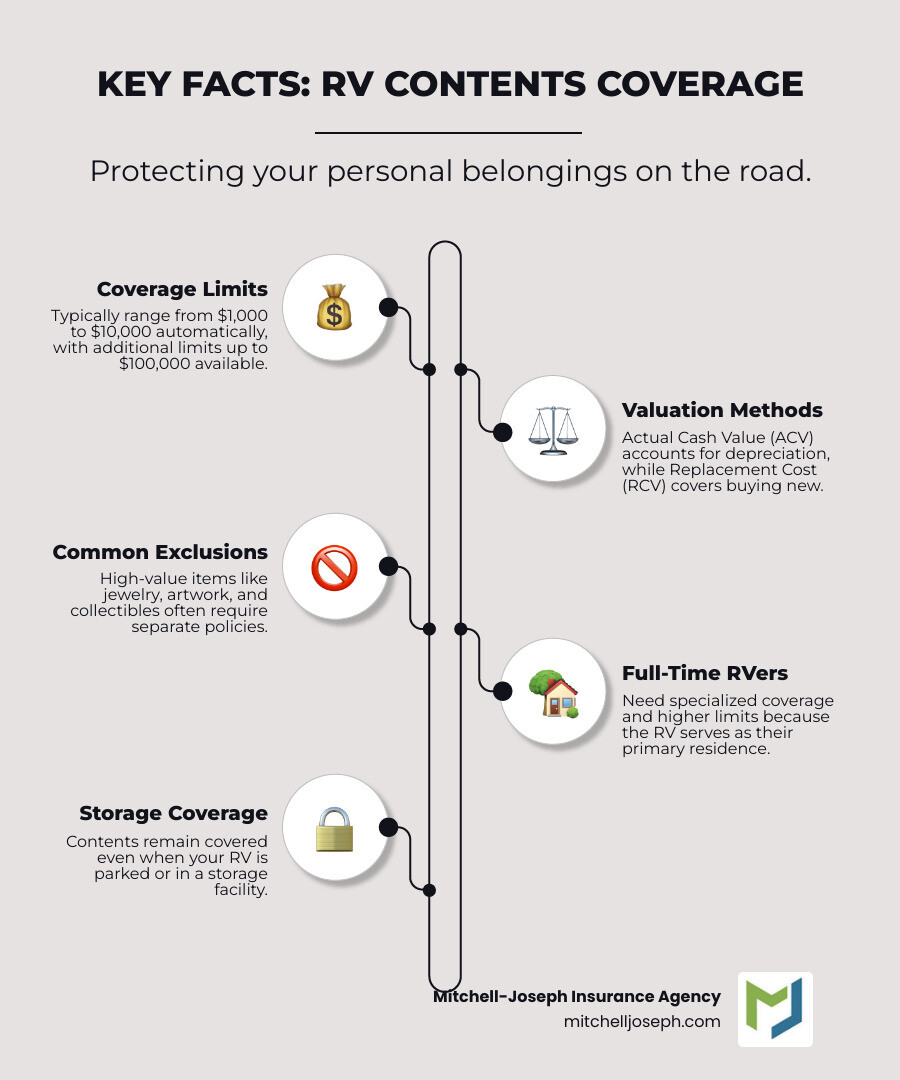
- Coverage Limits: Policies often include $1,000 to $10,000 in coverage automatically, with options to increase limits up to $100,000.
- Valuation: You can choose between Actual Cash Value (ACV), which pays the depreciated value, or Replacement Cost (RCV), which pays to buy a new item.
- Exclusions: High-value items like jewelry and fine art typically require separate coverage.
- Full-Time RVers: If your RV is your primary home, you need a specialized full-timer policy with higher limits.
Many RV owners don’t realize that a standard policy’s included limits might not cover the true value of their belongings. A laptop, smartphone, camping equipment, and kitchen supplies can easily exceed a few thousand dollars. Understanding this distinction is crucial for proper protection.
I’m Jeffrey Joseph, and at Mitchell-Joseph Insurance Agency, I’ve helped RV owners across the Finger Lakes Region secure the right protection since 1999. We ensure our clients understand the details of RV contents coverage before they hit the road, preventing coverage gaps when they’re needed most. For a deeper dive, explore More info about RV Insurance Coverage Options.
The Nuts and Bolts of RV Contents Coverage
To ensure you’re properly protected, it’s important to understand what items are covered, what’s excluded, and how their value is determined. We help our clients in Honeoye Falls, Pittsford, Naples, and across the Finger Lakes Region steer these specifics.
What’s Covered (and What’s Not)
RV contents coverage protects a wide array of personal items you bring to make your travels comfortable and enjoyable.
Typical Covered Items Include:
- Clothing and Shoes
- Electronics like laptops, tablets, and cameras
- Camping Gear such as tents, portable grills, and chairs
- Housewares including dishes, small appliances, and linens
- Sporting Equipment like fishing rods and tackle boxes
We’ve put together A helpful guide on what to pack in your RV that can also serve as a starting point for your inventory.
Common Exclusions:
While coverage is broad, some items are typically excluded or have very low limits:
- High-Value Items: Jewelry, watches, furs, and fine art often require a separate rider or floater policy for adequate protection.
- Business Equipment: Items used for commercial purposes usually need a separate business insurance policy.
- Cash and Securities: Money, deeds, and other valuable papers are generally excluded.
- Motorized Vehicles: ATVs, golf carts, and other small vehicles stored in the RV require their own policies.
Emergency Vacation Expense Coverage is a related but different protection. If your RV becomes inoperable from a covered loss, it helps pay for expenses like hotels, rental cars, and meals to allow you to continue your trip or get home. It protects your vacation, while contents coverage protects your things.
Understanding Your RV Contents Coverage Limits and Valuation
Setting the right coverage limits and valuation method is critical for ensuring you’re truly protected.
Typical Coverage Limits:
Standard policies often include a base limit for contents, such as $2,500 for an Actual Cash Value (ACV) policy or $10,000 for a Replacement Cost (RCV) policy. However, these automatic limits may not be enough. Additional coverage is available, often up to $100,000, for an extra premium.
‘Actual Cash Value’ (ACV) vs. ‘Replacement Cost’ (RCV):
This is a vital distinction for your RV contents coverage.
- Actual Cash Value (ACV): Pays the depreciated value of your item at the time of loss. For a five-year-old laptop, you’d get what a five-year-old laptop is worth, which may not be enough to buy a new one.
- Replacement Cost (RCV): Pays the cost to replace your item with a new one of similar kind and quality, without deducting for depreciation. This is the preferred option for most people as it provides better financial recovery.
Here’s a quick comparison:
| Feature | Actual Cash Value (ACV) | Replacement Cost (RCV) |
|---|---|---|
| Payout Basis | Depreciated value | Cost to replace with new, similar item |
| Premium Cost | Lower | Higher |
| Out-of-Pocket | Potentially higher after claim | Lower after claim |
High-Value Items:
As mentioned, standard policies have low sub-limits (e.g., $1,000) for items like jewelry, firearms, or collectibles. To insure these for their full appraised value, you need a scheduled personal property rider. We can help you add this to your policy to ensure your most valuable possessions are fully protected. For more insights, visit our RV Insurance Cost Guide.
Navigating Claims and Special Scenarios
Life on the road comes with unique situations. Understanding how your RV contents coverage applies when you’re living in your RV full-time, storing it for the winter, or need to file a claim is essential for peace of mind.
Special Scenarios for Your RV Contents Coverage
How your contents coverage works can vary depending on your RV and lifestyle.
Motorhome vs. Travel Trailer:
Coverage limits can differ. Motorhome policies might include a fixed amount of personal property coverage (e.g., $7,500), while some trailer policies may base the limit on a percentage of the trailer’s insured value (e.g., 20%). These are starting points that can be increased based on your needs. For specialized options, Explore options for 5th Wheel RV Insurance.
Full-Time Residence:
If your RV is your primary home, you’re a “full-timer” and need specialized insurance. A standard policy is not enough. Full-timer policies offer higher contents limits and crucial personal liability coverage, similar to a homeowners policy, to protect you and your assets.
Storage Coverage:
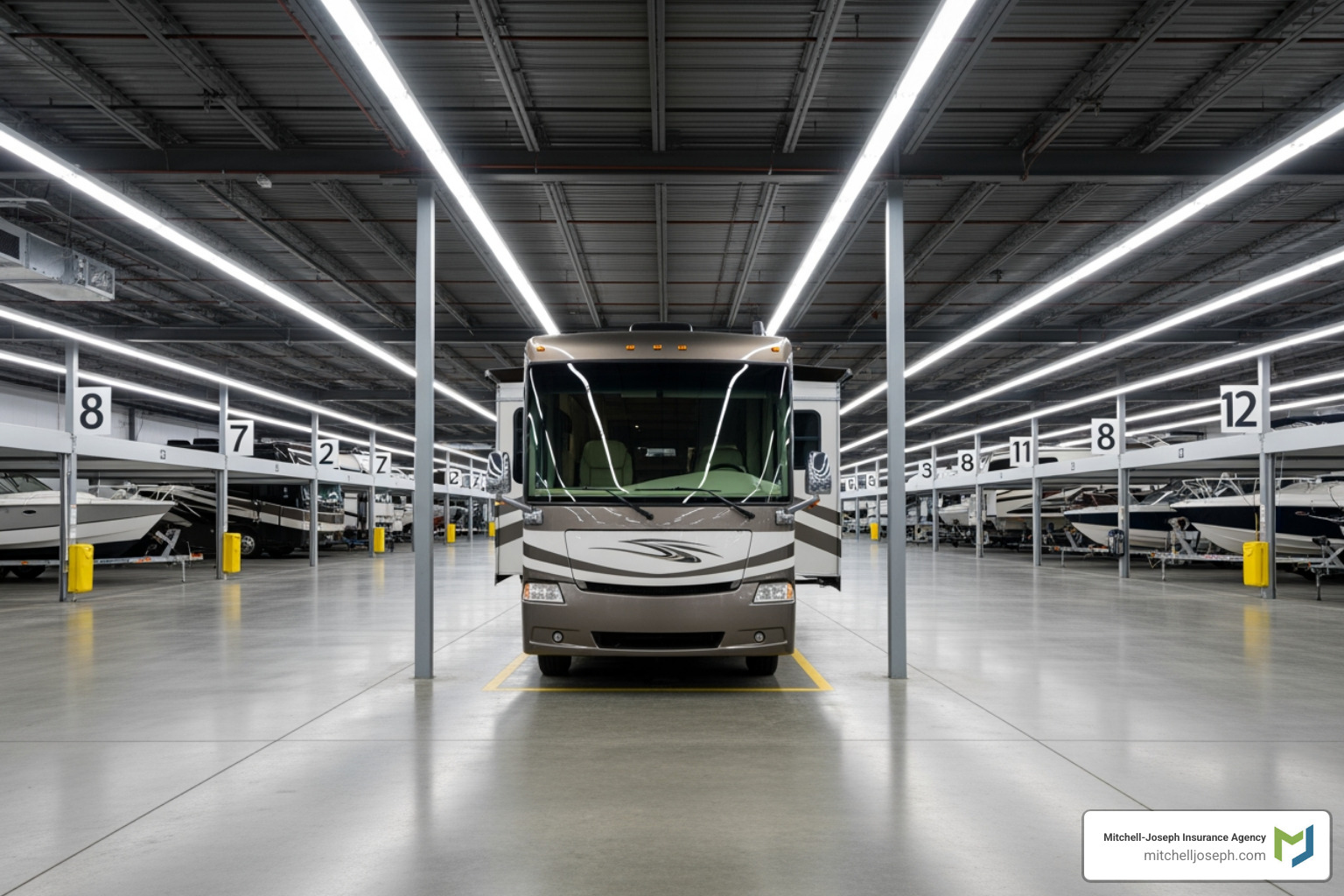
Your RV contents coverage generally remains active when your RV is in storage, as long as you maintain comprehensive coverage year-round. This protects your belongings from theft, fire, vandalism, and other non-collision events, whether the RV is parked in your driveway or at a storage facility.
Provider Variations:
Coverage details, limits, and definitions can vary between insurance companies. At Mitchell-Joseph Insurance Agency, we work with 24 different carriers to compare options and find the policy that best fits your needs.
Filing a Claim and Getting the Right Protection
If an accident or theft occurs, knowing the right steps can make the claims process much smoother.
What documentation is recommended to prove ownership and value?
Being prepared is the most important step you can take before a loss. To ensure a fast and fair claim, we highly recommend you:
- Create a Detailed Inventory: List your belongings with brand names, model numbers, and purchase dates.
- Take Photos and Videos: A visual record of your RV’s interior and high-value items is invaluable. Store these files in the cloud, not in the RV.
- Keep Receipts: Save digital copies of receipts for major purchases to prove their original cost.
- Get Appraisals: For jewelry, art, or collectibles, professional appraisals are necessary to prove their worth for a special coverage rider.
For a step-by-step guide, the Insurance Information Institute offers excellent resources on creating a home inventory.
What steps should I take if I need to file a claim?
If your property is damaged or stolen, follow these steps:
- Ensure Safety First: If there’s been an accident, check for injuries and call 911 if needed.
- Contact Law Enforcement: For theft or vandalism, file a police report immediately. Your insurer will require it.
- Document the Scene: Take photos of the damage before moving anything.
- Prevent Further Damage: Make temporary repairs to secure your RV (e.g., cover a broken window) and keep receipts.
- Contact Mitchell-Joseph Insurance Agency: Call us as soon as possible. We are here to guide you through the claims process with personal support.
- Provide Documentation: Submit your inventory, photos, and police report to the claims adjuster.
Filing a claim can be stressful, but you don’t have to do it alone. Our team is here to help you steer the complexities and ensure your RV contents coverage works for you. Get a comprehensive RV Insurance quote today and travel with confidence.

