

Your Rental Condo: The Insurance You Need
If you rent out your condo, navigating condo insurance for landlords is essential. This specialized coverage protects your investment and income, and it’s different from standard homeowner’s insurance.
Landlord condo insurance is designed to:
- Protect your property: Covers the condo’s interior and any items you own inside.
- Shield you from liability: Helps if someone is injured on your property.
- Cover lost rental income: Replaces rent if your unit becomes unlivable due to a covered event.
Becoming a landlord is rewarding, but it has unique risks that standard policies don’t cover. You need specific coverage for rental properties. This guide will walk you through the essentials.
As Jeffrey Joseph, I’ve seen since 1999 how vital the right condo insurance for landlords is. My team at Mitchell-Joseph Insurance focuses on delivering personalized policies that meet your unique needs.
Understanding the Essentials: What is Landlord Condo Insurance?
Renting out your condo is an exciting step, but it requires a specific type of coverage: condo insurance for landlords. This isn’t your average condo policy; it’s a financial safety net designed for property owners who rent out their units.
Also known as an HO-6 landlord endorsement or a dwelling fire policy, this insurance is for non-owner-occupied properties. Its goal is to protect you from financial losses, including property damage, liability claims, and lost rental income if your unit becomes uninhabitable.
As a landlord, you’re running a business that needs protection. A standard condo policy is not enough and can leave you exposed to significant financial risk.
To really grasp the importance of this specialized coverage, let’s look at how it stacks up against other common insurance types:
| Feature | Landlord Condo Insurance (HO-6 Landlord) | Standard Condo Insurance (HO-6) | Renters Insurance |
|---|---|---|---|
| Who it’s for | Condo owners who rent out their units. | Condo owners who live in their units. | Tenants renting a condo or apartment. |
| Property Covered | Interior of the unit (walls-in), landlord’s appliances/furnishings. | Interior of the unit (walls-in), owner’s personal belongings. | Tenant’s personal belongings. |
| Liability Covered | Landlord’s liability for accidents/injuries on rental property. | Owner’s liability for accidents/injuries within their unit. | Tenant’s liability for damage to unit or injuries to others. |
| Loss of Use/Rent | Covers lost rental income if unit is uninhabitable due to covered peril. | Covers additional living expenses if unit is uninhabitable. | Covers additional living expenses if rental is uninhabitable. |
| Tenant’s Belongings | No | No | Yes |
| Primary Focus | Protecting the landlord’s investment and rental business. | Protecting the owner-occupant’s home and personal property. | Protecting the tenant’s personal property and liability. |
| Accidental Tenant Damage | Often covered. | N/A (not for rental properties). | Covers tenant’s liability for damage to property. |
| Intentional Tenant Damage | Generally not covered. | N/A. | Generally not covered. |
Why This Specific Insurance is Non-Negotiable
This specialized insurance is non-negotiable for several reasons. It protects your asset from costly damage from perils like fire or burst pipes. It covers liability risks, shielding you from expensive lawsuits if a tenant or guest is injured on your property. It also secures your rental income with loss of rent coverage, which replaces income if your unit becomes uninhabitable during repairs.
While not always required by state law, most mortgage lenders and condo associations mandate it to protect their own interests and the community. It’s a smart, proactive way to manage your rental property.
How it Differs from Standard Condo and Homeowners Insurance
It’s a common misconception that a standard homeowners or condo (HO-6) policy will cover a rental unit. These policies are for owner-occupied properties and don’t account for the different risks of a rental, which is considered a business activity.
A standard policy won’t cover tenant-caused damages, landlord-specific liability, or lost rental income. A specialized landlord policy is essential to fill these critical coverage gaps and protect your investment.
For more information on how condo insurance works for owners who live in their units, explore our More info about Insurance for Condominium Owners.
The Landlord’s Safety Net: What Your Policy Covers (and What It Doesn’t)
A good condo insurance for landlords policy is a safety net for your investment. But it’s important to understand what your policy covers, and what it doesn’t, to be a well-prepared landlord.

Core Coverages Included in Condo Insurance for Landlords
These are the essential protections for any rental unit owner:
- Dwelling Coverage (Walls-In): While the HOA master policy covers the building’s exterior, this protects the interior of your unit—the “walls-in.” It includes drywall, flooring, cabinets, and fixtures damaged by a covered event like a fire or burst pipe.
- Fixtures and Built-in Appliances: Covers permanently installed items you own, such as light fixtures, plumbing, and built-in appliances like dishwashers or ovens that you provide for tenants.
- Landlord’s Personal Property: Covers your property within the unit used for service or maintenance, such as non-built-in appliances or furniture in a furnished rental. This is separate from the tenant’s belongings. Learn more on our Landlord’s Personal Property page.
- General Liability Insurance: Protects you financially if you’re found legally responsible for an injury on your property. It helps cover medical bills and legal defense costs. We offer more details on our General Liability Insurance page.
- Medical Payments to Others: Often included with liability, this covers minor medical expenses for people injured on your property, regardless of fault, helping to prevent larger claims.
- Loss of Rent Coverage (or Loss of Use): Also known as fair rental value coverage, this reimburses you for lost rental income if a covered event makes your condo uninhabitable during repairs, protecting your cash flow.
Common Exclusions and Gaps in Coverage
No policy covers everything. Knowing the common exclusions helps you manage risk and consider extra coverage. Standard landlord policies typically do not cover:
- Tenant’s Personal Property: Your policy covers your property, not your tenant’s belongings. They need their own renters insurance.
- Normal Wear and Tear: Policies don’t cover gradual damage from everyday use, like worn carpets or aging appliances.
- Maintenance Issues: Problems from a lack of routine maintenance, like a slow leak causing gradual damage, are generally not covered.
- Pest Infestations: Damage from termites, rodents, or other pests is typically excluded.
- Flood Damage: You need a separate flood insurance policy to cover damage from floods.
- Earthquake Damage: This requires a separate policy or endorsement.
- Intentional Acts: Damage caused intentionally by you or your tenants is not covered.
Does Landlord Insurance Cover Damage Caused by Tenants?
The answer depends on the type of damage.
Accidental Damage: Yes, your policy generally covers accidental damage caused by tenants, like a small kitchen fire or an overflowing bathtub.
Vandalism and Malicious Mischief: Coverage for deliberate damage by a tenant may be included or available as an add-on.
Intentional Damage/Neglect: Most policies will not cover intentional damage, such as a tenant punching a hole in a wall. For these situations, you’ll rely on the tenant’s security deposit. This highlights the need for a clear lease and adequate security deposit.
Navigating the Condo Ecosystem: Master Policies, Tenants, and Special Cases
Owning a rental condo means being part of a larger community. Understanding how your insurance fits with the HOA, your tenants, and other factors is crucial for protecting your investment.

Your Policy vs. The HOA’s Master Policy
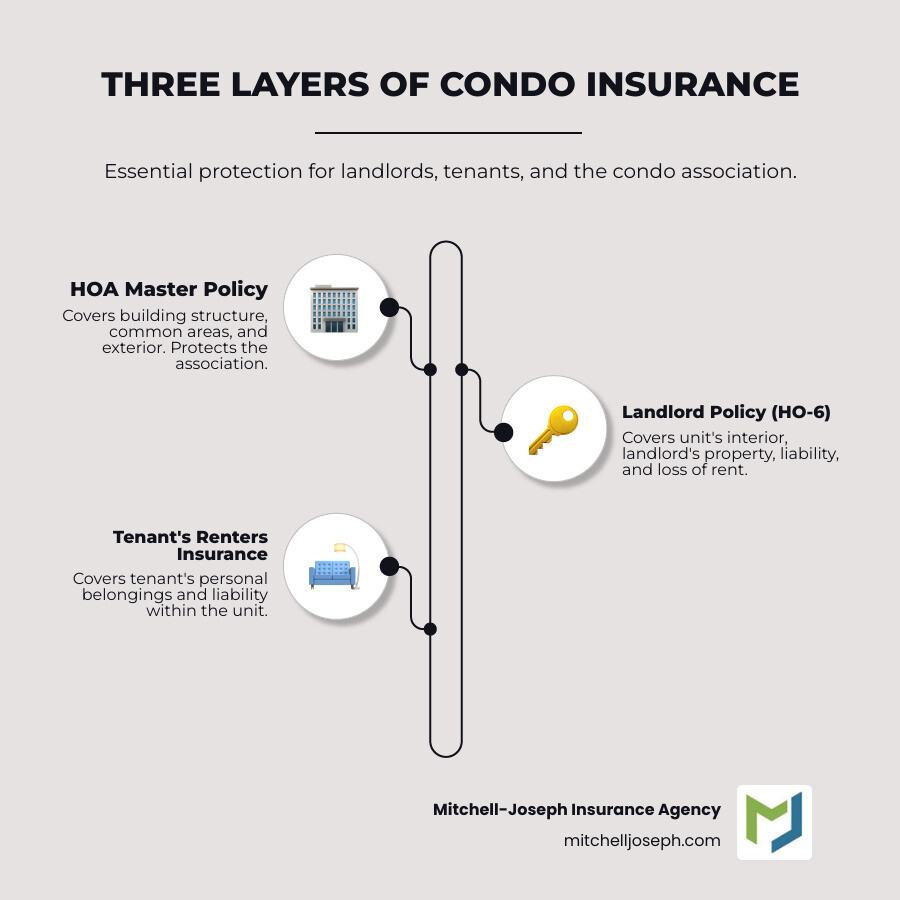
Your landlord policy works in tandem with your HOA’s master policy. The master policy covers the building’s structure and common areas (roof, hallways, pool). Where it stops, your policy begins.
Most HOAs have a “bare walls-in” policy, meaning it covers the building but not the interior of your unit. Your landlord policy provides the necessary “walls-in” coverage for drywall, flooring, cabinets, and fixtures.
Some HOAs have “all-in” policies that cover more of the unit’s interior, but you still need your own policy for landlord liability, personal property, and loss of rent.
An important feature of your policy is loss assessment coverage. If a major claim exceeds the master policy’s limits or deductible, the HOA can assess all owners for the shortfall. This coverage helps pay your share, protecting you from a large, unexpected bill.
For a deeper dive into how condo association policies work, the Insurance Information Institute has excellent resources at Understanding condo association policies.
Why You Should Require Tenants to Have Renters Insurance
Requiring tenants to have renters insurance is one of the smartest moves a landlord can make. It creates a crucial safety net for both of you.
Your landlord policy doesn’t cover your tenant’s personal belongings; renters insurance does. This prevents tenants from seeking compensation from you for their damaged property.
Renters insurance also includes liability coverage. If your tenant accidentally starts a fire or their guest is injured in the unit, their policy can cover the costs, protecting you and your policy from claims. This helps keep your claims history clean and premiums down, providing peace of mind for everyone.
For more details on renters insurance and how it protects tenants, check out our More info about Apartment Insurance page.
What About Short-Term Rentals like Airbnb?
If you plan to use your condo for short-term rentals like Airbnb, your standard landlord policy is likely insufficient. These policies are designed for long-term leases, and the high turnover of short-term rentals presents a different, higher risk that insurers view as a business activity.
Using your property for short-term rentals without the right coverage could void your policy in the event of a claim. You’ll need to speak with your insurer about specific options. Some offer home-sharing endorsements for occasional rentals, while properties used primarily for short-term hosting may require a full commercial insurance policy. Be upfront with your agent about your rental plans to ensure you have the correct coverage.
Our Business Insurance for Landlords page has additional information that might be helpful for your situation.
The Financials: Cost, Factors, and Additional Protections
Understanding the costs and factors that influence your premium for condo insurance for landlords can help you make smart decisions.

How Much Does Condo Insurance for Landlords Cost?
The cost of condo insurance for landlords varies, but it’s typically about 25% more than a standard owner-occupied condo policy due to the increased risks of renting. Your exact premium depends on several factors:
- Property Location: Premiums are higher in areas prone to natural disasters or crime.
- Building Age and Construction: Older buildings or certain construction materials can increase costs.
- Coverage Limits and Deductible: Higher limits increase the premium, while a higher deductible lowers it.
- Claims History: A history of claims can lead to higher rates.
- Security Features: Discounts may be available for security systems, smoke detectors, and fire alarms.
Valuable Add-Ons: Optional Coverages to Consider
Optional endorsements, or add-ons, allow you to customize your policy for greater protection. Consider these valuable additions:
- Water Backup Coverage: Covers damage from backed-up sewers or drains, which is excluded from standard policies. Learn more on our Water Backup Coverage page.
- Vandalism and Malicious Mischief: Provides coverage for intentional damage, which may not be standard.
- Building Code Compliance: Helps pay for required upgrades to meet current building codes during a repair.
- Personal Injury Liability: Covers claims beyond bodily injury, such as wrongful eviction or libel.
- Flood Insurance: Essential for properties in flood zones, as flood damage is excluded from standard policies. See our Flood Insurance for Landlords page.
- Umbrella Insurance: Offers an extra layer of liability protection above your standard policy limits, protecting your overall assets. Read more on our Do You Need Umbrella Insurance? page.
Frequently Asked Questions about Landlord Condo Insurance
Here, we’ll address some of the most common questions landlords ask us about condo insurance for landlords.
Is landlord insurance legally required for a condo?
While most states don’t legally require condo insurance for landlords, it is almost always a necessity.
- Mortgage Lenders: If you have a mortgage, your lender will require it to protect their investment. A standard policy is not sufficient for a rental property.
- Condo Associations (HOAs): Many HOAs mandate landlord insurance in their bylaws to protect the community from risks associated with rental units.
In short, while not a state law, it’s typically required by your lender or HOA and is a crucial financial protection.
What’s the difference between a standard HO-6 policy and a landlord condo policy?
Both are types of HO-6 policies, but they serve different purposes.
- A Standard HO-6 Policy is for owners who live in their condo. It covers the unit’s interior, the owner’s personal belongings, and personal liability.
- A Landlord Condo Policy is for owners who rent out their unit. It covers the unit’s interior and the landlord’s property (like appliances), but its key features are landlord-specific protections like Loss of Rent Coverage and Broader Landlord Liability. It does not cover the tenant’s personal belongings.
Can I insure multiple rental condos on one policy?
Yes. Many insurers offer multi-location or portfolio policies that allow you to cover all your rental condos under a single policy. This offers several advantages:
- Cost Savings: You can often get a discount for insuring multiple properties.
- Simplified Management: One policy means one bill and one renewal date, making administration easier.
- Consistent Coverage: It ensures all your properties have consistent protection.
If you own multiple rental properties, ask your agent about insuring them together to save time and money!
Conclusion
Renting out your condo is a smart investment, but it requires proper protection. Condo insurance for landlords is not just another expense; it’s an essential tool for keeping your asset safe.
This specialized coverage safeguards your property, shields you from liability, and secures your rental income if the unit becomes uninhabitable. Understanding how your policy interacts with the HOA’s master policy and requiring tenants to have renters insurance are key parts of being a prepared landlord.
Here at Mitchell-Joseph Insurance Agency, we have over 200 years of combined experience helping landlords in Honeoye Falls, Rochester, and across New York. As an independent, family-owned agency, we offer personalized service and competitive quotes from over 20 insurance companies.
Don’t leave your investment vulnerable. To find the right protection for your rental condo, explore our Insurance for Condominium Owners page or contact us for a personalized quote. We’re ready to help you find the custom coverage that brings you peace of mind.

