Understanding Raw Material Liability: Why It Matters for Your Business
Raw material liability is the legal responsibility suppliers have when their materials are part of a finished product that causes harm. Here’s what you need to know:
Key Points:
- Who’s Liable: Suppliers, manufacturers, distributors, and retailers can all be held responsible.
- When Liability Occurs: When raw materials are defective (contaminated, wrong formulation) or when suppliers fail to provide adequate warnings.
- Types of Defects: Manufacturing defects, design defects, and failure to warn.
- Financial Impact: Product liability litigation in the U.S. is the most frequent globally, with significantly higher damage awards.
When a product causes injury, determining who is responsible is complex. Every product starts with raw materials and passes through various processors before assembly. If that product fails, the legal finger-pointing begins, involving everyone in the supply chain.
Even if your material isn’t defective, you can face liability for participating in its integration or failing to warn of foreseeable hazards. The U.S. sees more frequent and costly product liability litigation than any other country, making this a critical issue for suppliers across all industries. Whether you supply chemicals, machinery components, or food ingredients, understanding your liability exposure is vital.
I’m Jeffrey Joseph, and at Mitchell-Joseph Insurance Agency, I’ve helped manufacturers and suppliers across the Finger Lakes region steer the complexities of raw material liability for over two decades. Through proper risk management and the right insurance, businesses can protect themselves from the potentially devastating financial consequences of these claims.
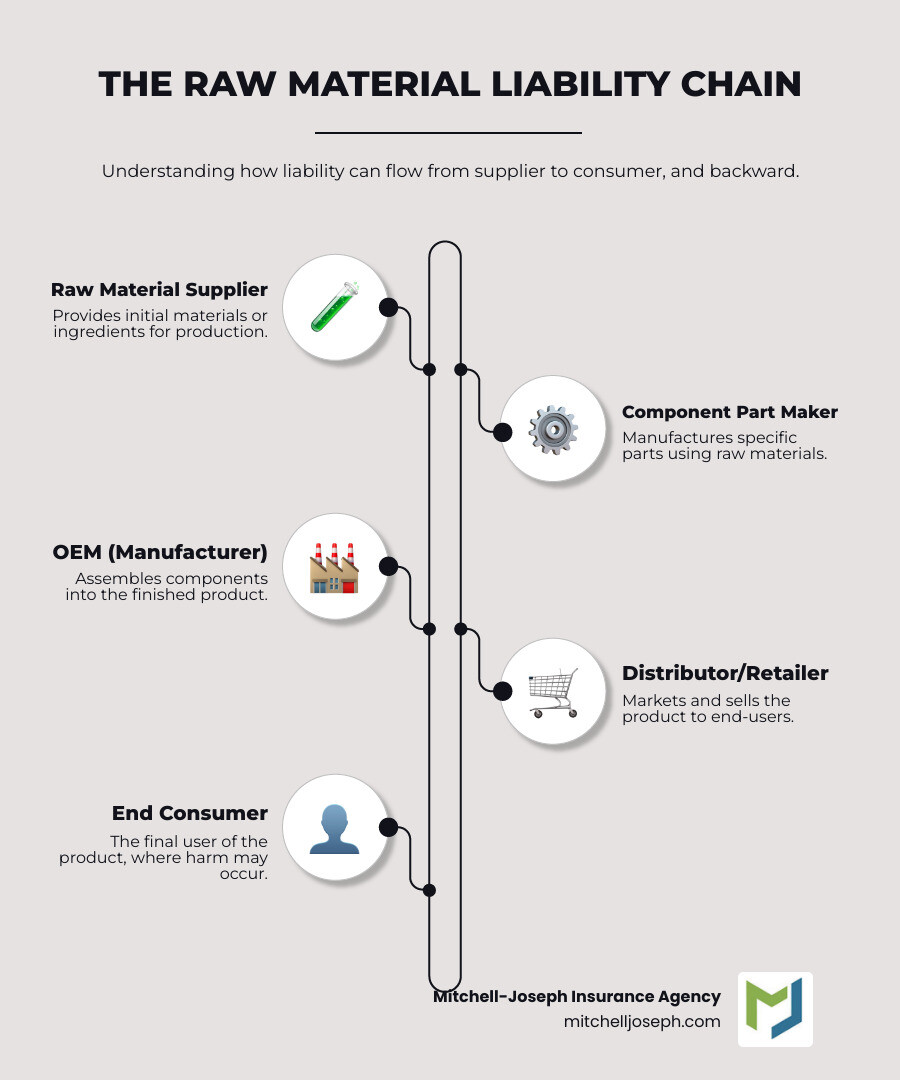
Raw material liability terms to remember:
Understanding the Legal Landscape of Raw Material Liability
Raw material liability is a specific area of product liability law, which holds everyone in the chain of distribution responsible for injuries caused by defective products. For raw material suppliers, the focus is on the very foundation of the end product.
In the U.S., product liability claims generally fall under three theories:
- Negligence: This involves failing to use reasonable care in the design, manufacture, or warning process, leading to harm, such as knowingly shipping impure materials.
- Strict Liability: Here, a plaintiff only needs to prove the material was defective and caused harm. In most U.S. states, including New York, you can be held liable even if you exercised extreme care.
- Breach of Warranty: This applies when a material fails to meet explicit or implied promises about its quality or fitness for a specific use.
When are Suppliers Liable? Key Legal Doctrines
When does a supplier become liable for harm caused by a product they contributed to? The distinction between a “component part” (a semi-finished product) and “raw material” (basic substances for processing) is important.
-
Inherently Defective Materials: If the raw material itself is contaminated, improperly formulated, or flawed, the supplier is directly liable. For example, a food ingredient tainted with bacteria or a batch of metal with a structural weakness are clear cases.
-
Substantial Participation Doctrine: A supplier can be liable even if their material isn’t defective if they “substantially participated” in the final product’s design. Offering advice or modifying a material for a specific use can lead to shared responsibility.
-
Raw Material Supplier Defense / Bulk Sales/Sophisticated Purchaser Rule: This defense can protect suppliers who provide a non-defective raw material in bulk to a “sophisticated purchaser” (the OEM). The argument is that the OEM is the expert on how to use the material. However, this defense fails if the supplier knew of a hazard and didn’t warn the OEM.
For a broader understanding of product liability, you can always refer to resources like What is product liability?.
Common Defects Leading to Raw Material Liability Claims
Understanding the types of defects is crucial. They fall into three categories:
-
Manufacturing Defects: These are flaws during production, making the material deviate from its design. Examples include contaminated ingredients, flawed components, unintended production errors, or improper formulation.
-
Design Defects: This can apply to raw materials if a supplier recommends a material for an application where it’s inherently unsuitable, like suggesting a flammable material for a high-heat use without proper warnings.
-
Failure to Warn Defects: This is a major area of liability. A supplier can be liable for failing to provide adequate warnings about potential hazards. This includes informing the OEM of non-obvious dangers and, in some cases, ensuring warnings reach the end-user.
Jurisdictional Differences: A Global Perspective
While we focus on the Finger Lakes region, it’s helpful to see how raw material liability compares globally. The U.S. legal landscape is unique.
In the U.S., product liability litigation is far more frequent and awards are significantly higher than elsewhere. Most states, including New York, use strict liability, making it easier for plaintiffs to recover damages.
Contrast this with other regions:
- Europe: Product liability is a minor legal field with far fewer claims and more modest awards compared to the U.S.
- Canada: The system is mostly based on common law (similar to the U.S. but with less litigation), while Quebec uses a civil law system. Overall, the frequency and scale of litigation are lower than in the U.S. Canada also emphasizes strict safety standards.
This global snapshot reinforces why robust risk management is a business imperative for U.S. businesses.
| Aspect of Product Liability Law | United States (General) | Canada (Common Law Provinces) |
|---|---|---|
| Basis of Claim | Negligence, Strict Liability, Breach of Warranty | Negligence, Breach of Contract/Warranty |
| Typical Damages | Often high, including non-economic (pain & suffering) | More modest, focused on actual losses |
| Litigation Frequency | Very High | Moderate |
| Who Can Be Sued | Manufacturer, Distributor, Retailer, Component/Raw Material Supplier | Manufacturer, Distributor, Retailer, Component/Raw Material Supplier |
| Legal Burden | Strict liability often reduces plaintiff’s burden | Plaintiff generally must prove negligence or breach |
Proactive Risk Management and Insurance Solutions

Proactive risk management is essential for safeguarding your business from raw material liability. For companies in Honeoye Falls, NY, and across the Finger Lakes, it protects your reputation, financial stability, and peace of mind.
Preventative Measures to Mitigate Raw Material Liability Risk
As a supplier, you play a critical role in product safety. Here’s how to mitigate your raw material liability risks:
- Robust Quality Assurance (QA) and Quality Control (QC) Programs: Implement rigorous QA/QC programs to test for contaminants, verify formulations, and inspect materials to ensure they meet specifications.
- Thorough Supplier Verification: Carefully vet your upstream suppliers to ensure they have strong QA/QC programs and comply with all relevant safety standards.
- Managing Imported Supplies: When importing materials, verify they comply with both foreign and U.S. safety standards and that all necessary warnings are provided.
- Clear and Comprehensive Documentation: Maintain detailed records of material specifications, QC results, and customer communications. Retain these documents long-term, as claims can arise years later.
- Contractual Indemnification: Use contractual clauses to outline financial responsibility for defects, but understand this doesn’t prevent you from being sued.
- Formal Product Recall Plans: Develop a clear, actionable product recall plan to respond quickly and minimize harm if a defect is finded.
The Crucial Role of Product Liability Insurance
Even with meticulous prevention, the risk of a claim remains. Product liability insurance is a vital safety net.
This insurance covers legal and settlement costs if your product is alleged to have caused injury or damage, protecting your business from financial ruin. This coverage is vital for B2B suppliers, not just B2C companies. Even if you are several steps removed from the consumer, you can be sued if your material contributes to a defect.
Investing in product liability insurance means:
- Protecting Business Assets: It shields your company’s finances from the massive legal fees and damages associated with liability claims.
- Ensuring Business Continuity: A single lawsuit could threaten your business. Insurance helps ensure you can continue operations.
- Providing Peace of Mind: Knowing you’re protected allows you to focus on your business without constant worry about unforeseen legal challenges.
Securing Your Business with the Right Partner
Navigating raw material liability and finding the right insurance can be daunting. At Mitchell-Joseph Insurance Agency, we act as your partners in risk management.
With over 200 years of combined experience, our team understands the unique challenges faced by manufacturers and suppliers in Honeoye Falls, Pittsford, Naples, and across the Finger Lakes region of New York. We offer:
- Expert Guidance: We’ll help you assess your specific raw material liability risks.
- Custom Coverage: We tailor insurance packages to your business needs, offering competitive quotes from our network of 24 insurance companies.
- Local Expertise: As a family-owned business, we understand the local landscape and provide personalized, attentive service.
Don’t let raw material liability keep you up at night. Let us help you put the right protections in place. To learn more about how we can safeguard your manufacturing business, connect with us today: Protect your manufacturing business with comprehensive liability insurance