

Your Business’s First Line of Defense
Property insurance insurance protects your business from financial disaster when events like fire, storms, or theft damage your building, equipment, or inventory. This coverage is essential for:
- Rebuilding or repairing your commercial structure after a loss
- Replacing equipment, inventory, and furniture damaged by covered perils
- Covering lost income while your business is closed for repairs (business interruption coverage)
- Meeting mortgage requirements for your commercial loan
- Protecting your life’s work from catastrophic losses
Your business is likely your biggest investment. Without proper property insurance, a single fire or severe storm could wipe out years of hard work. Protecting property from unforeseen disasters is a cornerstone of financial security.
Understanding commercial property insurance doesn’t have to be complicated. This guide breaks down what you need to know to protect your business assets effectively.
I’m Jeffrey Joseph, and since 1999, I’ve helped business owners across the Finger Lakes Region secure comprehensive property insurance. At Mitchell-Joseph Insurance Agency, we specialize in finding competitive coverage that protects what you’ve built.
Easy property insurance insurance glossary:
Decoding Your Commercial Property Insurance Insurance Policy
Understanding your property insurance insurance policy is key to protecting your business in places like Honeoye Falls, Avon, or Canandaigua. Let’s break down the core components.
Core Coverage Components for Your Business
When we talk about property insurance insurance, we’re looking at several key areas designed to safeguard your physical assets and operations.
-
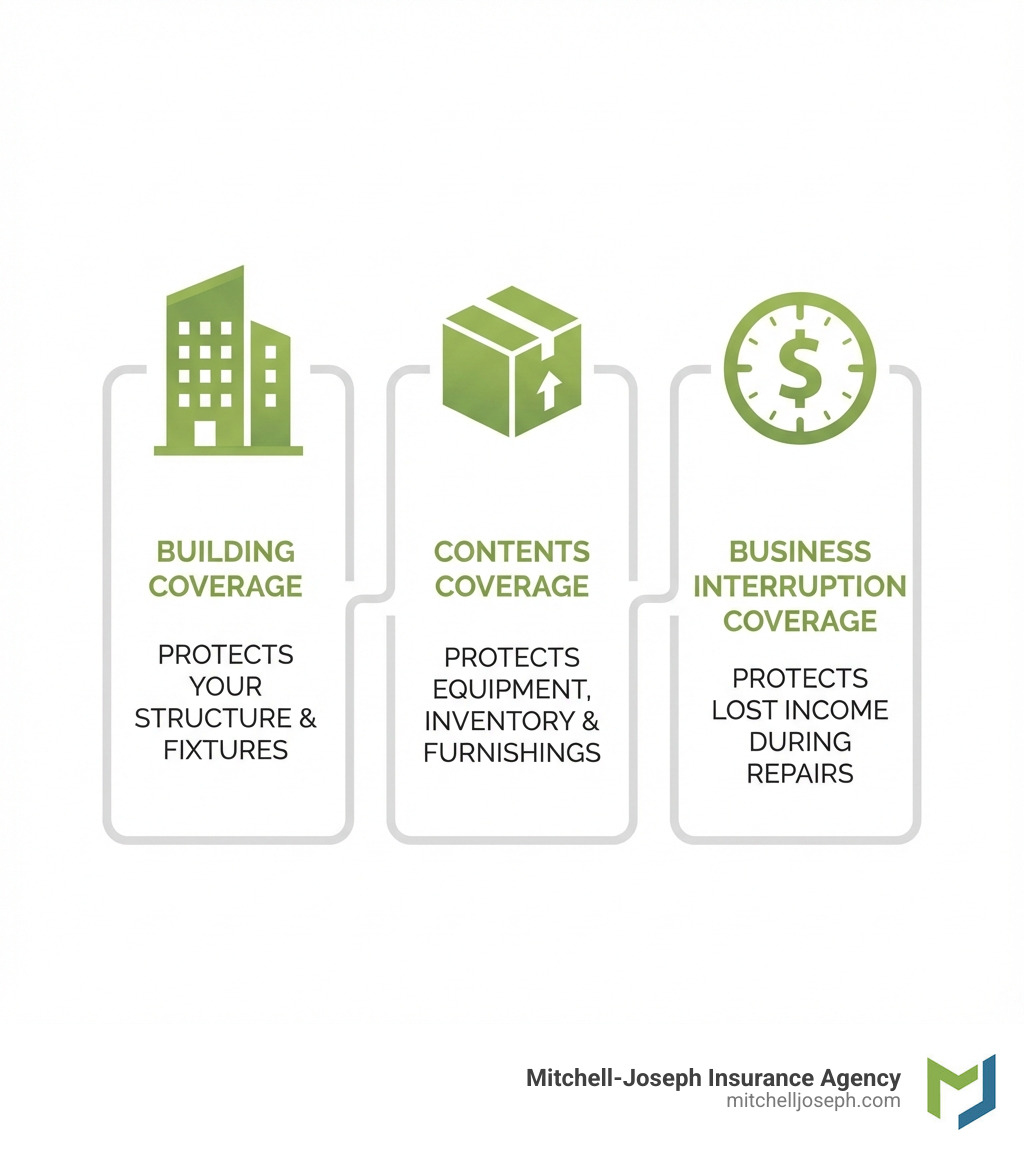
Building/Structure Coverage: This covers your building’s physical structure—walls, roof, floors, and permanently attached systems like HVAC. It’s designed to pay for rebuilding after a covered event, like a fire in your Pittsford shop. Your coverage amount should reflect the actual cost to rebuild, not just the market value.
-
Business Personal Property (BPP): BPP covers your business’s contents: furniture, equipment, computers, inventory, and raw materials. For a Rochester restaurant, this includes ovens, tables, and food stock. It can also cover items stored off-premises, like inventory in a warehouse or equipment at a job site.
-
Business Interruption Coverage (Loss of Use): Often called “lifeline” coverage, this helps your business survive a temporary closure. If a covered event, like a burst pipe in your Bristol office, forces you to shut down for repairs, this coverage replaces lost income and covers ongoing expenses like rent and salaries. It can also pay for temporary relocation.
-
Other Structures: This covers detached structures on your property, like a separate garage, storage shed, or fence. If a storm damages your detached storage unit in Honeoye, this part of your policy helps cover repairs.
-
Liability Coverage Overview: Often bundled with property insurance, liability coverage protects your business if you’re found legally responsible for injuring someone or damaging their property. For instance, if a customer slips and falls in your Victor storefront, it helps pay for medical bills, legal defense, and settlements.
Valuation and Perils: What’s Really Covered?
Understanding how your property is valued and what events are covered is crucial when you file a claim.
-
Replacement Cost Value (RCV): RCV is the preferred valuation method. It pays the cost to repair or replace damaged property with new items of similar quality, without deducting for depreciation. If a fire destroys your old computer system, RCV pays for a new one.
-
Actual Cash Value (ACV): ACV pays to repair or replace your property minus depreciation (the decrease in value from age and wear). For that same old computer system, an ACV payout would be much less than the cost of a new one. ACV policies have lower premiums but can create a financial gap after a loss.
-
Depreciation: This is the reduction in an asset’s value over time due to use and wear. It’s the key difference between RCV and ACV.
Here’s a quick comparison:
| Feature | Replacement Cost Value (RCV) | Actual Cash Value (ACV) |
|---|---|---|
| Payout Basis | Cost to replace with new, similar items | Cost to replace new, minus depreciation |
| Depreciation | Not factored in | Deducted from payout |
| Premium | Generally higher | Generally lower |
| Out-of-Pocket | Less, as policy covers full replacement | More, as you cover the depreciated value difference |
| Ideal For | Most businesses seeking full financial protection | Businesses with older assets or looking for lower premiums |
-
Named Perils vs. Open Perils: Your policy specifies which “perils” (events) it covers.
- Named Perils: Only covers losses from events specifically listed in the policy (e.g., fire, theft, windstorm). If a peril isn’t listed, it’s not covered.
- Open Perils (“All-Risk”): Covers all causes of loss except those specifically excluded. This offers broader protection, though premiums are typically higher.
-
Common Exclusions: All policies have exclusions—events that are not covered. Common ones include:
- Flood: Damage from external flooding is almost always excluded. Businesses in flood-prone areas like Stanley need a separate flood policy.
- Earthquake: Damage from seismic activity is also typically excluded and requires separate coverage.
- Wear and Tear: Gradual deterioration or lack of maintenance isn’t covered. Insurance is for sudden, accidental losses, not routine upkeep.
Other common exclusions include nuclear incidents, war, and certain types of mold damage. We can help you identify coverage gaps and explore options like flood insurance. For more information on protecting against water-related risks, you can explore our resources: More info about flood and water backup insurance.
What Determines Your Premium?
Several factors influence your property insurance insurance cost, reflecting your business’s risk level.
- Location: Your business’s location in the Finger Lakes Region impacts your premium based on weather risks (heavy snow, wind), proximity to fire protection (like in Honeoye Falls or Lima), and local construction costs.
- Construction Type: The building materials matter. A fire-resistant brick building with a sprinkler system will be cheaper to insure than an older wooden structure.
- Occupancy: The type of business you run affects risk. A restaurant or manufacturer has different risks than a retail store.
- Age and Condition: Older buildings can have higher risks due to aging plumbing, electrical systems, and roofs. Updating these systems can often lower your premiums.
- Safety Devices: Installing burglar alarms, fire sprinklers, and smoke detectors can reduce your risk and may lead to premium discounts.
- Deductible Amount: This is what you pay out-of-pocket before insurance pays. A higher deductible typically means a lower premium.
- Claims History: A history of frequent or large claims can increase your premiums, similar to a driving record.
Securing and Using Your Policy Effectively
Having the right property insurance insurance policy and knowing how to use it is crucial. Let’s explore how to maximize your protection.
Customizing Your Property Insurance Insurance with Endorsements

Standard policies are a great start, but endorsements (or riders) tailor coverage to your unique business needs by filling potential gaps.
-
What are endorsements/riders?: These are optional upgrades that add specific coverages or increase limits on your base policy.
-
Ordinance or Law Coverage: If your building is damaged, local codes may require you to rebuild to newer, more expensive standards. This crucial endorsement covers the extra cost to meet updated building codes, which is vital for older buildings in the Finger Lakes Region.
-
Equipment Breakdown: Standard policies often exclude mechanical failure. This endorsement covers repair or replacement of critical equipment (like HVAC or machinery) due to internal breakdown or power surges.
-
Spoilage Coverage: A must-have for businesses with perishable goods, like restaurants in Naples or florists in Victor. This covers inventory losses from spoilage due to power outages or equipment failure.
Other common endorsements include:
- Water Backup and Sump Pump Overflow: Covers damage from water backing up through sewers or drains.
- Utility Service Interruption: Covers losses from an off-site interruption of utility services.
- Fine Arts Coverage: Provides broader coverage for valuable artwork or collectibles.
- Glass Coverage: Offers specific coverage for breakage of large glass storefronts.
Customizing your policy with the right endorsements ensures it matches your unique risks. We can help you identify the most beneficial options for your business.
The Claims Process: What to Do When Disaster Strikes
Knowing what to do after a disaster can speed up your claim.
-
Steps After a Loss:
- Ensure Safety: First, protect lives and evacuate if necessary.
- Prevent Further Damage: Take reasonable steps to mitigate more loss (like boarding up windows), but don’t make permanent repairs before an adjuster’s inspection.
- Document Damage: Take extensive photos and videos of all damage. Do not throw anything away.
- Create an Inventory: An up-to-date inventory of your business property (with costs and purchase dates) will greatly speed up your claim.
- Notify Your Insurer Promptly: Contact us or your carrier as soon as it’s safe.
-
Role of the Claims Adjuster: An adjuster will be assigned to review the loss, determine what’s covered, and calculate the payment. Cooperate with them, but make sure you understand their assessment.
-
Third-party vs. First-party Claims:
- First-party claim: A claim you file against your own policy for damage to your property.
- Third-party claim: A claim filed by someone else against your business’s liability coverage.
Navigating claims can be daunting, but we’re here to guide you. For a deeper dive into insurance terms, see this A Consumer’s Insurance Glossary.
Partnering with an Expert for Peace of Mind
At Mitchell-Joseph Insurance Agency, our goal is to provide peace of mind with adequate protection.
-
Ensuring Adequate Coverage: We help you get the right policy, not just any policy. We’ll assess your risks, assets, and potential for lost income to tailor a solution that fits your business.
-
Annual Policy Review: Your business evolves, and your policy should too. We recommend an annual review to ensure your coverage keeps pace with changes like new equipment or renovations, helping you avoid being underinsured.
-
Independent Agent Benefits: As an independent agency, we understand local businesses in communities like Honeoye Falls and Victor. Unlike captive agents, we work with 24 carriers to shop for the best coverage and rates for you. With over 200 years of combined experience, our team is tied to your success, not a single provider.
We believe in building long-term relationships based on trust. As your partner, we handle the complexities of property insurance insurance so you can focus on running your business.
Don’t leave your business’s future to chance. Let us help you secure the comprehensive property insurance insurance you deserve.

