

What Property and Casualty Insurance Protects
Property and casualty insurance is an umbrella term covering various insurance types that protect your physical assets and provide liability coverage if you’re responsible for injuries or damage to others.
Quick Answer: Property and Casualty Insurance Explained
- Definition: Insurance that protects your physical assets (property) and covers legal liability for harm to others (casualty)
- Common Types: Homeowners, auto, renters, business, umbrella policies
- Property Coverage: Protects against damage to homes, vehicles, and personal belongings
- Casualty Coverage: Protects against liability claims if you’re legally responsible for injuries or damages
- Typical Perils Covered: Fire, theft, windstorms, vehicle accidents
- Common Exclusions: Floods and earthquakes (require separate policies)
When disaster strikes—whether it’s a kitchen fire, a car accident, or a lawsuit from someone injured on your property—the financial impact can be devastating. Without proper protection, you could lose your home, savings, or business in a single unfortunate event.
Property insurance covers your physical possessions like your home, car, or business equipment against damage or theft. Casualty insurance (also called liability insurance) protects your assets if you’re legally responsible for injuries to others or damage to their property.
Together, these coverages form a critical financial safety net that can mean the difference between recovery and financial ruin after an unexpected event.
I’m Jeffrey Joseph, owner of Mitchell-Joseph Insurance Agency, with over 20 years of experience helping clients steer property and casualty insurance solutions across the Finger Lakes Region of New York.

Property and Casualty Insurance 101: Definitions, Differences & Why It Matters
The story of property and casualty insurance began centuries ago when clever merchants spread their cargo across multiple ships – an early form of risk management. If one vessel sank, they wouldn’t lose everything. Today, this concept has evolved into a sophisticated safety net that protects millions of families and businesses from financial disaster.
Think of property and casualty insurance as a community piggy bank. We all contribute premiums into a shared pool, which then helps those who experience covered losses. This “organized solidarity” means that devastating accidents – which can cost hundreds of thousands or even millions of dollars – don’t have to ruin individuals financially because the cost is distributed across many participants.
Insurance companies track their financial health using something called the combined ratio – comparing what they pay out in claims plus operating costs against the premiums they collect. When this ratio stays below 100%, insurers remain profitable and stable, ensuring they’ll be there when you need them most.
What is property and casualty insurance?
Property and casualty insurance is like a protective umbrella covering both your valuable possessions and your legal responsibilities. Unlike life or health insurance that focus on your personal wellbeing, P&C insurance addresses your tangible assets and potential liability.
This insurance category forms the backbone of risk management for most households and businesses. It’s incredibly common – just one major carrier serves over 800,000 policyholders! Whether you’re a homeowner, renter, driver, or business owner, property and casualty insurance provides essential financial protection custom to your specific needs and risk profile.
What makes P&C insurance special is its dual focus: protecting what you own while also shielding you from claims if you accidentally harm others or their property. It’s peace of mind in policy form.
The difference between property insurance and casualty insurance
Though often packaged together, property and casualty coverages serve two distinct but complementary purposes:
Property insurance wraps protection around the things you own:
– The physical item itself if damaged or destroyed
– Income you might lose from not being able to use it
– Extra expenses you face while recovering from a loss
Imagine a small business owner whose shop suffers extensive fire damage. Property insurance would cover not just rebuilding costs, but potentially the lost income during reconstruction and the cost of temporarily relocating to continue serving customers.
Casualty insurance (also called liability insurance) steps in when you’re legally responsible for harm to others:
– Bodily injuries someone suffers because of your negligence
– Damage to someone else’s property you accidentally cause
– Legal defense costs if you’re sued
In insurance speak, casualty situations involve three parties: you (first party), your insurance company (second party), and the person making a claim against you (third party). A real-world example would be accidentally backing into your neighbor’s mailbox – your casualty coverage would pay for the replacement.
The key difference boils down to ownership: property insurance protects things you own, while casualty insurance protects your finances when you’re responsible for damage to what others own or for injuries they suffer.
This fundamental distinction explains why comprehensive property and casualty insurance provides such valuable protection – it addresses both sides of the risk equation that most people face every day.
Policy Types Under the Property and Casualty Insurance Umbrella
The property and casualty insurance umbrella covers a wide variety of policies designed to protect what matters most to you. Think of these policies as different shields, each one defending against specific risks that could otherwise leave you financially vulnerable.

Personal lines you should know
When it comes to protecting your home, homeowners insurance serves as your first line of defense. This comprehensive policy doesn’t just cover the structure of your house—it also protects other structures like your garage or shed, your personal belongings, and provides liability coverage if someone is injured on your property. If disaster strikes and your home becomes temporarily uninhabitable, it even covers additional living expenses while you’re displaced.
Don’t own your home? Renters insurance has got you covered. While your landlord insures the building, your personal possessions need protection too. Renters policies safeguard your belongings against theft or damage, provide liability coverage, and help with temporary housing costs if your rental becomes uninhabitable.
On the road, auto insurance keeps you financially secure if accidents happen. Beyond the liability coverage required in most states, comprehensive and collision coverage protect your vehicle against everything from fender benders to fallen trees and theft.
For those wanting extra peace of mind, umbrella insurance provides additional liability protection beyond your standard policies. Starting at $1 million in coverage, these policies are particularly valuable if you have significant assets to protect or face higher liability risks.
Standard homeowners policies typically exclude flood damage, making flood insurance an essential add-on for many homes in our Finger Lakes region. With our seasonal weather patterns, understanding your flood risk is crucial. More info about Flood Insurance
Want to learn more about protecting your home? Check out our detailed guide: More info about Home Insurance. For auto coverage questions, we’ve got you covered here: More info about Auto Insurance
Business lines that keep companies afloat
Small business owners often benefit from a Business Owner’s Policy (BOP), which bundles commercial property coverage, general liability protection, and business interruption insurance into one convenient package. It’s like the Swiss Army knife of business insurance—handling multiple protection needs with one policy.
For larger operations or specific needs, commercial property insurance specifically protects your business buildings and contents from fires, theft, and certain natural disasters. Pair this with general liability insurance to shield your business from third-party claims involving bodily injury, property damage, or advertising injury.
Every business with employees needs to consider workers’ compensation insurance. Required in nearly every state, this coverage pays for medical expenses and partial wage replacement when employees suffer work-related injuries or illnesses. It’s not just legally required—it’s the right thing to do for your team.
For professionals providing services, professional liability insurance (also called E&O insurance) protects against claims of negligence or inadequate work. Whether you’re an accountant, consultant, or healthcare provider, this coverage addresses the unique risks of your profession.
In our increasingly digital world, cyber liability insurance has become essential for businesses of all sizes. From data breaches to ransomware attacks, cyber incidents can be financially devastating without proper protection in place.
Business owners throughout Rochester and the surrounding communities face unique challenges. We can help you steer them with the right insurance mix. More info about Business Insurance
For those needing extra liability protection beyond standard policies, umbrella insurance provides that additional safety net. More info about Umbrella Insurance
How Coverage Works: What’s Covered, Exclusions & Cost Drivers
Ever wonder what your property and casualty insurance actually protects? The answer isn’t always straightforward, and understanding both the coverage and gaps is essential for avoiding those “wait, that’s not covered?!” moments when disaster strikes.
Most P&C policies operate in one of two ways: they either cover only specific “named perils” listed in your policy, or they protect against “open perils”—meaning everything except what’s specifically excluded. The difference matters tremendously when you’re filing a claim.
Covered Perils
Your standard property and casualty insurance typically protects your property against common threats like fire damage, lightning strikes, and windstorms. If someone breaks in and steals your belongings or vandalizes your home, you’re covered there too. Those heavy winter storms that dump ice and snow on your roof? Also covered. Even unusual scenarios like volcanic eruptions or someone accidentally driving their car into your living room fall under standard protection.
On the liability side, your policy steps in when you’re legally responsible for someone else’s injuries or property damage. Say your dog bites a neighbor or your teenager accidentally breaks a window at someone’s house—your coverage helps with medical bills and repair costs. It even covers personal injury claims like libel or slander, and provides legal defense if you’re sued, even if the claim turns out to be groundless.
When these covered events happen, your policy might pay for repairs to your home, replacement of damaged items, hotel stays if your home becomes uninhabitable, medical expenses for injured parties, or legal representation if you’re facing a lawsuit. For businesses, coverage can extend to lost income during repairs after a disaster.
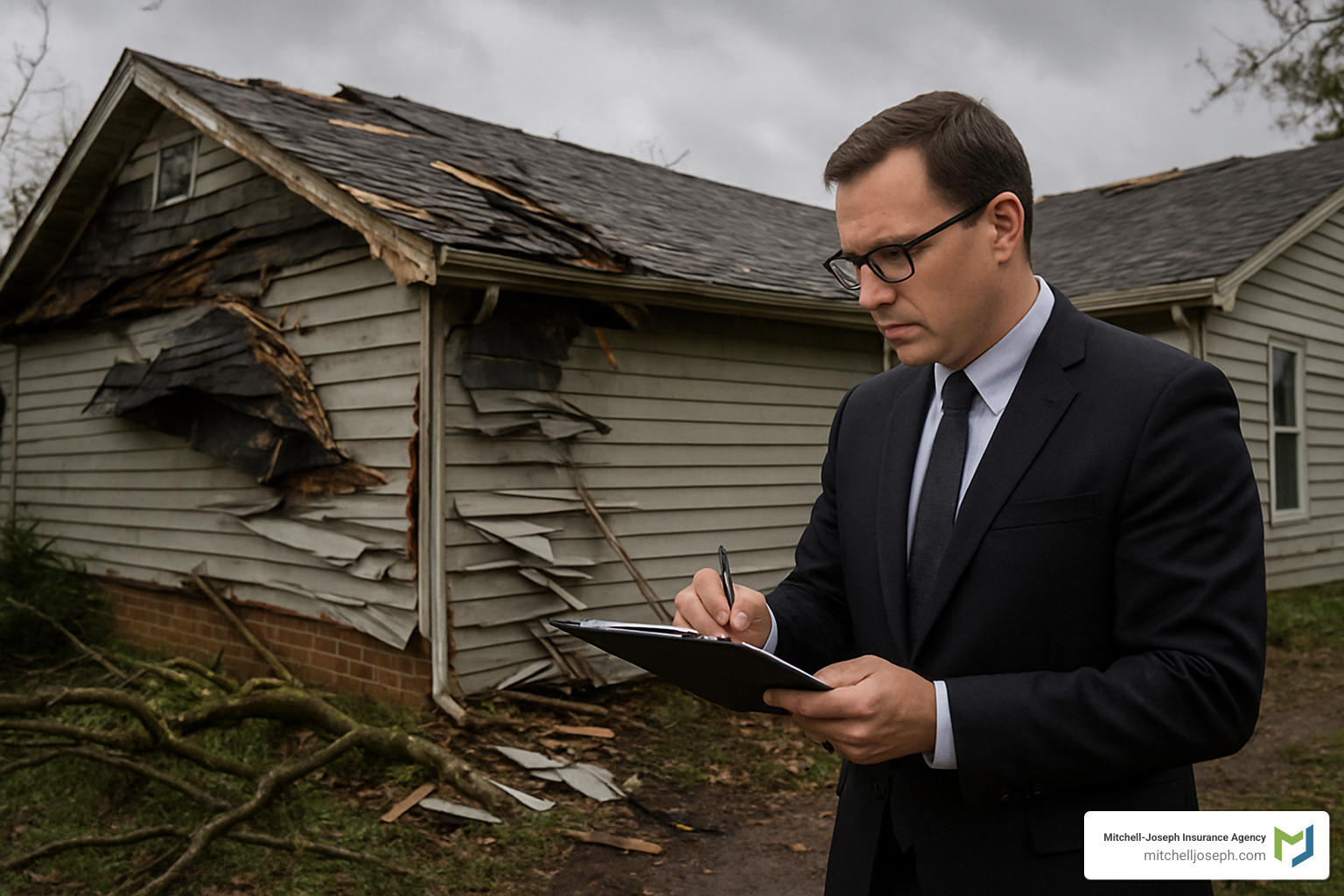
Liability coverage inside a P&C policy
The liability portion of your property and casualty insurance is what truly separates it from basic property protection. Think of it as your financial shield when accidents happen and you’re responsible.
Imagine a delivery driver slipping on your icy driveway and breaking their leg. Your homeowners liability would typically cover their medical bills, lost wages during recovery, pain and suffering damages, and—importantly—your legal defense if they decide to sue. Without this coverage, your personal assets could be at risk.
Most policies include protection for bodily injury to others, property damage you cause, legal defense costs, and any settlements or judgments against you. But here’s where many people get caught short: standard liability limits in basic policies might not be enough for serious incidents.
A severe car accident can generate costs well into the millions. That’s why many families benefit from additional umbrella policies that provide extra layers of protection beyond their primary coverage. For many of our clients in the Finger Lakes region, this extra protection provides invaluable peace of mind.
Typical exclusions you’ll want to plug
Understanding what your property and casualty insurance doesn’t cover is often more important than knowing what it does. Most policies won’t help with:
Flood damage – Standard policies simply don’t cover rising water, whether from hurricanes, heavy rains, or overflowing rivers. You’ll need separate flood insurance, especially important in certain parts of New York. The scientific research on this is clear: Federal Emergency Management Agency studies show even “low-risk” areas experience significant flooding.
Earthquake damage – If the ground starts shaking, your standard policy won’t help with repairs. Separate earthquake coverage is essential in vulnerable regions.
Your policy also won’t cover normal wear and tear, mold problems, pest infestations, or damage you cause intentionally. Government actions like condemnation are excluded, as are damages from war or nuclear hazards.
On the liability side, your policy won’t protect you for intentional acts, business activities run from your home, or professional services you provide. These require specialized coverage.
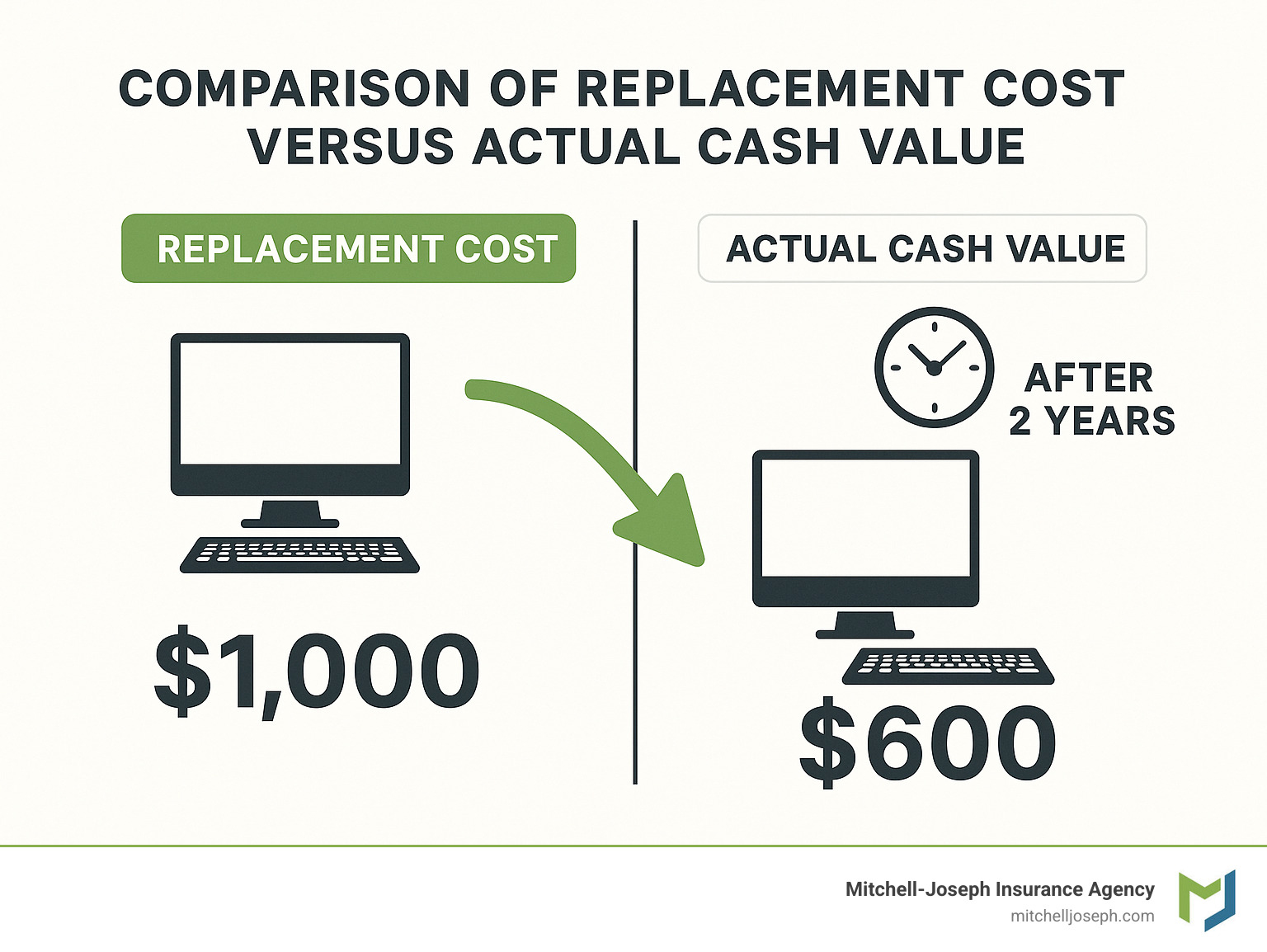
One crucial distinction to understand is between replacement cost and actual cash value (ACV) coverage. With replacement cost, your five-year-old laptop that gets stolen will be replaced with a brand new comparable model. With ACV, you’ll only receive what that five-year-old laptop was worth at the time of theft—often significantly less.
Here in Honeoye Falls and throughout the Rochester area, we’ve seen countless clients surprised by coverage gaps they didn’t know existed until they needed to file a claim. Taking time to understand your policy now, before disaster strikes, can save tremendous heartache later.
Protecting Yourself: Choosing Limits, Controlling Costs & Keeping Coverage Current
Finding the sweet spot with your property and casualty insurance isn’t a set-it-and-forget-it affair. Life changes, your assets grow (or shrink), and the risks you face evolve over time. Think of your insurance as a living document that needs regular check-ups to stay healthy.
How much property and casualty insurance do you need?
When I sit down with clients across the Finger Lakes region, I often hear the same question: “How much coverage is enough?” The answer isn’t one-size-fits-all, but there’s a thoughtful approach to finding your number.
For your home, focus on rebuilding cost, not market value. That charming Victorian in Honeoye Falls might sell for $350,000, but rebuilding those intricate details after a fire could cost $425,000. Insurance needs to cover that full reconstruction cost.
Your personal belongings deserve attention too. Standard policies typically cover contents at 50-70% of your dwelling coverage, but is that enough for your situation? Take a rainy Sunday afternoon to create a home inventory (photos work wonders) – most people are shocked to find how much they actually own.
When it comes to liability protection, think beyond the standard $300,000 homeowners policy limits. A serious accident could easily exceed that amount. A good rule of thumb? Your liability coverage should at least equal your net worth plus some consideration of your future earning potential. This is especially true for professionals whose careers represent significant lifetime earnings.
Here in New York, our state minimum auto liability requirements (25/50/10) barely scratch the surface of what you’d need after causing a serious accident. Those numbers represent $25,000 per person/$50,000 per accident for bodily injury and $10,000 for property damage – hardly enough in today’s world of expensive medical care and luxury vehicles.
Factors that affect your premium
Understanding what drives your insurance costs can help you make smarter decisions about coverage and potentially save money.
Your location plays a huge role – and not just your zip code. Being three miles from the nearest fire hydrant versus three blocks makes a significant difference. Living in flood-prone areas near Canandaigua Lake or in neighborhoods with higher crime rates will affect your rates too.
The bones of your property matter enormously. A newer home built with fire-resistant materials will typically cost less to insure than an older home with outdated electrical systems. Those beautiful original wood shingles on your historic home? Gorgeous, but more expensive to insure than a modern composite roof.
Your personal history tells insurers a story too. A spotless claims record speaks volumes, while multiple claims raise red flags. And yes, in most states, your credit score influences your premium – sometimes significantly. Insurance statistics show a strong correlation between credit management and claims frequency.
For the business owners I work with in Rochester and surrounding areas, industry type creates the baseline for commercial rates. A accounting firm faces different risks than a restaurant or construction company. Your safety programs, employee training, and loss prevention measures can all help control these costs.
When and how to update your policy
Life moves fast, and your insurance needs to keep pace. I recommend my clients review their property and casualty insurance at least once a year, ideally around renewal time when you’re already thinking about it.
But certain life events should trigger an immediate review:
That kitchen renovation you just completed? It likely increased your home’s value – and your insurance needs. The moment your teenager gets their driver’s license (congratulations and condolences!), your auto policy needs updating. Starting a side business in your garage? Your homeowners policy probably won’t cover business equipment or liability.
Major life transitions like marriage, divorce, retirement, or inheritance often change your asset picture substantially. These moments call for a fresh look at your coverage strategy.
Even subtle changes matter. Installing a security system or replacing that 25-year-old roof can qualify you for discounts. Adding a swimming pool or wood-burning stove increases your liability exposure and may require additional coverage.
For my clients throughout the Finger Lakes region, I recommend an annual “insurance checkup” – think of it as preventive care for your financial health. This regular review ensures your coverage grows and changes as your life does, without leaving dangerous gaps in protection.
More info about Umbrella Insurance
Claims, Comparisons & Real-World Lessons
When disaster strikes, you find the true value of your property and casualty insurance. Understanding how claims work before you need to file one can make an already stressful situation much more manageable.
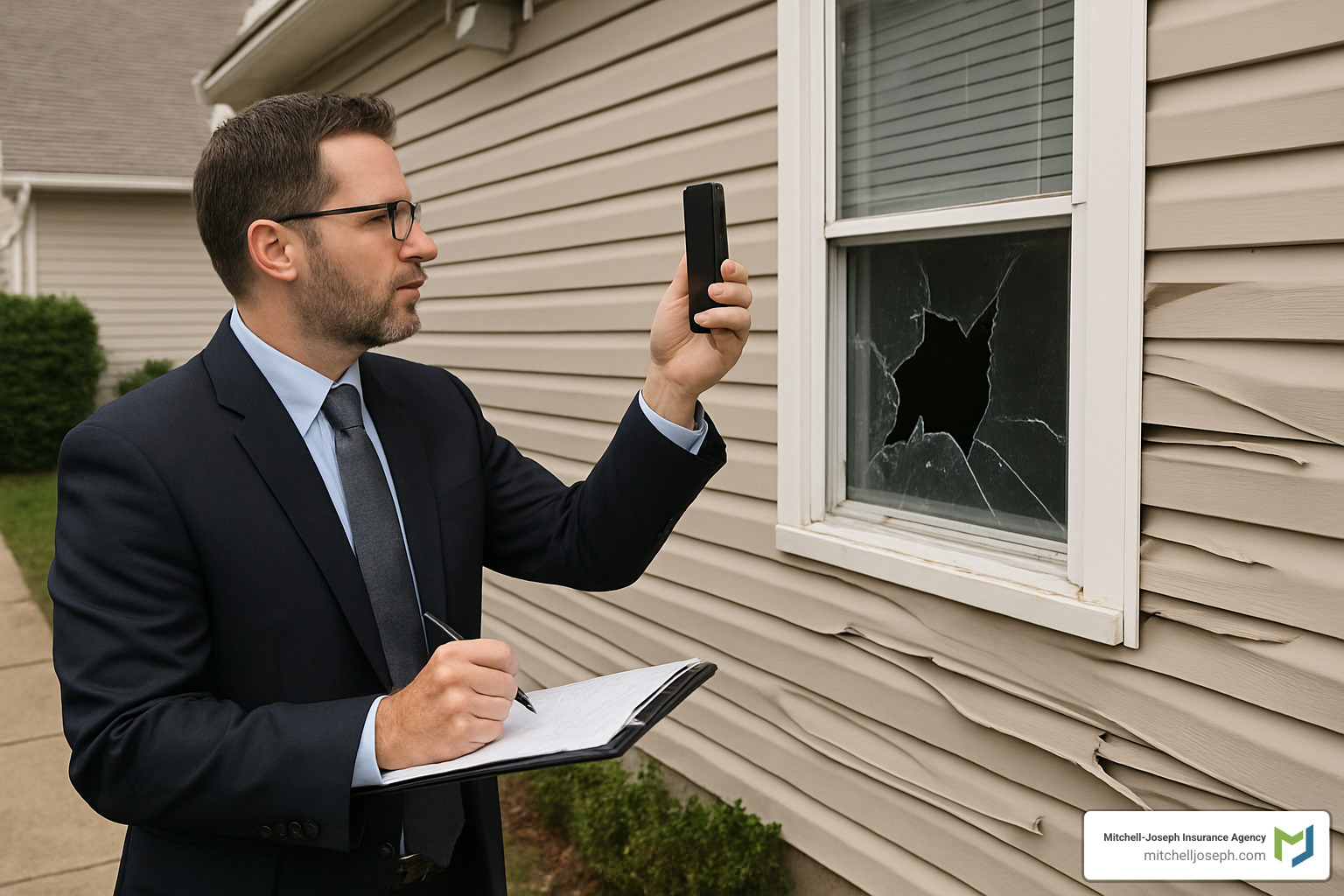
The claims process typically starts with notifying your insurance company as soon as possible after a loss. Most carriers now make this easy with 24/7 hotlines, online portals, mobile apps, or through your trusted agent. From there, you’ll need to document everything—take photos and videos of the damage, create an inventory of affected items, obtain police reports for theft or vandalism, and collect witness statements for liability claims.
Your insurance company will assign an adjuster who becomes your main point of contact. They’ll inspect the damage (either in person or sometimes virtually), review your documentation, determine if your policy covers the loss, and estimate repair or replacement costs.
The adjuster then makes a coverage determination based on your policy terms, the cause of loss, any applicable exclusions, and your deductible amount. If approved, your claim gets settled through direct payment to you, payments to contractors, or replacement of damaged items.
If you disagree with the settlement offer, you have options. Start by requesting a review with your adjuster, then escalate to claims management if needed. Many claims can be resolved through mediation or appraisal, and as a last resort, you can file a complaint with the state insurance department.
Real-life scenarios where coverage saves the day
Let me share some real stories that show how property and casualty insurance works when you need it most.
A family in Canandaigua experienced every homeowner’s nightmare—a kitchen fire that quickly spread to adjoining rooms. Their homeowners policy became their financial lifeline, covering $85,000 for structural repairs, $35,000 for smoke-damaged furniture and belongings, $12,000 for temporary housing during repairs, and professional cleaning of items that could be saved. Without proper coverage, this family would have faced financial devastation on top of the emotional trauma.
In Victor, a business owner faced a serious liability claim when a customer slipped on a wet floor and suffered a broken hip. Their general liability policy stepped in to cover $175,000 in medical expenses, $45,000 in lost wages, $80,000 in legal defense costs, and handled settlement negotiations that likely prevented an even larger jury award.
A driver from Honeoye Falls found themselves at fault in a serious collision. Their auto policy covered $120,000 in medical expenses for the other driver, $18,000 for the other driver’s vehicle, and provided legal representation when the claim initially exceeded policy limits. Thankfully, their umbrella policy activated to cover the additional exposure, protecting their personal assets.
When a retail store in Rochester suffered water damage that forced a six-week closure, their business owner’s policy proved invaluable. It covered not just the repairs to damaged inventory and fixtures, but also ongoing payroll for employees during the closure, lost profit reimbursement based on previous years’ earnings, and expenses for a temporary location to maintain partial operations.
Common misconceptions debunked
There’s a common belief that “the cheapest policy is the best value.” In reality, those lower premiums often mean higher deductibles, more exclusions, or inadequate coverage limits. The true value of insurance only becomes apparent when you need to file a claim—which is exactly the wrong time to find gaps in your coverage.
Many people think, “Disasters won’t happen to me.” While the odds of a total loss may seem low, the financial impact can be catastrophic. The property-casualty insurance industry processes millions of claims annually, showing that risk is real and widespread for everyone.
Another misconception is that “my homeowners policy covers everything.” Standard policies actually contain numerous exclusions, particularly for flood, earthquake, and certain high-value items. Understanding these gaps is essential for building comprehensive protection.
Some people believe, “I don’t have enough assets to worry about liability.” The truth is that liability judgments can target future earnings and assets you haven’t even acquired yet. Young professionals with high earning potential may be particularly vulnerable without adequate liability protection.
Small business owners sometimes think, “My business is too small to need extensive coverage.” In reality, small businesses often have less financial cushion to absorb unexpected losses, making proper property and casualty insurance even more critical for their survival.
Quick FAQs about property and casualty insurance
How do deductibles work? A deductible is the amount you pay out-of-pocket before your insurance coverage kicks in. With a $1,000 deductible, you would pay the first $1,000 of a covered loss, and your insurance would cover the remainder up to your policy limits.
Are all natural disasters covered by standard property insurance? No. While wind, hail, and fire are typically covered, flood and earthquake damage require separate policies or endorsements. In the Finger Lakes region, flood insurance is particularly important near lakes, creeks, and in certain low-lying areas.
How long do claims stay on my record? Typically 3-5 years, though this varies by insurance company. Your claims history can affect your premium at renewal and when shopping for new coverage.
What’s the difference between replacement cost and actual cash value? Replacement cost provides funds to replace damaged items with new ones of similar quality, while actual cash value only pays the depreciated value of the item at the time of loss—often leaving you with a significant gap to fill.
Does my personal auto policy cover business use of my vehicle? Generally no. Personal auto policies typically exclude or severely limit coverage for business use. If you use your vehicle for business purposes, you may need a commercial auto policy or endorsement.
How often should I review my coverage? At minimum annually, but also after major life events like home purchases, renovations, marriage, birth of children, or significant income changes.
If you’re facing a claim or have questions about the claims process, resources like Georgia’s SERFF Filing Access can provide additional information on insurance regulations and consumer protections.
Conclusion
Property and casualty insurance isn’t just another bill to pay—it’s the safety net that lets you sleep soundly at night. It’s what stands between you and financial devastation when life throws its inevitable curveballs your way.
Throughout this guide, we’ve walked through the essentials of what protects your most valuable assets and shields you from potentially devastating liability claims. The peace of mind that comes from proper coverage is truly priceless.
Here’s what I hope you’ll take away from our conversation:
First, property and casualty insurance works as your financial first responder. When disaster strikes—whether it’s a kitchen fire, a fallen tree, or someone slipping on your icy sidewalk—your policy springs into action, helping you rebuild and recover.
Second, the policy landscape is diverse for good reason. Your homeowners policy protects your castle, while auto coverage safeguards you on the road. Business owners need their own specialized protection. One size definitely doesn’t fit all when it comes to insurance.
Third, those policy exclusions matter enormously. I’ve seen too many heartbroken families find too late that standard policies don’t cover flood damage. Knowing these gaps helps you plug them before water starts rising.
Fourth, life changes—and your insurance should too. That starter home becomes a forever home with renovations. Kids grow up and start driving. Businesses expand. Your protection needs to keep pace with these changes through regular reviews.
Finally, when the unexpected happens, understanding how claims work transforms a potentially overwhelming process into a manageable one. The right coverage turns financial disasters into inconveniences you can handle.
At Mitchell-Joseph Insurance Agency, we’ve spent decades helping our neighbors throughout the Finger Lakes region steer these waters. With our team’s combined 200+ years of experience and relationships with 24 different insurance companies, we craft protection plans as unique as the people and businesses we serve.
Whether you’re in Honeoye Falls where we’re based, or in Canandaigua, Rochester, or anywhere in between, we’re here to help you make sense of your options. As an independent agency, our loyalty lies with you—not with insurance companies—ensuring you get recommendations truly aligned with your needs.

The best time to understand your insurance is before you need to use it. Reach out today to make sure your safety net is as strong as it should be—because protecting what matters most isn’t just our business, it’s our passion.

