

Your Guide to Pop-Up Camper Protection
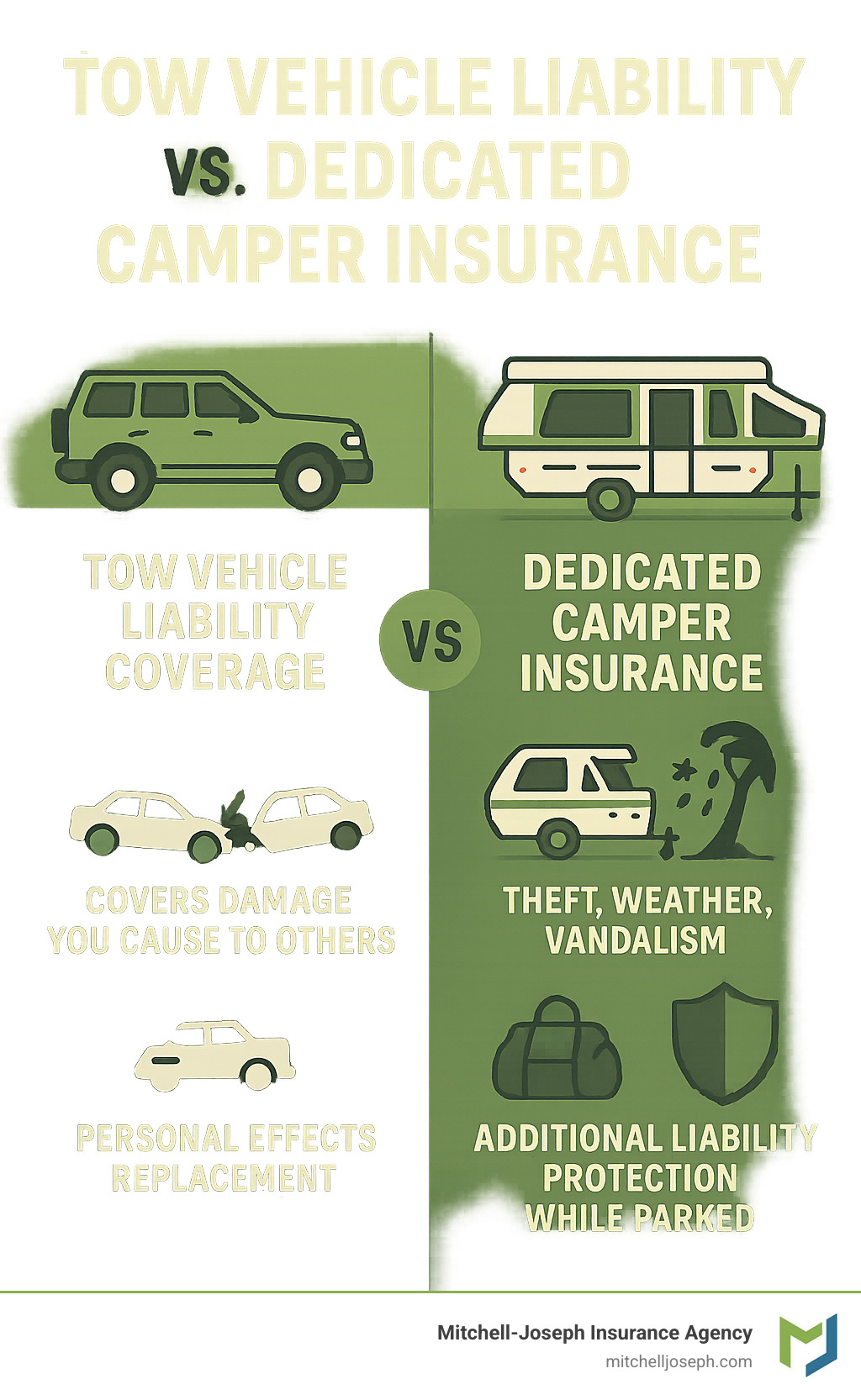
Pop up insurance coverage is essential protection for your recreational investment, even though many camper owners mistakenly believe their auto insurance provides complete coverage. While your tow vehicle’s liability insurance transfers to your pop-up camper while on the road, it won’t pay to repair or replace your camper if you’re at fault in an accident or if it’s damaged by theft, vandalism, or weather.
Quick Answer: Pop-Up Camper Insurance Essentials
- Legal requirement: Not required by law (no engine), but highly recommended
- Lender requirement: Usually mandatory if you have a loan
- Core coverage needed: Collision and comprehensive insurance
- Cost: Typically a few hundred dollars annually – much cheaper than motorhome insurance
- Tow vehicle coverage: Only provides liability protection, not physical damage to your camper
Pop-up campers offer incredible value for outdoor enthusiasts. They’re lighter and more aerodynamic than larger RVs, leading to better gas mileage and easier towing, which is why they are a popular entry point into the RV lifestyle. However, their affordability doesn’t mean you should skip proper insurance protection.
The temporary nature of pop-up camping – setting up in unfamiliar locations with changing conditions – introduces unique risks that standard auto insurance simply doesn’t address.
I’m Jeffrey Joseph, and I’ve been helping Finger Lakes families protect their recreational vehicles and other assets since 1999 at Mitchell-Joseph Insurance Agency. My experience with pop up insurance coverage has shown me how proper protection gives families confidence to explore new destinations without worry.
Decoding Pop Up Insurance Coverage for Your Camper
Picture this: you’re cruising down the highway with your pop-up camper in tow, windows down, trip calling. The last thing on your mind should be whether you’re properly insured. The good news? Pop up insurance coverage doesn’t have to be complicated, but understanding what you need is crucial for protecting your investment.
Here’s something that surprises many camper owners: pop-up campers aren’t legally required to have their own insurance policy in most states. Since they don’t have engines, they’re treated differently than motorhomes or travel trailers. However, just because something isn’t required doesn’t mean it’s not important.
Think of your pop-up camper like a valuable piece of property – because that’s exactly what it is. Whether you paid $5,000 for a vintage gem or $25,000 for a brand-new model, you wouldn’t leave that kind of investment unprotected, would you?
There is one major exception to the “not required” rule: if you financed your pop-up camper, your lender will almost certainly require full coverage insurance. This makes perfect sense – they want to protect their investment just as much as you want to protect yours. The lender will typically require both collision and comprehensive coverage until the loan is paid off.
Even without a lender requirement, having pop up insurance coverage gives you something priceless: peace of mind. When you’re setting up camp in a new location or dealing with unexpected weather, you’ll sleep better knowing your mobile home away from home is protected.
For a deeper dive into protecting all your recreational vehicles, check out our comprehensive guide on Recreational Vehicle Insurance.
Why Your Auto Insurance Policy Isn’t Enough
This is where many pop-up camper owners get tripped up, and honestly, it’s understandable. The relationship between your auto insurance and your camper coverage is a bit like a safety net with some pretty big holes in it.
Let’s start with what your auto insurance does cover. When your pop-up camper is hitched to your vehicle and you’re driving down the road, your auto policy’s liability coverage extends to your camper. This means if your camper causes damage to another vehicle or injures someone while being towed, your auto insurance will step in to help cover those costs.
For example, if your camper sways and clips another car’s mirror, or if it comes unhitched and causes an accident, your auto policy’s bodily injury and property damage liability would typically handle the claims from the other parties involved. That’s the good news.
Here’s where things get tricky: your auto insurance won’t pay a dime to repair or replace your own camper. Think about it this way – your auto insurance treats your camper like it would treat a boat trailer or utility trailer. It’ll cover the damage you cause to others, but your own property? That’s on you.
So what exactly leaves you hanging without dedicated pop up insurance coverage? Collision damage to your camper tops the list. If you’re in an accident and your camper gets damaged, twisted, or destroyed, your auto policy won’t help with repairs or replacement costs.
Theft is another major concern that auto insurance won’t address. Pop-up campers are unfortunately attractive targets for thieves – they’re relatively easy to hitch up and tow away, especially from storage lots or even your driveway.
Vandalism and weather damage can turn a great camping trip into a nightmare without proper coverage. Whether it’s hail denting your roof, wind tearing your canvas, or someone deciding to spray-paint your camper, your auto policy offers zero protection.
Fire damage is particularly devastating and unfortunately not uncommon with camping equipment. Whether it’s from a campfire mishap, electrical issues, or even a wildfire in the area, fire can completely destroy your camper in minutes.
Here’s something many people don’t consider: once you unhitch your camper and set up camp, your auto insurance coverage disappears entirely. You’re now parked and using your camper as temporary housing, which puts you in a completely different category of risk.
For more information about the various types of coverage that can protect your valuable assets, visit our Insurance Coverage page.
Core Coverage: What Your Pop Up Insurance Coverage Should Include
Now that we’ve covered what your auto insurance won’t do, let’s talk about what proper pop up insurance coverage will do. The foundation of any good camper policy rests on two essential coverages: collision and comprehensive.
Collision coverage is your financial lifeline when accidents happen. This coverage pays to repair or replace your pop-up camper if it collides with another vehicle, overturns, or hits an object – regardless of who’s at fault. Whether you accidentally back into a tree at the campsite (we’ve all been there!) or get caught up in a multi-vehicle accident on the interstate, collision coverage has you covered.
Comprehensive coverage is where your camper gets protection from almost everything else life can throw at it. Since camping inherently involves being outdoors and exposed to the elements, comprehensive coverage is absolutely crucial for pop-up campers.
The most common comprehensive claims we see include theft – unfortunately, campers parked in storage facilities or even driveways can disappear overnight. Fire damage is another frequent claim, whether from equipment malfunctions, campfire accidents, or wildfires. Weather-related damage from hail, windstorms, flooding, or lightning strikes can happen anywhere, anytime.
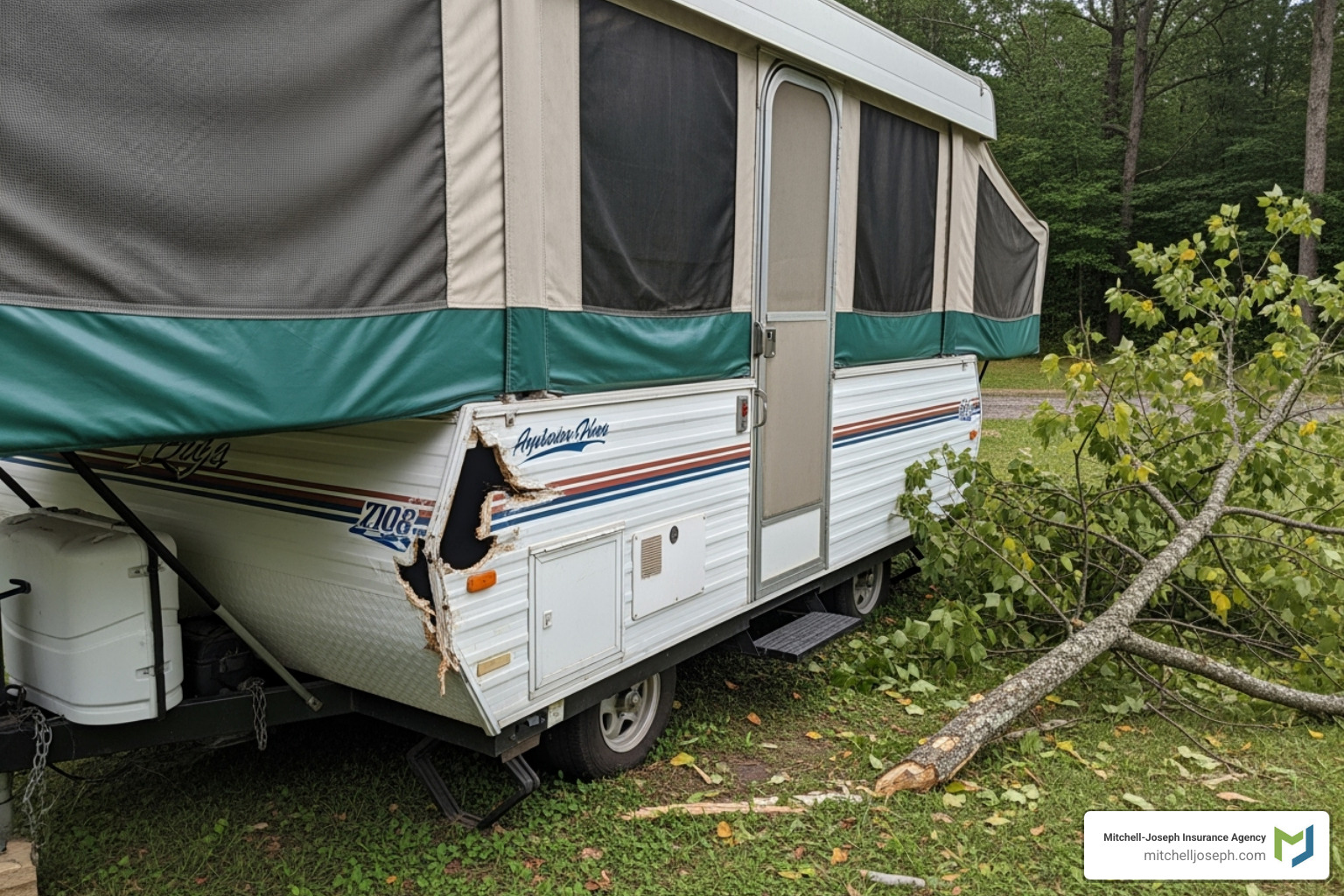
Falling objects like tree branches (or entire trees during storms) can cause significant damage to your camper’s roof or canvas. Vandalism is sadly common in some areas, and animal collisions – hitting a deer or elk while towing – fall under comprehensive coverage.
When selecting these coverages, you’ll need to choose a deductible – the amount you pay out of pocket before your insurance kicks in. A higher deductible typically means lower premiums, but make sure you can comfortably afford whatever deductible you choose if you need to file a claim.
One crucial decision you’ll face is how your camper’s value will be determined if it’s totaled. Most policies offer Actual Cash Value (ACV) coverage, which pays the replacement cost minus depreciation. For older campers, this might leave you with less money than you’d hoped.
Some insurers offer Replacement Cost coverage, especially for newer campers. This pays to replace your camper with a new one of similar kind and quality, without deducting for depreciation. While it costs more upfront, it can be invaluable for protecting your investment.
Optional Add-Ons for Total Peace of Mind
While collision and comprehensive form the backbone of good pop up insurance coverage, several optional coverages can provide even more comprehensive protection for your camping trips.
Personal Effects Replacement Coverage protects all the gear you’ve loaded into your mobile home. Camping equipment, electronics, clothing, and personal belongings can add up to thousands of dollars. This coverage helps replace these items if they’re stolen or damaged in a covered loss, separate from any limitations your homeowners insurance might have for items away from home.
Vacation Liability Coverage fills a critical gap that many camper owners don’t even realize exists. Remember how your auto insurance liability only works while you’re towing? This add-on provides liability protection while your camper is parked and being used as temporary housing. If someone slips and falls in your camper, or if your awning collapses and damages a neighbor’s property, vacation liability coverage protects you.
Roadside Assistance can be a absolute lifesaver when you’re miles from home with a disabled camper. This coverage typically includes towing service, flat tire changes, battery jump-starts, lockout service, and emergency fuel delivery. When you’re towing a camper, you’re more vulnerable to certain types of breakdowns, making this coverage particularly valuable.
Emergency Expenses Coverage ensures you’re not stranded if your camper becomes uninhabitable due to a covered loss. If your camper is damaged in an accident or destroyed by fire, this coverage helps pay for hotel stays, meals, and transportation while your camper is being repaired or until you can make other arrangements.
For a complete overview of recreational vehicle insurance options that can improve your camping experience, explore our RV Insurance Coverage Options page.
Factors That Influence Pop Up Insurance Coverage Costs
The cost of pop up insurance coverage is refreshingly affordable compared to other types of RV insurance, typically running just a few hundred dollars per year. Since pop-up campers don’t have engines and their liability coverage often transfers from your tow vehicle, they’re considered lower risk than motorhomes or large travel trailers.
Your camper’s value, age, and condition play the biggest role in determining your premium. A brand-new $25,000 pop-up will naturally cost more to insure than a well-maintained 10-year-old model worth $8,000. The insurance company needs to know how much they might have to pay out if your camper is totaled.
Where you store your camper when it’s not in use can significantly impact your rates. A camper stored in a locked, enclosed building will typically qualify for lower premiums than one parked on the street or in an open storage lot. Secure storage reduces the risk of theft and weather damage.
Your coverage limits and deductible choices directly affect your premium. Higher coverage limits mean higher premiums, while choosing a higher deductible will lower your premium. The key is finding the sweet spot that gives you adequate protection while fitting your budget.
Your driving record still matters, even though your camper doesn’t have an engine. Since you’ll be towing your camper, your driving history helps insurers assess the likelihood of accidents. A clean driving record can help keep your premiums lower.
Bundling discounts can provide significant savings if you insure your pop-up camper with the same company that handles your auto, home, or other policies. At Mitchell-Joseph Insurance Agency, we specialize in finding these money-saving opportunities for our clients by comparing options across multiple insurance carriers.
Here’s a sample of how different factors might influence your annual premium:
| Camper Value | Basic Coverage | Full Coverage |
|---|---|---|
| Under $10,000 | $150-$300 | $250-$450 |
| $10,000-$20,000 | $200-$400 | $350-$600 |
| Over $20,000 | $300-$500 | $500-$800 |
Note: These are sample ranges only. Your actual premium will depend on your specific circumstances, location, coverage choices, and insurance company.
Choosing Your Policy and Hitting the Road

After understanding what pop up insurance coverage can do for your camper, the next step is finding the perfect policy for your trips. Think of it like choosing the right camping gear – you want protection that fits your specific needs without breaking the bank.
The key is taking time to honestly assess what you need. Start by reviewing your assets and asking yourself some important questions. How often will you actually use your pop-up camper? Are you weekend warriors who hit the road every chance you get, or more like occasional triprs who camp a few times a year? Your usage patterns matter because they affect your risk exposure.
Next, think about your comfort level with deductibles. A higher deductible means lower monthly premiums, but you’ll pay more out-of-pocket if something happens. A lower deductible gives you more immediate protection but costs more upfront. It’s all about finding that sweet spot where you can sleep well at night (whether in your own bed or your pop-up!).
How to Find the Best Protection for Your Travels
Here’s where having the right insurance partner makes all the difference. At Mitchell-Joseph Insurance Agency, we’ve been helping families protect their trips for decades. Our approach is simple: we listen to your needs, then do the shopping for you.
With over 200 years of combined experience on our team, we understand that every camping family is different. Some folks want basic protection to meet lender requirements, while others want comprehensive coverage that lets them explore remote areas with complete confidence. We work with 24 different insurance companies, which means we can compare options and find you the best pop up insurance coverage at competitive rates.
Our personalized service means you’re not just another policy number. Whether you’re storing your camper in Honeoye Falls, planning trips from Pittsford, or exploring the beautiful lakes around Canandaigua, we understand the local camping culture and can tailor coverage accordingly. We serve families throughout the Finger Lakes region, including Naples, Rushville, Avon, Bloomfield, Bristol, Canadice, Cohocton, Fishers, Gorham, Honeoye, Ionia, Lima, Mendon, Middlesex, Potter, Rochester, Rush, South Bristol, Stanley, Victor, Wayland, and West Bloomfield.
The best part? We handle all the comparison shopping and paperwork, so you can focus on planning your next camping trip instead of deciphering insurance jargon. Our goal is to make getting coverage as easy as setting up your pop-up camper – straightforward, stress-free, and ready for the road ahead.
Ready to protect your investment and peace of mind? Get a quote for your Insurance for a Pop-Up Camper today and start your next trip with confidence!

