

Why Pop-Up Camper Insurance Is More Important Than You Think
Understanding how to insure a pop up camper begins by realizing your standard auto and home policies offer surprisingly little protection for your investment. Here’s how to get covered:
Steps to Insure Your Pop-Up Camper:
- Contact specialized RV insurers – Your regular policies won’t cover camper damage.
- Choose your coverage – Select comprehensive, collision, and liability protection.
- Compare quotes – Costs are affordable, often $100-$200 annually.
- Bundle policies – Save 10-25% by combining with your auto or home insurance.
- Review annually – Adjust coverage as your camper’s value and your needs change.
Pop-up campers are a significant investment, but many owners find too late that their auto insurance only covers liability while towing—not damage to the camper itself. Your homeowners insurance is also limited, typically offering only $1,000-$2,500 in coverage and only when your camper is parked at your residence. If it’s damaged at a campground or stolen from storage, you’re likely on your own.
I’m Jeffrey Joseph, and since 1999, I’ve helped families in the Finger Lakes region find affordable, custom RV insurance. At Mitchell-Joseph Insurance Agency, we turn potential disasters into minor inconveniences. This guide will show you how to protect your investment without overspending.

Understanding Why Your Pop-Up Camper Needs Insurance
One of the first questions new pop-up camper owners ask is whether they truly need insurance. While the answer can seem complex, understanding the risks involved makes the decision much clearer and can save you from major financial stress.
Is Pop-Up Camper Insurance Legally Required?
In most states, you are not legally required to carry a separate insurance policy for a pop-up camper. Because it’s a towable vehicle without its own engine, your auto insurance’s liability coverage typically extends to it while you’re on the road. This means if your camper causes an accident that damages another vehicle or injures someone, your car insurance should cover those liability costs.
However, that liability coverage will not pay to repair or replace your own camper. Furthermore, if you financed your camper, your lender will almost certainly mandate that you carry comprehensive and collision coverage to protect their investment. While most campgrounds don’t ask for proof of insurance, this doesn’t mean you’re protected from theft, storms, or other common risks. For general information on RV ownership, resources from organizations like the RV Industry Association (RVIA) can be very helpful.
For a deeper dive, see our guide on Does Your Pop-Up Camper Need Insurance? and our overview of Recreational Vehicle Insurance.
Does My Auto or Homeowners Policy Provide Enough Coverage?
This is the most common and costly myth about how to insure a pop up camper. Relying on your existing auto or home policies creates significant coverage gaps.
-
Auto Insurance: While it provides liability protection during towing, it offers zero coverage for physical damage to your camper. If you back into a post, get rear-ended, or have any other accident, you are responsible for all repair costs for the camper.
-
Homeowners Insurance: Most policies provide minimal coverage for recreational vehicles, often limited to just $1,000 to $2,500. Crucially, this coverage usually only applies when the camper is parked on your property. Damage at a campground, in storage, or on the road is not covered.
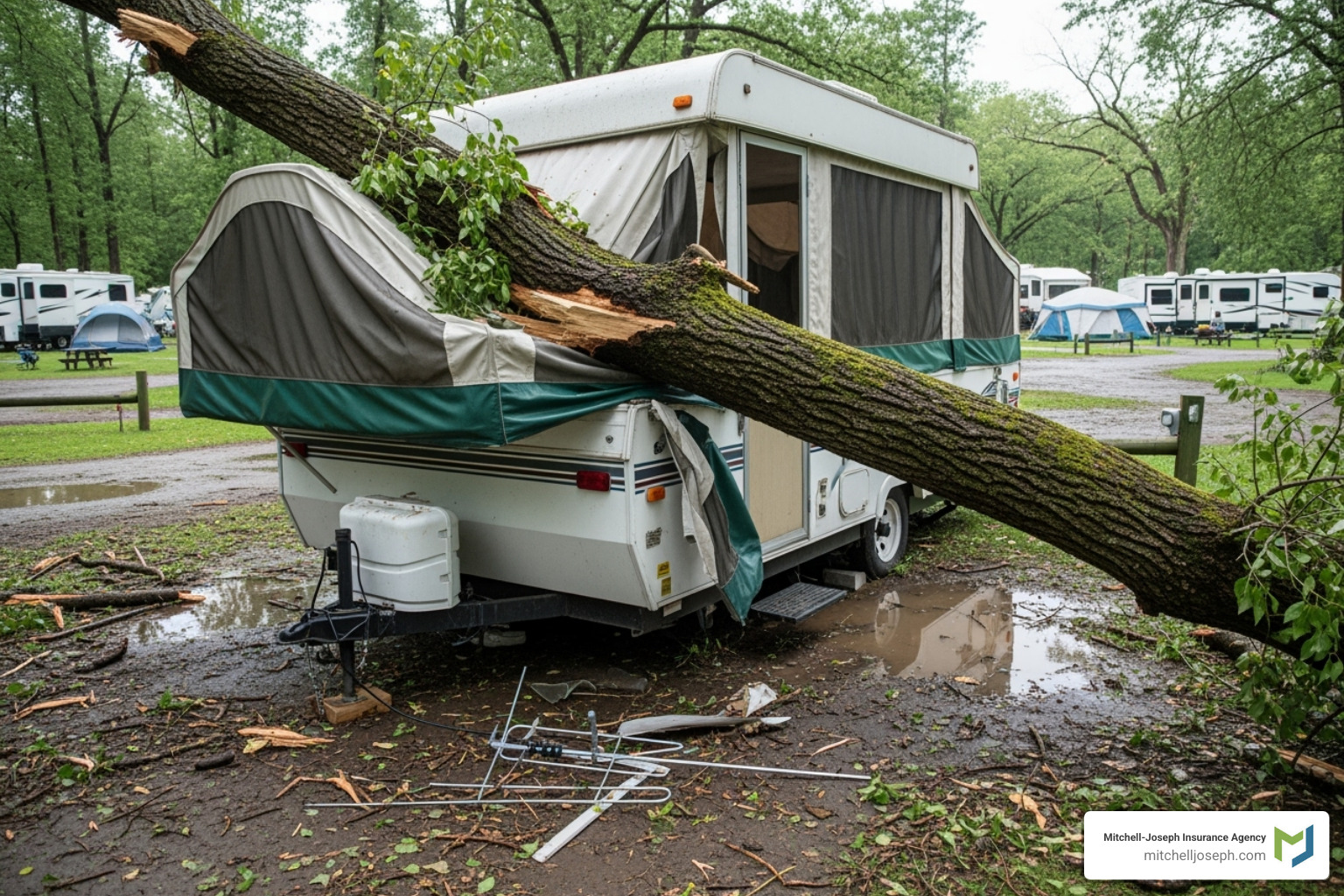
Imagine a severe storm rolls through your campsite, and a large branch causes $8,000 in damage to your camper’s roof. Without a dedicated RV policy, you would face that bill alone. Specialized pop-up camper insurance is designed to fill these exact gaps, protecting you from the unique risks of RV ownership.
Navigating Coverage Options and Costs
Once you understand the need for specialized insurance, the next step is choosing the right coverage. It’s simpler than it sounds and is all about protecting your investment and your peace of mind.
What Coverage You Need to Insure a Pop Up Camper
When we discuss how to insure a pop up camper, we focus on building a policy that protects your investment and your family memories. Key coverages include:
- Liability Coverage: Protects you if someone is injured at your campsite or if you damage their property. This goes beyond the liability provided by your auto policy, which only applies during towing.
- Collision Coverage: Pays for repairs to your camper if it’s damaged in an accident, regardless of who is at fault.
- Comprehensive Coverage: This is your protection against non-collision events like theft, fire, vandalism, hail, floods, and falling objects.
- Personal Effects Coverage: Reimburses you for personal belongings inside your camper (like camping gear, electronics, and clothes) if they are stolen or damaged, typically up to $5,000.
- Vacation Liability: Provides liability protection at your campsite, acting like a homeowner’s policy that travels with you.
- Emergency Expense Coverage: Helps pay for lodging and transportation if your camper becomes uninhabitable during a trip.
- Total Loss Replacement: If your newer camper (usually five model years old or less) is totaled, this coverage provides a brand new replacement, not just its depreciated value.
- Agreed Value Coverage: Perfect for vintage or custom campers, this option lets you and the insurer agree on the camper’s value upfront, ensuring a fair payout if it’s a total loss.
Policies typically exclude normal wear and tear, maintenance issues, and commercial use. We can explore all these options in detail at our RV Insurance Coverage Options page.

What Factors Influence the Cost of Pop-Up Camper Insurance?
The cost to insure your pop-up camper is based on several straightforward factors:
- Camper Value & Age: A newer, more expensive camper costs more to insure than an older, less valuable one.
- Driving Record: A clean driving history can earn you significant discounts.
- Location: Where you live and store the camper matters. Areas with higher rates of theft or severe weather may have higher premiums.
- Usage: How often you use the camper can affect your rate. Some insurers offer discounts for seasonal or limited use.
- Deductible: Choosing a higher deductible lowers your annual premium, but means you pay more out-of-pocket for a claim.
The great news is that pop-up camper insurance is very affordable. Most policies cost between $100-$200 annually, which breaks down to just $7-$20 per month. When a single incident like a hailstorm or theft could cost thousands, this small annual investment provides invaluable protection.
| Coverage Level | Annual Cost | What You Get | What You Risk Without It |
|---|---|---|---|
| Basic (Auto Policy Only) | $0 extra | Liability while towing | Everything else – theft, weather damage, collision repairs |
| Full RV Coverage | $100-$220 | Complete protection, personal effects, emergency expenses | Peace of mind is priceless |
Investing a small amount each year protects your much larger investment and ensures your trips are worry-free.
How to Insure a Pop Up Camper and Manage Your Policy
With a clear understanding of your coverage needs, let’s walk through the practical steps of how to insure a pop up camper and manage your policy effectively.
A Step-by-Step Guide on How to Insure a Pop Up Camper
Getting the right policy is a straightforward process. Here’s how we guide our clients:
- Assess Your Needs: Consider your camper’s value (including any modifications), how and where you use it, and your personal risk tolerance.
- Gather Necessary Information: Have the following ready to ensure a quick and accurate quote: year, make, model, and VIN of your camper; purchase price or current value; and your driving history.
- Compare Quotes from Multiple Providers: As an independent agency, Mitchell-Joseph Insurance Agency shops your policy with 24 different insurance companies. This allows us to find the best combination of coverage and price for you.
- Choose the Right Insurer and Policy: We’ll help you look beyond just the price to consider the insurer’s reputation for claims service and financial stability, ensuring you select a policy that truly meets your needs.
- Review Your Policy Thoroughly: Once you receive the documents, check the coverage limits, deductibles, and exclusions. We’re here to answer any questions and make sure you understand exactly what your policy covers.

Filing a Claim for Your Pop-Up Camper:
If an incident occurs, stay calm and follow these steps:
- Document Everything: Take photos and videos of the damage immediately. If theft is involved, file a police report.
- Contact Your Insurer Promptly: Report the incident to us or your insurance company as soon as possible.
- Get Repair Estimates: Your insurer may require estimates from approved shops. Keep receipts for any emergency expenses.
- Cooperate with the Adjuster: Provide all necessary information to the adjuster to process your claim smoothly.
At Mitchell-Joseph, we act as your advocate throughout the claims process. Learn more at our Insurance Coverage – Mitchell-Joseph Insurance Agency page.
Smart Ways to Save Money on Your Premium
Getting great coverage doesn’t have to be expensive. Here are some of the best ways to lower your premium:
- Bundling Discounts (10-25%): The easiest way to save is by combining your camper insurance with your auto or home policy through the same provider.
- Safe Driver Discounts: A clean driving record with no accidents or violations will almost always result in a lower rate.
- Safety Devices: Installing anti-theft devices like wheel locks, alarms, or GPS trackers can sometimes earn you a discount.
- Paying in Full: You can often save a small percentage by paying your annual premium in one lump sum instead of monthly installments.
- Storage or Seasonal Use Discounts: If you store your camper for a large part of the year, ask about a “lay-up” or storage discount for the off-season.
- Higher Deductibles: Opting for a higher deductible lowers your premium. Just ensure you can comfortably pay that amount if you file a claim.
We explore every available discount for our clients. For more tips, check out our guides on saving on RV insurance and finding affordable recreational vehicle coverage.

Conclusion
We hope this guide has clarified how to insure a pop up camper and why it’s a crucial step for any owner. While not always legally required, the financial protection and peace of mind it offers are invaluable.
Your pop-up camper is more than just equipment; it’s your gateway to trip and family memories. A standard auto policy only covers liability while towing, and a homeowners policy offers minimal protection at home, leaving you exposed to major risks like theft, storm damage, and accidents at the campground.
Specialized pop-up camper insurance fills these critical gaps. For a surprisingly low cost, typically $100-$200 per year (or $7-$20 per month), you can protect your investment against almost any eventuality. It’s a small price to pay to safeguard an asset worth thousands.
At Mitchell-Joseph Insurance Agency, we’ve been helping families in the Finger Lakes region protect what matters most since 1999. With over 200 years of combined experience and access to 24 insurance companies, we don’t just sell policies—we build a customized safety net that fits your budget and your needs.
Don’t let an unexpected incident ruin a vacation or your finances. Let us help you find the right coverage so you can focus on making memories.
Ready to protect your investment? Contact us for a quote on insurance for a pop up camper today. We’ll ensure you’re covered for whatever your trips bring.

