

Why Understanding Pipe Damage Insurance Matters for Your Home
Pipe damage insurance is a critical, yet often misunderstood, part of your homeowners policy. Here’s what you need to know:
Quick Answer: Does Homeowners Insurance Cover Pipe Damage?
- YES, if sudden and accidental: Burst pipes from freezing, sudden breaks, or vandalism are typically covered.
- NO, if gradual or preventable: Slow leaks, wear and tear, poor maintenance, or neglect are excluded.
- What’s covered: Water damage to your home’s structure and belongings, plus temporary living expenses.
- What’s NOT covered: The actual pipe repair/replacement itself in most cases.
- Average claim cost: $11,098 for water damage claims.
Water damage is the second most common homeowners insurance claim. Between 2016 and 2020, 1 in 50 claims involved water damage or broken pipes, and plumbing problems account for 53% of non-weather-related water damage claims.
The catch is that coverage depends entirely on how and why the pipe failed. A pipe that bursts overnight in a cold snap? Likely covered. A rusted pipe that’s been slowly leaking for months? Almost certainly not.
I’m Jeffrey Joseph of Mitchell-Joseph Insurance Agency. Since 1999, I’ve helped homeowners across the Finger Lakes region steer pipe damage insurance claims. Understanding the difference between sudden accidents and gradual wear has saved our clients thousands and helped them secure the right coverage before disaster strikes.

Pipe damage insurance terms at a glance:
Understanding Your Standard Homeowners Policy and Pipe Damage
When you find a burst pipe spraying water across your basement, your first thought is likely: “Am I covered?” The answer isn’t always simple. While standard homeowners policies offer solid protection, pipe damage insurance coverage has important distinctions. The difference between a covered claim and a denial often comes down to one question: How did this happen?

Your standard homeowners policy is designed to protect you from unexpected disasters—it’s not a maintenance contract. Understanding what’s covered (and what’s not) can save you thousands and prevent the frustration of a denied claim.
The Golden Rule: Sudden & Accidental vs. Gradual Damage
The fundamental principle of pipe damage insurance is that sudden and accidental damage is covered, while gradual damage is not. Insurance is for surprises, not for problems that develop slowly over time.
A pipe that bursts overnight during a Finger Lakes winter is sudden and accidental, and your policy will typically cover the damage. A pipe that’s been dripping behind a wall for months, causing rot and mold, is gradual damage, and you’re likely on your own.
Sudden and accidental events include pipes that burst from freezing, unexpected mechanical failures, or vandalism. If you wake up to a flood from a burst pipe, that’s the kind of unforeseen disaster your insurance is designed for.
Conversely, gradual damage, wear and tear, and neglect are your responsibility. Insurers expect you to maintain your home. If old, corroded pipes finally give out, it’s not a covered event. Similarly, if a pipe has been slowly leaking and you ignored it, the resulting damage falls under neglect.
As the National Association of Insurance Commissioners explains, coverage depends on whether you took reasonable steps to maintain your pipes. Insurers may argue damage could have been prevented with proper maintenance. The bottom line: maintain your home, fix leaks promptly, and replace old pipes. An adjuster will look for neglect, which can lead to a denied claim.
What’s Covered: Resulting Water Damage vs. The Pipe Itself
If a pipe bursts and damages your living room, what does insurance pay for? Your policy typically covers the damage caused by the water, but not the cost to fix the pipe itself.
-
Dwelling coverage repairs your home’s structure. It pays to tear out and replace water-soaked drywall, buckled floors, or damaged ceilings, restoring your home to its pre-loss condition.
-
Personal property coverage protects your belongings, like a water-soaked couch, ruined electronics, or clothing. This may be for the item’s depreciated value unless you have replacement cost coverage.
-
Loss of use coverage (Additional Living Expenses) pays for temporary housing, meals, and other increased living costs if the damage is so severe you can’t stay in your home during repairs.
What about the broken pipe? Investopedia confirms that homeowners insurance covers the resulting damage, but not the cost of repairing the pipe, especially if it failed from wear and tear.
An important exception: If a wall or floor must be opened to access the pipe, the cost of tearing out and replacing those structural elements is usually covered. The plumber’s bill to fix the pipe itself, however, is generally your responsibility.
Common Exclusions and Why Pipe Damage Insurance Claims Get Denied
Knowing what your pipe damage insurance doesn’t cover is critical. Many claims are denied because they fall under a specific exclusion.

-
Frozen pipes due to neglect are a common denial. Damage is covered only if you took reasonable precautions, like keeping your home heated (at least 55°F). As the DC Department of Insurance notes, an insurer can deny a claim for negligence.
-
Vacant vs. unoccupied homes is a key distinction. An unoccupied home (you’re on vacation) is usually covered. A vacant home (empty of people and possessions) may have limited or no coverage after 30-60 days. If you plan an extended absence, contact us to discuss your options.
-
Poor maintenance and unaddressed leaks are clear reasons for denial. Insurers won’t pay for damage that could have been prevented with basic home maintenance.
-
External water sources like floods from overflowing rivers or heavy rain coming through foundation cracks require separate flood insurance. Damage from ground movement is also excluded.
-
Sewer backups and sump pump failures are also excluded from standard policies. These common issues require a special sewer and water backup coverage endorsement.
Understanding these exclusions helps ensure you have the right protection before a disaster. We review these details with every client to help them avoid a denied claim.
Navigating Claims, Prevention, and Special Pipe Damage Insurance
When a pipe bursts, the chaos can be overwhelming. Taking the right steps immediately can mean the difference between a smooth pipe damage insurance claim and a denied one. Beyond emergencies, understanding specialized coverage and prevention will protect your home for years to come.

A Step-by-Step Guide to Filing Your Burst Pipe Claim
Your actions in the first few hours are critical. Here’s what to do:
- Shut off your water main. This is the most important first step to stop further damage. Know where your shutoff valve is before an emergency.
- Document everything. Use your phone to take photos and videos of the burst pipe, the standing water, and all damaged property. This visual evidence is crucial for your claim.
- Call us at Mitchell-Joseph Insurance Agency. We’ll walk you through your coverage and help you start the claims process. We’ve guided countless clients through this exact situation.
- Prevent further damage. Your policy requires you to mitigate additional harm. Remove standing water, use fans to dry the area, and move salvageable items. Don’t make permanent repairs or throw away damaged items until your adjuster has seen them.
- Get written estimates. Once the adjuster has assessed the damage, get repair estimates from at least two licensed and insured contractors.
If your claim is denied, ask your insurer for a detailed explanation in writing. You have the right to appeal their decision. The process for What to do if your claim is denied involves reviewing the insurer’s reasoning and presenting evidence that supports your position.
Special Scenarios: Sewer Lines, Vacant Homes, and Endorsements
Standard homeowners insurance doesn’t cover everything. Some situations require specialized coverage that many homeowners overlook.
-
Sewer line damage is a major gap in standard policies. The pipe from your house to the street isn’t typically covered for damage from tree roots or age, which can lead to thousands in excavation and repair costs. We strongly recommend adding Sewer Line Insurance or a Service Line Coverage endorsement.
-
Water backup and sump pump failure are also excluded. If your basement floods from a backed-up drain or a failed sump pump, the extensive damage is not covered without a specific Sewer and Water Backup Insurance endorsement.
-
Vacant homes need special attention. If your home will be empty of people and belongings for more than 30-60 days, your standard coverage may be voided. We can help you get a vacant home policy or endorsement to ensure you’re protected during extended absences.
Prevention and Getting the Right Coverage
The best pipe damage insurance claim is one you never file. Prevention saves you money, stress, and hassle, especially during our cold New York winters.
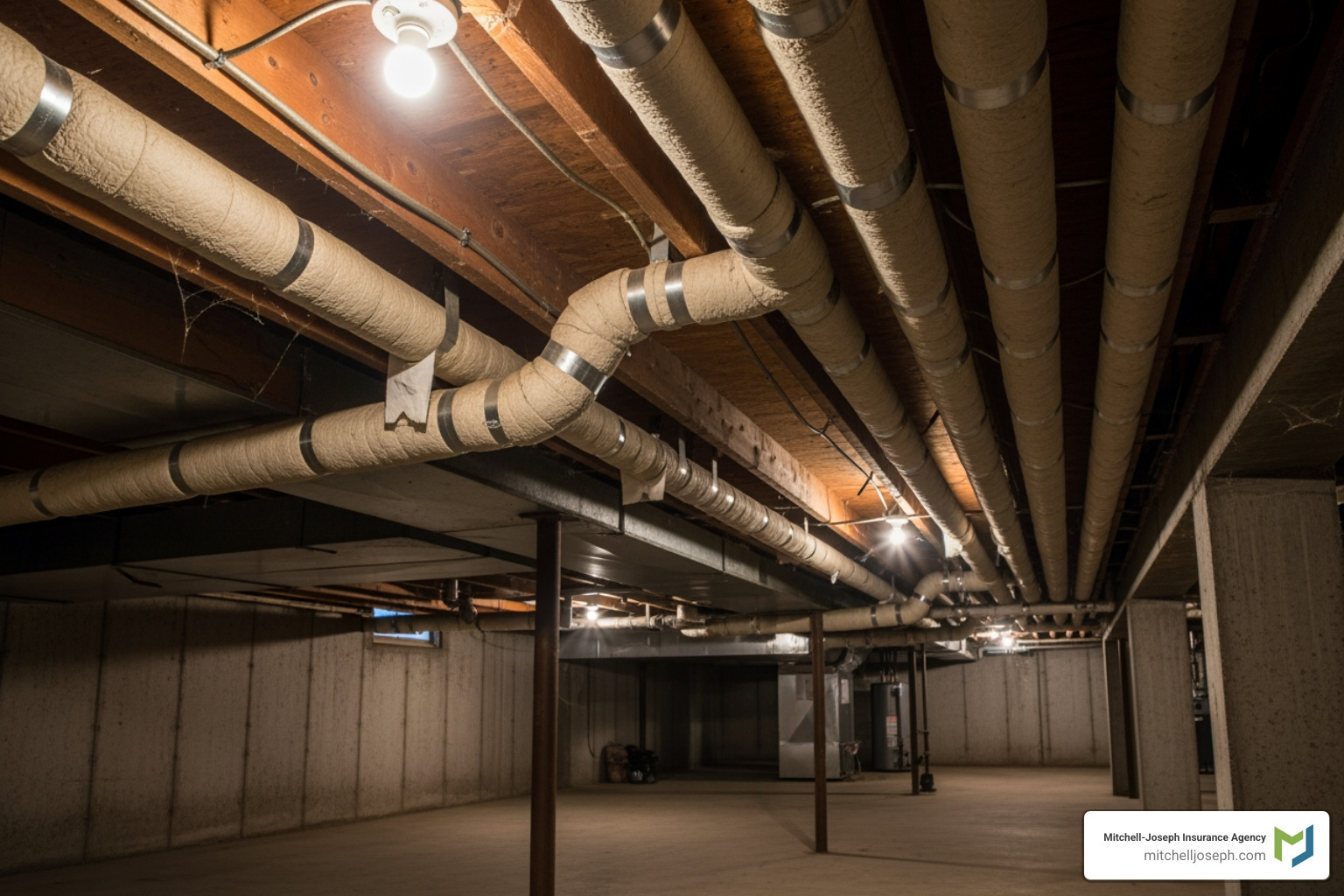
- Perform regular maintenance. Have a licensed plumber inspect your system periodically, especially in an older home. Keep records of inspections and repairs to prove you’ve maintained your home.
- Winterize your pipes. This is critical in the Finger Lakes. Keep your thermostat at 55°F or higher, insulate pipes in unheated areas (basements, crawl spaces), and seal drafts. Disconnect garden hoses before the first frost. On very cold nights, open under-sink cabinets to let warm air circulate.
- Use modern technology. Smart water sensors can detect leaks early and send alerts to your phone, potentially preventing major damage.
Your insurance needs change over time. We encourage clients to review their policies with us annually to identify gaps and discuss endorsements like service line or water backup protection.
At Mitchell-Joseph Insurance Agency, we’re an independent, family-owned business with over 200 years of combined experience serving the Finger Lakes region. We work with 24 insurance companies to find you the best coverage at competitive rates, providing the personalized service only a local agency can offer.
Don’t wait for a disaster to find out you’re underinsured. Get a free homeowners insurance review with us today. We’ll help you customize your pipe damage insurance to protect your home, budget, and peace of mind.

