

Understanding the Essentials of Photography Insurance
Photography insurance quotes are essential for protecting your valuable equipment and business from unexpected costs. Whether you’re a wedding photographer, commercial shooter, or freelance creative, the right insurance shields you from equipment theft, client lawsuits, and accident claims that could otherwise be financially devastating.
Quick Answer: Photography Insurance Quote Essentials
- General Liability: $650-$1,200/year for $1-2M coverage
- Equipment Coverage: $129-$500/year depending on gear value
- Professional Liability: Add $200-$400/year for E&O protection
- Event Policies: $59-$100 for 1-3 day coverage
- Key Factors: Annual revenue, equipment value, location, coverage limits
Many photographers mistakenly believe their homeowner’s policy covers their gear. However, once you receive payment for photography work, your equipment becomes “commercial” and is typically excluded from personal policies. This coverage gap leaves thousands of dollars in cameras, lenses, and lighting unprotected. The risks are significant; equipment theft, accidental damage, and liability claims can be costly. For example, the average small business accident claim costs $30,000, an amount that could sink a business without proper protection.
I’m Jeffrey Joseph from Mitchell-Joseph Insurance Agency. Since 1999, I’ve helped photographers secure comprehensive coverage by comparing photography insurance quotes from over 20 carriers to find the right fit for their unique needs.

Glossary for photography insurance quotes:
- best insurance for photographers
- best liability insurance for photographers
- cheap general liability insurance for photographers
What is Photography Insurance and Why Is It Crucial?
Photography insurance is a custom business policy designed to shield you from the financial liabilities and property losses inherent in your work. It provides peace of mind, ensuring that an unexpected event doesn’t leave you with a massive bill.
Here are common risks that make photography insurance a necessity:
- Equipment Theft or Damage: Professional camera setups can cost tens of thousands of dollars. If your gear is stolen from a vehicle or a lens is dropped during a shoot, equipment insurance covers the cost of replacement or repair, allowing you to get back to work quickly.
- Accidental Damage to Third-Party Property: If your light stand topples and damages a client’s expensive flooring or an antique vase, general liability insurance covers the repair or replacement costs.
- Client Dissatisfaction and Professional Errors: What if a memory card fails and you lose all the wedding photos? Professional liability insurance (also known as Errors & Omissions or E&O) protects you from claims of negligence or failure to deliver services as promised, covering legal fees and settlements.
- Third-Party Injury Claims: If a client trips over a lighting cable in your studio and is injured, they could sue. These “slip-and-fall” incidents can lead to significant bodily injury claims. Commercial General Liability (CGL) coverage protects you from these costs.
- Cybersecurity Breaches: If your system is hacked and client data is stolen, you could be held liable. Cyber liability insurance helps cover costs like legal fees and credit monitoring for affected clients.
A client can sue for any perceived dissatisfaction, whether you made a mistake or not. A robust Business Liability Insurance Policy is indispensable for protecting your finances.
Core Coverage Types: Liability vs. Equipment
Photography insurance is a package of coverages. The two main pillars are liability and equipment coverage.
Let’s break down the core types:
| Coverage Type | What it Covers | Why Photographers Need It |
|---|---|---|
| General Liability | Third-party bodily injury and property damage. Often called “slip-and-fall” insurance. Covers legal fees, medical expenses, and settlement costs if a client or other third party is injured or their property is damaged due to your business operations. | Essential for any business that interacts with clients or works in public/private spaces. Protects against common accidents, such as a client tripping over equipment at a photoshoot or accidentally damaging a venue’s property. Many venues require this coverage. |
| Professional Liability | Financial losses incurred by clients due to your professional errors, omissions, or negligence. Also known as Errors & Omissions (E&O) insurance. Covers legal defense and settlement costs related to claims of unsatisfactory work or failure to deliver services. | Crucial for photographers whose work involves capturing unique, irreplaceable moments. Protects if you’re accused of losing photos, delivering poor-quality images, or missing key shots. It’s like malpractice insurance for your creative services, safeguarding against claims arising from your professional duties. |
| Equipment Insurance | Theft, accidental damage, fire, and sometimes loss of use for your photography gear (cameras, lenses, lighting, drones, computers used for editing). Typically covers replacement cost. | Your gear is your livelihood. This covers the high cost of replacing or repairing essential tools if they are stolen, damaged in an accident (e.g., a dropped lens), or destroyed by an insurable event. It ensures you can get back to work quickly after an incident. |
General Liability Insurance
General Liability Insurance for Businesses covers your legal responsibility if you physically harm another person or their property. For example, it covers costs if a client trips over your gear and sues, or if you damage a venue’s property. Many venues require proof of this coverage, with typical limits of $1 million to $2 million.
Professional Liability Insurance
Also known as Errors & Omissions (E&O), Professional Liability Insurance provides financial protection if a client claims you made a mistake or delivered unsatisfactory work. This is crucial for situations like lost wedding photos or technical issues, covering legal fees and settlements to protect your professional reputation.
Equipment Insurance (Inland Marine)
This coverage protects your own valuable assets—cameras, lenses, lighting, and computers—against theft, accidental damage, and fire. Often called Inland Marine insurance, it travels with your gear wherever you go. Unlike Commercial Property Insurance for a fixed studio, this policy protects your equipment on location. It typically pays the replacement cost, not the depreciated value.
How to Get the Best Photography Insurance Quotes

Finding the right photography insurance quotes means comparing providers to understand what you’re paying for. Don’t settle for the first quote you receive; each insurer offers different coverage options and pricing.
Getting a Business Insurance Online Quote is simple and allows you to compare options side-by-side. Annual policies offer the best value for working photographers, averaging $650-$1,200 per year. For those just starting out, event policies provide 1-3 days of coverage for $59-$100.
Key Factors That Influence Your Photography Insurance Quotes
Insurers assess several factors to determine your risk and calculate your photography insurance quotes. Understanding them helps you shop for coverage effectively.
- Business Location: Premiums can be higher in areas with more crime or natural disasters. State-specific requirements also affect costs.
- Annual Revenue: Higher revenue suggests larger projects and greater liability exposure, which can increase rates.
- Employees: If you have employees or subcontractors, you’ll likely need Workers’ Compensation, adding to your costs.
- Photography Specialty: A wedding photographer has different risks (e.g., lost photos) than a commercial photographer working on a hazardous site. Your niche impacts pricing.
- Equipment Value: The more your gear is worth, the more it costs to insure. Keep an updated inventory of all equipment.
- Claims History: A clean record helps secure better rates, while a history of claims signals higher risk to insurers.
- Coverage Limits: Choosing higher liability and equipment limits provides more protection but also increases your premium.
Basic coverage often starts around $55-$60 per month, a reasonable investment considering a single claim could cost tens of thousands.
Understanding Policy Details: Deductibles and Limits
When reviewing photography insurance quotes, pay close attention to your deductible and coverage limits, as they determine your out-of-pocket costs during a claim.
Your deductible is the amount you pay before your insurance coverage begins. For a damaged $2,000 lens with a $250 deductible, you’d pay $250, and the insurer would cover the remaining $1,750. Typical deductibles range from $250 to $2,500. A higher deductible lowers your premium, but ensure it’s an amount you can afford.
Coverage limits are the maximum amount your policy will pay for a claim. Common liability limits are $1 million to $2 million per incident. Equipment coverage may have both per-item and total limits. It’s crucial to balance your budget with a realistic risk assessment. Ensure your equipment coverage reflects full replacement cost, and consider higher liability limits if you work in expensive venues or with high-profile clients. As digital risks grow, understanding Cyber Insurance Coverage Limits is also important.
The goal is to find the best value, not the cheapest price. Adequate protection is worth a slightly higher premium to avoid being underinsured when disaster strikes.
Tailoring Your Policy and Making the Right Choice
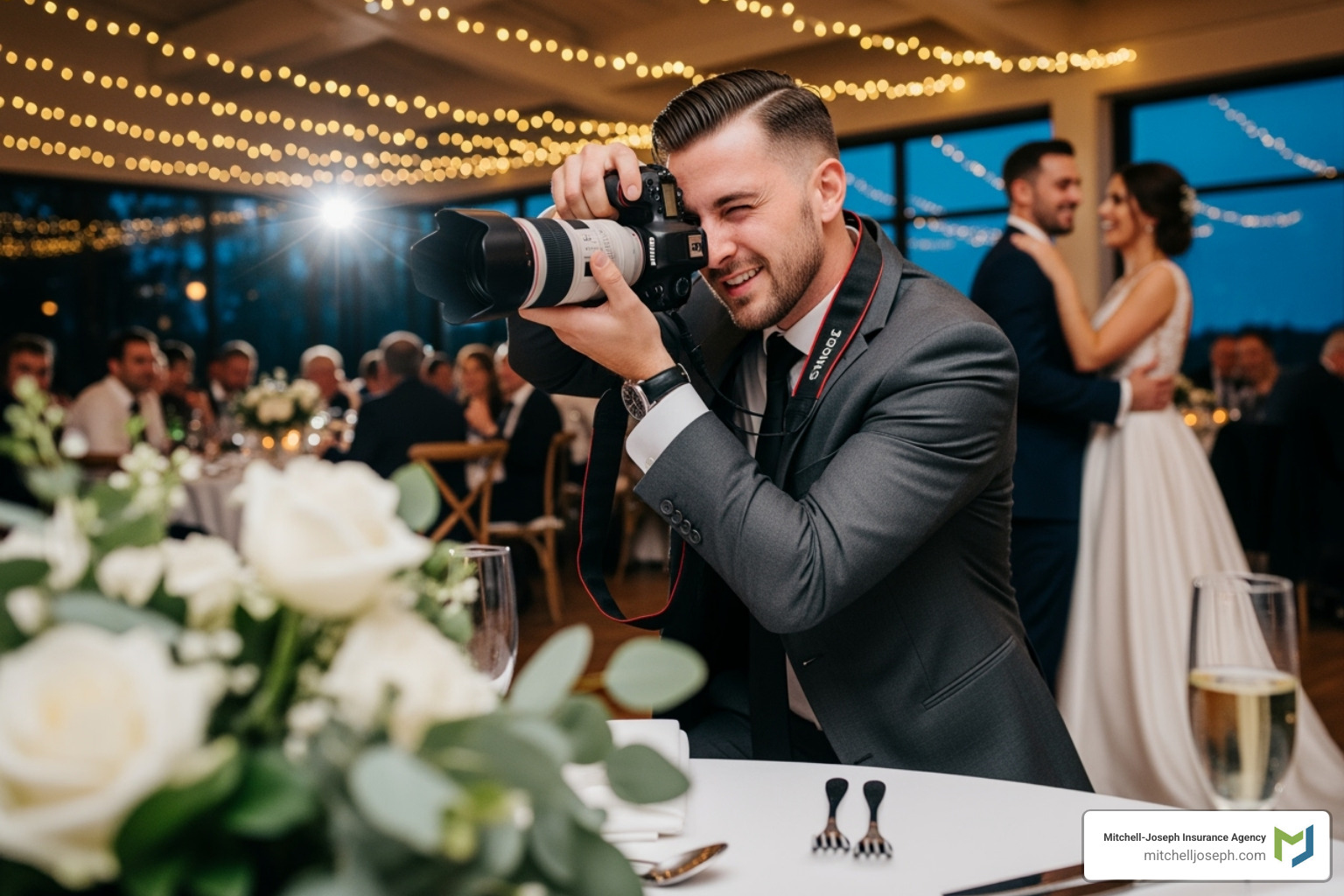
A cookie-cutter insurance policy won’t work for a creative business. Your photography insurance quotes should reflect the specific risks of your work, whether you shoot weddings or commercial projects. Understanding your niche is key to getting the right protection.
Specialized Insurance for Your Photography Niche
Your photography specialty shapes your insurance needs. Here’s how different niches require different protection:
- Wedding Photographers: You capture irreplaceable moments. A corrupted memory card could lead to a major professional liability claim. This coverage is essential, and many venues will require you to have specific liability limits.
- Commercial Photographers: Larger budgets and complex shoots in industrial or corporate settings mean higher general liability exposure. Clients often have strict insurance requirements.
- Freelance Photographers: Your homeowner’s policy won’t cover gear used for paid work. Even part-time freelancers need general liability for shoots and professional liability for their services.
- International Shoots: Standard policies may not cover you abroad. Look for worldwide coverage options to protect your equipment and liability wherever your assignments take you.
- Videography: If you shoot video, ensure your policy covers cinema cameras, gimbals, and other specialized gear.
- Drone Photography: A falling drone can cause serious injury or damage. Drone Liability Insurance is essential for any commercial drone operation.
- Cyber Liability: You handle client data and financial information. Cyber liability coverage protects you from the costs of a data breach.
These varied needs are why we offer Specialized Commercial Insurance custom to unique industries like photography.
Your Next Steps to Getting Covered
Ready to get the right policy? Follow these steps.
- Assess Your Needs: Calculate the total replacement value of your equipment and consider your typical shooting locations and client interactions.
- Understand Your Risks: Are you a wedding photographer handling priceless moments or a commercial shooter on a large set? Your specialty determines your primary risks.
- Gather Your Information: Have your annual revenue, payroll details, and claims history ready to get accurate photography insurance quotes.
- Compare Quotes Thoroughly: Look beyond the premium. Examine coverage limits, deductibles, and exclusions. As an independent agency, we compare options from multiple carriers for you.
- Review Policy Documents: Once you choose a policy, read it carefully to understand all conditions and limitations. Ask questions about anything that is unclear.
- Plan for Additional Insureds: Many venues require you to add them to your policy. This is a common and inexpensive endorsement.
- Conduct Annual Reviews: As your business grows, your insurance needs will change. Review your policy annually to ensure your coverage remains adequate.
Working with Mitchell-Joseph Insurance Agency simplifies this process. Based in Honeoye Falls, NY, we serve photographers throughout New York, including Pittsford, Rochester, and Victor. With over 200 years of combined experience and access to 24 insurance companies, we provide personalized service and competitive quotes. We do the comparison shopping to find custom coverage that fits your needs and budget.
Your business deserves protection as unique as your vision. Check out our Business Insurance Policy information, then get a custom quote for your photography business today.

