

Why Your Camera Gear Needs Protection
Photography equipment insurance protects your valuable camera gear from damage, theft, and loss. For professionals and serious hobbyists alike, camera bodies, lenses, and accessories can total thousands of dollars. This specialized coverage ensures you can replace or repair your equipment without a major financial setback.
The Reality of Photography Risks
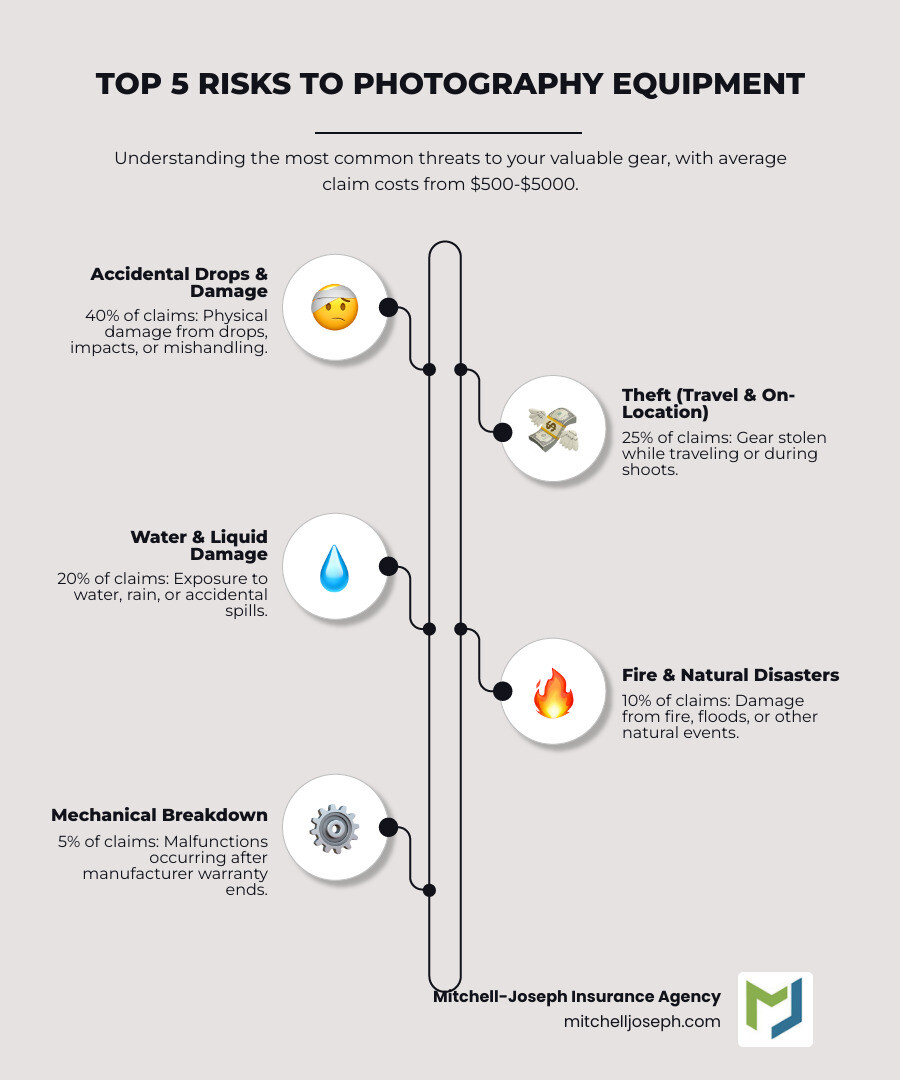
Most photographers carry at least $3,000-$5,000 in equipment, with professionals often having gear worth significantly more. Your camera equipment faces constant risks, including:
- Accidental damage from drops or falls
- Theft on location or in transit
- Water damage from weather or spills
- Fire and natural disasters
- Mechanical breakdown after the warranty expires
Standard homeowners insurance often falls short, as many policies won’t cover business equipment, and making multiple claims can risk your policy’s cancellation.
I’m Jeffrey Joseph from Mitchell-Joseph Insurance Agency. For over two decades, I’ve helped photographers across the Finger Lakes region protect their valuable equipment. The right photography equipment insurance provides financial protection and peace of mind, allowing you to focus on your craft.
Your Comprehensive Guide to Photography Equipment Insurance
We understand that your camera gear isn’t just a collection of electronics; it’s an extension of your artistic vision and, for many, the backbone of your livelihood. That’s why understanding photography equipment insurance is crucial. It’s designed to be your safety net, catching you when unexpected mishaps occur. Let’s explore what these policies typically cover, what they don’t, and how you can get the best protection for your precious gear.
What Your Photography Equipment Insurance Covers
A comprehensive photography equipment insurance policy is your safety net, designed to protect your entire toolkit, not just the camera body.

What’s Typically Insured:
- Cameras and Lenses: Includes DSLRs, mirrorless bodies, various lenses, and filters.
- Lighting and Support: Flashes, strobes, light stands, modifiers, tripods, and gimbals.
- Accessories: Memory cards, batteries, chargers, and even props or underwater housing.
- Drones: Many policies now offer coverage for drones used for incidental purposes, subject to regulations like those from CASA.
Common Perils Covered:
The true value of this insurance lies in the broad spectrum of perils it covers.
- Accidental Damage: This is a major benefit, covering drops, falls, and other physical impacts.
- Theft & Loss: Provides compensation if your gear is stolen from your car, studio, or on location (requires evidence like a police report).
- Fire & Water Damage: Protects against studio fires, floods, spills, or rain damage.
- Mechanical & Electrical Breakdown: Covers internal failures that occur after the manufacturer’s warranty expires.
- Damage During Transit: Essential for photographers on the go, this covers damage sustained while transporting equipment.
Photography equipment insurance is a specialized form of “inland marine” coverage for movable property. It is distinct from general liability insurance, which covers third-party claims against you. For complete business protection, you may want to add this specialized coverage to your Business Owners Policy. Most policies will also cover used or refurbished equipment, though claim payouts typically reflect its current market value.
Understanding Common Exclusions and Limitations
Like any policy, photography equipment insurance has boundaries. Understanding these exclusions is crucial to avoid surprises during a claim.
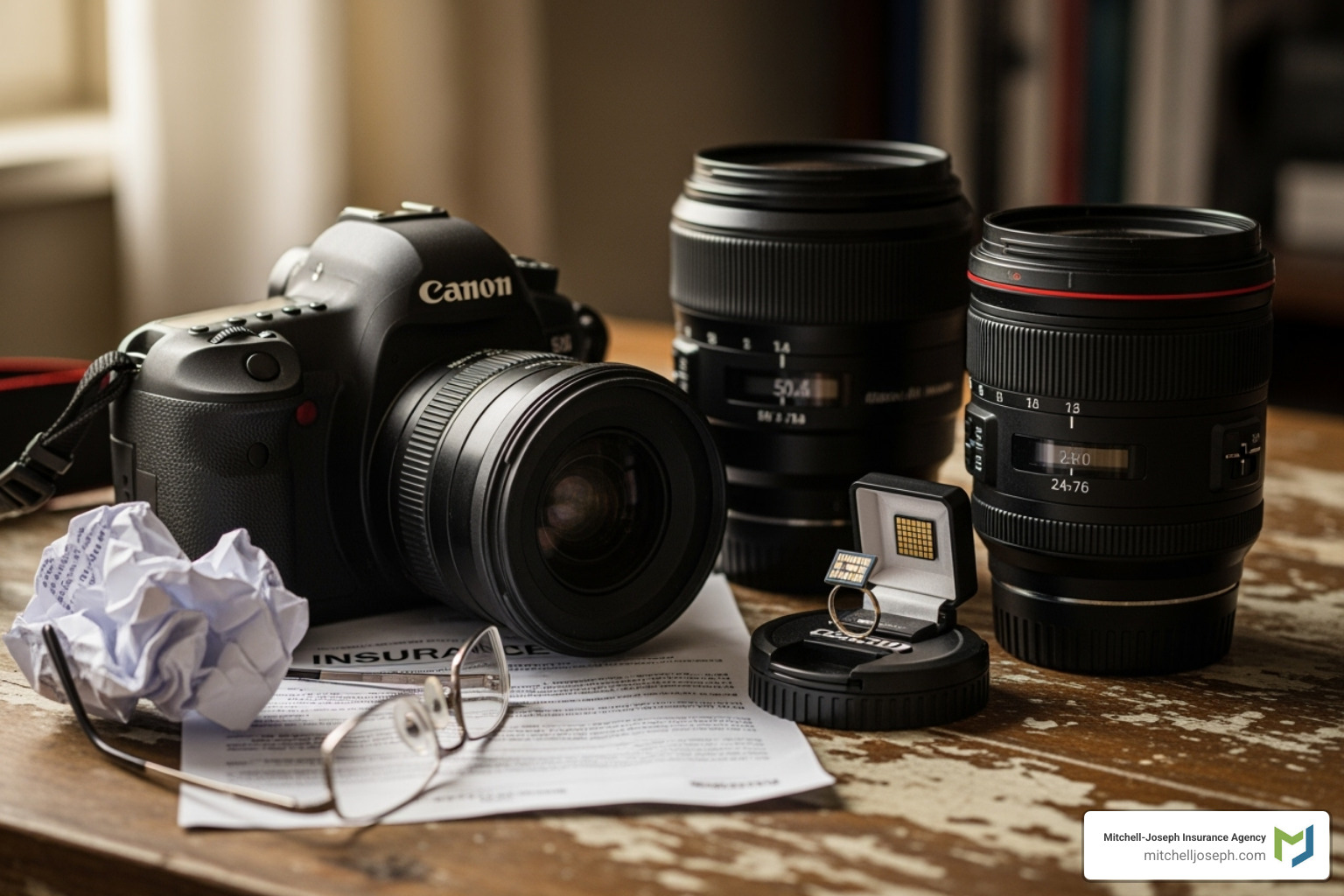
Here are some typical exclusions:
- Wear and Tear: Insurance doesn’t cover gradual deterioration from normal use.
- Intentional Damage or Gross Negligence: Willful damage or extreme carelessness is not covered.
- Manufacturing Defects: Issues covered by a manufacturer’s warranty are the manufacturer’s responsibility. Insurance may cover breakdowns after the warranty expires.
- Unexplained Disappearance: If gear vanishes without evidence of a covered peril like theft, it’s often excluded.
- Damage in an Unsecured Vehicle: Many policies exclude theft from an unattended vehicle that was not properly locked.
- War and Terrorism: Loss from acts of war or terrorism is almost universally excluded.
- Pre-existing Faults: Problems that existed before the policy was purchased are not covered.
- Loss of Data: The policy covers physical equipment, not the photos on your memory cards. Always back up your work!
- Routine Maintenance: Costs for cleaning, servicing, or calibration are not covered.
Understanding these limitations helps us find the right policy that aligns with your specific needs.
Key Features: What to Look for in a Policy
Choosing the right photography equipment insurance means finding the right fit for your needs. Here are key features to consider:
- Replacement Cost (RC) vs. Actual Cash Value (ACV): This is a critical distinction. RC pays to replace your item with a new one of similar kind and quality, without deducting for depreciation. ACV pays the replacement cost minus depreciation. We almost always recommend RC coverage for camera gear.
- Deductibles: This is the amount you pay out-of-pocket before insurance kicks in. A higher deductible usually means a lower premium. We can help you find a balance that fits your budget.
- Worldwide Coverage: If you travel for shoots, ensure your policy protects your gear anywhere in the world. This is a vital feature for travel photographers.
- Policy Limits: Make sure the total coverage limit is enough for all your equipment. High-value items may need to be “scheduled” or listed individually.
- Rented Equipment Coverage: If you often rent gear for specific shoots, ask about adding coverage for rented equipment.
- Professional Liability Coverage: While separate from equipment insurance, many providers offer it in a bundle. This protects you if a client sues for professional negligence. Learn more about General Liability Insurance for Photographers.
- Emergency Equipment Hire Costs: Some policies cover the cost of renting equipment while yours is being repaired or replaced, helping you stay in business without interruption.
By carefully considering these features, you can build a policy that offers robust protection, financial security, and peace of mind.
How Much Does Photography Equipment Insurance Cost?
“So, how much is this peace of mind going to cost me?” The cost of photography equipment insurance varies based on several factors unique to your gear and how you use it.

Primary factors that influence your premium include:
- Total Value of Your Gear: This is the biggest factor. A policy covering $50,000 in gear will cost more than one for $5,000.
- Coverage and Deductible Choices: Higher limits and “replacement cost” coverage increase the premium, while a higher deductible can lower it.
- Your Location and Usage: Where you operate and whether you use your gear professionally can influence rates.
General Cost Estimates:
While costs vary, basic policies can be surprisingly affordable. For example, some plans offering up to $15,000 in equipment coverage can start from around $230 per year. For the protection it offers, photography equipment insurance is a small price to pay for significant peace of mind. We can help you get a personalized Business Insurance Online Quote to see what your specific costs would be.
The Process: From Getting a Quote to Filing a Claim
Getting insured doesn’t have to be complicated. We aim to make the process straightforward, from the initial quote to guiding you through a claim.
1. Getting a Quote and Your Policy:
- Inventory Your Gear: Create a detailed list of your equipment with make, model, serial number, and replacement cost. This is the foundation of your policy.
- Contact Us for a Quote: As an independent agency, we work with 24 insurance companies to find you custom coverage. We’ll discuss your gear, usage, and desired limits to find the best fit.
- Review and Purchase: We’ll walk you through the proposed policy to ensure you understand the coverage. Once you’re comfortable, you can finalize the purchase and your policy will be activated.
2. The Claims Process:
If you need to make a claim, a smooth process is vital. Here are the typical steps:
- Step 1: Immediate Notification: Contact us or your insurance provider as soon as an incident occurs.
- Step 2: Document Everything: Provide a detailed account of what happened. For theft, you must file a police report. For damage, take clear photos.
- Step 3: Provide Proof of Ownership: You’ll need purchase receipts, invoices, or bank statements for the affected items.
- Step 4: Follow Instructions: The insurer will guide you on next steps, such as sending gear for repair assessment or processing a replacement. We are here to advocate for you throughout the process.
Documents Typically Required for a Claim:
- Your policy document
- Police Report (for theft or crime-related loss)
- Detailed inventory list of affected gear
- Purchase invoices or receipts
- Photos of the damage
Secure Your Gear and Your Business Today
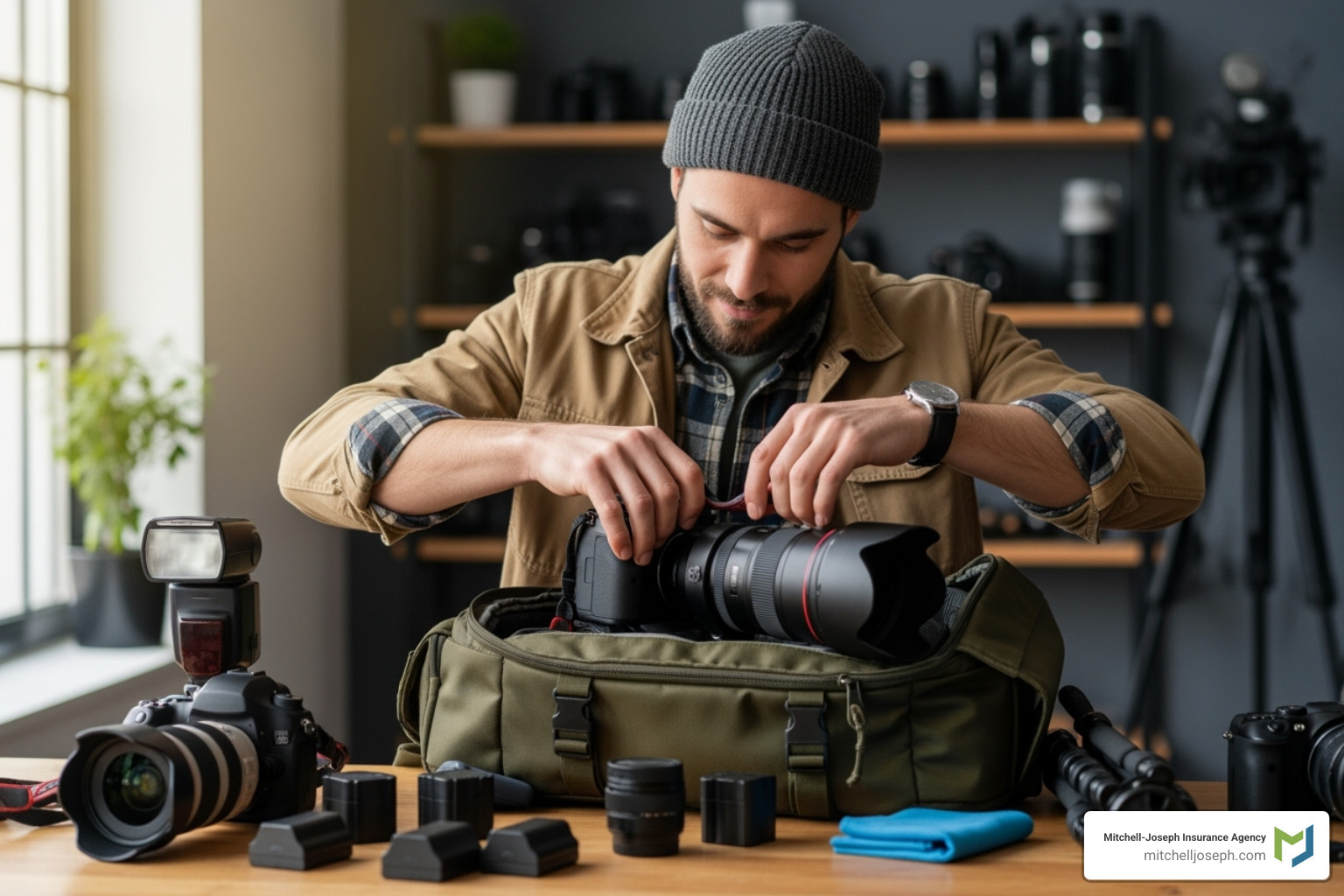
Your camera equipment is your creative toolkit and the foundation of your income. Photography equipment insurance is the financial safety net you need. When an accident happens, you won’t face the crushing blow of replacing thousands of dollars in gear out-of-pocket. You’ll spend less time worrying and more time capturing perfect moments.
Having specialized coverage also improves your professionalism, showing clients you are prepared for any situation. This confidence can lead to more bookings and greater trust.
Here at Mitchell-Joseph Insurance Agency in Honeoye Falls, NY, we’ve helped photographers across the Finger Lakes region for decades. With over 200 years of combined experience and access to 24 insurance companies, we don’t offer off-the-shelf policies. We take the time to understand your specific gear and risks to craft a solution that fits your needs and budget.
Don’t let equipment worries hold back your creativity. The peace of mind from proper coverage is invaluable and surprisingly affordable.
Ready to protect your investment? Learn more about Business Insurance for Photographers and find out how we can tailor the perfect coverage for your unique needs.

