

Why Your Standard Home Policy Isn’t Enough
Non owner occupied insurance is specialized property insurance for homes where the owner doesn’t live, such as rental properties, vacation homes, or investment properties. Unlike standard homeowners insurance, this coverage is designed to protect against the unique risks landlords and property investors face.
Quick Answer: What is Non-Owner Occupied Insurance?
- Purpose: Covers properties you own but don’t live in.
- Who needs it: Landlords, vacation home owners, real estate investors.
- Key difference: Includes rental income protection and tenant-related liability.
- Not covered by: Standard homeowners policies, which exclude rental activities.
- Cost: Typically 15-25% higher than homeowners insurance due to increased risk.
If you own a home you don’t live in, a standard homeowners policy won’t cut it. These policies are for owner-occupied homes and typically exclude coverage for rental activities.
The stakes are high. A standard policy will likely deny claims for fire, theft, or vandalism if the property is vacant for more than 30 days, leaving you financially exposed. Non-owner occupied properties also face higher financial risks, including higher mortgage rates. Without proper insurance, you could face devastating losses from property damage, liability claims, or loss of rental income.
I’m Jeffrey Joseph of Mitchell-Joseph Insurance Agency. Since 1999, I’ve helped property owners in the Finger Lakes region steer non owner occupied insurance. I’ve seen that choosing the wrong coverage is one of the costliest mistakes a landlord can make.
A Deep Dive into Non-Owner Occupied Insurance
Imagine a kitchen fire damages your rental property. You call your insurance company, only to hear, “Claim denied.” Why? You had a standard homeowners policy, not one designed for a rental. This scenario is unfortunately common. Non owner occupied insurance is a different type of coverage, and it’s crucial for protecting your investment.
What is Non-Owner Occupied Insurance and Who Needs It?
Non owner occupied insurance—also called landlord or rental property insurance—is for homes where the owner doesn’t reside. It assumes someone else lives in your property or it’s sitting empty, which presents different risks than an owner-occupied home.
This insurance is essential for landlords with long-term rentals, who need to protect the building itself. It’s also crucial for short-term rental hosts (like Airbnb), who face unique risks from a revolving door of guests. Vacation and second home owners need it for properties that sit empty for long periods, making them vulnerable to unnoticed damage or vandalism. Even if family members live in a property you own, a formal lease and proper insurance are vital for protecting everyone involved. Real estate investors also rely on this coverage to protect their income-generating assets, which lenders often view as higher-risk and may require this specific insurance for a mortgage.
For a comprehensive look at protecting your rental investment, check out our guide Landlord Insurance 101: Cover Your Assets. If you’re renting out a condo, our article Renting Out Your Condo? Don’t Skip Landlord Insurance offers targeted advice.

Key Coverages vs. Common Exclusions
Understanding your policy’s coverages and exclusions is critical. These policies are built for the risks landlords face.
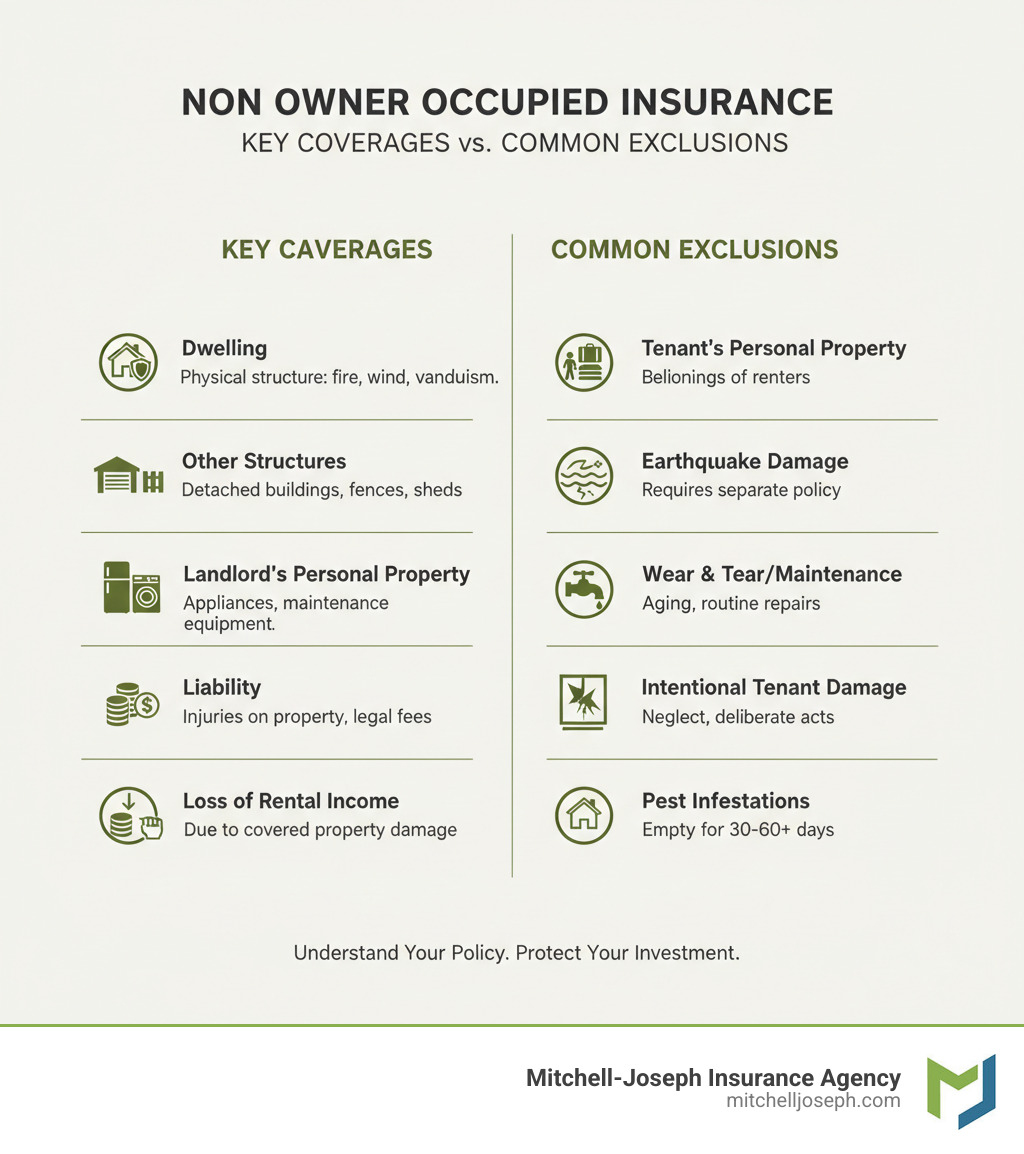
Key Coverages:
- Dwelling coverage: Protects your building’s structure (foundation, walls, roof) against perils like fire, wind, and vandalism.
- Other structures coverage: Covers detached structures like garages, sheds, and fences.
- Landlord’s personal property coverage: Protects items you own for servicing the rental, such as appliances and lawnmowers.
- Liability coverage: This is crucial. It protects you from lawsuits if a tenant or guest is injured on your property, covering legal fees and medical expenses.
- Loss of rental income coverage: Reimburses you for lost rent if a covered event (like a fire) makes your property uninhabitable during repairs.
Common Exclusions:
- Your tenant’s personal belongings: Their property is not covered. Require them to have their own renters insurance.
- Flood damage: This requires a separate policy, typically through the National Flood Insurance Program (NFIP). Learn more in our article on Landlord vs Flood Insurance.
- Earthquake damage: Also requires a separate policy or endorsement.
- Normal wear and tear: Insurance covers sudden events, not routine maintenance like aging carpets or slow leaks.
- Intentional damage by tenants: This is usually not covered, which is why tenant screening is so important.
- Vacancy exclusions: Most policies deny claims if a property is vacant for over 30-60 days. You may need vacant property coverage for longer periods.
Homeowners vs. Landlord vs. Vacant Property Insurance
Let’s break down the three main types of property insurance to clarify which one fits your situation.
| Feature | Homeowners Insurance (HO-3) | Non-Owner Occupied/Landlord Insurance (DP-3) | Vacant Property Insurance |
|---|---|---|---|
| Purpose | Protects your primary residence where you live | Protects properties rented out to tenants | Protects properties left empty for extended periods |
| Primary Occupant | Owner | Tenant(s) | No one (property is empty) |
| Key Coverages | Dwelling, personal belongings, liability, loss of use | Dwelling, other structures, landlord’s personal property, liability, loss of rental income | Dwelling, other structures, liability (often limited) |
| Personal Property | Covers owner’s personal belongings | Covers landlord’s appliances/equipment; NOT tenant’s | May cover some landlord property, often limited |
| Liability | Covers owner’s liability for accidents on property | Covers landlord’s liability for tenant/guest accidents | Covers owner’s liability for accidents on empty property |
| Loss of Income | Covers additional living expenses (loss of use) | Covers loss of rental income | Not applicable (no rental income to lose if vacant) |
| Vacancy Clause | Often excludes coverage if vacant > 30-60 days | Often excludes coverage if vacant > 30-60 days | Specifically designed for vacancy; no exclusion |
| Typical Cost | Baseline | 15-25% higher than homeowners | Significantly higher than homeowners/landlord insurance |
| Risks Addressed | Owner-occupant risks, personal property theft/damage | Tenant-related risks, property damage, landlord liability | Increased risks of vandalism, undetected damage, squatters |
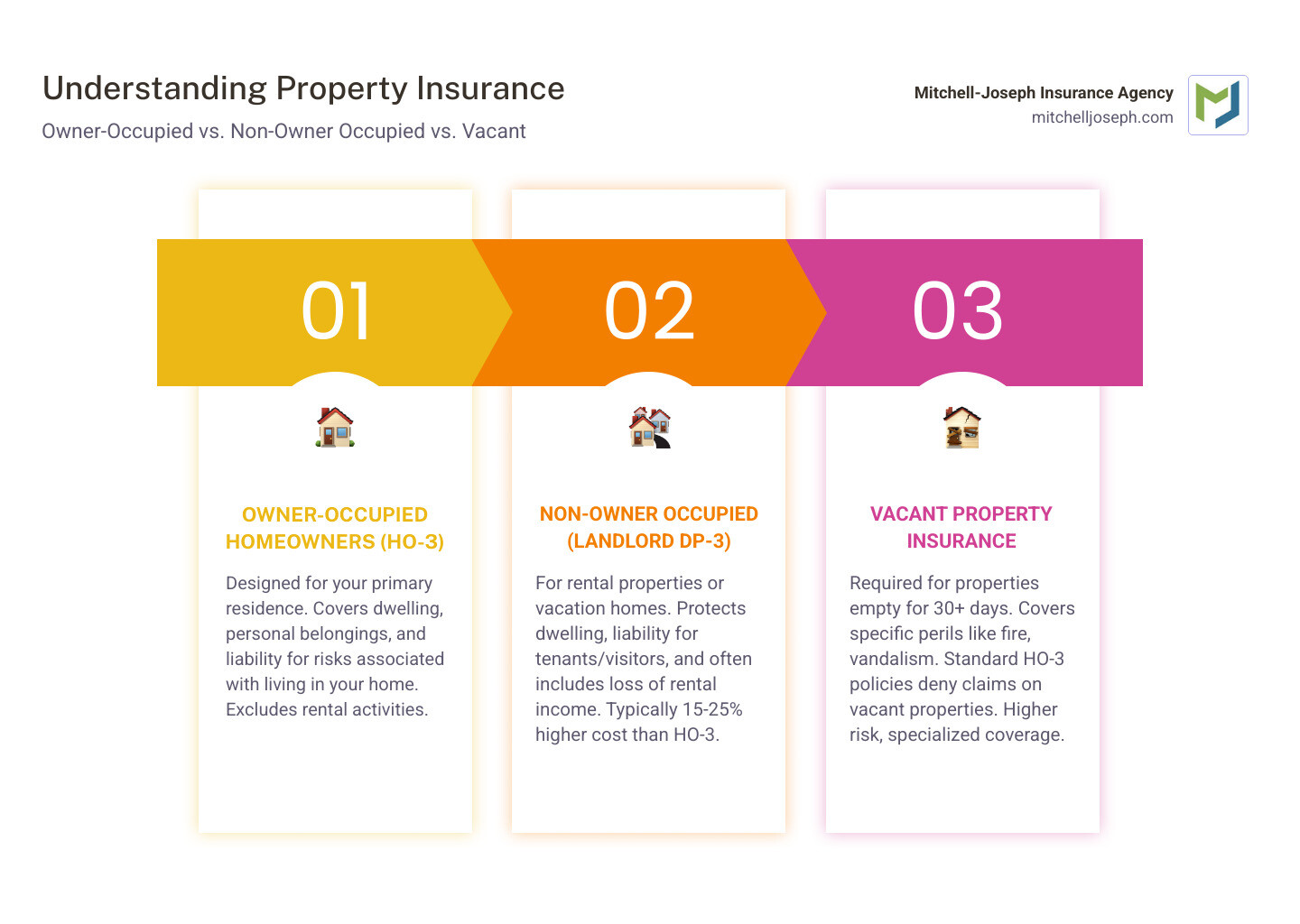
Homeowners insurance (HO-3) is for the house you live in. It won’t cover rental-related losses.
Non-owner occupied landlord insurance (DP-3) is for tenant-occupied properties. It’s designed for landlord-specific challenges like liability and loss of rental income.
Vacant property insurance is for properties empty for over 30-60 days (e.g., during renovations or sale). Empty homes are targets for vandalism and undetected damage (like a burst pipe), making this specialized, more expensive coverage essential. For more, see our guide on Home Insurance for Empty Homes.

What Determines the Cost of Non-Owner Occupied Insurance?
Several factors influence your premium, which is typically 15-25% more than a standard homeowners policy.
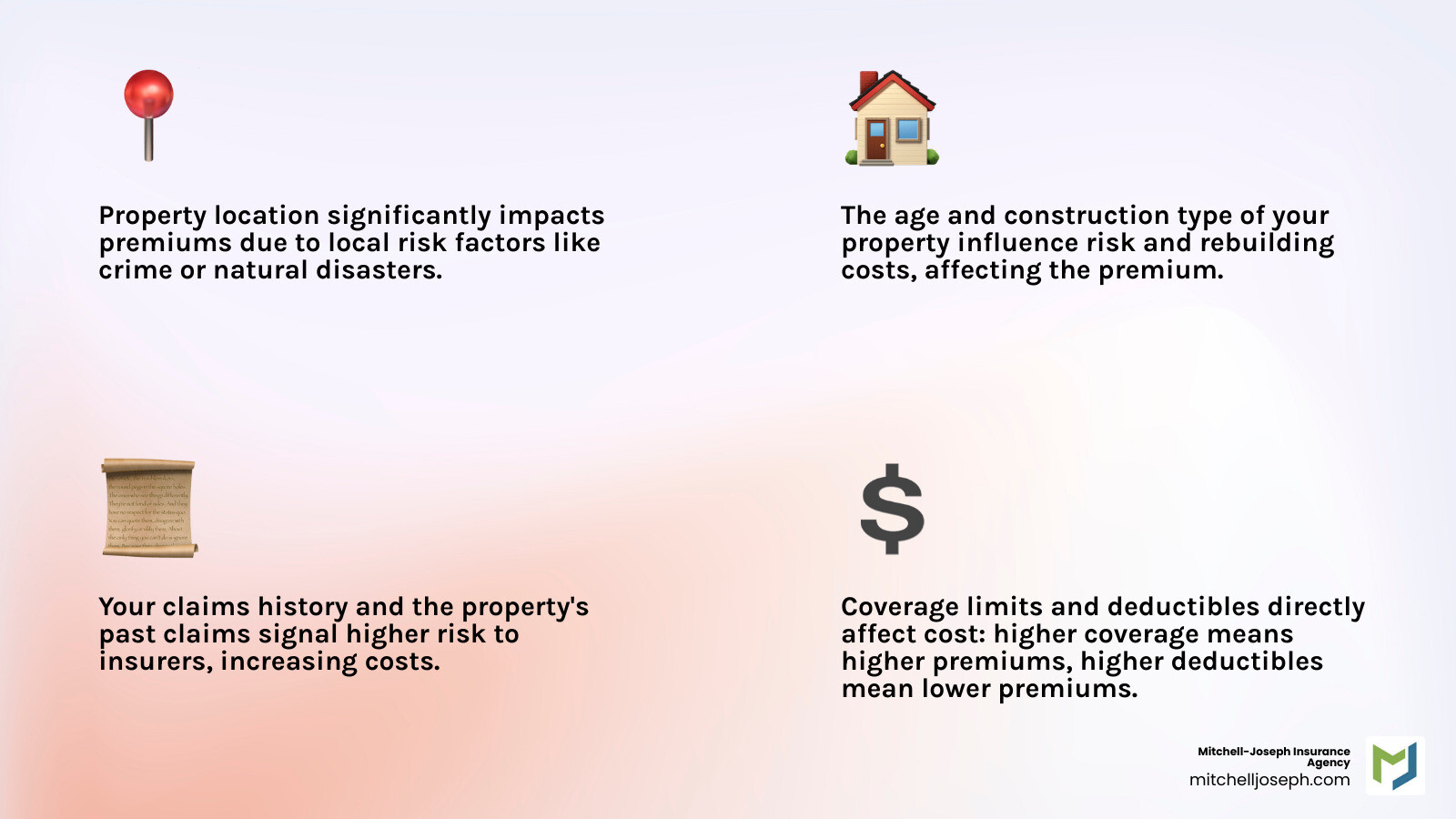
- Location: Properties in high-crime areas or far from fire services cost more. Local conditions in the Finger Lakes region, from Rochester to Canandaigua, directly impact premiums.
- Property’s Age and Construction: Older homes with outdated systems or wood-frame construction can be more expensive to insure than newer, brick homes.
- Claims History: A history of claims on the property or by you can increase your rates.
- Coverage Limits and Deductibles: Higher limits increase premiums, while a higher deductible can lower them.
- Security Features: Discounts are often available for burglar alarms, fire detection systems, and deadbolts.
- Rental Use: Short-term rentals (like Airbnb) are seen as higher risk and may require more expensive commercial coverage compared to long-term rentals.
- Vacancy Periods: Extended vacancies require specialized, costlier insurance due to higher risks.
Additionally, non owner occupied mortgages often have higher interest rates because lenders see them as riskier. Learn more in our article What Are Non-Owner-Occupied Mortgages and What Interest Rates Do They Charge?.
Legal Considerations and the Risks of Improper Coverage
Using the wrong insurance can lead to serious legal and financial problems.
- Mortgage Lender Requirements: Misrepresenting your property’s use to your lender (e.g., claiming it’s owner-occupied when it’s a rental) can be considered occupancy fraud and may lead to your loan being called due.
- Lease Agreements: A solid lease is your first line of defense. It should clarify responsibilities and require tenants to carry renters insurance.
- Tax Implications: You can deduct insurance premiums and other expenses, but you must report rental income. Consult a tax advisor, especially if renting to family below market rate.
- Property Code Compliance: As a landlord, you are responsible for meeting local safety and building codes.
The risks of improper coverage are catastrophic: claim denials, forcing you to pay for major repairs out-of-pocket; liability lawsuits that can exceed hundreds of thousands of dollars; and lost rental income during repairs. This financial pressure can lead to mortgage default and foreclosure, destroying your investment and credit.

Protect Your Investment with the Right Partner
Finding the right non owner occupied insurance doesn’t have to be overwhelming. With over two decades of experience helping property owners in the Finger Lakes region, I know the key is working with a partner who understands your unique situation.
How to Find the Best Policy for Your Needs
Choosing non owner occupied insurance isn’t a one-size-fits-all process. A lakefront cottage in Canandaigua has different risks than a duplex in Rochester, and your policy must reflect that.
Start by assessing your property’s specific risks. Consider its location, age, construction, and the type of tenants you have. This will help determine the right coverage limits. Ask yourself: could you afford to rebuild from scratch? How long could you survive without rental income?
Compare quotes, but look beyond the premium. The cheapest policy often has coverage gaps. Scrutinize deductibles, limits, and exclusions to avoid costly surprises during a claim.
Work with an independent agent. At Mitchell-Joseph Insurance Agency, we aren’t tied to a single carrier. We access 24 different insurers to shop for the policy that truly fits your needs and budget. Our team’s 200+ years of combined experience means we know how to match your property with the right company.
Bundle your policies for savings. Many clients save money by bundling their primary home, auto, and non owner occupied insurance policies with us.
The best advice is to ask questions. A good agent will explain your policy in plain English so you understand what you’re buying. At Mitchell-Joseph Insurance Agency, we believe protecting your investment should bring you peace of mind.
Whether you’re a first-time landlord or a seasoned investor, we’re here to ensure you have the right protection. Ready to secure your investment with confidence? Let’s get you a personalized quote.

