

Understanding What Drives New York Home Insurance Costs
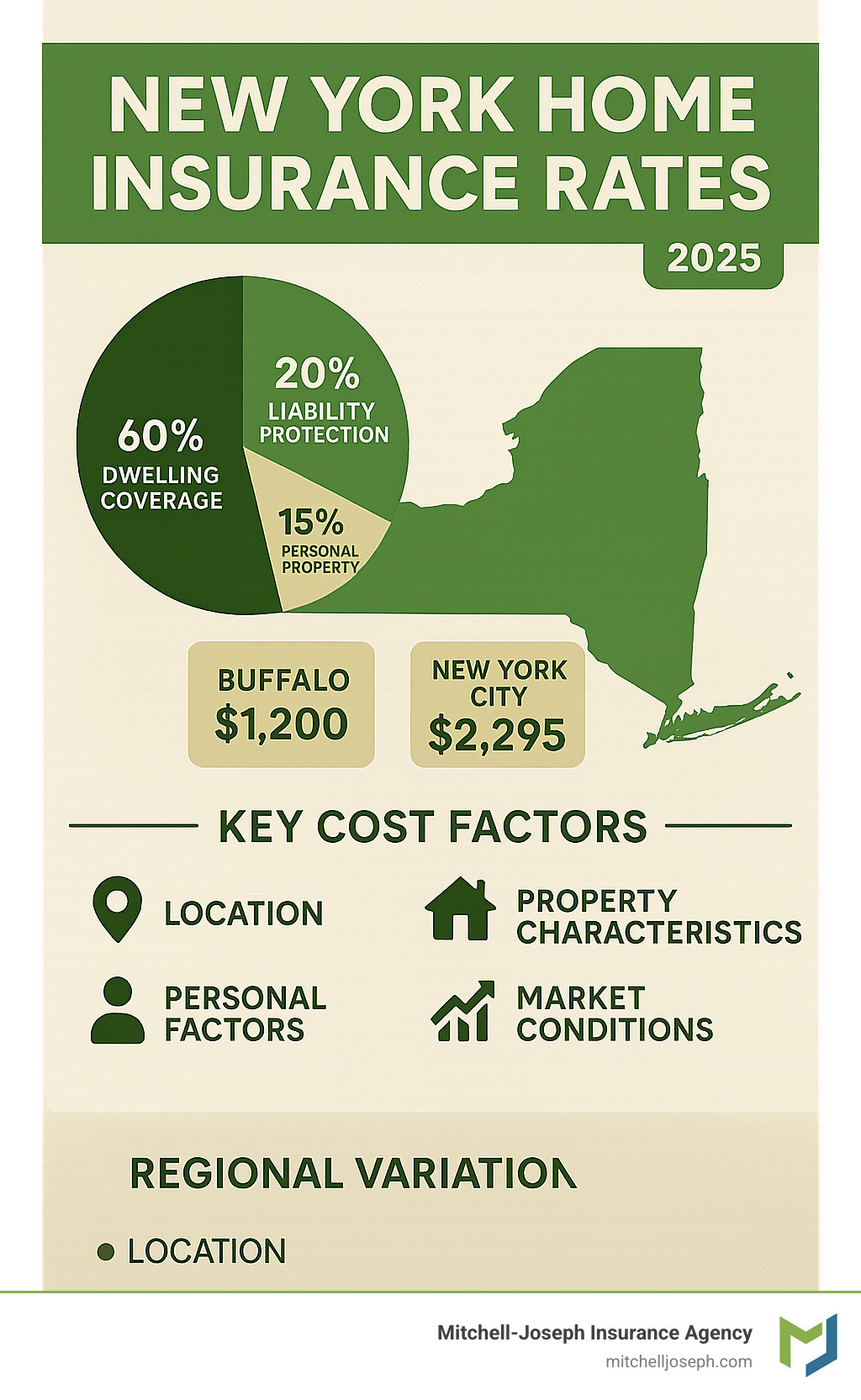
New York home insurance rates average $1,740 per year statewide, which is actually 18% less than the national average of $2,110. However, costs vary dramatically across the state – from around $1,200 annually in Buffalo to over $2,295 in New York City.
Key factors affecting your rates:
- Location – NYC boroughs, proximity to coast, fire protection access
- Property characteristics – Home age, construction type, roof condition
- Personal factors – Credit score, claims history, coverage amount
- Market conditions – Rising construction costs, severe weather frequency
Recent data shows some NYC buildings have seen insurance rate increases ranging from 10% to 300% upon renewal, depending on claim history. For apartment buildings with 50+ units, average premiums more than doubled in Brooklyn and rose over 50% in Manhattan and Queens between 2020 and 2023.
This guide breaks down exactly what’s driving these costs and, more importantly, what you can do about them. Whether you’re dealing with premium increases or shopping for new coverage, understanding these factors puts you in control.
I’m Jeffrey Joseph, and I’ve been helping Finger Lakes region homeowners steer New York home insurance rates since 1999 at Mitchell-Joseph Insurance Agency. My experience across our Naples, Honeoye Falls, and Rushville locations has shown me how dramatically rates can vary even within small geographic areas – and how the right approach can save homeowners hundreds of dollars annually.
Understanding Average New York Home Insurance Rates
When we talk about average New York home insurance rates, it’s crucial to understand that “average” is a very broad term. While the statewide average is about $1,740 per year, this figure can be misleading because rates fluctuate significantly based on where you live and the specifics of your home. In fact, our average is 18% less than the national average of $2,110, which might come as a pleasant surprise to some!
However, the cost of home insurance in New York is far from uniform. For instance, homeowners in Buffalo might pay around $1,200 annually, while those in New York City could face premiums averaging $2,295 per year. This wide variance highlights the importance of looking beyond a single statewide number.
To give you a clearer picture, here’s a look at how average annual home insurance costs can compare in some of New York’s major cities:
| City | Average Annual Cost |
|---|---|
| New York City | $2,295 |
| Buffalo | $1,200 |
| Rochester | $1,125 |
| Albany | $1,305 |
| Syracuse | $1,215 |
As you can see, there’s a notable difference between urban centers, particularly downstate, and other parts of the state. These figures are averages, and your specific rate will depend on numerous individual factors.
How Your Location Impacts New York Home Insurance Rates
Your home’s location is one of the most significant factors influencing your New York home insurance rates. Insurers divide the state into “rating territories,” each with its own risk profile. For example, New York City’s five boroughs are considered separate rating territories, each with its own protection classification. Outside of the city, companies assign territories based on their own experience and factors like fire protection levels.
Proximity to fire protection services plays a huge role. If your home is just a mile from a fire station, you’ll likely pay less than if you’re 15 miles away in a rural area, as firefighters can respond more quickly to emergencies. Similarly, living in a community with better fire protection services generally leads to lower fire coverage costs.
Coastal vs. inland risks also heavily impact premiums. Properties along the New York coastline, like those in Suffolk County, often face significantly higher rates – sometimes averaging $3,260 per year – compared to homes further inland. This is due to the increased risk of damage from hurricanes, tropical storms, and severe winds. If you live near the coast, you’ll likely pay more for home insurance than someone who lives miles away.
Finally, local crime rates can affect your insurance costs. A home located in a community with a higher incidence of crime and vandalism may have higher premiums, as the risk of theft or damage is greater.
We always recommend assessing your flood risk, as standard home insurance policies don’t cover flood damage. You can check your property’s flood risk using FEMA’s flood maps.
Key Property and Personal Factors
Beyond location, the characteristics of your home and your personal profile significantly shape your New York home insurance rates.
The age and construction type of your home are major considerations. Newer homes, especially those built to modern building codes, tend to have lower premiums because they are often more resilient and less prone to certain issues. For instance, a home built in 2024 might average around $1,220 per year, while one built in 1955 could cost about $2,110 (based on national averages). Similarly, a brick building is often more resistant to fire than a wood-frame building, leading to lower insurance costs.
The dwelling coverage amount you choose directly impacts your premium. This is the amount it would cost to rebuild your home from the ground up, not its market value. Naturally, insuring a home for $500,000 will cost more than insuring one for $250,000. For example, $250,000 in dwelling coverage averages around $1,854 per year in New York, while $500,000 could be $3,527.
The age and material of your roof are also key. A newer roof, particularly one made of durable materials like tile, can result in lower premiums compared to an older roof or one made of more susceptible materials like frame or shake. Installing a modern roof can be a smart investment for both protection and premium savings.

Your claims history can impact your rates. If you’ve filed multiple claims in recent years, your premiums are likely to increase. Even one claim can raise your premium by about 9% on average. Two claims within five years could increase your premium by over $400. Insurers view frequent claims as an indicator of higher future risk.
Finally, your credit-based insurance score plays a substantial role in New York. While not allowed in all states, insurers in New York can use credit information for pricing. Those with poor credit pay significantly more for homeowners insurance – an average of $2,555 per year – which is about 47% more than those with good credit. In fact, your credit rating can be one of the biggest factors impacting your premium. This is because credit scores are seen as indicators of financial responsibility.
Why Are Premiums Increasing Across the State?
If you’re a New York homeowner, you’ve likely noticed your New York home insurance rates creeping upwards. It’s not just your imagination; there are several big reasons why premiums are on the rise across the state. It’s a challenging time for both insurance companies and us, the policyholders.
One major culprit is inflation and ongoing supply chain issues. Think about it: when it costs more to buy lumber, steel, or even specialized parts for a furnace, it naturally costs more to repair or rebuild a home after damage. These costs have soared, partly due to lingering pandemic-induced challenges in the supply chain. You can read more about how supply constraints impact housing at the White House Council of Economic Advisers’ report: Pandemic-induced challenges in the supply chain. When repair costs go up, insurance companies have to collect higher premiums to make sure they can cover potential claims.
Another significant factor is the increased frequency and severity of severe weather events. Climate change is leading to more intense storms, floods, and other natural disasters. For example, in 2022, the U.S. saw 18 weather events that each caused over a billion dollars in damage, and that number jumped to 28 in 2023! This isn’t just about hurricanes hitting the coast; it includes harsh winter storms, heavy rainfall, and strong winds that can impact homes all over New York. More claims mean higher payouts for insurers, which then get passed along to all of us through our premiums.
You might not hear much about it, but rising reinsurance costs also play a big part. Reinsurance is essentially insurance for insurance companies. When insurers face more risks and have to pay out more claims, their own insurance (reinsurance) becomes more expensive. These higher costs for the insurance companies inevitably trickle down to you, the homeowner.
Finally, the litigation environment in New York adds to the burden, especially in New York City. Insurers point to a rise in personal injury lawsuits, as well as concerns about “rampant fraud” and practices like “lawsuit lending,” which can drive up the cost of claims. This has hit apartment buildings in NYC particularly hard, with some seeing average premiums more than double in Brooklyn and jump over 50% in Manhattan and Queens between 2020 and 2023. Some condo buildings have even experienced their insurance rates tripling, leading to nearly double common charges for residents. It’s a complex issue, but the bottom line is it makes insurance more expensive for everyone.
Common Risks for New York Homeowners
Living in New York means facing a unique set of risks when it comes to your home. Understanding these common perils helps you ensure you have the right coverage in place.
Our harsh winter weather brings a host of headaches. Heavy snowfall can lead to ice dams, where melting snow refreezes at the edge of your roof, causing water to back up and damage roofs, ceilings, and walls. And who hasn’t worried about frozen pipes when temperatures plummet? They can burst, causing extensive water damage inside your home. These are frequent occurrences across upstate New York, including our local areas like Honeoye Falls, Pittsford, and Naples.

The threat of hurricanes and tropical storms is a big concern, especially for coastal areas and parts of downstate New York. These storms can bring strong winds, heavy rain, and storm surges. It’s super important to know that many New York policies include a specific “hurricane deductible.” This isn’t a flat dollar amount; it’s usually a percentage (often 1% to 5%) of your dwelling coverage amount. This means if a hurricane causes damage, you might pay a much larger deductible out-of-pocket than for other types of claims.
Coastal flooding is another major risk. While your standard homeowners insurance policy covers many types of water damage (like a burst pipe inside your home), it generally does not cover flood damage from outside sources. This includes overflowing rivers, storm surges, or even just heavy rainfall that causes water to rise. For this, you’ll need a separate flood insurance policy, often obtained through the National Flood Insurance Program (NFIP). We always recommend thinking about flood insurance, even if you’re not in a designated high-risk flood zone, because flooding can happen in unexpected places.
It’s also good to know that standard policy exclusions typically include damage from earthquakes and landslides. If you live in an area prone to these events, you would need to buy specific endorsements or separate policies for coverage. On the brighter side, most tornado damage is generally covered under your standard homeowners policy.
Actionable Strategies to Lower Your Insurance Costs
While it might feel like your New York home insurance rates are always climbing, don’t lose heart! There are definitely smart steps you can take to potentially bring those premiums down. We’re here to empower you with practical advice that puts you back in control.
The very best strategy we can recommend is to shop around and compare quotes. Think of it like this: you wouldn’t buy the first car you see, right? The same goes for insurance! Premiums can vary wildly from one company to another, sometimes by hundreds of dollars for the exact same coverage. Don’t just renew with your current insurer without checking what else is out there. Getting quotes from several providers is key to finding the best value. As an independent agency, this is where we shine! We do that shopping for you, comparing options from 24 different insurance companies to make sure you get the right fit at a fair price.
Understanding your deductible is another powerful way to save. Your deductible is the amount you agree to pay out of your own pocket before your insurance coverage kicks in for a claim. Generally, choosing a higher deductible means your annual premium will be lower. For example, if you increase your deductible from $500 to $1,000, your yearly cost could drop significantly. Just make sure you pick a deductible amount that you’d be comfortable paying if you ever needed to file a claim.
Finally, investing in making home improvements can do more than just boost your property’s value and safety. It can also lead to lower premiums! When you upgrade systems like your electrical or plumbing, or replace an old roof, you’re telling insurers that your home is less risky. This can often qualify you for discounts. Installing things that prevent or deter damage, like a new security system or hurricane-resistant windows, also falls into this category. It’s a win-win: your home is safer, and your wallet is happier!
Available Discounts for New York Homeowners
Insurance companies love to offer discounts, and finding the ones you qualify for can really chip away at your New York home insurance rates. Always chat with your agent about every single discount you might be eligible for – you’d be surprised what’s out there!
One of the easiest ways to save big is by bundling your policies. If you buy both your home and auto insurance from the same company, you could see substantial savings, sometimes up to 17% on average. That could mean saving up to $950 per year on your combined premiums! We often see this as one of the biggest opportunities for our clients to save money.
Another common discount comes from having protective devices in your home. This includes simple things like deadbolt locks and smoke alarms, all the way up to centrally monitored security systems and sprinkler systems. For instance, a basic burglar alarm might save you around 5% on your premium. If you have both a sprinkler system and a fire/burglar alarm, your savings could reach 6-7%.
If you’ve recently moved into a newly built home, you might be eligible for a new home discount. Newer homes often have modern construction and updated systems, which insurers see as less risky. And if you’re a long-term customer, don’t forget to ask about loyalty discounts! Some insurers reward you for sticking with them, offering savings after a certain number of years, perhaps 7% after 3-5 years, and even more after 10+ years.
For those in areas prone to storms, New York even requires insurers to offer discounts if you’ve installed hurricane/storm shutters or hurricane-resistant laminated glass windows and doors that meet specific standards. Plus, if you maintain a claim-free history for several years, you could see additional savings. Some companies also offer a non-smoker discount if no one in your household smokes, as this reduces fire risk. You might even find discounts for eco-friendly or green home features, or simply for getting an advanced quote or being a new customer. Even belonging to certain affinity groups like professional organizations or alumni associations could open the door to special rates.
We always encourage our clients to review their policy and all available discounts every year. It’s a simple step that can help you maximize your savings and keep your premiums as low as possible.
Your Rights Regarding Credit Information in New York
It’s completely understandable if you have questions about how your credit information affects your New York home insurance rates. We want you to know your rights when it comes to how insurers use this data in our state.
In New York, insurance companies are allowed to use credit information when they’re deciding whether to issue you a policy and how to price it. However, this practice is regulated by both federal and New York State laws, which are in place to protect you, the consumer.
You have some important rights regarding this practice:
- You have a right to be notified. If an insurer uses your credit information to make a decision about your policy – whether to give you a policy, or to charge you a higher premium – they must tell you. This notice should clearly explain that your credit information was part of their decision.
- You have the right to correct errors. It’s super important to regularly check your credit reports for accuracy. If you find any mistakes, you have the right to dispute them with the credit reporting agency and get them corrected. And here’s a tip: if an error is corrected, let your insurer or agent know right away! It could affect your premium and might even mean you’re due a refund.
- They can’t raise your premium solely because your credit changed. An insurance company cannot cancel your policy or increase your renewal premium only because your credit information changed. While your credit can be a factor, it can’t be the only reason for such actions. Also, insurers are required to review your credit information periodically, at least every three years if you ask them to, to make sure your rates reflect any positive changes you’ve made.
We always advise our clients to keep an eye on their credit health. It truly can have a noticeable impact on your insurance costs.
Navigating the New York Insurance Landscape
Alright, we’ve explored the ins and outs of New York home insurance rates – what drives them, and how you can save. But there’s another important layer to understand: the legal side of things and where to go if you need a little help. A question we hear all the time is, “Is homeowners insurance actually required by law here in New York?” And the simple answer is, not by the state itself! However, there’s a big ‘but’ here: if you have a mortgage on your home, your lender will almost certainly require you to have insurance. Think of it as them protecting their investment in your lovely home. So, while New York State doesn’t make it mandatory, your bank usually will!
Beyond the requirements, it’s super important to know where you can turn for help or if you ever need to file a complaint. Even with the best intentions, sometimes things don’t go as smoothly as we’d like with an insurance company. The good news is, you’re not alone! New York provides excellent resources to assist homeowners just like you.

Where to Find Help and Information
So, where do you go for answers about your New York home insurance rates or if you have a policy issue? Your go-to source is the New York State Department of Financial Services (DFS). These folks are essentially the watchdogs of the insurance industry here in New York, and their main job is to protect consumers like you. Their website, dfs.ny.gov/consumers, is a treasure trove of information, with FAQs and guides on all sorts of insurance topics. If you can’t find what you need there, they’ll point you in the right direction.
Let’s say you’ve tried to sort out a problem with your insurance company directly, but it just isn’t working out. Don’t worry! You absolutely have the right to file a consumer complaint with the DFS. They’ve got an easy-to-use online form where you can lay out all the details – like the company’s name, your policy number, and any documents that help tell your story. Once you submit it, they’ll investigate your complaint and work hard to help you find a fair solution.
And if talking is more your style, you can always contact the DFS helpline directly. They’re there to help New York consumers steer the sometimes-tricky waters of the insurance market. One more important thing to know about is the New York Property Insurance Underwriting Association (NYPIUA), often called the New York FAIR Plan. Think of this as a safety net. If for some reason you can’t get home insurance from at least three other companies in the regular market – maybe because you’re in a super high-risk area – the FAIR Plan steps in as a last resort to make sure you can still get basic property insurance. It’s there to ensure that every homeowner has access to essential protection, no matter how challenging their situation.
Conclusion
Navigating New York home insurance rates might sometimes feel like trying to solve a puzzle with a lot of moving pieces! But we genuinely hope this guide has helped clear things up and made the process feel a little less daunting for you. We’ve explored how everything from your home’s unique location and features to bigger market trends like inflation and severe weather can all play a role in shaping your premiums.
The good news is, understanding these key cost drivers is the first big step. When you know why your rates are what they are, and you’re aware of your rights regarding things like credit information, you’re empowered. Plus, by using the practical strategies we’ve discussed – like shopping around and taking advantage of discounts – you can truly take more control over your insurance costs. Even small adjustments can add up to significant savings over time!
Here at Mitchell-Joseph Insurance Agency, we truly believe that knowledge is power, and that personalized advice makes all the difference. As a family-owned business with over 200 years of combined experience, we’re dedicated to being your trusted guide. We partner with 24 different insurance companies, which means we can shop around for you and help tailor coverage that perfectly fits your specific needs, whether you’re in Honeoye Falls, Pittsford, Naples, or any of our wonderful surrounding communities. We’re here to help you find that sweet spot between great value and robust protection for your home.
Ready to explore your options and potentially lower your premiums? Let us help you find the cheapest home insurance in New York for your needs.

