

Understanding the Unique Insurance Needs of Owner-Occupied Rental Properties
Owner-occupied landlord insurance is specialized coverage for homeowners who live in their property while renting out other units or rooms. This hybrid situation creates unique risks that standard homeowners and traditional landlord policies don’t fully cover.
Quick Answer: Do You Need Special Insurance?
- Yes, if you rent out any part of your home – Standard homeowners insurance typically excludes coverage for rental activities.
- Coverage needed includes:
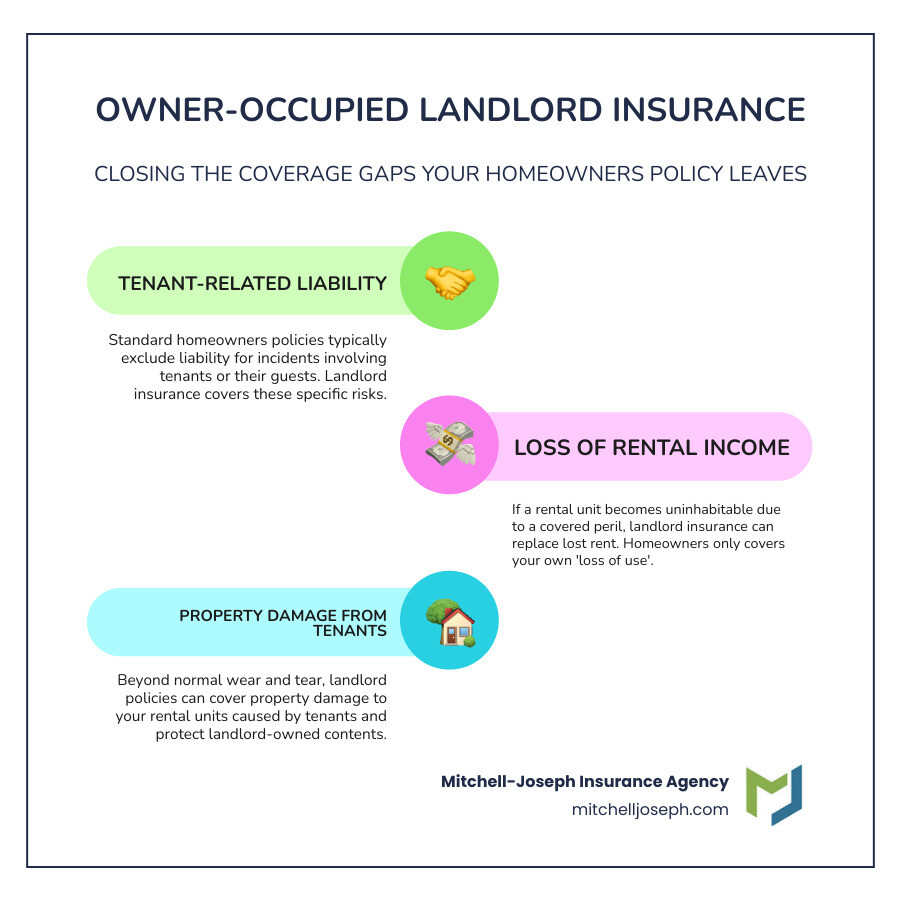
- Liability protection for tenant-related incidents
- Loss of rental income if units become uninhabitable
- Property damage from tenant activities
- Protection for common areas and landlord-owned items in rental units
- Your tenants still need their own renters insurance for their personal belongings.
Living in your property while collecting rent introduces risks most homeowners don’t face. For example, if a tenant’s visitor slips on your stairs or a fire in the rental unit causes lost income, your standard homeowners policy likely won’t cover it.
Landlord insurance premiums are typically 15-25% higher than homeowners policies due to increased risks. Many owners are surprised that renting even a single room can void their homeowners coverage for rental-related claims.
I’m Jeffrey Joseph of Mitchell-Joseph Insurance Agency. Since 1999, I’ve helped property owners in the Finger Lakes region steer complex insurance. I’ve seen many owner-occupants find too late that their standard policy doesn’t cover tenant-related risks. Understanding owner-occupied landlord insurance is crucial to protect your home and investment. Let me walk you through what you need to know.
The Definitive Guide to Owner Occupied Landlord Insurance
Living in your property while renting out a portion makes you both a homeowner and a landlord. This dual role requires a specialized solution: owner-occupied landlord insurance.
Collecting rent is like running a small business in your home. From an insurance perspective, this changes everything, and a standard homeowners policy isn’t designed for it.
Homeowners vs. Landlord Policies: A Clear Distinction
Here’s something that surprises many new landlords: your trusty homeowners insurance policy has some serious limitations once you start collecting rent. Homeowners policy limitations become apparent the moment you hand over those first keys to a tenant.
Homeowners insurance protects your personal residence, belongings, and liability for personal guests. It also covers living expenses if you must move out temporarily. However, it doesn’t cover the rental property risks associated with tenants.
The liability differences are significant. If a tenant’s guest is injured, your homeowners policy may deny the claim as it’s related to rental activity. Traditional landlord insurance covers this, but it’s for non-owner-occupied properties.
Personal property coverage also differs. Homeowners policies protect your belongings, while landlord insurance covers items you provide for tenants, like appliances.
The key difference is loss of use vs. loss of rent. Homeowners insurance covers your extra living expenses if your home is unlivable. Landlord insurance covers lost rental income. As an owner-occupant, you need both.
| Feature | Homeowners Insurance | Landlord Insurance | Owner Occupied Landlord Insurance |
|---|---|---|---|
| Occupancy | Owner lives in the property | Owner does not live in the property | Owner lives in one unit; tenants in others |
| Liability | Covers homeowner and their guests | Covers landlord liability for tenant incidents | Covers both personal and rental-related incidents |
| Personal Property | Covers homeowner’s personal belongings | Covers landlord-owned items in rental units | Covers owner’s belongings AND rental unit items |
| Loss of Income/Use | “Loss of Use” for additional living expenses | “Loss of Rent” for lost rental income | Both “Loss of Use” AND “Loss of Rent” coverage |
This is exactly why owner occupied landlord insurance exists – to bridge the gap between these two very different types of coverage. You can learn more about comprehensive coverage options in our guide on home insurance coverage types.
Essential Coverages for Your Owner-Occupied Landlord Insurance
When you’re wearing both the homeowner and landlord hats, your insurance needs to cover all the bases. Let’s walk through the essential protections that make owner occupied landlord insurance so valuable.
Dwelling protection forms the foundation of your coverage. This protects the entire physical structure, including your living space and the rental units. It helps rebuild your property after a covered event like a fire. Ensure your coverage is sufficient to rebuild completely, including demolition, debris removal, and code-compliance costs.
Liability coverage becomes incredibly important when you share your property with tenants. This protects you if someone is injured on your property and sues. For example, if a delivery driver slips on your steps, liability coverage can handle medical bills and legal fees, protecting you from large out-of-pocket expenses.
Loss of rental income coverage is where owner occupied landlord insurance really shines. If a covered disaster makes your rental unit uninhabitable, this coverage reimburses you for the lost rent during repairs. It’s a financial safety net that helps you continue paying your mortgage and other expenses without rental income.
Medical payments coverage handles smaller medical expenses for injuries on your property, regardless of fault. It can prevent minor incidents from becoming large lawsuits by covering costs like a few stitches quickly and without hassle.
Landlord-owned contents protects items you provide for your tenants – appliances, furniture, or fixtures that belong to you but are in their rental space. This only covers your property, not anything your tenants own.
These coverages work together to protect both your home and your investment income. For more detailed information about protecting your rental property assets, check out our guide to covering your assets.
What Isn’t Covered and Why Tenants Need Their Own Policy
Even the best owner occupied landlord insurance policy has its limits. Understanding what’s not covered helps you set realistic expectations and explains why your tenants absolutely need their own insurance.
Tenant’s personal belongings top the list of what your policy won’t cover. Your policy protects your property and liability, not your tenant’s personal items like furniture or electronics. If a burst pipe ruins their belongings, they need their own renters insurance to cover the loss.
Intentional damage falls outside your coverage too. Your policy may cover accidental damage by a tenant, but it excludes deliberate acts like vandalism. If a tenant intentionally damages the property, you’ll likely have to pay for repairs yourself.
Wear and tear represents normal aging and deterioration that happens over time. Normal aging and deterioration, like faded paint or worn carpets, are considered maintenance, not insurance claims. Insurance covers sudden and accidental events, not gradual decline.
Requiring tenant insurance makes sense for everyone involved. A renter’s policy covers their belongings and liability, and can even cover accidental damage they cause to your property. Making renters insurance a lease requirement is a smart move for landlords.
When tenants have their own coverage, it protects them from financial disaster and gives you peace of mind. They won’t look to you to replace their items after a loss. You can learn more about renters insurance in our guide to renters insurance.
As a landlord, you also have certain responsibilities for maintaining your property safely. You can find detailed information about these obligations at the NSW government’s guide to landlord responsibilities.
Understanding these coverage gaps helps you make informed decisions about your owner occupied landlord insurance and ensures both you and your tenants are properly protected.
Securing Your Policy and Managing Costs
Getting the right owner occupied landlord insurance doesn’t have to be complicated. At Mitchell-Joseph Insurance Agency, we help property owners in the Finger Lakes region find coverage that protects their investment without breaking the bank. Let’s review what affects your costs and how to get the best value.
Key Factors That Determine Your Insurance Premium
Your owner-occupied landlord insurance premium is calculated based on your property’s risk profile. Several key factors influence the final cost.

Property value plays the biggest role. The higher your property’s rebuild cost, the higher your premium. This includes the main structure and extras like decks, plus costs for demolition and debris removal after a loss.
Location makes a huge difference. A property’s location significantly impacts risk. Insurers consider local crime rates, proximity to fire stations, and exposure to natural disasters. For example, insuring a house in New York might cost around $900 annually, while a condo could be closer to $400 due to different risk factors.
The number and type of rental units you have directly impacts your premium. More rental units generally mean more potential for claims, increasing the cost.
Your claims history follows you. A history of frequent claims will increase your premium, as insurers view you as a higher risk. A clean record helps keep costs down.
Deductibles give you direct control over your premium. A higher deductible lowers your annual premium but increases your out-of-pocket cost for a claim. It’s a trade-off between monthly savings and your ability to cover the deductible in an emergency.
Safety features and property condition can work in your favor. Safety features like updated electrical systems, new roofs, and monitored alarms can earn you discounts. Insurers reward responsible owners of well-maintained properties with lower rates.
Understanding these factors puts you in the driver’s seat when it comes to managing your insurance costs.
For more insights into potential ways to reduce your costs, check out our guide on Find potential discounts.
How to Get the Best Owner-Occupied Landlord Insurance Policy
Finding great owner occupied landlord insurance is easier with a strategic approach. Here’s how to get the best value.
Bundling your policies is often the easiest way to save. Combining your landlord policy with other insurance, like auto, can lead to significant multi-policy discounts and simplifies managing your coverage.
Adjusting your deductible gives you immediate control over your premium. Increasing your deductible from $500 to $1,000 or more can lower your premium. Ensure you can comfortably pay the higher amount out-of-pocket if you need to file a claim.
Shopping around for quotes is where an independent agency shines. We compare rates from our network of 24 insurance companies at once. Since companies weigh risks differently, rates can vary significantly, and we can help find the best value.
Reviewing your coverage annually keeps your protection current. The insurance market and your needs change. A yearly review ensures your coverage remains adequate and that you’re getting all available discounts.
Maintaining your property well is good insurance practice. Regular maintenance and inspections of systems like roofing and plumbing reduce the chance of claims. Insurers often reward proactive owners with better rates.
Being strategic about claims can help keep your rates stable. Avoid filing small claims you can cover out-of-pocket. Frequent claims can increase your premiums, so save insurance for major losses.
To get a quote, first assess your needs and gather property details (age, size, renovations). Then, reach out to us. We’ll compare options from multiple carriers to help you find the best policy for your investment.
Having a local agent who understands the New York market makes all the difference.
Find a local agent who can guide you through the process with expertise and care.
Your Next Steps to Full Protection
Becoming an owner-occupant landlord is a smart investment. As this guide has shown, this unique role requires specialized protection beyond a standard homeowners policy.
The good news? Owner-occupied landlord insurance isn’t complicated. The slightly higher cost is a wise investment to protect both your home and rental income.

Assess your specific situation. Consider what you’re renting (a room, a unit), shared spaces, property value, and items you provide to tenants. This helps determine your liability exposure and coverage needs.
Don’t steer this alone. Insurance is complex. At Mitchell-Joseph Insurance Agency, our experienced team serves the Finger Lakes region, making insurance straightforward. We listen to your needs and help you build a policy that fits.
Protect your home and rental income. The right owner-occupied landlord insurance protects your property, shields you from liability, and covers lost rent after a disaster. It provides peace of mind knowing your dual-purpose asset is secure.
Ready to protect your investment properly? Let’s have a conversation about your specific needs.

