

Why Understanding NY Boat Insurance Requirements Matters for Your Peace of Mind
Is Boat Insurance Required in NY? The Official Answer and Common Exceptions
Here’s the quick answer: is boat insurance required in NY by state law? No, it isn’t. Unlike auto insurance, which New York demands before you can leave the driveway, boat insurance is strictly optional under state law.
That legal freedom is nice, but it also means every dollar of damage, injury, or cleanup comes out of your own pocket unless you carry a policy. After 25-plus years helping families in Honeoye Falls, Pittsford, Canandaigua, and the greater Rochester area, we’ve seen how a single mishap can cost far more than the boat itself.
Think of it this way: driving without insurance gets you a ticket. Boating without insurance could cost you your house. For comparison, our More info about Auto Insurance Coverage shows how differently the two worlds are regulated.
When You Will Be Required to Have Boat Insurance
State law may be silent, but plenty of other parties speak up:
- Financed boats – Lenders require comprehensive and collision coverage until the loan is paid off.
- Marinas & yacht clubs – Most facilities demand proof of liability insurance (often $300,000-$1 million) before they’ll give you a slip.
- Private docks & storage yards – Similar rules protect their property from uninsured losses.
Sorting this out ahead of time keeps your purchase or launch day from turning into a paperwork scramble.
So, is boat insurance required in NY for registration?
Absolutely not. Registration and insurance are separate. You can register a boat with the New York DMV using proof of ownership, sales-tax payment, and the fee—no insurance card needed.
All motorized craft, even a canoe with a tiny trolling motor, need DMV papers. Non-motorized vessels don’t. Registration simply makes the boat legal to operate; it does nothing to protect your wallet if things go wrong.
Many boaters around Honeoye Lake and the Finger Lakes grab their new sticker and think they’re “covered.” When the first close call happens, reality sets in: registration ≠ protection.
Why Boat Insurance is a Smart Investment for NY Boaters
Picture this: you’re cruising Conesus Lake on a perfect July afternoon when another boat cuts too close. The collision lasts seconds; the bills can last years. Is boat insurance required in NY? No, but the better question is whether you can afford to skip it.
Nationwide, more than 5,000 boating accidents occur annually, and medical, legal, and cleanup costs often top six figures. A single finger-lakes water-ski spill can send a rider to a trauma center—$100,000 in care before anyone files a lawsuit.
Even “minor” fender-benders are pricey. Dock collisions routinely hit $15,000 in repairs. If you dent a vintage wooden runabout, expect five-digit invoices. Environmental fines for a small fuel spill can dwarf both.
The High Cost of a Boating Mishap
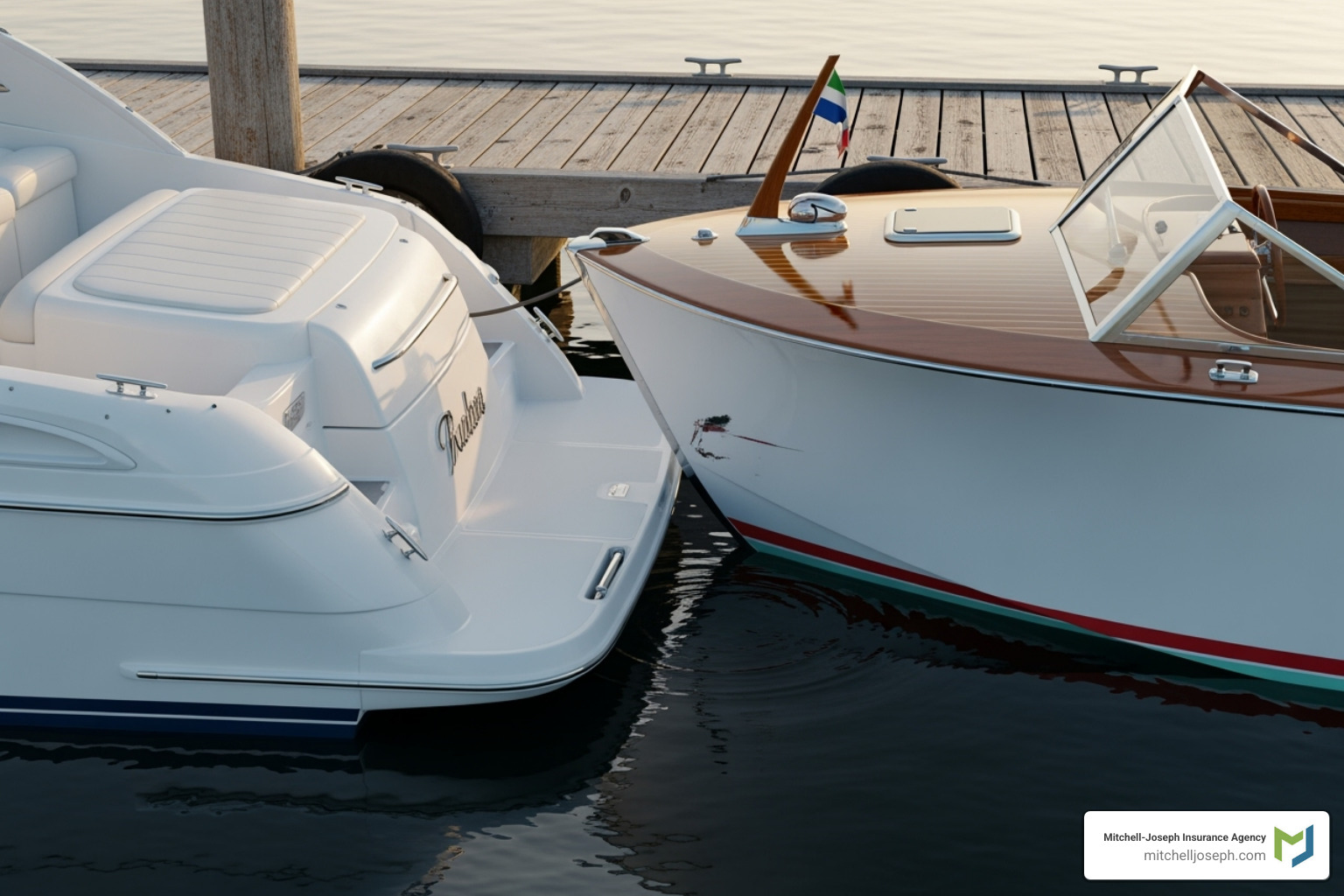
Legal defense alone can run tens of thousands—even if you did nothing wrong. Salvage after a sinking in a navigation channel typically costs $10,000-$50,000. We’ve watched families face $200,000 claims that dwarfed the price of their boats.
Protecting Yourself From Uninsured Boaters
Because New York doesn’t mandate coverage, plenty of folks cruise without it. If an uninsured operator injures you, Uninsured/Underinsured Boater Coverage steps in to pay medical expenses, lost wages, and more. Hit-and-run boating incidents happen; this coverage treats them as if the other boater had no insurance at all.
Bottom line: boat insurance isn’t a legal requirement—it’s your financial life jacket.
Decoding a Standard New York Boat Insurance Policy
A solid policy is a custom safety net, usually built with these core parts:
- Liability coverage – pays when you injure someone or damage property and covers your legal defense.
- Physical damage – collision plus comprehensive (theft, fire, storms, sinking) for your boat, motor, and trailer.
- Medical payments (MedPay) – immediate medical help for you or passengers, regardless of fault.
- Uninsured/Underinsured boater – protects you from others who don’t carry insurance.
- Personal effects – fishing gear, electronics, and other belongings aboard.
- Emergency towing & assistance – gets you home when the engine quits.
Liability: Your Financial Shield
We recommend at least $500,000 for boats under 26 ft and $1 million for larger craft or busy waterways. The extra premium is modest and includes legal defense.
Physical Damage: Protecting Your Investment
Collision repairs props and hull dings; comprehensive handles perils like theft or lightning. Newer boats benefit from replacement-cost settlement instead of depreciated value.
Smart Add-Ons
MedPay, uninsured boater protection, and on-water towing cost little yet solve big problems. We walk clients through each option so coverage matches how—and where—they actually boat.
Navigating the Cost of Boat Insurance in New York

The average NY boater pays about $521 a year for full coverage or around $100 for liability-only—often less than a family’s monthly coffee run. Considering claims can top $200,000, the math speaks for itself.
What Drives Your Premium?

Key factors include boat type and size, age and value, engine horsepower, where you operate, and your boating experience. Secure winter storage and safety gear can trim rates.
Easy Ways to Save
- Raise the deductible – moving from $500 to $1,000 often cuts 10-15%.
- Complete a boating safety course – meets Brianna’s Law and earns 5-10% discounts.
- Lay-up credit – reduce coverage during winter.
- Bundle policies – combining boat, auto, and home with Mitchell-Joseph can shave 10-25% off premiums.
Our independent agency compares 24 insurers to find the sweet spot between cost and protection.
Beyond Insurance: Other Mandatory NY Boating Requirements
While is boat insurance required in ny gets a clear “no” from state law, New York doesn’t leave boaters completely without rules. The Empire State has put several mandatory requirements in place to keep everyone safe on the water and protect our beautiful lakes and rivers.
These aren’t just bureaucratic problems – they’re smart safety measures born from real-world tragedies and environmental concerns. As someone who’s been helping Finger Lakes boaters for over two decades, I’ve seen how these requirements genuinely make our waterways safer for everyone.
Think of it this way: just because insurance isn’t legally required doesn’t mean New York has a “anything goes” approach to boating. The state takes safety seriously, and these requirements reflect that commitment across our extensive waterway system.
Brianna’s Law: Mandatory Safety Education
This law carries the name of 11-year-old Brianna Lieneck, who lost her life in a 2005 boating accident. Her tragic death sparked legislation that’s been rolling out gradually, with full compliance required by January 1, 2025.
Right now, if you’re operating a personal watercraft (PWC), you must be at least 14 years old and hold a boating safety certificate. For other motorized boats, operators born January 1, 1978, or later need that certificate. But here’s the important part – by 2025, every motorized boat operator will need certification, regardless of age.
The NYS Office of Parks, Recreation and Historic Preservation runs the program and offers both classroom and online courses. However, New York requires proctored exams – you can’t just take a purely online course like in some other states. This ensures everyone actually learns the material.
The course covers navigation rules, safety equipment, emergency procedures, and environmental protection. It’s genuinely useful information that can prevent accidents and save lives. Plus, many insurance companies offer discounts for completing the course, so it can actually save you money.
Given that this requirement is coming for everyone soon and the legally required safety courses provide valuable knowledge, I recommend all our clients complete certification now rather than waiting.
Boat and Trailer Registration
Here’s where things get straightforward: all mechanically propelled boats operating on New York waters must be registered with the DMV, regardless of size. This includes canoes and kayaks with any type of motor attached. If it’s got a motor, it needs registration.
Non-motorized vessels like canoes and kayaks don’t need registration unless you add a motor. But the moment you attach even a small trolling motor, registration becomes mandatory.
Boat registrations are renewed every three years, while trailers require annual renewal. You can register your boat online or visit a DMV office. The process requires proof of ownership, sales tax payment, and applicable fees.
Hull Identification Numbers (HINs) serve as unique identifiers, similar to vehicle VINs. Most boats built after 1972 have them, but older boats might need to obtain HINs through the Office of Parks, Recreation and Historic Preservation.
Registration numbers must be displayed prominently on both sides of the bow in block letters at least three inches high. They need to contrast with the hull color and be readable from 100 feet away. The registration stickers go in line with the numbers, three inches toward the stern.
Required Safety Equipment Onboard
New York takes safety equipment seriously, with specific requirements based on boat size and type. These rules ensure boaters can respond effectively to emergencies and comply with federal Coast Guard regulations.
Personal Flotation Devices (PFDs) top the list as the most critical safety requirement. Every boat must have one USCG-approved wearable Personal Flotation Device for each person on board.
But New York goes beyond just having them available. Children under 12 must wear PFDs on boats under 65 feet unless they’re in an enclosed cabin. PWC operators must wear PFDs at all times – no exceptions. Anyone being towed behind a boat must wear a PFD, and here’s one that surprises many boaters: anyone on boats under 21 feet between November 1 and May 1 must wear PFDs due to cold water dangers.
Fire extinguishers are required on boats with enclosed fuel tanks, enclosed living spaces, or permanently installed fuel tanks. The number and type depend on your boat’s size and configuration.
If you’re boating in coastal waters or waters connected to the ocean, you’ll need visual distress signals. Sound-producing devices like horns or whistles are required for boats over 16 feet.
Navigation lights must be displayed during reduced visibility and between sunset and sunrise. The specific configuration depends on your boat’s size and type.
These requirements might seem extensive, but they’re based on decades of boating safety experience. At Mitchell-Joseph Insurance Agency, we’ve seen how proper safety equipment can prevent minor incidents from becoming major tragedies.
Conclusion: Set Sail with Confidence in New York
So, is boat insurance required in ny? The answer tells a story of legal freedom paired with financial responsibility. While New York State won’t ticket you for operating an uninsured boat, the smart money is on protecting yourself from the significant financial risks that come with life on the water.
Think about it this way: you’re 30 times less likely to have a serious accident in your boat than in your car. But when boating accidents do happen, more than half result in injury. The medical bills, property damage, and legal costs can easily reach six figures – enough to sink your financial future along with your boat.
The numbers speak for themselves. At an average cost of around $521 annually in New York, boat insurance represents one of the best financial investments you can make as a boat owner. That’s less than $45 per month to protect against potentially catastrophic liability exposure.
The reality is that responsible boat ownership goes beyond following navigation rules and carrying safety equipment. It means protecting your family’s financial security through proper insurance coverage. Whether you’re required to have coverage by your lender or marina, or you’re simply being proactive about risk management, boat insurance provides essential peace of mind.
At Mitchell-Joseph Insurance Agency, we’ve built our reputation over decades of helping families throughout the Finger Lakes region make smart insurance decisions. Our over 200 years of combined experience means we understand the unique challenges New York boaters face, from navigating busy summer traffic on Lake George to dealing with winter storage concerns.
What sets us apart is our independent status. We work with 24 different insurance companies, which means we’re not tied to any single provider. Instead, we can shop the market to find the coverage that fits your specific needs and budget. Whether you’re launching from Honeoye Lake, exploring the Finger Lakes, or cruising the Hudson River, we’ll help you find the right protection.
Don’t let the absence of a legal mandate fool you into thinking insurance isn’t necessary. The question isn’t whether you can operate without coverage – it’s whether you can afford the potential consequences of going without it. A single accident involving injury to another boater could result in hundreds of thousands of dollars in damages, legal fees, and settlement costs.
Your boat represents freedom, family time, and some of your best memories. Don’t let inadequate insurance protection turn those good times into financial nightmares. The modest cost of proper coverage ensures you can focus on what matters most – enjoying New York’s beautiful waterways with confidence.
Ready to explore your options? Our experienced team is here to help you understand your coverage needs and Find the right insurance coverage for your needs that protects your investment and your peace of mind.
Contact Mitchell-Joseph Insurance Agency today to discuss your boat insurance needs. With locations throughout the Finger Lakes region and a commitment to personalized service, we’re here to help you steer the waters of insurance protection with confidence. Because when you’re properly covered, every day on the water is a good day.

