Why Your Home on Wheels Needs Specialized Insurance
Insurance for RV protects your recreational vehicle and belongings with coverage that goes beyond standard auto insurance. Your RV is a significant investment, and whether you’re a weekend camper or a full-time RVer, it needs specialized protection.
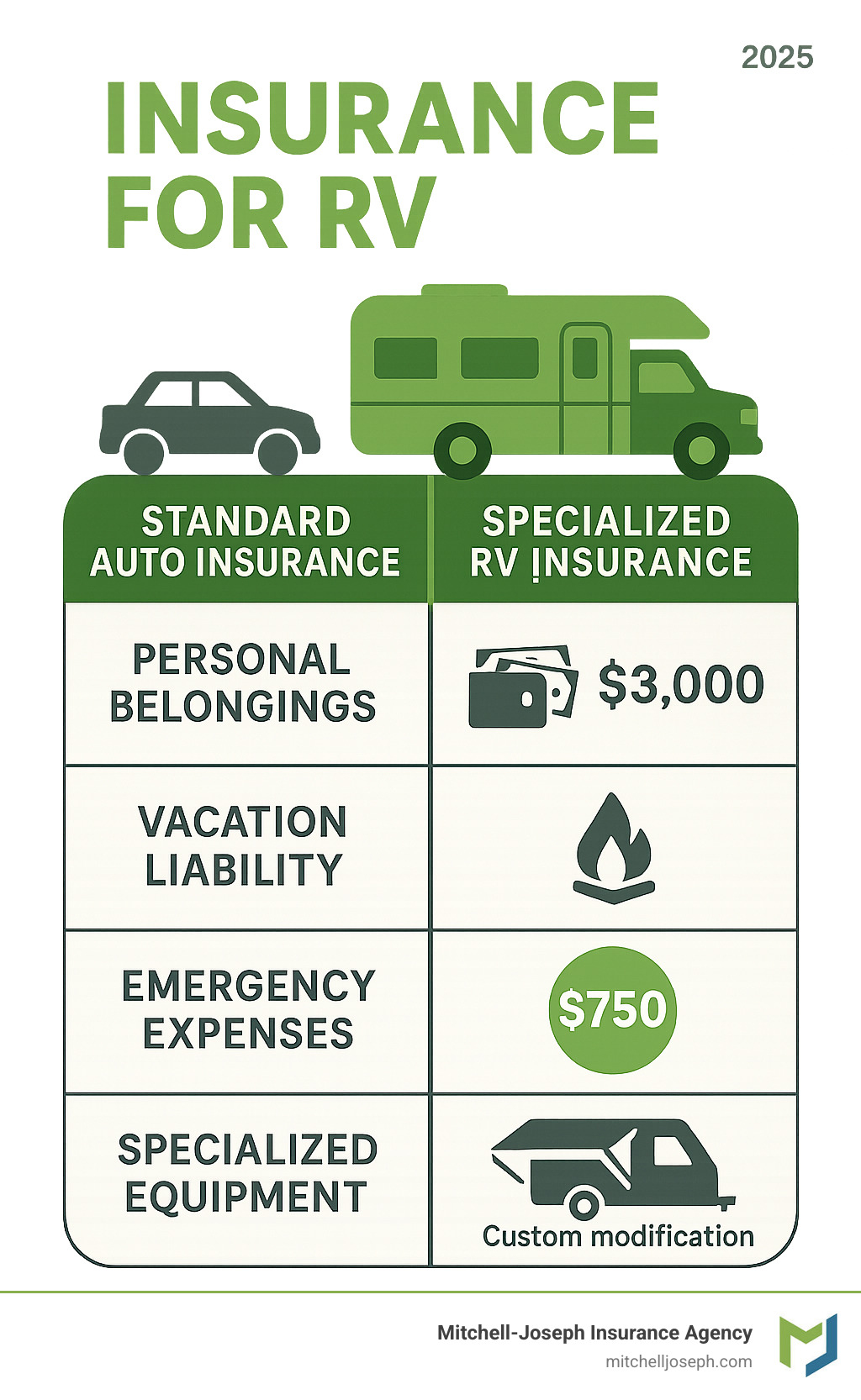
Unlike auto insurance, RV policies combine vehicle coverage with property protection similar to homeowners insurance. This ensures everything from your motorhome’s engine to the personal belongings inside is covered. Key components include:
- Liability Coverage: Required by law for motorhomes, covering injury and property damage.
- Physical Damage: Protects against collision, theft, fire, and weather.
- Personal Property: Covers belongings inside your RV.
- Emergency Expenses: Pays for lodging and meals if your RV breaks down.
- Roadside Assistance: Provides towing and emergency services.
With the right insurance for RV, you can explore with peace of mind. I’m Jeffrey Joseph from Mitchell-Joseph Insurance Agency, and since 1999, I’ve helped Finger Lakes residents find the perfect coverage for their trips.
What is RV Insurance and Why is it Different?
Many RV owners wonder if their auto insurance is sufficient. The answer is no. An RV isn’t just a vehicle; it’s a home on wheels. Standard auto policies are designed for commuting, not for a vehicle that contains a kitchen, beds, and personal belongings. This dual nature is why specialized insurance for RV is essential.
RV insurance blends auto coverage with features of a homeowners policy. It protects the vehicle itself, your personal property inside, and provides liability coverage. For motorized RVs, liability coverage is mandatory in most states, protecting you if you’re at fault in an accident. While not always legally required for towable trailers, insurance is highly recommended to cover theft, fire, or damage. You can learn more about state-specific requirements from the National Association of Insurance Commissioners (NAIC).
The right insurance for RV provides a vital safety net against unexpected events, from a highway fender bender to a storm-damaged roof. It ensures your financial well-being is protected, so you can focus on enjoying the open road.
More info about Recreational Vehicle Insurance
What Types of Recreational Vehicles Can Be Insured?
The RV lifestyle offers a wide variety of vehicles, and we can insure nearly all of them. From large motorhomes to small pop-ups, we have a policy for your home on wheels.
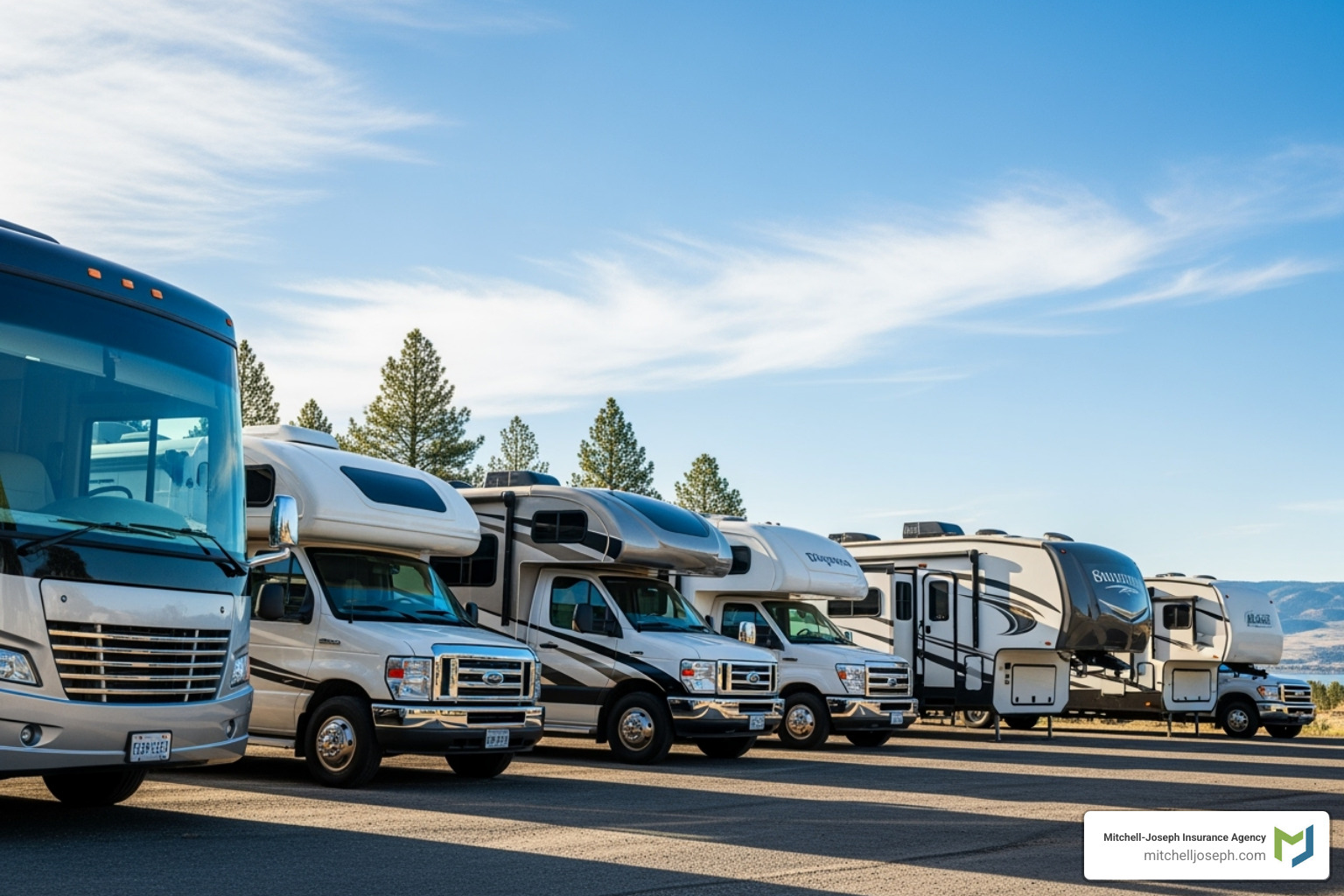
Here are the common types of recreational vehicles we insure:
- Motorhomes (Class A, B, and C): Motorized RVs ranging from large, bus-style Class A models to nimble Class B camper vans and mid-sized Class C vehicles.
- Travel Trailers: Non-motorized living spaces towed by a truck or SUV, easily detached at your campsite.
- Fifth-Wheels: Larger trailers towed by a pickup truck with a special in-bed hitch, often featuring multi-level layouts.
- Pop-Up Campers: Lightweight, foldable trailers that are easy to tow and store.
- Truck Campers: Units that slide into the bed of a pickup truck, ideal for off-road trips.
- Utility Trailers with Living Quarters: Customized trailers for hauling that include basic living amenities.
Each RV type has unique insurance needs. Our team will help you find the right protection for your specific vehicle and travel style.
Learn more about specialized RV coverage
A Deep Dive into Your Options for Insurance for RV
Choosing the right insurance for RV means tailoring protection to your travel style. With over 220,000 RV claims filed annually, it’s clear that unexpected events happen. The right policy turns potential financial disasters into manageable inconveniences.
Core Coverage Types Explained
RV insurance starts with a foundation of core coverages:
- Liability Coverage: Legally required for motorhomes, this covers costs if you cause an accident that injures someone (bodily injury liability) or damages their property (property damage liability). Many owners choose higher limits for better protection.
- Uninsured/Underinsured Motorist: Protects you if the at-fault driver in an accident has insufficient or no insurance.
- Collision Coverage: Pays for repairs to your RV after an accident, regardless of who is at fault, after you pay your deductible.
- Comprehensive Coverage: Covers non-collision damage from events like fire, theft, vandalism, hail, falling objects, and animal strikes.
- Personal Belongings Coverage: Protects the items you store inside your RV, such as clothing, electronics, and camping gear. Standard limits are often around $3,000 but can be increased.
Specialized Coverage for the RV Lifestyle
Because your RV is also your temporary home, specialized coverages are essential:
- Full-Timer Insurance: For those who use their RV as a primary residence, this combines RV and homeowner-style protections, including personal liability and improved contents coverage.
- Vacation Liability: Protects you if someone is injured at your campsite when your RV is parked.
- Emergency Expenses: Covers costs like hotels and meals if your RV is unusable due to a covered loss while you’re traveling.
- Campsite Protection: Extends coverage to your campsite setup, protecting items like awnings and outdoor equipment.
- Roadside Assistance: Provides specialized towing and services for large vehicles, including flat tire changes, fuel delivery, and jump-starts.
Understanding Your RV’s Value: Agreed vs. Actual Cash Value
How your RV is valued determines your payout if it’s totaled or stolen. Understanding your options is key to protecting your investment.
- Actual Cash Value (ACV): This is the most common method, paying you the market value of your RV at the time of loss, which includes depreciation. ACV policies often have lower premiums but may not provide enough to buy a similar replacement.
- Agreed Value: You and the insurer agree on a value for your RV when the policy is written. If it’s totaled, you receive that full amount, regardless of depreciation. This is ideal for custom, vintage, or well-maintained RVs.
- Replacement Cost Coverage: Typically for newer RVs (often under five years old), this coverage will pay to replace your totaled RV with a brand-new, comparable model.
Choosing the right valuation method protects you from depreciation and ensures you can get back on the road without a major financial setback. We can help you decide which option best suits your RV and budget.
Getting Covered: From Quote to Claim
Once you understand the types of coverage available, the next step is getting your RV insured and knowing what to do if you ever need to file a claim. We’ve streamlined this process to be as straightforward as possible, so you can protect your RV without any headaches.

What Determines the Cost of Insurance for RV?
The cost of insurance for RV depends on several factors. Understanding them can help you find the best value.
- RV Type and Class: A large, luxurious Class A motorhome will cost more to insure than a small pop-up camper due to its higher value.
- Age and Condition: Newer RVs generally have higher premiums due to higher replacement costs, while older RVs may cost less to insure for physical damage.
- Driving Record: A clean driving record with no accidents or violations typically results in lower premiums.
- Usage: Recreational users who take occasional trips will pay less than full-timers who live in their RV year-round.
- Coverage Limits and Deductibles: Higher coverage limits increase your premium, while a higher deductible can lower it.
- Storage Location: Premiums can be higher in areas with more theft or severe weather.
Opening up Savings and Discounts
You can save on your insurance for RV without sacrificing coverage. We help our clients find every available discount:
- Bundling: Insuring your RV with your auto or home policy can save you up to 21%.
- Multi-Vehicle Discount: Insuring your car and RV with the same provider can save 10% or more.
- Storage Savings: If you store your RV seasonally, you could reduce your premium by up to 53% during the off-season.
- Good Driver & Claims-Free: A clean record is rewarded with lower rates.
- Safety Features: Anti-theft devices, anti-lock brakes, and other safety features can earn you a discount.
- Paid-in-Full Discount: Paying your annual premium upfront often reduces the total cost.
- RV Club Memberships: Affiliation with certain RV clubs may qualify you for a discount.
As an independent agency working with 24 insurance companies, we shop around to find you the best combination of coverage, service, and price.
The Practical Steps: Getting a Quote and Filing a Claim
We make getting insured and handling claims simple and straightforward.
Getting Your Quote
To provide an accurate quote, we’ll need some basic information: your personal details and driving history, your RV’s year, make, model, and value, and how you plan to use it (recreational vs. full-time). Letting us know about current home or auto policies can help us find bundling discounts. While online quotes are a good start, calling us directly ensures a personalized quote custom to your needs.
For seasonal RV owners, we can adjust your policy for storage periods to save you money, while still protecting your vehicle from theft or damage year-round.
Filing a Claim
If you need to file a claim, we’re here to help. Contact us immediately after an incident. Be sure to document the scene with photos, get contact information from others involved, and keep records of all communications and receipts. We’ll guide you through the process and work with the adjuster to ensure a smooth resolution.
At Mitchell-Joseph Insurance Agency, we’re a family-owned business in Honeoye Falls, NY, with offices in Pittsford, Naples, and Rushville, serving the entire Finger Lakes region. With over 200 years of combined experience and access to 24 insurance carriers, we deliver personalized service and competitive quotes.