Why Insurance for New Homeowners Matters
Insurance for new homeowners provides essential protection against unexpected events that could damage or destroy a new home. For those new to homeownership, securing the right coverage can seem daunting, but it’s crucial for preserving your biggest investment.
- Home insurance safeguards the structure of your home, your personal belongings, and even your liability in cases of accidents on your property.
- Coverage also extends to additional living expenses if your home becomes uninhabitable.
- Specialized policies, like flood or earthquake insurance, might be necessary depending on your location.
I’m Jeffrey Joseph, and since 1999, I’ve been working to ensure new homeowners have the best protection available. Insurance for new homeowners is a key focus of mine at Mitchell-Joseph Insurance Agency, where we prioritize personalized service and comprehensive coverage solutions.
Common Insurance for new homeowners vocab:
– Home insurance coverage types
– Homeowners insurance discounts
Understanding Homeowners Insurance
Homeowners insurance is a safety net for your biggest investment—your home. It breaks down into various coverage types that protect different aspects of homeownership. Let’s explore the essentials.
Coverage Types
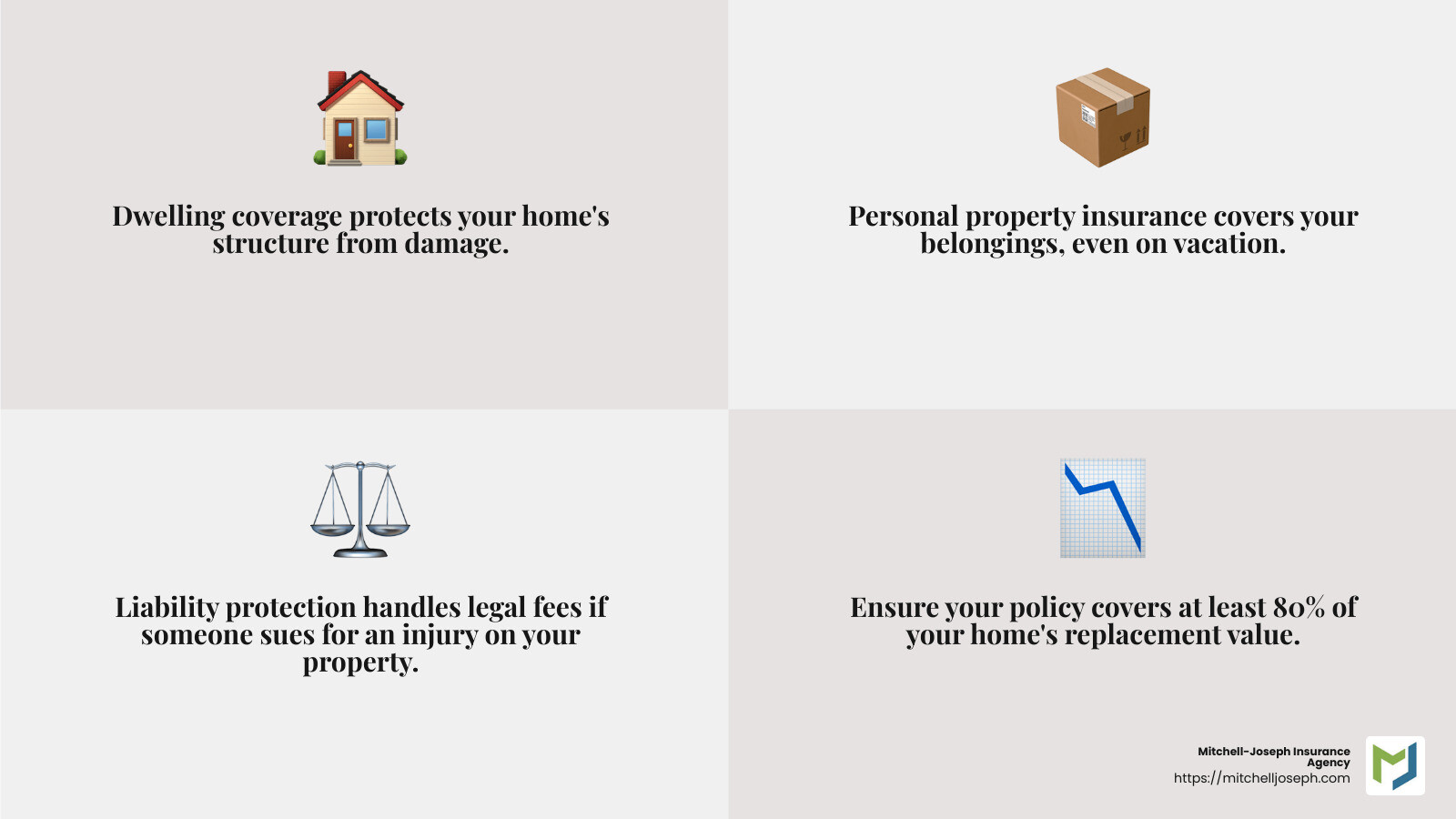
1. Dwelling Coverage: This covers the physical structure of your home. If a storm or fire damages your house, dwelling coverage helps pay for repairs. It’s crucial to ensure your policy covers at least 80% of your home’s replacement value. If not, you might have to pay out-of-pocket for some repairs.
2. Personal Property Coverage: This protects your belongings, like furniture, electronics, and clothes, from theft or damage. Even when you’re on vacation, your personal items are covered.
3. Liability Protection: If someone gets hurt on your property and decides to sue, liability protection covers legal fees and medical expenses. This coverage is essential for peace of mind, as legal costs can be significant.
Personal Property
Personal property insurance is like a safety net for your stuff. Imagine someone steals your 10-year-old laptop. Your insurance doesn’t just give you the laptop’s current value; it covers the cost to replace it with a new one.
Liability Protection
Accidents happen. If a visitor trips over a loose step and breaks a leg, you could be held responsible. Liability protection steps in here. It covers medical bills and legal fees if you’re sued. This coverage isn’t just limited to accidents at home; it can also cover incidents away from your property.
Quick Tip: Consider adding a personal umbrella policy for extra liability coverage. It’s an affordable way to boost your protection.
By understanding the different coverage types, you can tailor your homeowners insurance to fit your needs. This ensures you’re fully protected, no matter what life throws your way.
Next, we’ll explore how to choose the right policy to fit your budget and needs.
Insurance for New Homeowners
Buying a home for the first time is exciting but also comes with many responsibilities. One crucial task is securing insurance for new homeowners. This ensures your financial security and peace of mind. Let’s break down what you need to know.
First-Time Buyers
As a first-time homeowner, you’re probably new to insurance. It’s essential to understand that homeowners insurance is not just a suggestion—it’s often a requirement if you have a mortgage. Lenders want to protect their investment, so they require you to have insurance before you get the keys.
Mortgage Requirements
When you’re getting a mortgage, your lender will likely require you to have homeowners insurance in place before the loan is finalized. This is because the lender holds a lien on your property until the mortgage is paid off, and they want to ensure the property is protected.
Tip: Start shopping for insurance as soon as you know your new address. This gives you ample time to compare policies and find the best fit.
Dwelling Coverage
Dwelling coverage is the part of your policy that covers the physical structure of your home. It’s crucial to have enough coverage to rebuild your home in case of a disaster. This is known as the replacement cost, which is different from the market value or tax assessment of your home.
The 80% rule ensures your home is insured for at least 80% of its replacement cost. If this requirement isn’t met, you might have to pay a share of repair costs.
Quick Checklist for New Homeowners
- Understand your lender’s insurance requirements. Make sure you have a policy that meets these before closing.
- Ensure adequate dwelling coverage. Aim for at least 80% of your home’s replacement cost.
- Shop early and compare quotes. This helps you find the best deal and ensures coverage is in place when you need it.
Securing the right insurance as a new homeowner is a key step in protecting your investment. Up next, we’ll dive into how to choose the right policy that fits your needs and budget.
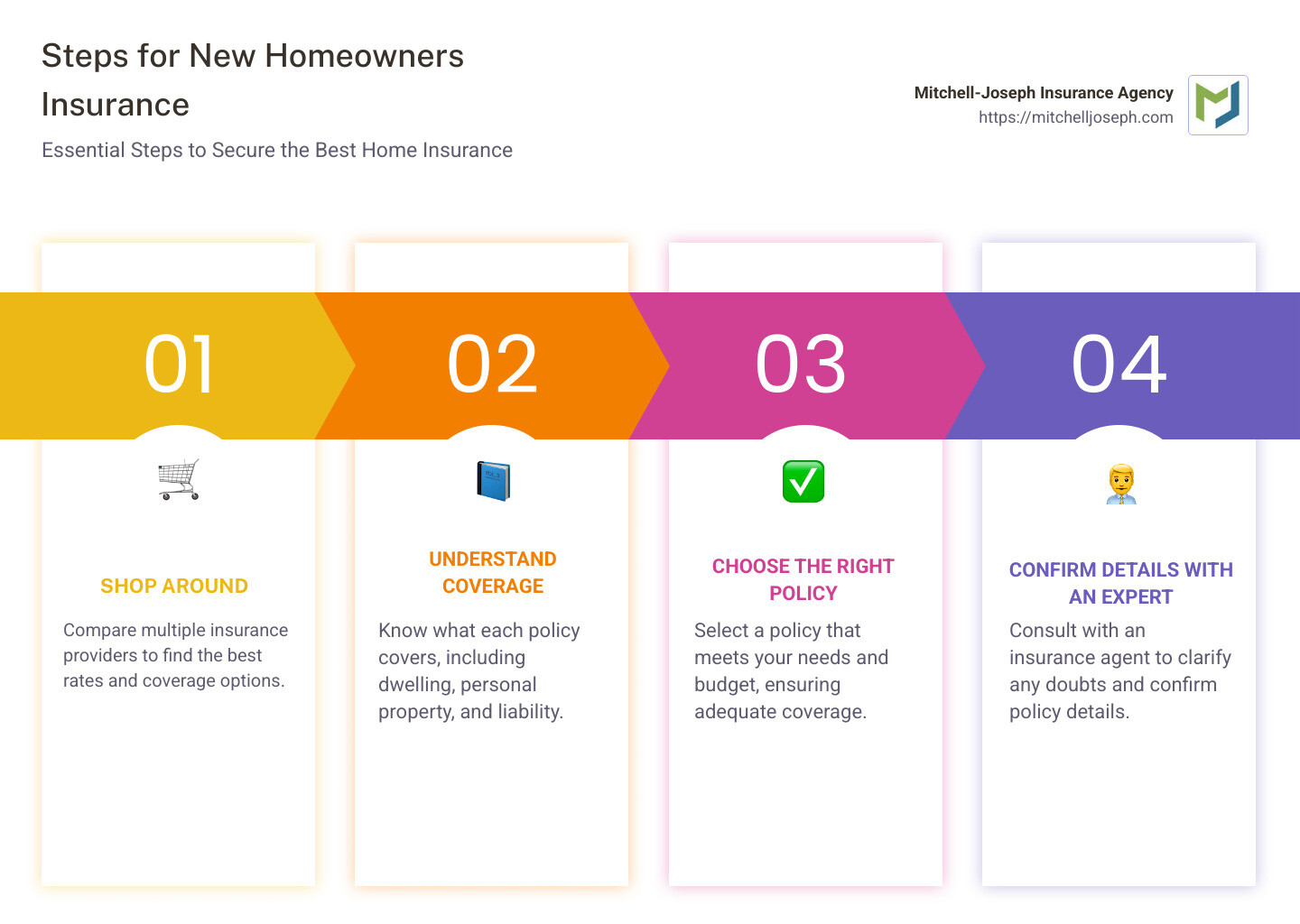
How to Choose the Right Policy
Finding the perfect homeowners insurance policy can be a bit like shopping for a new phone. There’s a lot to consider, and you want to make sure you get the best deal. Let’s explore the key factors to consider when choosing the right policy.
Compare Quotes
Start by gathering quotes from several insurance companies. This will give you a good idea of what’s available and help you find the best price. When comparing quotes, make sure you’re looking at the same coverage amounts and deductibles.
Tip: Aim to get at least five quotes. This will give you a solid understanding of the market and help you negotiate better rates.
Coverage Limits
Coverage limits are the maximum amount your insurance will pay out for a covered loss. It’s crucial to choose limits that adequately protect your home and belongings. Think about everything you own and the potential costs of rebuilding your home.
- Dwelling Coverage: Covers the structure of your home. Make sure it covers at least 80% of the replacement cost.
- Personal Property Coverage: Protects your belongings. Ensure this limit is enough to replace your items.
- Liability Coverage: Shields you if someone gets hurt on your property. Consider your assets when choosing this limit.
Deductibles
Your deductible is the amount you’ll pay out of pocket before your insurance kicks in. Choosing a higher deductible can lower your premium, but make sure it’s an amount you can afford if you need to file a claim.
- Low Deductible: Higher premium, less out-of-pocket cost when filing a claim.
- High Deductible: Lower premium, more out-of-pocket cost when filing a claim.
Tip: Balance your deductible with your budget. A higher deductible can save you money on premiums, but be sure you have savings to cover it if needed.
Choosing the right policy is about finding a balance between coverage and cost. With careful consideration, you can ensure your home is well-protected without breaking the bank. Next, we’ll explore some tips to help you save on your homeowners insurance.
Tips for Saving on Homeowners Insurance
Saving on homeowners insurance doesn’t have to be complicated. With a few smart strategies, you can reduce your premiums while keeping your home protected. Let’s explore some effective tips:
Bundling Discounts
One of the easiest ways to save is by bundling your insurance policies. Many insurance companies offer discounts if you purchase more than one type of insurance from them, like combining your home and auto insurance.
- Example: You could save up to 10% or more by bundling your auto and home insurance policies. This not only reduces your premiums but also simplifies managing your insurance with a single company.
Safety Devices
Installing safety devices in your home can lead to significant savings on your insurance premium. Insurance companies often offer discounts for homes equipped with features that reduce risk.
Consider adding:
- Smoke Detectors & Fire Alarms: Reduce the risk of fire damage and may lower your premium.
- Burglar Alarms: Deter theft and can lead to discounts.
- Sprinkler Systems: Minimize fire damage, often resulting in lower insurance costs.
Tip: Check with your insurer to see which safety devices qualify for discounts. Some companies might offer a discount just for having deadbolt locks!
Deductible Adjustments
Adjusting your deductible is another way to control your premium costs. A higher deductible usually means a lower premium, but it’s important to choose a deductible you can afford in the event of a claim.
- Higher Deductible: Opting for a higher deductible can save you money on your monthly premium. However, ensure you have enough savings to cover this amount if you need to make a claim.
- Lower Deductible: This means a higher premium but less financial burden during a claim.
Tip: Consider your financial situation and risk tolerance when deciding on a deductible. It’s a balancing act between saving now and being prepared for unexpected expenses.
By using these strategies, you can enjoy the peace of mind that comes with insurance for new homeowners without overspending. Next, we’ll address some frequently asked questions about homeowners insurance to clear up any lingering doubts.
Frequently Asked Questions about Homeowners Insurance
How much is home insurance for first-time buyers?
The cost of home insurance for first-time buyers can vary widely. On average, homeowners insurance can range from $300 to $1,000 annually, depending on factors like the location of your home, its size, and the amount of coverage you choose.
Dwelling Coverage: This is a key component of your policy. It covers the cost to rebuild your home if it’s damaged or destroyed by a covered event. The amount should be based on the replacement cost, not the market value of your home.
Tip: Use home inventory apps to assess the value of your belongings and ensure your policy covers them adequately.
What is the 80% rule in homeowners insurance?
The 80% rule is essential for ensuring you’re not underinsured. It means you should insure your home for at least 80% of its replacement value. If you fail to meet this requirement, your insurance company might not cover the full cost of a claim, leaving you responsible for a portion of the repair or rebuilding costs.
Example: If your home’s replacement cost is $200,000, you should have at least $160,000 in coverage. Falling short of this can result in significant out-of-pocket expenses.
Is homeowners insurance included in closing costs?
Homeowners insurance isn’t typically included in closing costs. However, mortgage lenders usually require proof of insurance before finalizing the loan. You might need to pay the first year’s premium upfront at closing.
Escrow Accounts: Many lenders set up escrow accounts where your insurance premiums and property taxes are collected as part of your monthly mortgage payment. This ensures your insurance is paid on time each year.
Payment Terms: When setting up your policy, you can choose to pay annually, semi-annually, or monthly. Paying annually might offer a small discount compared to monthly payments.
Understanding these aspects of insurance for new homeowners can help you make informed decisions and avoid unexpected surprises. Next, we’ll conclude with how Mitchell-Joseph Insurance Agency can provide personalized service and custom coverage.
Conclusion
At Mitchell-Joseph Insurance Agency, we understand that buying a new home is a significant milestone, and protecting it is essential. Our insurance for new homeowners is designed to offer peace of mind with personalized service and custom coverage that fits your unique needs.
Why Choose Us?
-
Personalized Service: With over 200 years of combined experience, our team is dedicated to providing you with custom advice and support. We take the time to understand your specific situation and craft a policy that ensures comprehensive protection.
-
Custom Coverage: We work with 24 different insurance companies to offer competitive quotes and flexible options. Whether you need basic dwelling coverage or additional protection for personal property and liability, we have you covered.
-
Local Expertise: Serving Honeoye Falls and surrounding areas, we know the community and the specific risks homeowners face here. This local insight allows us to recommend the best coverage options for your home.
Get Started Today!
Ready to protect your new home with a policy that meets your needs? Visit our Home Insurance page to learn more about our offerings and get in touch with our experienced agents.
At Mitchell-Joseph Insurance Agency, we’re here to help you steer the complexities of homeowners insurance with ease and confidence. Trust us to safeguard your home and everything in it.