

Why Pop Up Camper Owners Need the Right Insurance Protection
Insurance for a pop up camper isn’t just a good idea—it’s often essential for protecting your investment and avoiding costly surprises on the road. Here’s what you need to know:
Quick Answer: Do You Need Pop Up Camper Insurance?
• Legal requirement: Most states don’t require it unless financed
• Auto policy: Only covers liability while towing, not camper damage
• Home policy: May cover theft at home but not camping incidents
• Cost: Typically $100-$200 per year for full coverage
• Recommended: Yes, for comprehensive protection beyond basic liability
Pop-up campers offer the perfect blend of comfort and convenience for outdoor enthusiasts. These collapsible trailers are easy to tow, store compactly, and provide basic amenities like sleeping space and storage. But as one camping forum member put it: “If you can’t afford [insurance] you can’t afford to camp. Seriously.”
Your auto insurance liability transfers to the camper while towing, but it won’t cover damage to the camper itself. This leaves significant gaps when your trailer is parked at a campsite, stored at home, or damaged in an accident.
Weather events, theft, vandalism, and campground accidents can quickly turn a relaxing vacation into a financial nightmare. With insurance costs as low as $7-$20 per month, most owners find it’s “cheap peace of mind” that’s worth every penny.
I’m Jeffrey Joseph from Mitchell-Joseph Insurance Agency, and I’ve been helping Finger Lakes region families protect their recreational vehicles since 1999. My experience with insurance for a pop up camper has shown me that the right coverage prevents small incidents from becoming major financial setbacks.

Explore more about insurance for a pop up camper:
– affordable recreational vehicles
– fun recreational vehicles
Insurance for a Pop Up Camper: Do You Really Need It?
Here’s the honest truth: insurance for a pop up camper isn’t legally required in most situations, but going without it could cost you thousands. The legal landscape around pop-up camper insurance is surprisingly complex, and many owners find coverage gaps only after something goes wrong.
Most states treat pop-up campers differently than cars because they’re non-motorized trailers. While you need insurance to drive your truck, the law doesn’t typically require separate coverage for what you’re towing behind it. But here’s where it gets tricky—your existing auto and home policies only provide partial protection.
When you’re towing your pop-up, your auto insurance liability transfers to cover the trailer. This means if you accidentally back into someone’s car at a gas station, your policy will handle their repairs. However, if your own camper gets damaged in that same incident, you’re on your own financially.
Think about it this way: your auto policy protects others from you, but it doesn’t protect your investment. One camping enthusiast learned this the hard way when a storm damaged several campers at their campground. As they shared online: “Major storm destroyed several campers under high winds and falling trees, prompting purchase of coverage.”
Is Pop Up Camper Insurance Required by Law?
State laws generally don’t mandate insurance for pop-up campers because they fall under non-motorized RV rules. Unlike your car, which needs minimum liability coverage to legally drive, trailers exist in a different category altogether.
However, lender mandates tell a different story entirely. If you financed your pop-up camper through a bank or credit union, your loan agreement almost certainly requires comprehensive insurance coverage. Lenders want to protect their investment—if your $15,000 camper gets totaled in an accident, they still want their money back.
This creates an interesting situation where you might be legally allowed to tow without camper insurance, but contractually obligated to carry it. Financed camper obligations override state minimums in these cases, making insurance practically required even when the law doesn’t demand it.
Even if you paid cash for your camper, consider the financial risk. Without insurance, you’re essentially self-insuring against theft, weather damage, accidents, and liability claims that could happen at campgrounds.
Does My Auto or Home Policy Already Cover Me?
Your existing insurance provides some protection, but significant gaps remain that could leave you financially exposed. Understanding exactly what’s covered—and what isn’t—helps you make informed decisions about additional coverage.
Your auto insurance extends liability protection while you’re actively towing. This means auto liability while towing covers bodily injury and property damage you might cause to others. If you’re merging onto a highway and cause an accident, your auto policy’s liability limits apply to the entire incident.
However, there’s no physical damage coverage for your camper itself. Your auto policy won’t pay to repair hail damage, replace stolen equipment, or fix collision damage to your trailer. For more info about auto protection, your liability limits remain the same whether you’re driving solo or towing a camper.
Homeowners insurance might provide limited coverage when your camper is parked at home. Some policies cover theft or damage that occurs on your property, treating the camper like other personal property. But homeowners storage limits are typically quite low—maybe $1,000 to $2,500 for recreational vehicles.
More importantly, homeowners coverage generally stops working the moment you leave for a camping trip. Damage at campgrounds, roadside breakdowns, or accidents away from home fall outside typical homeowners policy territory. For more info about home coverage, recreational vehicle coverage varies significantly between insurance companies and policy types.
The bottom line? Your existing policies provide a safety net with some pretty big holes in it. While you won’t be completely unprotected, you could face substantial out-of-pocket costs for common camping-related incidents.
Coverage Options & What They Protect Against
When you’re choosing insurance for a pop up camper, understanding your coverage options makes the difference between adequate protection and expensive surprises. Each type of coverage protects against specific risks that pop-up owners face on the road and at campsites.
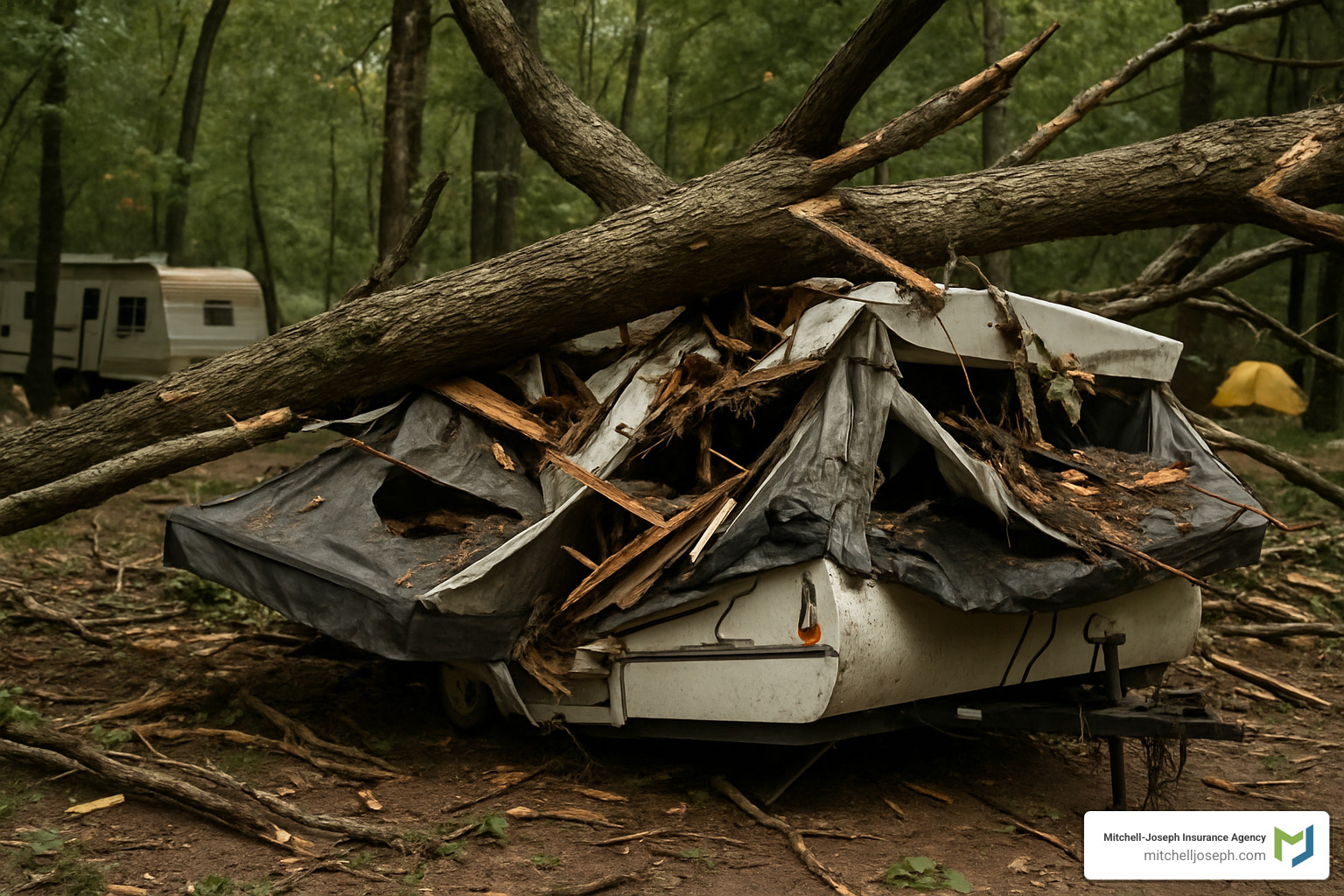
Weather damage tops the list of common claims. Hailstorms can shred canvas, high winds can flip trailers, and falling trees can crush roofs. Theft is another major concern—laptops, camping gear, and even entire campers disappear from supposedly secure campgrounds. Then there are the everyday accidents: backing into a post, rolling over during transport, or having someone trip over your stabilizer jacks.
One owner learned this lesson the hard way: “A fallen tree damages the camper’s roof” during what started as a perfect camping weekend. Another finded that “someone breaks in and steals a laptop from inside the camper” while they were hiking. These real-world scenarios show exactly why your auto insurance’s basic liability coverage leaves dangerous gaps.
Liability vs. Comprehensive vs. Collision for Insurance for a Pop Up Camper
Think of these three coverage types as your protection team, each handling different types of problems.
Liability coverage protects others when you cause damage or injury. While towing, this extends from your vehicle to cover the trailer. If you back into another camper at a crowded campground, liability pays for their repairs and any medical bills. Most lenders require this coverage, and it’s often included with your auto policy.
Comprehensive coverage handles what insurance folks call “acts of nature and acts of criminals.” This covers theft, vandalism, fire, weather damage, and falling objects like tree limbs. When that unexpected hailstorm turns your canvas into Swiss cheese, comprehensive coverage pays for repairs. It’s often called “other than collision” because it covers almost everything except actual crashes.
Collision coverage takes care of accident damage to your camper, whether you’re at fault or not. This includes rollovers during transport, impacts while backing up, and damage from other vehicles hitting your trailer. If high winds flip your trailer on the highway, collision coverage handles the repairs.
| Coverage Type | What It Covers | When It Applies | Typical Cost Impact |
|---|---|---|---|
| Liability | Injury/damage to others | While towing and at campsites | Included with auto policy |
| Comprehensive | Theft, weather, vandalism | Anywhere your camper is located | Adds $50-100/year |
| Collision | Accident damage | During transport and setup | Adds $30-80/year |
Add-On Coverages Most Owners Overlook
Beyond the basic trio, several add-on coverages provide protection that many owners don’t realize they need until it’s too late.
Personal effects coverage protects the belongings inside your camper. Most policies offer up to $5,000 for electronics, camping gear, clothing, and other personal items. As one claims adjuster explained: “If someone steals your laptop or smartphone from your camper, personal effects coverage could help pay to replace them.” This coverage applies whether you’re camping or have items stored in your trailer at home.
Vacation liability extends your liability protection when your camper is set up at a campsite. This covers incidents like a guest slipping and falling at your site, or damage caused by your awning breaking loose in high winds. It’s especially valuable if you frequently camp with friends or family.
Emergency expenses coverage becomes a lifesaver when your camper becomes uninhabitable during a trip. This pays for lodging, meals, and transportation to get you home or to continue your vacation. Some policies even include up to $750 for tools if you’re handy enough to make your own repairs.
Total loss replacement offers tremendous value for newer campers. Instead of receiving a depreciated payout, you get a brand-new equivalent model. However, as one insurer notes: “Trailers older than five model years aren’t eligible for total loss replacement.” This coverage typically adds 10-15% to your premium but can save thousands if your new camper is totaled.
For situations requiring extra liability protection when towing expensive recreational equipment, more info about umbrella coverage can provide additional peace of mind.
Special Considerations for Vintage or Custom Pop Ups
Vintage pop-up campers present unique insurance challenges that standard policies don’t handle well. Most regular policies apply depreciation to older units, which can leave you with a settlement that barely covers scrap value for a carefully restored classic.
Agreed value coverage solves this problem by having you and the insurer agree on your camper’s value upfront. This eliminates depreciation disputes after a loss and ensures you receive the full agreed amount. This approach works particularly well for restored vintage units or custom builds where replacement cost exceeds book value.
Specialty insurers typically require that vintage campers be at least 25 years old with a minimum insured value of $2,000. The camper must be in good condition or under active restoration, and you can’t use it for full-time living or commercial purposes. Photo documentation showing the camper’s condition is usually required during the application process.
Some specialty insurers offer unique features like Vehicle Under Construction coverage with quarterly value increases as you complete restoration work. Cherished Salvage options allow you to keep your totaled camper for parts or continued restoration. Guaranteed Value programs eliminate the need for professional appraisals, streamlining the process for well-documented restorations.
What Does Pop Up Camper Insurance Cost & How to Save
Here’s some great news for your wallet: insurance for a pop up camper won’t break the bank. Most owners find they can get solid protection for what they’d spend on a nice dinner out each month.
The typical annual cost runs between $100-$200 for comprehensive coverage, though your actual rate depends on several factors. Some lucky owners report paying as little as $7-$20 monthly, while others with newer or more valuable units might pay slightly more.
Real stories from actual owners paint a clear picture of what you can expect. One GEICO customer shared they pay just $24.72 every six months (that’s only $48 yearly!) for coverage that includes emergency transport, up to $5,000 in contents protection, and $10,000 in liability coverage. Another owner with a $3,500 camper pays $110 annually for $5,000 in stated value coverage with a $100 deductible. For those with brand-new pop-ups, expect around $130 per year for full replacement value coverage.
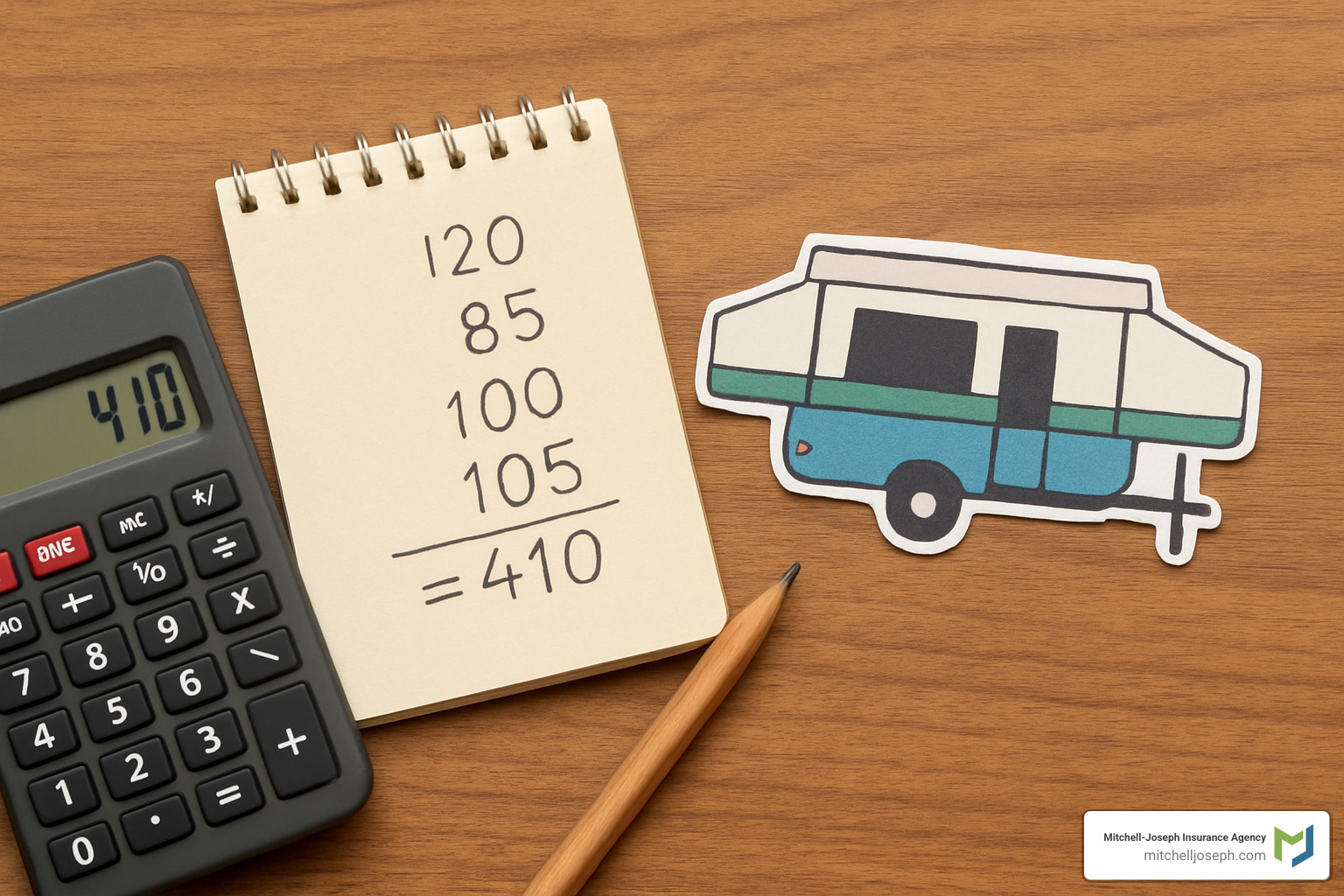
When you consider that a single storm could cause thousands in damage, or theft could wipe out your investment entirely, these modest premiums feel like a bargain. As one forum member put it: “For less than $10 a month, I sleep better knowing my family’s camping trips are protected.”
Factors That Drive the Price of Insurance for a Pop Up Camper
Understanding what influences your premium helps you make smart choices when shopping for coverage. Your camper’s age and value play the biggest role—newer, more expensive units cost more to insure simply because they’re worth more to replace.
Where you live matters significantly. An owner in New Jersey reported paying $120 yearly for trailer insurance, while folks in lower-risk areas often pay half that amount. Weather patterns, theft rates, and local claim frequencies all factor into your location’s risk profile.
Your personal driving record carries weight too. Insurers figure that careful drivers are less likely to have towing accidents or file claims. Similarly, your credit score (where legally permitted) can influence rates, as can any previous insurance claims you’ve made.
How you use and store your camper also affects pricing. A pop-up that sits in a secure garage most of the year costs less to insure than one parked outside year-round. The number of days you actually camp annually, your typical towing distances, and whether you take it out of state all factor into the equation.
For insights into scientific research on common RV problems, insurers study failure patterns and maintenance issues when setting their rates.
Your coverage choices make the final difference. Higher deductibles lower your premium, while comprehensive add-ons increase it. The good news? Even full coverage with all the bells and whistles rarely pushes costs above $200 annually for most pop-up campers.
Money-Saving Tips & Available Discounts
Smart shoppers can slash their insurance for a pop up camper costs with a few strategic moves. The biggest savings often come from bundling your camper coverage with your existing auto and home insurance. Most insurers offer multi-policy discounts of 10-25%, and you’ll enjoy the convenience of dealing with just one company for claims.
Security improvements can earn you real premium reductions. Installing wheel locks, kingpin locks, or GPS tracking devices shows insurers you’re serious about protecting your investment. One owner noted that “adding safety devices to your pop up camper can help reduce your insurance premium,” and many insurers offer specific discounts for anti-theft equipment.
Payment timing makes a difference too. Paying your annual premium upfront instead of monthly installments often saves money, and choosing paperless billing with online account management can trigger additional small discounts. Some insurers even offer original owner discounts if you’re the first person to insure the camper.
Your driving record continues paying dividends year after year. As one owner finded, “drivers with three years of accident- and violation-free history earn discounted rates.” Keep that record clean, and your camper insurance stays affordable.
How you use your camper opens up more savings opportunities. If you’re a seasonal camper who stores the unit during winter months, many insurers offer storage discounts. Similarly, if you limit your annual mileage or primarily camp close to home, you might qualify for low-mileage discounts.
The combination of these strategies can be impressive. One savvy owner managed to get comprehensive coverage for under $50 annually by bundling policies, maintaining a clean driving record, installing security devices, and storing their camper in a locked garage during off-season.

Choosing a Policy, Filing a Claim, and Avoiding Surprises
Finding the right insurance for a pop up camper isn’t just about grabbing the cheapest quote online. You need coverage that actually works when you’re dealing with a damaged awning at 2 AM in a thunderstorm or explaining to your spouse why the camper got dinged in a campground parking lot.
The truth is, most people spend more time researching their next camping destination than they do understanding their insurance policy. Then when something goes wrong, they find their “great deal” doesn’t cover what they thought it would.
At Mitchell-Joseph Insurance Agency, we work with 24 different insurance companies, giving us the flexibility to find coverage that actually fits your camping style and budget. Being independent means we’re not pushing one company’s products—we’re finding what works best for you.

How to Pick the Right Insurer & Coverage Limits
Start by thinking about how you actually use your pop-up camper. Are you the type who camps three weekends a year at state parks, or do you spend weeks exploring remote areas? Your camping style should drive your coverage choices.
Weekend warriors typically need solid basic coverage—liability that exceeds your state’s minimums, comprehensive for weather and theft, and collision for those inevitable backing-up mishaps. If you’re mainly hitting established campgrounds with your family, you probably don’t need every bell and whistle.
Extended travelers benefit from emergency expense coverage because being stranded 500 miles from home gets expensive fast. One couple I work with learned this the hard way when their camper’s roof got damaged by hail in Colorado—hotel costs added up quickly while waiting for repairs.
Vintage camper enthusiasts need agreed value coverage, period. Standard policies depreciate older units so much that a total loss payout might not even cover a decent used replacement.
When evaluating insurers, look beyond the premium. Financial strength ratings matter because you want the company to still exist when you need to file a claim. Claims service reputation is crucial—ask other camper owners about their experiences. Some companies are great at collecting premiums but terrible at paying claims promptly.
The cheapest policy usually isn’t the best value. As one industry rule of thumb suggests, once repair costs exceed 60-75% of a trailer’s value, insurers typically declare a total loss. Make sure your coverage limits reflect what it would actually cost to replace your camper today, not what you paid for it five years ago.
Step-by-Step Guide to Filing a Pop Up Camper Insurance Claim
Nobody plans to file a claim, but when you need to, knowing the process makes everything smoother. I’ve walked many clients through this, and the key is staying organized and documenting everything.
Right after an incident, your first priority is safety. If anyone’s hurt or if you’re blocking traffic, call 911. For theft, you’ll need a police report. Don’t worry about determining fault or explaining complex details to other parties—that’s what adjusters are for.
Document everything immediately. Take photos from multiple angles, even if the damage seems minor. One client thought their bumper just had a small dent, but photos revealed frame damage the adjuster caught later. Get contact information from witnesses—their statements can be valuable if fault becomes disputed.
Contact your insurer within 24-48 hours. Most companies have 24/7 claim reporting, and faster reporting usually means faster resolution. Have your policy number ready and stick to the facts about what happened. You don’t need to have all the answers immediately.
During the claims process, get repair estimates from shops your insurer approves when possible. Keep receipts for any emergency lodging or transportation costs—many policies cover these expenses. Stay in regular contact with your adjuster, but don’t be afraid to ask questions if something doesn’t make sense.
Common documentation you’ll need includes the police report number, photos of damage, receipts for emergency expenses, an inventory of damaged personal property, and maintenance records that show you’ve kept your camper in good condition.
Common Exclusions & Limitations to Watch For
Every insurance for a pop up camper policy has exclusions, and understanding these prevents nasty surprises when you’re trying to file a claim. Some exclusions make sense, others might catch you off guard.
Gradual damage is a big one that trips people up. Most policies use the term “sudden and direct” when describing covered events. A storm that rips your awning off? Covered. A slow roof leak you didn’t notice for months that damages the interior? Probably not covered. The key difference is whether the damage happened suddenly or developed over time.
Normal wear and tear isn’t covered, which seems obvious but can get complicated. Mechanical breakdowns, worn-out parts, and age-related deterioration are your responsibility. However, if a mechanical failure causes sudden damage—like a tire blowout that damages your fender—that might be covered under collision.
Geographic and usage restrictions can surprise people. Some policies exclude certain flood-prone areas or require separate coverage. International travel often isn’t covered. Most importantly for serious campers, full-time living (typically defined as more than 150 nights annually) usually voids your policy because it changes your camper from recreational to residential use.
Commercial activities are excluded, which includes renting out your camper or using it for business purposes. Even innocent activities like selling crafts from your campsite could potentially void coverage if an insurer considers it commercial use.
The best way to avoid surprises is to read your policy carefully and ask questions about anything that’s unclear. Most exclusions exist for good reasons, but knowing about them upfront helps you make informed decisions about your coverage and camping activities.
Frequently Asked Questions about Insurance for a Pop Up Camper
When you’re considering insurance for a pop up camper, certain questions come up time and again. Let me address the three most important ones that can help you make the right decision for your situation.
Do I need insurance if I paid cash for my pop up camper?
Here’s the thing—paying cash doesn’t eliminate your risks, it just changes them. While no law requires you to insure a paid-off pop-up camper, you’re still on the hook for some pretty significant exposures.
Think about it this way: you just invested several thousand dollars in a camper that you’ll be towing on highways, parking in unfamiliar campgrounds, and leaving unattended. Weather doesn’t care how you paid for it, and neither do thieves.
One camping forum member shared some practical wisdom: “If your camper cost under your homeowners deductible, self-insure and ‘eat the cost’ if it’s totaled.” But most pop-up campers cost well above typical $500-1,000 deductibles, making this approach risky for most owners.
The peace of mind factor is huge here. As another owner put it: “Insurance not only protects your camper but also provides peace of mind.” For just $100-200 annually, most people find that protection worth every penny. After all, if you couldn’t afford to replace your camper tomorrow without financial strain, you probably need insurance.
Will my policy cover belongings like laptops and bikes inside the camper?
Good news—most insurance for a pop up camper policies include personal effects coverage that protects your belongings. This typically covers up to $5,000 worth of electronics, camping gear, clothing, and recreational equipment stored in your camper.
Your electronics like laptops, tablets, and phones are usually covered, along with camping equipment, clothing, and recreational gear like bikes and fishing equipment. Even your food and beverages typically fall under this protection.
But here’s where it gets tricky. High-value items might bump up against coverage limits. One forum member noted: “Camper owner covered camera gear with a $10 per $1,000 rider on home policy.” This approach works well for expensive cameras, jewelry, or specialty equipment that exceeds standard limits.
Items like jewelry and watches, professional camera equipment, high-end electronics over certain limits, and cash or collectibles often need additional coverage. Your insurance agent can help you determine if your valuable items need special riders or if the standard coverage handles your needs.
How much liability coverage should I carry while towing?
This question keeps me up at night sometimes, because the answer really matters. Your towing setup significantly increases your liability exposure—you’re now operating a longer, heavier, more complex vehicle combination that can cause more damage in an accident.
Let’s be realistic about what could happen. Multiple injuries in a serious accident, damage to expensive vehicles or property, and legal defense costs can quickly exceed basic state minimums. If three people are injured with medical bills totaling more than your policy limits, you’d pay out of pocket for the excess.
I recommend starting with $100,000 per person for bodily injury, $300,000 per accident for bodily injury, and $100,000 for property damage as absolute minimums. But honestly, better protection means $250,000/$500,000/$100,000 or higher, plus uninsured/underinsured motorist coverage.
Consider adding an umbrella policy for additional liability protection beyond your auto limits. The extra cost is minimal compared to the massive financial protection it provides. When you’re towing thousands of pounds of recreational equipment, higher liability limits aren’t just smart—they’re essential for protecting everything you’ve worked to build.
Conclusion
Getting the right insurance for a pop up camper is like having a reliable camping buddy—you hope you’ll never need them in an emergency, but you’re incredibly grateful when you do. For the cost of a nice dinner out each month, you can protect yourself from financial disasters that could end your camping trips permanently.
Here’s what we’ve learned: your auto insurance keeps you legal while towing, but it won’t fix your camper after a hailstorm or replace your gear if thieves strike. Comprehensive and collision coverage handle the big risks, while personal effects protection saves your electronics and camping equipment. Most families pay between $100-200 annually for complete peace of mind.
The math is simple. One forum member put it perfectly: “If you can’t afford insurance, you can’t afford to camp.” When a decent pop-up camper costs $5,000-15,000, spending $150 a year to protect it just makes sense.
At Mitchell-Joseph Insurance Agency, we’ve been helping Finger Lakes families protect what matters most since 1999. Our 200 years of combined experience means we understand both the joys and risks of the camping lifestyle. Whether you’re exploring Letchworth State Park for the weekend or heading cross-country for a month-long trip, we’ll find coverage that fits your style and budget.
Being an independent agency gives us a huge advantage—we work with 24 different insurance companies instead of being stuck with just one. This means we can shop around until we find the perfect combination of coverage and price for your specific situation. No cookie-cutter policies here.
We serve families throughout Rochester, Canandaigua, Victor, and surrounding communities because we understand local risks. We know about sudden summer storms, the challenges of storing campers through harsh winters, and the peace of mind that comes with proper protection.
Don’t let an uninsured loss turn your dream camping trip into a financial nightmare. Contact Mitchell-Joseph Insurance Agency today for a personalized quote on insurance for a pop up camper. We’ll explain your options in plain English and help you choose coverage that makes sense for your family.
For more info about protecting your ride, the best insurance is the kind you never have to use—but when you need it, you’ll be incredibly glad you have it. After all, camping should be about roasting marshmallows and making memories, not worrying about what could go wrong.

