

Why Auto Insurance Matters More Than You Think
Auto insurance is legally required in nearly every state and serves as your financial safety net when accidents happen. Whether you’re shopping for your first policy or looking to switch providers, understanding the basics can save you money and headaches.
Quick Auto Insurance Essentials:
- Legal requirement: Most states mandate minimum liability coverage.
- Financial protection: Covers medical bills, property damage, and legal costs.
- Required coverage types: Liability (bodily injury and property damage), often plus uninsured motorist.
- Optional but valuable: Collision, comprehensive, rental reimbursement, roadside assistance.
- Cost factors: Driving record, location, vehicle type, age, and credit score.
Shopping for auto insurance can feel overwhelming with its confusing terms and fluctuating quotes. However, the core concept is simple: protecting yourself financially when things go wrong on the road. The key is knowing what you actually need versus what you’re being sold. Some coverage is legally required, like liability insurance, while other types, like collision, protect your own vehicle.
Every insurance company uses a different formula to calculate your rate, factoring in your age, location, vehicle, and even credit score. This is why getting multiple quotes is crucial, and why the cheapest option isn’t always the smartest choice.
I’m Jeffrey Joseph, and at Mitchell-Joseph Insurance Agency, I’ve been helping drivers in the Finger Lakes region with auto insurance since 1999. I’ve seen how the right coverage can prevent a minor inconvenience from becoming a major financial disaster. Let me walk you through what you need to know to make a smart decision.
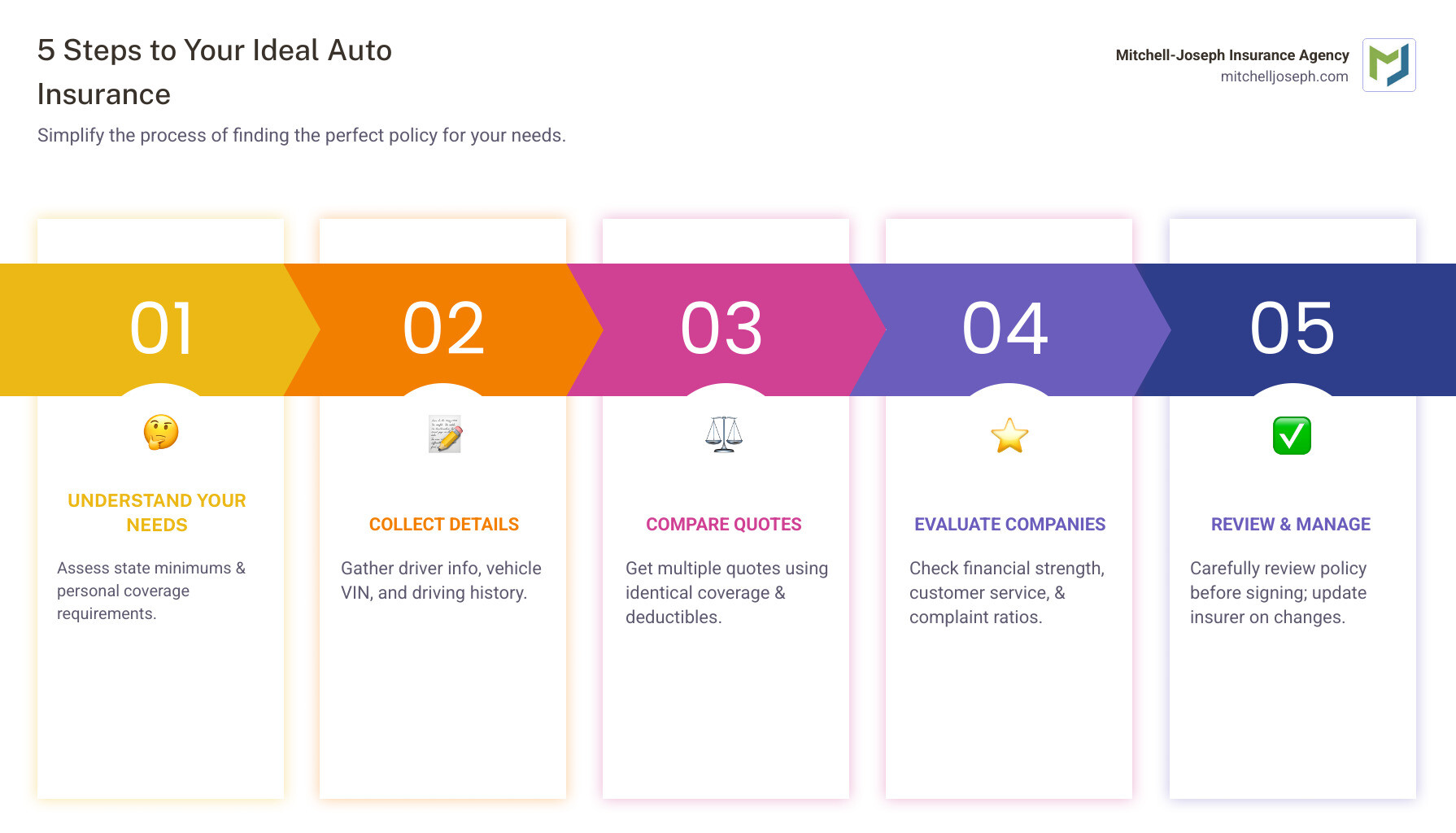
First Things First: Why Auto Insurance is Non-Negotiable
Auto insurance isn’t optional; in almost every state, driving without it is illegal. But even if it weren’t required by law, you’d still want it. Auto insurance is your financial lifeline when the unexpected happens, preventing a simple fender-bender from turning into a financial nightmare.
Understanding Your Legal Duty
Every state has its own legal requirements for auto insurance. In New York, for instance, you must carry liability insurance to legally drive or register a vehicle. Liability insurance is the foundation of any policy, paying for injuries and property damage you cause to others in an accident. State minimums vary widely; for example, California requires $15,000/$30,000 for bodily injury and $5,000 for property damage, while other states have higher limits and may also require uninsured motorist coverage.
The penalties for driving uninsured are harsh, including hefty fines, license suspension, vehicle impoundment, and even jail time. You might also be required to file an SR-22 form, labeling you a high-risk driver. Always keep your proof of insurance in your vehicle.
For more detailed coverage information, check out our auto insurance coverage guide. California also provides comprehensive automobile insurance information guides.
Protecting Your Financial Future
Beyond legality, auto insurance is about protecting everything you’ve worked for. If you cause an accident, you could be personally responsible for expensive vehicle repairs and staggering medical bills. A serious injury can lead to six-figure costs and lengthy lawsuits. Your liability coverage pays for these expenses and provides legal representation if you’re sued.
If a judgment exceeds your policy limits, you’re responsible for the difference. This is why state minimums are often not enough, especially if you own a home or have savings. We recommend higher limits to protect your assets.
Auto insurance also protects your own vehicle. Lenders require collision and comprehensive coverage to protect their investment in your financed car. Furthermore, uninsured motorist coverage is crucial, as it covers your expenses if you’re hit by a driver who has no insurance.
Auto insurance is a smart investment in your financial security, protecting you from the unpredictable nature of the road.
Decoding Your Policy: A Guide to Auto Insurance Coverage
Your auto insurance policy is a contract detailing your coverages, rights, and responsibilities. The declarations page summarizes your policy, showing coverages, limits, and premiums. Key terms to know include:
- Actual Cash Value (ACV): Your car’s worth right before an accident.
- Deductible: The amount you pay out-of-pocket on a claim before insurance pays.
- Limits: The maximum amount your insurer will pay for a covered loss.
- Premium: The amount you pay for your policy.
For more details, see our guide at More info about Auto Insurance Coverage.
The Core Coverages You’ll Encounter

- Liability Coverage: Legally required in most states, it covers injuries (Bodily Injury) and property damage (Property Damage) you cause to others. It also covers your legal defense if you’re sued.
- Collision Coverage: Pays to repair your vehicle after it hits another car or object, regardless of fault. Lenders typically require this for financed cars.
- Comprehensive Coverage: Covers non-collision damage to your car, such as theft, vandalism, fire, hail, or hitting a deer.
| Coverage Type | What It Covers | When It Applies |
|---|---|---|
| Liability | Injuries/damage you cause to others | You are at fault in an accident |
| Collision | Damage to your car from hitting another car or object | Your car is damaged in a collision (regardless of fault) |
| Comprehensive | Damage to your car from non-collision events (theft, fire, hail, vandalism) | Your car is damaged by something other than a collision |
- Uninsured/Underinsured Motorist (UM/UIM): Pays for your medical bills and sometimes vehicle damage when an at-fault driver has little or no insurance.
- Medical Payments (MedPay) & Personal Injury Protection (PIP): Cover medical expenses for you and your passengers, regardless of who is at fault. PIP can also cover lost wages.
Optional Add-Ons for Extra Security
Consider these valuable additions for greater peace of mind:
- Rental Reimbursement: Covers the cost of a rental car while yours is being repaired after a covered claim. Learn more here: How Does Rental Reimbursement Work for Car Insurance?.
- Roadside Assistance: Provides help for flat tires, dead batteries, lockouts, and towing.
- GAP Insurance: Pays the difference between what you owe on your loan and your car’s ACV if it’s totaled. This is crucial for newer, financed vehicles.
- Custom Parts and Equipment: Covers aftermarket modifications like custom wheels or sound systems.
For a complete glossary of terms, the Automobile Insurance Terms guide is an excellent resource.
The Price of Protection: How Your Auto Insurance Premium is Calculated
Insurance companies calculate your auto insurance premium by assessing risk. They analyze dozens of factors about you, your driving habits, and your vehicle to predict your likelihood of filing a claim. Higher perceived risk means a higher premium. If you’ve been noticing higher auto insurance costs, understanding these factors can help explain why. Learn more at Noticing Higher Auto Insurance Costs.
Key Factors That Determine Your Rate
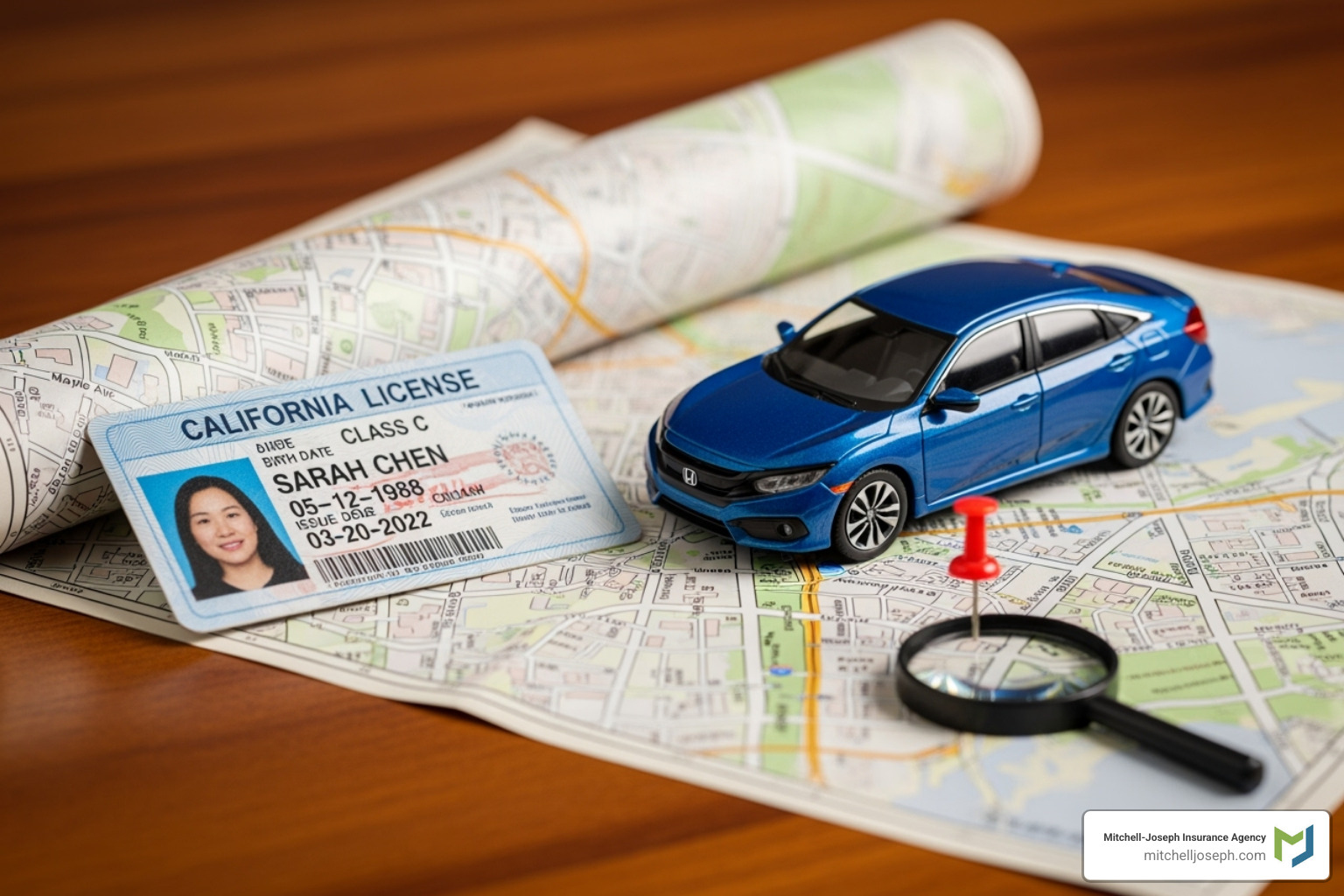
- Driving Record: Your history of accidents and violations is the most significant factor.
- Location: Urban areas with more traffic and crime typically have higher rates than rural areas.
- Age and Life Circumstances: Younger drivers (under 25) and, to some extent, older drivers (over 65) often face higher premiums. Marital status can also play a role.
- Credit-Based Insurance Score: In most states, a better score can lead to lower premiums.
- Annual Mileage: The more you drive, the higher the risk of an accident.
- Prior Insurance Coverage: A history of continuous coverage can lower your rates.
For a deeper dive, visit Factors That Determine Your Auto Insurance Premium.
How Your Vehicle Choice Impacts Costs
Your car significantly influences your premium based on:
- Vehicle Type: Sports cars are more expensive to insure than sedans, while pickups and SUVs are in the middle.
- Safety Ratings: Cars with high safety ratings from organizations like the Insurance Institute for Highway Safety can earn you discounts.
- Repair Costs: Luxury or foreign cars with expensive parts cost more to insure.
- Theft Rates: If your car model is frequently stolen, your comprehensive coverage will cost more.
- Hybrid Vehicles: Many insurers offer discounts for hybrid and electric cars.
Open uping Common Auto Insurance Discounts
Discounts can significantly reduce your premium. Ask your agent about:
- Multi-Policy Bundling: Combining auto with home or renters insurance for big savings.
- Multi-Car: Insuring more than one vehicle on the same policy.
- Good Driver: For maintaining a clean record for several years.
- Good Student: For high school or college students with good grades.
- Safety Features: For cars with airbags, anti-lock brakes, and anti-theft devices.
- Low Mileage: If you don’t drive very often.
- Loyalty & Paperless Billing: For being a long-term customer or choosing to go paperless.
Explore more ways to save with our guide on More info about Affordable Car Insurance.
Your Roadmap to Finding the Best Policy
Finding the best auto insurance policy isn’t about finding the cheapest one—it’s about finding the right fit. The goal is to balance adequate coverage, reliable service, and a reasonable cost. If you’re in the Rochester NY area, we can help you find that fit. Learn more at More info about Auto Insurance Quotes Rochester NY.
How to Get an Accurate Auto Insurance Quote
To get an accurate quote, you’ll need to provide specific information. Accuracy is crucial, as insurers use these details to calculate your premium.
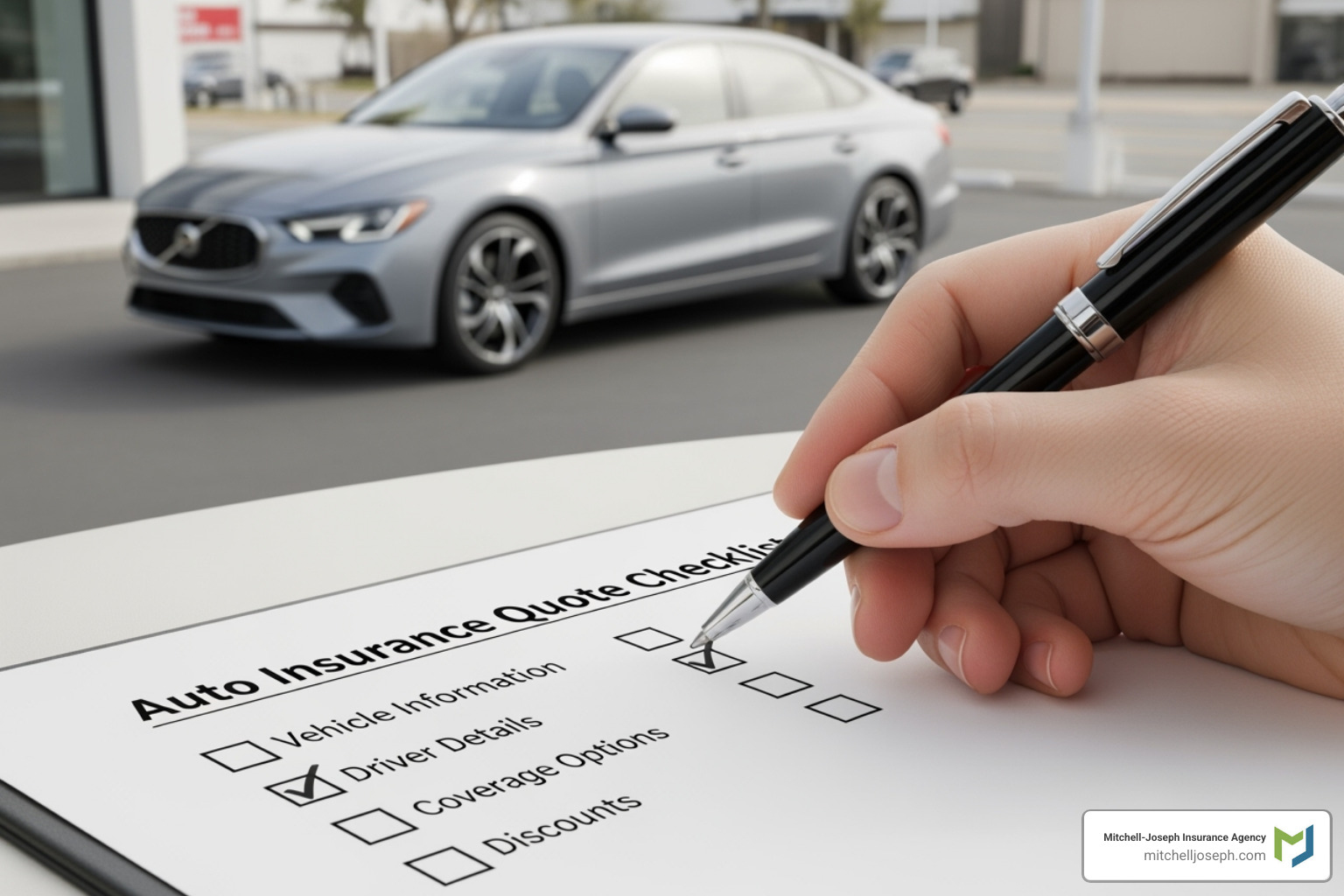
- Driver Information: Names, birth dates, and driver’s license numbers for all household drivers, plus driving history (accidents, violations).
- Vehicle Details: The Vehicle Identification Number (VIN), make, model, year, safety features, and estimated annual mileage.
- Desired Coverage: The types of coverage, limits, and deductibles you want.
- Prior Insurance: Information on your current or previous insurer to show continuous coverage.
Always be honest. Misrepresenting information can lead to higher rates or policy cancellation.
Comparing Quotes: An Apples-to-Apples Approach
Don’t just choose the lowest price. To make a fair comparison:
- Match Coverage Details: Ensure each quote has identical coverage types, limits, and deductibles.
- Check the Fine Print: Look for differences in included features like rental reimbursement or roadside assistance.
- Beware of “Cheap” Insurance: The lowest-priced policy may have inadequate limits, poor customer service, or a frustrating claims process.
- Research the Company: Check online reviews and customer satisfaction ratings to understand the real-world experience.
How to Choose a Reputable and Financially Stable Auto Insurance Company
Your insurer should be a reliable partner. Look for:
- Financial Strength: Check ratings from agencies like A.M. Best Company Rating. A high rating (A, A+, A++) indicates a company can pay its claims.
- Customer Service: Review complaint ratios on the National Association of Insurance Commissioners (NAIC) website and check J.D. Power rankings.
- Agent Accessibility: Decide if you prefer a local agent or are comfortable with call centers and online portals.
As independent agents at Mitchell-Joseph Insurance Agency, we do the shopping for you. We work with 24 reputable companies to find the right coverage at a competitive price, combining personalized service with broad market access. Learn how we can help at More info about Independent Auto and Home Insurance Agents Rochester NY.
After You’re Covered: Claims, Changes, and Responsibilities
Your auto insurance policy is an active partnership. Knowing how to manage it, file a claim, and update it for life changes is key to a smooth experience. For answers to common questions, see our More info about Auto Insurance FAQs.
What to Do Immediately After a Car Accident
Knowing what to do after an accident can protect your safety and your financial interests. Stay calm and follow these steps:

- Prioritize Safety: Check for injuries and call 911 if needed. Move vehicles to a safe location if possible and turn on hazard lights.
- Call the Police: An official police report is invaluable for your insurance claim, even for minor accidents.
- Exchange Information: Get the other driver’s name, contact info, insurance company, and policy number. Collect contact details from any witnesses.
- Document Everything: Use your phone to take photos of the vehicles, damage, and the accident scene. Note the time, date, and location.
- Contact Your Insurer: Report the accident as soon as possible to start the claims process.
- Avoid Admitting Fault: Let the police and insurance companies determine who is at fault based on the evidence.
Filing a Claim and Navigating the Process
After reporting the accident, a claims adjuster will be assigned to investigate. Cooperate fully and provide all necessary documentation, like the police report and photos. You have the right to choose your own repair shop. If your car is repairable, your insurer pays the cost minus your deductible. If it’s a total loss, you’ll receive its Actual Cash Value (ACV). Be patient but persistent, and if you face issues, you can contact your state’s Department of Insurance.
Your Responsibilities and Rights as a Policyholder
As a policyholder, you have both responsibilities and rights:
- Pay premiums on time to keep your coverage active.
- Keep proof of insurance in your vehicle.
- Report life changes like moving, buying a new car, or adding a driver.
- Understand your policy and review it annually with your agent to ensure it still meets your needs.
- Know your rights, such as choosing a repair shop and receiving fair valuation for a totaled vehicle.
Frequently Asked Questions about Auto Insurance
Here are answers to some of the most common questions about auto insurance.
How much coverage do I really need?
State minimum coverage is rarely enough, as it hasn’t kept pace with the rising costs of accidents. A serious accident can easily result in costs that far exceed minimum limits, leaving you personally responsible for the difference. The smart approach is to choose liability limits that protect your assets, such as your home and savings. We often recommend starting with limits of $100,000 per person and $300,000 per accident. For those with significant assets, an umbrella policy offers an extra layer of protection. An agent can help you assess your specific needs.
Will filing a claim automatically raise my rates?
Not necessarily. Your rates typically won’t increase for a not-at-fault accident. However, if you are found to be at fault, your premium may increase at renewal. Many insurers offer accident forgiveness programs that prevent a rate hike after your first at-fault accident. Comprehensive claims (like theft or hail damage) are also less likely to impact your rates. That filing multiple small claims can signal higher risk to an insurer.
Can I get insurance with a high-risk driving record?
Yes, you have options. If standard insurers decline coverage, you can get basic liability through your state’s “assigned risk” plan. For serious violations like a DUI, you may need an SR-22 form, which proves you have the required insurance. Some companies specialize in high-risk drivers, and as an independent agency, we can help you find them. The good news is that your record improves over time. A clean driving history for three to five years will help you qualify for better rates.
Conclusion
Finding the right auto insurance is about making confident decisions that protect your finances and peace of mind. It’s more than a legal requirement; it’s a financial shield. The goal is to find the right balance of comprehensive protection from a reliable company at a fair price—because the cheapest policy isn’t always the smartest choice, especially when you need to file a claim.
That’s where we come in. At Mitchell-Joseph Insurance Agency, we’ve been helping families in the Finger Lakes region make smart insurance decisions for decades. As an independent, family-owned business with over 200 years of combined experience, we don’t work for just one insurance company—we work for you.
We leverage our relationships with 24 different insurers to shop on your behalf, finding the policy that fits your unique needs. Whether you’re in Honeoye Falls, Pittsford, Naples, Rushville, Avon, Bloomfield, Bristol, Canadice, Canandaigua, Cohocton, Fishers, Gorham, Honeoye, Ionia, Lima, Mendon, Middlesex, Potter, Rochester, Rush, South Bristol, Stanley, Victor, Wayland, or West Bloomfield, NY, we provide personalized service and competitive quotes.
Don’t steer the complexities of auto insurance alone. Let us help you find a policy that gives you genuine peace of mind.
Get Your Personalized Auto Insurance Quote in Rochester NY Today

