

Understanding Boat Insurance Costs in New York
How much is boat insurance depends on several key factors, but here’s what you can expect to pay:
Quick Cost Guide:
- Personal watercraft: $100-$300 per year
- Runabouts and pontoons: $250-$600 per year
- Cruisers and cabin boats: $500-$1,500 per year
- Yachts or high-performance boats: $1,500-$5,000+ per year
- General rule: 1-3% of your boat’s value annually
Enjoying the beautiful waters around the Finger Lakes means protecting your investment. Boat insurance costs vary dramatically, from a few hundred dollars for a small fishing boat to several thousand for a luxury yacht.
While not legally required in New York, boat insurance is often mandated by marinas and lenders. More importantly, it protects you from devastating financial loss. Boating without insurance is as risky as driving without it.
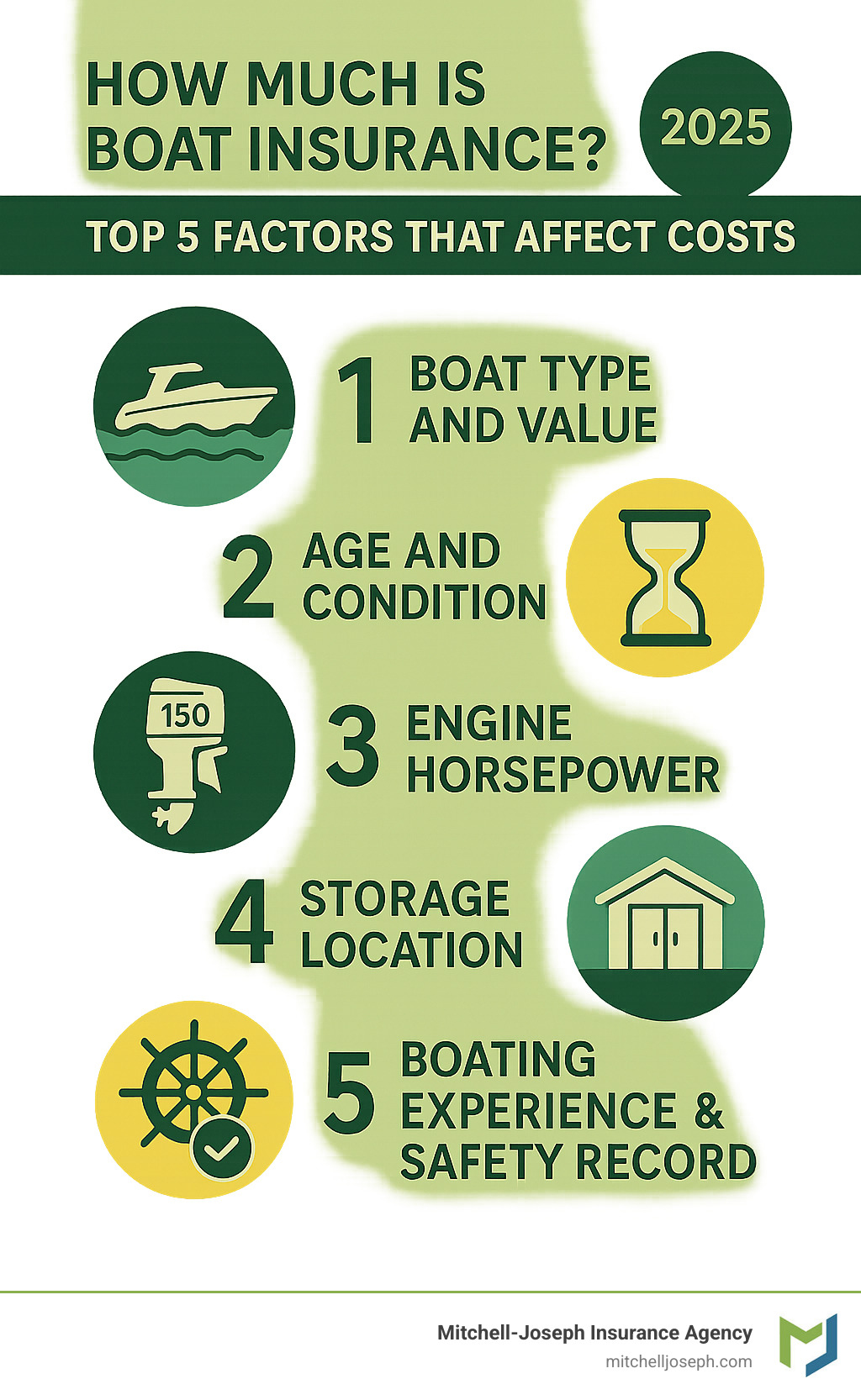
Your premium depends on your boat’s type, value, age, storage location, and your boating experience. Understanding these factors helps you budget and find ways to save.
I’m Jeffrey Joseph, owner of Mitchell-Joseph Insurance Agency. Since 1999, my team and I have helped Finger Lakes boaters understand how much is boat insurance and find the right coverage. We work with multiple carriers to ensure you get comprehensive protection at competitive rates.
How Much is Boat Insurance? Understanding the Costs and Factors
The truth about boat insurance costs? They’re as varied as the boats themselves. Just like snowflakes, no two policies are exactly alike, and that’s actually a good thing – it means you can find coverage that fits your specific needs and budget.
Average Boat Insurance Costs: How Much is Boat Insurance Annually?
For most boaters, annual premiums for standard coverage are typically between $200 and $500. However, this range is just a starting point. The most reliable way to estimate your costs is the 1% to 3% rule: if you own a $50,000 boat, you’re looking at $500 to $1,500 per year for comprehensive coverage. High-value yachts or speedboats carry higher premiums, often ranging from $1,500 to $5,000 or more annually, because their repair bills can be substantial.
Location matters. Here in New York, with our gorgeous Finger Lakes, you can expect to pay around $420 per year for liability and approximately $800 for comprehensive coverage. Our rates are higher than landlocked states like Minnesota (around $267 annually) but more reasonable than coastal hotspots like Florida (averaging $839 per year). Our longer boating seasons and concentration of larger vessels naturally push rates up.
Key Factors That Influence Your Premium
Think of your boat insurance premium like a recipe – each ingredient adds its own flavor to the final cost. Understanding these factors helps you see exactly where your money goes and, more importantly, where you might save some.
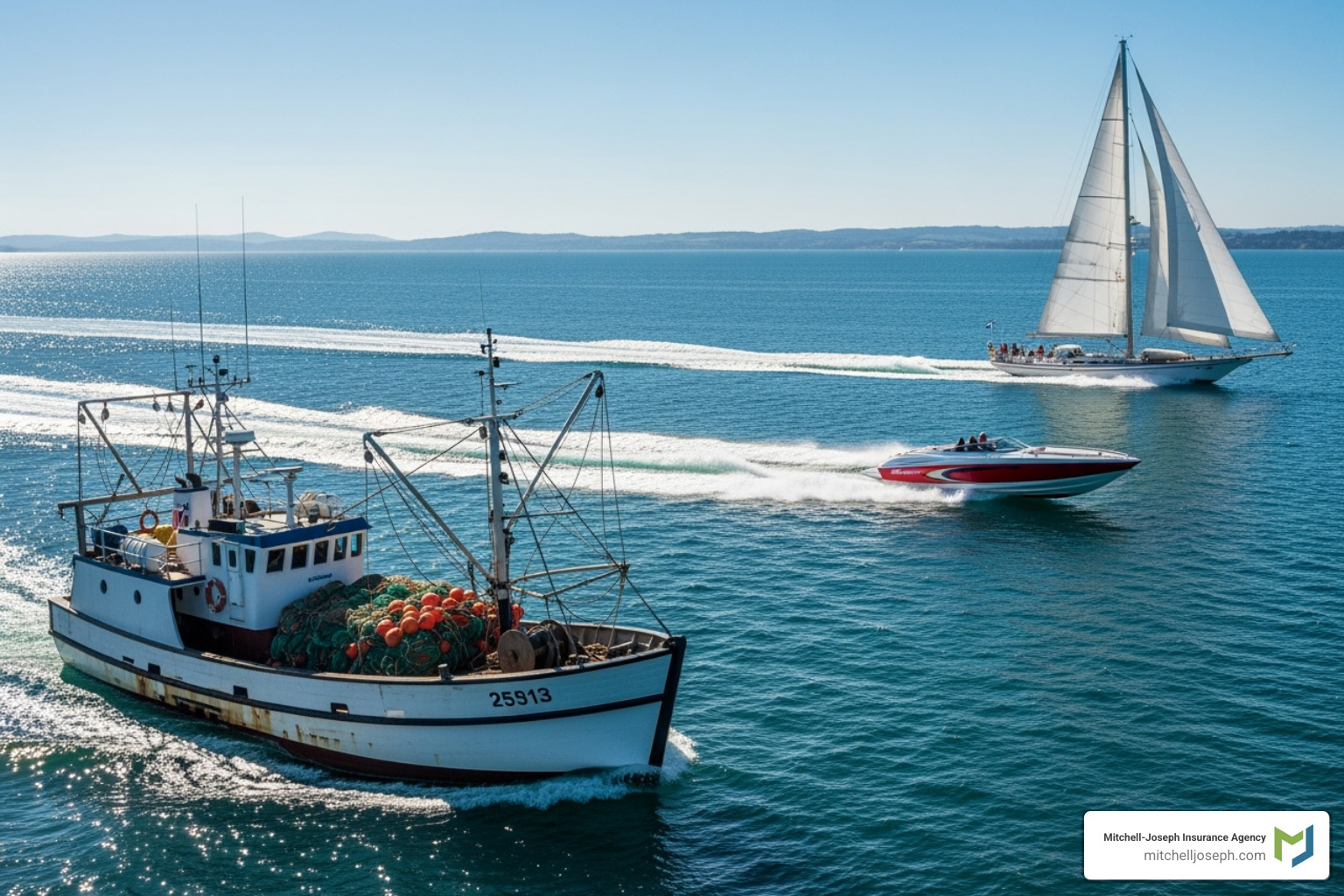
Your boat type is the biggest piece of the puzzle. That peaceful fishing boat you use for weekend relaxation? It’s going to cost far less to insure than a high-performance speedboat that can hit 60 mph. Sailboats have their own unique considerations too – different risks, different costs.
Boat value directly impacts your premium because, well, expensive things cost more to replace. It’s that simple. The hull and machinery coverage reflects what it would actually cost to get you back on the water.
Age and condition create an interesting dynamic. New boats cost more to replace, but boats over 15-20 years old can also become more expensive to insure. Insurers may get nervous about older vessels and require special surveys to prove seaworthiness. However, a well-maintained older boat can be a better risk than a neglected newer one.
Engine horsepower tells insurers a lot about potential risk. More power means higher speeds, and higher speeds can mean more dramatic accidents and costlier repairs. It’s just math, really.
Where you boat and store your vessel plays a huge role in your rates. If you’re navigating waters prone to severe weather or heavy traffic, expect higher premiums. Your policy will also include “navigational limits” – specific areas where you’re covered. Venture outside these boundaries, and you could find yourself without protection when you need it most.
Your experience and claims history matter just as much as they do with car insurance. A clean boating record and years of experience operating similar vessels can significantly lower your rates. On the flip side, previous claims or even driving violations can bump up your premium – insurers see these as indicators of overall risk.
How often and why you use your boat influences your rates too. Weekend pleasure cruising carries different risks than competitive racing or commercial chartering. The more you’re out there, the more opportunities there are for something to go wrong.
Boating safety course completion is one of the smartest investments you can make. Not only does it make you a safer boater, but most insurers offer discounts for completing state-approved courses. It’s a win-win that shows you’re serious about safety.
Standard vs. Optional Coverages
A solid boat insurance policy is like having a safety net – you hope you’ll never need it, but you’ll be incredibly grateful it’s there when you do. Let’s break down what’s typically included and what extras you might want to consider.

Liability coverage forms the backbone of your policy and is arguably the most crucial protection you’ll have. Bodily injury liability covers medical expenses, lost wages, and legal fees if you injure someone with your boat. We typically recommend at least $3 million in liability coverage – legal costs can add up frighteningly fast. Property damage liability handles the bills when your boat damages someone else’s vessel, a dock, or marina property.
Physical damage coverage protects your actual boat. Collision coverage pays for repairs when you hit another boat, strike a submerged log, or have that embarrassing encounter with a dock. Comprehensive coverage handles everything else – theft, vandalism, fire, storms, and other surprises that life throws your way.
Now for the extras that can make your coverage truly comprehensive. Emergency towing and assistance gets you back to shore when your engine decides to take an unscheduled break. Personal effects coverage protects your fishing gear, electronics, and other belongings from theft or damage. Trailer coverage handles physical damage to your trailer itself, which your car insurance typically won’t cover when it’s detached.
Watersports liability becomes essential if you enjoy pulling skiers, wakeboarders, or tubers behind your boat. Medical payments coverage takes care of medical expenses for you and your passengers regardless of who’s at fault. Uninsured boater coverage protects you when the other guy doesn’t have adequate insurance.
Don’t overlook wreck removal and accidental pollution coverage – if your boat sinks or causes an environmental mess, cleanup costs can reach tens of thousands of dollars. Loss of use coverage reimburses rental expenses while your boat is being repaired after a covered loss.
Agreed Value vs. Actual Cash Value Explained
This choice might be the most important decision you’ll make about your boat insurance, and it directly affects both how much is boat insurance costs and what you’ll receive if disaster strikes.
| Feature | Agreed Value Policy | Actual Cash Value (ACV) Policy |
|---|---|---|
| Payout at Total Loss | Insurer pays the fixed amount you and the insurer agreed upon when the policy was written. | Insurer pays the fair market value of the boat at the time of the loss, minus depreciation. |
| Depreciation | No depreciation applied to the agreed value in case of a total loss. | Depreciation is factored into the payout, reducing the amount you receive over time. |
| Policy Cost | Generally higher premiums. | Generally lower premiums. |
| Best For | New boats, custom boats, or owners who want certainty in payout. | Older boats where depreciation has significantly lowered their value, or budget-conscious owners. |
| Financial Security | Provides greater peace of mind and predictability for reimbursement. | Payout may be less than what you need to replace your boat with a similar new one. |
Agreed value policies lock in a specific payout amount when you buy your policy. If your boat becomes a total loss – whether it sinks, gets stolen, or is completely destroyed – you’ll receive that predetermined amount, period. No arguments about depreciation, no haggling over current market value. It’s especially valuable for new boats where you want to protect your full investment.
Actual cash value policies pay out based on your boat’s current market value at the time of loss, minus depreciation and wear. While these policies typically cost less upfront, you might find yourself with a gap between what you receive and what you need to replace your boat. This approach can work well for older boats that have already depreciated significantly.
The choice often comes down to peace of mind versus premium savings. We can help you crunch the numbers and decide which approach makes the most sense for your specific situation and budget.
How to Get the Best Rate on Your Boat Insurance
Finding affordable boat insurance doesn’t mean you have to cut corners on safety or peace of mind. Let’s explore smart ways to get great coverage without breaking the bank!
Top Discounts to Lower Your Boat Insurance Premium
Who doesn’t love a good deal? When it comes to boat insurance, there are many ways to trim down your costs. You can keep your boat protected without spending too much.
These common discounts can help reduce how much is boat insurance for you:
One of the easiest ways to save big is by bundling your policies. If you already have your home or auto insurance with one company, ask about adding your boat. Many insurers offer a nice discount when you keep all your policies together. We can help you find companies that give great rates across the board.
Are you lucky enough to own more than one boat? Some insurers offer a special multi-boat discount if you insure all your watercraft under the same plan.
Taking a state-approved boating safety course is a fantastic idea. You can find approved courses through the U.S. Coast Guard Auxiliary’s Boating Safety Resource Center. It makes you a safer boater, and it often earns you a discount on your insurance. This shows insurers you’re a responsible person, which means less risk for them. The knowledge you gain will last a lifetime, even if the discount lasts for about three years.
Having certain safety equipment on board can also help. Things like a good ship-to-shore radio, Coast Guard-approved fire extinguishers, or a built-in GPS tracking system can sometimes get you a discount. These items reduce the chance of serious problems or make it easier to recover your boat if something happens.
Just like with car insurance, a clean boating and driving record is a gold star. If you have no boating violations or even car accidents, insurers see you as a careful person, which can help lower your premium.
This one’s simple: if you choose a higher deductible, your annual premium will go down. The deductible is the amount you pay first before your insurance kicks in. Just make sure you’re comfortable paying that higher amount if you ever need to make a claim.
For those of us in the beautiful Finger Lakes area, we know boating is seasonal. If you store your boat for a good chunk of the year (this is called a lay-up period), you might get a discount. However, we often recommend year-round coverage. Even when stored, your boat could still be stolen, vandalized, or damaged by winter storms.
Some insurance companies appreciate it when you take good care of your boat. If your boat gets professional maintenance from certified marine mechanics regularly, it shows you’re proactive. This can sometimes lead to a discount, as it means fewer mechanical breakdowns.
Want a small extra saving? If you can pay your entire annual premium upfront instead of in monthly payments, you might get a discount for paying annually.
To explore these and other potential savings, take a peek at our insights on recreational vehicle insurance. You might be pleasantly surprised at how much is boat insurance can be reduced with the right strategy and a little help from us.
More info about our Recreational Vehicle Insurance
How to Get an Accurate Quote and See How Much Boat Insurance Is
Ready to find out how much is boat insurance for your specific vessel? To give you the best possible estimate, we’ll need a few details about your boat and how you use it.
To tailor a quote, we’ll need your boat’s make, model, year, and Hull Identification Number (HIN). We’ll also ask for engine details (type, horsepower), its current value, and its general condition, including any recent surveys or repairs for older boats.
We’ll also ask about your boating habits: how often you use it, where you store it, and the waters you steer. Your years of boating experience, safety courses completed, and any past claims are also important factors.
At Mitchell-Joseph Insurance Agency, getting a quote is simple and clear. As an independent, family-owned business in Honeoye Falls, NY, with over 200 years of combined experience, we work with 24 different insurance companies. This allows us to compare quotes and find custom coverage that fits your needs and budget. We understand the local boating scene in the Finger Lakes region, including Honeoye Falls, Pittsford, Naples, Canandaigua, Victor, and all surrounding towns.
Our friendly team is here to walk you through every step. We’ll answer all your questions and make sure you understand exactly what your policy covers. Ready to set sail with confidence and peace of mind? Let’s get you a personalized quote today!

