Understanding Homeowners Insurance in New York
When it comes to protecting your slice of the American dream in the Empire State, homeowners insurance NY isn’t just another bill—it’s your financial safety net. As someone who’s helped countless New Yorkers find the right coverage, I’ve seen how proper insurance provides peace of mind through our state’s unique challenges.
The average New Yorker pays about $1,715 annually for home insurance—actually 10% below the national average, which might surprise you! If you’re looking to save even more, Travelers often offers the most competitive rates, averaging around $1,170 per year.
While New York state law doesn’t require you to have homeowners insurance, don’t celebrate just yet. Your mortgage lender almost certainly does, and for good reason. Standard policies protect your dwelling, personal belongings, provide liability coverage, and help with additional living expenses if disaster strikes and you need temporary housing.
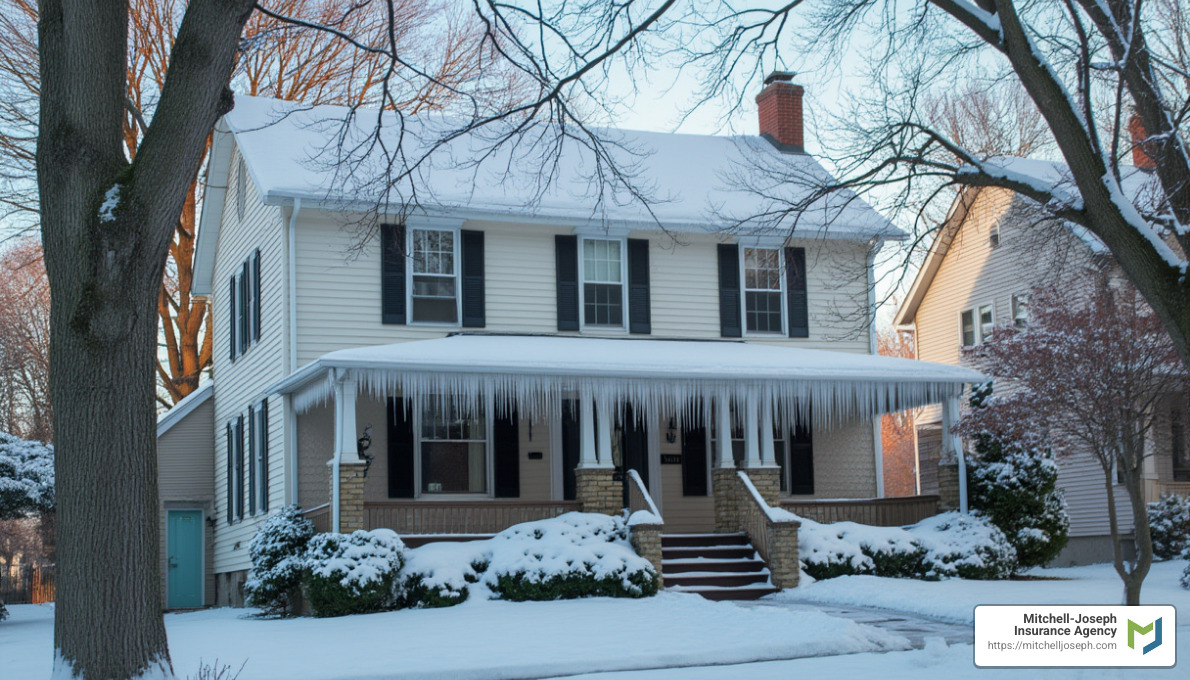
New York homeowners face distinct regional challenges. Those harsh winters we endure? They bring frozen pipes and damaging ice dams. Coastal areas face hurricane risks, while many regions experience flood threats. Speaking of floods—standard policies don’t cover them, nor do they cover earthquake damage. These require separate policies, something many homeowners find too late.
Living in the Big Apple? You’ll typically pay more—NYC homeowners average about $3,339 annually for coverage, significantly higher than upstate regions. This reflects the higher property values, different risk factors, and increased rebuilding costs in the city.
What affects your premium costs? Several factors come into play:
Your specific location within New York makes a huge difference—coastal properties face different risks than those in the Finger Lakes region. The age of your home matters too (and with a median home age of 63 years, New York has some of the oldest housing stock in the country). Your home’s construction type impacts rates as well—brick homes often cost less to insure than frame houses. Personal factors like your credit score and claims history also influence what you’ll pay.
I always remind clients that investing in safety features like security systems, smoke detectors, and water leak sensors not only protects your family but can also reduce your premium by up to 15%. And don’t overlook bundling opportunities—combining home and auto policies often saves up to 30%.
Hi there—I’m Jeffrey Joseph. For over twenty years, I’ve helped families steer the complexities of homeowners insurance NY at our family-owned Mitchell-Joseph Insurance Agency. As an independent agency serving the Finger Lakes Region, we’re not tied to any single insurance company. This means we can shop among 24 different carriers to find you the right coverage at competitive rates.

Homeowners Insurance NY: Basics & Legal Must-Knows
When you own a home in the Empire State, understanding homeowners insurance NY isn’t just smart—it’s essential. Think of it as a safety net that wraps around your most valuable asset and your financial future.
A typical New York homeowners policy bundles several protections under one roof. Your dwelling coverage helps rebuild or repair your home after covered damages, while personal property coverage takes care of your belongings—from that comfy sofa to your grandmother’s antique clock. The liability portion steps in if someone gets injured on your property (think: postal worker slipping on your icy steps), and additional living expenses coverage provides a financial cushion if disaster strikes and you need temporary housing.
One distinction that trips up many New Yorkers is the difference between replacement cost and actual cash value. “I often see the disappointment on clients’ faces when they learn their five-year-old television is only worth a fraction of what they paid,” says Sarah Mitchell, one of our experienced agents. “That’s why we recommend replacement cost coverage whenever possible—it pays to replace items with new ones, without factoring in depreciation.”
Why “homeowners insurance ny” matters for every property owner
Even if you’ve paid off your mortgage and own your home free and clear, homeowners insurance NY remains critically important. Your home represents years of hard work and savings—possibly your largest investment. Without proper coverage, one kitchen fire or severe windstorm could wipe out everything you’ve built.
The liability protection alone makes insurance worthwhile. Imagine your normally friendly dog nips a delivery person, resulting in medical bills and a lawsuit. Or picture a guest tripping on your stairs and breaking their wrist. Your policy’s liability coverage helps protect your savings and assets from being drained by legal expenses.
Just last winter, one of our clients in Rochester experienced this when a pipe burst during a particularly bitter cold snap. Water damaged their hardwood floors, drywall, and furniture. Their homeowners insurance NY policy not only covered the $15,000 in repairs but also provided $4,500 for their three-week hotel stay while contractors restored their home. Without coverage, that unexpected $19,500 expense would have been devastating.
Is homeowners insurance required by law in NY?
Here’s the straightforward answer: New York State law doesn’t mandate homeowners insurance. But before you consider going without it, understand that several practical realities make it virtually necessary:
If you have a mortgage, your lender will require insurance—typically with coverage at least equal to your loan amount. It’s their way of protecting their investment in your property.
Live in a condo or co-op? The association bylaws almost certainly require unit owners to maintain insurance coverage.
Even if you own your home outright, going without insurance leaves you financially vulnerable to disasters, liability claims, and the costs of temporary housing after a loss.
The New York State Department of Financial Services offers excellent guidance through their Homeowners Insurance: Choosing a Policy resource, emphasizing that while not legally mandated, this protection is something few homeowners should go without.
At Mitchell-Joseph Insurance Agency, we often recommend insuring for your home’s full replacement cost rather than just the mortgage balance. Why? Because if disaster strikes, you’ll want to rebuild your entire home—not just the portion the bank owns.
Policy Forms & Core Coverages
Shopping for homeowners insurance NY can feel like navigating alphabet soup with all those HO-codes. But don’t worry – these standardized policy forms simply represent different levels of protection for your home.
Most New York homeowners today choose between an HO-3 (Special Form) or HO-5 (Comprehensive Form). The HO-3 is the most common, providing “all-risk” coverage for your actual house while covering your personal belongings against specifically named perils. If you want the most robust protection, the HO-5 extends that “all-risk” coverage to your personal property too.
The older, more limited HO-1 (Basic Form) policies have largely disappeared from the New York market, while HO-2 (Broad Form) policies offer middle-ground protection but still only cover specifically named risks.
Don’t own a house? You’re not left out. Renters can get HO-4 policies that protect their belongings and personal liability, while condo owners typically need an HO-6 policy covering personal property, liability, and any improvements they’ve made to their unit.
“Most of our clients find the HO-3 hits the sweet spot between comprehensive coverage and affordability,” says our agent Sarah Mitchell. “But for those with valuable collections or high-end furnishings, upgrading to an HO-5 often makes sense.”
What a standard NY policy covers & common exclusions
Your standard homeowners insurance NY policy is your financial shield against many common disasters. When winter storms blow through Rochester or Syracuse, your policy typically covers wind damage to your roof and frozen pipes that burst during those brutal January cold snaps. If your teenager accidentally starts a kitchen fire or thieves break in while you’re vacationing in the Adirondacks, you’re covered there too.
Lightning strikes, falling trees, and vandalism also fall under standard protection. This gives many homeowners peace of mind during our notorious Nor’easters and thunderstorm seasons.
But here’s where many New Yorkers get caught off guard – standard policies have significant gaps:
Flood damage is never covered by standard homeowners insurance, regardless of whether it’s from Hurricane remnants hitting Long Island or spring thaws flooding basements in Buffalo. This exclusion surprises many homeowners after it’s too late.
Earthquake damage also requires separate coverage, though less common in our state. Normal wear and tear, intentional damage, and those persistent New York pests (like termites or rodents) all fall outside standard coverage too.
“The flood exclusion is by far the most misunderstood aspect of homeowners insurance,” explains Michael Mitchell. “I’ve seen too many devastated families find this gap only after their basement is underwater.”
Optional add-ons New Yorkers should weigh
Given our unique New York risks, several optional coverages deserve serious consideration:
Flood Insurance tops the list for many homeowners. Available through the National Flood Insurance Program (NFIP) or private insurers, this covers the damage from rising waters that standard policies exclude. With approximately 186,000 New York properties at flood risk, this coverage makes sense even for many homes outside designated flood zones.
Water Backup Coverage is another smart addition, especially in older homes throughout Syracuse, Rochester, and Buffalo. This protects against damage from backed-up sewers or failed sump pumps – a particularly common headache in our aging housing stock.
For families with significant assets, Umbrella Insurance provides extended liability protection beyond standard policy limits. This affordable add-on could be crucial if someone suffers a serious injury on your property.
Modern problems require modern solutions, which is why Identity Theft Protection has become increasingly popular. This helps cover expenses related to restoring your identity if stolen.
Equipment Breakdown Coverage works similarly to a home warranty, covering repair or replacement of major appliances and home systems when they fail.
Finally, if you have special treasures – perhaps artwork, jewelry, or that vintage guitar collection – Scheduled Personal Property coverage ensures these high-value items are fully protected beyond the standard policy limits.
You can explore these options in greater detail through our comprehensive guide to Home Insurance Coverage Types.

Location, Perils & “Homeowners Insurance NY” Pricing
New York’s diverse geography creates varied insurance risks across the state. From coastal Long Island to the snow belts of Western New York, location significantly impacts your homeowners insurance NY premiums and coverage needs.
Nor’easters and Winter Weather: These powerful storms occur 20-40 times annually and can cause significant damage to New York homes. Standard policies typically cover most winter-related perils, including:
– Snow and ice damage to roofs
– Frozen and burst pipes (if proper precautions were taken)
– Wind damage from winter storms
Coastal Considerations: If you live along New York’s coastline, your policy may include a separate, higher deductible specifically for windstorm or hurricane damage. These deductibles typically range from 1-5% of your dwelling coverage amount rather than a flat dollar amount.
NYC vs. Upstate: Location within New York dramatically affects insurance costs. Consider these regional differences:
| Region | Average Annual Premium | Common Risks |
|---|---|---|
| New York City | $3,339 | Theft, water damage, liability claims |
| Rochester | $1,042 | Winter weather, flooding, wind damage |
| Buffalo | $1,126 | Snow damage, freezing pipes, ice dams |
| Albany | $1,189 | Flooding, wind damage, winter storms |
| Long Island | $2,450 | Hurricane risk, coastal flooding, wind |
Home Age Considerations: With a median home age of 63 years—among the oldest in the country—many New York properties have outdated electrical, plumbing, or heating systems that can increase insurance costs.
Construction Type: Brick homes typically cost less to insure against fire than wood-frame structures, while homes with features like hurricane straps or reinforced roofs may qualify for premium discounts in coastal areas.
Protection Class: Your home’s proximity to fire hydrants and professional fire stations affects your premium. Rural properties often have higher rates due to longer emergency response times.
Factors driving cost of homeowners insurance ny
When calculating your homeowners insurance NY premium, insurers consider numerous factors:
Dwelling Limit: The cost to rebuild your home is the most significant premium factor. Construction costs in New York have risen significantly in recent years, with the average premium increasing 11% from 2022 to 2023 due to higher rebuilding expenses.
Roof Age and Condition: Older roofs are more susceptible to damage and may result in higher premiums or even coverage limitations.
Claims History: Both your personal claims history and the claims frequency in your neighborhood affect your rates. Even a single claim can impact your premium for 3-5 years.
Credit Tier: New York insurers use credit-based insurance scores to help determine premiums. State regulations require insurers to review your credit at least once every three years, potentially lowering your premium if your credit improves.
Safety Devices: Smoke detectors, security systems, and water shut-off devices can reduce your premium through discounts.
Deductible Choice: Opting for a higher deductible lowers your premium but increases your out-of-pocket costs when filing a claim.
“We’ve seen cases where two nearly identical homes just a few miles apart have premiums that differ by 30% or more,” explains our agent Jennifer Joseph. “That’s why local expertise is so valuable when shopping for homeowners insurance NY.”
Discounts & smart savings moves
Despite rising costs, several strategies can help you save on homeowners insurance NY:
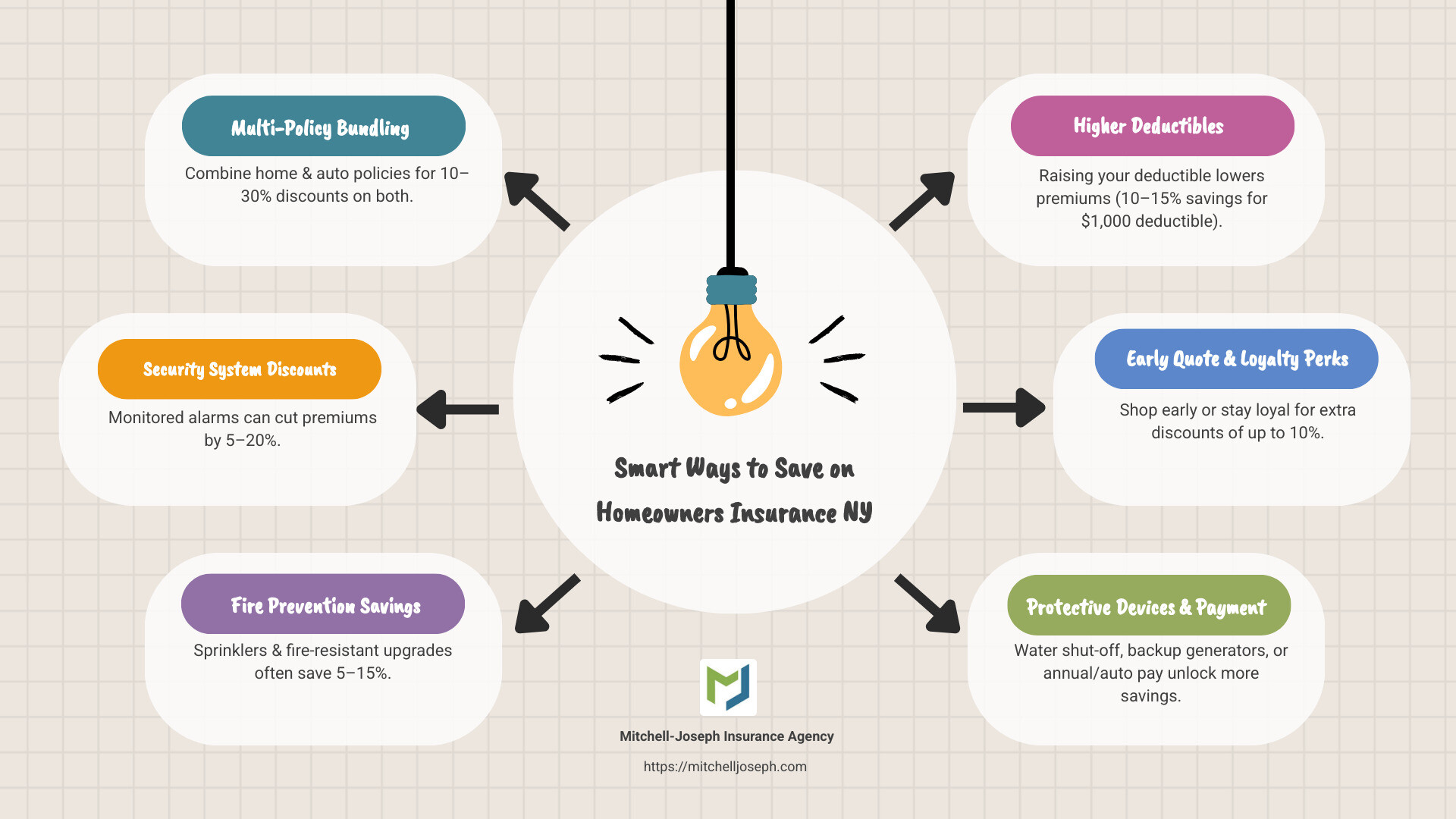
Multi-Policy Bundling: Combining your home and auto insurance with the same carrier typically saves 10-30% on both policies. At Mitchell-Joseph Insurance Agency, we’ve seen clients save up to $950 annually through bundling.
Security System Discounts: Monitored alarm systems can reduce premiums by 5-20%.
Sprinkler Systems and Fire Prevention: Homes with sprinkler systems or fire-resistant features may qualify for discounts of 5-15%.
Higher Deductibles: Increasing your deductible from $500 to $1,000 can lower your premium by 10-15%.
Early Quote Discount: Some insurers offer discounts of up to 10% for obtaining a quote well before your current policy expires.
Loyalty Discounts: Many companies reward long-term customers with premium reductions.
Protective Device Discounts: Installing water leak detection systems, backup generators, or storm shutters can qualify you for additional savings.
Payment Method Discounts: Paying your annual premium in full or setting up automatic payments often results in small but meaningful discounts.
Learn more about available savings opportunities through our Homeowners Insurance Discounts resource.
Step-by-Step Guide to Picking the Best Policy
Shopping for homeowners insurance NY shouldn’t feel overwhelming. Let me walk you through finding the right coverage with the same practical approach we use with our clients at Mitchell-Joseph.
Think of this as your roadmap to protection—one that considers your unique home, your possessions, and your peace of mind.
1. Assess Your Specific Needs
Before gathering quotes, take a moment to think about what makes your home unique. Is it a century-old Victorian in Buffalo with original woodwork? A modern condo in White Plains? Or perhaps a lakeside cottage in the Finger Lakes?
“No two homes in New York are exactly alike, which means no two insurance policies should be either,” explains our agent Sarah Mitchell. Your home’s construction type, age, special features, and location all influence the coverage you need.
Consider your personal circumstances too. Do you work from home? Have expensive jewelry? Own a dog? These factors affect your liability needs and specialized coverage requirements.
2. Create a Home Inventory
I can’t stress this enough—documenting your belongings before a loss occurs is invaluable. Take an hour on a weekend to:
Walk through each room with your smartphone, recording video of your possessions. Open drawers and closets, capturing everything from furniture to electronics to clothing. For valuable items, take close-up photos and note serial numbers where applicable.
Store this inventory securely in cloud storage or email it to yourself. Should disaster strike, you’ll have proof of ownership that makes the claims process significantly smoother.
“After a fire or major loss, remembering everything you owned is nearly impossible,” notes our agent Jennifer Joseph. “The emotional stress clouds memory, and without documentation, many items go unclaimed.”
3. Determine Your Dwelling Coverage Limit
Here’s a crucial distinction: your home’s market value isn’t the same as its rebuilding cost. Your homeowners insurance NY policy should cover what it would cost to rebuild your home from scratch—which often differs from what you paid for it.
In New York, construction costs vary dramatically by region. Rebuilding in Manhattan might cost three times more per square foot than in rural areas upstate. Local building codes, material costs, and labor rates all factor into this calculation.
Most insurers require you to insure for at least 80% of your home’s replacement cost to receive full coverage when partial losses occur. Insuring below this threshold could trigger a penalty at claim time—something we help our clients avoid.
4. Gather Multiple Quotes
At Mitchell-Joseph Insurance Agency, we represent 24 different insurance companies, which allows us to shop around for the best coverage and rates for your specific situation. Even if you’re working with a captive agent who represents just one company, get at least three quotes for comparison.
When comparing quotes, look beyond just the bottom line. Consider:
Financial strength ratings from organizations like AM Best—these indicate the company’s ability to pay claims during widespread disasters.
Claims satisfaction scores from J.D. Power or Consumer Reports.
Coverage differences between policies—they’re not all created equal!
Deductible options and how they affect your premium.
5. Compare Deductibles and Understand Their Impact
Your deductible—the amount you pay out of pocket before insurance kicks in—significantly impacts both your premium and your financial exposure after a loss.
For many New Yorkers, a standard deductible ranges from $500 to $2,500. Raising your deductible from $500 to $1,000 might save you 10-15% on your premium, but consider whether you could comfortably cover that higher amount after a loss.
If you live in coastal areas of New York, be especially attentive to special wind or hurricane deductibles. These are typically percentage-based (often 2-5% of your dwelling coverage) rather than flat dollar amounts. On a $500,000 home, that means you could be responsible for $10,000-$25,000 before insurance covers wind damage.
6. Review Policy Exclusions Carefully
Understanding what your policy doesn’t cover is just as important as knowing what it does. Standard homeowners insurance NY policies typically exclude:
Flood damage (requires separate coverage through the National Flood Insurance Program or private insurers)
Earthquake damage (available as an endorsement)
Mold (may have limited coverage or complete exclusion)
Sewer backup (usually available as an add-on)
Normal wear and tear (insurance covers sudden, accidental damage, not maintenance)
“One of the most heartbreaking conversations we have is telling clients their loss isn’t covered because they didn’t understand their policy exclusions,” says David Mitchell. “We work hard to prevent that scenario through education.”
7. Schedule Valuable Items
Standard policies limit coverage for certain categories of valuables. For example, most policies cap jewelry coverage at $1,000-$2,000 total, regardless of how much jewelry you own.
If you have valuable items like:
Fine jewelry or watches
Art or antiques
Musical instruments
Collectibles
High-end electronics
Consider “scheduling” these items (also called adding a personal property endorsement). This provides broader coverage with no deductible for these specific items.
8. Finalize Your Purchase
Once you’ve selected the right policy, review all documentation before signing. Verify coverage limits, deductibles, and any special endorsements you’ve discussed.
Set up payment arrangements—many insurers offer discounts for automatic payments or paying annually instead of monthly. Request proof of insurance for your mortgage lender if required.
Store your policy documents somewhere accessible but secure, and make sure family members know where to find them.
Avoid these common mistakes when shopping
Over our decades in the business, we’ve seen New Yorkers make the same costly insurance mistakes repeatedly. Don’t fall into these traps:
Under-insuring your home: With New York construction costs rising rapidly, many homeowners are shocked to find their coverage falls short after a major loss. Rebuild values often exceed market values, especially in older homes with character features that are expensive to replicate.
Ignoring flood risk: Even if you’re not in a designated flood zone, you may still be at risk. Approximately 25% of all flood insurance claims come from “low-risk” areas, and standard homeowners insurance NY policies never cover flood damage.
Choosing based on price alone: The cheapest policy often provides inadequate coverage. One recent client saved $300 annually by switching companies, only to find a $20,000 coverage gap after a kitchen fire.
Misunderstanding replacement cost vs. actual cash value: Replacement cost coverage pays to replace your items with new ones of similar quality. Actual cash value subtracts depreciation, potentially leaving you thousands short after a claim.
Skipping the annual review: Your insurance needs change as your home ages, you acquire new possessions, or you make improvements. We recommend reviewing your coverage annually and after any major home renovation or life change.
For more detailed information about ensuring you have adequate coverage, visit our resource on Is Your Home Underinsured?
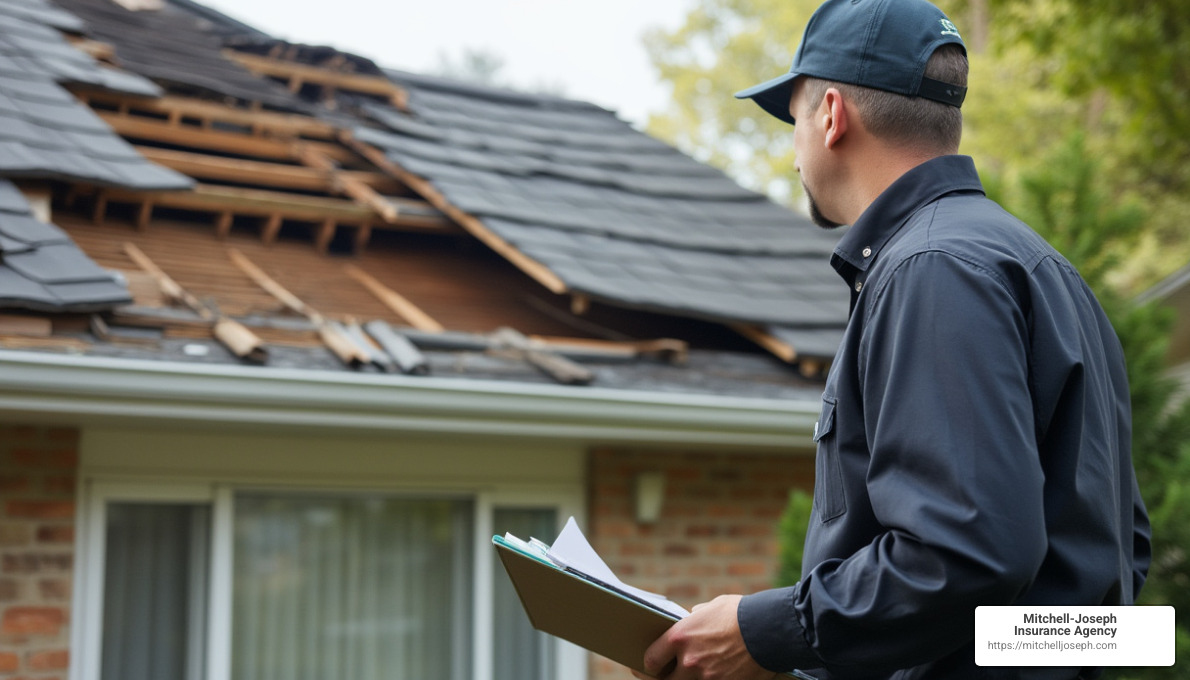
Filing & Managing Claims in New York
Even with the best homeowners insurance NY policy, filing a claim can be stressful. Understanding the process beforehand helps ensure a smoother experience when you need it most.
The Claims Process Step-by-Step
1. Report the loss promptly: Contact your insurance company as soon as possible after finding damage. Most insurers have 24/7 claims hotlines, and many offer online or mobile app reporting options.
2. Mitigate further damage: You’re required to take reasonable steps to prevent additional damage. This might include:
– Turning off water in case of plumbing leaks
– Covering roof damage with tarps
– Securing the property against theft or vandalism
3. Document everything: Before cleanup or repairs:
– Take photos and videos of all damage
– Make lists of damaged items
– Save samples of damaged materials if possible
– Keep all receipts for emergency repairs or temporary accommodations
4. Meet with the adjuster: An insurance adjuster will inspect the damage, typically within a few days for serious claims. Be present during this inspection if possible and point out all damage.
5. Review the settlement offer: The insurance company will provide a settlement offer based on your policy terms and the adjuster’s findings. Review this carefully and ask questions about anything you don’t understand.
6. Dispute resolution if necessary: If you disagree with the settlement offer, you can:
– Request a second inspection
– Provide additional documentation
– File a complaint with the New York Department of Financial Services
– Consider hiring a public adjuster (who typically charges 10-15% of your settlement)
“After a significant loss, homeowners are often overwhelmed,” notes our claims specialist Rebecca Mitchell. “That’s why we walk our clients through each step of the process, helping them maximize their claim while meeting all policy requirements.”
Special Considerations for New York Claims
Hurricane Deductibles: If your claim involves hurricane damage, be aware that special percentage deductibles may apply. These are triggered when the National Weather Service declares a hurricane and typically range from 1-5% of your dwelling coverage.
Replacement Cost Claims: If you have replacement cost coverage, you’ll typically receive two payments: one for the actual cash value (depreciated amount) initially, and a second payment once you’ve completed repairs or replacement.
New York State Consumer Protections: New York has strong consumer protection laws for insurance claims, including:
– Required timelines for insurer responses
– Interest penalties for delayed payments
– Specific disclosure requirements
Customer service tips for smoother claims
Working with Mitchell-Joseph Insurance Agency provides several advantages during the claims process:
24/7 Claims Support: All our carrier partners offer round-the-clock claims reporting.
Local Agent Advocacy: As your local agent, we can intercede with the insurance company if issues arise during your claim.
Claim Tracking Assistance: We help you monitor your claim’s progress and follow up on delays.
Documentation Guidance: We advise on what documentation will strengthen your claim.
Dispute Resolution Support: If you disagree with a settlement offer, we can help explain your options and rights.
“The claims process is where insurance companies truly demonstrate their value,” explains Jeffrey Joseph. “That’s why we carefully select carriers with strong claims reputations and regularly review their performance.”
Frequently Asked Questions about Homeowners Insurance NY
How much coverage do I really need?
When clients ask me about coverage amounts for their homeowners insurance NY policies, I always tell them there’s no one-size-fits-all answer. Your coverage needs are as unique as your home.
For dwelling coverage, focus on rebuilding costs, not market value. Here in New York, rebuilding typically runs $200-300 per square foot, varying widely depending on whether you’re in a Manhattan brownstone or a Rochester colonial. For a typical 2,000 square foot home, that translates to roughly $400,000-$600,000 in dwelling coverage.
Your personal belongings deserve careful consideration too. Standard policies cover personal property at 50-70% of your dwelling coverage. Is that enough? Take a walk through your home with fresh eyes. Those furniture pieces, electronics, clothing, and kitchen items add up quickly.
“Many clients are surprised when they actually catalog what they own,” says our agent Sarah Mitchell. “That’s why we recommend completing a home inventory before settling on coverage amounts.”
For liability protection, we typically recommend at least $300,000, but if you have a swimming pool, entertain frequently, or have significant assets, consider higher limits or an umbrella policy. Your financial security is worth the modest additional premium.
At Mitchell-Joseph Insurance Agency, we help determine appropriate coverage by conducting detailed replacement cost estimates based on your home’s specific features and local construction costs. This personalized approach ensures you’re neither over-insured nor dangerously under-protected.
Does a standard policy cover basement flooding?
This question causes more confusion than almost any other aspect of homeowners insurance NY. The answer isn’t a simple yes or no—it depends entirely on what caused the water damage.
If your basement floods because a pipe suddenly bursts or your water heater fails, standard policies typically cover the damage. But if water seeps in from outside during heavy rain or if your sewer backs up, you’re looking at a claim denial unless you have specific additional coverages.
I remember helping a family in Pittsford after their finished basement flooded. They were devastated to learn their standard policy wouldn’t cover the damage because it resulted from surface water entering through a window well. Had they added flood insurance and water backup coverage beforehand, they would have been protected.
For complete basement protection, New York homeowners should consider:
Flood Insurance: Available through the National Flood Insurance Program or private insurers, this covers damage from rising groundwater or surface water.
Water Backup Coverage: This affordable endorsement covers damage from backed-up sewers or drains and sump pump failures—common problems in older New York homes.
Even with these coverages, items stored in basements often have limitations. Store valuable or irreplaceable items on upper floors if possible, especially in flood-prone areas.
Can I get insurance if private carriers deny me?
Yes! If standard insurance companies have turned you down, don’t despair. New York has created safety nets specifically for these situations.
The New York Property Insurance Underwriting Association (NYPIUA) provides basic fire and extended coverage for properties that standard insurers won’t touch. While NYPIUA policies cost more and offer more limited protection than standard policies, they ensure essential coverage remains available to all homeowners.
Beyond NYPIUA, excess line carriers specialize in higher-risk properties. They typically charge 15-50% above standard rates, but that’s far better than having no coverage at all.
Coastal homeowners face particular challenges, which is why New York established the Coastal Market Assistance Program (C-MAP) to help property owners in vulnerable shoreline areas find coverage when standard markets pull back.
Sometimes, making specific improvements to your property can make it insurable again. Updating outdated electrical systems, installing protective devices, or replacing an aging roof might be all it takes to become eligible for standard coverage.
“We had a client in Canandaigua whose home had been declined by three insurers due to an outdated electrical panel,” recalls Jeffrey Joseph. “After upgrading to a modern 200-amp service, we secured coverage with a preferred carrier at a competitive rate. Sometimes a modest investment open ups significant insurance savings.”
At Mitchell-Joseph Insurance Agency, our relationships with 24 different insurance companies, including several that specialize in higher-risk properties, often allow us to find solutions where others have failed. Don’t give up hope—give us a call instead.
Conclusion
Securing the right homeowners insurance NY policy isn’t just about checking a box for your mortgage lender—it’s about protecting what might be your most significant investment and the place your family calls home.
New York presents a mix of insurance challenges that vary dramatically depending on where you live. The homeowner in Buffalo battling lake-effect snow faces very different risks than someone in a Brooklyn brownstone or a beachfront property in the Hamptons. This diversity is precisely why cookie-cutter insurance solutions often leave New Yorkers with coverage gaps or paying for protection they don’t need.
At Mitchell-Joseph Insurance Agency, we’ve spent decades helping families across the Finger Lakes Region steer these complexities. When the Johnsons in Pittsford had their claim denied because of an overlooked flood exclusion, or when the Garcias in Naples finded they were severely underinsured after a partial fire, these were wake-up calls that proper insurance guidance matters.
Our independent agency status means we’re not tied to any single insurance company. Instead, we can shop among 24 different carriers to find the coverage that truly fits your unique situation—often saving you money while improving protection.
As you consider your homeowners insurance NY options, keep these crucial points in mind:
Standard policies create a significant protection gap by excluding flood damage—something many New Yorkers find too late. With our state’s aging housing stock (median age 63 years), outdated electrical, plumbing, and heating systems often require special attention in your policy. Your location within New York might be the single biggest factor in your premium, with differences of 200% or more between regions. Smart bundling of your home and auto policies can save up to 30%, often thousands over the years. And perhaps most importantly, your insurance needs evolve as your home ages and your life changes, making annual reviews essential.
We’ve built our reputation on being there when it matters most—not just when you’re shopping for a policy, but when you need to file a claim. Our clients tell us there’s nothing quite like having a familiar voice on the phone walking them through the claims process after a stressful event.
Whether you’re buying your first home, upgrading to a larger property, or simply making sure your current coverage is still appropriate, we invite you to experience the difference that working with a truly local, family-owned agency can make. Our offices throughout the region make it convenient to meet face-to-face with our experienced agents.
For more information about our home insurance solutions, visit our home insurance resource page.
After all, protecting your home isn’t just about having insurance—it’s about having the right insurance backed by people who treat you like a neighbor, not a policy number.