

Why Understanding Coverage Gaps Can Save Your Home and Finances
Homeowners insurance and flood insurance serve different purposes, but many homeowners mistakenly believe their standard policy covers all water damage. Here’s what you need to know:
Key Differences:
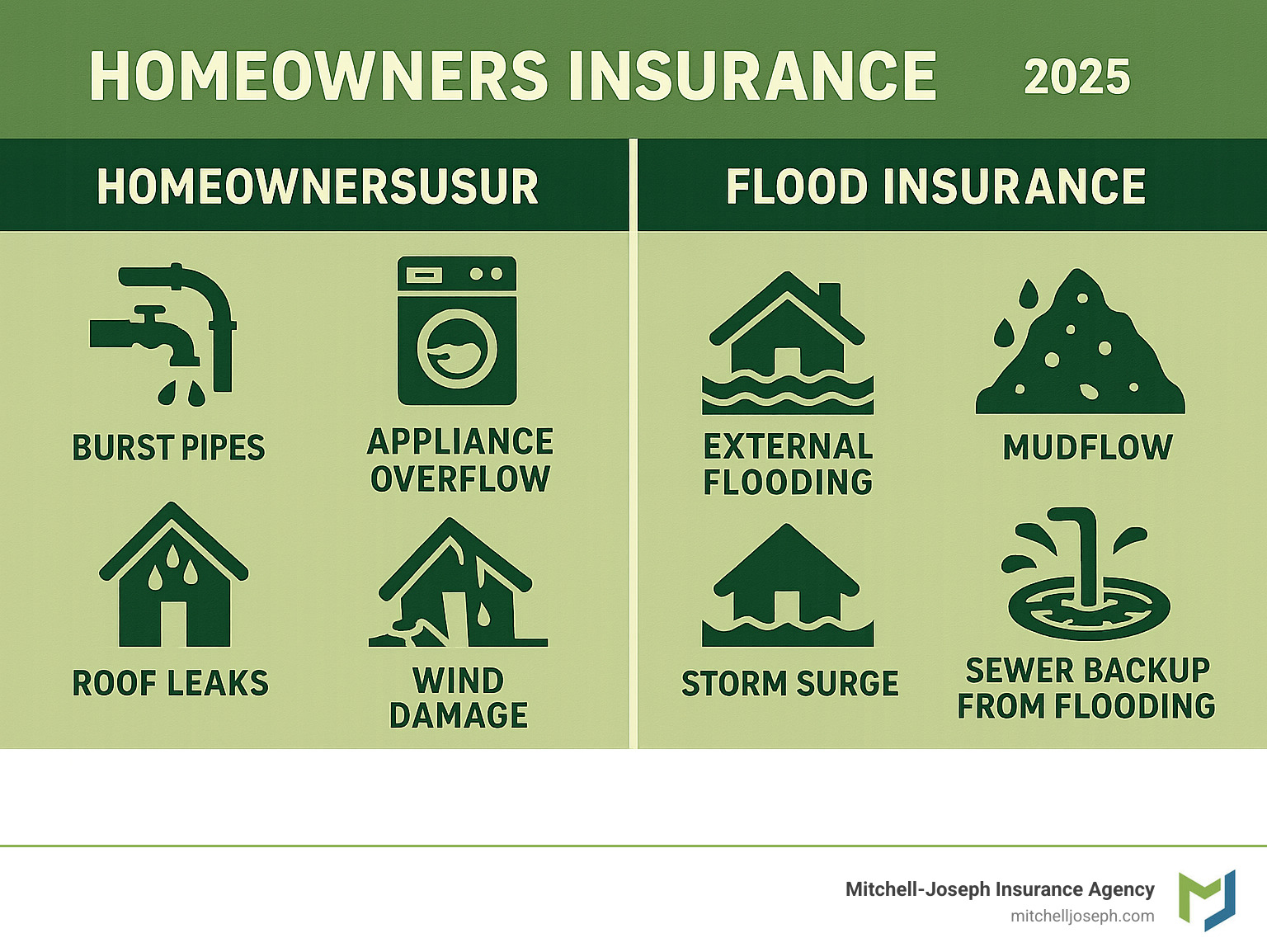
- Homeowners Insurance: Covers sudden water damage from burst pipes, appliance leaks, and roof damage.
- Flood Insurance: Covers water damage from external flooding, storm surge, and ground-level water intrusion.
- Critical Gap: Standard homeowners policies exclude flood damage entirely.
- Separate Purchase Required: Flood insurance must be bought as an additional policy.
The Financial Reality:
Just one inch of floodwater can cause over $25,000 in damage. More than 25% of flood insurance claims come from outside high-risk areas, meaning even homes in “safe” zones face significant risk.
When It’s Required:
Homes in high-risk flood zones with government-backed mortgages must carry flood insurance. However, flooding is the most common and costly natural disaster in the U.S., affecting properties everywhere.
The stakes are high. Flood damage represents a massive coverage gap that can lead to tens of thousands in out-of-pocket repairs. Understanding this distinction is crucial to protecting your most valuable asset.
I’m Jeffrey Joseph, owner of Mitchell-Joseph Insurance Agency. Since 1999, I’ve helped Finger Lakes homeowners steer the complexities of homeowners insurance and flood insurance. I’ve seen how proper coverage protects families from financial devastation.
Similar topics to homeowners insurance and flood insurance:
The Critical Difference: A Guide to Homeowners Insurance and Flood Insurance
Imagine your washing machine floods the laundry room—your homeowners insurance likely covers it. But what if a creek overflows into your home? That’s a different story, and a financial disaster without the right coverage. The confusion between homeowners insurance and flood insurance is a common, costly mistake. Too many families find this gap the hard way.
What Your Standard Homeowners Policy Covers (and What It Doesn’t)
Homeowners insurance is generous with water damage, but only when it originates inside your home.

Sudden and accidental damage from inside your home is typically covered. This includes burst pipes and appliance overflows from dishwashers or washing machines. Roof leaks from storm damage are also covered. If wind damages your roof and rain gets in, the policy typically covers both the roof repair and interior water damage. The key is that the damage must be “sudden.” Slow, neglected leaks are generally not covered.
The biggest exclusion is flood damage. Water from outside your home—like an overflowing river, heavy rain, or storm surge—is not covered by a standard policy.
The line between sewer backup and flood damage is also tricky. A backup caused by flooding is considered flood damage. However, a backup from a clogged pipe might be covered by a special endorsement. Learn more in our guide: Does Homeowners Insurance Cover Water Damage from Sewer Backup?.
Similarly, mudflow is excluded from homeowners policies but covered by flood insurance.
What flood insurance actually protects
Flood insurance covers what homeowners policies don’t: damage from water that originates outside your home.

Building coverage protects your home’s structure and essential systems, including the foundation, electrical systems, plumbing, and major appliances like the furnace and water heater. The National Flood Insurance Program (NFIP) provides up to $250,000 in building coverage.
Contents coverage protects your personal belongings, like furniture, clothes, and electronics, with NFIP limits up to $100,000. For more details on what’s protected, see this resource: What Is Covered by A Flood Insurance Policy for Homeowners?
Flood insurance has exclusions, including most basement contents, landscaping, decks, and vehicles (which are typically covered by auto insurance). Unlike homeowners insurance, flood insurance does cover destructive mudflows.
Do You Need Flood Insurance? Assessing Your Risk and Requirements
Many people think they don’t need flood insurance because they aren’t in a designated flood zone, but the statistics tell a different story.
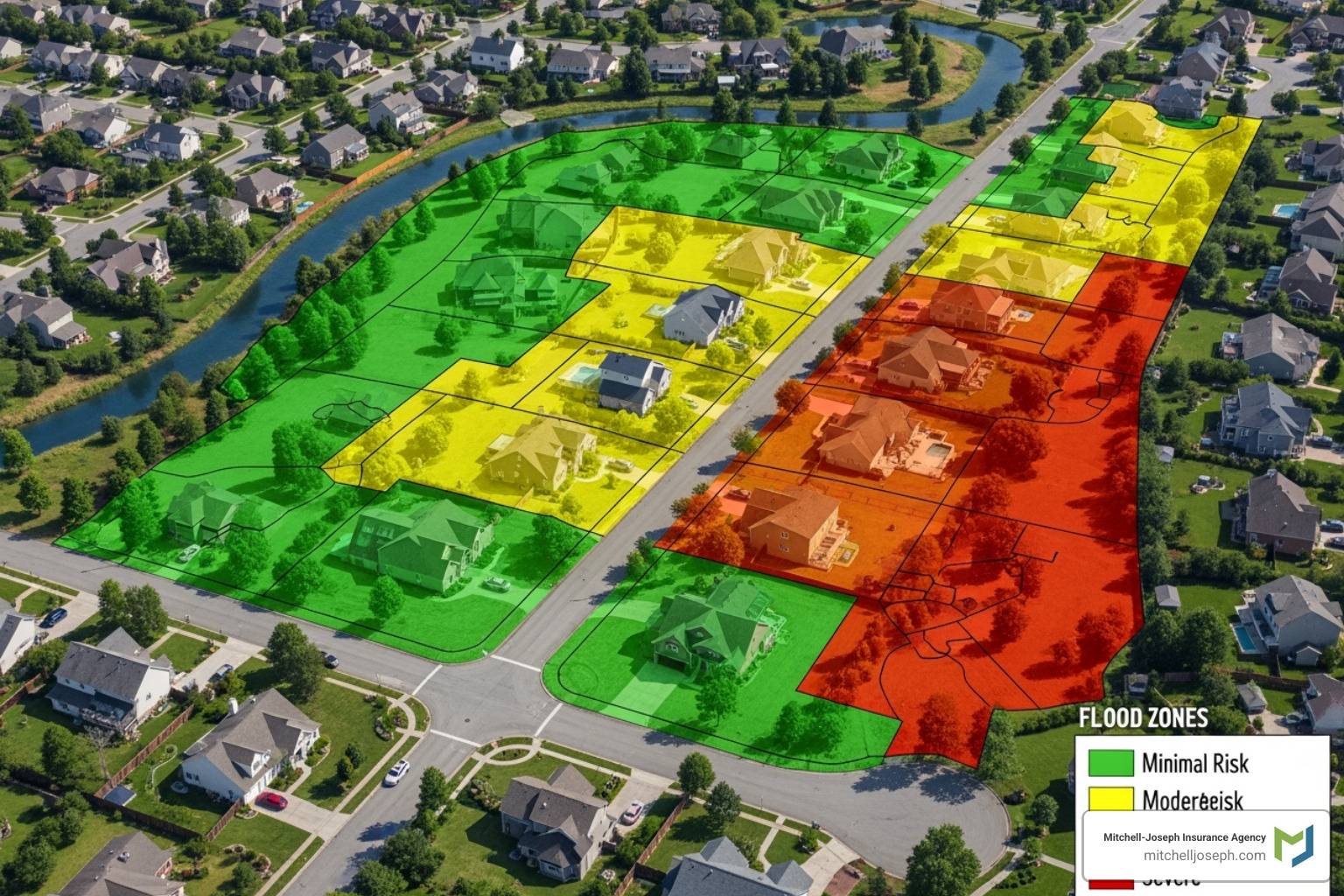
If you live in a high-risk flood zone (FEMA zones A or V) and have a federally-backed mortgage, flood insurance is mandatory.
Surprisingly, over 25% of flood claims occur in low-to-moderate risk areas. These “safe” zones are riskier than many believe. In the Finger Lakes region, from Pittsford to Canandaigua, we see flooding caused by snowmelt, heavy thunderstorms, and aging drainage systems, even in areas not considered flood-prone.
You can Check your flood risk using FEMA’s official tool.
Climate change increases this unpredictability. Shifting weather patterns mean so-called “100-year floods” are becoming more frequent.
Even if it’s not required, flood insurance is invaluable. Just one inch of water can cause $25,000 in damage. Most families can’t afford to rebuild without it, which is why homeowners insurance and flood insurance are both essential for complete protection.
Securing Your Flood Coverage and Final Takeaways
Now that you understand the need for both homeowners insurance and flood insurance, let’s review how to get coverage. The process is straightforward, but some details are key.
Navigating your options for homeowners insurance and flood insurance
You can typically choose between the National Flood Insurance Program (NFIP) and private flood insurance. At Mitchell-Joseph Insurance Agency, we help you compare both to find the right fit.
Understanding the National Flood Insurance Program (NFIP):
The NFIP is a federal program managed by FEMA. You can purchase an NFIP policy through agents like us via the Write Your Own (WYO) program, allowing us to handle both your homeowners and flood policies. NFIP policies offer standardized coverage with limits set by federal law: up to $250,000 for building and $100,000 for contents. Contents are typically covered at actual cash value (depreciated value), not replacement cost. Most communities in our service area, including Honeoye Falls and Rochester, participate in the NFIP. For details on limits, see our guide: Flood Insurance Coverage Limits.
Exploring Private Flood Insurance Options:
The private flood insurance market has grown, often offering advantages over the NFIP. Higher coverage limits are a key benefit, with some policies offering $4 million or more in building coverage, which is crucial for high-value homes. Private policies often provide replacement cost coverage for contents and may include additional living expenses or coverage for items NFIP excludes, like pools and landscaping. Shorter waiting periods (10-15 days vs. NFIP’s 30) are another benefit. Private flood insurance can also be more affordable, especially in lower-risk areas.
Here’s how the main options typically compare:
| Feature | National Flood Insurance Program (NFIP) | Private Flood Insurance (Example) |
|---|---|---|
| Coverage Limits | Building: Up to $250,000; Contents: Up to $100,000 | Building: Often higher, e.g., up to $4 million; Contents: Often higher, e.g., up to $500,000 |
| Contents Basis | Actual Cash Value (ACV) – depreciated value | Often Replacement Cost Value (RCV) – new for old |
| Waiting Period | Typically 30 days | Can be shorter (e.g., 10-15 days), but varies by insurer |
| Availability | Available in NFIP participating communities | Varies by insurer and state, may be available in more areas or offer more flexible terms |
| Additional Cover | Limited (e.g., detached garages up to 10% of building coverage) | May include additional living expenses, basement contents, pools, landscaping (varies by policy) |
| Cost Factors | FEMA’s Risk Rating 2.0 uses property-specific data (distance to water, elevation, cost to rebuild) | Risk-based pricing, can be competitive, especially in lower-risk areas |
At Mitchell-Joseph Insurance Agency, we provide custom coverage. We’ll help you compare both NFIP and private options to find the best protection for your home, belongings, and budget.
The path to protection: How to purchase and prepare
Getting flood insurance is straightforward, but you can’t wait until a storm is approaching.

The Critical 30-Day Waiting Period:
Most NFIP policies have a 30-day waiting period before coverage begins. This prevents people from buying insurance just before a storm hits. Plan ahead and don’t wait for flood warnings. Some policy exceptions exist, such as for new mortgage requirements or if your property is remapped into a high-risk zone. Learn more here: Flood Insurance Effective Date.
Working with the Right Agent:
As an independent agency, we work with numerous companies in the WYO program and the private market. This allows us to shop for the best coverage and rates for you.
Understanding Premium Payments:
Most flood policies, particularly NFIP, require premiums to be paid in full upfront. The average federal policy is around $819 annually, but your cost will vary. It’s wise to budget for this expense.
Creating a Home Inventory:
Before a flood, create a home inventory. Video or photograph your belongings and estimate their value, storing the file in the cloud. This documentation is invaluable for filing a claim and ensuring proper compensation.
Beyond insurance: Federal aid and flood prevention
While insurance is your best defense, it’s good to know about other potential aid and prevention measures.
The Reality of Federal Disaster Assistance:
Don’t rely on the government to cover flood losses. Federal disaster assistance is only available after a presidential disaster declaration (less than 10% of flood events), and the aid is limited. FEMA grants average only about $5,000. Most aid comes as low-interest loans that must be repaid. Receiving federal aid also often triggers a mandatory requirement to purchase and maintain flood insurance for the property’s lifetime. The bottom line: Federal aid is a risky bet. Flood insurance offers far more reliable protection.
Simple Steps to Prevent Flood Damage:
You can’t control the weather, but you can take simple, affordable steps to reduce your flood risk:
- Maintain gutters and downspouts, directing water 5-10 feet from your foundation.
- Install flood vents to allow water to flow through enclosed areas, reducing pressure on walls.
- Waterproof your basement with sealants to prevent seepage.
- Lift utilities and appliances (furnace, water heater) on platforms.
- Install backflow valves to prevent sewer backup.
- Landscape for proper drainage by grading your yard away from the house.
- Maintain your sump pump and consider a battery backup. These simple measures can lower your risk and potentially your premiums.
At Mitchell-Joseph Insurance Agency, our 200+ years of combined experience means we’re more than agents; we’re your neighbors in Honeoye Falls and the Finger Lakes. We provide personalized service and competitive quotes from 24 insurers to find the custom coverage you need.
Don’t wait to protect your most valuable asset. Understanding homeowners insurance and flood insurance is key. Get expert advice on your flood insurance needs today, and let us help you secure your home.

