

Why Water Line Breaks Are Every Homeowner’s Hidden Worry
Does home insurance cover water line breaks? The short answer: it depends on where the break occurs and what caused it. Here’s what you need to know:
- Interior pipe bursts (sudden and accidental) are typically covered by standard home insurance
- Underground service line breaks between your home and the street are typically not covered by standard policies
- Gradual damage from wear, tear, or neglect is typically not covered
- Service line coverage (an optional add-on) can protect you from expensive underground repairs
A burst pipe can quickly become a homeowner’s nightmare. Insurance data shows non-weather water claims average almost $11,000. But here’s what most homeowners don’t realize: your standard policy likely won’t cover the underground water line connecting your home to the municipal main. Repairing this line can cost $10,000 to $15,000 or more, and without the right coverage, you’re responsible for every dollar.
As Jeffrey Joseph at Mitchell-Joseph Insurance Agency, I’ve helped countless Finger Lakes homeowners steer the complexities of water line coverage since 1999. Understanding these gaps can save families from devastating out-of-pocket expenses.

Does Home Insurance Cover Water Line Breaks? The Standard Policy Breakdown
When it comes to water damage from broken water lines, coverage depends on the cause, location, and whether the damage was sudden or gradual. At Mitchell-Joseph Insurance Agency, we help homeowners understand what their policy covers—and what it doesn’t.
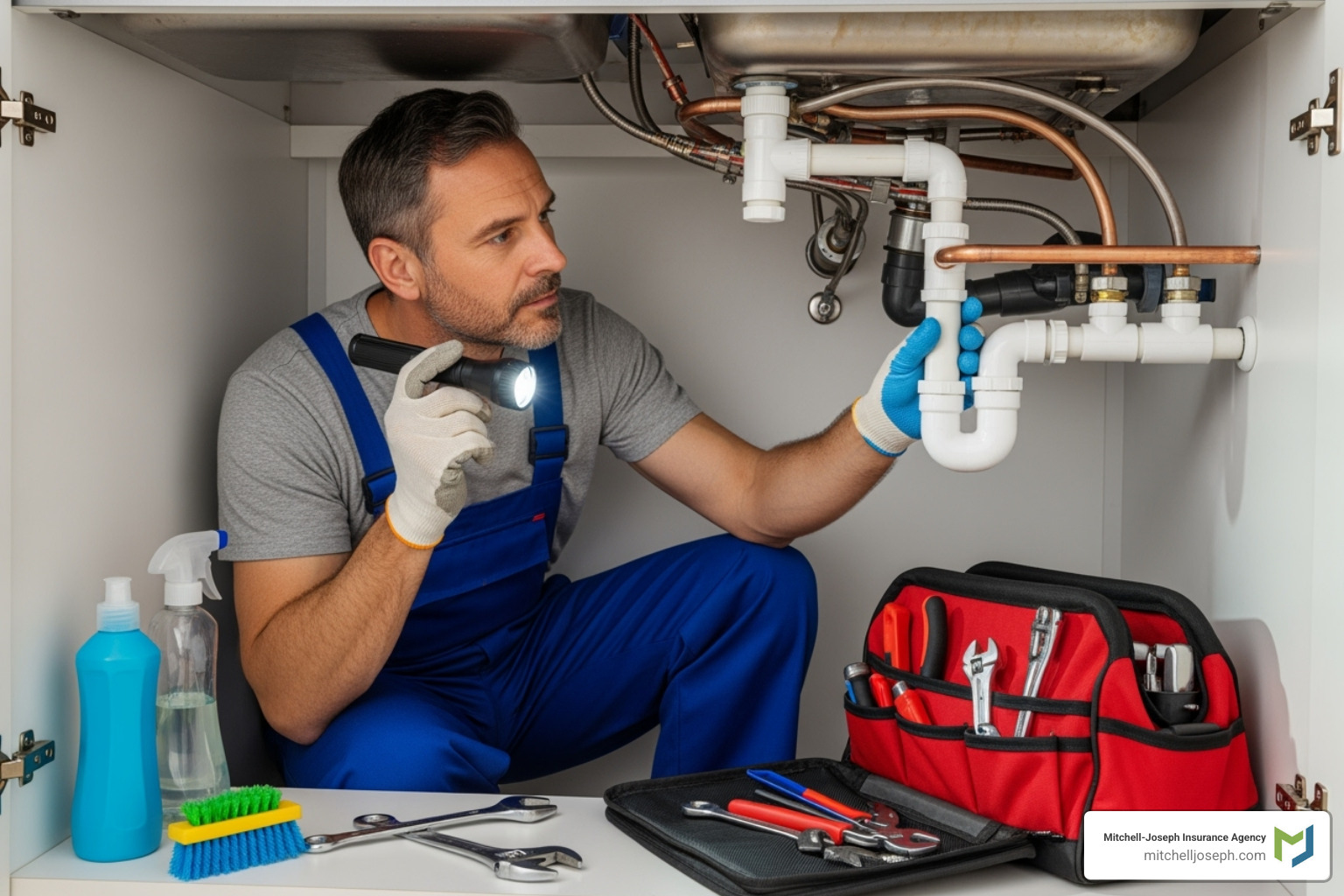
What’s Typically Covered: Sudden & Accidental Damage
If a water line break happens suddenly and without warning, your standard home insurance usually has you covered. The key is that the damage must be “sudden and accidental,” not the result of neglect.
So does home insurance cover water line breaks when they’re sudden? Yes—at least for the resulting damage.
- Interior burst pipes: When a pipe inside your home suddenly bursts, the water damage to your walls, floors, and belongings is typically covered. The average non-weather water damage claim is nearly $11,000.
- Frozen pipes: This is covered, but you must have taken reasonable steps to prevent freezing, like keeping your heat on during a Honeoye Falls winter.
- Appliance hose failures: If a washing machine hose ruptures, the resulting water damage is usually covered. The appliance itself is likely not, but the soaked floors and ruined cabinets are.
It’s important to know your policy covers the damage caused by the water, not necessarily the cost to fix the failed pipe or appliance. However, if a major break makes your home unlivable, your policy’s Loss of Use coverage can help pay for a hotel and other extra living costs.
For more details, the National Association of Insurance Commissioners has a helpful resource: Will My Homeowners Insurance Policy Cover Water Damage From a Burst Pipe?.
Common Exclusions: Wear, Tear, and Neglect
Your home insurance isn’t a maintenance plan, so certain water issues are typically excluded. Claims are often denied for gradual problems or lack of upkeep.
- Gradual leaks and slow seepage: A pipe that has been dripping for months, causing rot or mold, is not covered. Insurers expect you to fix these issues before they become disasters.
- Lack of maintenance: If a pipe breaks due to obvious corrosion you ignored, or because you didn’t heat your home in winter, the claim may be denied.
- Old or corroded pipes: This is a gray area. While damage from a sudden break might be covered, if the pipe was clearly deteriorated, the insurer could argue it was a maintenance issue.
- Tree root intrusion and pest damage: Damage from tree roots or pests is considered gradual and is almost never covered.
Also, note that sewer backups and sump pump failures require specific endorsements. Flooding from natural sources always requires separate flood insurance.
Travelers Insurance offers more insights in their guide: Answers to 5 Common Insurance Questions About Home Water Damage.
Your Property vs. The Street: Understanding Responsibility
When an underground water line breaks, responsibility depends entirely on where the break occurs.
- The municipal side: The main water line under the street and the service line up to your property boundary belong to the city or town. If a break occurs here, the municipality pays for the repair.
- Your side: The moment that service line crosses onto your property, it becomes your responsibility. Every inch of that underground pipe, from your property line to your foundation, is yours to maintain and repair.
Here’s the crucial gap: your standard home insurance policy typically does not cover repairs to this underground service line on your property.
If the city’s main breaks and floods your property, your homeowners policy might cover the damage to your house, but the city is still responsible for fixing the main itself. This coverage gap for your own service line can leave you with a bill for $10,000 to $15,000, which is why understanding this distinction is so important.
Beyond the Basics: Enhancing Your Coverage and Preventing Disaster
Understanding the limitations of a standard home insurance policy is sobering, but you can take proactive steps to improve your coverage and prevent these costly headaches.

At Mitchell-Joseph Insurance Agency, we empower homeowners in Honeoye Falls, Pittsford, Naples, Rochester, and throughout the Finger Lakes region to protect their biggest investment. Let’s explore how you can fill those coverage gaps.
Does home insurance cover water line breaks on my property? Understanding Service Line Coverage
We’ve established that standard policies often fall short for underground service lines. This is where service line coverage becomes your best friend.
Service line coverage is an optional endorsement to your homeowners policy, specifically designed to cover the repair or replacement of damaged underground utility lines that are your responsibility. This includes water, sewer, electrical, natural gas, and communication lines.
While your standard policy protects your house from damage caused by a water line break, service line coverage protects the actual underground lines themselves. This crucial difference can save you thousands. The coverage is comprehensive, typically including:
- Repair or replacement costs for the damaged line itself.
- Excavation costs to dig up your yard and access the line.
- Landscaping and property restoration for your lawn or driveway after the repair.
- Additional living expenses like hotel stays if the damage makes your home uninhabitable.
This coverage won’t cover public utility lines, damage from intentional acts, or issues covered by another policy like flood insurance.
Here’s a side-by-side comparison to help clarify the difference:
| Feature | Standard Home Insurance Policy | Service Line Coverage (Endorsement) |
|---|---|---|
| Covers Damage To: | Home structure, personal property (from water) | The actual underground service line itself |
| For: | Sudden & accidental internal water line breaks | Underground water, sewer, electrical, gas, comm. lines |
| Repair of Line Itself: | Typically NO (unless part of a covered peril) | YES (for covered causes like breaks, freezing, wear) |
| Excavation Costs: | NO | YES |
| Landscape Restoration: | NO | YES |
| Additional Living Exp.: | YES (if home uninhabitable from covered water damage) | YES (if home uninhabitable from covered service line failure) |
Does home insurance cover water line breaks from a cost perspective?
Let’s talk dollars and cents. Repairing an underground water line break can be financially devastating, with average costs ranging from $10,000 to $15,000 or more. Industry data shows non-weather water claims average almost $11,000, while service line failures specifically average around $6,000 per occurrence.
Now, consider the cost of adding service line coverage. This endorsement is typically a small annual fee. For a minimal premium, some policies offer thousands in coverage with a manageable deductible.
Imagine a $15,000 repair. With service line coverage and a $1,000 deductible, you’d pay $1,000. Without it, you’re responsible for the entire $15,000. The value is clear: it’s a small investment for significant peace of mind.
Proactive Protection: How to Prevent Water Line Breaks
While insurance is essential, preventing problems is the smartest strategy, especially in the Finger Lakes region where cold winters are tough on pipes.
- Insulate exposed pipes in basements, crawl spaces, and attics using sleeves or heat tape.
- Winterize outdoor faucets by disconnecting hoses, draining the faucets, and shutting off their water supply if possible.
- Maintain steady heat indoors (at least 55°F), even when you’re away. Open cabinet doors under sinks to let warm air circulate.
- Know your main water shut-off valve’s location. In an emergency, quickly turning off the water can prevent a disaster.
- Conduct regular plumbing inspections. Check visible pipes for corrosion or leaks. For older homes, consider a professional inspection every few years.
- Fix small leaks promptly. A dripping faucet can indicate bigger issues, and ignoring it could lead to a denied claim for neglect.
- Be mindful of tree roots near utility lines, as they are a common cause of gradual, uncovered damage.
- Consider smart water sensors. These devices can alert your phone at the first sign of a leak, giving you time to act.
At Mitchell-Joseph Insurance Agency, we’re not just here to sell a policy—we’re trusted advisors. Our team uses its 200+ years of combined experience and access to 24 insurance companies to find custom coverage that fits your needs. Don’t let a water line break keep you up at night. Take action to protect your home and finances.

