

Why Rural Living Demands Specialized Insurance Protection
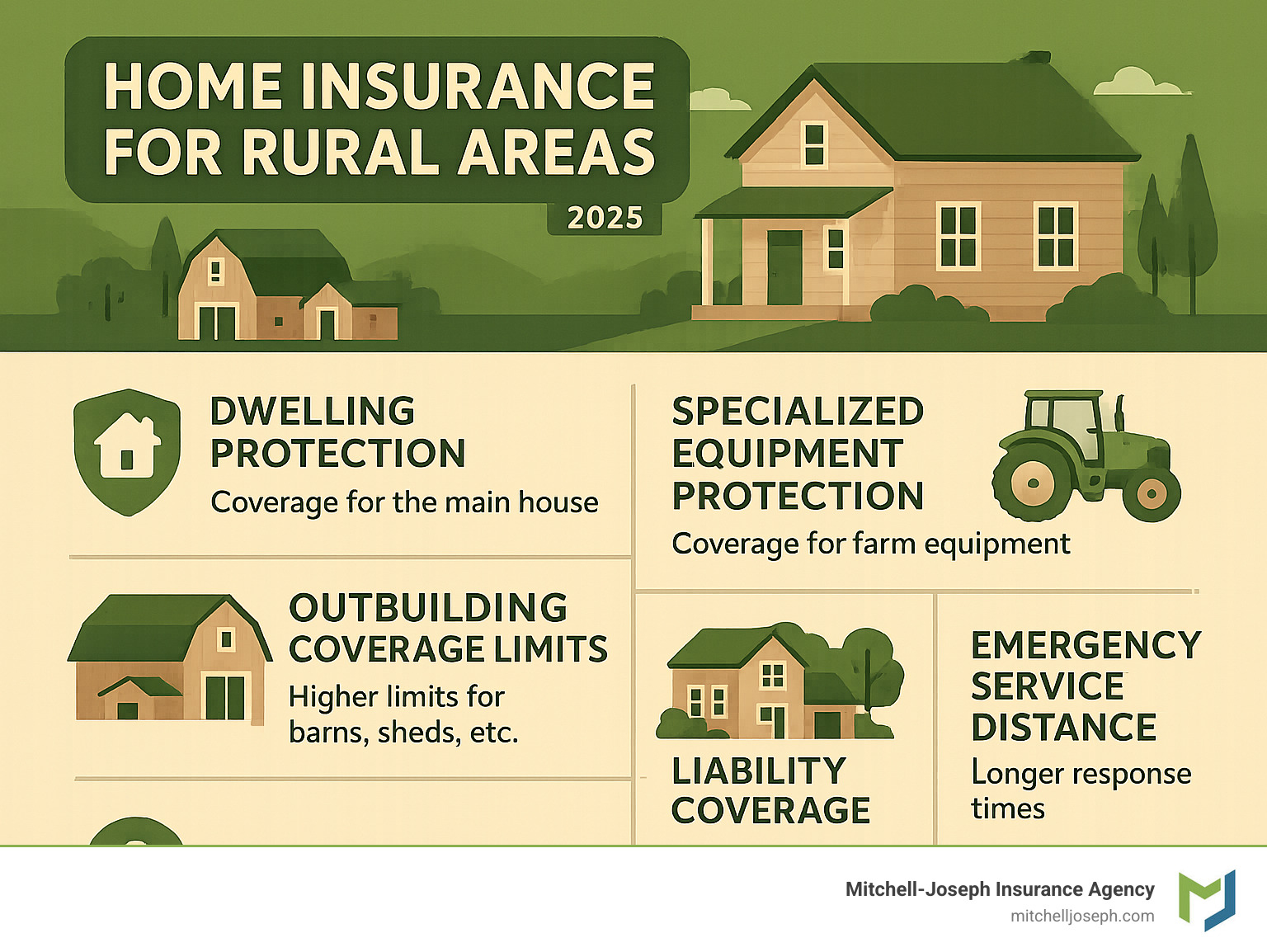
Home insurance for rural areas requires specialized coverage that standard homeowners policies simply can’t provide. About 46 million Americans live in rural areas, yet most struggle to find adequate protection for their unique properties and lifestyle risks.
Key differences between standard and rural home insurance:
- Coverage Limits: Rural policies offer higher limits for outbuildings (standard policies cap at 10% of dwelling coverage)
- Specialized Structures: Coverage for barns, workshops, equipment sheds, and detached garages
- Unique Assets: Protection for farm equipment, livestock, wells, septic systems, and generators
- Extended Liability: Higher liability limits for larger properties and unique rural activities
- Distance Factors: Adjusted coverage for properties far from fire departments and emergency services
- Business Activities: Endorsements for home-based businesses and hobby farming operations
Rural properties face distinct challenges that city and suburban homes don’t encounter. The distance from emergency services can mean longer response times during fires or medical emergencies. Your property likely includes multiple outbuildings, specialized equipment, and unique systems like wells or septic tanks that need protection.
Standard homeowners insurance treats your barn the same as a suburban garden shed – but that $50,000 barn storing your tractor deserves more than the typical 10% coverage limit.
As Jeffrey Joseph from Mitchell-Joseph Insurance Agency, I’ve spent over two decades helping rural homeowners in the Finger Lakes region steer the complexities of home insurance for rural areas. Our agency has specialized in protecting unique rural properties since 1961, understanding that your countryside estate needs coverage as distinctive as your lifestyle.
Why Standard Home Insurance Falls Short in the Countryside
Country living offers peace and wide-open spaces, but it also presents unique challenges for protecting your home. A standard homeowners policy, designed for urban or suburban life, often falls short. Let’s explore why your rural property requires specialized coverage.
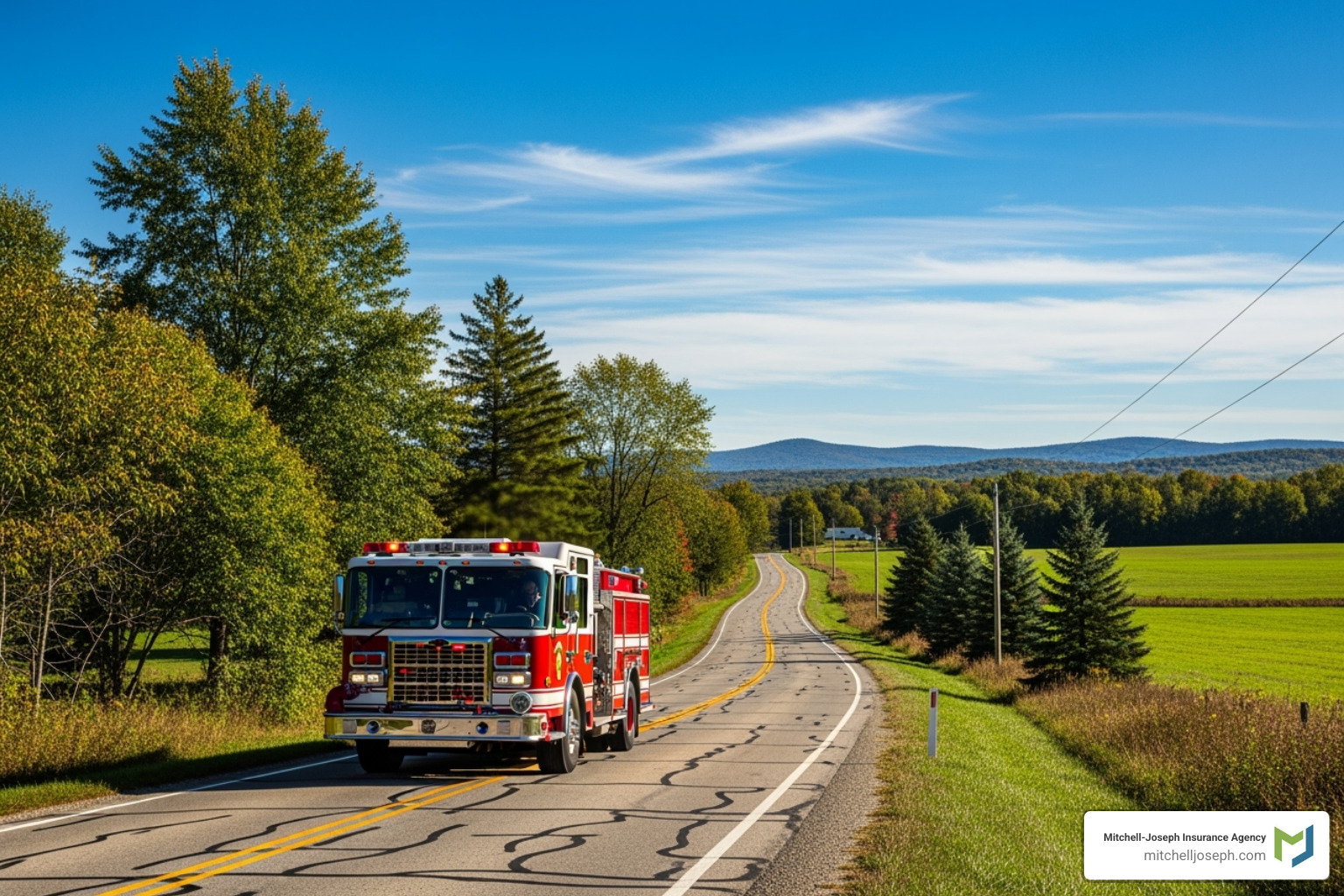
In the city, a fire truck is usually nearby. In the country, longer distances mean delayed emergency response times, turning a small fire into a potential disaster. Insurers assess this risk using an ISO rating (from 1 to 10, with 1 being best) to evaluate local fire protection. Rural areas often have higher ISO ratings, which can increase insurance costs.
Beyond distance, rural properties are typically larger, with more land, outbuildings, and long driveways. This extra space and these unique structures increase the chances of accidents, elevating your liability risks. The U.S. Census defines rural as any area that isn’t urban. This remoteness is precisely why rural properties need specialized insurance. What defines rural areas?
Understanding the Gaps in a Typical Policy
Standard homeowners policies don’t fit the unique needs of a rural home. A major gap is the “other structures” coverage. Most policies cap this at 10% of your home’s insured value. If your home is insured for $300,000, your valuable barn might only be covered for $30,000, leaving you significantly underinsured if it’s worth more or if you have multiple outbuildings.
Standard policies also typically exclude business activities. If you engage in hobby farming, sell produce, or run a home-based business, you won’t be covered for related liability or property damage. These activities require specific endorsements.
Understanding the difference between Actual Cash Value (ACV) and Replacement Cost is crucial. ACV pays for an item’s depreciated value, leaving you with less money to rebuild. Replacement Cost coverage provides enough to rebuild with new materials. For rural properties, where rebuilding is often more expensive, ACV can be a costly mistake. We always recommend Replacement Cost coverage for your home and outbuildings.
Unique Risks That Demand Specialized Coverage
Country living involves unique risks that standard policies often don’t cover. These include wildfire exposure, failures of private well and septic systems, damage from wildlife, and washouts of long, unpaved driveways. Power outage risks are also higher, potentially requiring more than just spoiled food coverage.
Here is a list of common rural property risks that highlight the need for specialized home insurance for rural areas:
- Wildfire and brush fire damage
- Well water contamination or pump failure
- Septic system backup or damage
- Damage caused by large wildlife (deer, bears, etc.)
- Unpaved road damage and maintenance issues
- Extended power outages and grid vulnerability
- Limited access for emergency services
- Theft of farm equipment or valuable outdoor items
- Liability from recreational activities on large properties
- Damage to fences and other boundary markers
- Flooding from natural waterways (often requires separate flood insurance)
- Damage from specific types of storms common to rural areas (e.g., hailstorms impacting crops, tornados)
Key Coverages for Home Insurance for Rural Areas
Understanding the unique risks of rural living is the first step; the next is making sure you have all the right protections in place. While the core parts of home insurance for rural areas might sound familiar, how they apply and what limits you need are very different from a standard city policy.

At its core, your policy includes familiar basics. Dwelling Coverage protects your home’s structure, and for rural properties, it’s vital this is for the full replacement cost, as remote rebuilding is often more expensive. Personal Property Coverage protects your belongings, but you may need higher limits for items like workshop tools or outdoor gear. Liability Protection is crucial for larger properties with more potential risks, and higher limits are recommended. Medical Payments coverage handles medical bills for guests injured on your property, regardless of fault.
Essential Coverage for Your Unique Structures and Assets
This is where home insurance for rural areas truly stands out. Your property is more than just a house; it’s a collection of assets needing specific protection.
- Outbuildings: The standard 10% coverage cap for “other structures” is often insufficient for valuable barns, sheds, and workshops. We ensure these are insured to their full replacement value.
- Fences and Gates: Extensive fencing on large properties requires adequate coverage for repair or replacement.
- High-Value Equipment: Items like tractors, ATVs, and mowers often exceed standard personal property limits and need specific coverage against theft and damage.
- Livestock or Hobby Farm Animals: Standard policies typically exclude animals. Special endorsements are needed to cover chickens, horses, or other livestock, which can be a significant asset.
- Detached Garages and Guesthouses: These major investments must be insured for their full replacement value, not just lumped into a limited “other structures” category.
Important Endorsements for Your Rural Home Insurance Policy
Endorsements customize your home insurance for rural areas, filling critical gaps for peace of mind.
- Equipment Breakdown Coverage: This covers repairs or replacement for essential systems like your well pump, HVAC, or water heater due to mechanical or electrical failure—a lifesaver for rural homes dependent on these systems.
- Service Line Coverage: A must-have for rural properties, this covers expensive repairs to underground water, sewer, and power lines on your property, including well and septic components.
- Home-Based Business Endorsements: If you run a business from home, this extends liability coverage to visiting customers and protects your business equipment and income.
- Identity Theft Protection: A valuable addition that provides assistance and reimburses costs associated with recovering from identity theft.
- Water Backup Coverage: This recommended endorsement covers damage from backed-up sewers, drains, or sump pump overflows, which are common risks for homes with septic systems.
Factors That Influence Your Rural Insurance Premiums
While rural areas may have less crime, home insurance for rural areas isn’t always cheaper. Several unique factors can influence your premiums, causing them to vary significantly from national averages.
Your property location is a primary factor. The distance to the nearest fire department and the proximity to fire hydrants heavily influence your premium. A lack of nearby hydrants means firefighters may need to transport water, slowing response times. Insurers use an ISO rating to assess this risk; remote locations are seen as higher risk, which can increase costs.
The construction materials of your home and outbuildings affect your rates. Fire-resistant materials can lower your premium, while older systems in historic homes, like knob-and-tube wiring, may increase costs due to higher risk.
The age of your home is also a key factor. Older homes may have outdated electrical, plumbing, and heating systems that are more prone to failure. Repairing them can also be more complex and costly, which insurers account for.
Your personal and property claims history impacts your premium. A history of frequent claims can signal higher risk to insurers, resulting in a higher rate.
A good credit score can help lower your rates. Insurers often use a credit-based insurance score to predict future claims. A strong credit history suggests financial responsibility and can lead to lower premiums. Learn more about how your credit score can help
Finally, your property size and acreage influence premiums. More land, outbuildings, and features like ponds or long driveways increase potential liability and the amount of property that needs protection, which can raise the cost.
Smart Strategies to Lower Your Insurance Costs
While rural home insurance might come with its own set of cost factors, that doesn’t mean you’re stuck with exorbitant premiums. We believe in empowering our clients with smart strategies to manage and lower their insurance costs without compromising on essential coverage.

Here are some effective approaches:
- Bundling Policies: This is one of the easiest ways to save. Most insurance providers offer significant discounts when you combine multiple policies, such as your home insurance for rural areas with your auto insurance, or even life insurance. Bundling can lead to an average discount of 5% to 25% on your premiums. It also simplifies your insurance management, as you’ll have everything with one provider.
- Increasing Your Deductible: Your deductible is the amount you pay out-of-pocket before your insurance coverage kicks in. Opting for a higher deductible typically results in a lower annual premium. For example, increasing your deductible on a $350,000 policy from $500 to $1,000 could save you around 7%, while raising it to $2,000 could lead to savings of up to 16%. Just make sure you choose a deductible amount you’re comfortable paying if a claim arises.
- Installing Security Systems: Protecting your home proactively can lead to discounts. Installing a monitored home security system, smoke detectors, fire alarms, and even deadbolt locks can signal to insurers that your property is less risky. Discounts for home security systems can range from 5% to 20% off your premiums. The average monthly cost for monitoring a home security system is typically between $25 to $50, making it a worthwhile investment for both safety and savings.
- Maintaining Your Property: A well-maintained property is a safer property. Regularly clearing brush, keeping trees trimmed away from your home, maintaining your roof, and addressing minor repairs promptly can prevent larger, more expensive claims. Showing a commitment to property upkeep can sometimes be recognized by insurers.
- Claims-Free Discounts: Many insurers offer discounts for policyholders who maintain a claims-free record over a certain period. While you should always file a claim when necessary, avoiding small, easily manageable claims can help you accrue these discounts over time and secure better rates.
- Reviewing Your Policy Annually: Your life changes, and so should your insurance. We encourage our clients to review their policies with us annually. This ensures your coverage still meets your needs, accounts for any new additions to your property, and allows us to explore new discounts or better rates that may have become available.
Choosing the Right Policy: Rural Home vs. Farm & Ranch Insurance
A common question from rural property owners is whether they need a specialized rural home policy or a more comprehensive farm and ranch policy. The right choice depends on the scale of your activities and how you use your land.
This table highlights the main differences:
| Feature | Rural Home Insurance (Specialized) | Farm & Ranch Insurance |
|---|---|---|
| Primary Purpose | Residential living, with coverage for unique rural exposures. | Agricultural operations (commercial or hobby), plus residential. |
| Dwelling Coverage | Standard home coverage, often with higher limits for outbuildings. | Home coverage integrated into a broader farm policy. |
| Outbuildings | Covers barns, sheds, workshops, detached garages (non-commercial use). | Covers all farm buildings: barns, silos, equipment sheds, livestock housing. |
| Equipment | Covers personal-use equipment like lawnmowers, ATVs, small tractors. | Covers extensive farm machinery, implements, grain, and supplies. |
| Livestock | Limited or no coverage for personal animals; specific endorsements needed. | Comprehensive coverage for farm animals (commercial or hobby). |
| Liability | Higher personal liability for large acreage, recreational use. | Broader liability for farm operations, public access, products, employees. |
| Income Generation | Minimal or no income from property activities. | Significant income generated from agricultural activities. |
| Scale of Operations | Hobby farming, personal enjoyment, large residential property. | Commercial farming, ranching, extensive agricultural pursuits. |
| Specialized Risks | Focus on well/septic, distance to fire, wildlife damage. | Focus on crop failure, livestock perils, machinery breakdown, product liability. |
The key distinction is whether your property is primarily a residence or if it generates significant income from farming. If your farm activities generate more than $50,000 in annual turnover, it’s likely time to consider a farm and ranch policy to ensure your coverage matches your property’s purpose.
When to Consider a Full Farm and Ranch Policy
A farm and ranch policy is designed for properties where farming is a primary activity, whether for business or as a serious hobby. Consider this policy if:
- You have significant agricultural income (e.g., over $50,000 annually), as it covers farm assets and business income loss.
- You allow public access for business activities like U-pick operations or farm stands, which creates liability risks not covered by a standard policy.
- You are employing farm workers, which requires workers’ compensation and liability protection.
- You own extensive farm equipment beyond a personal tractor, such as combines or balers.
- You have product liability needs from selling farm products like milk, eggs, or produce.
- You have large-scale livestock operations beyond a few hobby animals.
Finding the Right Provider for Home Insurance for Rural Areas
Navigating the options for home insurance for rural areas can be complex, which is why choosing the right provider is critical. Working with an independent agent is one of the best moves you can make.
As an independent agent, Mitchell-Joseph Insurance Agency isn’t tied to one carrier. We work with 24 different insurance companies to shop around and find the best policy and price for your unique needs. Our job is to translate your lifestyle into the right coverage.
When searching for an insurance partner, keep these tips in mind:
- Compare multiple quotes: An independent agent can handle this for you, as prices and coverage vary widely.
- Check financial strength ratings: Ensure the insurer (e.g., via AM Best) is financially stable and can pay claims.
- Read customer reviews: Look for patterns in how an insurer handles claims and customer service.
- Look for specialization: Choose providers with experience and products specifically for rural properties.
We pride ourselves on understanding the insurance needs of residents in the Honeoye Falls, Pittsford, Naples, Rushville, Avon, Bloomfield, Bristol, Canadice, Canandaigua, Cohocton, Fishers, Gorham, Honeoye, Ionia, Lima, Mendon, Middlesex, Potter, Rochester, Rush, South Bristol, Stanley, Victor, Wayland, and West Bloomfield areas. With over 200 years of combined experience, we are here to guide you.
Conclusion
Living in the countryside truly offers a special kind of peace and beauty. But as we’ve explored, this wonderful lifestyle also brings its own set of unique challenges. A standard homeowners policy, designed for city or suburban homes, just doesn’t cut it when it comes to protecting your rural property. It simply wasn’t built to understand the specific risks you face – things like the longer distances for emergency services, the specialized needs of your barns and outbuildings, or the vital workings of your private well and septic systems.
So, what’s the secret to truly protecting your rural haven? It’s all about custom protection. Your home, your land, and your lifestyle are unique, and your insurance should be too. Whether you’re tending a small hobby farm that needs specific endorsements, or running a larger operation that calls for a full farm and ranch policy, tailoring your coverage is absolutely key. And remember, being proactive about managing risks – like bundling your policies for savings or installing a smart security system – can also make a big difference in both your safety and your premiums.
At Mitchell-Joseph Insurance Agency, we don’t just see a house; we see a lifestyle. We understand that your rural property is more than just bricks and mortar – it’s where your heart is. With over 200 years of combined experience and the ability to compare quotes from 24 different insurance companies, we’re here to offer you personalized guidance. Our goal is to make sure you have the custom home insurance for rural areas that perfectly fits your needs. We want you to enjoy every starry night and quiet morning, knowing your unique abode is well-protected.
Ready to find the right coverage for your countryside haven? Don’t leave your cherished rural property exposed. Get a quote for the cheapest home insurance in New York today, and let us help you secure your peace of mind.

