

Why Older Homes Present Unique Insurance Challenges
Home insurance for old homes requires specialized knowledge. While charming, these properties—from Victorian mansions to century-old farmhouses—have architectural details and historical significance that create unique insurance challenges standard policies often can’t address.
Key facts about insuring older homes:
- Cost increase: Homes over 30 years old cost 75% more to insure than new construction
- Higher premiums: A 50-year-old home averages $209 per month vs. $134 for new homes
- Special policies: Many older homes require HO-8 policies instead of standard HO-3 coverage
- Additional risks: Outdated electrical, plumbing, and heating systems increase claim likelihood
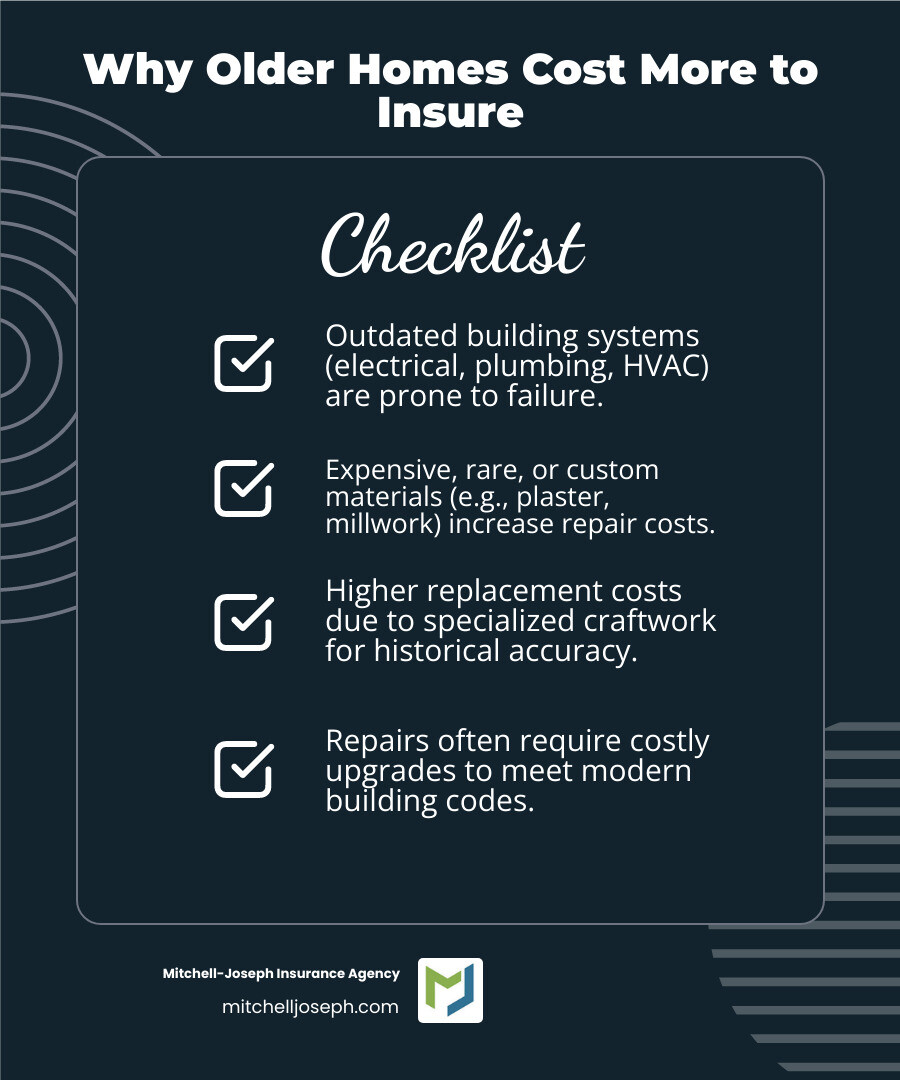
The appeal of older homes is undeniable, with features like stained-glass windows and original hardwood floors. However, the vintage materials and building techniques create higher risks that insurers must consider. Older homes typically have three main factors that drive up insurance costs: outdated building systems prone to failure, expensive specialty materials that cost more to repair, and higher replacement costs due to the skilled craftwork required.
I’m Jeffrey Joseph, and since 1999, I’ve helped homeowners in the Finger Lakes region find specialized coverage for older and historic properties. My experience with home insurance for old homes shows that the right approach can protect these unique homes while keeping costs manageable.
Home insurance for old homes terms to remember:
For insurance purposes, an “older home” is generally 40-50 years old or more, often with systems that predate modern building codes, making them more susceptible to fires or water damage. A “heritage home” is typically over 50 years old and may have an official designation from a body like the National Register of Historic Places. While this designation doesn’t always increase premiums directly, the costly requirements for historically accurate upkeep and repairs do.
The biggest factor affecting insurance cost is the expense of repairs. Older homes require specialized labor and rare materials (like plaster or custom millwork) to maintain their character, which is more costly than modern repairs. This translates to higher repair costs for insurers and higher premiums for homeowners. In fact, homes over 30 years old can cost 75% more to insure than new ones.
Common Issues That Increase Risk and Premiums

Many common issues in older properties significantly increase their risk profile and insurance premiums.
- Outdated electrical systems: Knob-and-tube wiring (pre-1950s) lacks a ground wire and can be a fire risk. A 60-amp service may not handle modern electrical loads, and some insurers won’t cover homes with aluminum wiring due to fire risk.
- Outdated plumbing: Galvanized pipes (pre-1950s) corrode over time, while cast iron and lead pipes also pose risks of leaks and bursts, leading to expensive water damage claims.
- Aging roofs: Roofs over 25 years old are more prone to damage from weather, a major concern for insurers. Some policies may only cover an older roof’s actual cash value, not full replacement.
- Old HVAC systems: Furnaces older than 25 years are often considered unacceptable by insurers due to inefficiency and risks of breakdown or carbon monoxide leaks.
- Fuel oil tanks: Tanks over 25 years old can rust and leak, creating environmental hazards with high cleanup costs.
- Foundation issues: Older homes can have foundation problems indicating structural instability, a major risk for insurers.
For more on assessing your home’s current coverage, check out our guide: Is Your Home Underinsured?.
Understanding Replacement Cost vs. Actual Cash Value
Understanding the difference between Replacement Cost Value (RCV) and Actual Cash Value (ACV) is crucial for insuring an older home, as it determines your claim payout.
- Replacement Cost Value (RCV): This covers the cost to rebuild or repair your home with new, similar materials, without deducting for depreciation. It aims to restore your home fully, even if the cost exceeds market value. We typically recommend RCV for older homes to ensure you can afford a complete restoration.
- Actual Cash Value (ACV): This is the replacement cost minus depreciation (age, wear and tear). For example, an ACV policy pays for a 50-year-old roof’s current value, not the cost of a new one. This can leave a significant funding gap for major repairs on an older home.
This distinction is critical because an older home’s rebuild cost can exceed its market value. A historic home might sell for $300,000, but cost $500,000 to rebuild with period-appropriate materials. An ACV policy would leave you with a large out-of-pocket expense, making the right valuation method essential for proper coverage.
For more detailed information on property valuation and insurance, please visit our page on Property Insurance Rochester NY.
Navigating Policy Options for Home Insurance for Old Homes
Insuring an older home isn’t a one-size-fits-all situation. Properties with significant age, unique construction, or historical designations often require specialized policies beyond standard coverage.

The most common standard policy is the HO-3, an “open perils” policy that covers your home’s structure from all risks except those specifically excluded. It typically pays Replacement Cost Value (RCV), covering the cost to rebuild new without deducting for depreciation. An HO-3 is ideal for many homes.
However, an HO-3 may not be available for older homes with outdated systems, or premiums could be very high. This is where specialized policies like the HO-8 are essential for home insurance for old homes. For very valuable older homes (e.g., over $750,000), high-value home insurance from specialty carriers can provide broader, customized coverage.
The HO-8 Policy: Custom for Older Properties
The HO-8 policy, or “modified coverage form,” is designed for older homes that don’t qualify for a standard HO-3. This is often due to age, unique construction, or outdated systems. It’s also a common choice for historic homes where the replacement cost exceeds the market value.
An HO-8 policy differs from an HO-3 in two key ways. First, it’s a named perils policy, meaning it only covers risks specifically listed in the policy. Second, it typically pays on an Actual Cash Value (ACV) basis, factoring in depreciation. This results in lower premiums but may not provide enough funds to fully rebuild your home to its original condition.
Commonly covered perils under an HO-8 include fire, wind, theft, and vandalism. However, risks like damage from the weight of snow or certain types of water damage are often excluded, as older homes are more vulnerable to these issues. While an HO-8 might seem less comprehensive, it’s often the only viable option for properties that insurers consider too risky for standard coverage.
For a deeper dive into various policy types, check out our Home Insurance Coverage Types page.
Essential Endorsements for Your Older Home
Even with an HO-3 or HO-8 policy, critical add-ons, called endorsements, are highly recommended for older homes to fill crucial coverage gaps.
- Ordinance or Law Coverage: This is a must-have for older homes. If your home is damaged, local rules may require you to rebuild to current, more expensive building codes. For example, a fire could trigger a mandate for updated wiring. Standard policies don’t cover these “code upgrade” costs, but this endorsement does.
- Service Line Coverage: This protects you from the high cost of repairing or replacing aging utility lines (water, sewer, gas) that run from the street to your house. Standard policies typically exclude this coverage. You can find out more about this important coverage here: Service Line Coverage.
- Water Backup and Sump Overflow Coverage: This vital endorsement covers damage from water backing up through sewers or drains or from an overflowing sump pump, which is a common risk in homes with basements. Learn more about what this covers: What Does Water Sewer Backup Insurance Cover?.
- Scheduled Personal Property: If you own valuable items like antiques, fine art, or collectibles, standard coverage may be insufficient. This endorsement allows you to list and insure specific items for their full appraised value.
- Flood Insurance: Standard home insurance never covers flood damage. Since many older homes were built before modern flood mapping, they can be vulnerable. We always recommend considering a separate flood insurance policy to protect your property from rising water. Get the facts on Flood Insurance Coverage.
Your Action Plan for Insuring an Older Home
Insuring an older home requires a proactive approach. With preparation and documentation, you can find the right coverage, avoid pitfalls, and protect your property.
The Critical Role of a Home Inspection
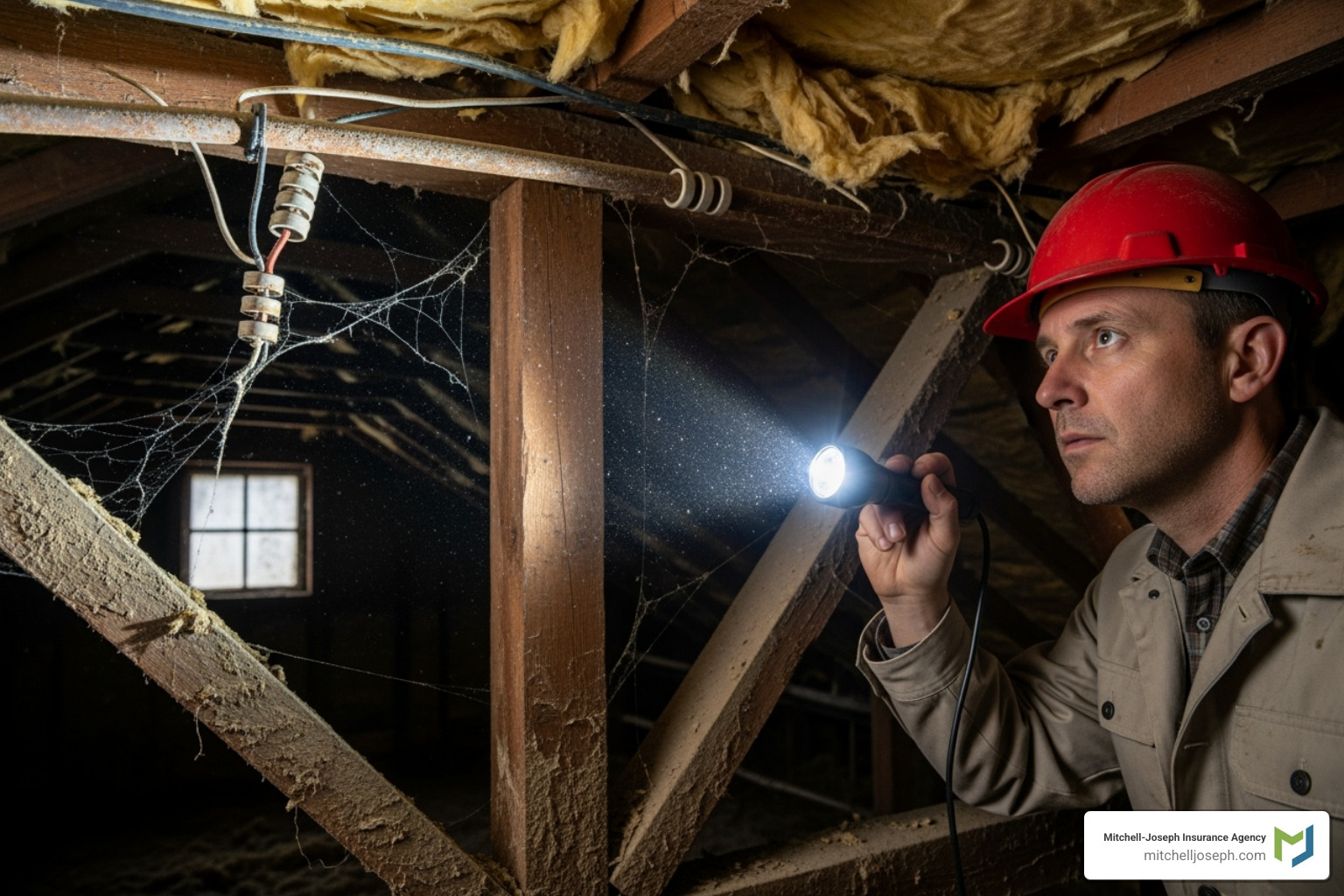
A comprehensive home inspection is essential before seeking home insurance for old homes. It helps you understand your home’s needs and provides a clear picture for insurers. We recommend an inspector who specializes in older homes. They can spot subtle issues a generalist might miss, pinpointing problems with outdated systems or structure that impact your insurability and premiums.
Many insurers require a “four-point inspection” for older homes, focusing on the four systems that pose the highest risk:
- Roof: Its age, condition, materials, and remaining lifespan.
- Electrical System: The type of wiring (e.g., knob-and-tube, copper), service amperage, and overall condition.
- Plumbing System: The type of pipes (e.g., galvanized, PVC), their condition, and any signs of leaks.
- HVAC (Heating, Ventilation, and Air Conditioning): The age, type, and operational safety of the system.
A detailed inspection report can help you secure better rates or qualify for coverage.
Can You Be Denied Coverage for an Older Home?
Yes, an older home can be denied home insurance for old homes. Insurers assess risk, and if a property is deemed too risky, they may decline to offer a policy. Common reasons for denial include high-risk systems (e.g., knob-and-tube wiring, old roof), poor overall condition, or an extensive claims history.
If you’re denied coverage, first understand why. Often, the denial is due to fixable issues. Upgrading wiring, plumbing, or the roof can make a home insurable. We can also help you explore options like state-run FAIR Plans if traditional coverage isn’t available.
Be aware of common policy exclusions that apply to all homes:
- Earthquakes: Requires a separate policy or endorsement.
- Floods: Always excluded; requires a separate flood insurance policy.
- Wear and tear: Gradual deterioration from age or lack of maintenance is not covered.
- Neglect: Damage from a failure to maintain the property is typically not covered.
- Intentional damage: Damage caused by the policyholder is never covered.
For more information on specific scenarios, like what happens if your home is vacant, take a look at our guide on Home Insurance for Empty Homes.
How Claims Are Handled for Historic Properties
Handling a claim for a historic home is complex. It’s not just about fixing damage but restoring a piece of history according to specific guidelines.
Document unique features before a loss occurs. Take detailed photos and videos of architectural elements like custom millwork or period fixtures. This documentation is invaluable for proving the quality of these features to an adjuster.
After damage, finding skilled artisans for historically accurate repairs is essential. Replicating stained glass or matching plaster is more complex and expensive than modern repairs. Your policy should account for these higher costs.
Work closely with your adjuster, explaining your home’s historical significance and the need for specific repair methods. An HO-8 policy pays ACV, while other policies may offer RCV. Understanding your settlement terms is key to knowing how much you’ll receive, and we can help guide you through this process.
For answers to more general questions about home insurance, our Home Insurance FAQs page is a great resource.
How to Find the Best and Most Affordable Coverage
Finding affordable home insurance for old homes is about balancing cost with solid protection. It requires a smart approach to achieve long-term affordability through proactive steps and careful shopping.

Tips for Reducing Your Home Insurance for Old Homes
While older homes have higher premiums, you can lower them. The most impactful step is making safety upgrades. Updating high-risk systems (wiring, plumbing) or installing a new roof reduces your home’s risk profile, which can lead to better rates.
Other cost-saving strategies include:
- Installing security and safety devices like alarms, smoke detectors, and water leak sensors to earn discounts.
- Increasing your deductible, the amount you pay out-of-pocket on a claim, to lower your premium. Just ensure you can comfortably afford the higher deductible amount.
- Bundling home and auto policies with the same provider, which usually results in a significant discount.
- Maintaining a good credit score and having a claims-free history, which can lead to lower premiums in many states.
For even more detailed strategies on saving money, be sure to review our page on Homeowners Insurance Discounts.
Finding the Right Insurance Partner
For home insurance for old homes, your agent is as important as your policy. The value of an independent insurance agent like us at Mitchell-Joseph Insurance Agency is our ability to find the right fit for you. As an independent agency, we work with multiple carriers, not just one. This allows us to shop on your behalf, comparing quotes and coverage to find the best fit for your older home. Our team’s local expertise in the Finger Lakes region ensures your policy is custom to your specific environment.
We understand the unique challenges of insuring vintage properties, from construction methods to historic district rules. We can guide you through HO-8 policies, crucial endorsements, and documenting special features, using resources like those from the National Trust for Historic Preservation to provide up-to-date advice.
What to consider when looking for home insurance for old homes
When choosing home insurance for old homes, balance strong protection with affordability. Keep these points in mind:
- Your home’s specific needs: Consider original features, outdated systems, and expensive materials that require special coverage.
- Your budget: We’ll work with you to find a comprehensive policy that fits your financial comfort zone.
- The insurer’s reputation for handling claims: We partner with reputable companies known for fair and efficient claims handling.
- Available endorsements: Ensure your insurer offers crucial add-ons for older homes, like ordinance or law, service line, and water backup coverage.
For a broader understanding of insuring your home in our area, you might find our Insuring Your Rochester Home: A Comprehensive Guide helpful too.
Conclusion: Protect Your Piece of History with Confidence
Insuring an older home can seem complex. We’ve covered the unique challenges, from outdated systems and aging pipes to the higher repair costs. These properties require a different insurance approach than modern homes.
The good news is that getting the right home insurance for old homes is entirely possible. It’s about facing challenges with a smart plan. Being proactive with inspections, understanding your home’s quirks, and making key upgrades can make a huge difference in protecting your home and saving on premiums.
That’s where Mitchell-Joseph Insurance Agency comes in. We understand the care you put into your older home. With over 200 years of combined experience, our family-owned business has helped countless homeowners in Honeoye Falls and across the Finger Lakes region steer these challenges.
Every older home has unique needs, which is why we avoid one-size-fits-all solutions. We partner with 24 different insurance companies to shop for you, finding custom coverage that fits your home perfectly. We’re here to ensure your piece of history is protected for generations.
Don’t let insuring your vintage home feel overwhelming. We’re here to simplify the process and give you peace of mind. Ready to protect your unique property? Get a comprehensive quote for your Home Insurance today and let’s get your home covered with confidence!

