

Why Manufactured Homes Need Specialized Insurance Protection
Home insurance for manufactured homes is essential protection for factory-built homes, which differ significantly from traditional site-built houses. These homes face unique risks, such as higher vulnerability to wind damage, and require specialized coverage that standard homeowners policies don’t provide.
Quick Answer: What You Need to Know About Manufactured Home Insurance
- Coverage Type: HO-7 policies (not standard HO-3 homeowners policies)
- Average Cost: $500-$1,200+ annually, often less than traditional home insurance
- Key Requirements: Permanent foundation, proper skirting, and tie-downs
- Age Limits: Some insurers won’t cover homes over 20-25 years old
- Special Considerations: Covers home during transport and includes specific manufactured home risks
Over 20 million Americans live in manufactured homes, drawn by their affordability. However, their unique construction means they require specialized knowledge to insure properly. The distinction between mobile homes (pre-1976), manufactured homes (post-1976 HUD standards), and modular homes is critical for insurance, as each has different policy requirements.
As an agent with Mitchell-Joseph Insurance Agency, I’ve helped upstate New York homeowners steer the complexities of home insurance for manufactured homes for over two decades. Finding the right coverage means understanding both the unique construction of these homes and the specialized insurance products designed to protect them.

Mobile, Manufactured, or Modular? Understanding Your Home’s Insurance Needs
Many people use the terms “mobile,” “manufactured,” and “modular” interchangeably, but your insurance company doesn’t. Each type of factory-built home has its own construction standards and, most importantly, its own insurance requirements. Understanding which category your home falls into is the key to getting the right protection.
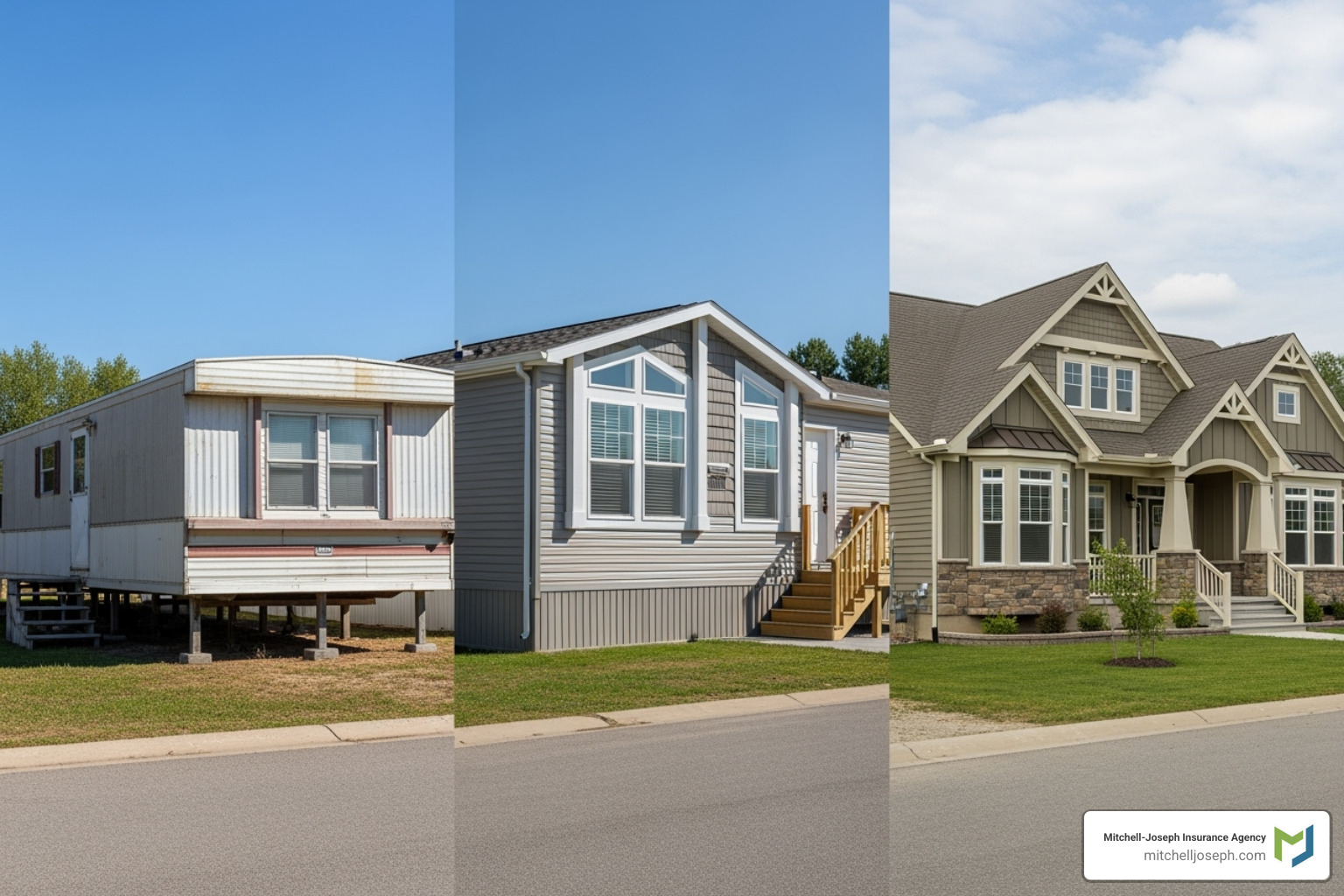
These differences directly impact the type of home insurance for manufactured homes you’ll need and how much you’ll pay.
| Attribute | Mobile Home | Manufactured Home | Modular Home |
|---|---|---|---|
| Build Date | Before June 15, 1976 | After June 15, 1976 | Any time |
| Governing Code | No federal standard (state/local codes varied) | HUD Manufactured Home Construction and Safety Standards (MHCSS) | State and local building codes (like site-built homes) |
| Foundation | Often on wheels or temporary foundation | Can be on non-permanent or permanent foundation, metal frame | Always on a permanent foundation (can have basement) |
| Insurance Policy Type | HO-7 (Specialized) | HO-7 (Specialized) | HO-3 (Standard Homeowners) |
For the complete technical definition, you can check out the official HUD definition of a manufactured home.
The Key Differences for Insurers
These aren’t just different names; they represent real differences in risk that insurers care about.
- Mobile homes: Built before June 15, 1976, with no federal standards. Finding insurance can be trickier, and they require a specialized HO-7 policy.
- Manufactured homes: Built after June 15, 1976, under strict federal HUD standards for safety and quality. They are transported to the site and also typically require an HO-7 policy.
- Modular homes: Constructed to the same local and state building codes as site-built homes. They are assembled on permanent foundations and usually qualify for a standard HO-3 homeowners policy.
Why This Distinction Matters for Your Policy
Insurance companies are particular about these details for one reason: risk assessment. Different construction materials, foundation types, and building standards translate to different levels of risk for perils like wind and fire.
- Risk Factors: Older mobile homes and some manufactured homes can be more vulnerable to wind and fire due to their construction and lack of a permanent foundation.
- Policy Type: The unique risks of mobile and manufactured homes necessitate a specialized HO-7 policy. Modular homes, being built to the same standards as traditional houses, fit into standard HO-3 policies.
- Premium Calculation: Higher perceived risk can mean higher premiums, although the lower replacement value of manufactured homes often results in a lower insurance cost than for traditional homes. The key is matching the right coverage to your specific home type.
Understanding these distinctions helps ensure you get appropriate coverage. For more detailed information, check out more info about home insurance coverage.
Decoding Your Policy: What Home Insurance for Manufactured Homes Covers
Your home insurance for manufactured homes policy is a contract that outlines what’s covered and how you’ll be paid after a loss. Most policies are “named perils,” covering specific events like fire, wind, or theft. A key detail is the settlement method: Actual Cash Value (ACV) pays the depreciated value of your items, while Replacement Cost Value (RCV) pays to replace them with new ones. RCV provides better financial protection. For more details, see this guide to loss settlement options.
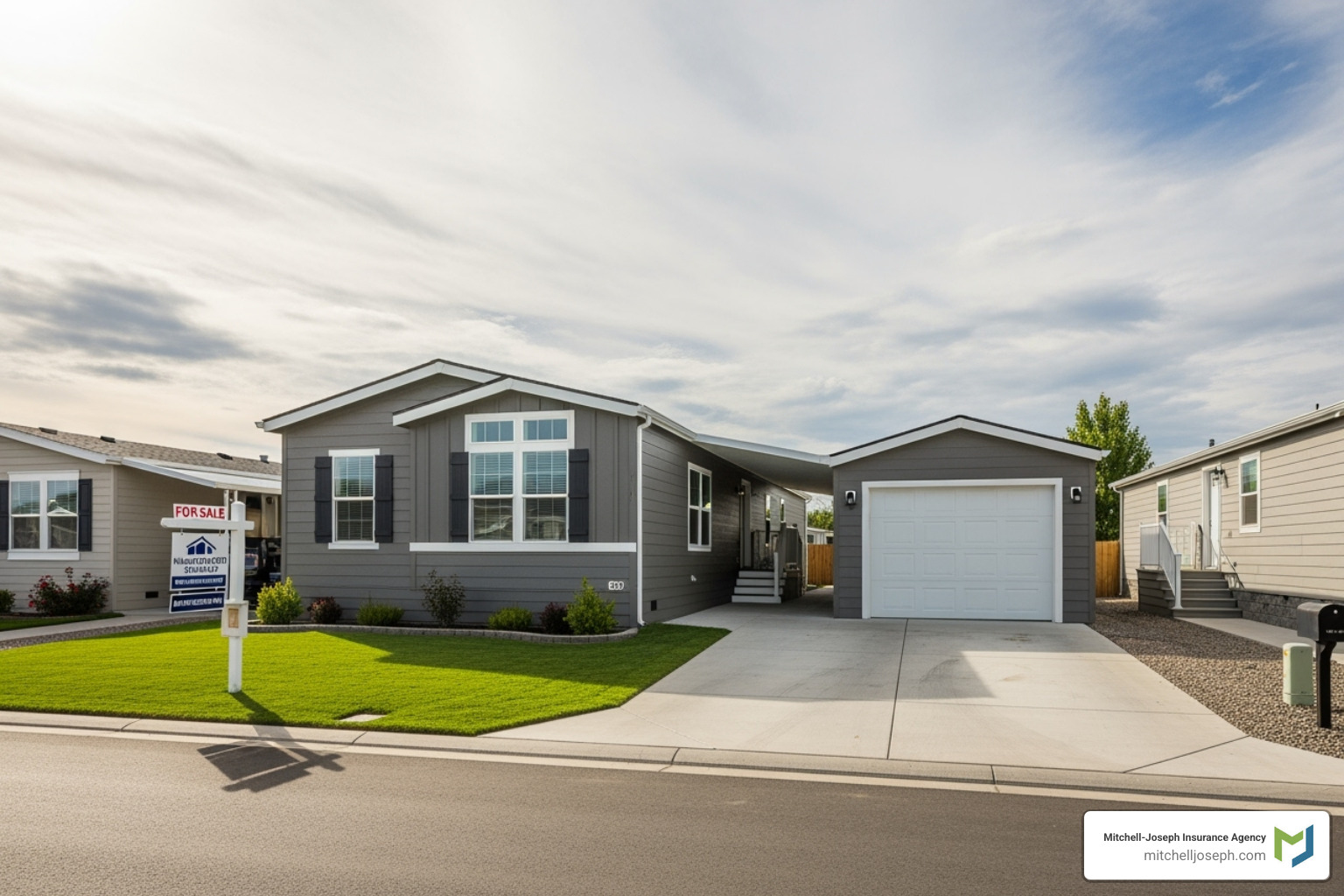
Standard Coverages Included in Your Policy
Every policy includes several core protections. Here’s a quick rundown:
- Dwelling coverage (Coverage A): Protects your home’s physical structure, including walls, roof, and built-in systems.
- Personal property (Coverage C): Covers your belongings, like furniture, electronics, and clothing, from covered damages.
- Other structures coverage: Insures structures not attached to your home, such as a detached garage or shed.
- Personal liability coverage: Shields you financially if you’re responsible for injuring someone or damaging their property.
- Additional Living Expenses (ALE): Pays for temporary housing and related costs if your home is unlivable during repairs.
- Medical payments to others: Covers minor medical bills for guests injured on your property, regardless of fault.
For more details, see this breakdown of home insurance coverage types.
Popular Optional Coverages and Endorsements
Consider adding endorsements for risks your standard policy may not cover:
- Sewer and water backup: Covers damage from backed-up drains or sump pump failure. Learn about water and sewer backup coverage.
- Flood insurance: A separate, crucial policy for flood damage, which standard policies exclude. Understand flood insurance coverage.
- Equipment breakdown: Helps pay for repairs to major home systems like your furnace or water heater.
- Trip coverage for moving: A unique endorsement that protects your home while it’s being relocated.
- Service line protection: Covers repairs to underground utility lines on your property.
- Guaranteed replacement cost: Ensures you can rebuild your home to its former state, even if costs have risen.
These optional coverages address common and expensive claims, and we can help you decide which ones fit your needs and budget.
The Price Tag: Factors Influencing Your Premium and How to Save
The cost of home insurance for manufactured homes varies widely, typically ranging from $500 to $1,200 annually, but can be higher in high-risk areas. While the lower replacement value of these homes can lead to lower premiums compared to traditional houses, their vulnerability to perils like wind damage is also a key pricing factor.
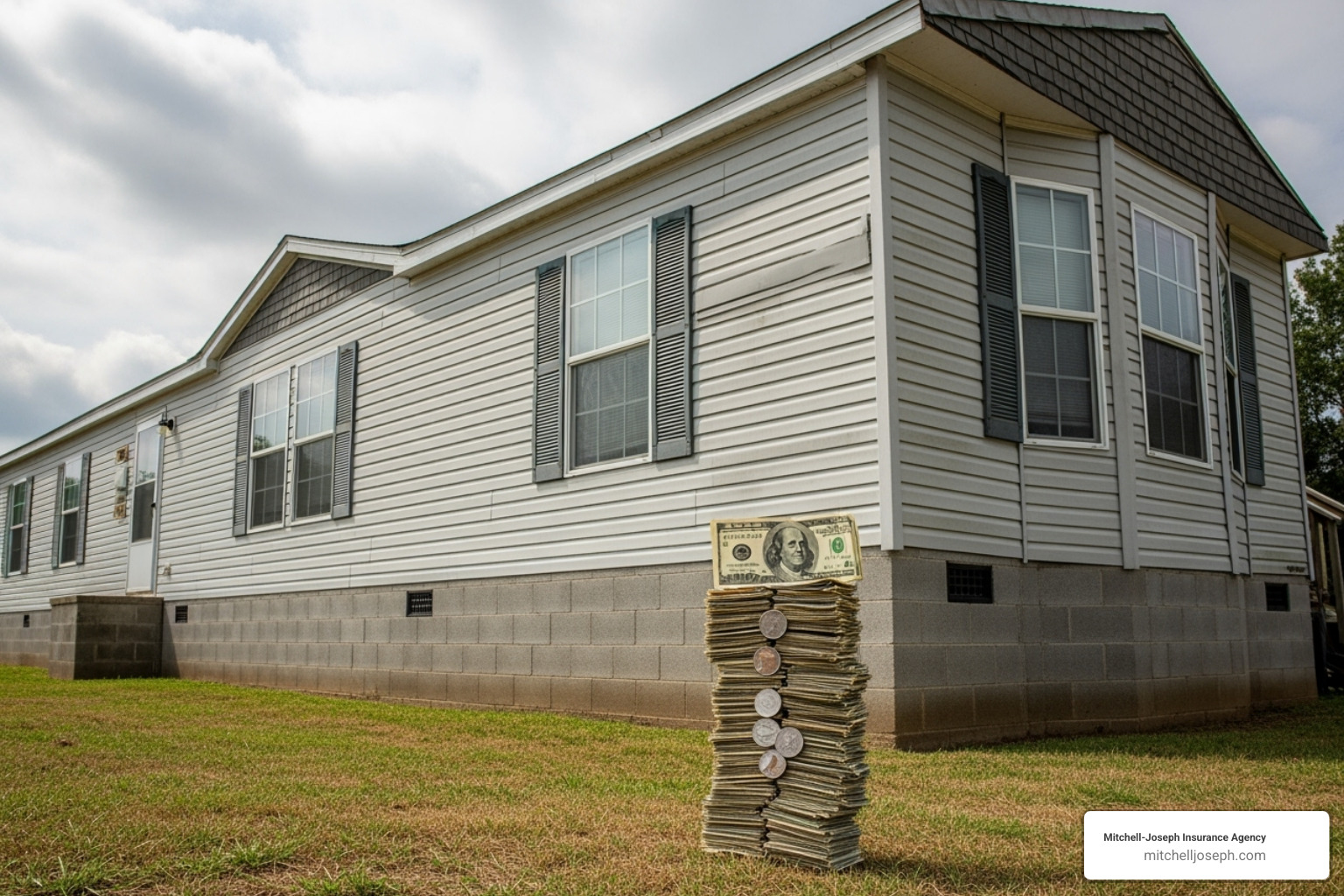
Key Factors That Determine Your Rate
Multiple factors combine to determine your premium:
- Home’s Age: Older homes (often 25+ years) may have higher premiums due to increased risks from aging systems.
- Location: Your ZIP code’s risk profile, including proximity to fire services and exposure to storms or floods, affects rates.
- Construction and Size: A larger home costs more to rebuild and insure. Construction materials also play a role.
- Replacement Value: This is the estimated cost to rebuild your home. It’s a primary driver of your premium. It’s important to ask, is your home underinsured?.
- Claims History: A history of multiple claims can lead to higher rates.
- Deductible: Choosing a higher deductible lowers your premium, but means you pay more out-of-pocket for a claim.
- Credit-Based Insurance Score: In New York, a good credit history can help lower your insurance costs.
Smart Strategies for Lowering Your Premium
You can take steps to reduce your insurance costs:
- Bundle Policies: Combine your home and auto insurance with one company for a multi-policy discount, often saving 10-25%.
- Install Safety Devices: Smoke detectors, security systems, and sprinklers can earn you discounts.
- Raise Your Deductible: A higher deductible provides immediate premium savings. Just be sure you can afford the out-of-pocket expense.
- Maintain Good Credit: Paying bills on time can positively impact your insurance score and premium.
- Shop Around: As an independent agency, we compare quotes from multiple carriers to find you the best value.
- Ask for Discounts: You may be eligible for discounts based on age (55+), being a new homeowner, or living in a specific mobile home park. Learn more about homeowners insurance discounts.
Qualifying for Coverage: Eligibility and Getting a Quote
To get home insurance for manufactured homes, your property generally needs to meet specific requirements that ensure its safety and stability. Insurers look for these features to manage risk, which helps keep rates affordable.
Common eligibility requirements include:
- Permanent Foundation: The home must be secured to a permanent foundation, not sitting on wheels or temporary blocks.
- Skirting and Tie-Downs: Proper skirting must enclose the perimeter to protect plumbing and electrical systems, and steel tie-downs must anchor the home to its foundation to resist wind.
- Age and Condition: Many insurers prefer homes under 25 years old and in good condition, with no major structural issues. Updated electrical and plumbing systems may be required for older homes.
- External Rules: Your mortgage lender will mandate specific coverage levels, and your mobile home park may have its own insurance rules.
Key considerations for home insurance for manufactured homes
Certain situations require special attention:
- Older Homes: While challenging, insuring older homes is possible, especially with proof of good maintenance and system updates.
- High-Risk Zones: If you live in an area prone to floods or other disasters, you may need coverage from a specialized carrier, likely at a higher premium.
- Vacant or Rental Properties: Empty homes and rental properties have different risk profiles and require specialized policies, not standard homeowner’s insurance.
- Proving Maintenance: Keep records and photos of all repairs and updates to your home. This documentation can significantly speed up the underwriting process.
The process for getting a quote for home insurance for manufactured homes
Getting a quote is a straightforward process. First, we’ll gather information about your home, including its address, age, size, VIN, foundation type, and any recent updates. Then, we’ll help you compare quotes and understand your coverage options, like the difference between Actual Cash Value and Replacement Cost.
Working with an independent agent is a major advantage. We can shop the market for you, presenting options from multiple carriers who specialize in manufactured homes. We know which insurers are best for older homes or specific locations and how to present your home in the best light. Understanding the value of a home insurance agent is key to navigating the unique requirements of manufactured home insurance.
Frequently Asked Questions about Manufactured Home Insurance
Here are answers to some of the most common questions we receive about home insurance for manufactured homes.
Is manufactured home insurance legally required?
No, New York State does not legally require you to have it. However, it is almost always a practical necessity.
- Lender Requirements: If you have a mortgage, your lender will require you to maintain insurance to protect their financial interest in the property.
- Community Rules: Many mobile home parks require residents to carry property and liability insurance as a condition of their lease.
Even if you own your home outright, insurance is a critical safeguard for your financial investment and peace of mind.
How does the age of a manufactured home affect insurance?
Age is a significant factor for insurers. As a home gets older, especially past 20-25 years, you can expect:
- Fewer Options: It becomes more difficult to find an insurer willing to offer a policy.
- Higher Premiums: Insurers charge more to cover the increased risk associated with aging systems and materials.
- ACV Policies: Coverage is more likely to be offered on an Actual Cash Value basis rather than Replacement Cost.
- Required Updates: You may need to prove that the electrical, plumbing, and roofing systems have been updated and are in good condition.
We work with carriers who specialize in insuring well-maintained older homes and can help you find coverage.
What is the difference between Actual Cash Value (ACV) and Replacement Cost (RCV)?
Understanding this distinction is crucial, as it can mean a difference of thousands of dollars in a claim.
- Actual Cash Value (ACV): Pays for the value of your damaged property at the time of the loss, minus depreciation. For example, it would pay the used value of a 5-year-old appliance, not the cost of a new one.
- Replacement Cost Value (RCV): Pays the full cost to replace your damaged property with a new item of similar kind and quality, without deducting for depreciation.
RCV policies cost slightly more but provide far superior financial protection. We always clarify which type of settlement your policy includes. For more answers, see our more home insurance FAQs.
Securing Your Investment with the Right Coverage
Your manufactured home is a significant investment that deserves protection as unique as it is. Securing the right home insurance for manufactured homes is essential for protecting your asset, whether you live in Victor, Rush, West Bloomfield, or any of the communities we serve across upstate New York.
Navigating the complexities of manufactured home insurance doesn’t have to be overwhelming. At Mitchell-Joseph Insurance Agency, we specialize in this type of coverage. As an independent, family-owned business, we leverage our relationships with 24 different insurance companies to find you the best policy.
Our independence means we work for you, not a single insurance carrier. We shop the market to compare coverage and prices, finding the right fit for your specific needs. We know which carriers are best for older homes, which offer the best discounts, and how to secure comprehensive protection against upstate New York’s weather.
We provide clear, honest advice to help you understand your policy and feel confident in your coverage. The peace of mind that comes from knowing you’re properly protected is priceless. If you ever need to file a claim, we’ll be there to guide you through the process.
Ready to find coverage that fits your needs and budget? For more insights on getting the best value, including tips on how to find the cheapest home insurance in New York, reach out to us today. Let’s secure the protection your home deserves.

