Why Home Flood Insurance is Critical for Every Homeowner
Home flood insurance protects your property and belongings from flood damage that standard homeowners insurance won’t cover. Here’s what you need to know:
- Standard homeowners insurance does NOT cover flood damage
- Only 4% of homeowners currently have flood insurance
- Just one inch of floodwater can cause over $25,000 in damage
- 40% of flood claims come from outside high-risk flood zones
- Average claim payment is $68,000 (never needs to be repaid)
Water’s great in pools and on water slides, but not so much when it doesn’t belong in your home. Most homeowners assume their regular insurance covers flooding – it doesn’t.
Since 1996, 99% of U.S. counties have been impacted by flooding, making it the most common and costly natural disaster in the United States. Poor drainage systems, summer storms, melting snow, neighborhood construction, and broken water mains can all cause flooding anywhere, anytime.
The National Flood Insurance Program (NFIP) provides nearly $1.3 trillion in coverage to 4.7 million policyholders nationwide through a network of more than 47 insurance companies. Yet most homeowners remain unprotected, leaving themselves vulnerable to devastating financial losses.
I’m Jeffrey Joseph, and I’ve been helping Finger Lakes region homeowners protect their properties with comprehensive insurance solutions since 1999. Through Mitchell-Joseph Insurance Agency, I’ve guided countless clients through the home flood insurance process, ensuring they understand their coverage options and get the protection they need.

What is Flood Insurance and Why is it Essential?

Home flood insurance is a specialized policy that protects your property when water decides to go where it shouldn’t. Unlike your regular homeowners insurance, which specifically excludes flood damage, this coverage steps in when flooding affects your home and belongings.
The NFIP defines flooding as “an excess of water on land that is normally dry, affecting two or more acres of land or two or more properties.” That might sound technical, but it covers everything from heavy rain overwhelming storm drains to snowmelt creating unexpected water flow, coastal storms pushing water inland, and even broken water mains flooding neighborhoods.
Here in the Finger Lakes region, we see flooding happen in ways that surprise homeowners. A summer thunderstorm dumps three inches of rain in an hour, overwhelming Rochester’s drainage systems. Spring snowmelt combines with rain to flood basements in Canandaigua. New construction in Victor changes how water flows through the neighborhood during storms.
The financial reality is stark: 90% of all presidentially declared U.S. natural disasters involve flooding, yet most homeowners remain dangerously unprotected. The gap between what people think they’re covered for and what actually happens when water enters their home can be financially devastating.
Since 99% of U.S. counties have experienced flooding since 1996, this isn’t just a coastal problem or something that happens to other people. It’s a widespread risk that affects communities everywhere, including right here in our backyard.
If you’re dealing with water issues beyond flooding, understanding the difference between coverage types is crucial. Check out our guide on Water Backup Insurance vs. Flood Insurance to make sure you have complete protection.
The National Flood Insurance Program (NFIP)
FEMA manages the National Flood Insurance Program, but here’s the good news – you don’t have to steer government bureaucracy to get coverage. The program operates through the Write-Your-Own (WYO) Program, where private insurance companies sell and service NFIP policies.
This means you get the financial backing of a federal program with the personal service of your local agent. When you work with us at Mitchell-Joseph Insurance Agency, we handle all the paperwork and guide you through the process, just like we do with your other insurance needs.
The program serves over 22,600 participating communities nationwide, including virtually every community we serve throughout the Finger Lakes region. From Honeoye Falls to Victor, if your community participates in the NFIP (and they almost certainly do), you can purchase flood insurance regardless of whether you live in a high-risk flood zone.
Currently, the NFIP provides nearly $1.3 trillion in coverage to policyholders across the country. For detailed information about how the program works, visit The National Flood Insurance Program website.
Why You Need It, Even in Low-Risk Areas
Here’s where many homeowners make a costly assumption – thinking they’re safe because they don’t live near a river or in a designated high-risk flood zone. The reality will surprise you: more than 40% of NFIP flood insurance claims come from outside high-risk flood areas.
I’ve seen this with clients throughout our region. A homeowner in Pittsford thought they were completely safe until a summer storm overwhelmed local drainage systems, sending water rushing into their finished basement. Another client in Mendon finded that new construction upstream changed water flow patterns, directing runoff toward their property during heavy rains.
The truth is, floods can happen anywhere from drainage issues when storm systems can’t handle heavy rainfall, new construction that changes how water moves through an area, broken water mains, or even ice jams in local waterways during winter thaws.
Misconceptions about safety in low-risk areas leave homeowners vulnerable. Just because you haven’t experienced flooding doesn’t mean it won’t happen. Weather patterns change, development alters water flow, and infrastructure ages.
Want to know your specific risk level? Use FEMA’s tool to Check your property’s flood risk. But remember – even if you’re in a low-risk area, you’re not in a no-risk area. The peace of mind that comes with home flood insurance is worth it, especially when you consider that just one inch of water can cause over $25,000 in damage.
Decoding Your Coverage: What’s Included and Excluded?
When you purchase home flood insurance through the NFIP, you’re getting protection that works differently from your regular homeowners policy. Understanding exactly what’s covered – and what isn’t – helps you make smart decisions about your protection level.
The NFIP offers two distinct types of coverage that work together to protect your investment. According to the Official Definition of a flood, coverage applies when water inundates normally dry land affecting your property.
Think of it this way: one part protects your house itself, and the other protects everything inside it. You can buy them separately, but most homeowners benefit from having both.
For detailed information about coverage amounts, check out our guide on Flood Insurance Coverage Limits.
Building Property Coverage
Building property coverage protects your home’s structure and permanently installed systems. This coverage comes automatically with every NFIP policy and has a standard limit of $250,000.
Your foundation walls and anchorage systems are covered, along with staircases attached to the building and permanently installed carpeting over unfinished flooring. Built-in features like permanently installed cabinets, paneling, and bookcases are protected, as are window blinds.
The systems that keep your home running are also covered. Your electrical and plumbing systems are protected, along with central air conditioning equipment, furnaces, and water heaters. Built-in appliances like refrigerators, cooking stoves, and dishwashers are covered too.
Don’t forget about equipment outside your main house. Well water tanks and pumps are covered, as is solar energy equipment. Detached garages get protection up to 10% of your building coverage amount. Even fuel tanks and their connections are included.
For property owners with rental units, we provide specialized guidance through our Flood Insurance for Landlords resource.
Personal Property (Contents) Coverage
Contents coverage protects your personal belongings and must be purchased separately from building coverage. This optional coverage has a standard limit of $100,000.
Your everyday belongings are protected, including clothing, furniture, and electronic equipment. Curtains and window treatments are covered, along with portable and window air conditioners. Kitchen items like microwave ovens and other portable appliances get protection.
Your washers and dryers are covered under contents coverage, as are freezers and the food within them. Carpets not included in building coverage – like carpet installed over wood floors – are protected, along with area rugs and runners.
Valuable items get limited protection. Original artwork and furs are covered up to $2,500 total, and other valuable items are protected with proper documentation.
Many homeowners underestimate how much their belongings are worth. I always recommend creating a detailed home inventory to make sure you have adequate coverage. You’d be surprised how quickly furniture, electronics, and clothing add up.
For homeowners dealing with water backup issues in addition to flood concerns, our guide on Water & Sewer Backup Coverage for Homeowners provides valuable information.
Common Exclusions and Limitations
Here’s where home flood insurance might surprise you. Knowing what’s not covered helps you avoid unpleasant surprises when filing a claim.
Basement contents are generally not covered, except for items that service your home like water heaters, furnaces, washers, and dryers. These get protection under building coverage. Finished basement improvements like carpeting and wall finishes have very limited coverage.
Property outside your building doesn’t get protection. This includes landscaping, trees, and shrubs, along with wells and septic systems. Decks, patios, and fences aren’t covered, nor are seawalls and hot tubs. Swimming pools and pool equipment are excluded too.
Additional living expenses aren’t covered either. If flooding forces you out of your home, you’re responsible for temporary housing costs, hotel bills, and restaurant meals. Lost rental income from a damaged rental property isn’t covered.
Other exclusions include currency, precious metals, and stock certificates. Cars and most self-propelled vehicles aren’t covered. Damage caused by earth movement like landslides or sinkholes is excluded. Moisture, mildew, or mold that could have been avoided by the property owner isn’t covered.
Here’s an important distinction: damage caused by sewer backup is only covered if the backup results directly from flooding. If your sewer backs up for other reasons, your flood insurance won’t help.
For more information about managing your out-of-pocket costs, read our guide on Flood Insurance Deductible Options.
Getting Covered: Eligibility, Requirements, and Costs for Home Flood Insurance
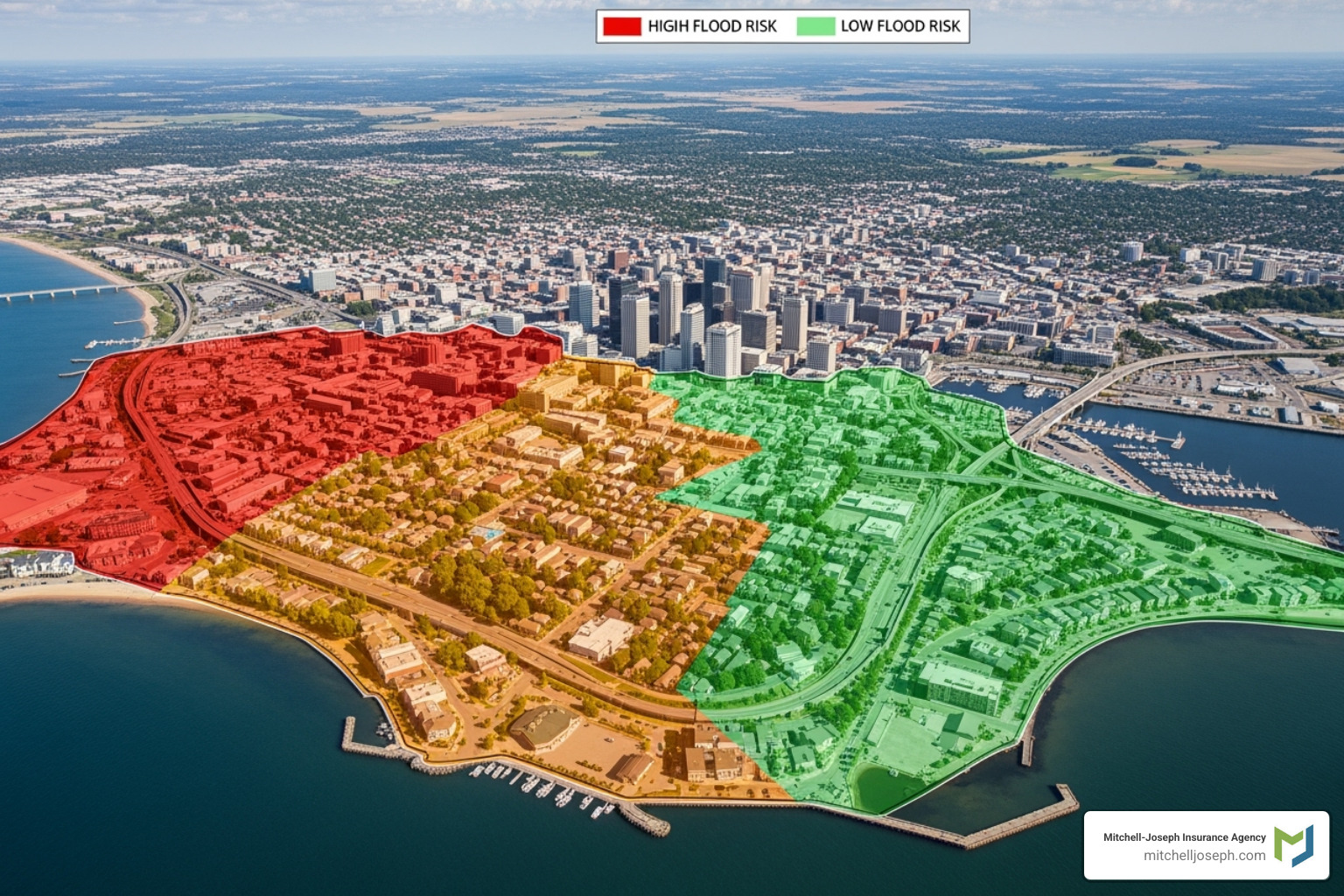
Understanding who can buy home flood insurance, who must buy it, and what it costs helps you make informed decisions about protecting your property. The good news is that flood insurance is more accessible and affordable than many homeowners realize.
For comprehensive information about flood and water backup insurance options, explore our Flood & Water Backup Insurance Category.
Who Can (and Who Must) Buy Home Flood Insurance?
Who Can Buy Flood Insurance:
Anyone living in a participating NFIP community can purchase flood insurance, regardless of their flood risk level. This includes:
- Homeowners
- Renters (for contents coverage)
- Business owners
- Condominium associations and unit owners
In our service areas throughout the Finger Lakes region – from Rochester to Wayland – virtually all communities participate in the NFIP, making coverage available to everyone.
Who Must Buy Flood Insurance:
Federal law requires flood insurance in specific situations:
- Properties in Special Flood Hazard Areas (SFHAs) with federally-backed mortgages
- Anyone who has received federal disaster assistance for flood damage must maintain coverage for the life of the building (homeowners) or as long as they live at the property (renters)
- Some lenders may require coverage even outside high-risk areas
To determine your property’s flood zone designation, Enter your address here to check your flood zone. Even if you’re not required to carry coverage, we strongly recommend it given the statistics on flood claims from low-risk areas.
How Much Does a Policy Cost?
The average annual premium for homeowners flood insurance is approximately $700 per year – less than $2 per day for substantial financial protection. However, costs vary significantly based on several factors.
NFIP’s Risk Rating 2.0 Methodology:
The NFIP now uses a sophisticated pricing approach that considers:
- Location factors: Distance from flooding sources, elevation relative to potential flood levels
- Building characteristics: Foundation type, first floor elevation, number of floors
- Replacement cost value: The cost to rebuild your home
- Flood adaptation features: Flood vents, liftd utilities, other mitigation measures
- Coverage choices: Building and contents coverage amounts, deductible levels
Cost Ranges:
Based on NFIP data, 37% of policies nationwide fall into the $0-1,000 price range, while 32% cost between $1,000-2,000 annually. Properties with lower risk profiles and flood-resistant features typically pay less.
Rate Increases:
By law, NFIP rates cannot increase by more than 18% per year for most policyholders. Once you reach your full risk-based rate, annual increases stop, unlike some other insurance products.
For personalized cost estimates, use the Flood Insurance Cost Calculator or contact our agency for a detailed quote.
The 30-Day Waiting Period
One of the most important aspects of flood insurance that catches homeowners off guard is the waiting period. Most flood insurance policies have a 30-day waiting period before coverage becomes effective. This means you can’t wait until a storm is approaching to buy coverage.
Standard Waiting Period:
- 30 days from the date FEMA receives your application and premium payment
- Applies to new policies and coverage increases
- No exceptions for weather events or flooding predictions
Exceptions to the 30-Day Rule:
- Mortgage closing requirements: If your lender requires flood insurance for a mortgage closing, coverage can begin immediately
- Map revisions: When FEMA revises flood maps and your property is newly designated as high-risk, you have a one-year grace period to purchase coverage without the waiting period
- Continuous coverage: Renewing an existing policy or transferring coverage to a new owner
This waiting period emphasizes the importance of planning ahead. Don’t wait for flood season or severe weather predictions to consider coverage. For specific information about when your coverage begins, read our detailed guide on Flood Insurance Effective Date.
The Purchasing and Claims Process Explained

Getting home flood insurance is straightforward when you work with the right people. At Mitchell-Joseph Insurance Agency, we’ve helped countless Finger Lakes homeowners steer this process over the past 25 years. The key is understanding what information you’ll need and having realistic expectations about timing.
When disaster strikes, knowing exactly what to do can save you thousands of dollars and weeks of delays. We’ll walk you through both sides of the equation – getting covered and getting paid when you need it most.
For a detailed breakdown of what happens after you file a claim, check out our comprehensive guide on the Flood Insurance Claim Process.
How to Purchase a Policy
The easiest path to flood insurance is through your current insurance agent. As an independent agency, we work with multiple insurance companies that participate in the NFIP’s Write-Your-Own program. This means we can shop around for you while handling all the paperwork – no need to contact FEMA directly or steer government websites.
When you call us for a quote, we’ll ask about your property address and basic building details. We need to know when your home was built, what type of foundation it has (basement, crawlspace, slab, or liftd), and how many floors it has. Don’t worry if you don’t know all these details off the top of your head – we can help you figure it out.
You’ll also need to decide on coverage amounts for both building and contents protection. Most homeowners choose the standard $250,000 building coverage, but we’ll help you determine if that’s adequate for your situation. Contents coverage is optional but recommended – think about how much it would cost to replace all your furniture, clothing, and electronics.
Deductible selection affects your premium significantly. Higher deductibles mean lower premiums, but you’ll pay more out of pocket when you file a claim. We’ll explain the trade-offs so you can make an informed decision.
If you prefer to search for providers yourself, you can use the tool to Find a provider near you, though we’re confident you’ll find our personalized service and competitive rates hard to beat.
One important note: flood insurance must be paid in full annually – there’s no monthly payment option. However, most homeowners include the premium in their mortgage escrow account, so it’s spread out over 12 months just like property taxes.
What to Do After a Flood
Nobody wants to think about flood damage, but if it happens, your first few actions can make or break your claim experience. Safety comes first – never enter flooded areas until authorities say it’s safe. Floodwater can hide dangerous debris, electrical hazards, and contamination.
Once it’s safe, contact us immediately. Don’t wait until business hours or worry about bothering us – flood claims are time-sensitive, and we’re here to help 24/7. If you have building coverage, you’ll also need to notify your mortgage company right away.
Documentation is absolutely critical. Take photos and videos of everything before you start cleaning up. I know it’s tempting to start removing water and damaged items immediately, but insurance adjusters need to see the damage in its original state. Photograph water lines on walls, damaged furniture in place, and any structural damage.
Separate damaged items from undamaged ones, but don’t throw anything away until the adjuster gives you permission. That water-soaked couch might look like a total loss, but the adjuster needs to see it to include it in your claim settlement.
Keep receipts for emergency repairs and temporary living expenses. If you need to buy a dehumidifier, pay for emergency board-up services, or stay in a hotel, save those receipts. While flood insurance doesn’t cover additional living expenses, some emergency repairs may be covered.
The adjuster inspection typically happens within a few days of reporting your claim. Be present during this inspection if possible. The adjuster will assess damage, explain what’s covered, and help you complete the Proof of Loss form. This document is required for claim payment, so accuracy is important.
Most flood insurance claims are resolved within 30 days of receiving all required documentation. During major disasters, when adjusters are handling hundreds of claims, it might take longer. We stay in touch throughout the process to ensure your claim moves forward smoothly.
We’re your advocates throughout this process. Our job isn’t just to sell you a policy – it’s to be there when you need us most, helping you steer what can be a stressful and overwhelming experience.
Flood Insurance vs. Federal Disaster Assistance
Conclusion
Home flood insurance isn’t just another insurance policy – it’s your financial lifeline when water decides to visit uninvited. Think about it: 99% of U.S. counties have dealt with flooding since 1996, yet only 4% of homeowners have coverage. That’s a lot of people playing a very expensive game of chance.
Here’s what we hope you’ll remember from everything we’ve covered today. Standard homeowners insurance treats flood damage like that relative who’s not invited to family dinner – it’s simply not welcome. You absolutely need a separate flood insurance policy to bridge this gap.
Don’t fall into the trap of thinking floods only happen “somewhere else.” 40% of flood claims come from outside high-risk areas, often catching homeowners completely off guard. Whether it’s a summer storm overwhelming drainage systems or new construction changing water flow patterns, flooding can happen anywhere.
The financial reality is sobering. Just one inch of water can cause over $25,000 in damage to your home. But here’s the good news: protection is more affordable than most people think. At around $700 per year, that’s less than what many families spend on coffee in a month.
Planning ahead is absolutely crucial because of that 30-day waiting period. You can’t wait until you see storm clouds gathering to buy coverage. We’ve learned this lesson the hard way in our Finger Lakes communities – preparation beats panic every time.
When disaster strikes, home flood insurance delivers real financial protection. The average claim payment of $68,000 never needs to be repaid, unlike federal disaster loans that can burden families for years. Insurance gives you money to rebuild your life, not another monthly payment to worry about.
As an independent agency serving the Finger Lakes region for over two decades, we’ve seen how flooding affects our neighbors. From the Genesee River in Rochester to the shores of Canandaigua Lake, water doesn’t respect property lines or risk zones. We work with multiple insurance companies to find you the right coverage at the best price because that’s what neighbors do for each other.
Whether you’re in Honeoye Falls, Victor, Canandaigua, or any community we serve, your home represents your biggest investment and your family’s security. Don’t leave it vulnerable to one of nature’s most common threats.
Ready to take action? Protect your home and assets with the right Flood Insurance policy by reaching out to us today. We’ll walk you through your options, explain your specific flood risk, and make sure you understand exactly what you’re getting.
The best time to buy flood insurance was yesterday. The second best time is today. Don’t wait for the next storm to make this decision for you.