

Why General Liability Insurance is Essential for Your Business
General liability insurance protects your business from costly lawsuits and claims involving third-party injuries, property damage, and reputational harm. Here’s a quick overview:
What General Liability Insurance Covers:
- Bodily injury claims from customer accidents
- Property damage to client or customer property
- Personal and advertising injury like libel or copyright infringement
- Legal defense costs including attorney fees and court expenses
- Medical payments for immediate medical needs of injured parties
Average Cost: Small business owners pay around $42 per month, with policies starting as low as $17 per month for low-risk businesses.
Who Needs It: Nearly every business, from contractors and retail stores to consultants. Many clients and landlords require proof of coverage before working with you.
Accidents happen. A customer could slip on a wet floor, or an employee might damage a client’s property. Without general liability insurance, you’d pay these costs out of pocket, with legal fees alone costing $100 to $500 per hour. Since 1999, our team at Mitchell-Joseph Insurance Agency has seen how general liability insurance saves companies in the Finger Lakes region from financial ruin. We’ve guided countless owners through claims that could have otherwise closed their doors.
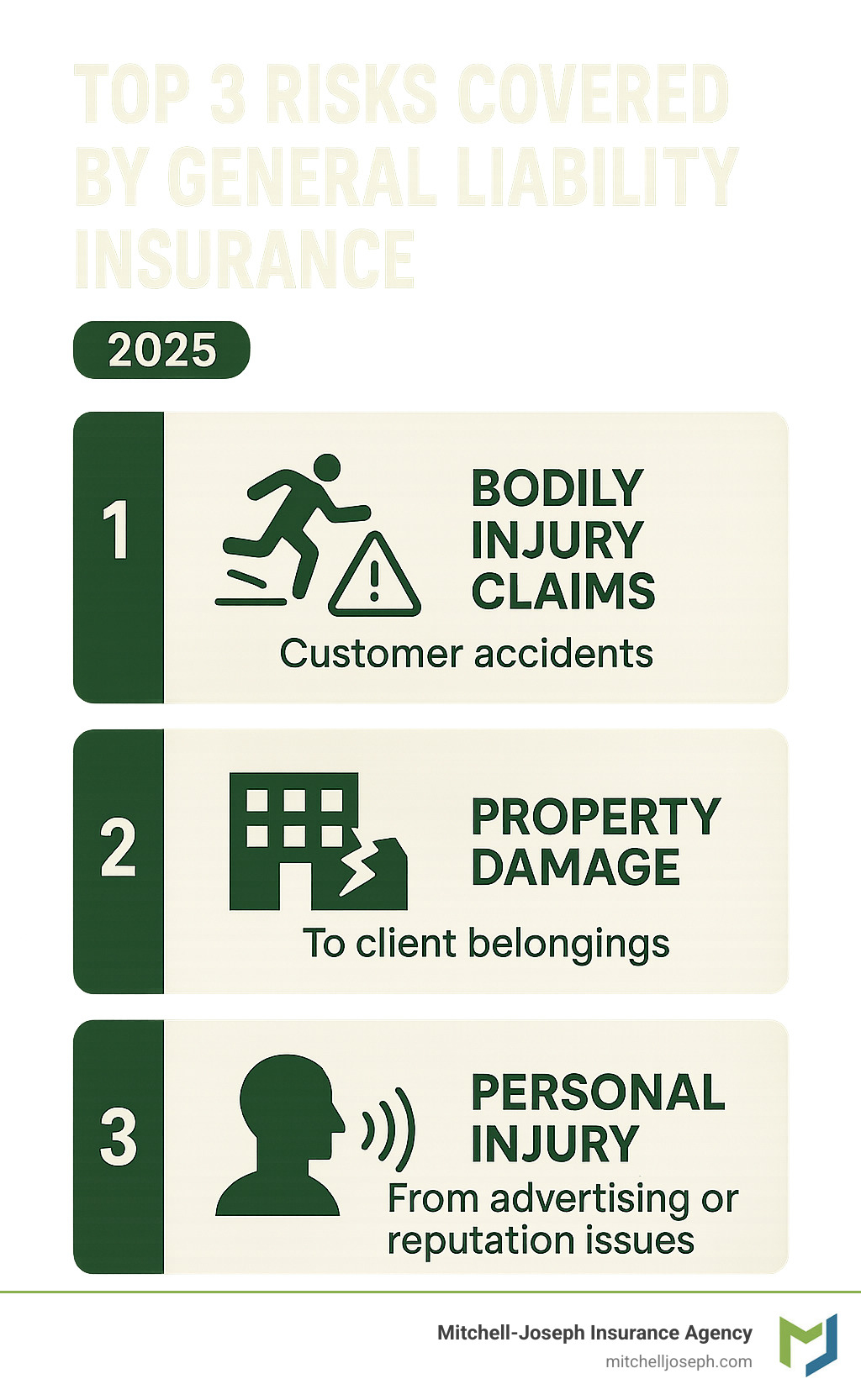
Simple guide to general liability insurance terms:
What is General Liability Insurance and What Does It Cover?
General liability insurance, also known as Commercial General Liability (CGL), is a safety net for your business. It protects your company when your work leads to injury or property damage for someone outside your business.
For example, if a customer slips on a wet floor or an employee accidentally damages a client’s equipment, general liability insurance is designed to handle it. The policy covers claims from third parties—customers, clients, vendors, or passersby—who experience bodily injury, property damage, or personal and advertising injury due to your business activities.
Crucially, it covers legal defense costs even if you’re not at fault, with attorney fees running $100 to $500 per hour. It also covers medical payments for injured parties, which can prevent small incidents from becoming large lawsuits. If you are found liable, the insurance pays for settlements and judgments up to your policy limits. Understanding your General Liability Policy is your business’s financial shield.
Coverage for Bodily Injury
Bodily injury coverage protects you when a non-employee is physically hurt on your property or because of your business operations. This includes everything from cuts and bruises to more serious injuries. This coverage is for customers, clients, or anyone not on your payroll.

When someone gets hurt, your policy covers their medical expenses, your legal fees, and any settlements or judgments if you’re found responsible. This is often called “slip-and-fall” insurance because these accidents are so common. Having this coverage means you can focus on the injured person instead of your business’s financial future.
Coverage for Property Damage
Property damage coverage applies when your business or employees accidentally damage someone else’s property. This could be a client’s equipment, a customer’s belongings, or a building where you’re working. The policy helps pay for repair or replacement costs.
This protection is vital if you work at client locations, whether you’re a contractor, a cleaning service, or an IT consultant. That’s why Business Insurance for Contractors is so essential. The coverage also extends to completed operations, so if your finished work later causes damage, you’re still protected.
Coverage for Personal & Advertising Injury
This coverage protects against non-physical harm that hurts reputations and finances.
It covers libel and slander claims if you or an employee make false statements that damage someone’s reputation. It also handles copyright infringement, such as using a photo or music in your marketing without permission. Other covered risks include misappropriation of advertising ideas and wrongful eviction for business owners who rent out space. When information spreads instantly, this coverage protects your business from costly mistakes.
Key Exclusions: What General Liability Insurance Does NOT Cover
General liability insurance is essential, but it doesn’t cover everything. Understanding what your policy excludes is key to building a complete protection strategy, as different risks require specialized insurance. Knowing these gaps helps you find the right Business Insurance Coverage to fill them.

Professional Mistakes and Errors
General liability covers accidents, but not professional mistakes. If you’re an accountant who makes a costly tax error or a consultant whose advice leads to a client’s financial loss, that’s considered professional negligence. These situations, often called Errors & Omissions (E&O), require a separate professional liability policy. General liability is for physical accidents, not the quality or accuracy of your professional services.
Employee Injuries and Illnesses
General liability protects you from claims by third parties, not your own employees. If an employee is injured on the job, their medical bills and lost wages are covered by workers’ compensation insurance. In New York, workers’ comp is legally required if you have employees. It protects your team while shielding you from direct lawsuits.
Commercial Auto Accidents
Your general liability policy does not cover accidents involving business vehicles. Whether it’s a company van or an employee driving their personal car for work, you need a separate commercial auto policy. Personal auto insurance typically won’t cover business use either, creating a dangerous gap. Our expertise in Property and Casualty Insurance can help you steer this.
Your Own Property and Intentional Acts
General liability is for damage to others’ property, not your own. If your office equipment is stolen or your building is damaged by fire, you need commercial property insurance. Additionally, insurance is for accidents, not deliberate wrongdoing. Your policy will not cover fraud, purposeful damage, or other intentional harmful acts.
The Essentials of a General Liability Insurance Policy
Understanding your general liability insurance policy is about balancing comprehensive coverage with affordability. Getting personalized guidance is key, which is why at Mitchell-Joseph Insurance Agency, we help businesses across the Finger Lakes find the right Business Liability Insurance Policy.
Who Needs General Liability Insurance?
If you own a business, you likely need general liability insurance. It’s essential for:
- Contractors and tradespeople working on others’ property.
- Retail stores and restaurants with high foot traffic.
- Service providers like salons and cleaning businesses.
- Consultants and freelancers, even those working from home.
- Landlords and property managers responsible for tenant safety.
Beyond protecting your assets, many clients and landlords require proof of insurance before they will work with you, making it a standard business necessity.
How Much Does General Liability Insurance Cost?
The average cost for small businesses is around $42 per month, but your premium will vary. Low-risk businesses might pay as little as $17 monthly, while higher-risk industries like construction could pay $80 or more.
Key factors influencing your rate include:
- Your industry and its associated risks.
- Your business location and state legal environment.
- Business size and number of employees.
- Your claims history.
- Policy limits and deductibles you choose.
At Mitchell-Joseph Insurance Agency, we work with 24 different insurance companies to find you competitive Business Insurance Quotes NY that fit your budget.
Understanding Policy Limits and the Claims Process
Your policy has two main limits:
- The per-occurrence limit is the maximum paid for a single incident.
- The aggregate limit is the total maximum paid during your policy year.
A common standard is $1 million per occurrence and $2 million aggregate.
The claims process is straightforward. You report the incident to your insurer, who then investigates. For covered claims, the insurer handles legal defense, settlement negotiations, and payments up to your policy limits. We guide our clients through every step of this process.
The Certificate of Insurance (COI)
A Certificate of Insurance (COI) is a one-page document that proves you have coverage. It summarizes your policy types, limits, and effective dates.

COIs are important because clients and landlords often require them before signing contracts or leases. They want assurance that you can handle unexpected accidents. Getting a COI is usually quick and easy, and we can help you obtain one promptly. It demonstrates professionalism and gives everyone peace of mind.
General Liability vs. Other Business Policies
General liability insurance is the foundation of your business protection, but it works best alongside other policies to create a comprehensive safety net. Different policies protect against different risks, and understanding how they fit together is key.
| Feature | General Liability Insurance | Professional Liability Insurance (E&O) |
|---|---|---|
| What it covers | Bodily injury, property damage, personal & advertising injury to third parties. | Financial loss due to professional mistakes, negligence, errors, or omissions in services/advice. |
| Risk Type | Physical risks, tangible damage, reputational harm from advertising/speech. | Financial risks, intangible harm from professional services. |
| Example Claim | Customer slips and falls on your premises; Employee damages client’s property. | Client sues for faulty advice; Software developer’s bug causes client financial loss. |
| Who typically needs it | Nearly all businesses. | Businesses providing advice or services (consultants, IT, real estate, healthcare). |
General Liability vs. Professional Liability
The difference between general liability and professional liability (also called E&O) comes down to the type of harm. General liability covers physical risks like bodily injury or tangible property damage. Professional liability covers financial risks resulting from mistakes in your professional services or advice. Many businesses, especially service providers, need both to be fully protected.
Bundling with a Business Owner’s Policy (BOP)
For many small businesses, a Business Owners Policy (BOP) is a convenient and affordable solution. A BOP bundles three essential coverages:
- General liability insurance
- Commercial property insurance (for your building and equipment)
- Business income insurance (for lost revenue after a covered loss)
Bundling often leads to cost savings and simplifies policy management. For businesses needing even more protection, Umbrella Insurance Coverage can provide an extra layer of liability coverage over your existing policies. At Mitchell-Joseph Insurance Agency, we help you find the right combination of coverages from our 24 insurance partners.
Frequently Asked Questions about General Liability Insurance
Running a business involves many questions, and insurance shouldn’t add to the confusion. Here are answers to common questions about general liability insurance, drawn from our Business Insurance FAQs.
Is general liability insurance legally required?
While not typically mandated by state or federal law (unlike workers’ compensation), general liability insurance is often a contractual requirement. Many clients, landlords, and licensing boards require a Certificate of Insurance before they will work with you. The significant financial risk of operating without coverage—with legal fees alone hitting $500 per hour—makes it a practical necessity for almost every business.
Is general liability insurance tax deductible?
Yes. The IRS generally considers general liability insurance premiums to be ordinary and necessary business expenses. This means you can typically deduct the full cost of your premium from your taxable income. As always, we recommend consulting with a tax professional to confirm your specific situation and follow all IRS guidelines on business expenses.
How do I get a general liability insurance policy?
Getting a policy is a straightforward process:
- Assess your risks to understand your specific coverage needs.
- Find a reputable agent. As an independent agency, Mitchell-Joseph works with 24 different companies to find the best rates and coverage for you.
- Compare quotes to find the best value, not just the lowest price.
- Purchase your policy. We can often issue policies and your Certificate of Insurance in less than 24 hours.
- Review annually to ensure your coverage evolves with your business.
If you’re looking for Business Insurance Agents Near Me in the Finger Lakes region, our team in Honeoye Falls is ready to help you steer the process.
Conclusion: Securing Your Business’s Future
General liability insurance is more than just another business expense; it’s the financial shield that protects everything you’ve worked to build. It covers legal defense costs, settlements, and judgments from claims of injury, property damage, or reputational harm—risks that could otherwise end your business.
Think of it as the foundation for your company’s future. It provides the peace of mind to focus on growth, knowing you’re protected from unexpected accidents.
At Mitchell-Joseph Insurance Agency, a family-owned business rooted in the Finger Lakes community, we understand what’s at stake. Our team uses its deep experience and access to 24 insurance carriers to find coverage that fits your unique business and budget. Don’t wait for an accident to find a gap in your protection. Let us help you secure the right coverage to protect your business’s future.
Get a quote for NY General Liability Insurance today and take the first step toward securing your business’s tomorrow.

