

Why Gas Pipe Insurance Matters for Every Homeowner
Gas pipe insurance is a critical coverage gap most homeowners don’t know they have until disaster strikes. Here’s what you need to know:
Quick Answer: What is Gas Pipe Insurance?
- Standard homeowners insurance typically covers damage caused by gas leaks (like explosions or fires) but not the cost to repair the leaking pipe itself
- Service line coverage (gas pipe insurance) is an optional endorsement that covers repair and replacement of your underground or interior gas pipes
- You’re responsible for all gas lines from your meter to your appliances—not your utility company
- Repair costs range from $150-$800 for single appliance lines to thousands for main line repairs
- Coverage is affordable, often around $5.95/month through utility programs or as a homeowners policy add-on
Natural gas heats 51.5% of Canadian homes and powers countless American households. It’s efficient and reliable—until something goes wrong. A cracked pipe from nearby construction, aging connections, or even winter freeze-thaw cycles can leave you facing massive repair bills and potential safety hazards.
The confusion starts at your gas meter. Most homeowners assume their utility company handles everything. They don’t. Your responsibility begins at the meter and extends to every appliance in your home. That’s potentially hundreds of feet of pipe you own and must maintain.
A gas leak isn’t just expensive—it’s dangerous. The distinct “rotten egg” smell (added to naturally odorless gas) warns of potential explosions, fires, and carbon monoxide poisoning. Yet standard insurance policies leave a costly gap in protection.
I’m Jeffrey Joseph, and I’ve been helping Finger Lakes homeowners steer complex insurance coverage since 1999 at Mitchell-Joseph Insurance Agency, specializing in identifying coverage gaps like gas pipe insurance that can save families from financial disaster. Let me walk you through exactly what protection you need and how to get it.

Gas pipe insurance glossary:
- Service Line Coverage
- Sewer Line Insurance (While not directly gas, understanding service line protection often involves all lines, including sewer.)
Understanding Your Coverage for Gas Line Issues
Most homeowners assume their insurance covers everything under one protective umbrella. But when it comes to your home’s gas lines, standard policies have specific gaps that can leave you exposed. Let’s break down what you’re actually covered for and where you might need additional protection.
Does Standard Homeowners Insurance Cover Gas Leaks?
Here’s the truth: standard homeowners insurance covers the aftermath of gas leaks, but rarely the leak itself.
If a gas leak causes an explosion or fire, your policy typically responds. The resulting damage to your home’s structure, your belongings, and even temporary living expenses while you rebuild—those are usually covered. Explosions are considered sudden and accidental events, which is exactly what homeowners insurance is designed for.
But here’s the catch that surprises most people: your policy won’t pay to fix the leaking pipe. It’s like if a burst water pipe floods your kitchen. Insurance covers the damaged cabinets and flooring, but not the cost to replace the broken pipe itself. The same principle applies to gas lines.
Your policy also excludes coverage for several common scenarios. Wear and tear from aging pipes isn’t covered—that’s considered a maintenance issue, not an accident. If you’ve neglected regular maintenance or the leak results from improper installation by a previous owner, your claim could be denied. Insurance companies expect homeowners to take reasonable care of their property.
Another important consideration: policy limits and deductibles. If a gas explosion destroys your home, you’ll only receive up to your dwelling coverage limit. We’ve seen situations where homes are completely destroyed, and the payout falls short of what’s needed to fully rebuild. Plus, you’ll pay your deductible before insurance kicks in—often $1,000 or more.
Understanding these limitations is crucial. For more detailed information on how homeowners insurance responds to different disasters, check out this scientific research on homeowners insurance disaster coverage.
What is Gas Pipe Insurance and What Does It Cover?
So if standard insurance won’t cover the pipe itself, what will? That’s where gas pipe insurance comes in—typically offered as a “service line endorsement” or “buried utility lines coverage” on your homeowners policy.
This specialized coverage fills the gap by protecting the actual gas lines on your property. When you add this endorsement, you’re covered for the repair or replacement costs of damaged pipes, the excavation expenses needed to reach buried lines, and the restoration of your property after repairs are complete. That last part is significant—if a repair crew digs up your driveway or tears up your landscaping to fix a pipe, this coverage helps restore everything to how it was.
The coverage extends beyond simple leaks too. It typically protects against freezing or thawing damage, mechanical breakdown, rust and corrosion, tree root invasion, and even accidental damage from vehicles or construction. Some policies even cover damage from rodents or insects.
Many utility companies offer similar protection through their own programs. For example, some providers offer pipe protection plans for around $5.95 per month that cover interior natural gas pipes from your meter to your appliances. These plans handle the replacement of supply lines, repair of safety shutoff valves, and both interior and exterior restoration after repairs.
It’s a small monthly investment that can save you thousands when something goes wrong. For a comprehensive look at how this protection works, visit our page on Service Line Coverage.
Homeowner vs. Utility Company: Who’s Responsible?
This confusion trips up nearly every homeowner we meet. Most people assume the gas company handles all the pipes because they deliver the gas. That assumption can cost you thousands.
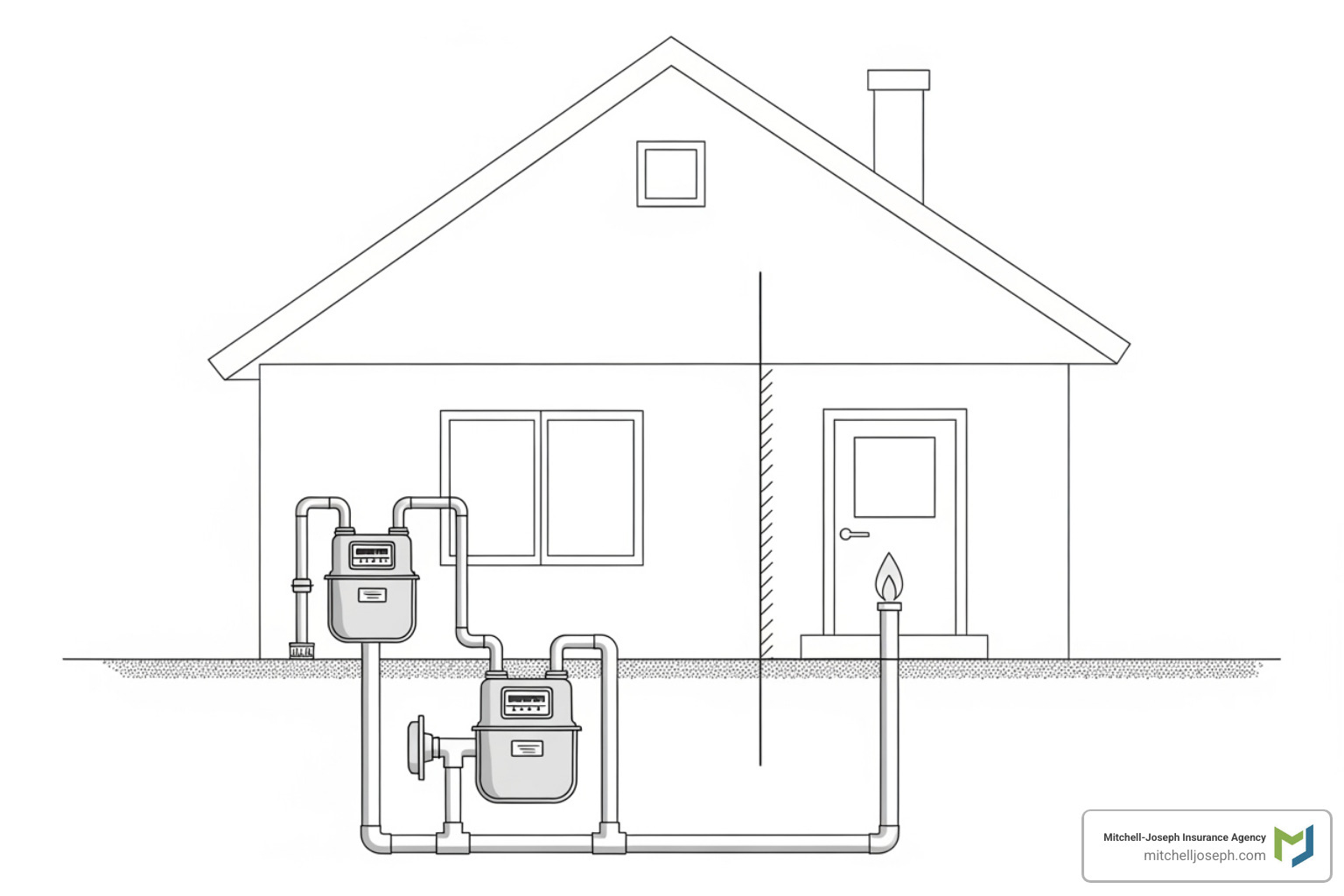
Here’s how responsibility actually breaks down:
The utility company owns and maintains the main gas lines running under public streets and the line that connects to your property, including your gas meter. If a leak happens on their side of the meter, they handle the repair at no cost to you.
You own everything beyond the meter. That means the service line running from the meter to your house, all the interior pipes feeding your furnace, water heater, stove, dryer, and other appliances, plus all the connections to those appliances. This applies whether you’re in Honeoye Falls, Pittsford, or anywhere across the Finger Lakes region.
This “demarcation line” at the meter is critical. Once gas passes through that meter, maintenance and repairs become your financial responsibility. It’s often hundreds of feet of pipe that you own and must maintain—which is exactly why gas pipe insurance matters so much.
The Real Cost of Gas Line Repairs
Let’s talk real numbers, because that’s when most homeowners realize how valuable this coverage is.
For a simple appliance line repair—like fixing a flexible connector to your stove or dryer—you’re looking at $150 to $800. That’s manageable for most budgets, though still an unwelcome surprise.
But main line repairs are a different story entirely. If the leak is in the pipe running from your meter to your home, or within a significant section of interior piping, costs can easily reach several thousand dollars. Installing a new gas line runs about $15 to $25 per linear foot for materials alone—and that’s before you factor in everything else.
The total bill includes much more than just the pipe:
- Labor costs for licensed plumbers and gas technicians who have the expertise to work safely with gas lines
- Material costs for copper, black iron, or flexible corrugated stainless steel tubing
- Permits and inspections required by local authorities to ensure safety compliance
- Excavation expenses to reach buried lines, which can mean tearing up your yard, driveway, or sidewalk
- Restoration costs to repair your landscaping, repave your driveway, or replace your sidewalk after the repair is complete
This is where gas pipe insurance transforms a potential financial disaster into a manageable situation. Instead of writing a check for thousands of dollars, your service line coverage handles the repair, excavation, and restoration costs—often with generous coverage limits. You’re only responsible for your deductible, which is far less painful than the full repair bill.
Making an Informed Decision About Gas Pipe Insurance
Now that we understand the potential pitfalls of relying solely on standard homeowners insurance for gas line issues, let’s explore how you can proactively protect your home and your wallet. Making an informed decision means comparing your options and, crucially, understanding that prevention is often the best medicine.
Homeowners Insurance vs. Service Line Coverage
To truly evaluate your options, it helps to see the fundamental differences between your standard homeowners policy and dedicated service line coverage (which is effectively gas pipe insurance in action) laid out side by side. Think of it like comparing a basic toolkit to a specialized repair kit—both have their place, but they’re designed for different jobs.
Your standard homeowners policy is designed to cover damage caused by a covered peril. So if a gas leak leads to a fire or explosion, your policy would typically cover the resulting damage to your home’s structure and belongings. That’s the good news. The less-good news? It typically won’t cover the cost to repair the leaking pipe itself. It also excludes damage from wear and tear, negligence, lack of maintenance, improper installation, and certain natural disasters. You’re working within your overall dwelling and liability limits, which might not be enough if disaster strikes. And when you file a claim, you’re filing for damage after the leak causes a major event.
Service line coverage (or gas pipe insurance) works differently. This endorsement specifically covers the repair or replacement of damaged gas lines on your property—the pipe itself, not just the damage it causes. It also covers the resulting property damage from excavation, like your torn-up landscaping or cracked driveway, and may even include additional living expenses if you need to stay elsewhere during repairs. While it has some exclusions (like blockages without physical damage, or sometimes internal pipes under your foundation—always check the specific policy), it typically comes with its own dedicated limit of $10,000 to $20,000, separate from your dwelling coverage. The cost? Usually an additional, affordable premium or monthly fee. And when you file a claim, you’re filing for repair or replacement of the line itself once damage is found.
The key difference is focus. Your standard policy handles the consequences of a major gas event, while service line coverage targets the source of the problem. Without this specialized gas pipe insurance, you’re left with a significant coverage gap for an essential, and potentially dangerous, component of your home’s infrastructure. We at Mitchell-Joseph Insurance Agency often compare it to having car insurance that covers the crash, but not the broken engine that caused it! Understanding these gaps is our specialty, and we’re here to help you get comprehensive coverage. More details are available on our page about Service Line Coverage.
Prevention: Your First Line of Defense
While gas pipe insurance offers crucial financial protection, your absolute best defense against gas leaks is prevention. An ounce of prevention is worth a pound of cure, and in the case of gas leaks, it could literally save your home and your life.
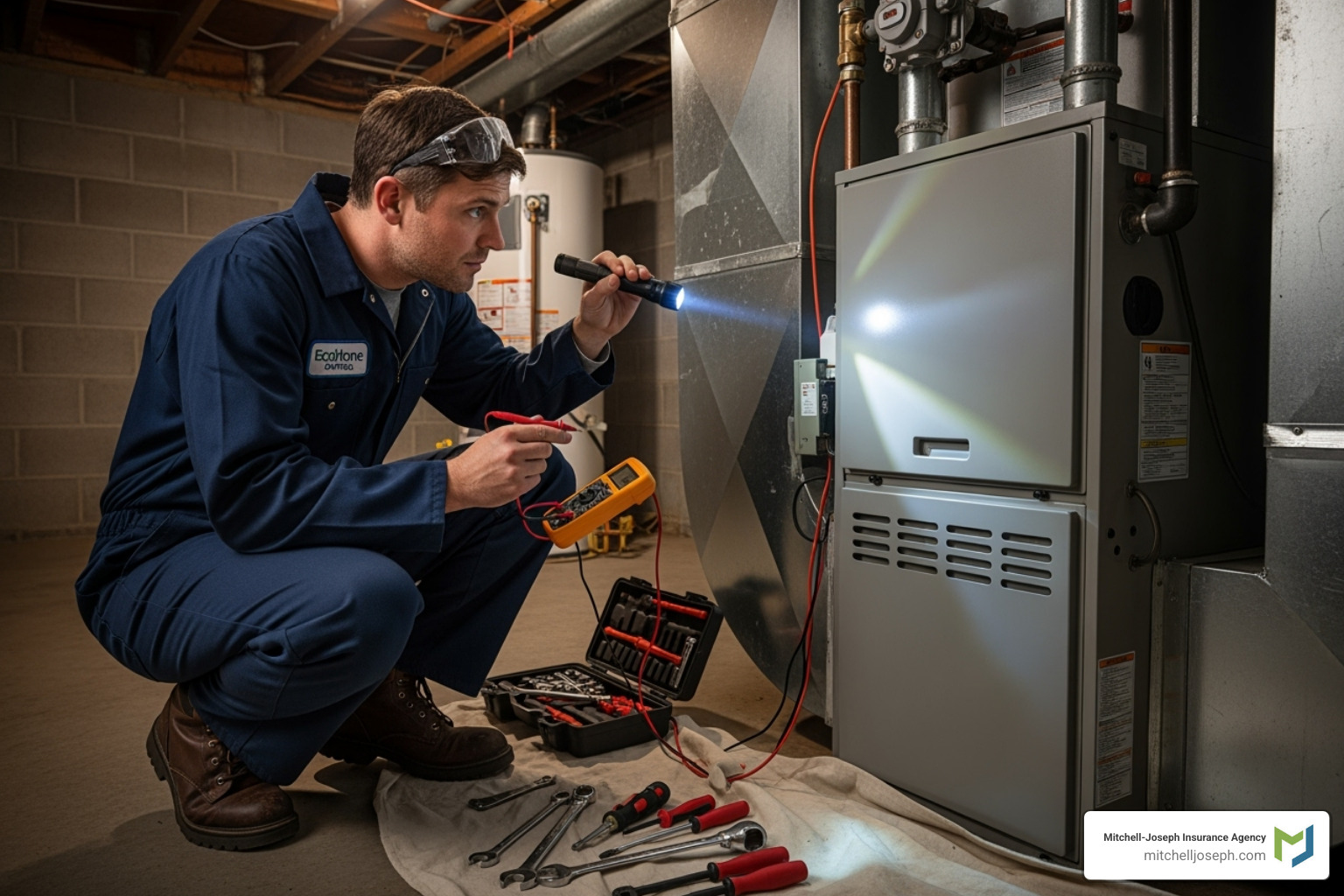
Regular maintenance and inspections are your first line of defense. Just like your car needs oil changes, your gas lines and appliances need routine check-ups. Schedule professional inspections for your gas furnace, water heater, stove, and any other gas-powered appliances. A master plumber or certified gas technician can spot potential issues like corrosion, loose connections, or aging pipes before they become dangerous leaks. They can also ensure proper ventilation, which is vital for gas appliances. This isn’t just about safety—it’s about protecting your insurance coverage. Leaks caused by lack of maintenance or wear and tear are typically not covered by homeowners insurance.
Professional installation is non-negotiable. Always have gas appliances installed by trusted, licensed professionals. Improper installation is a leading cause of gas leaks and can lead to immediate hazards and claim denials from your insurance provider. Once professionally installed, routine maintenance becomes your responsibility to avoid out-of-pocket costs, but that initial installation sets the foundation for everything that follows.
Detecting leaks early can make all the difference. While your utility company adds that distinctive “rotten egg” scent to natural gas to make leaks detectable, you should also install gas leak detectors in your home. These devices provide an early warning, especially in areas where you might not immediately smell a faint leak. Carbon monoxide detectors do not detect natural gas leaks, so you need specific gas leak alarms. Listen for hissing sounds near gas lines or appliances. Watch for dying plants—if you have outdoor gas lines, inexplicable dead patches of vegetation or dying houseplants near indoor lines can signal a leak. Keep an eye on your utility bill for unexplained spikes without a corresponding increase in usage. And know where your shut-off valve is located and how to use it. In an emergency, being able to quickly and safely turn off your home’s main gas supply can be a lifesaver.
We at Mitchell-Joseph Insurance Agency are strong advocates for proactive home safety. We understand that preventing home gas leaks through regular maintenance and professional installation is paramount. For more comprehensive tips on keeping your home safe, we recommend checking out Preventing Home Gas Leaks. And if you’re looking to understand how service line coverage can add an extra layer of protection to your diligent prevention efforts, we invite you to explore more info about our service line coverage options.
Protecting your home and family from the risks of gas line issues requires a two-pronged approach: diligent prevention and comprehensive coverage. Don’t wait until a small leak becomes a big problem. Reach out to us at Mitchell-Joseph Insurance Agency today. With over 200 years of combined experience and access to quotes from 24 insurance companies, we’re dedicated to finding you the custom coverage you need, right here in the Finger Lakes region.

