

Why Every Homeowner Needs to Understand Flood Risk
A flood policy is specialized insurance that covers water damage from flooding—a peril that standard homeowners insurance almost always excludes. Since flooding is the most common and costly natural disaster in the U.S., understanding this gap in coverage is critical for protecting your most valuable asset.
Key Flood Policy Facts:
- Separate Coverage Required: Standard homeowners insurance does NOT cover flood damage.
- Two Coverage Types: Building coverage (up to $250,000) and contents coverage (up to $100,000).
- 30-Day Waiting Period: Most policies require a month before coverage begins.
- Available Everywhere: You don’t need to live in a high-risk flood zone to purchase coverage.
- Affordable for Many: 37% of policies cost less than $1,000 annually.
Why does this matter? Over 25% of flood claims occur in moderate- to low-risk areas, and just one inch of floodwater can cause tens of thousands of dollars in damage. Without a dedicated flood policy, you bear these costs alone. The typical 30-day waiting period means you can’t wait until a storm is approaching to get covered—you must plan ahead.
I’m Jeffrey Joseph, and at Mitchell-Joseph Insurance Agency, I’ve helped homeowners in the Finger Lakes region make smart flood policy decisions since 1999. Proper coverage can mean the difference between a quick recovery and financial devastation.
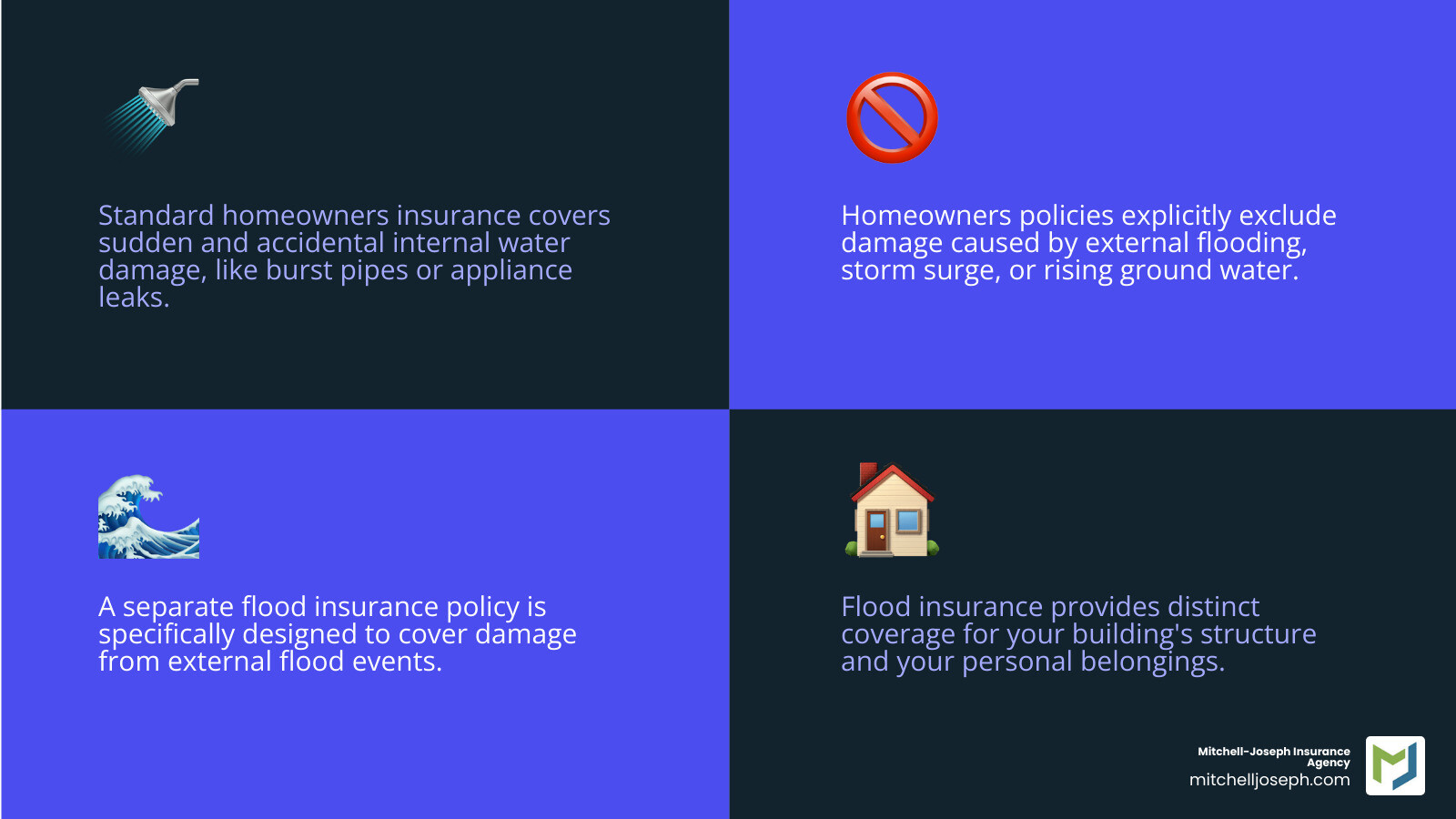
Flood policy terms you need:
Standard Homeowners Insurance vs. Flood Insurance
It’s a common misconception that homeowners insurance covers all water damage. It typically covers water damage originating inside your home, such as from burst pipes or a malfunctioning appliance. However, it draws a clear line at damage from “surface water” or “overland flooding.” If water enters your home from the ground up due to a swollen river, storm surge, or torrential rain, your standard policy offers no protection.
A common point of confusion is sewer backup. A flood policy may cover sewer backup if it’s a direct result of a flood overwhelming the system. However, if the backup is due to a non-flood-related clog, you would need a separate “water backup” endorsement on your homeowners policy. Learn more here: Water Backup Insurance vs. Flood Insurance.
Here’s a quick comparison of what a National Flood Insurance Program (NFIP) flood policy typically covers:
| Feature | Building Coverage (up to $250,000 residential) | Contents Coverage (up to $100,000 residential) |
|---|---|---|
| Structure | Electrical & plumbing systems | Personal belongings (clothing, furniture, electronics) |
| Furnaces & water heaters | Curtains | |
| Refrigerators, cooking stoves, built-in appliances | Washer & dryer | |
| Permanently installed carpeting over unfinished floors | Portable & window air conditioners | |
| Cabinets & paneling | Microwave oven | |
| Foundation walls, anchorage systems, staircases | Carpets not permanently installed | |
| Detached garages (up to 10% of building coverage) | Valuable items (up to $2,500 for specific items) | |
| Fuel tanks, well water tanks & pumps, solar energy equipment | ||
| What’s NOT Covered (generally) | Temporary housing expenses, property outside insured building (landscaping, decks, fences, pools), business interruption, currency, vehicles, personal property in basements. |
Understanding Your Flood Policy Options and Responsibilities
When protecting your home from flooding, understanding your options is key. In the Finger Lakes region, from Honeoye Falls to Rochester, NY, many homeowners are unaware of their risk. Yet, nearly a third of all flood claims occur outside high-risk zones.
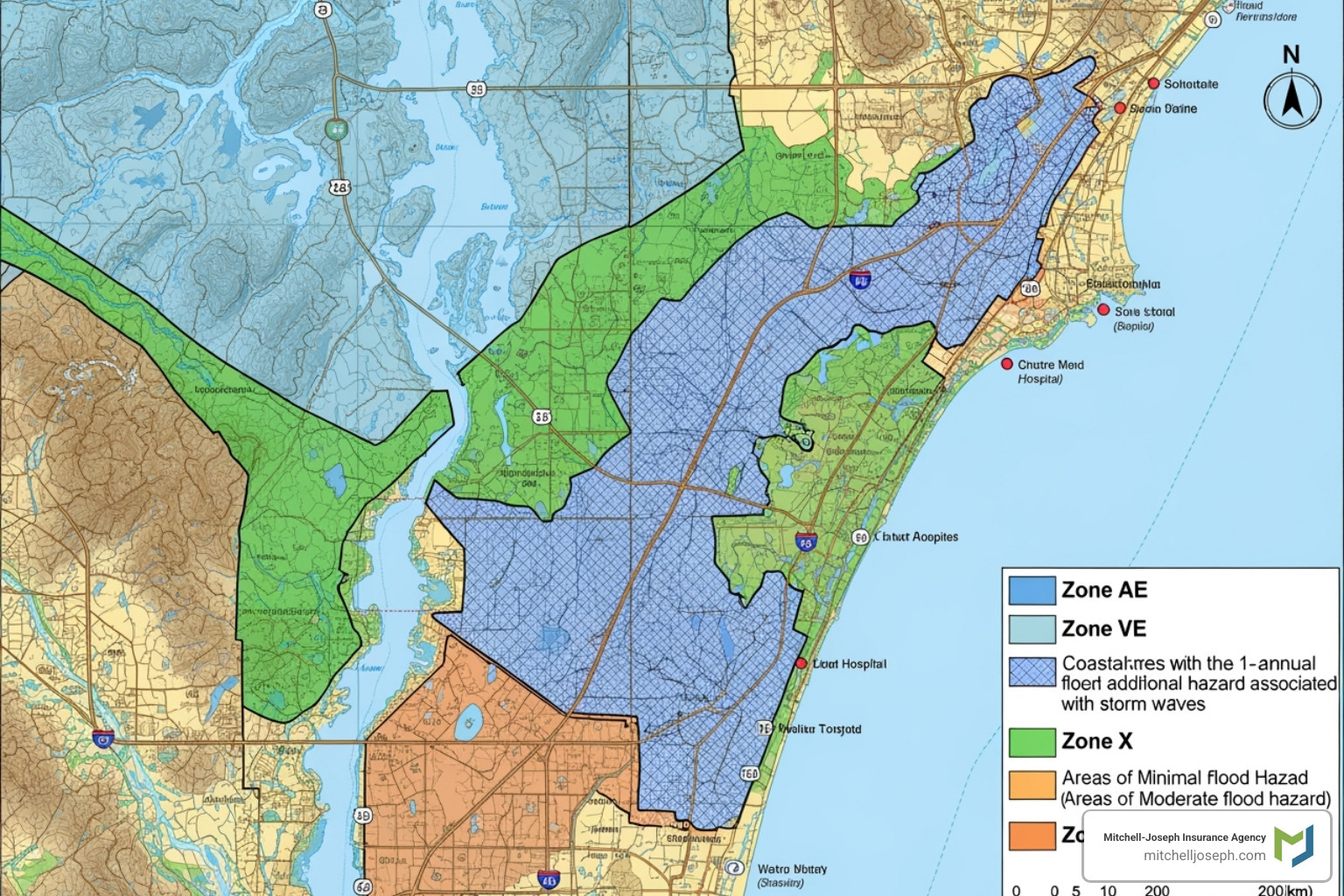
Your primary option is the National Flood Insurance Program (NFIP), managed by FEMA. At Mitchell-Joseph Insurance Agency, we help homeowners steer these crucial decisions. For specific guidance, see our page on Flood Insurance Rochester, NY.
The U.S. National Flood Insurance Program (NFIP) Explained
The NFIP was created by Congress in 1968. You don’t buy policies directly from the government; instead, you work with private insurance companies through the Write-Your-Own (WYO) program. These companies sell and service NFIP policies, which are backed by the federal government.
- Eligibility: If your community participates in the NFIP, you are eligible. Lenders require flood insurance for federally backed mortgages on homes in high-risk flood zones (Zone A or V).
- Coverage Limits: For residential properties, you can get up to $250,000 for your building and $100,000 for your contents. Learn more about Flood Insurance Coverage Limits.
- Waiting Period: There is typically a 30-day waiting period before a flood policy becomes effective. You cannot wait until a storm is imminent. Learn about exceptions at Flood Insurance Effective Date.
To purchase a policy, contact an insurance agent like us or find a provider at floodsmart.gov.
A Look at Canada’s National Flood Insurance Program
It’s insightful to see how other countries handle flood risk. Canada is launching its first national flood policy program in 2025, addressing a similar problem: millions of high-risk homes lack affordable coverage. Like the U.S., Canada is creating a public-private partnership to provide sustainable insurance and shift the focus from costly disaster relief to proactive protection. This global trend underscores the importance of well-designed flood insurance programs.
Understanding the Cost and Value of a Flood Policy
“How much will it cost?” is a common question. The answer depends on several factors, but a flood policy is often more affordable than people think.
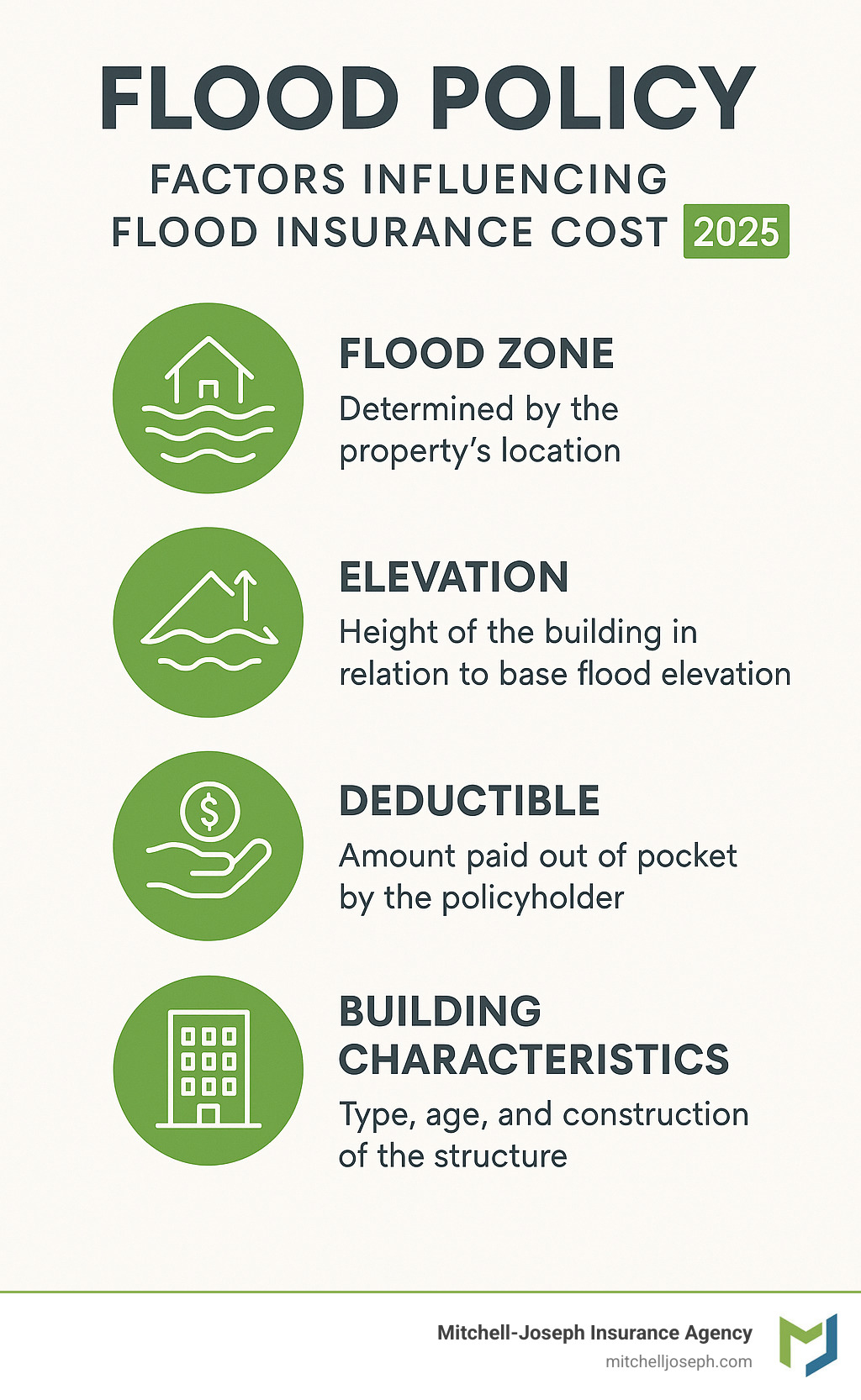
Key factors influencing your premium include:
- Flood Zone: High-risk zones (A and V) cost more than moderate-to-low-risk zones (B, C, and X).
- Property Characteristics: Your home’s elevation, age, construction, and number of floors affect the price.
- Deductible: Choosing a higher deductible will lower your annual premium. Our guide on Flood Insurance Deductible Options can help you decide.
Beyond protecting your home, flood insurance protects your property value, as lenders are often hesitant to finance uninsured homes in flood-prone areas. When it comes to claim payments, policies use either Replacement Cost Value (RCV), which pays to replace items with new ones, or Actual Cash Value (ACV), which is replacement cost minus depreciation. For help determining your needs, see How Much Flood Insurance Do I Need?.
Filing a Claim and Navigating Your Flood Policy Appeal
After a flood, a clear process helps ensure a fair settlement. The most important step is submitting a Proof of Loss—a sworn statement detailing your damages—to your insurer, typically within 60 days.
Documentation is critical. Be prepared to provide:
- Itemized contractor estimates and paid invoices.
- Canceled checks or bank statements as proof of payment.
- Clear photos of all damaged areas before and after repairs.
- Receipts for materials and any water extraction services.
Claims can be denied if they include non-covered items like temporary housing, landscaping, vehicles, or most personal property in basements. If your claim is denied or underpaid, you can appeal through FEMA. The burden of proof is on you to show that the damages are covered and properly documented. Our Flood Insurance Claim Process guide offers more detail, and you can find official information on FEMA’s guidance on appealing a claim.
Proactive Steps for Flood Resilience and Protection
A flood policy is your financial safety net, but true protection combines insurance with proactive mitigation. Taking steps to make your home more resilient can prevent damage from happening in the first place and may even earn you discounts on your policy premium.
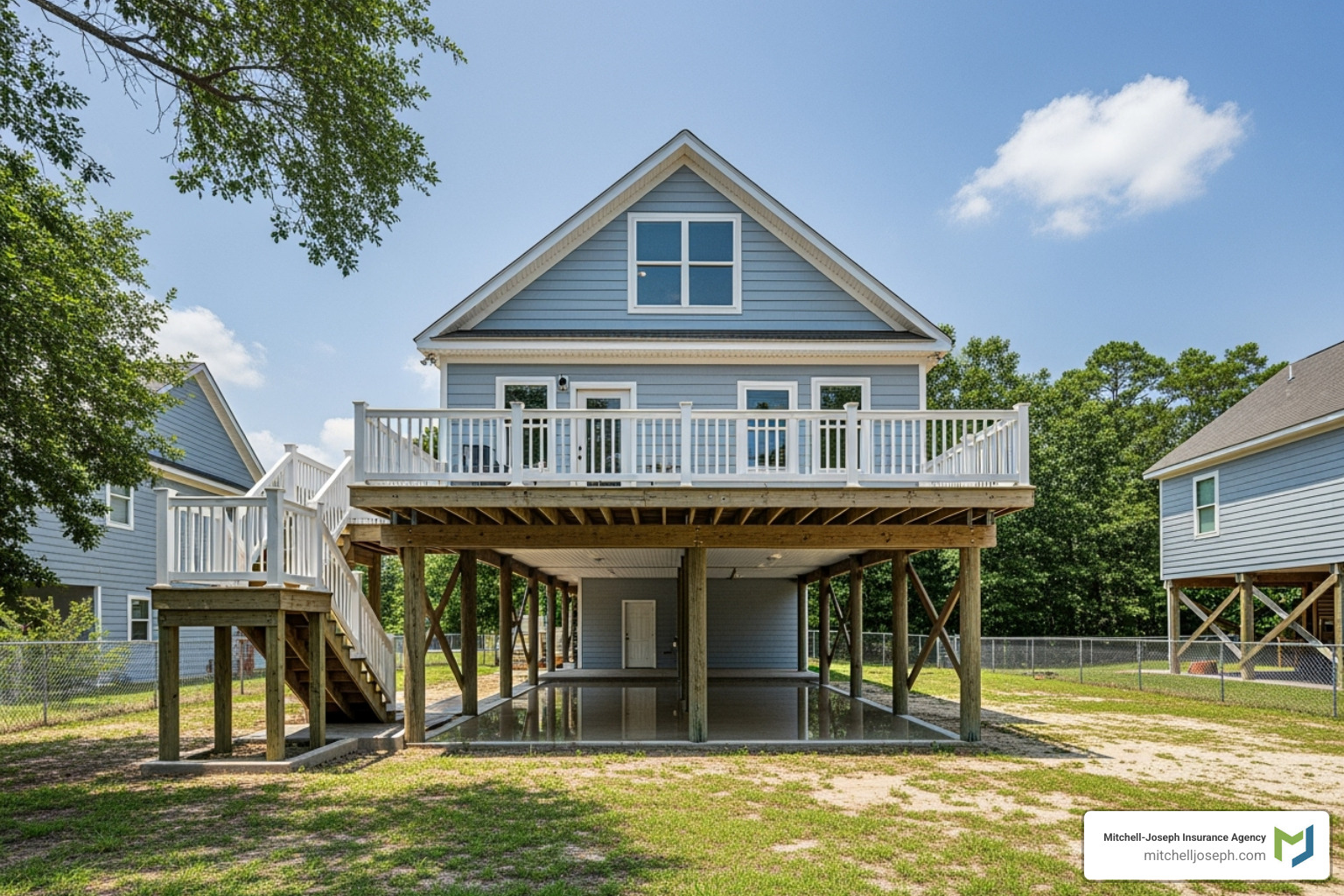
The NFIP encourages this approach through programs like Increased Cost of Compliance (ICC) coverage. If your home is substantially damaged, ICC provides up to $30,000 to help you rebuild smarter by elevating your home or relocating it out of harm’s way.
How to Mitigate Risk and Prevent Water Damage
The best flood damage is the kind that never happens. While your flood policy protects you financially, these practical steps help protect your home and peace of mind.
Inside Your Home:
- Protect Valuables: Avoid storing important items in the basement. If you must, use waterproof containers and lift them off the floor.
- Install a Sump Pump: A sump pump with a battery backup is essential for removing water during a power outage.
- Add a Backwater Valve: This device can prevent sewage from backing up into your home during heavy rains. Learn more about this risk at Water Backup Damage.
- Lift Utilities: Move your furnace, water heater, and electrical panels above anticipated flood levels.
Outside Your Home:
- Ensure Proper Grading: Your yard should slope away from your house to direct water away from the foundation.
- Maintain Gutters: Clean gutters and extend downspouts at least six feet from your foundation.
- Clear Storm Drains: Keep nearby storm drains free of leaves and debris to help your entire neighborhood.
- Landscape Thoughtfully: Use plants that resist erosion, especially on slopes.
Even with these precautions, no home is flood-proof. Combining smart prevention with a solid flood policy offers the best possible protection. For other utility-related concerns, explore our information on Service Line Coverage.
Securing Your Financial Future Against Floods
Protecting your home from flood damage is about safeguarding your family’s financial future. A flood policy is an investment in your peace of mind and your home’s long-term value.
At Mitchell-Joseph Insurance Agency, we’ve helped families in the Finger Lakes region—from Honeoye Falls and Pittsford to Rochester and Naples—prepare for and recover from flood events. We understand the local challenges and vulnerabilities.
What sets us apart is choice. As an independent agency, we work with 24 different insurance companies. We aren’t locked into a single option; we shop the market to find you the best flood policy coverage at a competitive rate.
Our approach is simple: listen first, then advise. We take the time to understand your specific situation, budget, and needs. We believe in education over sales pressure, walking you through what’s covered, what isn’t, and how the claims process works before you need it. No jargon, no surprises—just straight talk.
Don’t wait for the next storm to think about flood risk. Whether you’re in a high-risk zone or a “safer” area, being prepared is essential.
Ready to protect what matters most? We’re here to help you find a flood policy that fits your needs and budget.

