

Understanding Flood Risk for Rental Properties
When water starts creeping into your rental property, standard insurance policies often leave landlords high and dry. Flood insurance for landlords fills this crucial gap, offering specialized protection that regular landlord policies simply don’t provide.
As a property owner, you’ve worked hard to build your rental business. The last thing you need is floodwater washing away your investment and income stream.
Quick Answer: Flood Insurance for Landlords
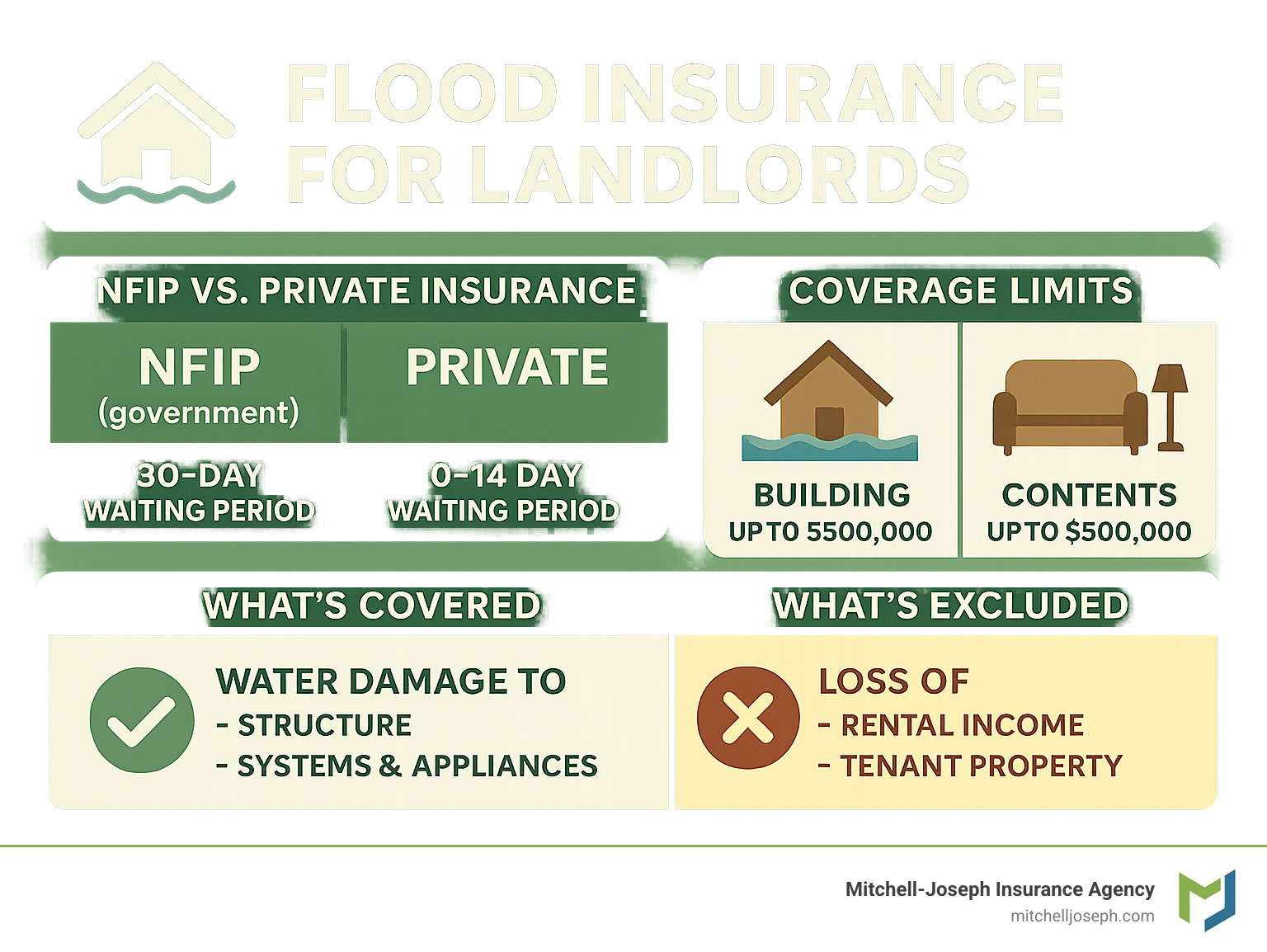
- Coverage: Protects building structure (up to $500,000) and optional contents (up to $500,000)
- Cost: Varies by flood zone, typically $600-$2,000+ annually
- Provider Options: NFIP (government) or private insurers
- Waiting Period: Typically 30 days with NFIP, 0-14 days with private insurers
- Required: Mandatory in high-risk flood zones with federally-backed mortgages
Here’s a sobering thought: just one inch of floodwater can cause up to $25,000 in damage to your property. For landlords, the nightmare doesn’t end with physical damage – you’re also facing lost rental income while repairs drag on. And floods are far more common than most people realize. Since 1996, an astonishing 99% of U.S. counties have experienced flooding events, yet most property owners remain unprotected.
When floodwaters recede, landlords often face a cascade of problems: structural damage to foundations and walls, major systems damage to HVAC and electrical components, tenant displacement that may lead to lease terminations, and the painful loss of rental income during what can be lengthy repairs.
The most shocking findy for many landlords comes after the flood – when they learn their standard landlord policy explicitly excludes flood damage. This coverage gap can be financially devastating without proper protection.
I’m Jeffrey Joseph, and after helping landlords protect their investments for over 20 years at Mitchell-Joseph Insurance Agency, I’ve seen how the right flood insurance for landlords can make the difference between a temporary setback and a financial catastrophe for rental property owners throughout the Finger Lakes region.
As you steer your flood insurance options, you’ll want to familiarize yourself with key terms that will help you make informed decisions. Understanding flood insurance coverage limits helps you ensure you’re fully protected. Exploring flood insurance deductible options can help you balance premium costs with out-of-pocket expenses. And knowing the flood insurance claim process in advance can save precious time when water starts rising.
The peace of mind that comes with proper flood insurance for landlords isn’t just about protecting physical assets – it’s about safeguarding your financial future and ensuring your rental business can weather any storm.
Understanding Your Flood Exposure
Many landlords I talk with are surprised to learn they’re at risk for flooding, especially when their properties sit far from any visible water source. Here’s an eye-opening reality: over 40% of all National Flood Insurance Program claims come from properties outside designated high-risk flood zones.
At Mitchell-Joseph Insurance, we often tell our clients, “Everyone lives in a flood zone. The question is simply which zone and what level of risk.”
Climate change is making these risks worse each year. According to recent scientific research, flood damage across the United States is projected to increase by at least 26% over the next three decades. For landlords here in Upstate New York and throughout the Finger Lakes region, this means growing exposure to flood risks, even in areas that have historically stayed dry.
As Evan W. Walker, an attorney who specializes in insurance claims, puts it: “To make sure you’re protected against flood losses, you must purchase separate flood insurance. Standard landlord policies simply don’t cover it.”
Finding Your Property on the Map
Let’s start by figuring out exactly where your rental property stands on the official flood risk scale. FEMA’s Flood Insurance Rate Maps (FIRMs) categorize areas based on flood risk and are used to determine both insurance requirements and rates.
Finding your property’s flood zone is straightforward:
- Visit FEMA’s Flood Map Service Center at msc.fema.gov
- Enter your property address in the search bar
- View the interactive map or download the FIRM for your area
- Identify your property’s flood zone designation
The most critical thing to look for is whether your property falls within what’s called a Special Flood Hazard Area (SFHA). These are zones labeled with letters A or V on FEMA maps, indicating areas with a 1% or greater annual chance of flooding (what used to be called the “100-year floodplain”).
I’ve seen how properties in Honeoye Falls, Canandaigua, and other areas we serve can experience local flooding even when they’re marked as minimal risk zones. That’s why I recommend all landlords take time to assess their true flood exposure, regardless of what the official zone designations might suggest.
Required vs. Optional Coverage Zones
If your rental property sits in an SFHA (those A or V zones) and you have a federally backed mortgage, flood insurance for landlords isn’t optional—it’s mandatory. Your lender will require you to maintain coverage as a condition of your loan.
But what if you’re in a moderate-to-low risk area (zones B, C, or X) or own your property outright without a mortgage? While not legally required, flood insurance is still something you should seriously consider. Properties in these lower-risk zones may qualify for significantly more affordable Preferred Risk Policies (PRPs) through the NFIP.
I’ve worked with clients in Rochester, Victor, and Canandaigua who learned this lesson the hard way. After devastating floods hit the Finger Lakes region in recent years, many landlords in “low-risk” areas who skipped coverage faced repair bills running into tens of thousands of dollars—all coming straight from their own pockets.
It’s also worth remembering that when major flooding events occur, federal disaster assistance typically comes as loans that must be repaid, not as grants. Having proper flood insurance for landlords means receiving claim payments you’ll never have to pay back, giving you true financial protection when you need it most.
Flood Insurance for Landlords Basics
When water starts creeping into your rental property, standard insurance won’t keep your investment afloat. Flood insurance for landlords steps in where regular policies bail out, covering damages from what NFIP defines as “a general and temporary condition of partial or complete inundation.” In plain English: when water goes where it shouldn’t, flooding at least two acres or affecting multiple properties.
You’ve got two main lifeboats when shopping for coverage:
- National Flood Insurance Program (NFIP): The government-backed option available to properties in participating communities
- Private Flood Insurance: Offered by commercial insurers, often with higher limits and sometimes more flexible terms
For your rental properties, NFIP policies provide substantial protection – up to $500,000 for the building itself and another $500,000 for contents if you choose to insure them. These are separate coverages with separate premiums.
Why Flood Insurance for Landlords Differs from Homeowners Policies
When you’re protecting a rental property, the rules change in important ways. Flood insurance for landlords has some crucial differences from policies covering owner-occupied homes.
The biggest surprise for many landlords is the Actual Cash Value vs. Replacement Cost difference. While homeowners often receive replacement cost coverage, rental property flood policies typically pay Actual Cash Value (ACV), factoring in depreciation. That 10-year-old roof? You’ll only get about half its replacement value if floods damage it.
Fred Hoffman of Seniors Life Insurance Finder puts it perfectly: “This ACV payout structure means landlords need to be particularly careful about their coverage amounts, as they won’t receive full replacement value for older components of their rental properties.”
Perhaps even more concerning is what happens to your cash flow when your property needs repairs. Standard NFIP policies don’t cover loss of rental income during repairs – a potentially devastating gap if you depend on that monthly income. Some private insurers offer endorsements for this crucial protection, which we strongly recommend to our clients.
While NFIP policies do cover detached structures like garages, they exclude several exterior features that can be expensive to repair, including pools, fences, decks, landscaping, and retaining walls. These exclusions can lead to significant out-of-pocket expenses after a flood.
What Standard Landlord Insurance Misses
At Mitchell-Joseph Insurance, we’ve seen too many landlords find the hard way that their standard property insurance leaves them high and dry when it comes to flood damage. This misunderstanding is both common and costly.
Your standard landlord policy specifically excludes flooding from natural sources like rivers, lakes, and heavy rain. It won’t cover storm surge, ground saturation causing water seepage, or mudflow. These exclusions create enormous financial exposure for unprepared property owners.
Understanding the distinction between different types of water damage is crucial. When a pipe bursts inside your rental property, your standard landlord policy typically has you covered. But when water enters from outside due to rising water levels? That’s when you need flood insurance for landlords.
Karren from Clearsurance explains it clearly: “The damages covered by standard landlord policies are for those that are considered sudden and accidental internal water damage. For example, if the bathroom floor is damaged after a bathtub overflows, landlord insurance can help cover the cost of repairs. But external flooding is excluded.”
For a deeper dive into these important distinctions, check out our detailed comparison: Water Backup Insurance vs Flood Insurance
How Much Flood Insurance for Landlords Do You Need?
Finding the right coverage level requires balancing protection against cost. When helping our Finger Lakes region clients determine appropriate flood insurance for landlords, we consider several key factors:
First, assess the building valuation – the actual cash value of your rental property structure, accounting for depreciation. For older properties, this figure may be substantially lower than replacement cost.
Next, decide whether to add contents coverage for landlord-owned items like appliances, maintenance equipment, and furnishings (especially important for furnished rentals).
Then, carefully select deductible options that balance premium costs against out-of-pocket exposure. Higher deductibles lower your premiums but increase your costs when filing a claim.
Finally, consider supplemental coverage for loss of rental income – a critical protection that standard NFIP policies don’t include.
For Honeoye Falls, Pittsford, and other properties throughout our service area, we often recommend obtaining an Elevation Certificate. This document, prepared by a licensed surveyor, provides detailed elevation information that can significantly impact your premiums – sometimes reducing them substantially.
Want to understand exactly what’s covered and for how much? Visit our comprehensive guide: Flood Insurance Coverage Limits
Choosing the Right Policy
When it comes to protecting your rental property from floods, you’ve got two main paths to explore: the government-backed National Flood Insurance Program (NFIP) or private market coverage. As a landlord, this choice deserves careful consideration since each option brings different benefits to the table.
| Feature | NFIP Policies | Private Flood Insurance |
|---|---|---|
| Coverage Limits | $500,000 building/$500,000 contents | Often higher limits available |
| Waiting Period | 30 days | 0-14 days typically |
| Loss of Rental Income | Not covered | Available as endorsement |
| Claims Process | Government-standardized | Company-specific |
| Availability | Any participating community | May be limited in highest-risk zones |
| Rate Stability | More predictable long-term | May fluctuate more year-to-year |
Purchasing Through the NFIP
The National Flood Insurance Program has been the traditional go-to for flood insurance for landlords since 1968. These policies are sold through a network of Write-Your-Own (WYO) insurance companies – private insurers that handle everything from sales to claims, while the federal government bears the actual risk.
One important requirement: your rental property must be located in a community that participates in the NFIP by enforcing floodplain management regulations. Fortunately, most communities around Rochester and throughout the Finger Lakes region are participants, so this is rarely an obstacle for our local clients.
Before you commit to an NFIP policy, keep these points in mind:
There’s typically a 30-day waiting period before coverage kicks in, so don’t wait until the forecast shows storms on the horizon. Mortgage lenders universally accept NFIP policies when flood insurance is required. The standardized coverage and claims handling process means fewer surprises during stressful post-flood periods.
Finding an NFIP provider is straightforward – you can use the FloodSmart.gov provider finder or simply give us a call at Mitchell-Joseph Insurance. We’ll walk you through the process with zero pressure and plenty of straight talk.
Going with a Private Insurer
Private flood insurance has really come into its own in recent years, offering landlords some compelling alternatives to the NFIP. At Mitchell-Joseph, we’ve developed relationships with multiple private flood insurers to give our clients more options.
Higher coverage limits are a major advantage of private policies – perfect if your rental property’s value exceeds the NFIP’s $500,000 cap. Shorter waiting periods (sometimes as little as 10-14 days or even immediate coverage) can be a lifesaver if you need protection quickly.
Many of our landlord clients appreciate the bundling discounts available when combining flood coverage with their other policies. The more flexible underwriting approach of private insurers often results in lower premiums for properties with favorable characteristics – like those liftd above the base flood elevation.
Perhaps most importantly for landlords, private policies frequently offer loss of rental income coverage options. This can be absolutely crucial if a flood leaves your property uninhabitable for months.
As Diana Rodriguez-Zaba, a restoration specialist I often consult with, points out: “Private flood insurers typically provide more landlord-friendly options, especially that business interruption coverage that keeps rent money flowing during repairs. That’s something you just can’t get with standard NFIP policies.”
Policy Features to Compare
When evaluating flood insurance for landlords, I always encourage my clients to look beyond just the premium and carefully consider these key policy features:
Deductible Tiers impact both your premium and out-of-pocket costs. NFIP policies offer separate deductibles for building and contents coverage, typically ranging from $1,000 to $10,000. Higher deductibles mean lower premiums but more financial responsibility when filing a claim – it’s all about finding your comfort zone.
Loss-of-Rent Endorsement is something I emphasize with every landlord. This critical coverage, primarily available through private insurers, replaces your rental income while the property is being repaired. Without it, you could face months of mortgage payments with zero rental income.
Contents Coverage Options deserve thoughtful consideration. Do you need to insure landlord-owned appliances, maintenance equipment, or furnishings? If you offer furnished rentals, this becomes even more important. Your tenants’ personal belongings aren’t covered under your policy – they need their own renters insurance with flood coverage.
Replacement Cost Upgrades available through some private policies can make a huge difference in claim payouts. Unlike the NFIP’s actual cash value standard (which factors in depreciation), replacement cost coverage helps you rebuild without major out-of-pocket expenses.
For clients with multiple properties in flood zones across our service area – from Naples to Rushville to Avon – we can help create a comprehensive flood protection strategy that addresses each property’s unique flood risk profile. Having the right flood insurance for landlords means you can sleep easier when the heavy rains come.
Costs, Requirements, and Saving Tips
When it comes to flood insurance for landlords, the price tag can vary dramatically depending on your specific situation. I’ve seen premiums range from a few hundred dollars to several thousand per year across the properties we insure throughout the Finger Lakes region.
What drives these costs? Several key factors come into play:
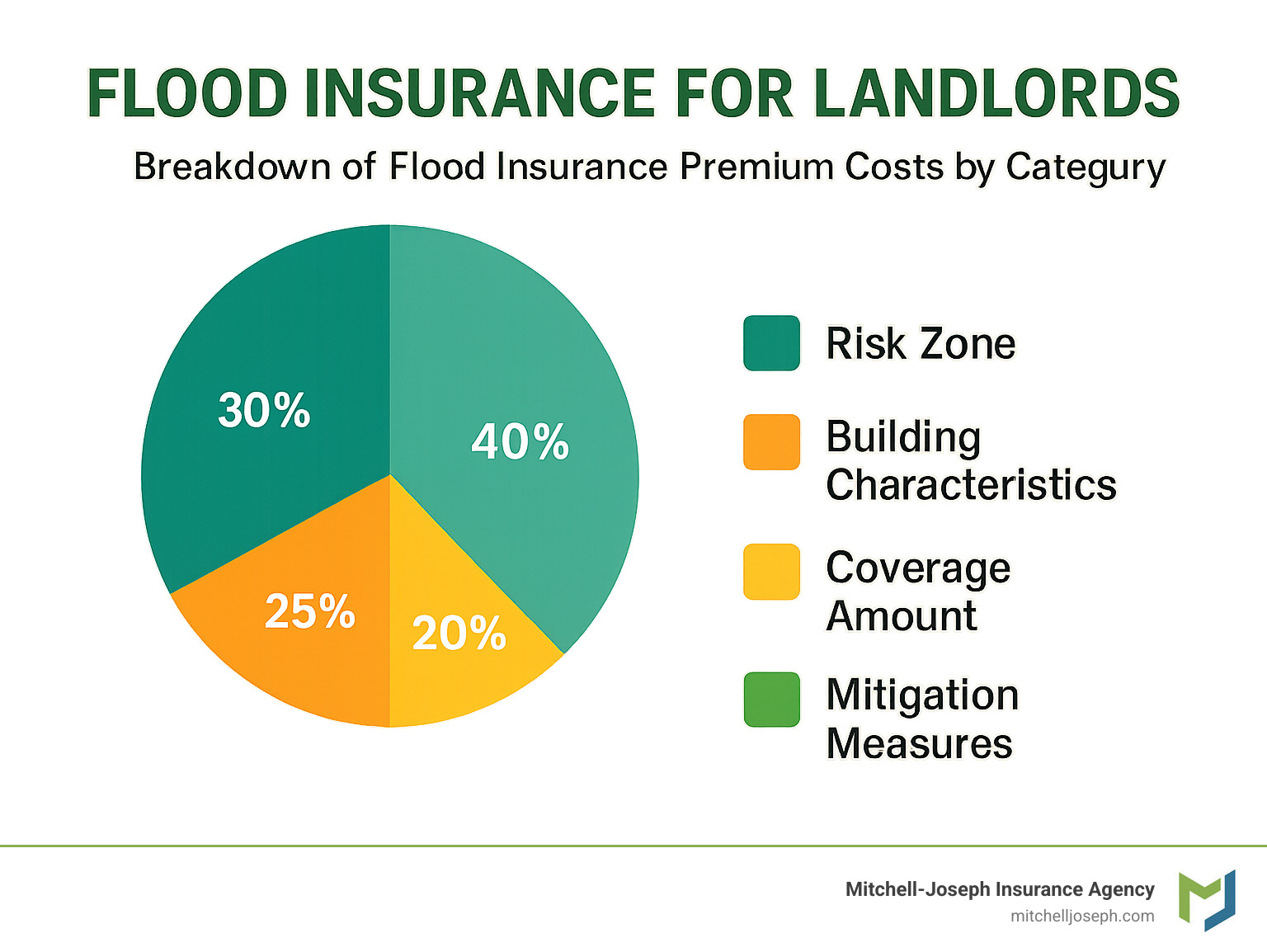
Your property’s flood zone designation has the biggest impact on what you’ll pay. A rental in a high-risk A zone will cost significantly more to insure than an identical property in a preferred X zone. The age and construction type of your building also matters – newer properties built to modern flood codes often qualify for better rates. How high your property sits relative to the expected flood level (known as the base flood elevation) can dramatically affect your premium as well.
Of course, the coverage amounts and deductibles you select will influence costs too. And don’t forget about potential Community Rating System discounts – these can reduce premiums by up to 45% in communities that have taken extra flood mitigation steps.

One document that can be worth its weight in gold is an Elevation Certificate. For properties in high-risk zones, this paperwork can potentially save you thousands in premiums by documenting exactly how high your property sits above the expected flood level. It’s an upfront investment that often pays for itself many times over.
Typical Cost Ranges for Rental Properties
Based on the hundreds of landlord policies we’ve written across the Rochester area and Finger Lakes region, here’s what you might expect to pay annually for flood insurance for landlords:
In low-risk zones (X), most landlords pay between $600-$1,200 for basic coverage. If you’re in a moderate-risk zone (B or shaded X), that typically jumps to $800-$1,500. For properties in high-risk zones (A or AE), premiums usually range from $1,500 to over $5,000. And if you’ve got a rental in a coastal high-risk zone (V or VE), you’re looking at $3,000 to $12,000 or more.
Your deductible choice makes a big difference too. I remember working with a Rochester landlord who saved about $2,000 annually by increasing his deductible from $1,000 to $5,000. For him, the math made sense – he had the financial reserves to handle a larger out-of-pocket expense if needed, while the premium savings added up year after year.
Reducing Premiums Through Mitigation
There are several practical ways landlords can lower their flood insurance costs, and I’ve seen these strategies work for many of our clients.
Making structural modifications to your rental property can yield significant savings. Installing proper flood vents in foundation walls helps water flow through rather than pushing against the structure. Elevating utilities like HVAC systems, water heaters, and electrical panels above the base flood elevation not only reduces damage potential but can also lower premiums. Some landlords have even filled in basements or converted them to properly vented crawlspaces to achieve better rates.
Community participation matters too. When your local government implements flood mitigation measures through FEMA’s Community Rating System, everyone in the community benefits with premium discounts. I’ve encouraged several of our landlord clients to attend town meetings and advocate for these improvements – it’s a win for both property owners and the community as a whole.
Don’t overlook emergency preparedness measures either. While keeping sandbags on hand and installing backflow prevention devices might not directly reduce your premium, they can significantly minimize your losses when flooding occurs. Creating clear emergency response plans for your tenants helps protect both lives and property.
For more details on community-wide approaches to reducing flood risk, check out FEMA’s resources at Community mitigation.
Is Flood Insurance Required for Your Rental?
The simple answer: flood insurance for landlords is legally required if your rental property is in a Special Flood Hazard Area (zones A or V) AND has a mortgage from a federally regulated or insured lender.
But even if it’s not legally required, there are compelling reasons to consider coverage. I’ve unfortunately had to deliver the bad news to several uninsured landlords after major flooding events – and watching someone face tens or even hundreds of thousands in uninsured losses is heartbreaking.
Beyond protecting your investment, having flood insurance maintains your property’s marketability and value. Some buyers won’t even consider properties without it, regardless of zone. And if a disaster does strike, having coverage can make you eligible for certain types of federal disaster assistance that are unavailable to the uninsured.
This is especially important in our beautiful Finger Lakes region, where waterfront properties are highly desirable but also face unique flood risks. I’ve worked with numerous property owners in Canandaigua, Naples and other lakefront communities to secure appropriate coverage that addresses their specific flood exposures while keeping premiums as affordable as possible.
When it comes to flood insurance for landlords, the goal isn’t just compliance – it’s comprehensive protection of your valuable investment property.
Filing Claims & Post-Flood Steps
When water invades your rental property, knowing exactly what to do can make all the difference between a smooth recovery and a prolonged nightmare. As someone who’s guided countless landlords through this stressful process, I can tell you that flood claims work quite differently than your typical insurance claims.

We’ve created a comprehensive guide that walks you through every step: Flood Insurance Claim Process
Immediate Actions After Water Recedes
The moment after a flood feels overwhelming, but your first priority must always be safety. Never rush into a flooded building until you’re certain it’s structurally sound. Even seemingly minor floods can compromise foundations and create hidden hazards.
Once it’s safe to enter, immediately turn off the electricity at the main breaker box. Water and electricity create a deadly combination, and this simple step could save a life. One of our landlords in Canandaigua learned this lesson when he nearly suffered a shock while checking his property after a flash flood.
Before touching anything, grab your phone and document everything. I mean everything! Take photos of water lines on walls, damaged belongings, and affected structural elements from multiple angles. This documentation becomes your strongest ally when working with adjusters.
After our client in Victor experienced flooding from a nearby creek, his meticulous photo documentation proved invaluable. The adjuster initially questioned some damage, but those time-stamped photos showing clear water lines made all the difference in getting his claim fully covered.
While you’re documenting, make that all-important call to your insurance provider. The sooner you report the loss, the faster your claim process begins. Most flood insurance for landlords policies require immediate notification.
How to File and Track Your Claim
Filing a flood claim follows a specific timeline that’s important to understand. Here’s what typically happens:
Once you’ve contacted your insurer, they’ll assign an adjuster who should reach out within 24-48 hours. This adjuster will schedule an inspection to assess the damage firsthand. Be present for this inspection if possible – it’s your opportunity to point out all affected areas.
The most critical document in this process is the Proof of Loss form. This sworn statement details your damage and requested payment amount. You must submit this completed, signed form within 60 days of the flood. This deadline is non-negotiable in most cases, though FEMA sometimes extends it during major disasters.
“The Proof of Loss is where many landlords make costly mistakes,” shares one of our Rochester clients who manages multiple rental properties. “Taking the time to be thorough and accurate with this document made a $15,000 difference in my claim payout.”
If you need funds to begin repairs immediately, ask your adjuster about advance payments. Many landlords don’t realize this option exists, but it can provide crucial funds while your full claim is being processed.
Should your claim be denied or underpaid, you have appeal rights – but you must act within 60 days of receiving the written denial. We’ve helped several landlords in the Finger Lakes region successfully appeal initial claim decisions by providing additional documentation and expert opinions.
Recovering Loss of Rental Income
Here’s where flood insurance for landlords gets tricky – standard NFIP policies don’t cover lost rental income. This creates a substantial gap in protection that catches many property owners by surprise.
A Rochester landlord with a six-unit property finded this the hard way when basement flooding made his units temporarily uninhabitable. The lost rental income actually exceeded his physical damage costs! Fortunately, he had secured a private flood policy through our agency that included business interruption coverage, which replaced his rental income during the three-month repair period.
If you rely on consistent rental income to cover your mortgage and expenses, consider these protection options:
Private flood insurance with business interruption coverage offers the most comprehensive protection. Unlike NFIP policies, many private insurers offer endorsements specifically designed to replace lost rent during repairs.
Separate business income policies can sometimes be structured to include flood as a covered cause of loss. This creates another layer of protection specifically for your rental income stream.
When disaster strikes without adequate coverage, SBA disaster loans provide a fallback option. These loans offer favorable terms but remember – unlike insurance payments, loans must be repaid.
At Mitchell-Joseph Insurance, we’ve seen how devastating the combination of property damage and lost income can be for landlords. That’s why we help our clients create a comprehensive protection plan that addresses both aspects of flood risk. After all, what good is repairing your building if you’ve lost your tenants and income in the process?
Frequently Asked Questions about Flood Insurance for Landlords
Are Tenants’ Belongings Covered?
One of the most common questions we hear from landlords is about tenant property coverage. The short answer? No, your flood insurance for landlords policy doesn’t cover your tenants’ personal belongings.
This creates an important conversation you should have with your renters before any flooding occurs. Many tenants mistakenly believe their belongings are protected under their landlord’s policy, which can lead to uncomfortable situations after a flood.
Diana Rodriguez-Zaba puts it clearly: “Landlords are responsible only for the structure, not the tenant’s personal property or tenant negligence. This should be clearly communicated in lease agreements.”
From our experience helping hundreds of landlords across the Finger Lakes region, we recommend making this crystal clear in your rental process. Consider adding a clause in your lease agreement that explicitly states tenants need their own insurance coverage. You might even require proof of renters insurance as a condition of the lease.
The good news? Your tenants can purchase affordable NFIP contents-only policies, sometimes for as little as $99 per year. Providing this information to your tenants shows you care about their protection while clarifying your coverage boundaries.
How Long Until Coverage Starts?
When it comes to flood insurance, timing matters tremendously. The standard NFIP policy comes with a 30-day waiting period before coverage begins. This is why we always tell our landlord clients: “The best time to buy flood insurance was a month ago. The second-best time is today.”
You simply cannot wait until you see storm clouds gathering to protect your rental property. By then, it’s already too late.
There are a few exceptions to this 30-day rule:
– When you’re getting a new mortgage or refinancing
– At policy renewal time when making coverage changes
– For properties affected by flooding on burned federal land (if purchased within 60 days of fire containment)
Private flood insurance often provides more flexibility with waiting periods typically ranging from immediate coverage to 14 days. This can be a lifesaver when you need protection quickly.
Here in the Finger Lakes region, we see the highest flood risks during spring snowmelt and summer thunderstorm seasons. I always advise our landlord clients to secure coverage well before these high-risk periods arrive.
Can I Cancel Flood Insurance After Paying Off the Mortgage?
Technically, yes. Legally, you can cancel your flood coverage once your mortgage is paid off. But I would be doing you a disservice if I didn’t strongly caution against this decision.
I remember a landlord client in Canandaigua who was thrilled to make his final mortgage payment. One of his first cost-cutting moves was canceling his flood insurance for landlords policy that cost $900 annually. His celebration was short-lived – just three months later, his property experienced significant flooding. The $42,000 in damages came straight from his retirement savings.
Before canceling your policy, please consider:
Flood risk doesn’t magically disappear when your mortgage does. If anything, climate change is increasing flooding in many areas previously considered safe.
If a federal disaster is declared, future assistance may be contingent on having maintained flood insurance. Without it, you might be ineligible for certain types of aid.
Uninsured flood losses can devastate your investment property’s value and eliminate rental income during repairs – potentially impacting your retirement income or investment strategy.
If you decide to restart coverage later, you’ll face that 30-day waiting period all over again, leaving you vulnerable.
At Mitchell-Joseph Insurance, we’ve seen too many landlords learn this lesson the hard way. Your property represents years of investment and income potential. Protecting it with proper flood insurance for landlords coverage, even after the mortgage is paid, is simply good business sense.
Conclusion
Protecting your rental property investments from flood damage isn’t just smart—it’s essential in today’s changing climate. As we’ve seen throughout this guide, flood insurance for landlords provides crucial protection that standard property policies simply don’t offer.
I’ve worked with countless property owners across Honeoye Falls, Rochester, and the Finger Lakes region who initially thought flood insurance was unnecessary—until water started seeping through their rental property doors. By then, it’s always too late.
Flooding doesn’t discriminate. With over 40% of flood claims occurring outside designated high-risk zones, your rental properties may be vulnerable even if they seem safely positioned. Climate change continues to shift the landscape of risk, making previously “safe” areas increasingly susceptible to flooding events.
At Mitchell-Joseph Insurance Agency, we take pride in helping landlords steer the sometimes confusing world of flood insurance. Our team has spent decades studying the unique flood patterns of our region, allowing us to provide custom advice for your specific properties.
We’ve found that many landlords appreciate understanding all their options. Whether you choose government-backed NFIP coverage or explore private market alternatives, what matters most is having protection that addresses your specific risks—including that crucial loss of rental income that standard policies miss.
Don’t overlook the potential savings from mitigation efforts. Simple improvements like elevating utilities or installing flood vents can substantially reduce your premiums while simultaneously protecting your investment. Our team can help identify which measures make the most financial sense for your specific properties.
The worst time to think about flood insurance for landlords is when the forecast calls for heavy rain. With waiting periods typically ranging from 14-30 days, preparation is everything. I’ve sat with too many property owners after a flood, wishing they had called us just a month earlier.
Your rental properties represent significant investments—both financially and in terms of the time you’ve dedicated to maintaining them. Protecting that investment with appropriate flood coverage ensures one unexpected weather event doesn’t wash away years of hard work.
Ready to explore your flood insurance options? Our team at Mitchell-Joseph Insurance Agency is just a phone call away. We’ll help you understand your risk exposure, compare coverage options, and find protection that fits both your needs and budget.
For more detailed information about flood insurance options for your rental properties, visit our dedicated page: Insurance Coverage: Flood Insurance

