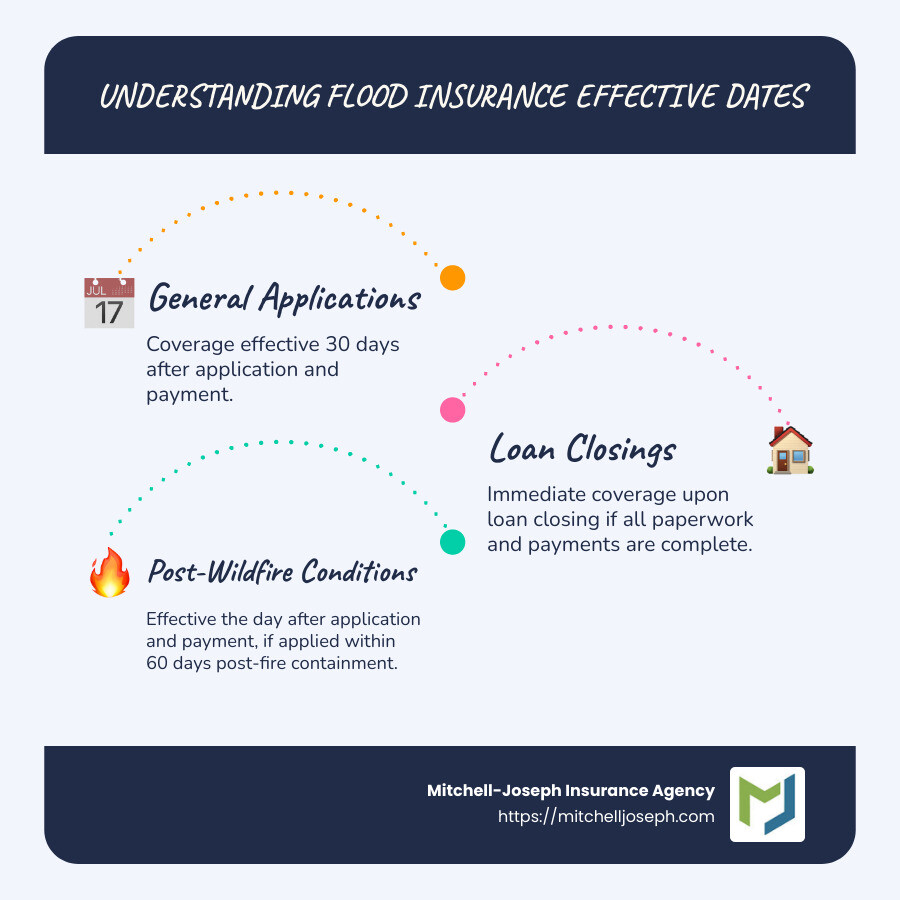
Flood insurance effective date is crucial to understand when planning to protect your property from flood damage. This date signifies when your flood insurance policy officially begins coverage, which can be vital in areas prone to flooding. Here’s a quick breakdown of flood insurance effective date rules:
-
New Applications:
- General cases: Effective 30 days after application and payment.
- Map revisions: Effective the day after application and payment during a 13-month window post-map update.
-
Loan Closings:
- Coverage effective upon loan closing, given all paperwork and payment are completed on time.
-
Post-Wildfire Conditions:
- Effective the day after application and payment, if applied within 60 days post-fire containment.
Navigating flood insurance effective dates can be the difference between being covered in a flood or being left with hefty repair bills.
My name is Jeffrey Joseph, and with over two decades of experience in the insurance industry, I have guided numerous clients in understanding the intricacies of flood insurance effective date. At Mitchell-Joseph Insurance Agency, we strive to make the complex simple, ensuring you’re informed and protected.
Stay tuned as we dig deeper into the specifics of flood insurance effective dates and how they impact you.
Flood insurance effective date terms simplified:
What is the Flood Insurance Effective Date?
Understanding the flood insurance effective date is crucial when purchasing a policy, especially if you live in a flood-prone area. This date marks the official start of your flood insurance coverage. Knowing when your policy kicks in helps ensure you’re protected when you need it most.
Policy Term and NFIP Guidelines
Flood insurance policies, particularly those issued through the National Flood Insurance Program (NFIP), typically have a term of one year. This means your coverage lasts for 12 months from the effective date, after which it needs to be renewed to maintain protection.
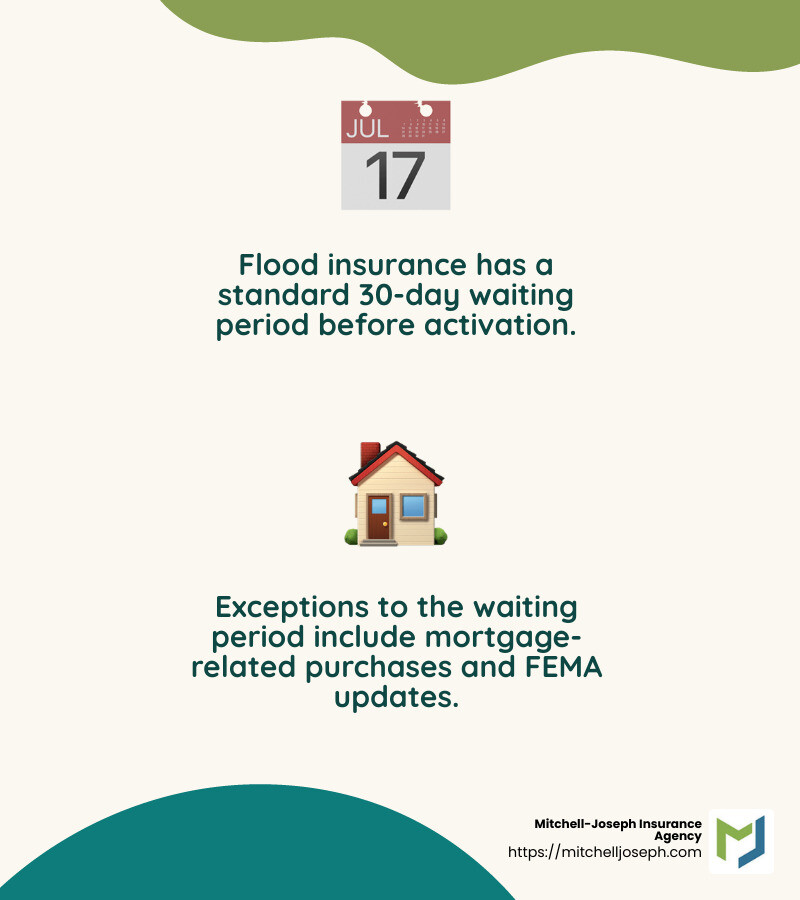
NFIP policies are unique because they come with a standard 30-day waiting period. This means that from the time you purchase your policy, it takes 30 days before the coverage is activated. This waiting period is designed to prevent people from only buying insurance when a flood is imminent.
Special Circumstances
There are exceptions to the 30-day waiting period. For instance, if you’re buying flood insurance in connection with a mortgage loan, the coverage can become effective immediately upon loan closing. Similarly, if your area experiences a map update by FEMA, you have a 13-month window to buy insurance with no waiting period.
Wildfire-related flooding is another exception. If your area is affected by a wildfire, and you purchase insurance within 60 days of the fire being contained, your coverage can start the next day.
Key Takeaways
- Policy Term: Generally, 1 year.
- Standard Waiting Period: 30 days, with exceptions.
- Immediate Coverage: Possible with loan closings or specific conditions like map updates and wildfire impacts.
Understanding these timelines is essential to ensure your property is adequately protected. At Mitchell-Joseph Insurance Agency, we’re here to help you steer these details and secure the right coverage for your needs.
Understanding the 30-Day Waiting Period
When you buy flood insurance, it’s important to know about the 30-day waiting period. This waiting period means your flood insurance coverage won’t kick in until 30 days after you purchase the policy. This rule is in place to prevent last-minute buying when a flood is expected.
Exceptions to the 30-Day Rule
While the 30-day waiting period is standard, there are some exceptions:
-
Mortgage-Related Purchases: If you purchase flood insurance when getting a new mortgage or adjusting an existing one, your coverage can start right away, as long as it’s part of the loan closing process.
-
FEMA Map Updates: If your area is newly designated as high-risk due to a FEMA map update, and you buy flood insurance within 13 months of this update, the waiting period can be bypassed.
-
Wildfire-Related Flooding: After a wildfire, if you purchase flood insurance within 60 days of the fire being contained, your policy can become active in just one day.
These exceptions ensure that you’re not left vulnerable due to changes in your property’s flood risk status.
Policy Activation
Once the waiting period is over, your flood insurance policy is active. This means you’re protected from flood damages according to the terms of your policy. It’s crucial to pay attention to these timelines to make sure your coverage is in place when you need it.
Understanding these details can help you make informed decisions about your flood insurance. At Mitchell-Joseph Insurance Agency, we’re here to guide you through the process and ensure your coverage is custom to your needs.
Exceptions to the Waiting Period
While the 30-day waiting period is the norm for flood insurance policies, there are specific situations where this waiting period can be waived. Let’s explore these exceptions:
Loan-Related Purchases
When you’re buying a new home or refinancing your mortgage, flood insurance becomes part of the loan process. In such cases, the waiting period is waived. Your coverage can start immediately as part of closing the loan. This ensures that your new investment is protected right from day one.
FEMA Map Updates
FEMA periodically updates flood maps, which may change your property’s flood risk status. If your area is newly marked as high-risk and you purchase flood insurance within 13 months of this update, you can skip the waiting period. This exception is crucial because it allows homeowners to respond promptly to changes in their flood risk.
Wildfire-Related Purchases
Wildfires can dramatically alter landscapes, increasing the risk of flooding due to loss of vegetation. If your area has experienced a wildfire, and you buy flood insurance within 60 days of the wildfire being contained, your policy can become active in just one day. This quick activation is vital for areas where the risk of flooding has increased due to recent fires.
These exceptions are designed to provide flexibility and ensure that homeowners are not left unprotected due to circumstances beyond their control. Understanding these can help you make timely decisions about your flood insurance needs.
At Mitchell-Joseph Insurance Agency, we are committed to helping you steer these complexities and secure the coverage you need.
How to Ensure Your Coverage is Active
Getting your flood insurance coverage active involves understanding the application process, making timely premium payments, and following NFIP guidelines. Let’s break it down step by step.
Application Process
Starting your flood insurance coverage begins with submitting an application. You’ll need your property’s address and basic information about your home. This can often be done online in just 10 minutes or less.
Important: Your application must be submitted promptly to ensure the flood insurance effective date aligns with your needs. If your application and full payment are received by the NFIP within 10 days, your waiting period will start from the application date. If you use certified mail within four days of applying, the same rule applies, even if NFIP receives your documents after 10 days.
Premium Payment
Paying your premium is crucial. The NFIP requires that your full premium payment accompanies your application. Remember: Payment to your agent doesn’t mean payment to the NFIP. Ensure your payment reaches the NFIP directly and swiftly to avoid delays in activating your coverage.
NFIP Guidelines
The NFIP has specific rules that both policyholders and agents must follow. For Write Your Own (WYO) companies, agents send applications and payments directly to the WYO company, not the NFIP.
Here’s a quick checklist to ensure your coverage is active:
- Complete Application: Fill out all required information accurately.
- Prompt Payment: Ensure your premium is paid in full and sent directly to NFIP or the WYO company.
- Certified Mail: Consider using certified mail to ensure your application date is honored.
- Follow-Up: Confirm receipt of your application and payment with your insurance agent or the NFIP.
By following these steps, you can ensure your flood insurance coverage is active when you need it most. At Mitchell-Joseph Insurance Agency, we’re here to assist you with every step to make sure your home is protected.
Frequently Asked Questions about Flood Insurance Effective Dates
What is the presentment date for flood insurance?
The presentment date is the date on which your flood insurance application and premium payment are officially received by the NFIP or your Write Your Own (WYO) company. This date is crucial because it determines when the 30-day waiting period begins, ultimately affecting your flood insurance effective date.
To ensure your coverage starts when you need it, make sure your application and payment reach the NFIP within 10 days of your application date. If you send them via certified mail within four days of applying, the presentment date will still be the application date, even if received later.
What is the mandatory waiting period before flood insurance becomes effective?
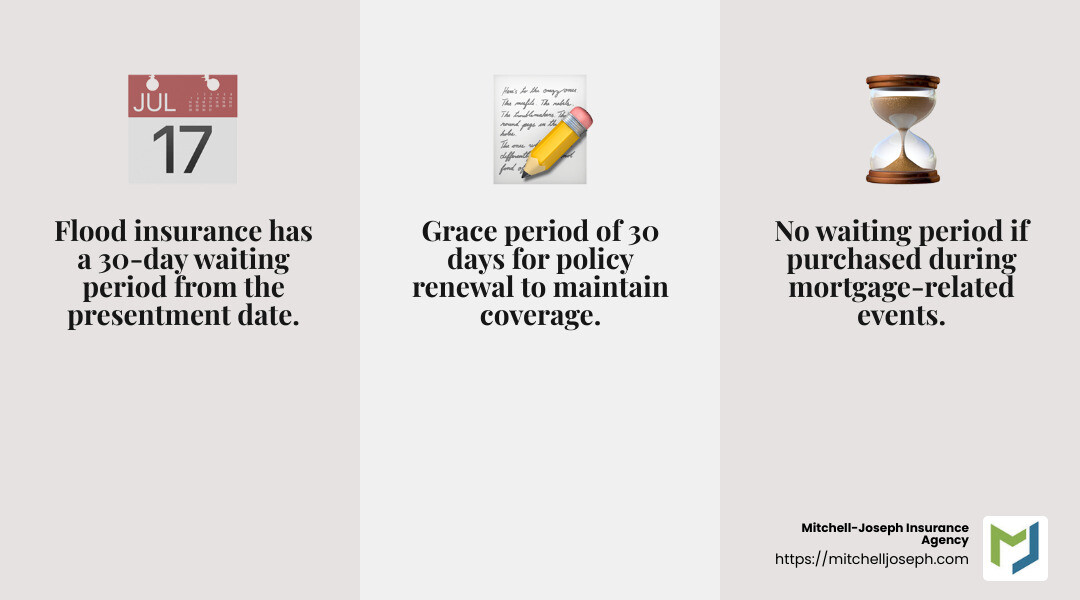
Typically, there is a 30-day waiting period from the presentment date before your flood insurance policy becomes effective. This means your policy won’t cover any flood damage that occurs during this period. However, there are some exceptions:
- No waiting period if you purchase flood insurance when making, increasing, extending, or renewing your mortgage.
- One-day waiting period if your property is newly designated in a high-risk flood area and you get insurance within 13 months of a map update or within 60 days of a wildfire containment date if the flooding is related to a wildfire.
Understanding these NFIP requirements helps ensure your policy is active when you need it most.
How does the grace period work for flood insurance?
The grace period for flood insurance is a 30-day window after your policy’s expiration date. During this time, your coverage continues, provided you pay the renewal premium by the end of the grace period. If you fail to renew within this time, your coverage will lapse, and any claims made during the grace period may not be honored.
Letting your policy lapse can also mean losing any discounted rates and possibly not meeting your mortgage terms. Therefore, it’s crucial to renew your policy promptly to maintain continuous coverage and avoid any complications.
By understanding these aspects, you can better manage your flood insurance and ensure your home is protected. At Mitchell-Joseph Insurance Agency, we are always here to help you steer these requirements and secure the coverage you need.
Conclusion
At Mitchell-Joseph Insurance Agency, we understand that navigating flood insurance can seem daunting. That’s why we’re committed to providing personalized service and custom coverage options custom to your unique needs. Our experienced team is dedicated to helping you understand the intricacies of flood insurance, including the all-important flood insurance effective date and how to ensure your coverage is active when you need it most.
With over 200 years of combined experience, we offer competitive quotes from 24 insurance companies, ensuring you receive the best possible protection for your home and belongings. Whether you’re in Honeoye Falls or any of our other locations across New York, we’re here to guide you every step of the way.
Don’t wait until it’s too late. Contact us today to learn more about our flood insurance options and how we can help protect your home from unexpected flood damage.
Your peace of mind is our priority, and we’re here to make sure you’re covered when it matters most.