Why a FEMA Flood Policy is Your Financial Lifeline
A FEMA flood policy through the National Flood Insurance Program (NFIP) is federally-backed flood insurance that protects your home and belongings when floodwaters strike. Here’s what you need to know:
Quick Facts About FEMA Flood Policies:
- Purpose: Provides up to $250,000 building coverage and $100,000 contents coverage
- Availability: Offered in 22,600 participating communities nationwide
- Requirement: Mandatory for high-risk areas with government-backed mortgages
- Waiting Period: Typically 30 days before coverage begins
- Claims: Covers direct flood damage to insured property
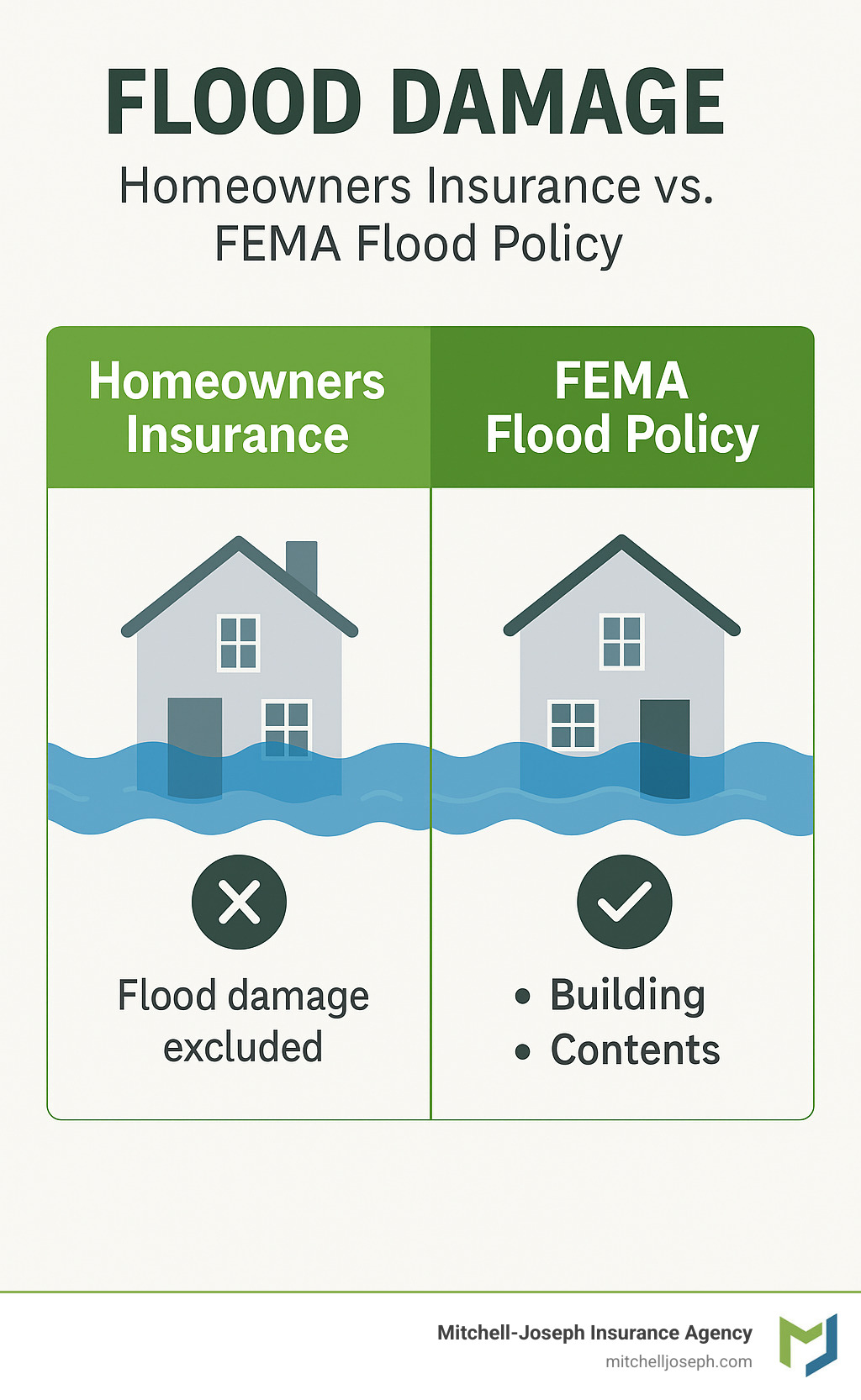
Most homeowners think they’re protected until disaster strikes. The harsh reality? Your homeowners insurance doesn’t cover flood damage. Period.
With 90% of all presidentially declared U.S. natural disasters involving flooding, and nearly one-third of NFIP claims coming from outside high-risk flood areas, no property is truly safe. Just one inch of floodwater can cause thousands of dollars in damage.
The NFIP was created in 1968 because private insurers found flood risk uninsurable at affordable rates. Today, it provides nearly $1.3 trillion in coverage to 4.7 million policyholders nationwide, making it the nation’s largest single-line insurance program.
I’m Jeffrey Joseph, and I’ve been helping Finger Lakes region families steer complex insurance decisions since 1999. Through decades of working with FEMA flood policy requirements and claims, I’ve seen how proper flood coverage can mean the difference between recovery and financial devastation.
Easy fema flood policy glossary:
How to Get and Understand Your FEMA Flood Policy
Getting a FEMA flood policy isn’t just about checking off a requirement—it’s about creating a financial safety net that could save your family from disaster. Think of it this way: you wouldn’t drive without car insurance, so why live in a country where 90% of natural disasters involve flooding without flood protection?

The National Flood Insurance Program exists for two important reasons: to help share the massive financial risk of flood damage across the country, and to encourage communities to build smarter in flood-prone areas. It’s not just about paying claims after disasters strike—it’s about preventing worse damage in the first place.
As your local insurance partners here in the Finger Lakes region, we’ve helped hundreds of families steer this process. Let me walk you through exactly how to get the protection you need.
Step 1: Assess Your Flood Risk and Mandatory Requirements
Before you can choose the right coverage, you need to understand what you’re up against. Here’s the truth: flood risk isn’t just about living near a river or lake.
Understanding Floodplains and Base Floods
A floodplain is simply any area that could get flooded. It sounds obvious, but many people don’t realize their property sits in one until it’s too late. The government defines a base flood as one that has a 1% chance of happening in any given year—that’s your so-called “100-year flood.”
Here’s what trips people up: that doesn’t mean it only happens once per century. It means there’s a 1-in-100 chance every single year. You could see two “100-year floods” in the same decade. We’ve seen it happen right here in New York.
Special Flood Hazard Areas: Where Coverage is Required
FEMA maps out areas with a 1% or greater annual flood risk and calls them Special Flood Hazard Areas (SFHAs). If your home sits in one of these zones and you have a mortgage from a federally-backed lender, a FEMA flood policy isn’t optional—it’s mandatory.
But here’s what surprises most homeowners: nearly one-third of flood insurance claims come from outside these high-risk areas. Poor drainage, heavy rain, snowmelt, or even a broken water main can flood any property.
Check Your Risk in Minutes
You can look up your property’s flood zone right now using FEMA’s Flood Map Service Center. Just enter your address to see your flood zone, nearby floodplain boundaries, and elevation details. It takes two minutes and could save you thousands.
Think Your Property is Mapped Wrong?
Sometimes FEMA’s maps aren’t perfect. If you believe your property sits on higher ground than indicated, you might qualify for a Letter of Map Amendment (LOMA). This official document can remove you from a high-risk flood zone, potentially eliminating your mandatory insurance requirement. We can help you determine if this option makes sense for your situation.
Step 2: Understand Your FEMA Flood Policy Coverage and Limitations
A FEMA flood policy covers one thing: direct damage from flooding. It’s not like your homeowners insurance that covers multiple perils. Understanding exactly what counts as “flood damage” and what’s covered can save you from nasty surprises later.

What Counts as a Flood?
The NFIP has a specific definition that matters when you file a claim. A flood is a temporary condition where normally dry land gets covered by water from overflow of rivers or lakes, unusual accumulation of surface water from any source, mudflow, or land collapse along shorelines due to water erosion.
You can find the complete Official Definition of a flood in FEMA’s official documentation.
Building Coverage vs. Contents Coverage
Your FEMA flood policy offers two types of protection, and you can buy one or both:
Building Coverage protects your home’s structure, foundation, electrical and plumbing systems, central air conditioning, water heaters, built-in appliances, and permanently installed features like carpeting and paneling. For single-family homes, this coverage goes up to $250,000. Your detached garage gets covered up to 10% of your building coverage limit.
Contents Coverage protects your personal belongings—clothing, furniture, electronics, and other personal items. This coverage maxes out at $100,000, and personal property is always valued at its depreciated worth, not replacement cost.
Basement Coverage: The Big Limitation
This is where many homeowners get surprised. Basements have very limited coverage under flood policies. The policy only covers items that are necessary for the building’s function or safety.
What is covered in basements includes foundation elements and staircases, permanently connected utilities like furnaces, water heaters, and electrical panels, permanently installed pumps, fuel tanks, washers and dryers, food freezers and their contents, and certain portable appliances like microwaves.
What’s not covered includes most personal belongings stored in basements, finished basement improvements like paneling or carpeting over finished floors, items stored just for storage, and valuable papers or currency.
Understanding these basement limitations is crucial for setting realistic expectations. For complete details on coverage limits, check out our guide on Flood Insurance Coverage Limits.
Step 3: The Purchase Process and Waiting Period
Buying flood insurance requires planning ahead. You can’t wait until storm clouds gather and expect immediate coverage.
How to Buy Your Policy
As an independent agency working with 24 different insurance companies, we can help you find competitive flood insurance quotes and guide you through the entire process. You can also purchase directly through NFIP Direct or other participating insurers.
To find additional providers, visit Find an insurance provider on the government’s FloodSmart website.
The 30-Day Waiting Period
Most flood insurance policies include a 30-day waiting period before coverage kicks in. This prevents people from buying insurance only when floods are imminent. If you buy a policy today, it won’t cover damage from a storm that hits tomorrow.
When the Waiting Period Doesn’t Apply
There are important exceptions to this rule. If your lender requires flood insurance for a mortgage closing, there’s no waiting period. If your property gets newly mapped into a high-risk area and you buy coverage within 13 months of the map change, you only wait one day. If you’re replacing an existing policy, you might avoid the waiting period entirely.
The key is planning ahead. Don’t wait for flood warnings to start shopping for coverage. For more details about when your policy becomes active, visit our page on Flood Insurance Effective Date.
Step 4: Using Your FEMA Flood Policy: Valuing Loss and Filing Claims
When flood damage happens, understanding how your claim gets handled makes the difference between a smooth recovery and a frustrating battle.
How Your Losses Get Valued
Unlike some insurance policies, flood insurance doesn’t guarantee to replace everything at today’s prices. Claims get settled using either Replacement Cost Value (RCV) or Actual Cash Value (ACV).
Replacement Cost Value pays to repair or replace damaged items with similar new ones, without deducting for depreciation. This typically applies to your building structure. Actual Cash Value pays the depreciated value of damaged items—what they were worth just before the flood, considering age and wear. This always applies to personal property.
| Coverage Type | Valuation Method | What This Means |
|---|---|---|
| Building Coverage | Usually RCV | Pay to rebuild without depreciation |
| Contents Coverage | Always ACV | Pay depreciated value of belongings |
Increased Cost of Compliance Coverage
If your home suffers substantial damage (typically 50% or more of its value), local building codes might require you to bring the entire structure up to current flood-resistant standards. Increased Cost of Compliance (ICC) coverage helps pay for these required upgrades, up to $30,000.
Filing Your Claim
When flooding strikes, contact your insurance company immediately. The Claims Handbook provides detailed guidance, but your main responsibility is providing a Proof of Loss form within 60 days of the flood.
Document everything with photos, keep receipts for temporary repairs, and don’t throw away damaged items until the adjuster sees them. For a complete walkthrough of the claims process, visit our guide on Flood Insurance Claim Process.
The bottom line: flood insurance claims can be complex, but understanding the process beforehand helps you recover faster and more completely.