

The Hidden Risk That Threatens Your Farm’s Future
Farm pollution liability insurance is specialized coverage that protects farmers from the financial consequences of pollution incidents on their property. This includes cleanup costs, third-party bodily injury claims, property damage, and legal defense expenses.
Quick Facts About Farm Pollution Liability Insurance:
– Coverage: Protects against chemical spills, pesticide drift, manure runoff, and fuel leaks
– Standard Policies: Most general farm liability policies exclude pollution or only cover sudden accidents
– Cost: Average minimum premium starts around $4,000 for $1M in coverage
– Necessity: Essential for farms using chemicals, storing fuel, or managing animal waste
When you picture a farm, you likely envision rolling fields, productive livestock, and the satisfaction of working the land. What you don’t see are the hidden risks lurking beneath that idyllic image. A single chemical spill, fertilizer runoff incident, or manure storage failure could trigger devastating financial consequences.
The reality is stark: a lawsuit in Des Moines sought over $180 million to address nitrate contamination from farm runoff, while Tyson meat packing plants were recently fined $4 million for ammonia leaks. Without proper coverage, these costs fall directly on you.
Most standard farm liability policies won’t help. They typically contain what’s called an “absolute pollution exclusion” or only cover sudden and accidental events, leaving gradual pollution—often the most costly—completely uninsured.
I’m Jeffrey Joseph, and at Mitchell-Joseph Insurance Agency, I’ve spent over two decades helping farms across the Finger Lakes Region secure comprehensive farm pollution liability insurance that protects their operations from environmental claims and regulatory actions.
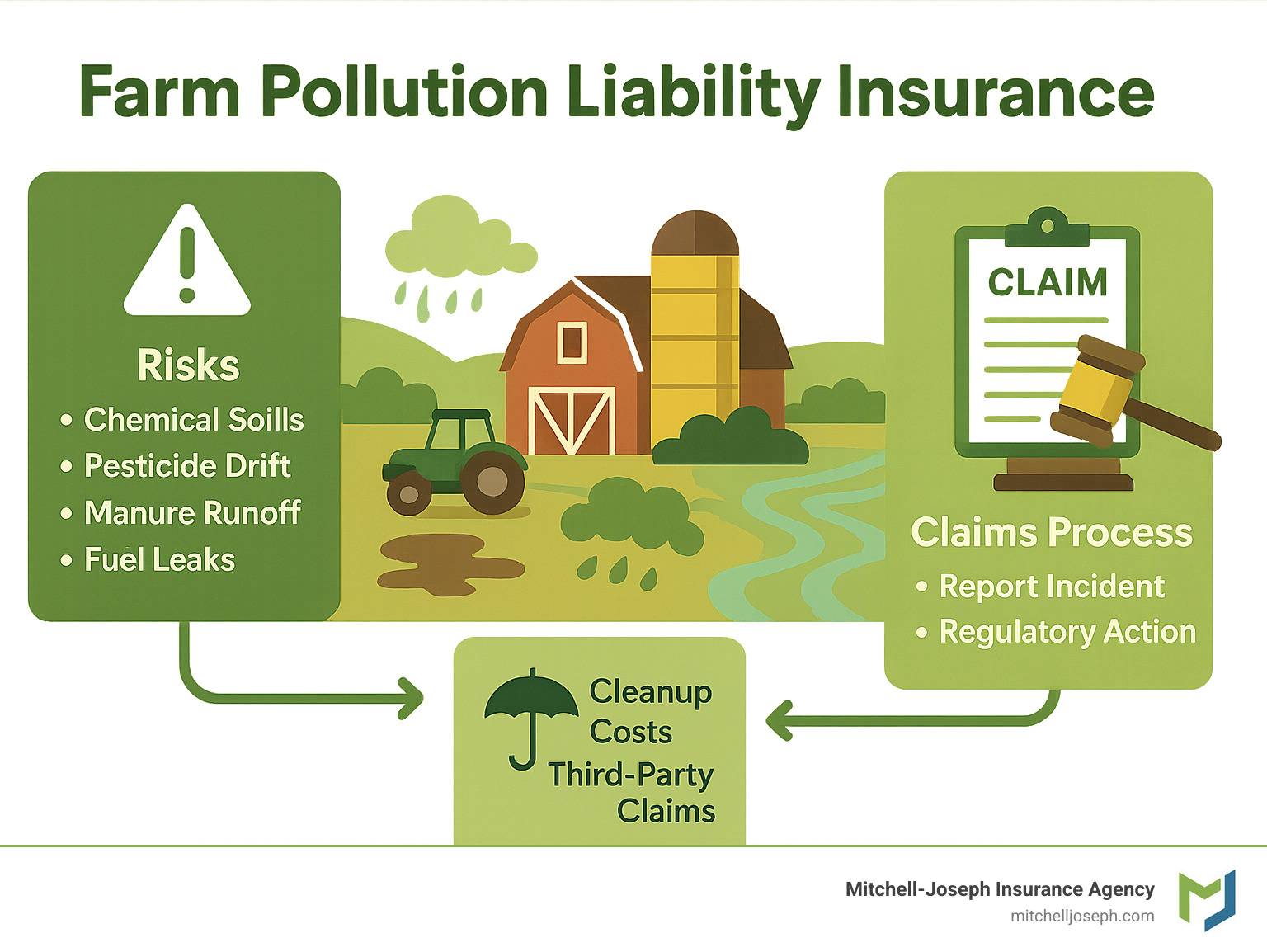
Farm pollution liability insurance vocab explained:
– Commercial farm insurance NY
– Farm equipment insurance coverage
– Farm flood insurance coverage
Why Farms Face Pollution Liability Risks
When you think about what keeps farmers up at night, pollution risks probably aren’t the first thing that comes to mind. But as a farm owner in the Finger Lakes region, these hidden risks could threaten everything you’ve worked for.
Modern farming involves daily use of substances that environmental regulations classify as “pollutants.” Whether you’re tending to a small family operation in Honeoye Falls or managing hundreds of acres in Canandaigua, these risks follow you everywhere:
Fertilizers rich in nitrogen and phosphorus help your crops thrive but can wreak havoc if they reach waterways. Pesticides and herbicides protect your investment but carry significant liability if they drift onto neighboring properties. Even petroleum products for your equipment and animal waste containing nutrients and pathogens represent serious environmental hazards when not properly managed.
What’s particularly alarming is the legal precedent set by a Wisconsin Supreme Court case that officially classified bacteria in cow manure as a “pollutant.” This ruling means that standard farm liability policies won’t cover contamination losses involving bacterial contamination of groundwater—leaving you completely exposed.
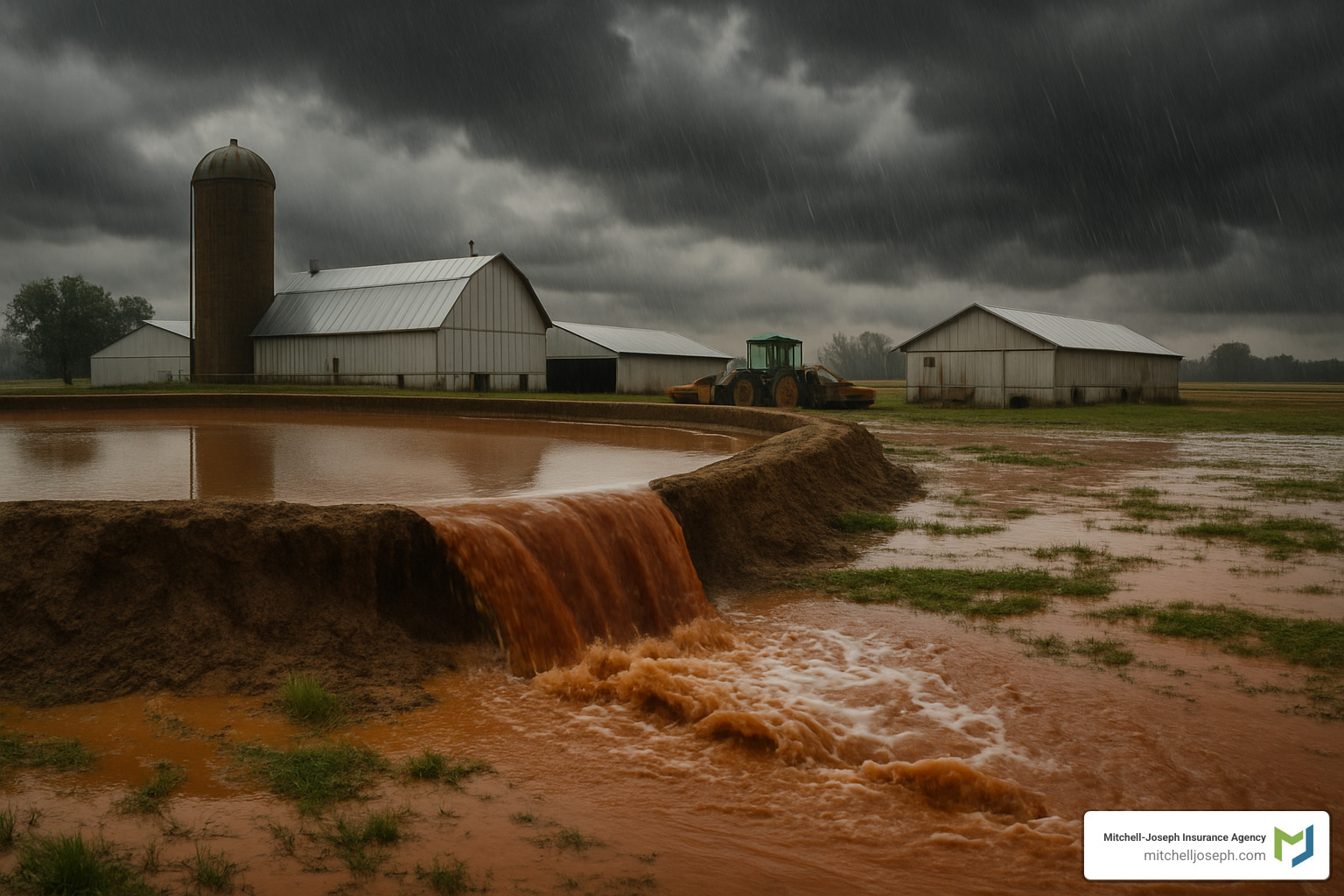
The risks you face aren’t just about the substances themselves—they’re magnified by factors beyond your control:
Climate events are becoming more extreme, with heavy rainfall and flooding that can overwhelm even well-designed containment systems. Your farm’s proximity to water resources matters tremendously in the Finger Lakes region, where watershed protection is paramount. Meanwhile, regulatory scrutiny continues to intensify at both federal and state levels, and community awareness about environmental impacts has never been higher.
Your relationship with neighbors in places like Victor, Naples, or Rochester depends partly on your environmental stewardship. Having proper farm pollution liability insurance shows your commitment to responsible farming and helps maintain the community trust you’ve worked hard to build.
Common Pollution Scenarios on Modern Farms
Let me share some real-world situations we’ve seen affect farms right here in New York. These aren’t theoretical risks—they’re happening to farms just like yours:
Imagine you’re applying pesticides when the wind suddenly shifts. Despite your best precautions, chemical overspray drifts onto your neighbor’s organic operation, potentially costing them their certification and triggering a lawsuit against you.
Or consider what happens during an unusually wet spring, when your carefully maintained manure lagoon breaches after consecutive heavy storms. The resulting runoff reaches a nearby creek, causing a fish kill and drawing immediate attention from environmental regulators.
That fuel storage tank you’ve had for years? It could be slowly leaking into the groundwater without any visible signs until a neighbor’s well test reveals contamination. These gradual leaks typically fall into the “absolute pollution exclusion” in standard policies.
Pathogen runoff from livestock areas can make people sick downstream, while an ammonia release from your fertilizer storage could affect air quality for miles. Tyson case with $4 million in fines? That started with ammonia leaks that could happen on any farm with similar storage facilities.
Serving farms across Avon, Bloomfield, and Canandaigua for decades, we’ve unfortunately seen too many farmers find these risks only after facing a claim—when it’s already too late.
The High-Stakes Numbers Behind Farm Pollution
The financial impact of pollution incidents can be absolutely devastating to a family farm. Consider what’s at stake:
A lawsuit in Des Moines sought over $180 million to address nitrate contamination primarily from farm runoff. That’s not a typo—$180 million. Meanwhile, Tyson was forced to pay approximately $4 million in fines for ammonia leaks at their facilities.
EPA penalties for Clean Water Act violations can reach $56,460 per day per violation. Just imagine how quickly that adds up if contamination continues for weeks before findy.
Now compare those potential costs to the average minimum premium for specialized farm environmental insurance: below $4,000 for a $1,000,000 limit of liability. The math makes the decision pretty clear, doesn’t it?
For farms in our Finger Lakes region, where water quality affects both our environment and our tourism economy, the stakes are particularly high. A single pollution incident could threaten not just your farm’s future, but your community’s well-being too.
When you’ve put your heart and soul into your farm, protecting it with farm pollution liability insurance isn’t just smart business—it’s peace of mind that lets you focus on what you do best: farming.
Farm Pollution Liability Insurance 101
Farm pollution liability insurance is the safety net that catches you when standard farm policies drop the ball. Think of it as the specialized coverage that steps in where your regular farm insurance steps out – particularly when it comes to those tricky pollution scenarios that keep farmers up at night.
Most farmers are surprised to learn their general farm liability insurance contains something called an “absolute pollution exclusion.” This is insurance-speak for “we’re not covering that chemical spill, fertilizer runoff, or manure leak.” That’s where specialized pollution coverage becomes essential.
This protection wraps around your operation to shield you from the financial fallout of environmental incidents. It covers the big expenses that could otherwise bankrupt your farm: cleanup costs for contaminated soil and water, claims from neighbors who’ve been affected, property damage to surrounding land, legal expenses when you need to defend yourself, and even certain regulatory fines and penalties.
One of the most critical distinctions to understand is the difference between sudden accidents and gradual pollution:
| Coverage Type | Standard Farm Liability | Farm Pollution Liability |
|---|---|---|
| Sudden spills | Sometimes covered | Covered |
| Gradual leaks | Almost never covered | Covered |
| Cleanup costs | Limited or excluded | Comprehensive coverage |
| Legal defense | May be excluded for pollution | Included |
| Regulatory fines | Typically excluded | May be covered where insurable |
| Coverage trigger | Typically “occurrence” based | Can be “claims-made” |
| Typical limits | Lower | Higher specialized limits |
Here at Mitchell-Joseph Insurance Agency, we’ve guided countless farmers across Lima, Mendon, Rushville and throughout the Finger Lakes region to understand these crucial differences before an incident occurs – not after when it’s too late.
Farm Pollution Liability Insurance: Key Definitions
When reviewing farm pollution liability insurance policies, you’ll encounter terminology that’s important to understand before signing on the dotted line:
A pollutant isn’t just obvious chemicals like pesticides. Insurance policies define this broadly as “any solid, liquid, gaseous or thermal irritant or contaminant, including smoke, vapor, soot, fumes, acids, alkalis, chemicals, and waste.” Yes, that includes fertilizers, manure, and just about everything else you work with daily.
Bodily injury extends beyond just physical harm to include sickness, disease, or even death resulting from pollutant exposure. Some policies even cover mental anguish and emotional distress claims – increasingly important in today’s litigation landscape.
When insurance talks about property damage, they mean physical damage to tangible property, including contamination of soil, groundwater, or surface water – plus the loss of use of that property.
Environmental impairment refers to broader adverse impacts on the environment, including damage to natural resources. This term often triggers regulatory action requiring costly remediation.
The distinction between sudden and accidental pollution (unexpected events occurring at a specific moment) versus gradual pollution (slow contamination over time, like a leaking storage tank) is crucial. Standard farm policies might cover the former in limited circumstances, but almost never the latter – which is often where the biggest expenses lie.
Farm Pollution Liability Insurance vs. Standard Farm Liability
The gaps between your standard farm policy and dedicated farm pollution liability insurance are wide enough to drive a tractor through:
Standard policies typically need a specific, identifiable “occurrence” at a known time to trigger coverage. Pollution policies, however, can activate when contamination is finded, even if the original release happened years earlier – a crucial difference when dealing with slow leaks or gradual contamination.
The exclusions in standard farm policies create Swiss cheese-like coverage when it comes to pollution incidents. Those broad exclusions are precisely what pollution-specific policies are designed to fill in.
Perhaps most importantly, standard policies provide minimal (if any) coverage for environmental cleanup – often the most significant expense in a pollution incident. Specialized pollution policies include comprehensive remediation coverage that can save your operation.
When it comes to defending yourself legally, standard policies may leave you on your own for pollution claims due to exclusions. Pollution policies include defense costs, often outside the limits of liability, meaning your coverage amount isn’t eaten away by legal fees.
Wisconsin Supreme Court case we mentioned? The court determined that bacteria in cow manure qualified as a “pollutant” under the standard farm policy’s exclusion. That left the farmer without coverage for a well contamination claim that specialized farm pollution liability insurance would likely have covered.
More info about Farm Insurance Policy
Types of Policies & Endorsements Available
For New York farmers, several flavors of farm pollution liability insurance are available, each addressing different environmental risks:
Sudden and Accidental Pollution Endorsements can be added to your standard farm liability policy for limited protection against events that happen unexpectedly at a specific moment. While better than nothing, these endorsements still leave significant exposure for gradual pollution events.
Site Pollution Liability Policies stand alone from your regular farm insurance and cover pollution conditions at your scheduled farm properties. The big advantage? They typically cover both sudden and gradual pollution, including cleanup costs, third-party claims, and legal defense.
If you store fuel, chemicals, or other substances in tanks, Storage Tank Liability coverage is essential. This specialized protection addresses leaks from above-ground or underground storage tanks – particularly important if your farm has aging infrastructure.
For farms that perform custom application services for neighbors, Contractors Pollution Liability protects against incidents that occur while working on others’ property. This has become increasingly important as many farms diversify their income streams.
If you sell products directly to consumers, consider Products Pollution Liability to cover pollution issues arising from products grown or produced on your farm – even after they’ve left your property.
For farms needing extra protection, Umbrella Extensions can provide an additional layer above your primary pollution coverage, often at a lower cost than increasing your primary limits.
At Mitchell-Joseph Insurance Agency, we help farms across Victor, Wayland, West Bloomfield and beyond steer these options to create protection strategies custom to their specific operations. With over 200 years of combined experience, we’ve seen how the right coverage can make the difference between weathering a pollution incident and being overwhelmed by it.
Policy Details: Coverage, Exclusions, Limits & Cost Drivers
When you’re shopping for farm pollution liability insurance, understanding what you’re actually buying is crucial. Let’s break down what these policies typically include in language that makes sense for your farm operation.
A good comprehensive farm pollution policy will protect you in several key areas:
Cleanup and Remediation Costs cover the often expensive process of restoring your land and nearby areas after a pollution event. This includes soil testing, groundwater remediation, surface water restoration, and any monitoring the government might require you to do afterward. These costs often represent the largest portion of any pollution claim.
Third-Party Claims protect you when others are affected by pollution from your farm. This includes bodily injury to people who don’t work for you, damage to neighboring properties, and even claims for reduced property values. We’ve seen these claims arise years after the initial incident, which is why long-term protection matters.

When a spill happens, time is of the essence. That’s why Emergency Response coverage is so valuable—it pays for immediate containment measures, evacuation costs if necessary, and crisis management to help minimize the damage. I’ve seen this coverage save farms tens of thousands of dollars by addressing problems quickly before they spread.
Your farm is your livelihood, which makes Business Interruption coverage essential. If you can’t operate during cleanup, this coverage helps replace lost income and covers extra expenses needed to keep things running. It might even help with reputation management—important in today’s social media world.
Legal costs can quickly drain your resources, which is why Legal Defense coverage is vital. This pays for attorneys, court costs, expert witnesses, and settlement negotiations. Having this coverage often means the difference between defending yourself properly or being forced into an unfavorable settlement.
What a Typical Policy Covers
Let me walk you through what you can expect from a solid farm pollution liability insurance policy:
When it comes to Soil and Water Cleanup, your policy should cover both on-farm and off-farm contamination. I remember helping a dairy farmer near Canandaigua whose fertilizer runoff affected a neighboring property—his policy covered remediation for both properties, saving him from financial disaster.
Regulatory Fines and Penalties coverage can be a lifesaver when environmental agencies get involved. While not all fines are legally insurable (a good agent will explain this), many are, and they can be substantial. One Finger Lakes vegetable farmer faced $30,000 in fines after an accidental pesticide spill—his policy covered the insurable portion.
Your farm materials don’t stay in one place, which is why Transportation Pollution Incidents coverage matters. This protects you during the movement of chemicals, products, or waste both on and off your property. A spill during transport can happen to even the most careful farmer.
Non-Owned Disposal Sites coverage might sound unnecessary until you need it. This protects you if waste you properly disposed of later causes problems at the disposal site. One Gorham farmer was named in a lawsuit involving a disposal site he’d used years earlier—his policy covered his defense costs.
The government takes natural resources seriously, and Natural Resource Damages coverage helps if you’re assessed costs to restore damaged habitats or wetlands. These assessments can be substantial and are separate from cleanup costs.
More info about FAQs: Pollution Insurance
Key Exclusions to Watch
Even the best farm pollution liability insurance won’t cover everything. Here are the main exclusions you should understand:
Intentional Acts aren’t covered—and that makes sense. If you deliberately ignore regulations or knowingly violate permits, insurance won’t protect you. Insurance is designed for accidents, not intentional wrongdoing.
Prior Known Conditions that existed before your policy started typically aren’t covered if you knew about them. However, some insurers offer coverage for pre-existing conditions if you disclose them upfront. I helped a Middlesex farmer secure this coverage for a property with historical contamination—it provided peace of mind during his expansion.
Many policies exclude Asbestos and Lead contamination. This matters if you have older farm buildings that might contain these materials. One Honeoye Falls farm needed special coverage for their 1940s-era barns.
Mold and Fungus exclusions can be problematic for certain types of farms. If this is a concern for your operation, ask about endorsements to add this coverage. We secured this for a mushroom grower in Ionia who faced unique exposures.
Nuclear Risk and War and Terrorism exclusions are standard in virtually all policies. Thankfully, these rarely impact typical farming operations in our area.
Understanding these exclusions helps you avoid surprises when you need your coverage most. At Mitchell-Joseph Insurance Agency, we review these with every farm client to identify potential gaps and solutions.
specific nuclear risk coverage
How Limits & Deductibles Work
Your farm pollution liability insurance policy has several important numbers that determine how much protection you actually have:
The Per-Occurrence Limit is the maximum amount your policy will pay for any single pollution incident. Think of this as your protection for one big event.
Your Aggregate Limit represents the total amount available during your policy period, regardless of how many incidents occur. If you have multiple small claims, this becomes important.
Many policies include Sub-Limits for specific coverages. For example, you might have a $1 million overall limit but only $250,000 for transportation pollution. These sub-limits aren’t always obvious, so it’s worth asking about them specifically.
Deductibles typically range from $5,000 to $25,000 for farm pollution policies. This is what you’ll pay before coverage kicks in. Some policies offer zero-dollar deductible options, which can be valuable for smaller operations where even a modest deductible would be challenging.
Most farms we work with carry limits between $1 million and $5 million, though larger operations often need more. The right amount depends on your specific situation.
As for cost, several factors influence your premium:
Farm Size and Operations impact pricing—larger farms with diverse activities generally pay more because they have more potential exposures.
The Types and Quantities of Chemicals Stored on your property significantly affect your premium. A farm storing large amounts of fertilizers, pesticides, or fuel will pay more than one with minimal chemical storage.
Proximity to Sensitive Receptors like streams, lakes, residential areas, or environmentally protected zones can increase your premium. Many farms in the Finger Lakes region face this issue due to our abundant water resources.
Your Loss History matters—previous pollution incidents will likely increase your premium, which is why prevention is so important.
The good news is that strong Risk Management Practices can help reduce your costs. Farms with spill prevention plans, secondary containment systems, and regular employee training often qualify for premium discounts. We helped a Victor dairy farm reduce their premium by 15% by implementing these practices.
At Mitchell-Joseph Insurance Agency, we work with farms throughout the Finger Lakes region to find the right balance of protection and affordability. Every farm is unique, and your insurance should reflect your specific operation and risk tolerance.
Buying & Optimizing Your Coverage
Getting the right farm pollution liability insurance doesn’t have to be complicated, but it does require some homework. Think of it as preparing your fields before planting – a little preparation now saves a lot of headache later.
Start by taking a good look around your farm. What chemicals do you store? Where are your fuel tanks located? How close is that creek to your manure storage? These questions form the foundation of your risk assessment, which is the first step toward proper coverage.
I’ve worked with countless farmers across the Finger Lakes who were surprised by what they finded during this process. One dairy farmer in Canandaigua had no idea his decades-old fuel tank was sitting just 50 feet from a neighbor’s well until we mapped it out together.
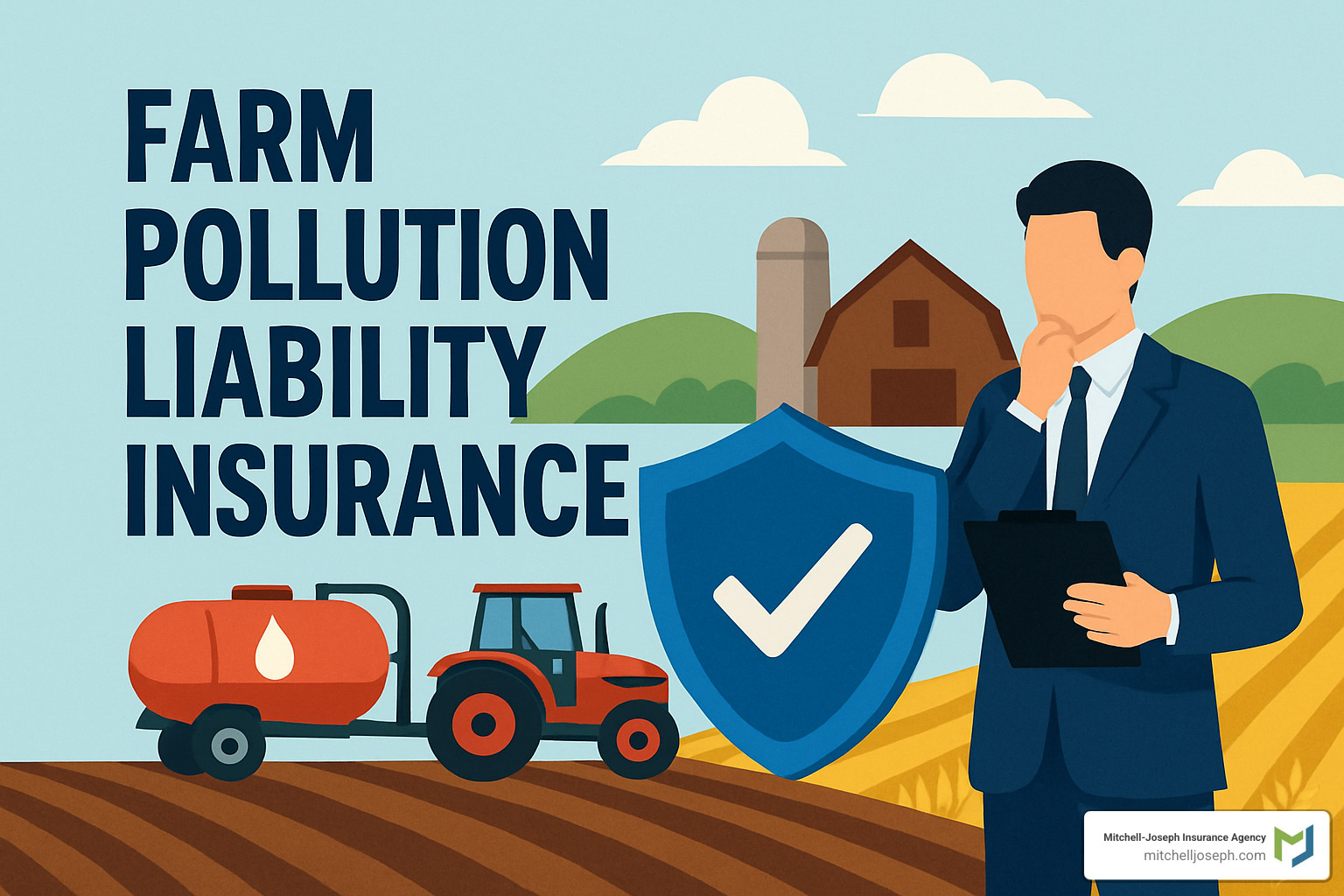
Steps to Obtain Farm Pollution Liability Insurance
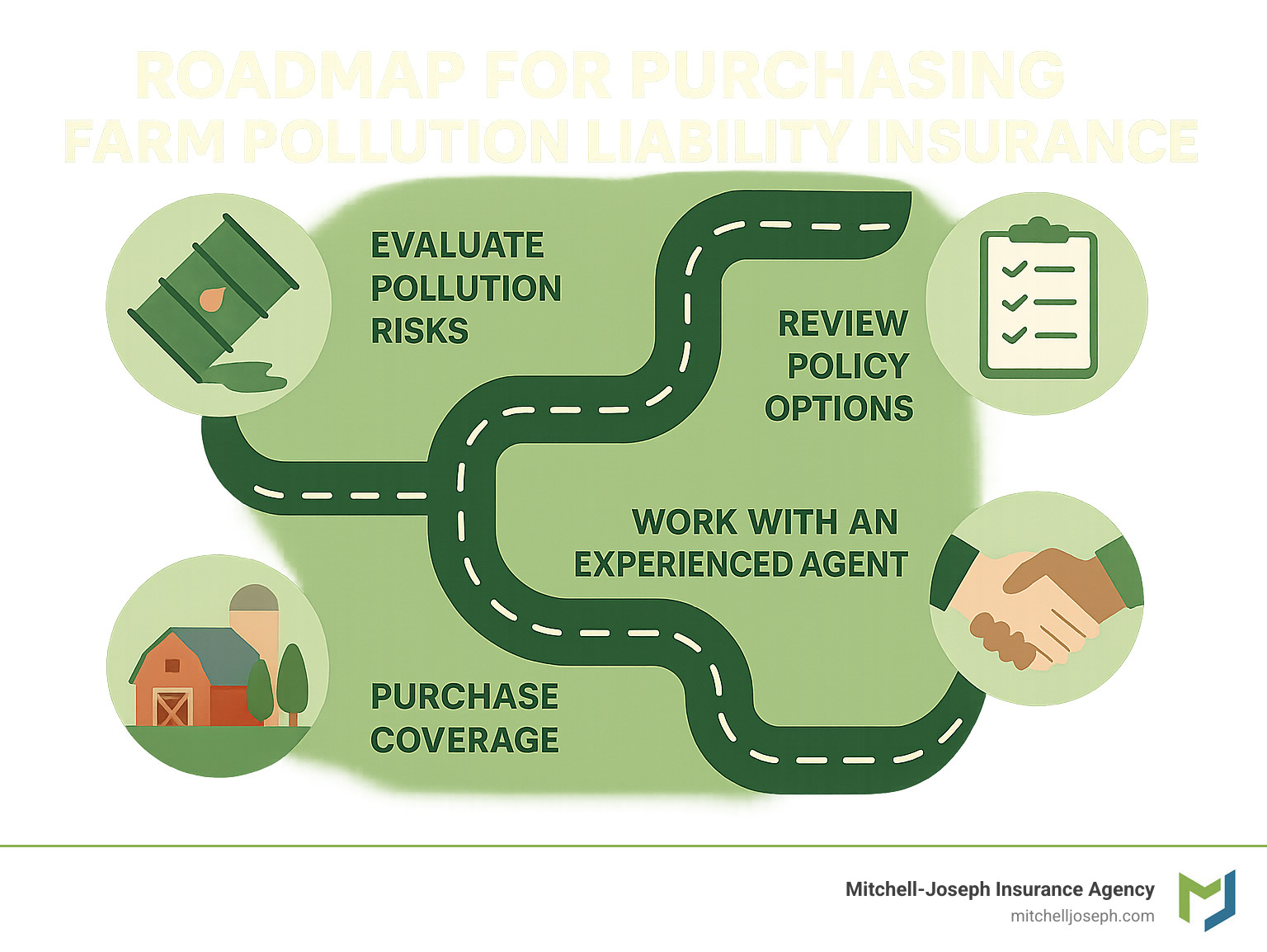
The path to proper protection isn’t as winding as you might think. Here’s how we approach it with our farm clients:
First, identify your exposures by walking your property with an experienced agent. We’ll help spot risks you might overlook because you see them every day.
Next, gather your documentation. This includes your chemical inventory, waste management practices, and claims history (often called “loss runs”). Don’t worry if you’re not sure what you need – we’ll guide you through it.
When it’s time to complete applications, be honest and thorough. I always tell farmers that it’s better to over-disclose than under-disclose. If information is missing or incorrect, it could jeopardize your coverage when you need it most.
After submitting applications, we’ll compare quotes from different insurers. Look beyond just the premium – pay attention to coverage limits, exclusions, and the financial strength of the insurance company. The cheapest option rarely offers the best protection.
We’ll help you negotiate endorsements to fill any coverage gaps. Think of endorsements as customizations to make the policy fit your farm’s unique needs, like adjusting a plow to match your soil conditions.
Once you’ve chosen your policy, we’ll bind coverage and provide all necessary documentation. Then comes the important part – implementing risk management recommendations from your insurer. These aren’t just hoops to jump through; they’re practical steps that can both protect your farm and potentially lower your premiums.
At Mitchell-Joseph Insurance Agency, we’ve guided farms from Potter to Rochester through this process, making it as painless as possible.
Cutting Premiums Without Cutting Protection
Nobody wants to pay more for insurance than necessary. The good news? There are practical ways to lower your farm pollution liability insurance costs without sacrificing the protection your farm needs.
Robust spill prevention plans make a big difference to insurers. When they see you’ve thought through how to prevent problems and respond quickly if something happens, they’re more likely to offer better rates. It’s like showing your banker a solid business plan when applying for a loan.
Secondary containment is another premium-reducer that’s worth the investment. Simple berms around fuel tanks or concrete containment under chemical storage can pay for themselves in premium savings over time, not to mention the peace of mind they provide.
Don’t underestimate the value of regular employee training. A well-trained team is your first line of defense against accidents. One of our clients in Lima holds quarterly safety meetings with his staff, and his pollution premium is about 15% lower than similar operations without such programs.
Equipment inspections aren’t just good practice; they can save you money on insurance. Regular checks of storage tanks, application equipment, and containment systems help prevent the small problems from becoming big disasters.
If your farm has healthy cash reserves, consider higher deductibles. Taking on a $10,000 deductible instead of $5,000 might save you hundreds in premium while still protecting you from the catastrophic events that could otherwise sink your operation.
Many farmers don’t realize that bundling coverage can lead to significant savings. When you purchase your pollution coverage alongside your other farm insurance products, many insurers offer multi-policy discounts.
At Mitchell-Joseph Insurance Agency, we’ve helped farms across the Finger Lakes region implement these strategies to keep costs reasonable while maintaining rock-solid protection. After all, insurance is about sleeping well at night, not cutting corners to save a few dollars that could cost you everything later.
Legal Trends, Case Studies & Risk Mitigation
The world of farm pollution liability is changing faster than the seasons. As a farmer in New York, you need to stay ahead of these shifts to protect your livelihood and legacy.
Courts across the country continue to expand what counts as a “pollutant” – with the Wisconsin Supreme Court ruling being particularly eye-opening for livestock operations. They determined that bacteria in cow manure legally qualifies as a pollutant. Let that sink in for a moment. The very substance farmers have used as fertilizer for centuries is now considered a potential liability.
While New York’s right-to-farm laws offer some protection against nuisance claims from neighbors who don’t appreciate normal farming activities, these laws won’t shield you from legitimate pollution claims – especially when water contamination is involved.
We’re also seeing increased regulation around emerging contaminants like PFAS (those “forever chemicals” that can show up in some agricultural inputs and biosolids). Add to that stricter nitrate standards for drinking water and the growing trend of environmental laws allowing private citizens to bring enforcement actions, and you’ve got a rapidly evolving risk landscape.

Real-Life Claims Lessons Learned
Nothing teaches like real-world examples. Let me share a few stories from farms not unlike yours:
Case Study 1: Dairy Lagoon Overflow
A Western New York dairy farmer faced every operator’s nightmare when heavy spring rains caused their manure lagoon to breach. The resulting flow contaminated a nearby stream, killed fish, and damaged a neighbor’s pond. The financial impact was devastating:
– $175,000 in emergency cleanup costs
– $250,000 in natural resource damages
– $120,000 in third-party property damage claims
– $85,000 in legal defense costs
Their standard farm liability policy? It denied coverage completely, citing the pollution exclusion. Without farm pollution liability insurance, those costs – totaling over $630,000 – came straight from the farm’s assets.
Case Study 2: Pesticide Drift
Near Canandaigua, a crop farmer applied herbicides on what turned out to be too windy a day. The drift affected a neighboring organic farm, causing them to lose their certification for three years. The claim included $320,000 in lost premium pricing, $45,000 in testing and recertification costs, and $95,000 in legal expenses.
Thankfully, this farmer had invested in farm pollution liability insurance, which covered these costs after the deductible. Their foresight preserved the farm’s financial stability through what could have been a devastating incident.
Case Study 3: Underground Fuel Tank Leak
A Finger Lakes region farmer finded an aging underground fuel tank had been leaking for who knows how long. The contamination reached groundwater and affected a neighbor’s well – a truly nightmarish scenario. The costs mounted quickly: $230,000 in soil remediation, $185,000 in groundwater treatment, $75,000 for an alternative water supply for the neighbor, and $110,000 in regulatory compliance and legal costs.
Their specialized pollution policy covered these expenses – expenses that would have been explicitly excluded under a standard farm policy.
These aren’t rare, extreme cases. They represent the kind of real-world situations farmers face every year across New York state.
How Insurance Strengthens Regulator & Community Relations
Beyond just protecting your bank account, farm pollution liability insurance offers strategic benefits that might not be immediately obvious.
When regulators, neighbors, and community members know you have proper coverage, it demonstrates your commitment to environmental stewardship. It shows you’re not just talking about being a responsible farmer – you’ve put financial resources behind that commitment.
If an incident does occur, your policy typically includes access to emergency response resources. This means faster containment and cleanup, which minimizes environmental impact and disruption to the community. The difference between a prompt, professional response and a delayed, inadequate one can dramatically affect how your farm is perceived.
This kind of preparation builds trust with neighboring properties, local officials, and watershed protection groups. They’ll see you as a partner in protecting shared resources rather than a potential threat.
From a business perspective, transferring the financial risk of pollution incidents to an insurer helps ensure your farm can maintain operations and financial stability even after a significant environmental event. Many agricultural lenders now recognize this and require pollution coverage as a condition of financing.
At Mitchell-Joseph Insurance Agency, we’ve watched farm pollution liability insurance help farms in South Bristol, Stanley, Victor, and throughout the Finger Lakes maintain positive relationships with regulators and neighbors – even after environmental incidents occurred. When something goes wrong (and eventually, something always does), having the right coverage makes all the difference in how the story ends.
More info about Farm Insurance 101
Frequently Asked Questions about Farm Pollution Liability Insurance
Do I really need coverage if my state doesn’t mandate it?
I hear this question from farmers across the Finger Lakes region all the time. The short answer? Absolutely.
While New York doesn’t legally require you to carry farm pollution liability insurance, the financial reality is what you should be concerned about. Your standard farm policy likely contains what insurance folks call an “absolute pollution exclusion” – essentially leaving you completely exposed when things go wrong.
Think about what’s at stake here. Even a relatively minor fuel spill can set you back $50,000 in cleanup costs. If that contamination reaches a neighbor’s property or a nearby stream? Those natural resource damage claims can quickly spiral into six figures. And we haven’t even talked about legal defense costs, which can drain your farm’s resources even if you ultimately win the case.
I’ve seen too many hardworking farmers face devastating financial consequences from uninsured pollution events. One dairy farmer near Canandaigua told me he wished he’d spent the $4,000 premium after facing over $300,000 in uninsured cleanup costs from a manure storage failure.
It’s also worth noting that many agricultural lenders now look for pollution coverage before approving loans. They understand the financial threat these uninsured incidents pose to your operation’s survival.
At Mitchell-Joseph Insurance Agency, we consider farm pollution liability insurance as essential as your tractor insurance – you simply can’t run a modern farm without it if you’re handling chemicals, fuel, or animal waste.
How much coverage should I carry for my operation size?
Finding the right coverage limit for your farm isn’t one-size-fits-all. It’s more like finding the right-sized tractor for your acreage – it depends on your specific situation.
Here’s what we look at when helping farmers determine appropriate farm pollution liability insurance limits:
First, we consider your operation’s size and activities. A 1,500-acre cash crop farm with extensive chemical applications has different exposure than a 50-acre organic vegetable operation. Similarly, a dairy with a 500,000-gallon manure lagoon presents different risks than a small beef cattle operation with dry manure handling.
Your farm’s location matters tremendously. If you’re farming near Canandaigua Lake or adjacent to residential developments in Victor or Mendon, your risk exposure increases significantly compared to more remote locations. Proximity to streams, wetlands, or municipal water supplies also raises the stakes.
We also look at what you need to protect. A farm with substantial assets and equity requires higher limits to ensure those assets remain protected if a significant pollution event occurs.
As a starting point:
– Small farms typically need at least $1 million in pollution liability coverage
– Mid-sized operations generally warrant $2-3 million in protection
– Large farms or those with significant risk factors should consider $5 million or more
When Jeffrey visits farms around Honeoye Falls and the surrounding communities, he often finds that farmers are underinsured for their actual exposure. We’d rather have that conversation before a claim than after.
Will my policy cover both sudden spills and slow leaks?
This question gets right to the heart of why specialized farm pollution liability insurance is so critical for today’s farmers.
Here’s the reality: Your standard farm liability policy likely only covers pollution events that are both sudden and accidental – if it covers pollution at all. Picture a fertilizer tank that ruptures dramatically during a delivery, creating an immediate spill. That might be covered.
But what about the fuel tank that’s been slowly leaking for months before anyone notices? Or the small, ongoing seepage from a manure storage structure that gradually contaminates groundwater? These gradual pollution events are almost never covered by standard policies.
The cruel irony is that these slow, hidden leaks often create the most extensive damage and result in the costliest claims. By the time you find the problem, the contamination has typically spread much farther than with a sudden release that you can immediately address.
I remember helping a farmer near Naples who finded his underground fuel tank had been leaking for years. His standard policy denied the claim entirely, citing the pollution exclusion. The $200,000+ remediation cost nearly forced him to sell part of his land – land that had been in his family for generations.
Specialized farm pollution liability insurance policies are specifically designed to cover both types of events. At Mitchell-Joseph Insurance Agency, we make sure our farm clients understand this critical distinction and secure coverage that protects them from both sudden accidents and those gradual problems that develop over time.
We work with farms throughout the Finger Lakes region to find the right balance of coverage and affordability, ensuring you’re protected regardless of how a pollution event unfolds.
More info about Farm Insurance 101
Conclusion
Protecting your farm’s financial future requires more than just hoping environmental incidents won’t happen. Let’s face it – modern farming involves risks that standard insurance simply doesn’t address, leaving your operation vulnerable.
Farm pollution liability insurance isn’t just another policy – it’s essential protection for the unique environmental challenges farmers face every day. Whether you’re dealing with chemical spills, watching for pesticide drift on windy days, managing manure storage, or maintaining fuel tanks, comprehensive pollution coverage ensures that one environmental incident won’t wipe out generations of hard work.
Here at Mitchell-Joseph Insurance Agency, we’ve walked alongside farmers throughout the Finger Lakes region for decades. From small family operations with a few acres to large commercial enterprises spanning hundreds, we’ve helped craft protection that fits each farm’s unique needs. We understand both the practical realities of agriculture and the complex world of environmental insurance, allowing us to find solutions that protect your livelihood without breaking the bank.
The truth we’ve learned over years of serving our farming community is simple: prevention is always better than reaction. Many farmers tell us they’re surprised to find how affordable proper pollution coverage can be – especially compared to the devastating costs of an uninsured environmental incident.
When it comes to farm pollution risks:
– Your standard farm policy likely contains exclusions that leave you completely exposed
– Both sudden accidents and slow, gradual pollution can trigger costs reaching hundreds of thousands of dollars
– Between cleanup, claims from neighbors, and legal expenses, even a “small” incident can threaten your farm’s future
– Specialized coverage exists that can be custom to your specific operation
– Taking proactive steps not only reduces your premiums but helps prevent incidents altogether
Don’t wait until you’re facing a claim to find the gaps in your coverage. Give us a call at Mitchell-Joseph Insurance Agency today for a friendly, no-pressure conversation about your farm’s specific pollution exposures and protection needs.
Our team proudly serves farms throughout the beautiful Finger Lakes region, including Honeoye Falls, Pittsford, Naples, Rushville, Avon, Bloomfield, Bristol, Canadice, Canandaigua, Cohocton, Fishers, Gorham, Honeoye, Ionia, Lima, Mendon, Middlesex, Potter, Rochester, Rush, South Bristol, Stanley, Victor, Wayland, and West Bloomfield.

