

Why Your Home’s Underground Lifelines Need Protection
Exterior electrical and water service line insurance is an optional coverage that protects homeowners from the cost of repairing or replacing underground utility lines running from the street to your home. Most homeowners are surprised to learn they’re financially responsible for these lines—not their utility company—and that standard homeowners insurance typically doesn’t cover damage from wear and tear, corrosion, or tree roots.
Quick Answer:
- What it covers: Underground water pipes, sewer lines, electrical wiring, and gas lines on your property
- Typical cost: $20-$50 per year in additional premiums
- Average repair cost without coverage: $2,500-$3,750 for water lines, $2,556 for sewer repairs
- Common deductible: $500 per incident
- Why you need it: Standard homeowners insurance excludes normal wear and tear on service lines
Imagine your water line collapses from tree root pressure. Because the break is on your property, the entire repair bill—excavation, pipe replacement, and landscape restoration—is yours. This scenario is common, with issues like corrosion and excavation damage affecting thousands of homeowners annually.
As homes age, so do their underground utility lines. Ground shifting, aging pipes, corrosion, and tree roots can cause sudden, expensive failures that basic homeowners insurance typically excludes.
Service line coverage bridges this gap. For a small monthly cost, it protects you from repairs that often exceed $3,000, including excavation, replacement, and landscape restoration—costs that can devastate an unprepared household budget.
I’m Jeffrey Joseph of Mitchell-Joseph Insurance Agency. Since 1999, I’ve helped upstate New York homeowners find affordable exterior electrical and water service line insurance to prevent financial hardship from unexpected utility failures.
What is Exterior Electrical and Water Service Line Insurance?
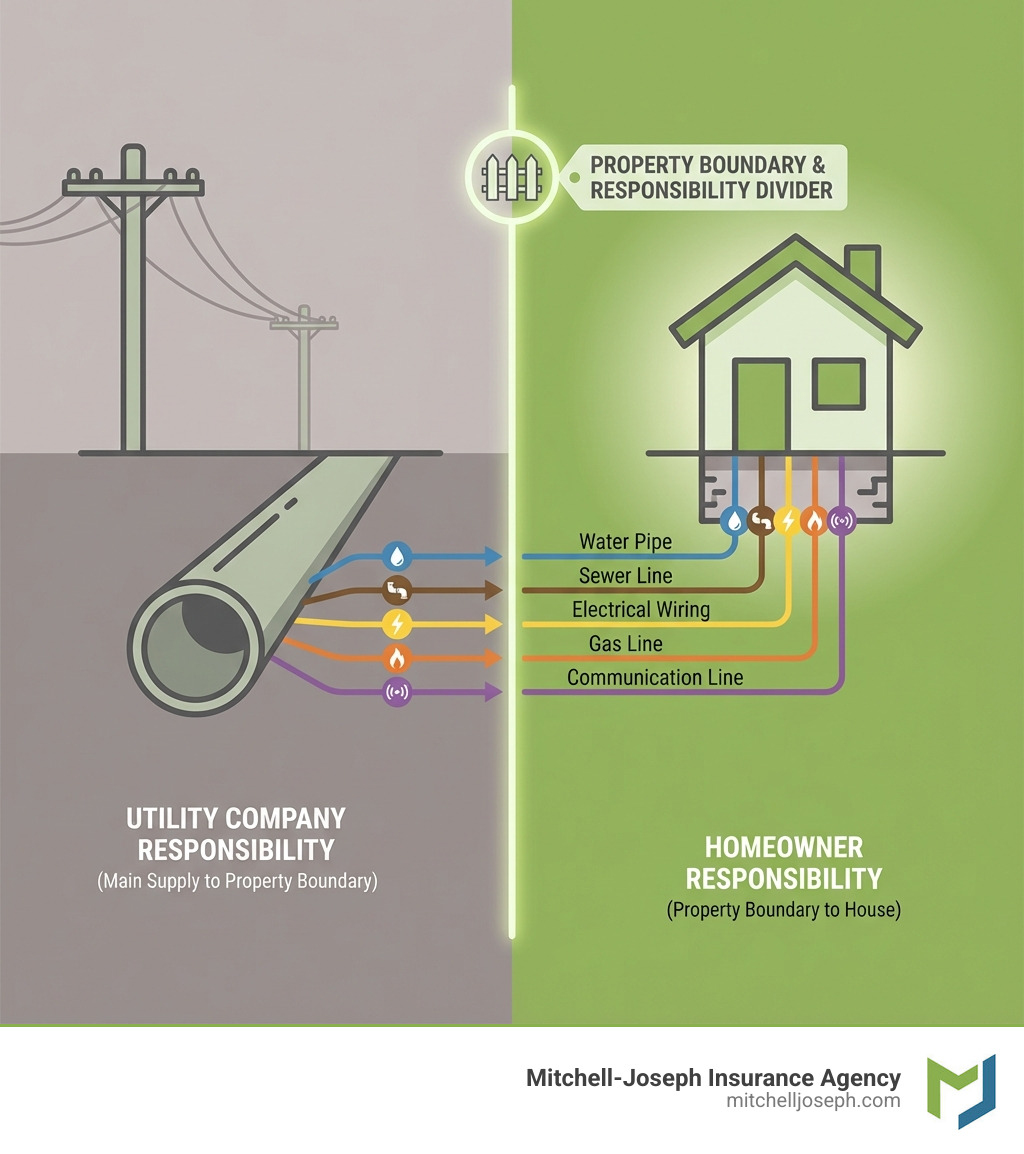
Exterior electrical and water service line insurance is an optional endorsement to your homeowners policy. It covers the high cost of repairing or replacing underground utility lines on your property. Many homeowners don’t realize that once a utility line crosses their property boundary, its maintenance becomes their responsibility, not the utility company’s.
This coverage activates when vital connections like your water pipe, sewer line, or buried electrical cables fail. A service line failure is more than an inconvenience; it’s a major, costly disruption. This insurance helps pay for repairs, excavation, and even landscape restoration—costs not covered by standard homeowners policies, especially for issues like wear and tear, corrosion, or tree root damage.
What’s Covered vs. What’s Excluded?
Understanding what your exterior electrical and water service line insurance policy covers—and what it doesn’t—is key to ensuring you have the right protection.
Covered Lines:
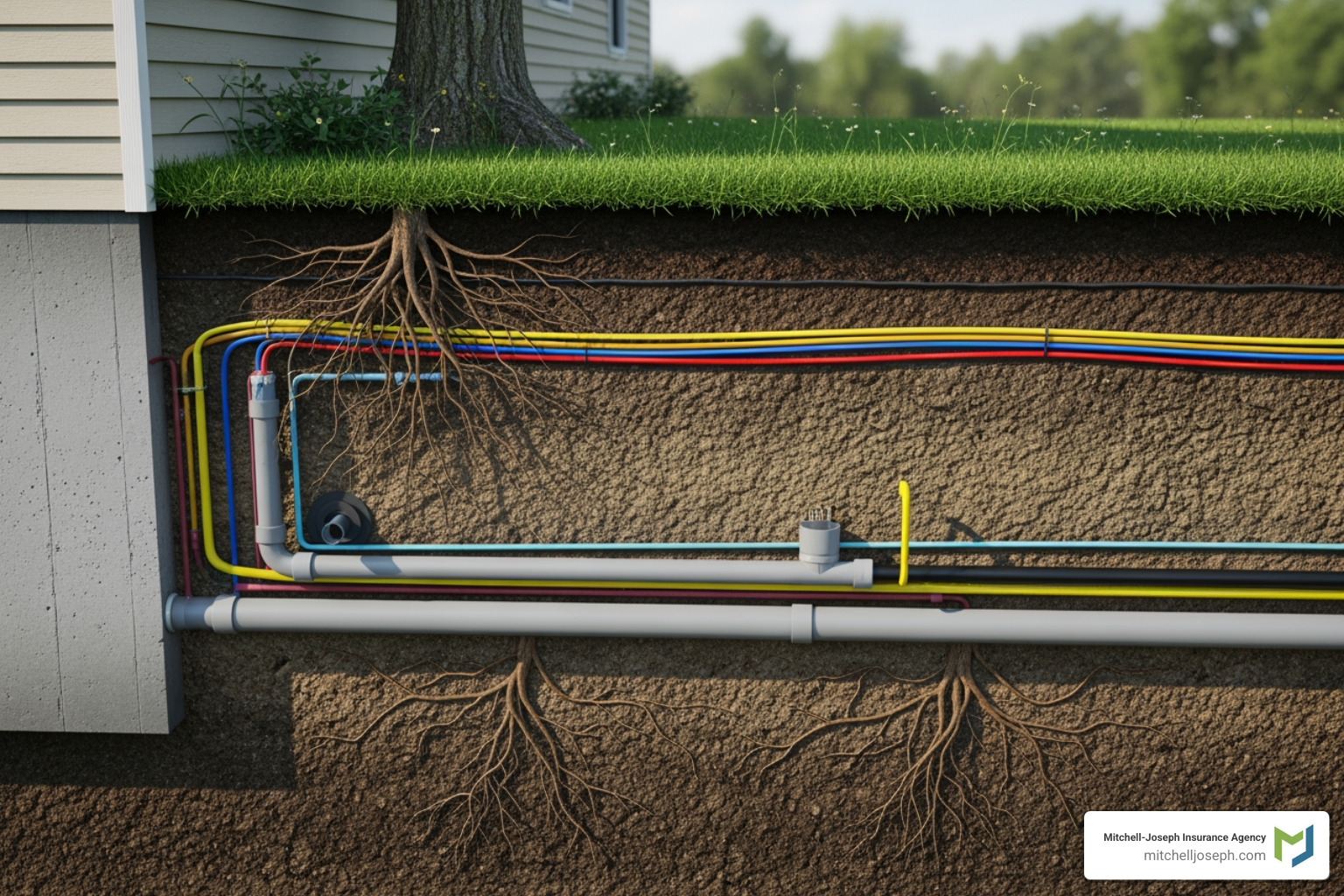
Service line coverage typically extends to a wide range of underground utility lines that provide services to your residence. These include:
- Water pipes: The main line supplying water to your home.
- Electrical wiring: Buried lines delivering electricity to your home.
- Sewer lines: The pipe carrying wastewater from your home.
- Gas lines: Pipes supplying natural gas or propane.
- Other lines: Often includes communications (telephone, cable, internet), drainage, and sprinkler lines.
Covered Damage:
This coverage is a lifesaver because it often includes damages that standard homeowners policies typically exclude. Common causes of service line failure that are usually covered include:
- Wear and tear: Natural aging and deterioration.
- Corrosion/Rust: Breakdown of materials over time.
- Tree root invasion: Damage from roots growing into pipes.
- Freezing/Frost heave: Damage from frozen ground.
- Mechanical or electrical breakdown: Internal malfunctions.
- Weight: Damage from vehicles or equipment on the ground above.
- Excavation damage: Accidental damage from digging.
- Rodents: Damage from burrowing animals.
- Collapse/Arcing: Physical pipe collapse or electrical arcing.
If a tree root invades your sewer line or your main water pipe corrodes and leaks, service line coverage is designed to help. For more details on specific sewer line coverage, check out our guide: Does Home Insurance Cover Main Sewer Line?.
Excluded Items:
While comprehensive, coverage has limits and typically excludes:
- Septic systems
- Water wells
- HVAC components
- Lines under the home’s foundation
- Unconnected lines
- Fuel tanks
- Lines running through or under a body of water
Always review your specific policy, as coverage details vary by provider.
The Financial Impact: Repair Costs vs. Premium Costs
The value of exterior electrical and water service line insurance becomes clear when you compare the costs.

Average Repair Costs:
A service line failure is a complex fix involving locating the problem, excavation, repair, and restoration. Excavation is often the most expensive part. Consider these average costs:
- Water Line Replacement: The average cost to replace your main water line is $3,750, with a typical range of $2,500-$5,000.
- Sewer Main Repair: The average cost to repair a sewer main is $2,556.
- Sewer Line Replacement: Can range from $3,000 to $25,000, depending on the severity.
- Average Service Line Claim: Roughly $3,000-$5,000.
These figures don’t include potential water damage inside your home or temporary lodging costs.
Annual Premiums and Deductibles:
Compare those potential repair bills to the cost of protection. Service line coverage is remarkably affordable, often costing just $20 to $50 per year in additional premiums.
This coverage typically includes a deductible, commonly $500 per incident. For a $3,500 repair, you would pay $500, and insurance would cover the remaining $3,000 (up to your policy limit, often $10,000 or more).
When you weigh a potential out-of-pocket expense of several thousand dollars against an annual premium of $20-$50, the value of service line coverage becomes crystal clear. It’s a small investment that can save you from a significant financial headache.
Is Service Line Coverage Right for You?
Deciding to add exterior electrical and water service line insurance is a personal choice, but its financial protection makes it a wise investment for many homeowners. While not mandatory, it guards against potentially crippling repair costs.
Assessing Your Need for Exterior Electrical and Water Service Line Insurance
To see if this coverage is right for you, consider these factors:
- Home Age: Older homes have aging pipes that are more susceptible to wear, corrosion, and collapse. If your home is several decades old, your lines may be near the end of their lifespan.
- Pipe Materials: Some older pipe materials are more prone to degradation than modern ones.
- Large Trees on Property: Mature trees have extensive root systems that are a common cause of sewer and water line damage.
- Neighborhood Repair History: If your neighbors have had service line issues, it’s a strong sign your home could be next.
- Personal Emergency Fund: If you lack savings to cover an unexpected repair of $3,000+, this coverage is an affordable safety net. AARP Money Map offers tips on building an emergency fund.
While the need may be less urgent for newer homes, even new lines can be damaged. For older homes in areas like Pittsford or Mendon, the coverage is often a “no-brainer.”
Service Line Insurance Endorsement: How It Works
This coverage is an “endorsement” or “rider”—an optional add-on to your Homeowners Insurance policy. It extends protection to perils not covered by a standard policy.
Here’s a breakdown of how it works:
| Factor | Description |
|---|---|
| Annual Cost | Affordable, typically $20-$50 per year. |
| Coverage Scope | Covers physical damage to underground service lines from wear and tear, corrosion, tree roots, etc. Includes repair, replacement, and excavation. |
| Deductible | Usually a $500 deductible per incident, separate from your main policy deductible. |
| Contractor Choice | Most policies let you choose your own licensed contractor. |
| Coverage Limits | Often $10,000 per incident, with some policies offering up to $25,000, covering the entire event. |
| Included Costs | Covers excavation, restoration, and often temporary living expenses. Some policies include eco-friendly material upgrades. |
| Service Fees | No separate service fees beyond the premium and deductible. |
When a failure occurs, you contact your insurer, pay your deductible, and the policy covers the rest up to your limit. For an $8,000 repair with a $500 deductible, insurance pays $7,500. It’s simple protection for a complex problem.
The Consequences of Not Having Exterior Electrical and Water Service Line Insurance
Opting out of exterior electrical and water service line insurance leaves you vulnerable to significant financial and logistical challenges.
Here’s what can happen without this coverage:
- High Out-of-Pocket Costs: Without coverage, you’re responsible for 100% of repair costs, which average $2,500-$4,000 but can exceed $25,000. This can deplete savings or lead to debt.
- Financial Strain: A surprise multi-thousand-dollar bill can impact your ability to pay other expenses or save for the future.
- Emergency Repairs: Failures are sudden and require immediate attention, leaving little time to shop for competitive pricing.
- Property Damage: A broken line can damage your yard or foundation. A sewer backup can cause unsanitary conditions inside your home, which may require separate water backup coverage.
- Loss of Use Expenses: If a major failure makes your home uninhabitable, you’ll have to pay for temporary lodging out-of-pocket. Many service line policies cover these costs.
For many, the small annual cost of coverage is worth avoiding the risk of a financial crisis from a single unexpected repair.
How to Get Protected
Getting protected with exterior electrical and water service line insurance is a straightforward process.
- Review Your Current Policy: Check if your homeowners policy already includes this coverage or if it can be added. Our team can review your policy with you.
- Speak to an Agent: A knowledgeable agent can provide custom advice. At Mitchell-Joseph Insurance Agency, we offer personalized service, assessing your specific risk factors to find the right coverage.
- Explore Endorsements: We work with 24 insurance companies to find a competitive quote for a policy endorsement that fits your needs and budget, ensuring you’re protected without overpaying.
- Get a Quote: We’ll provide a clear quote to add this affordable protection to your homeowners policy.
At Mitchell-Joseph Insurance Agency, our 200+ years of combined experience serves communities across upstate New York, including Honeoye Falls, Naples, Rushville, Avon, Bloomfield, Bristol, Canadice, Cohocton, Fishers, Gorham, Honeoye, Ionia, Lima, Mendon, Middlesex, Potter, Rochester, Rush, South Bristol, Stanley, Victor, Wayland, and West Bloomfield. We understand the region’s unique challenges and provide custom coverage for your peace of mind.
To learn more and get a personalized quote, contact us today. We’re ready to help you secure your home’s future. For more details, Read our complete guide to Service Line Coverage.

